-
-
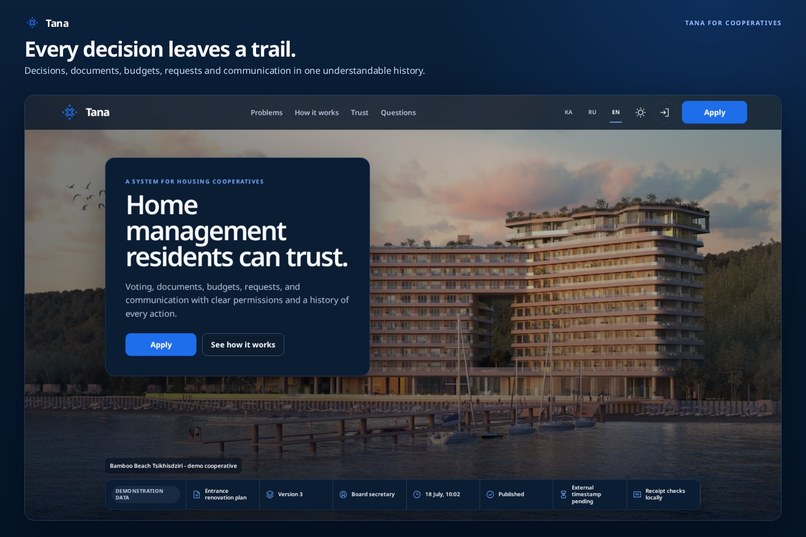
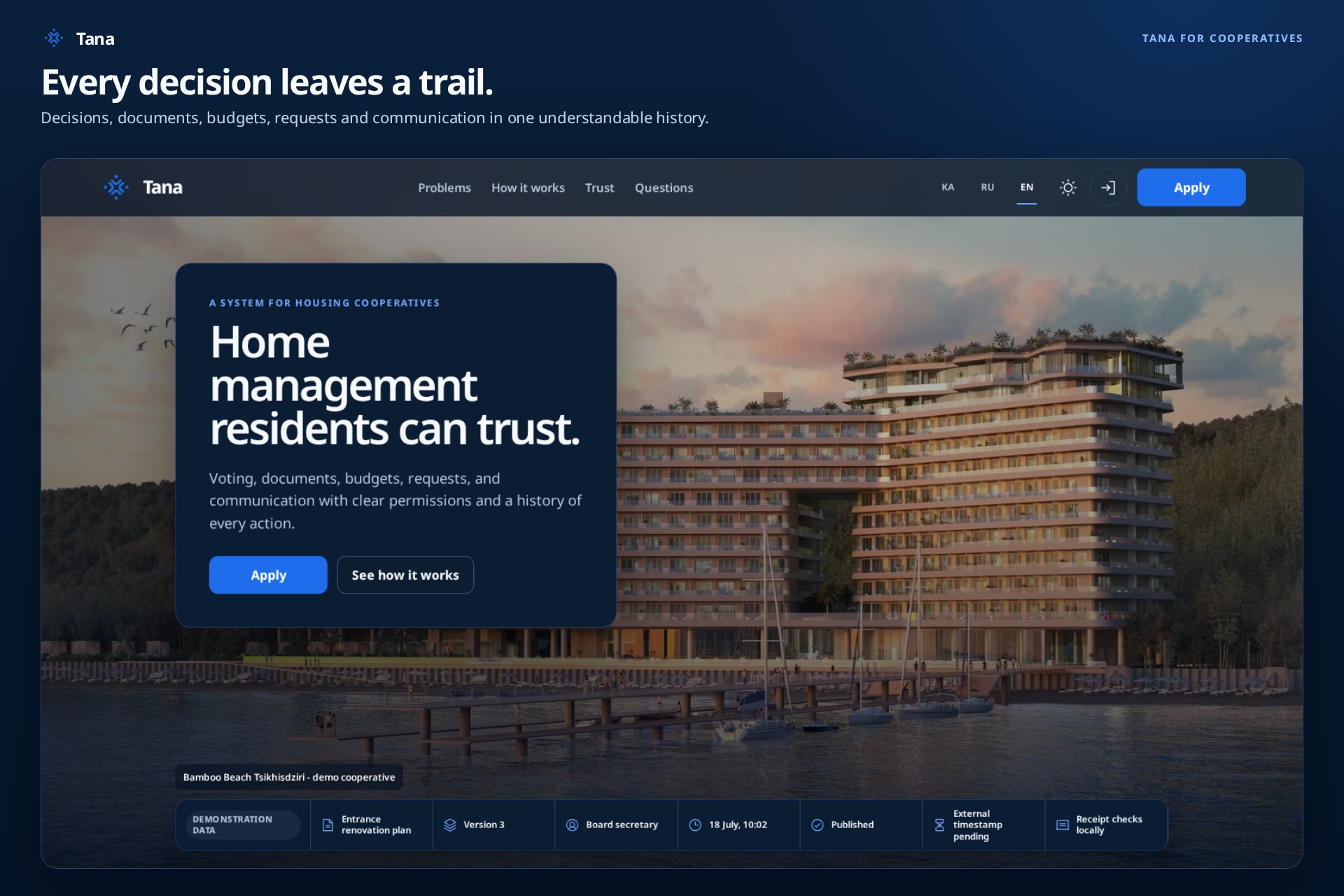
every-decision-leaves-a-trai
-
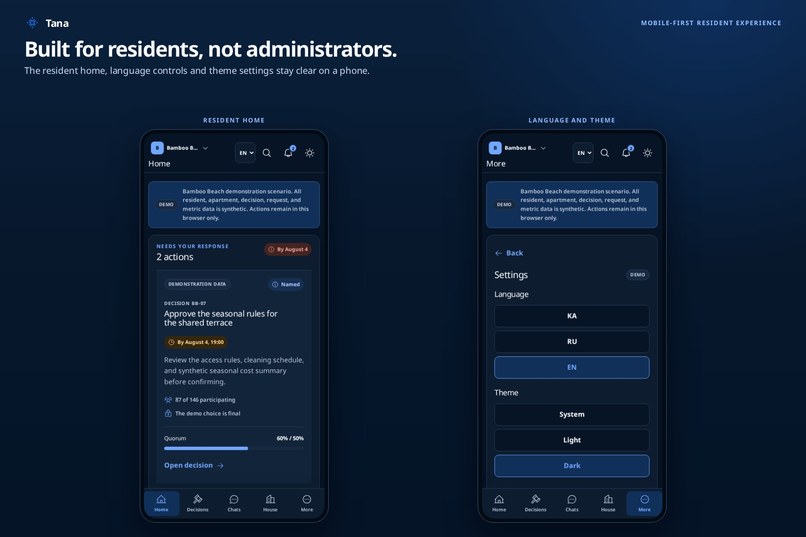
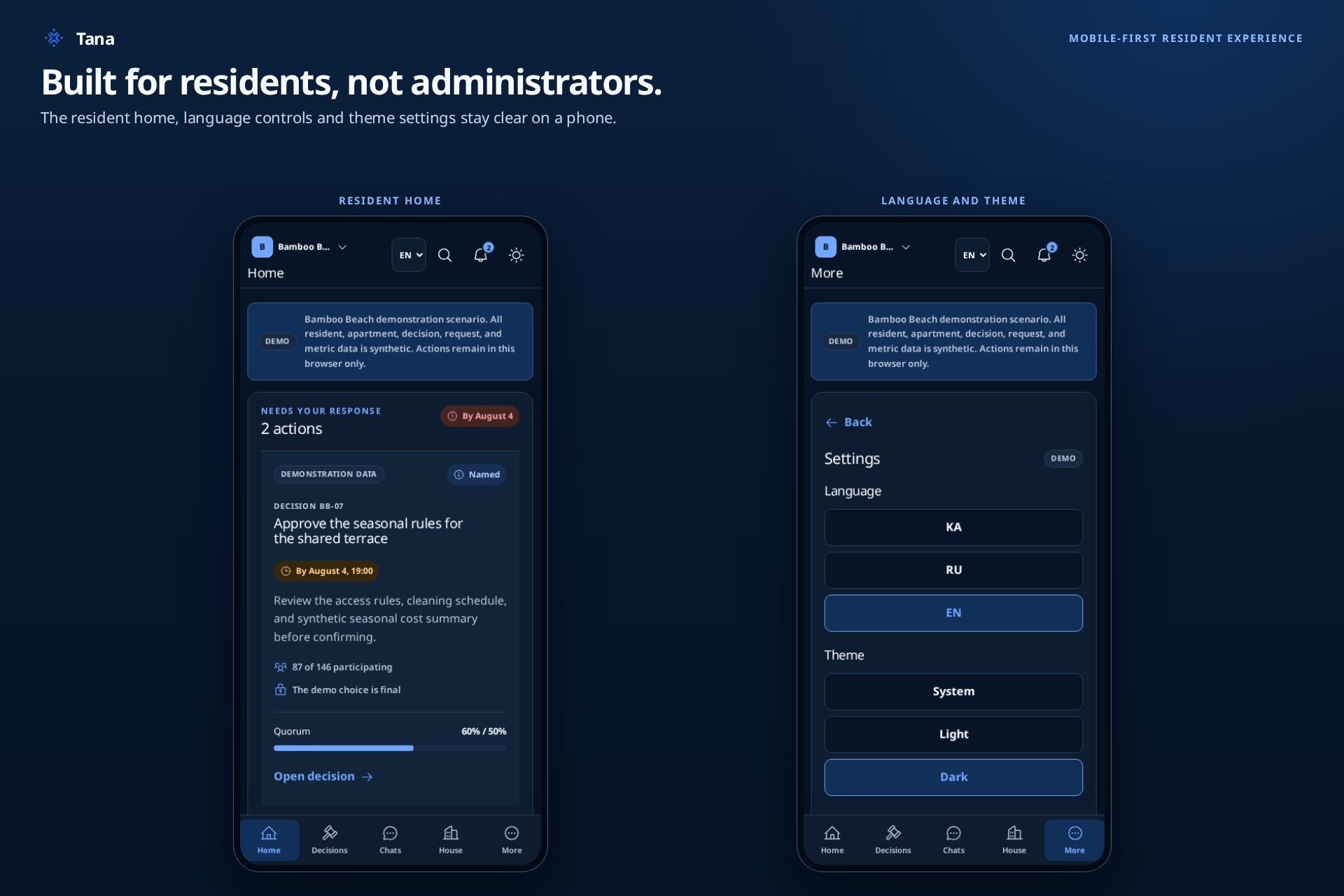
mobile-first-resident-experience
-
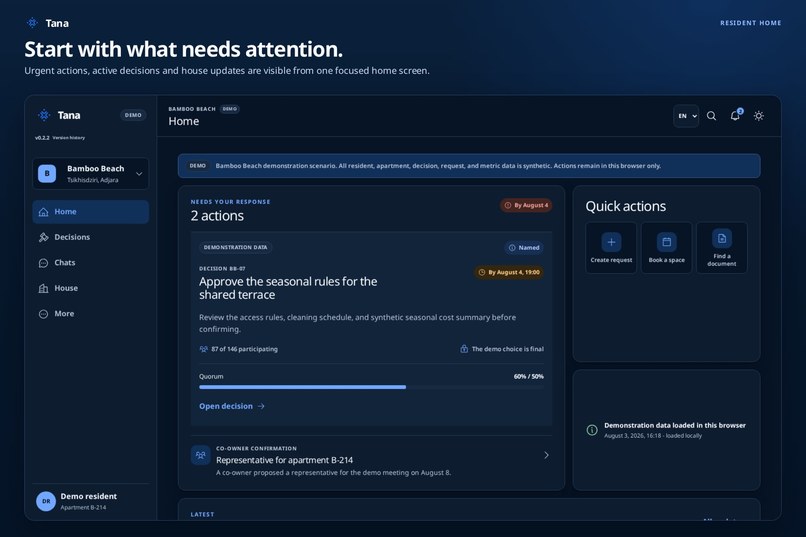
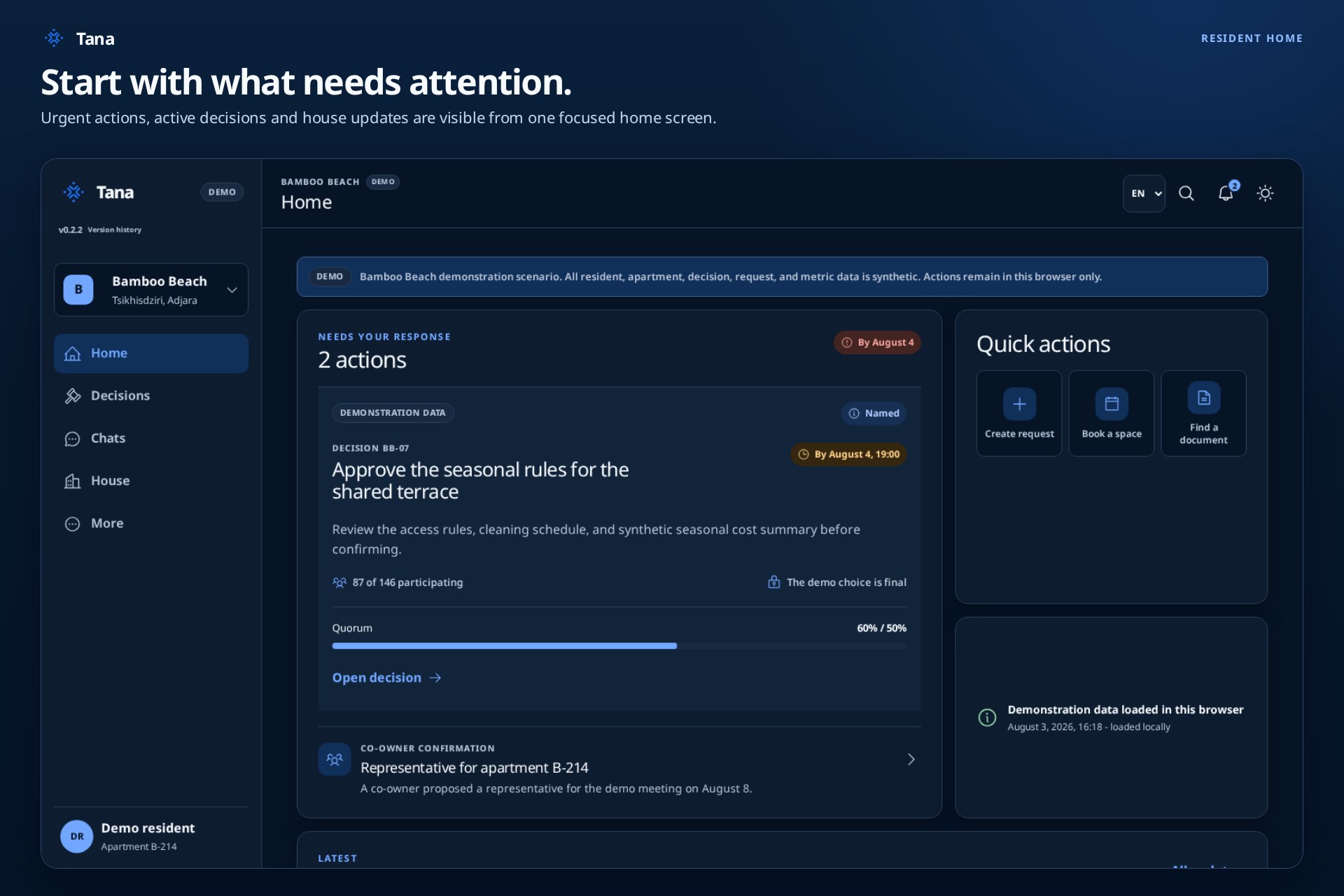
resident-action-dashboard
-
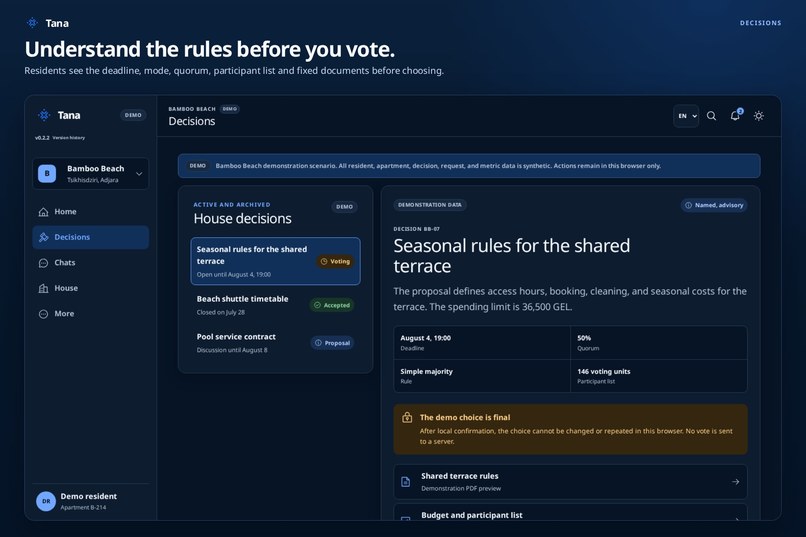
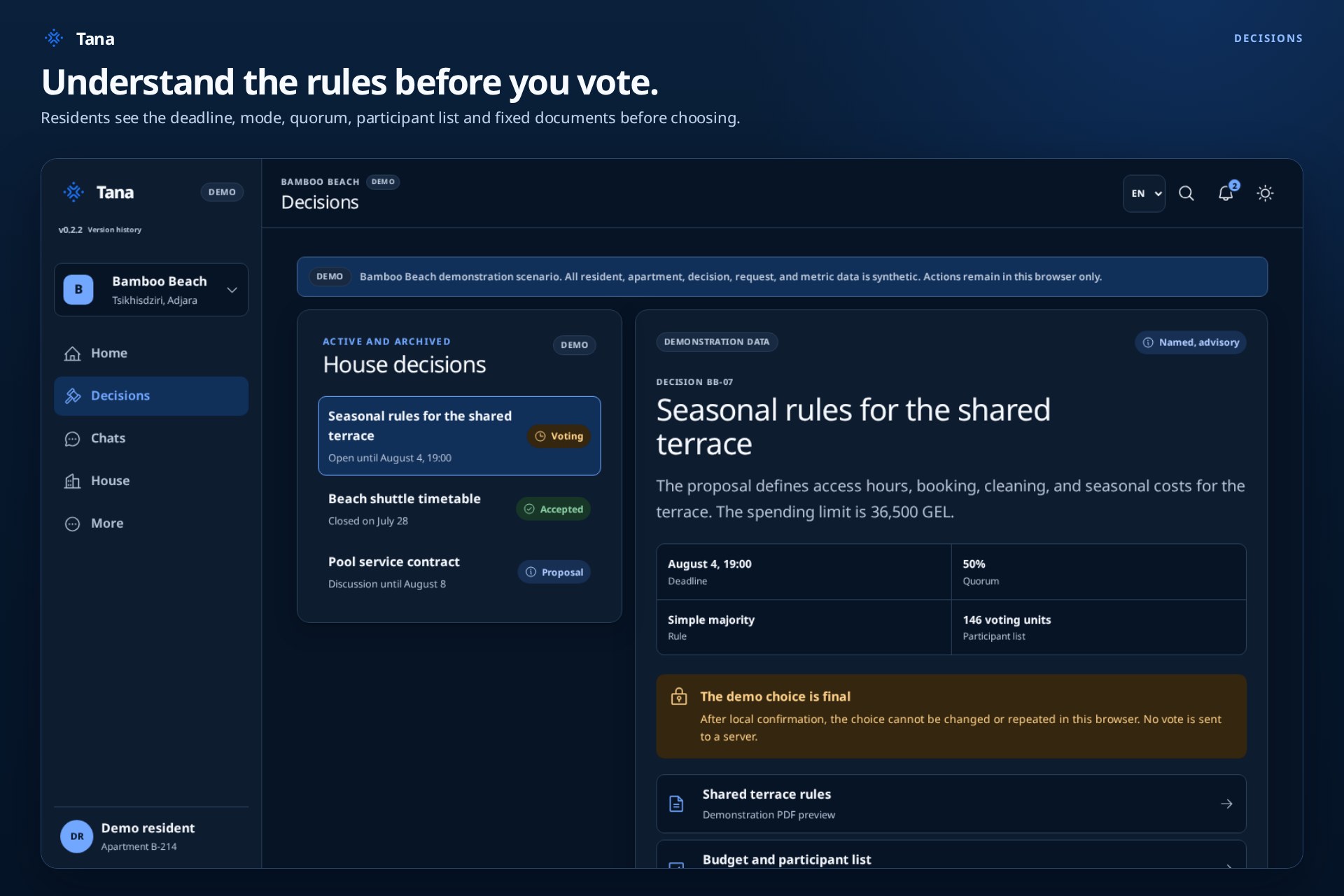
decision-rules-before-voting
-
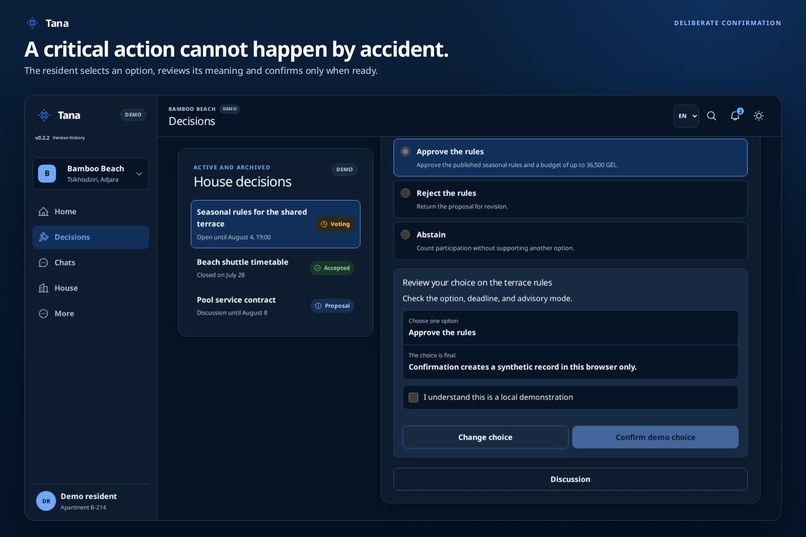
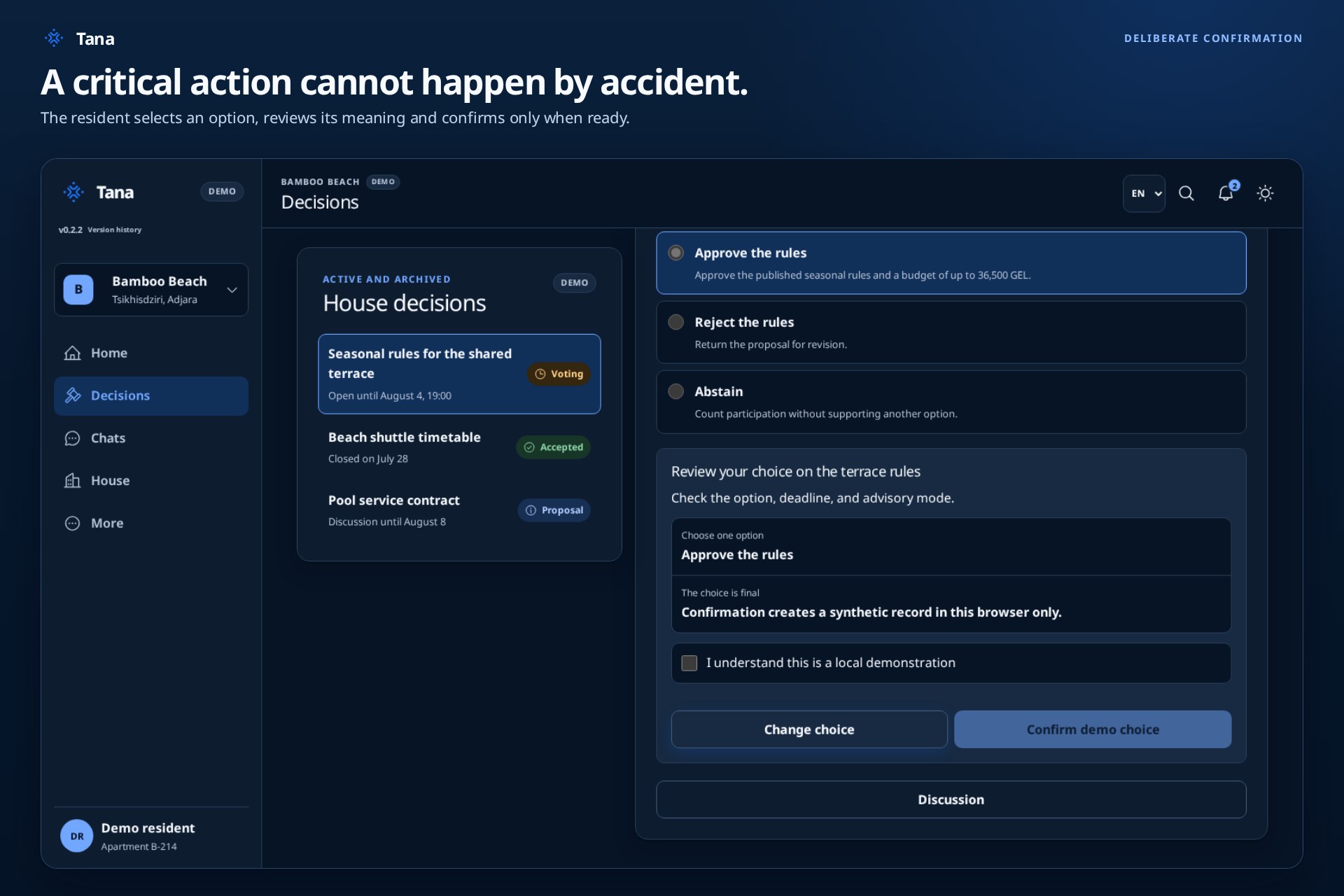
deliberate-vote-confirmation
-
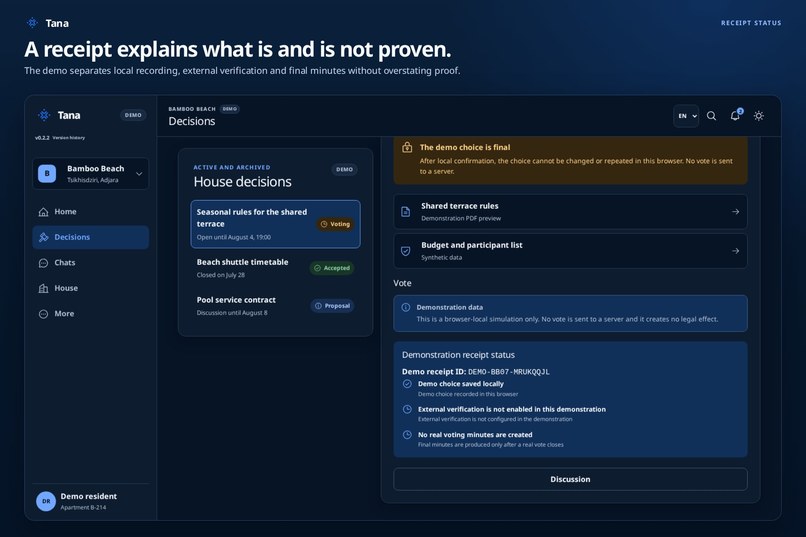
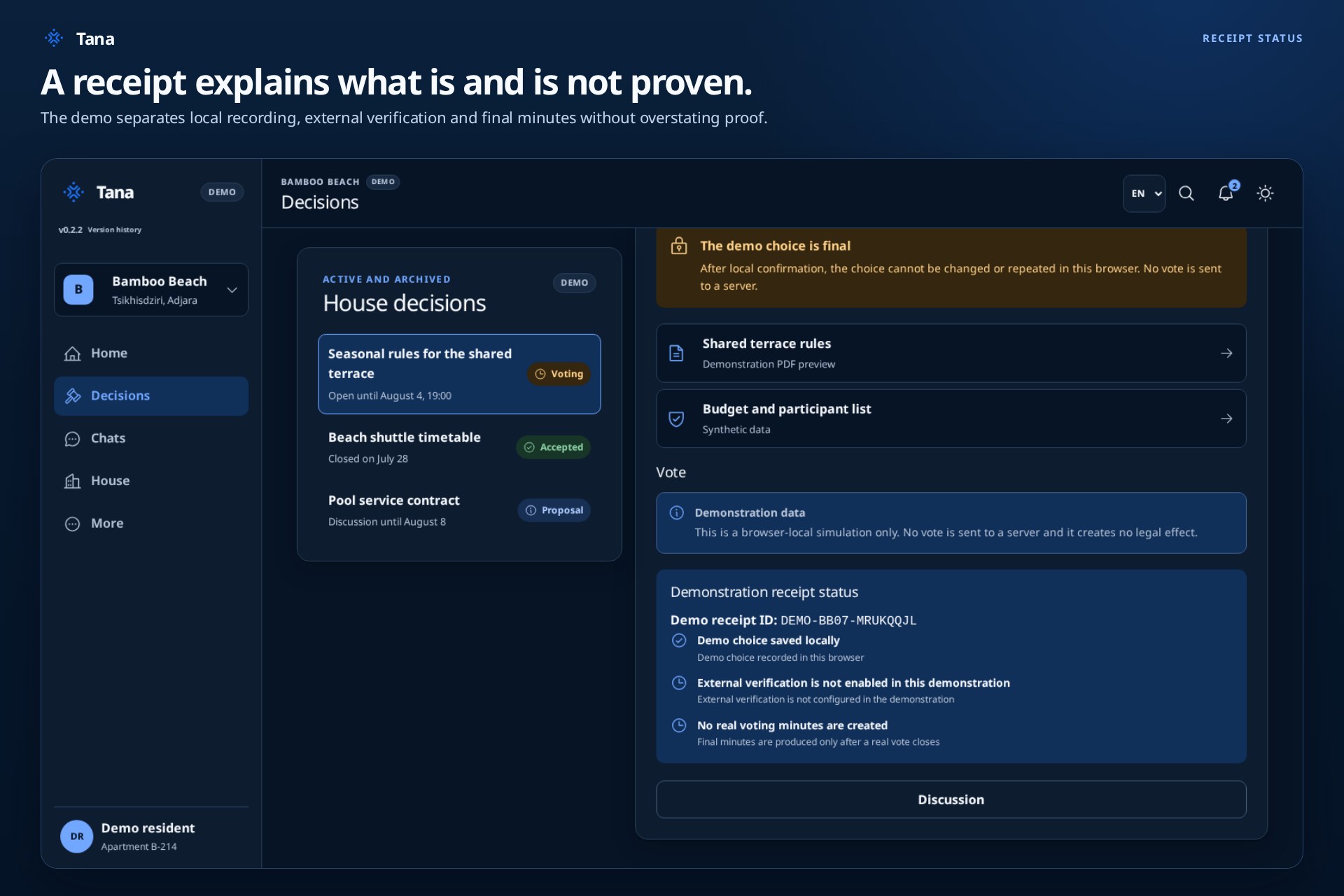
honest-receipt-status
-
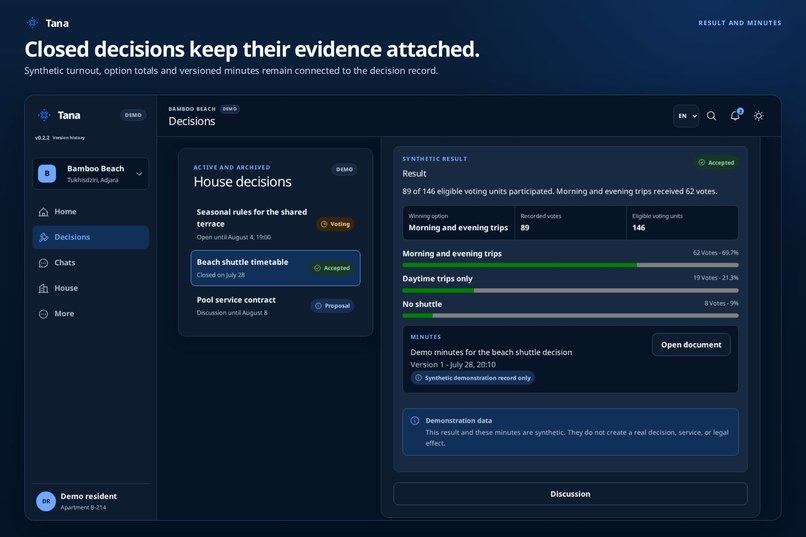
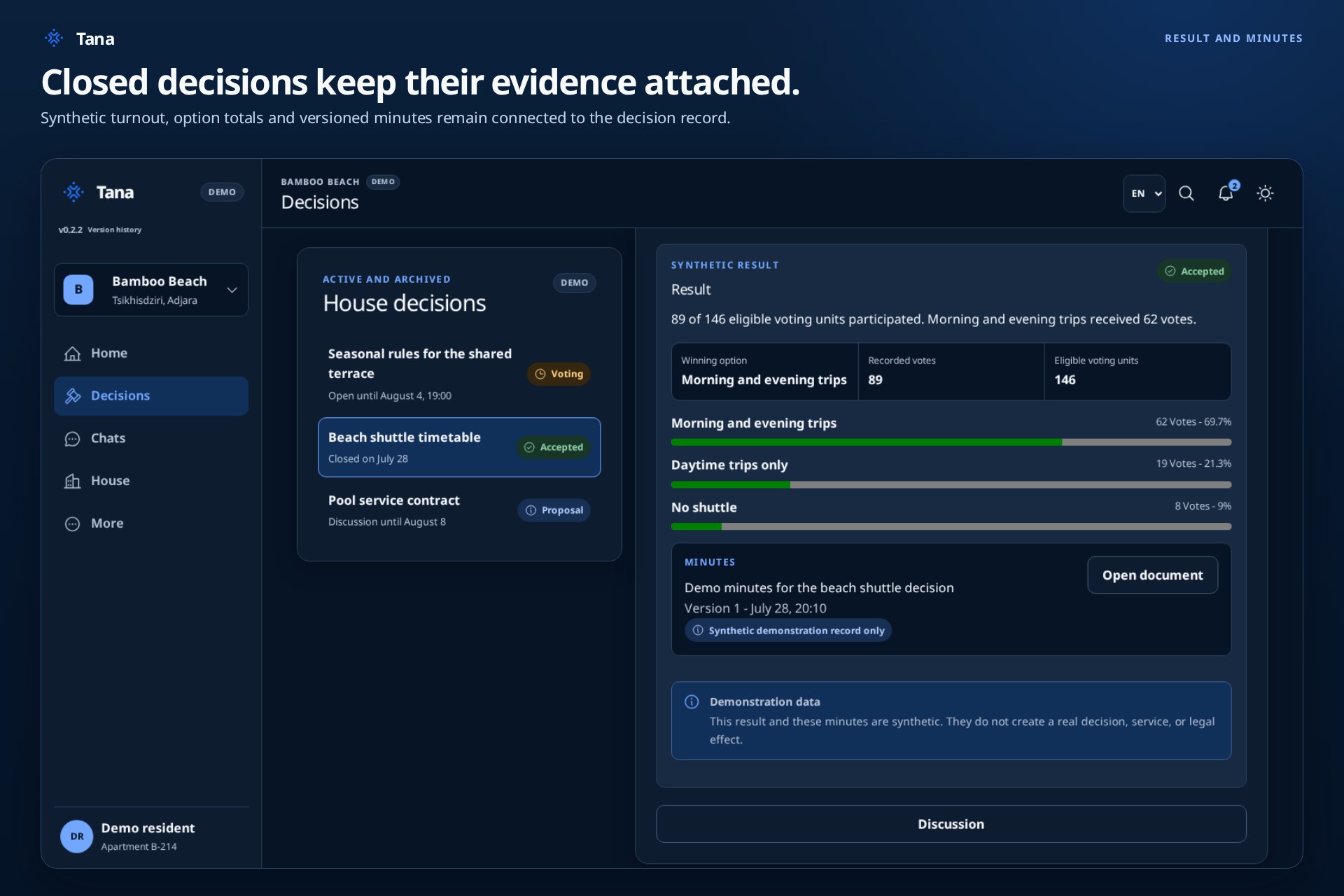
closed-decision
-
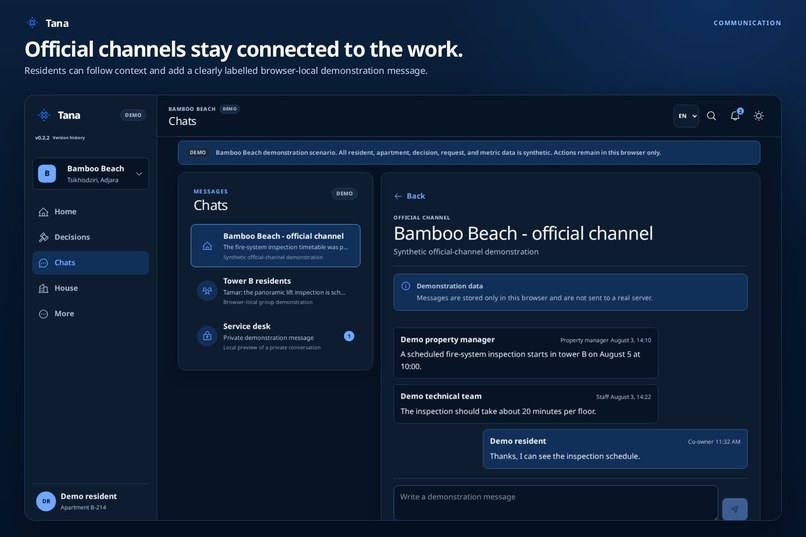
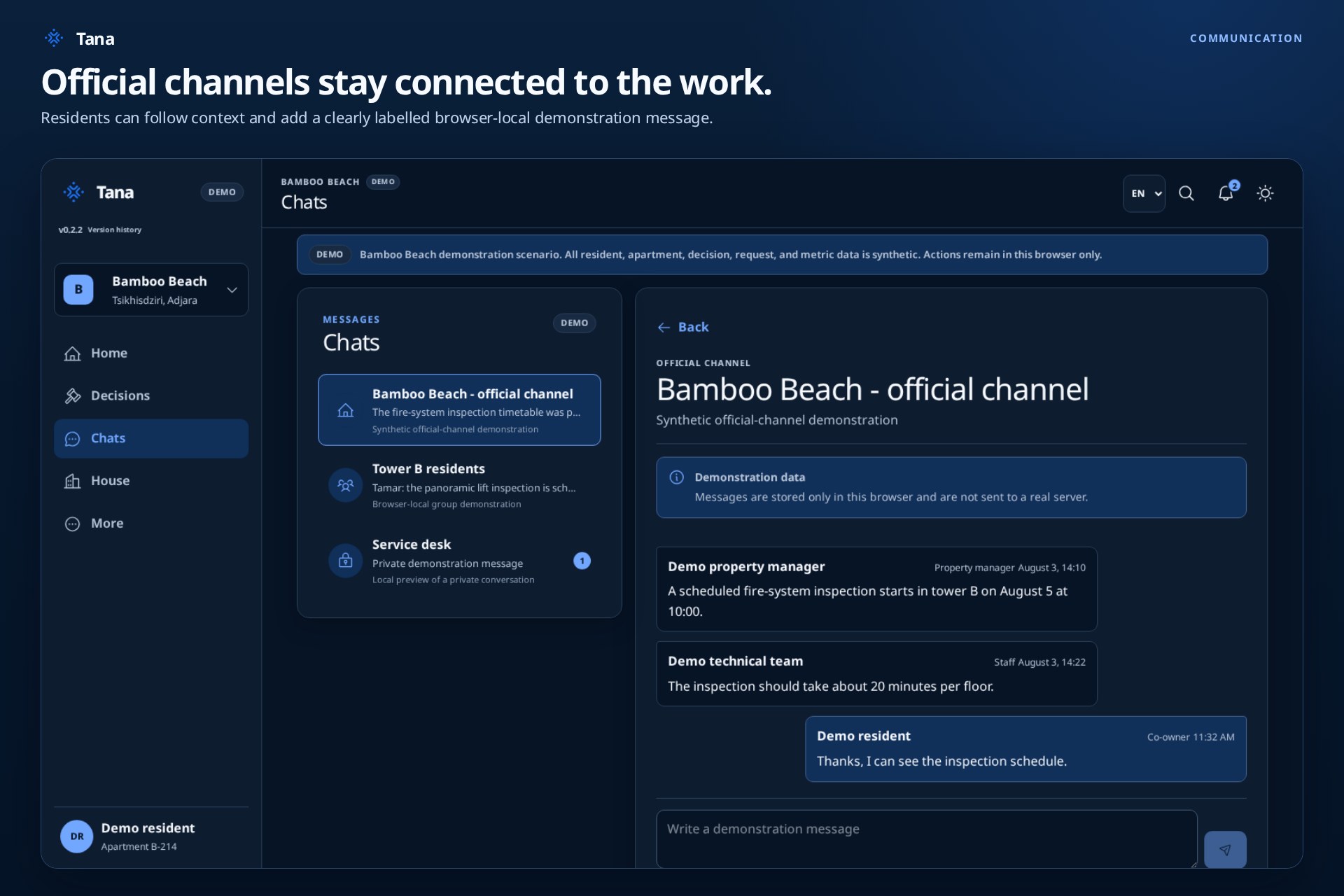
official-resident-chat
-
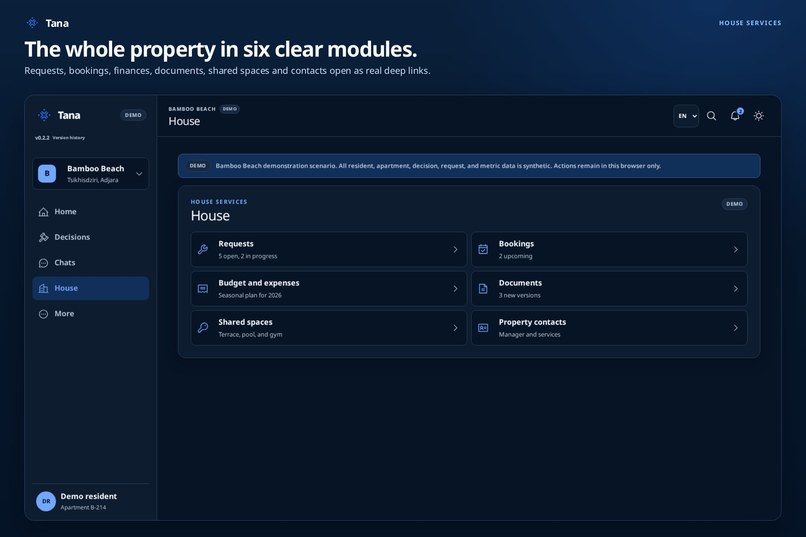
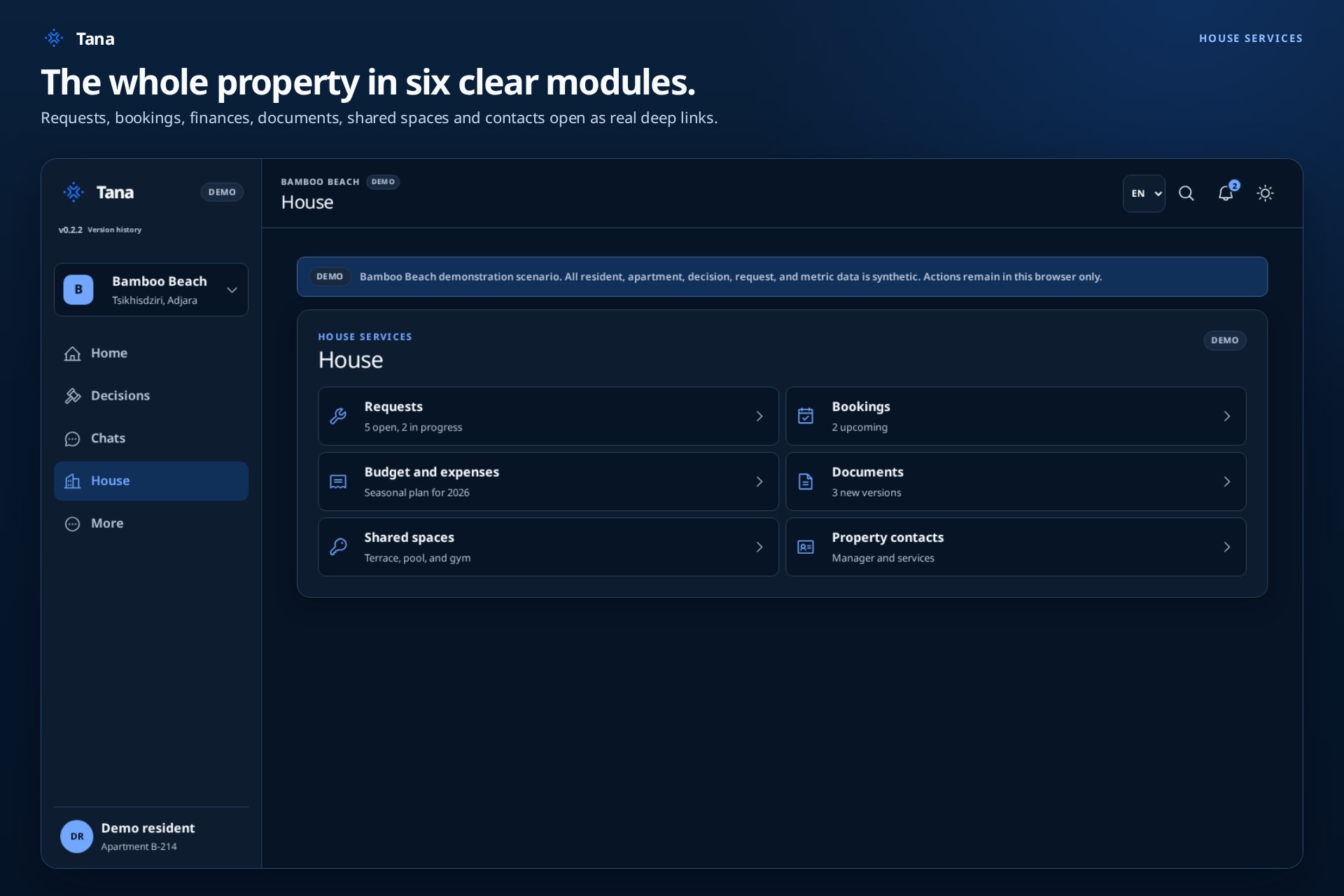
house-modules
-
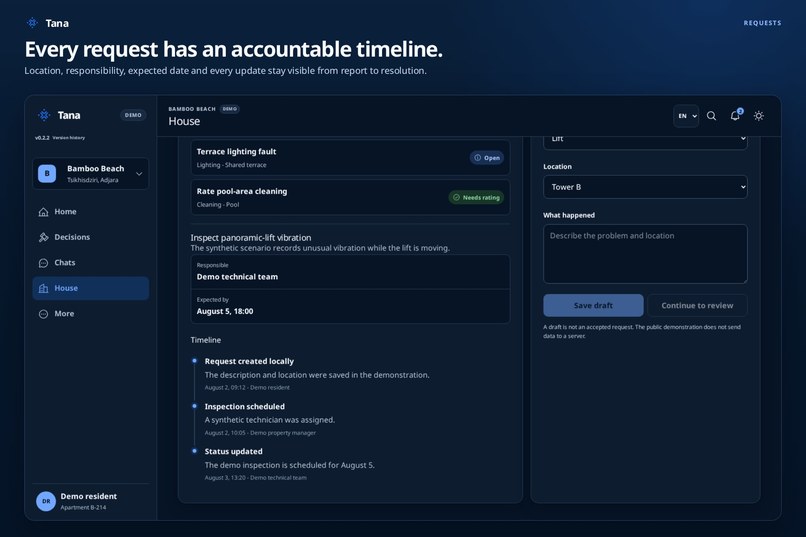
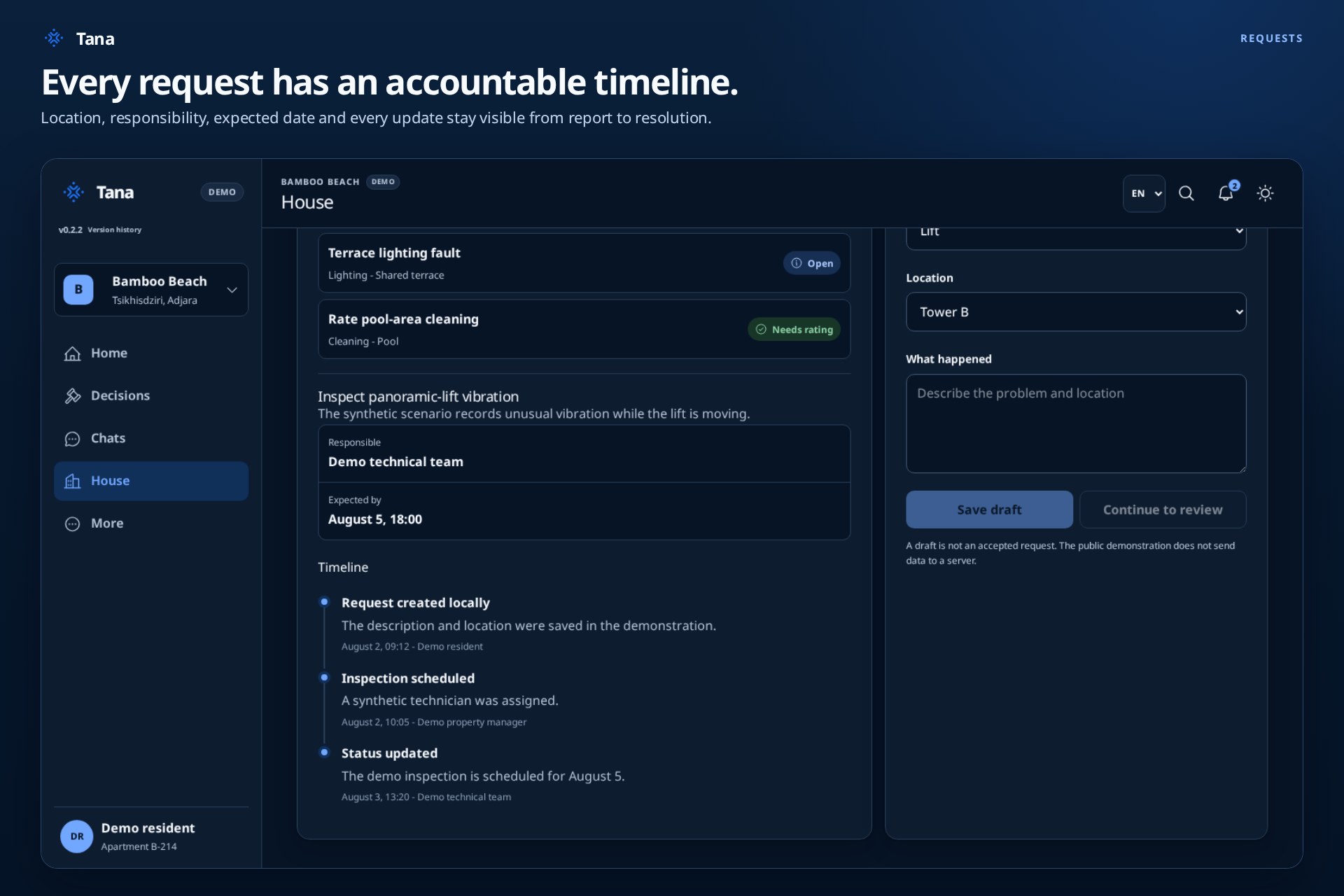
accountable-request-timeline
-
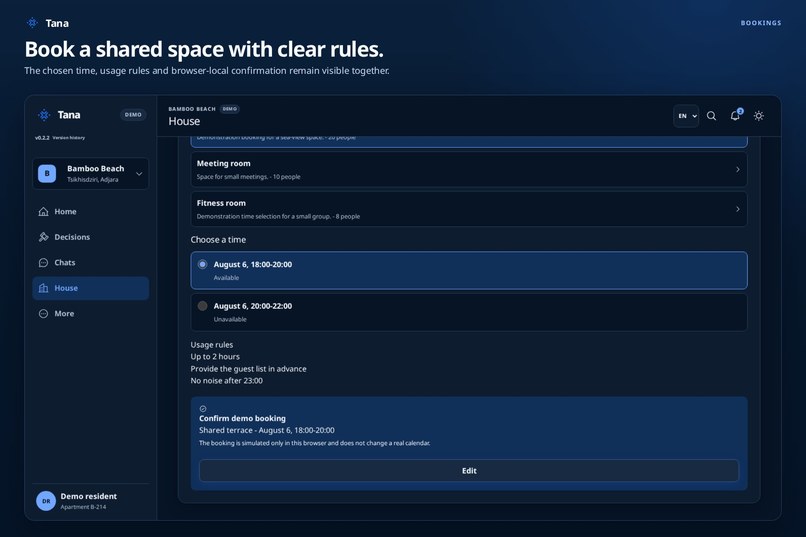
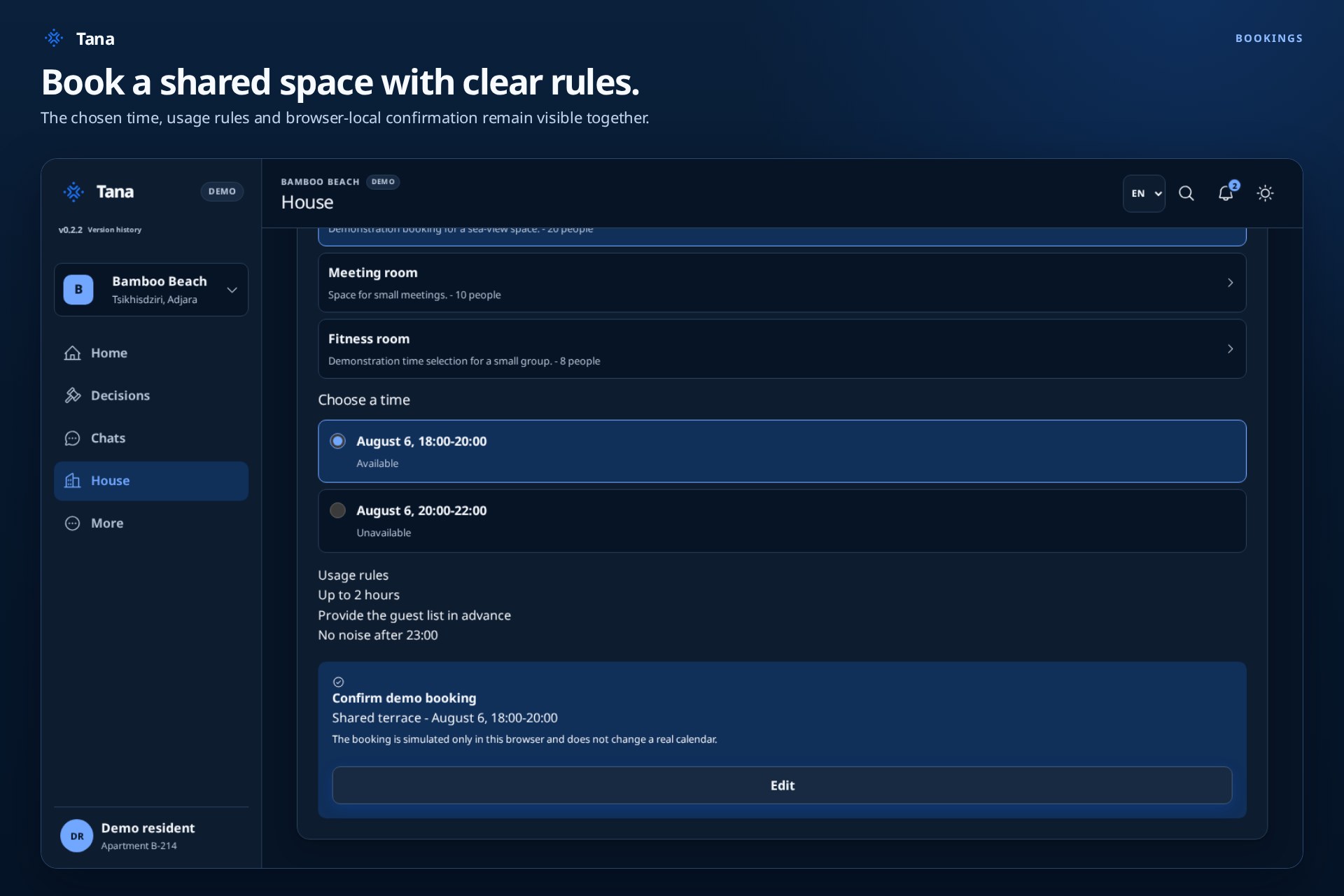
shared-space-booking
-
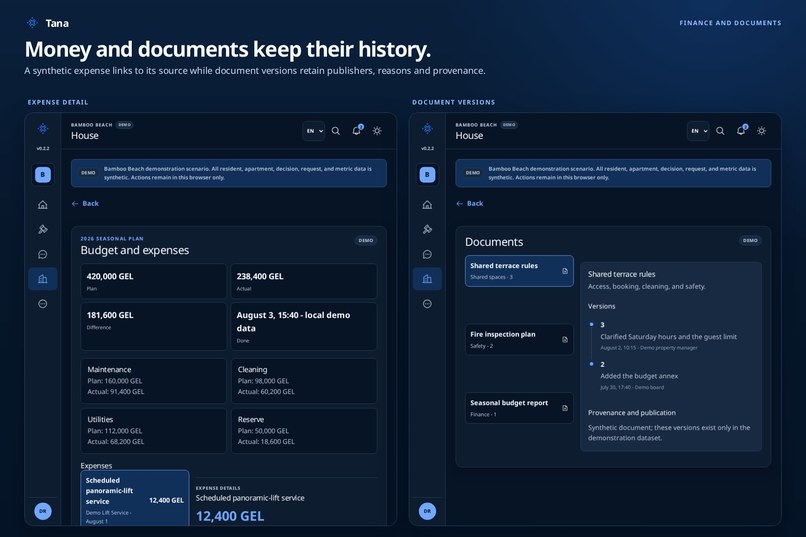
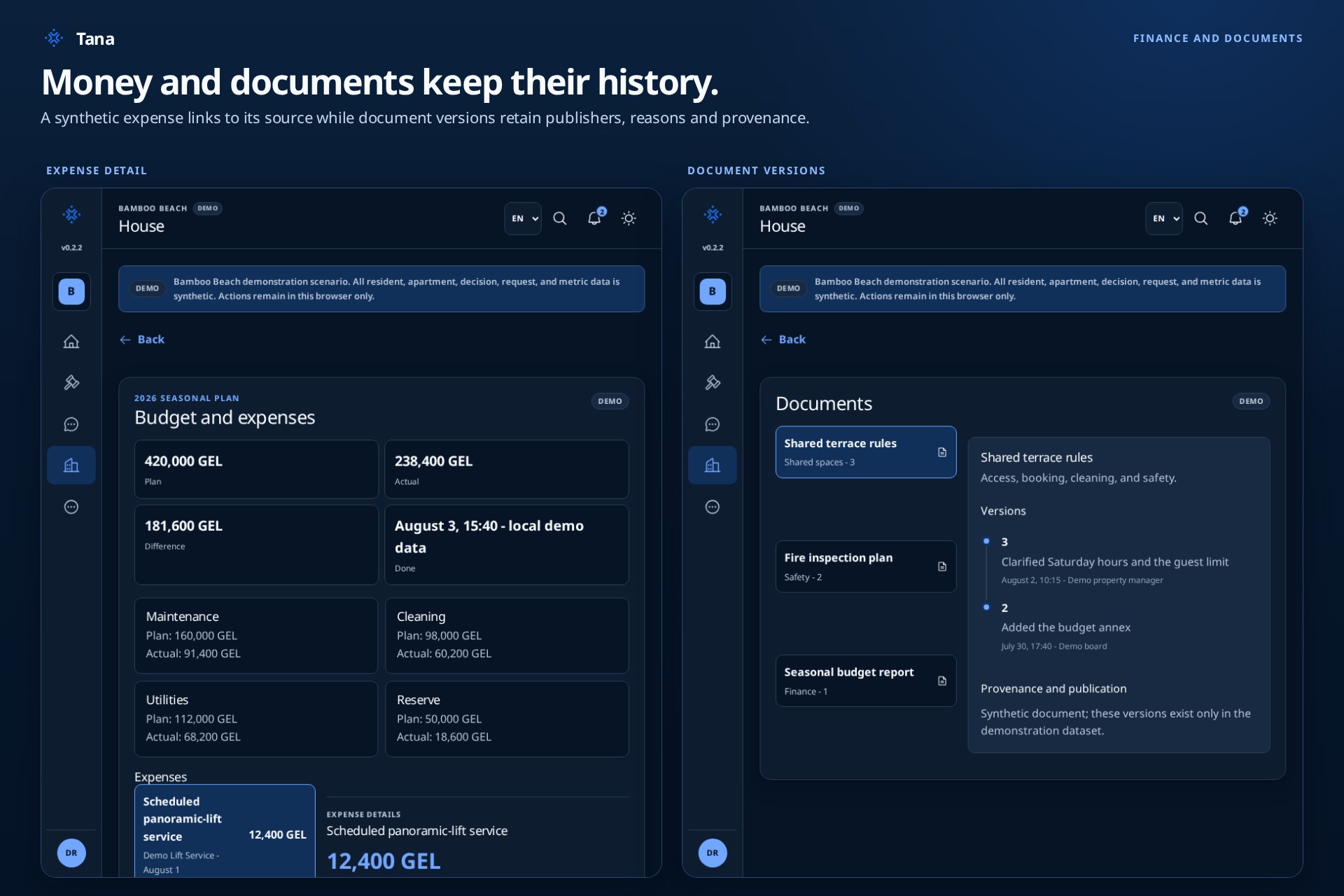
finance-and-documents
-
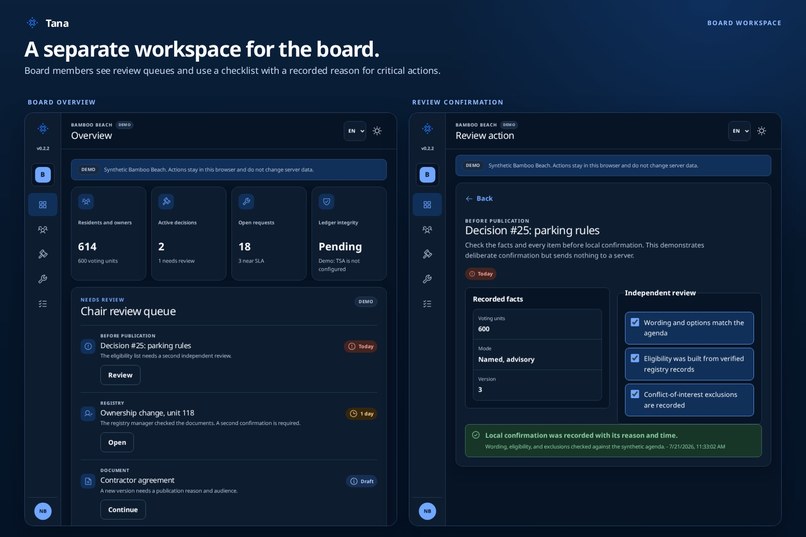
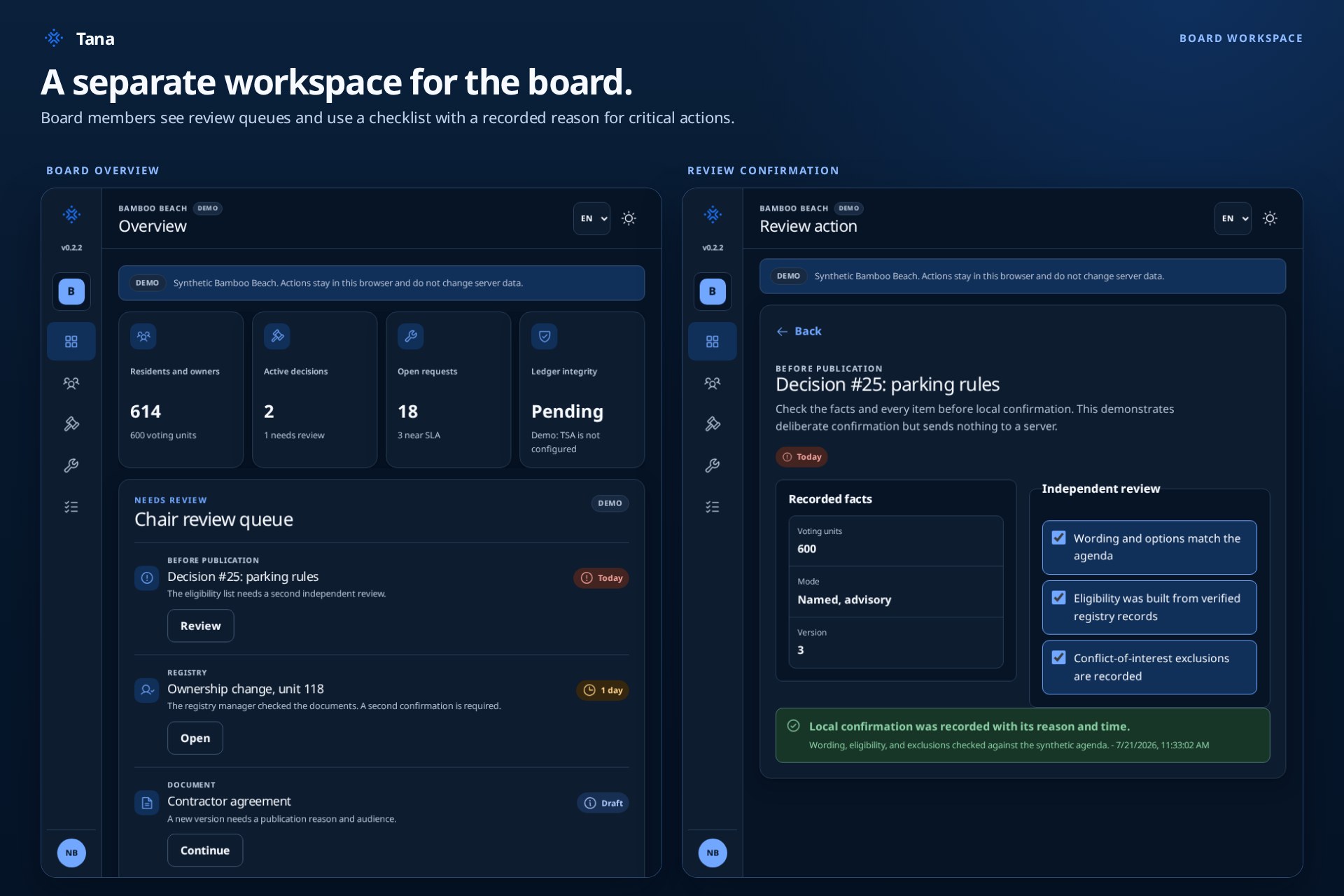
board-workspace
-
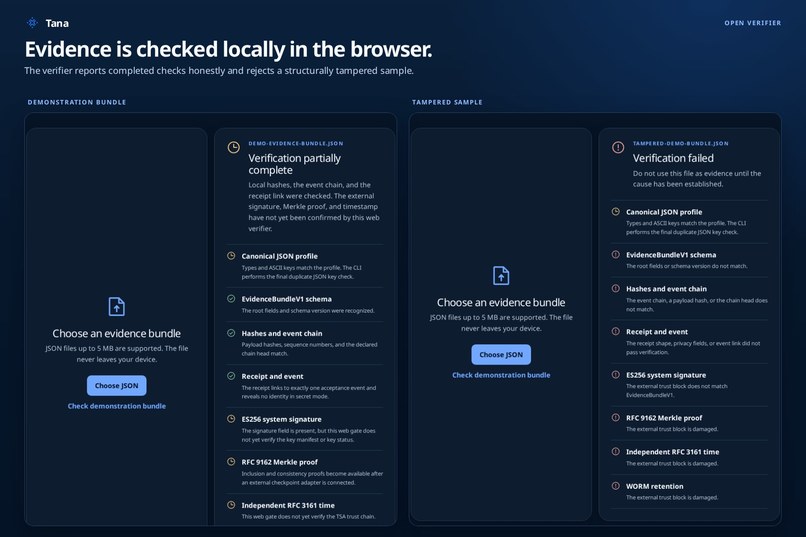
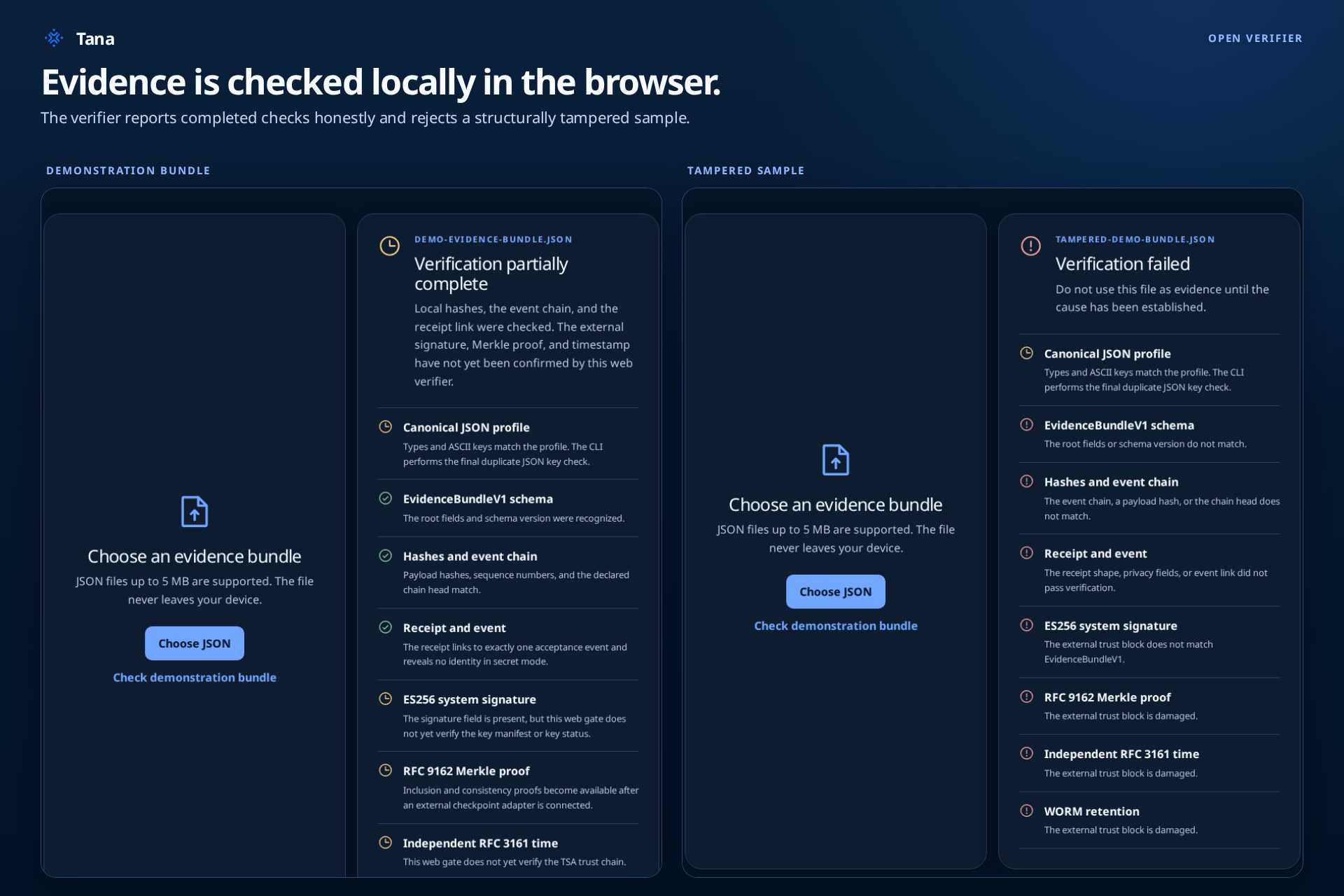
local-evidence-verifier
-
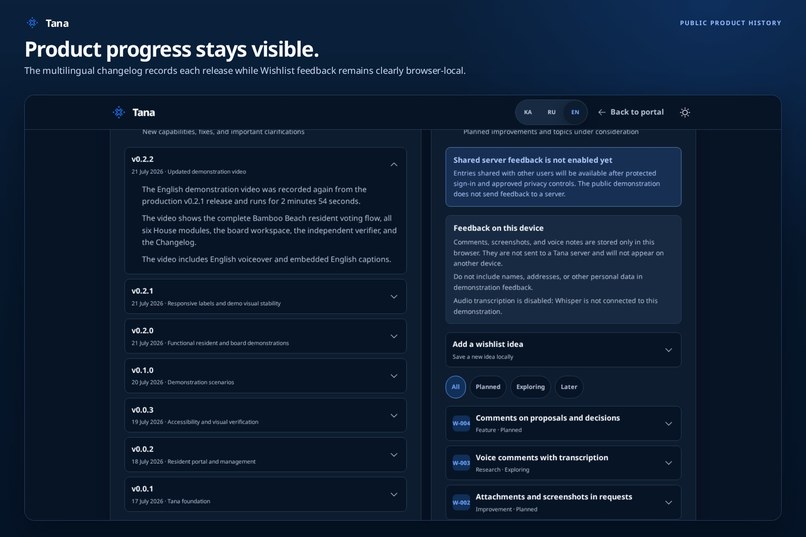
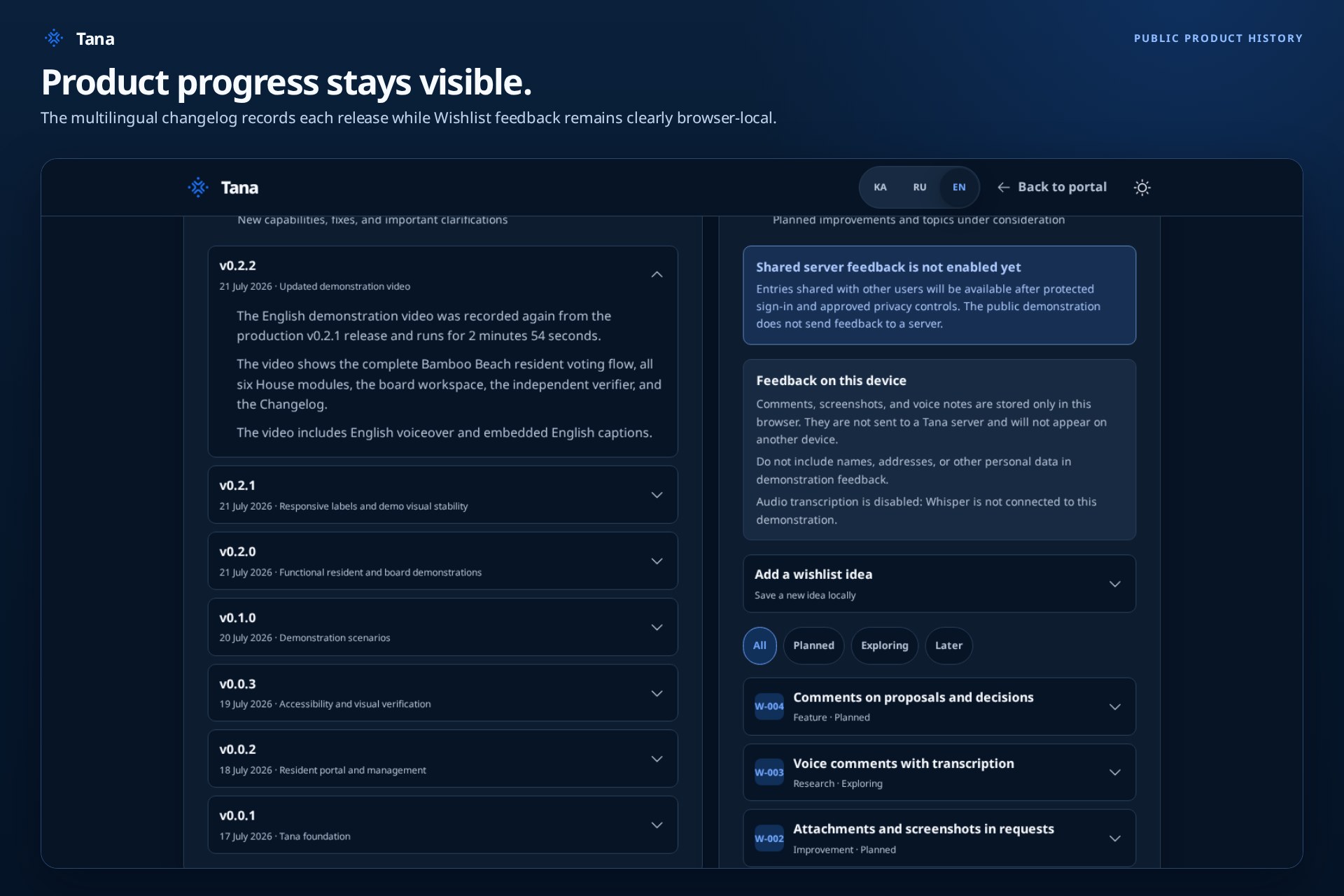
changelog-and-wishlist
Inspiration
tana.ge did not begin as a startup idea. It began with an apartment I bought in Batumi, Georgia.
The building belongs to a cooperative of nearly 600 owners. Whenever a decision had to be made about repairs, shared property, expenses or building rules, the same pattern repeated: endless group chats, conflicting documents, unclear voting results and arguments about who had decided what. Everything is/was managed via Facebook Messenger and/or tons of WhatsApp groups.
Small disagreements regularly escalated into serious conflicts. Even honest decisions created suspicion because residents had no reliable way to verify the process.
The real problem was not that people did not care. The problem was that almost 600 people were expected to trust a fragmented process they could not independently check.
That experience made one thing clear: housing cooperatives in Georgia do not just need another management dashboard. They need a shared source of truth.
What residents actually need
Residents need one simple place where they can:
- understand what decision is being proposed;
- see who published it and under which authority;
- access the exact document version being discussed;
- vote securely and receive proof that their vote was accepted;
- understand how the final result was calculated;
- see budgets, expenses, requests and official announcements;
- verify that published information was not silently replaced later.
It must work on a phone, support Georgian, Russian and English, and remain understandable even for residents who are over 60 or not comfortable with technology.
What tana.ge does
- tana.ge is a mobile-first governance and operations platform for housing cooperatives.
- It brings decisions, voting, documents, budgets, expenses, maintenance requests and communication into one clear system.
Its core promise is simple:
After information is published, it cannot be changed silently. Every correction creates a visible new version, and every critical action can be independently verified.
The prototype demonstrates versioned, tamper-evident records and verifiable receipts. Instead of asking residents to blindly trust an administrator, tana.ge gives them evidence they can check.
The system is multi-tenant from the beginning, allowing other cooperatives to join without creating a separate application for every building.
How we built it
We used Codex as an engineering collaborator throughout the Build Week.
Codex helped us transform a complicated real-world problem into a structured product architecture, threat model, permission system and mobile-first user experience. It supported the implementation of the Django backend, React PWA, tenant isolation, voting workflow, evidence journal, independent verifier, tests and infrastructure documentation.
The platform is designed around several trust principles:
- tenants are isolated by verified domains and database security policies;
- published records are versioned instead of overwritten;
- critical actions are idempotent and auditable;
- secret ballots are separated from participation records;
- residents receive understandable verification states;
- offline drafts are never presented as accepted server actions;
- the interface explains what has been proven and what has not.
For production, the evidence system is designed to support externally witnessed timestamps, locked evidence storage and future public blockchain anchoring without publishing residents’ identities or ballot choices.
Challenges
The hardest challenge was not building a voting button. It was designing a process people could genuinely trust.
We had to think about shared ownership, proxies, quorum rules, secret ballots, ownership changes, document corrections and the possibility that an administrator could have legitimate access but still attempt to alter history.
Another challenge was balancing technical verification with simplicity. Cryptographic hashes and audit chains mean little to most residents. The interface therefore translates them into three understandable states:
- Your action was received.
- It was anchored in the external record.
- It was included in the final protocol.
We also had to design for three languages, mobile devices, accessibility and residents with very different levels of digital experience.
What we learned
We learned that transparency is not a visual style. Trust does not come from glass effects, attractive dashboards or a green checkmark. It comes from giving every important action an author, a time, a reason, a version and evidence that can be checked independently.
We also learned that the strongest technology is useful only when ordinary residents can understand what it is telling them.
What is next
The next step is to test tana.ge with the cooperative that inspired it: nearly 600 apartment owners in Batumi (Tsikhisdziri).
Before real voting begins, we will complete Georgian legal review, human translation review, security testing and usability sessions with older residents.
After the pilot, tana.ge can become shared infrastructure for housing cooperatives across Georgia, replacing paper, fragmented chats and blind trust with decisions that people can actually verify. Next main development step is to add blockchain DAO for even more trust and transparency.
How we plan to use Codex and GPT in the future
Codex will remain an engineering collaborator as tana.ge develops from a functional prototype into a production platform. We plan to use it to help extend tenant-safe workflows, strengthen automated tests, review accessibility and permission boundaries, document new modules and integrate future capabilities without weakening the platform’s audit trail.
We also plan to integrate GPT-5.6 as an in-product assistant. Many apartment owners in Georgia are foreign citizens, so cooperative management teams currently have to prepare every decision, announcement and explanation separately in Georgian, Russian and English.
The future assistant will be able to:
- create aligned Georgian, Russian and English drafts from one canonical source;
- translate corrections consistently across all language versions;
- rewrite complex administrative language in a form residents can understand;
- help the management team structure proposals, agendas and announcements;
- identify missing explanations, documents or decision criteria before publication;
- act as an internal advisor when the board asks how a process or communication could be designed more clearly.
AI-generated content will never be published silently. An authorized person must review and approve every official version. The system will preserve the original source, generated translations, model version, reviewer, approval time and subsequent corrections in the visible history.
The assistant will not vote, determine outcomes or make decisions on behalf of the cooperative. It will support people with translation, structure and understandable communication while responsibility remains with the authorized human role.
This is planned functionality and is not active in the current public prototype.
Built With
- celery
- codex
- django
- github
- gsap
- matrix
- multi-tenant
- nginx
- openapi
- playwright
- pnpm
- postgresql
- pwa
- python
- react
- synapse
- tailwind
- typescript
- unfold
- uv
- valkey
- vitest
- webauthn


Log in or sign up for Devpost to join the conversation.