-
-
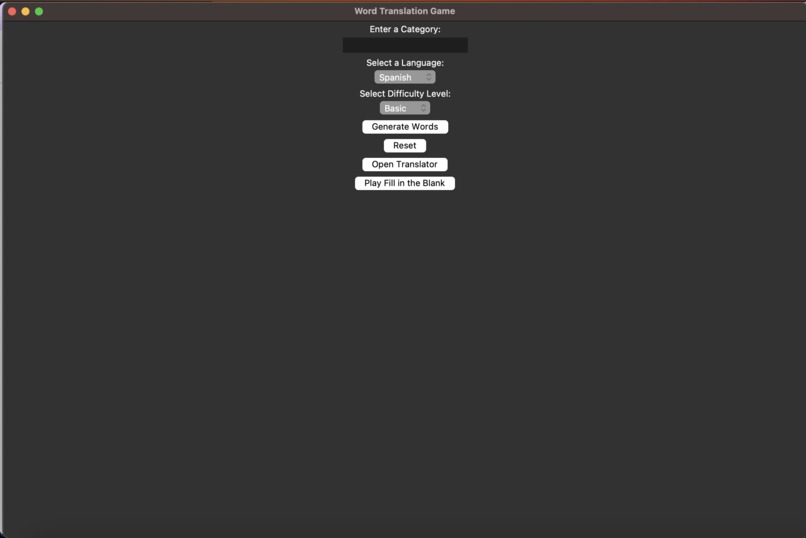
startup menu
-
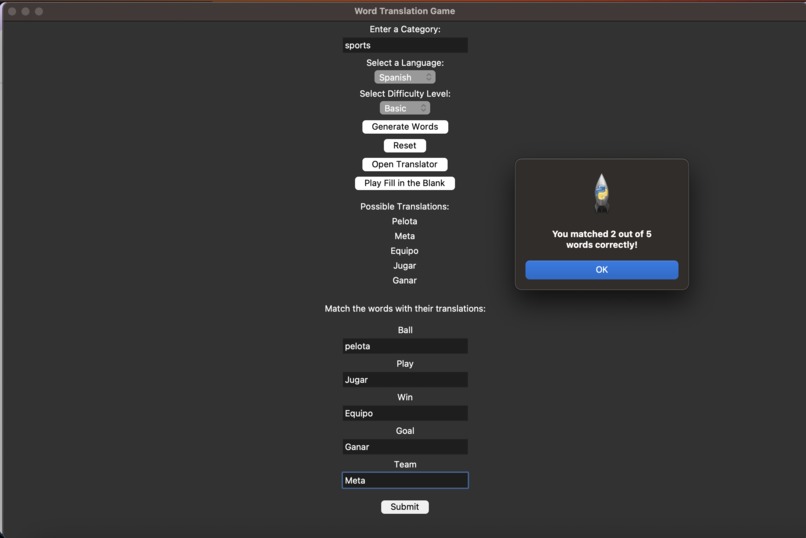
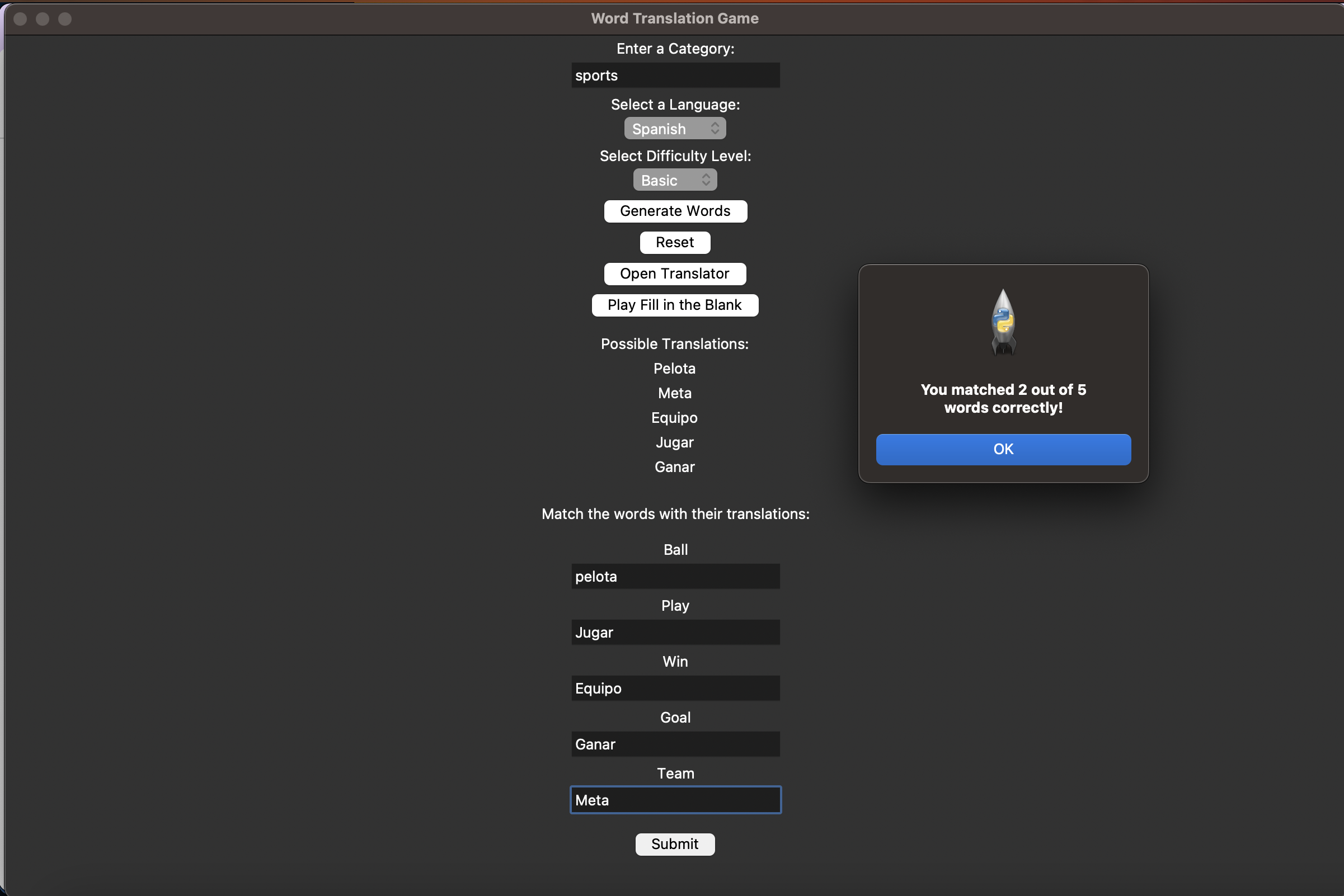
matching game + results (basic difficulty)
-
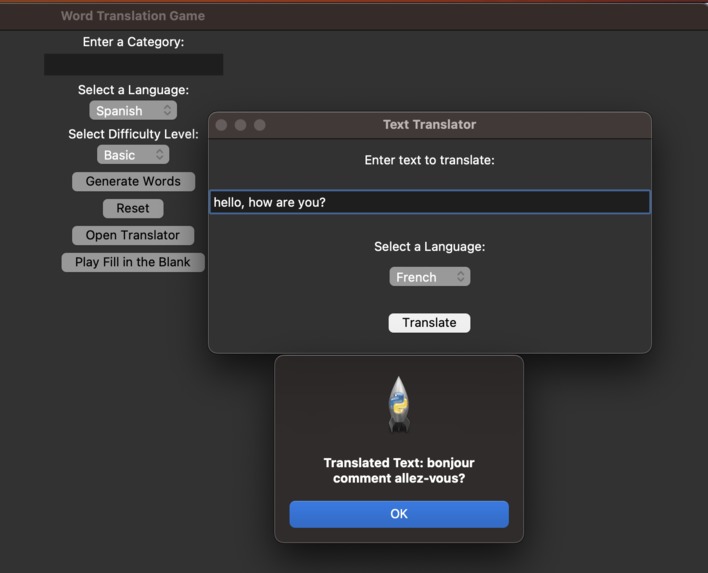
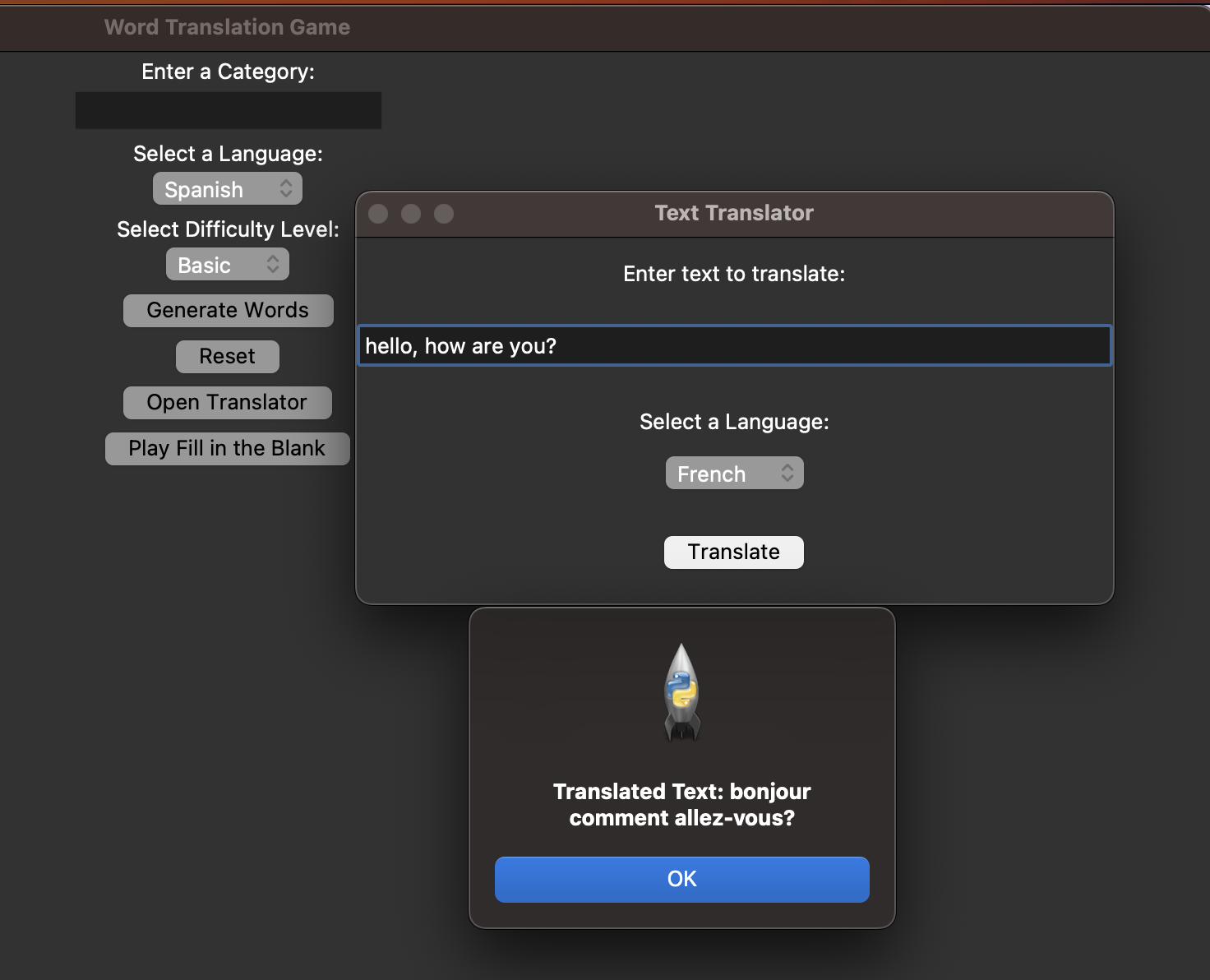
translator function
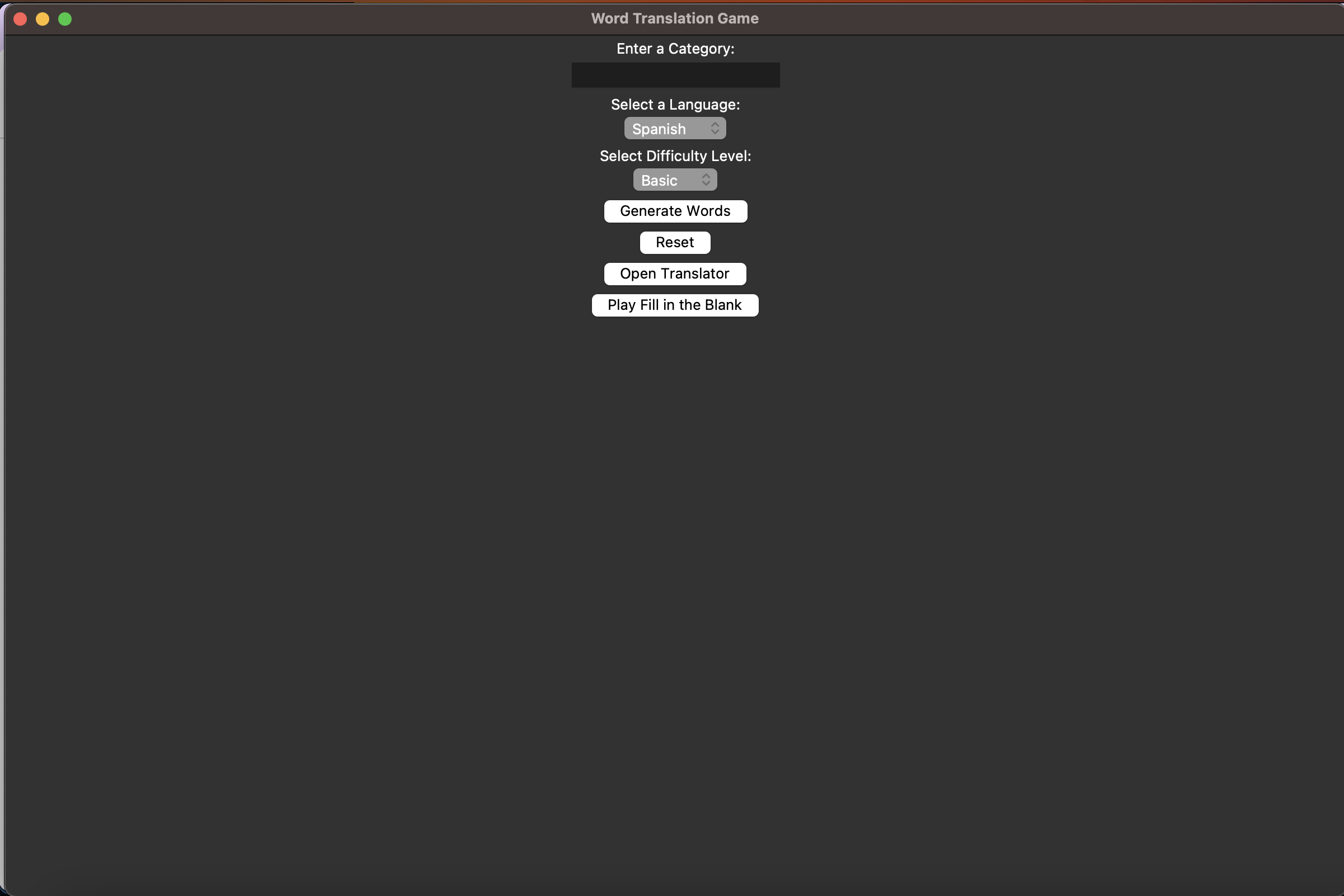
Inspiration
A member of our team is an immigrant from Japan who moved to the US at 7 years old. Knowing only a few English phrases and words, he struggled in school unable to understand the language, and adjusting into a completely new environment. The goal of the project is to provide those who are trying to learn a new language with lessons tailored to their context, rather than learning words and phrases that may not have immediate use in the environment they are in.
What it does
Our software provides custom lessons tailored to the field of interest of the user, allowing users to learn words and phrases relevant to the context of their field of interest. With different difficulty levels, our program ensures a progressive approach to learning, expanding and enhancing our users language.
How we built it
We started off by implementing our APIs. The two biggest aspects of our projects were the ideas of dynamic user input and translation, so we searched for those. The Google-cloud-translate API seemed to be the simplest and most efficient for the translation aspect. In terms of the chat AI model, we tried many things (it was difficult on a free budget), and ended up using Gemini 1.5 Pro through Vertex AI. Once we developed these, we then had to move on to the coding aspect. We were already using Python as it felt easiest, so we used Tkinter to develop the interface for python. This was used for buttons, drop-downs, etc. to add our game modes and settings. Through lots of logic as well as some prompts to the AI, we developed our (more or less) complete program.
Challenges we ran into
The biggest challenge in developing our software was figuring out the set up and different functions of the APIs that we incorporated in our program. Through deep research and analysis of the documentations of the APIs we were able to conquer this wall and develop our software. We also could not get our fill-in-the-blank game to end up working.
Accomplishments that we're proud of
We managed to successfully integrate AI-powered word generation tailored to user-selected categories, enhancing user learning experiences. We also overcame some challenges in API integration to create a seamless transition across the five different languages.
What we learned
We learned a lot about API usage. It is much more confusing than we anticipated, especially for chatbots. We also learned how specific you must be for ai prompts, as it often made mistakes. It did show how efficient these can be however if you use them in the right way.
What's next for TAMU Thematic Translator
We hope to improve the UI and implement new features and lesson plans to expand its possibilities through more minigames, difficulty accessibility, and language options. This includes the "fill-in-the-blank", as well as future games, such as conversation starters and speech to text features.


Log in or sign up for Devpost to join the conversation.