-
-
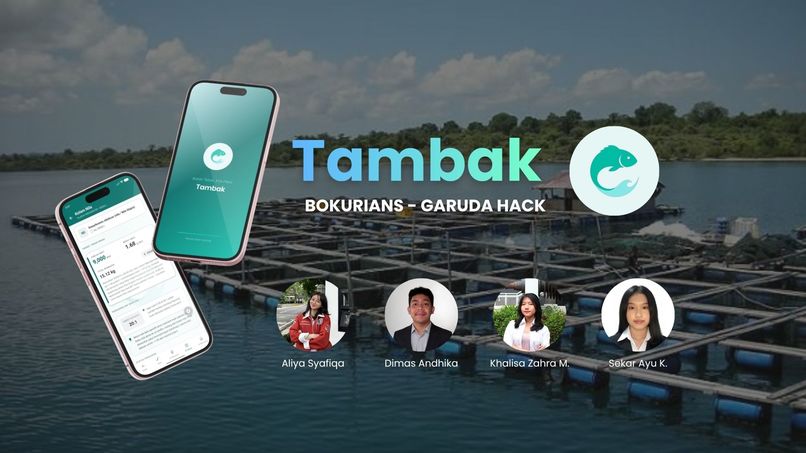
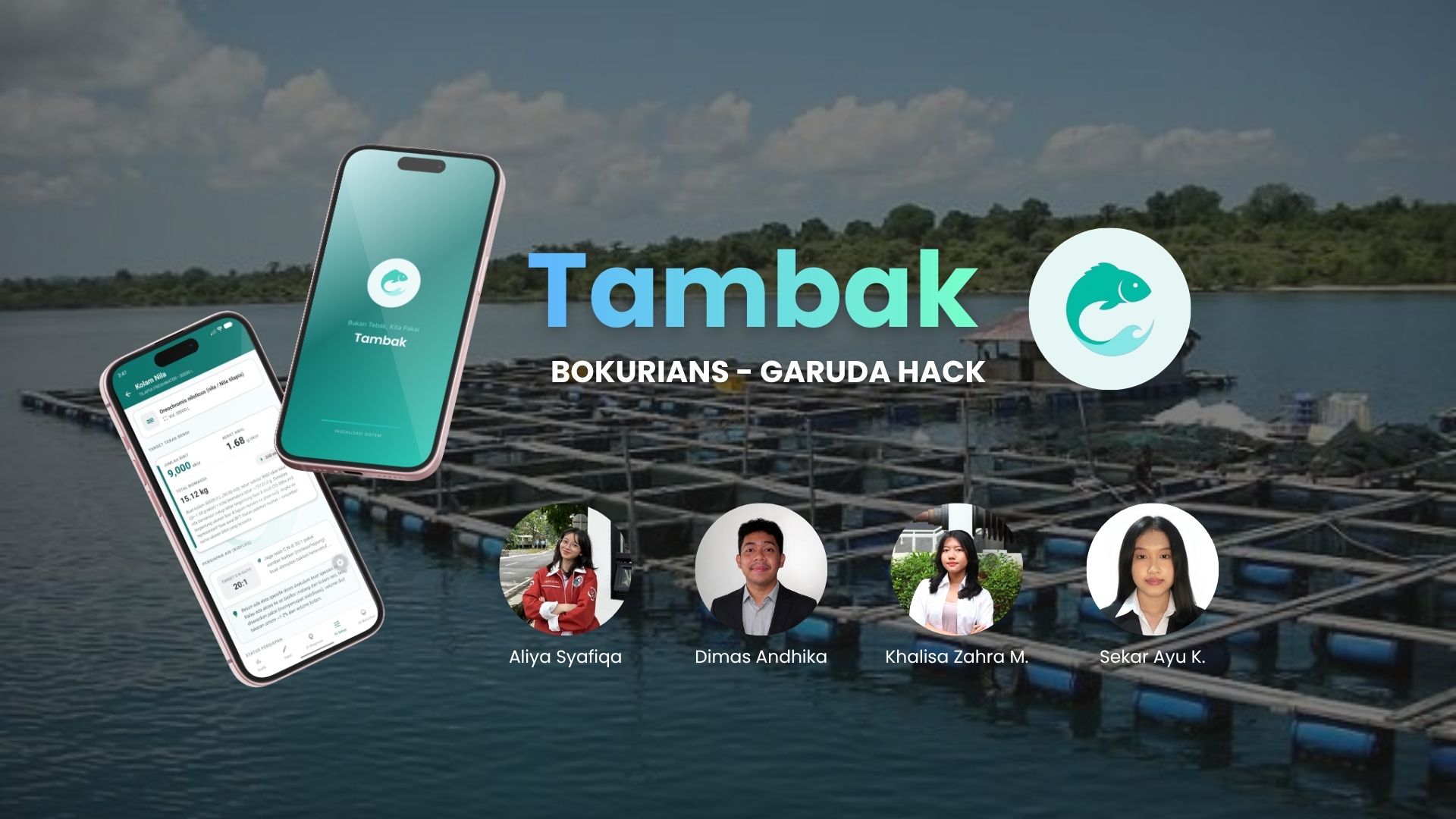
Profile Tambak
-
Landing Page
-
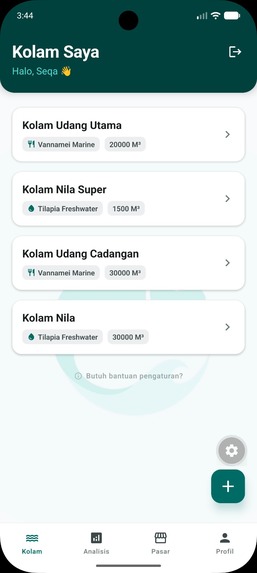
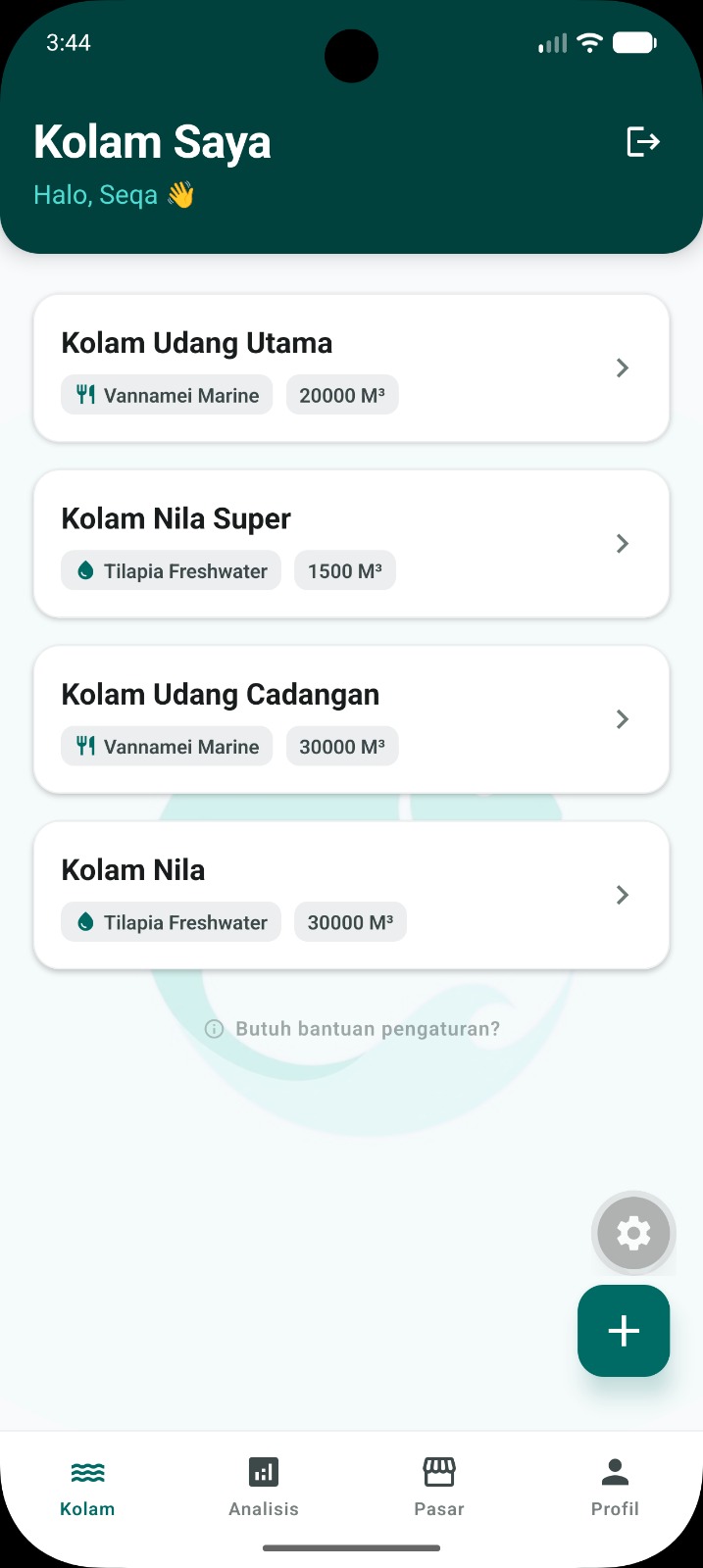
Pond List
-
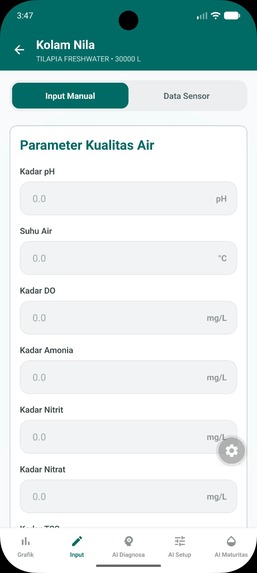
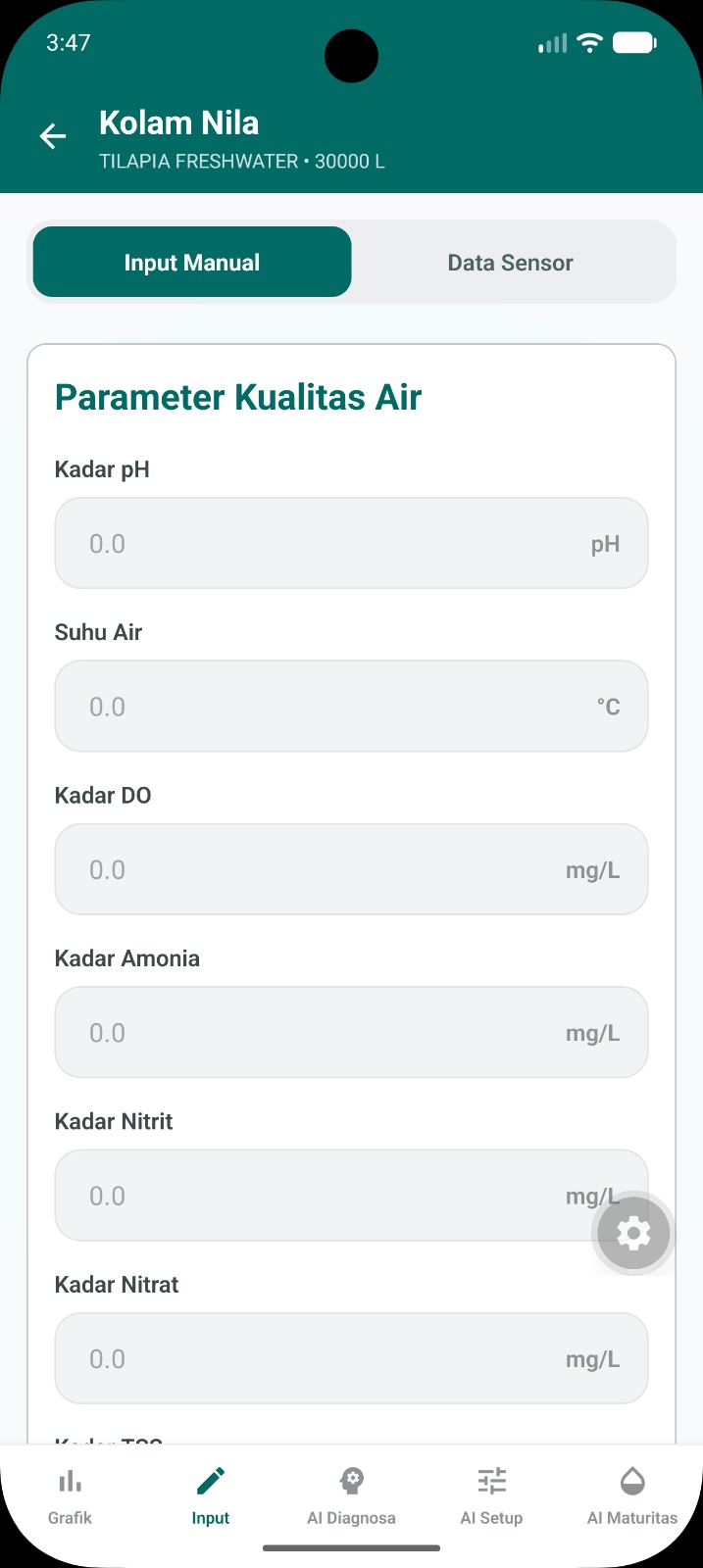
Manual Input
-
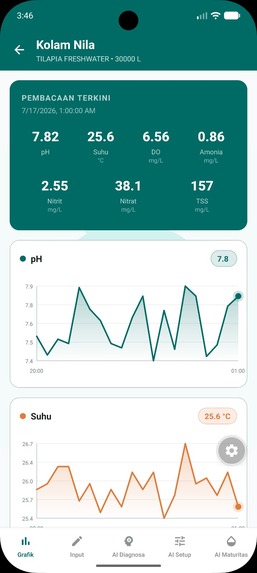
Graph
-
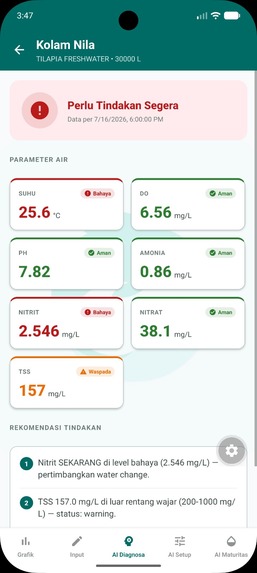
Monitoring
-
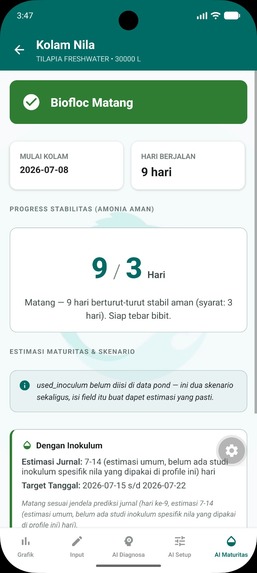
Water Maturity
-
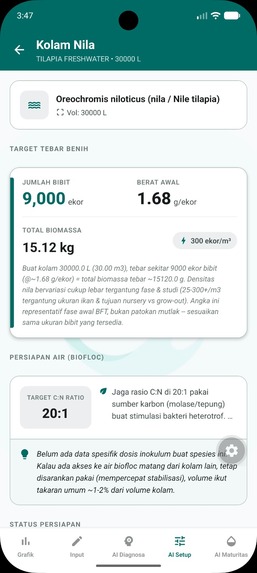
AI Recommendation
Inspiration
Indonesia is one of the world's largest aquaculture producers, yet the vast majority of its smallholder shrimp and fish farmers still operate without any scientific monitoring tools. Biofloc Technology (BFT) holds extraordinary promise — it reduces water exchange by over 90%, recycles nitrogen waste into live bacterial feed, and can dramatically improve Feed Conversion Ratios (FCR). In a standard 50 m³ biofloc pond, a well-managed crop of Penaeus vannamei or Oreochromis niloticus can be transformative for a family's livelihood.
But BFT is biologically unforgiving. The moment a farmer stocks seed into an immature bacterial system — because they judged readiness by eye — up to 80% of that seed stock can die within 7 days from ammonia toxic shock. An unmonitored nitrite bloom later in the cycle can silently devastate a healthy crop. A single crop failure costs a smallholder farmer up to Rp 15,000,000 in lost seed and feed, with no insurance, no early warning, and no explanation.
We saw this not as an agricultural failure, but as an information failure. Farmers make decisions on guesswork because scientific instruments are expensive, biofloc research is locked behind journal paywalls, and no one has translated peer-reviewed aquaculture science into a tool they can actually use in the field.
Tambak was built to close that gap. We believe every farmer — regardless of education or budget — deserves the same quality of insight that a professional aquaculture consultant would provide. We wanted to give them a silent expert in their pocket: one that watches their pond 24/7, speaks their language, and tells them exactly what to do and when.
What it does
Tambak is a full-stack, AI-powered biofloc pond monitoring and decision-support system designed specifically for smallholder aquaculture farmers in Indonesia.
Core Capabilities
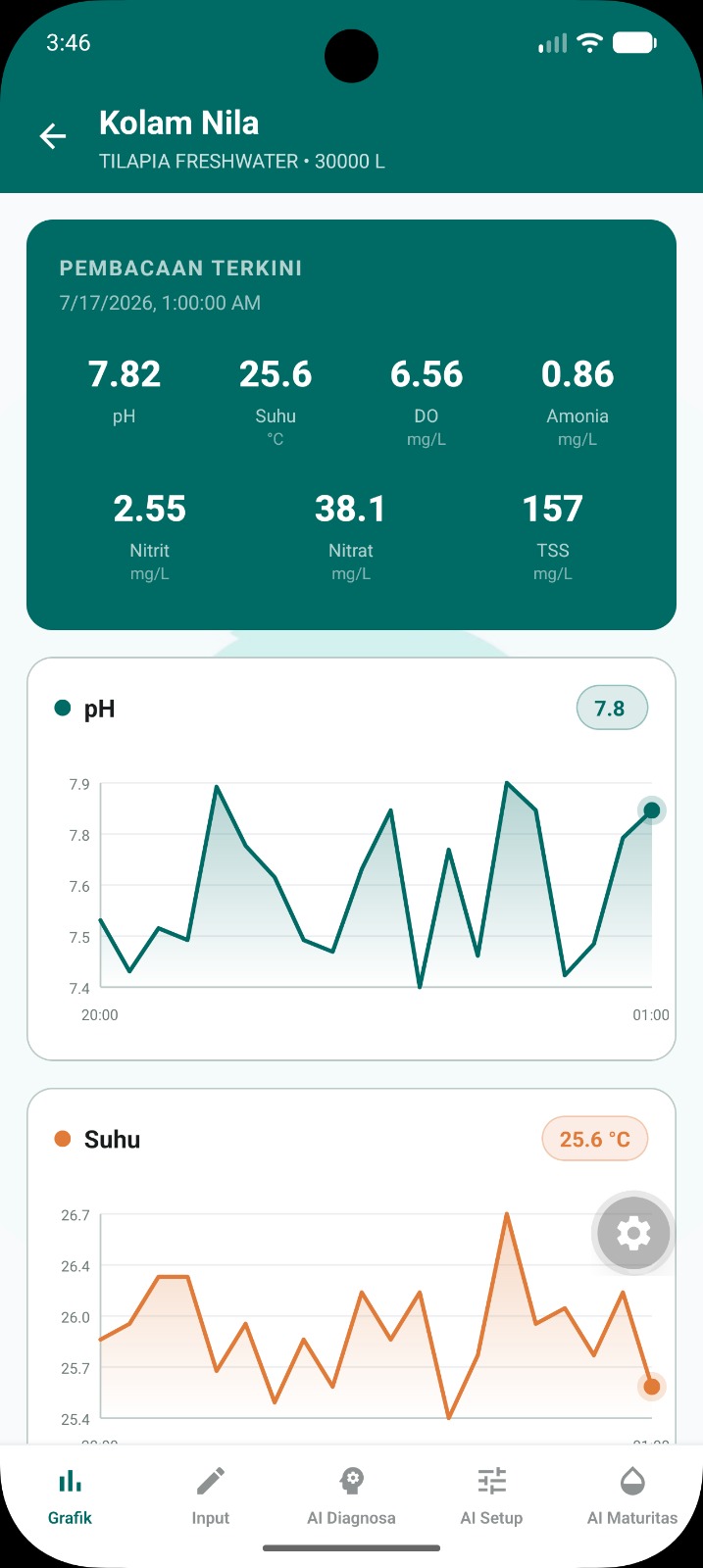
Real-Time Water Quality Dashboard Tambak continuously tracks all 7 critical biofloc water parameters — pH, Water Temperature, Dissolved Oxygen (DO), Ammonia (NH₃/NH₄⁺), Nitrite (NO₂⁻), Nitrate (NO₃⁻), and Total Suspended Solids (TSS) — via SVG line chart visualizations directly on the farmer's mobile device. The "Pembacaan Terkini" (Latest Reading) card gives an instant summary of the current pond state at a glance.
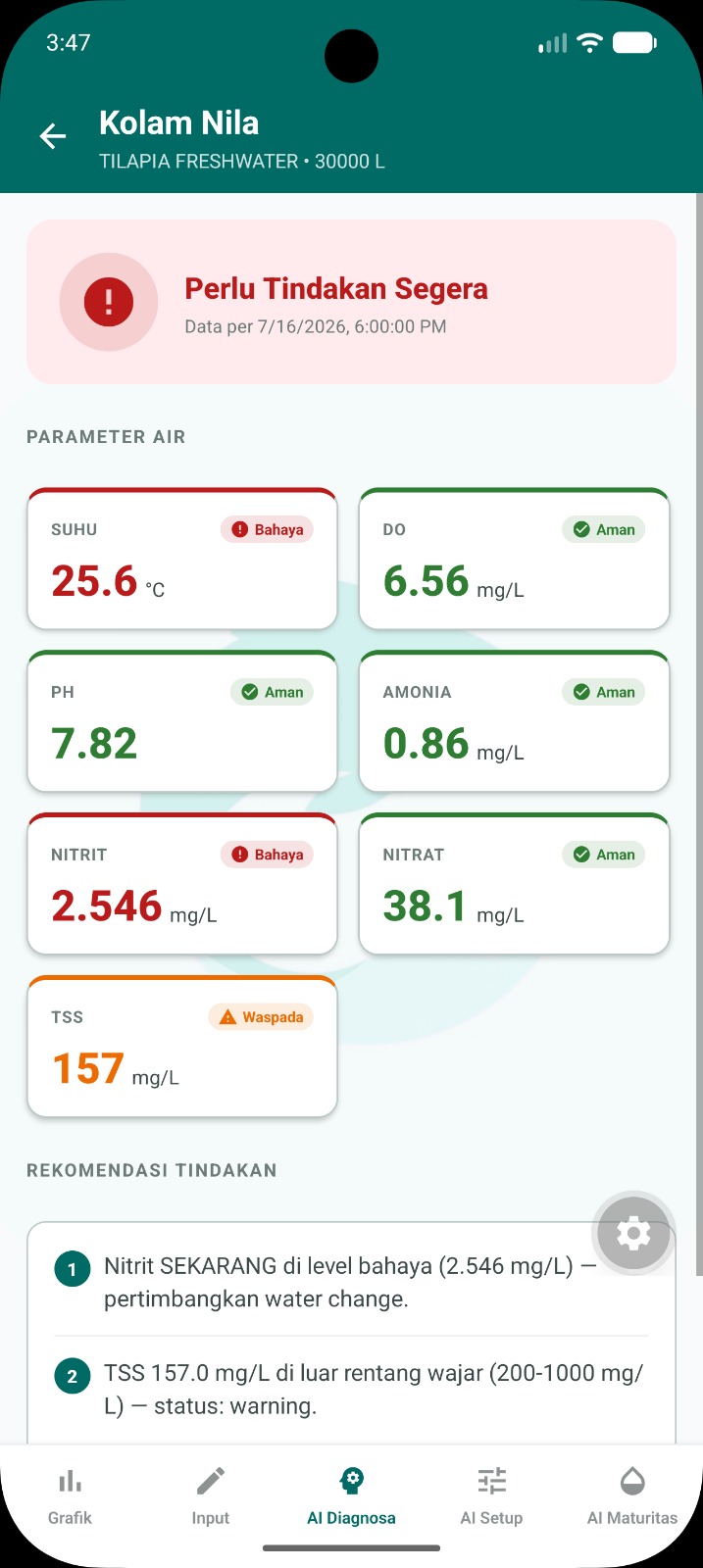
AI Diagnose (Rule-Based Instant Diagnosis)
At any moment, a farmer can request an AI diagnosis of their pond. The system evaluates the most recent readings against species-specific biological thresholds drawn from peer-reviewed literature (Wasielesky et al. 2026) and immediately returns a severity assessment (safe, warning, or danger) for each parameter — with plain-language recommendations on what corrective action to take.
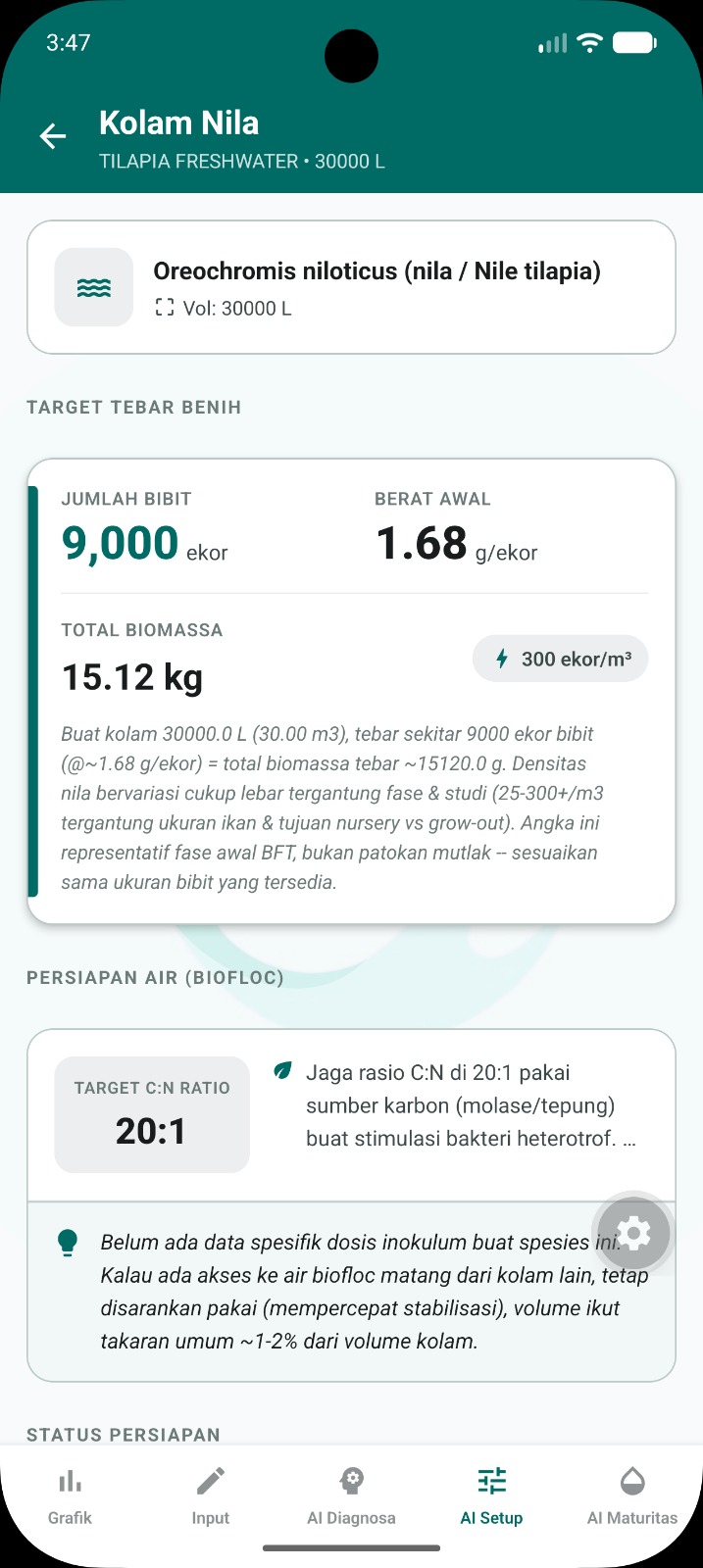
AI Setup (Stocking & Dosing Recommendations) Before a crop cycle begins, farmers receive a full setup plan tailored to their pond volume and species profile. This includes the optimal stocking density (fish/shrimp per m³), seed weight targets, total biomass calculations, the target C:N ratio (15:1) for biofloc formation, inoculum guidelines, and the molasses dosing formula to achieve a stable heterotrophic bacterial environment.
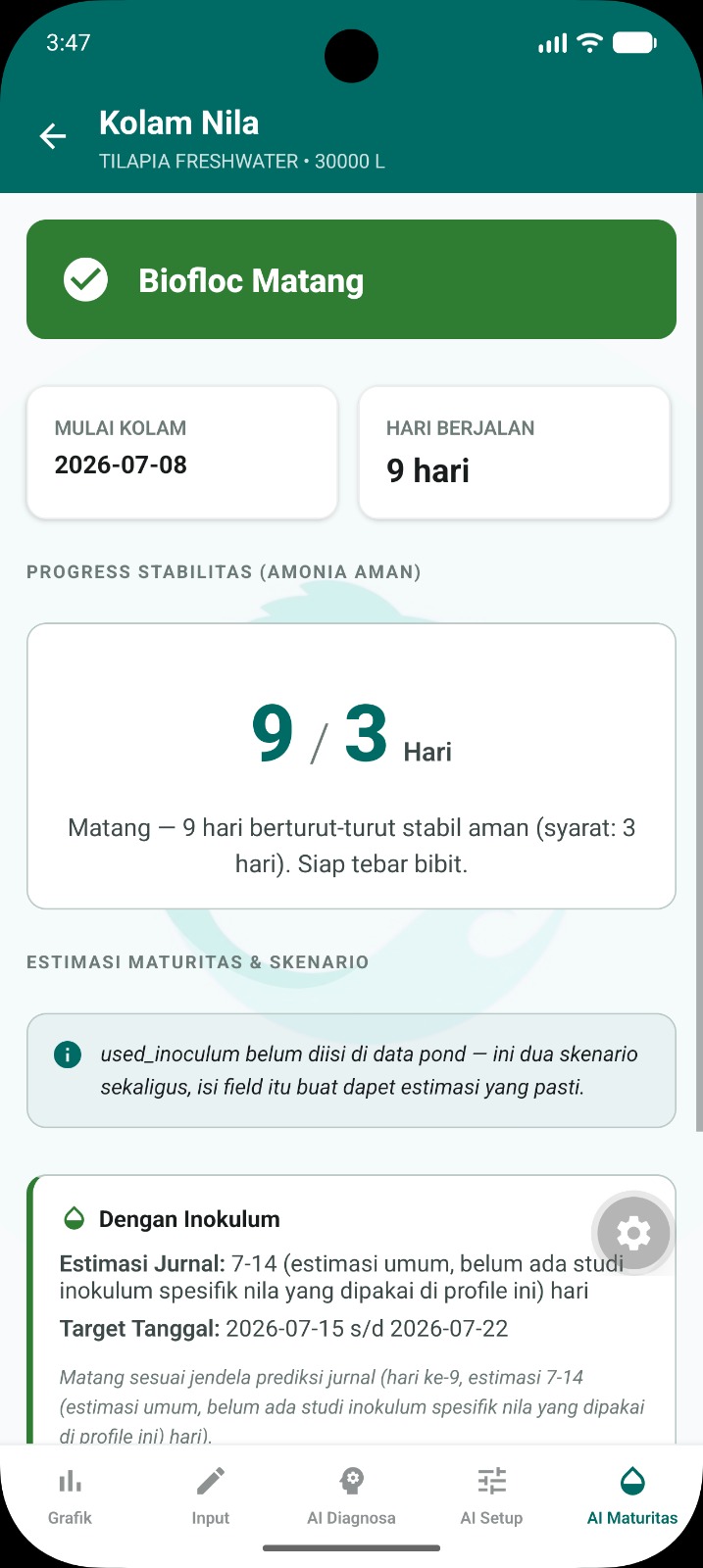
AI Maturitas (Biofloc Maturity Assessment) The most critical decision in biofloc farming — "Is my pond ready for stocking?" — is answered by a multi-phase maturity check engine. It evaluates the nitrification cycle progression (ammonia → nitrite → nitrate conversion), TSS stability within the inoculum window, and time-since-pond-preparation to determine biofloc maturity status and the optimal stocking window.
AI Health Score (ML-Based Prediction) A trained Random Forest Regression model, trained on public aquaculture datasets, analyzes historical time-series readings to predict the trajectory of key water parameters and generate a composite pond health score — giving farmers predictive foresight, not just reactive alerts.
Hybrid Data Entry Tambak works with or without IoT hardware. Farmers with automated sensors can stream readings via the sensor API. Farmers without sensors can input readings manually — the form supports all 7 parameters in a clean, labeled input UI. Both paths feed the same AI analysis pipeline.
How we built it
Tambak is architected as a three-layer distributed system: an AI Core, a Backend API, and a Mobile Client.
AI Core (biofloc_ai) — Python
We started by surveying peer-reviewed aquaculture literature to establish scientifically validated biological thresholds, citing Wasielesky et al. 2026 as our primary threshold reference for Penaeus vannamei in BFT. We then built two parallel reasoning systems:
Rule-Based Engine — A species-profile system backed by JSON configuration files (
tilapia_freshwater.json,vannamei_marine.json). Each profile defines per-parameterwarninganddangerthresholds, normal operating ranges, and management targets. The engine classifies every reading and generates structured diagnosis and recommendation outputs. For ponds without a known species, agenericauto-adaptive mode computes thresholds live from the pond's own historical data using percentile analysis (P5/P25/P75/P95).ML Prediction Engine — We sourced two public aquaculture datasets (Aquaponics Fish Pond Datasets from Kaggle; Aquaculture - Water Quality Datasets from Mendeley Data), preprocessed them with
pandasandnumpy, engineered features (rolling averages, trend deltas, risk flags), and trained Random Forest Regression models usingscikit-learn. Models are serialized per species profile usingjobliband loaded on-demand.
The AI Core runs as a standalone Python module. The backend invokes it by spawning subprocess calls to the specific AI scripts and capturing their JSON stdout output.
Backend API (biofloc_be) — FastAPI + MongoDB
We built a RESTful API using FastAPI and Uvicorn, connected to MongoDB Atlas. For time-series storage efficiency, we implemented the Bucket Pattern: readings are grouped into documents of up to 300 entries each, significantly reducing per-document overhead and query cost at scale.
The backend handles:
- JWT authentication with bcrypt password hashing and token blacklisting (TTL-indexed for automatic cleanup)
- Per-user pond ownership enforcement on all protected routes
- Exporting pond data to a temporary CSV file for consumption by AI scripts
- 6 API routers:
auth,ponds,sensor,manual,data, andai
The ai router exposes 4 endpoints (ai-setup, ai-maturity, ai-health, ai-diagnose) that each fetch the pond's stored readings from MongoDB, convert them to a structured CSV, pass them to the corresponding AI Python script as a subprocess, and return the JSON result.
Mobile App (biofloc_mobile) — React Native + Expo
The mobile client was built using React Native 0.86 with Expo 57 and Expo Router for file-based navigation. We chose not to depend on any external charting library — instead, all line charts are rendered as custom SVG components using react-native-svg, giving us full control over design and performance.
The UI features:
- A bottom tab navigation bar with 5 pond-detail tabs (Grafik, Input, AI Diagnosa, AI Setup, AI Maturitas), each with a relevant Material Icon
- A custom segmented control for the manual input tab (toggling between manual entry and IoT sensor info)
- Custom
ManualInputFieldcomponents with labeled unit suffixes (pH, °C, mg/L) matching professional form design standards - Faded brand watermark (
logo_tambak.jpeg) overlaid as background on all content screens for visual identity consistency
Challenges we ran into
Data scarcity in biofloc-specific ML training Publicly available datasets for BFT aquaculture are extremely limited. Most available aquaculture datasets cover RAS (Recirculating Aquaculture Systems) or conventional ponds with different parameter dynamics. We had to carefully select and preprocess data from two independent sources and validate that the parameter ranges were biologically comparable to real biofloc conditions before using them for training.
Translating biology into software Aquaculture research uses precise language for biological thresholds, but implementing them correctly in code — especially the interaction effects between ammonia, pH, and temperature (which affect NH₃ vs NH₄⁺ speciation) — required deep reading of the source papers. Getting the warning/danger bands right meant the difference between a system that nags farmers with false alarms and one they trust.
Bridging the rural digital divide Our target users are smallholder farmers, many of whom may have limited smartphone experience. Every decision in the UX — the segmented toggle, the labeled unit suffixes, the plain-language AI recommendations — had to balance feature richness with radical simplicity. We had to resist the engineer's instinct to add complexity.
Real-time AI inference on mobile constraints Running ML inference fully on-device was not feasible for the model sizes needed. Our architecture solves this by keeping all inference server-side. But this required designing a reliable, low-latency pipeline: MongoDB → temp CSV export → Python subprocess → JSON capture → API response. Ensuring this pipeline was robust to edge cases (empty ponds, missing parameters, unmatched profiles) required careful defensive programming at every step.
Biofloc maturity is multi-dimensional Assessing whether a biofloc pond is "mature enough" for stocking cannot be reduced to a single parameter. We needed a multi-phase engine that evaluates ammonia-to-nitrite conversion progress, nitrite-to-nitrate progression, TSS concentration stability, and elapsed time since pond preparation — all simultaneously — and synthesizes them into a single actionable verdict.
Accomplishments that we're proud of
An end-to-end system built from scratch in a hackathon Tambak is not a demo — it is a fully functional, integrated system. The AI models are trained, the backend is live, the API is authenticated, and the mobile app communicates with it in real-time. Every layer of the stack was built by our team from the ground up.
Grounded in peer-reviewed science Every biological threshold in Tambak's diagnostic engine is cited to a specific paper. We didn't guess at what "dangerous ammonia" means — we read the research (Wasielesky et al. 2026, Lin & Chen 2001) and implemented exactly what the literature recommends. This is what makes Tambak trustworthy rather than just plausible.
Custom SVG charting engine Rather than adding a heavy third-party charting dependency, we built a fully custom SVG line chart renderer in React Native. It handles dynamic axis scaling, gradient fills, time-series labels, and data point tooltips — with zero external charting library overhead.
Adaptive thresholds for unknown species
Our generic profile mode means Tambak can analyze ponds for any species — even ones not in our profile library — by computing adaptive thresholds from the pond's own historical baseline using percentile statistics. This makes the system immediately useful even in edge cases.
Farmer-first design The UI was designed to communicate science without requiring scientific literacy. Color-coded severity badges, plain-language recommendation text, and simple labeled inputs make Tambak accessible to farmers who have never used a monitoring system before.
What we learned
Good AI must be explainable, not just accurate. A health score of "72/100" means nothing to a farmer without knowing why. We learned to always pair any AI output with a plain-language explanation and a specific recommended action. Accuracy is table stakes; clarity is what creates trust.
Domain expertise is irreplaceable in ML. Feature engineering for water quality prediction is not generic. Rolling 24-hour averages behave very differently from rolling 7-day averages in biofloc dynamics. Understanding the biology told us which features to engineer — and that knowledge came from reading papers, not from trying all combinations.
Databases should match the data's shape. Choosing MongoDB's Bucket Pattern for our time-series readings was a deliberate architectural decision, not a default. It reduced our per-document overhead dramatically and made range queries on time windows significantly faster. The right data model matters as much as the right algorithm.
IoT and human data can coexist in the same pipeline. One of our design wins was building the data ingestion layer to be agnostic about source — sensor readings and manual farmer input go through the same storage bucket and the same AI analysis pipeline. This means the system degrades gracefully when hardware isn't available, rather than becoming useless.
Biological systems resist binary answers. The biofloc maturity check taught us that nature is rarely black-and-white. A pond can be "partially mature" in one nitrogen cycle phase and "not ready" in another. Building a multi-phase assessment engine — rather than a single threshold gate — was one of the hardest and most important design decisions we made.
What's next for Tambak
Field validation with real farmers. Our immediate next step is to deploy Tambak with a cohort of real smallholder farmers in a pilot region and measure whether AI-guided management actually reduces crop failure rates compared to a control group using traditional methods.
IoT hardware integration. We plan to partner with low-cost IoT sensor manufacturers to bundle a pre-configured sensor node with the Tambak app, eliminating the manual data entry burden entirely for farmers who want full automation.
Expanded species support. Currently Tambak supports Oreochromis niloticus (Nila) and Penaeus vannamei (Udang Vaname) with literature-backed profiles. We will add profiles for Litopenaeus stylirostris, catfish (Clarias), and freshwater carp — covering the majority of Indonesian smallholder species.
Marketplace & traceability layer. Our pitching deck outlines a business model built on a 2% marketplace transaction fee and IDR 5,000/scan verification service. Tambak's pond health data becomes a trust layer: buyers can verify that the livestock they are purchasing came from AI-verified, scientifically managed ponds — eliminating the "Biological Asymmetry" problem where buyers cannot trust seller claims.
Offline-first mobile mode. Rural farms often have spotty connectivity. We will implement a local-first data caching layer so farmers can continue logging readings offline, with automatic sync when connectivity is restored.
Expanding the prediction horizon. With more longitudinal data, we aim to extend the ML engine from single-session health scoring to multi-week harvest-timing prediction — giving farmers a dynamic, daily-updated "days until optimal harvest" estimate based on current growth trajectory and water stability trends.
Team
| Member | Role |
|---|---|
| Khalisa Zahra Maulana | Machine Learning & AI |
| Aliya Syafiqa | UI/UX & Product Design |
| Dimas Andhika | Software Development |
| Sekar Ayu Kinanthi | Business & Market Strategy |
Built With
- fast-api
- figma
- joblib
- kaggle
- machine-learning
- mongodb
- node.js
- numpy
- pandas
- python
- react-native
- scikit-learn


Log in or sign up for Devpost to join the conversation.