Inspiration
We wanted help with our physics homework. More specifically, we wanted a hint.
When we got stuck, we often needed just one nudge to keep going. But asking an AI chatbot for help frequently meant receiving the entire solution. We could follow the answer, but we lost the opportunity to figure it out ourselves.
We built tamatar.si to bring a teaching assistant’s red pen to handwritten physics work: show us where our reasoning went wrong, offer a small hint, and let us try again. Conversations with professors helped us understand what educators would want from a tool they could bring into their curriculum.
What it does
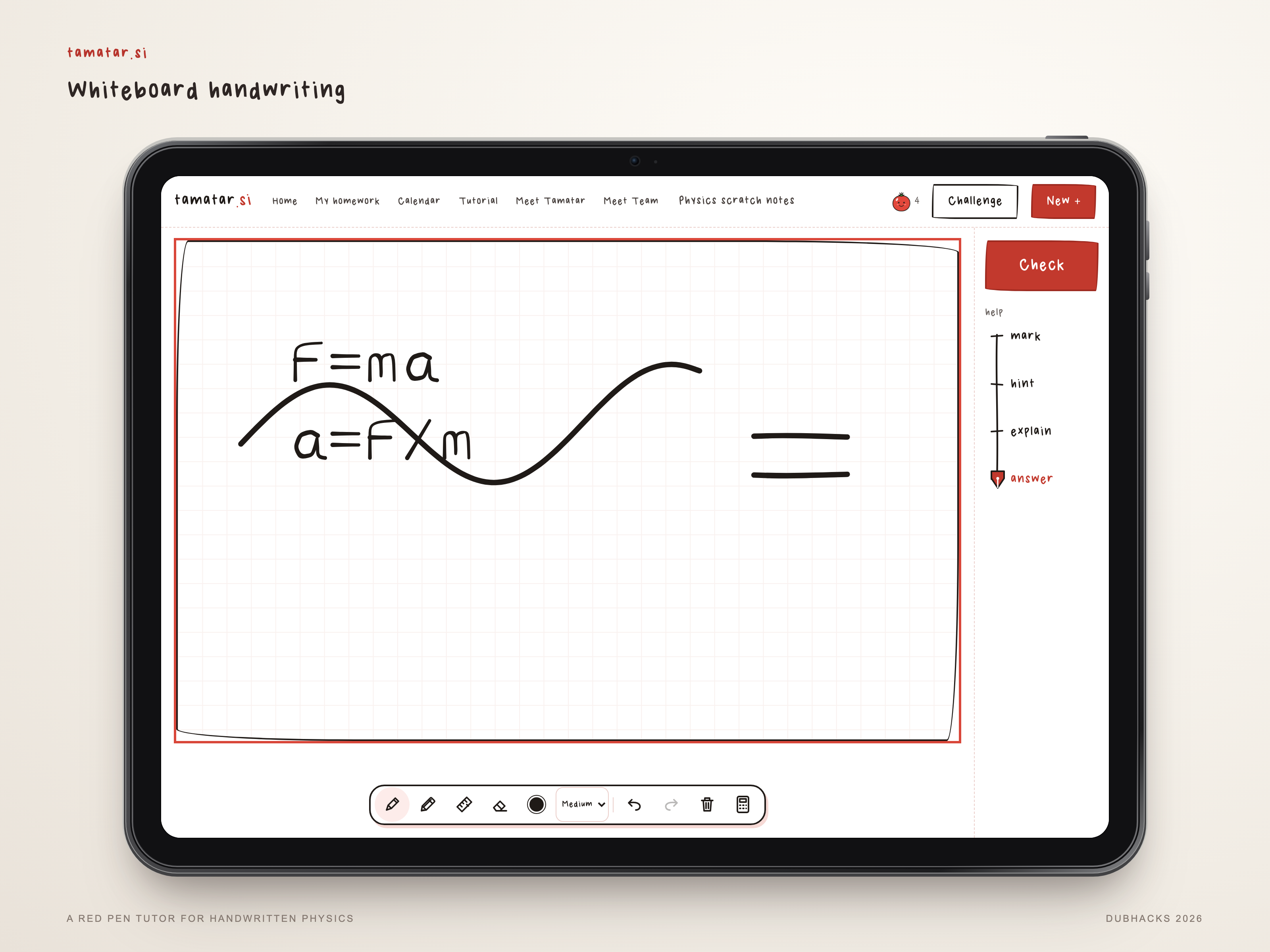
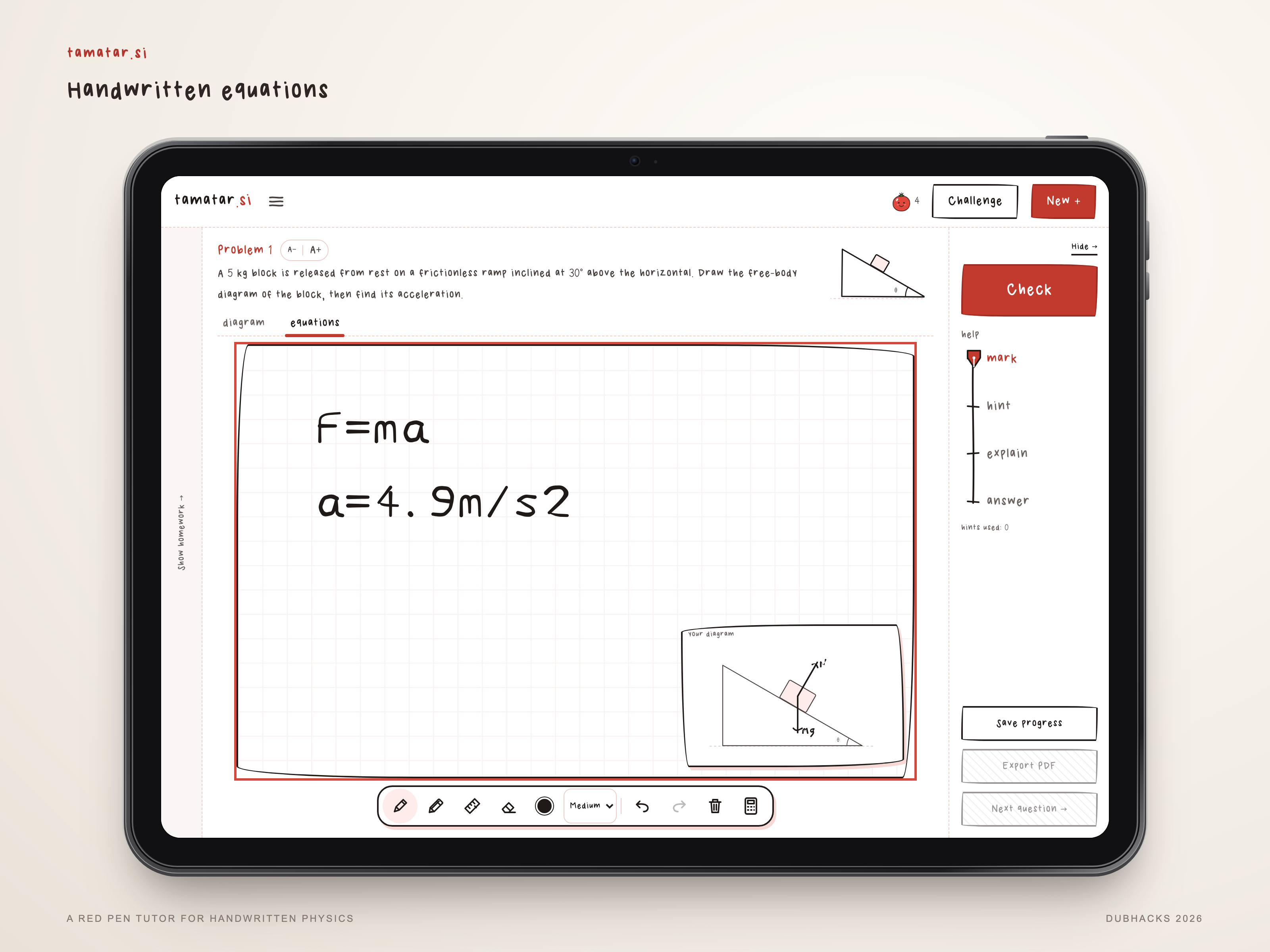
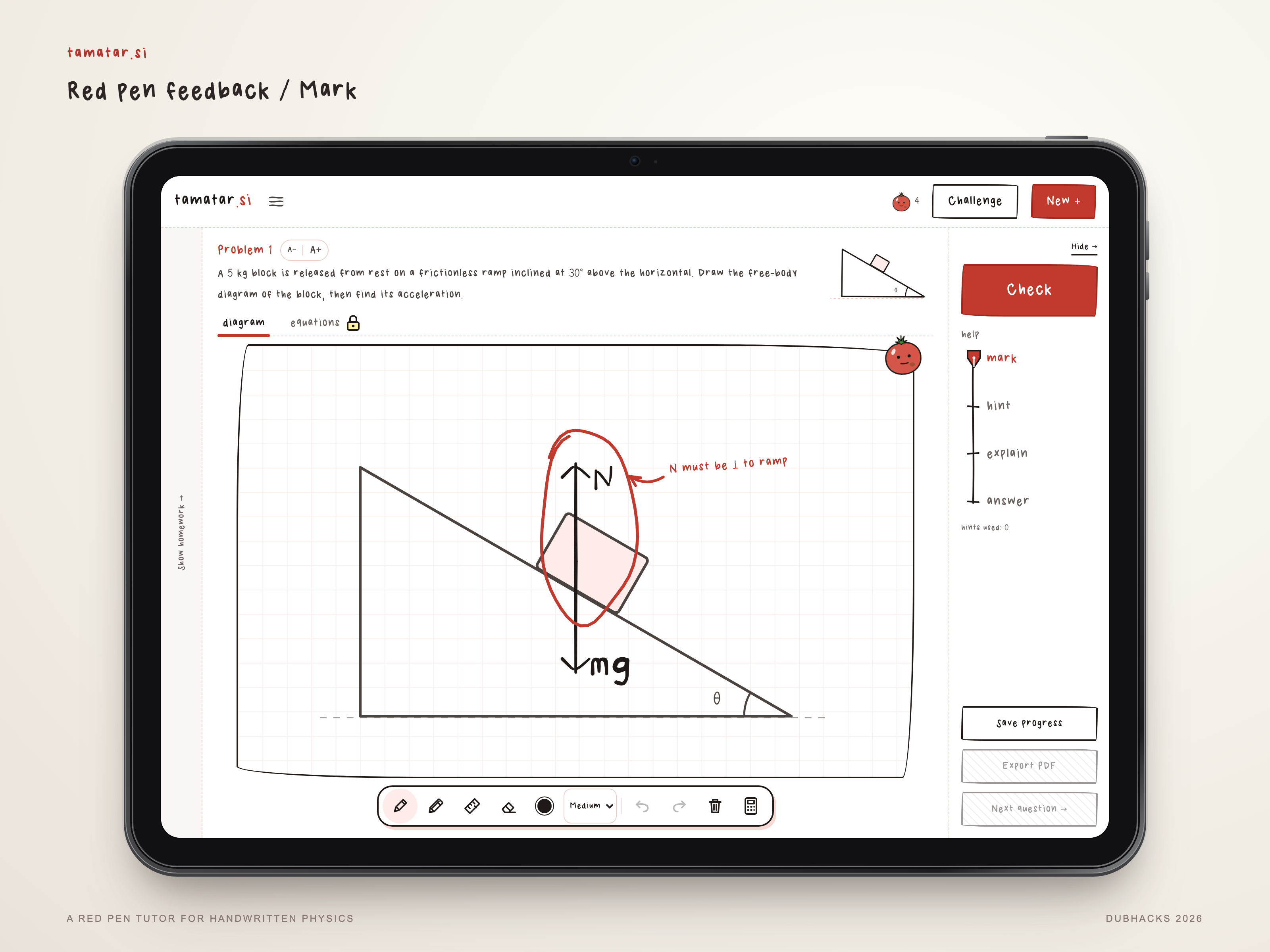
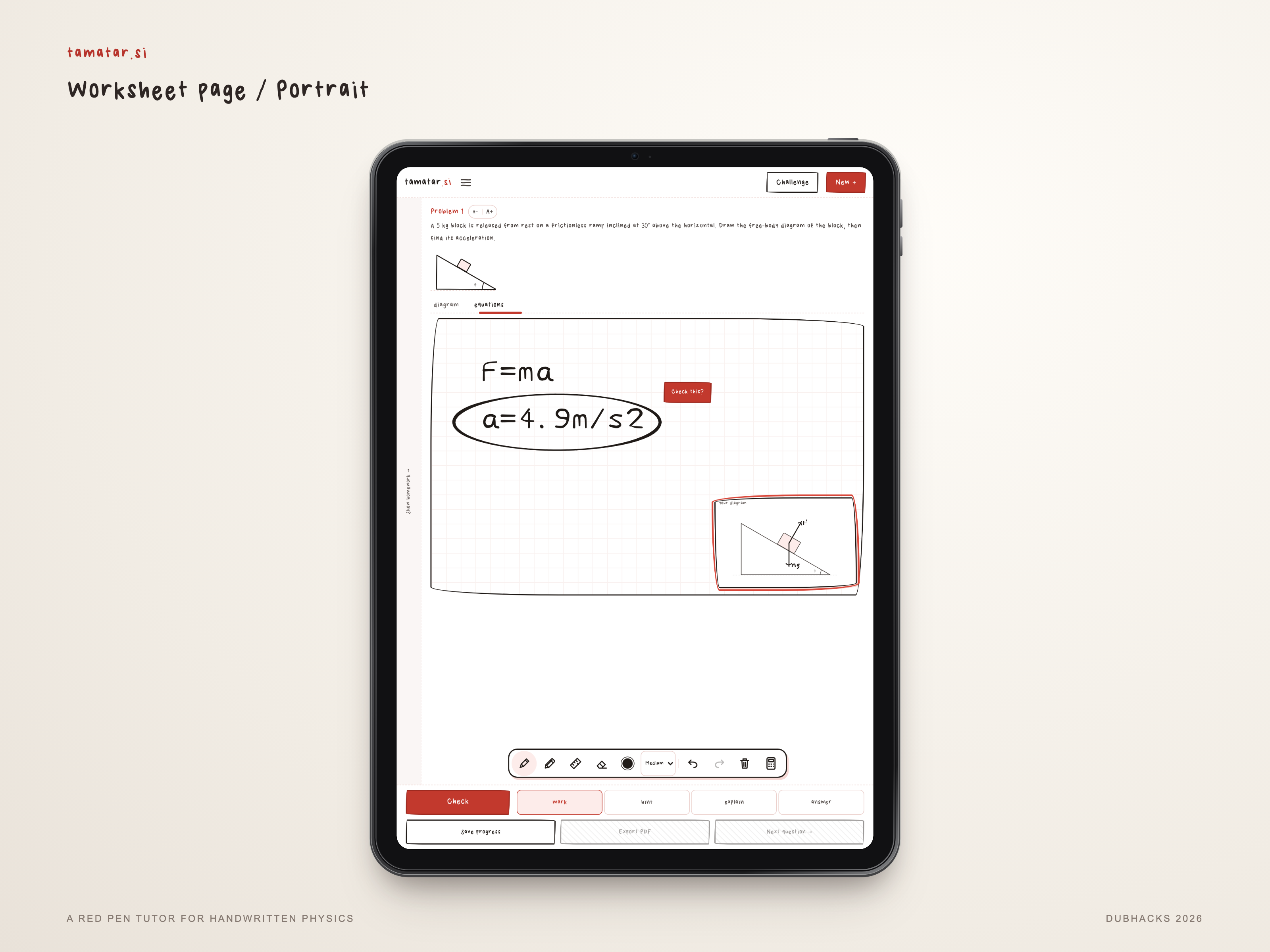
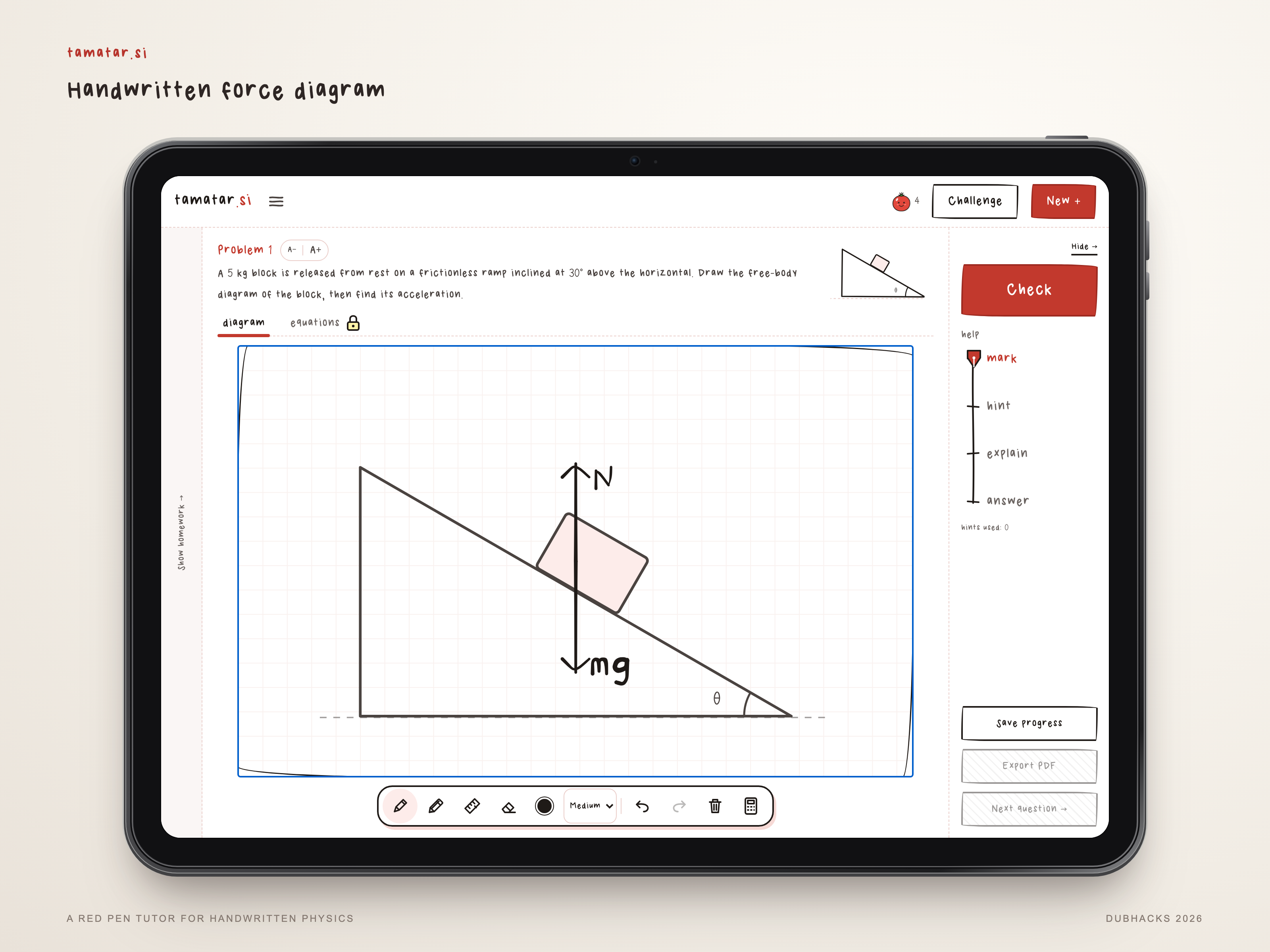
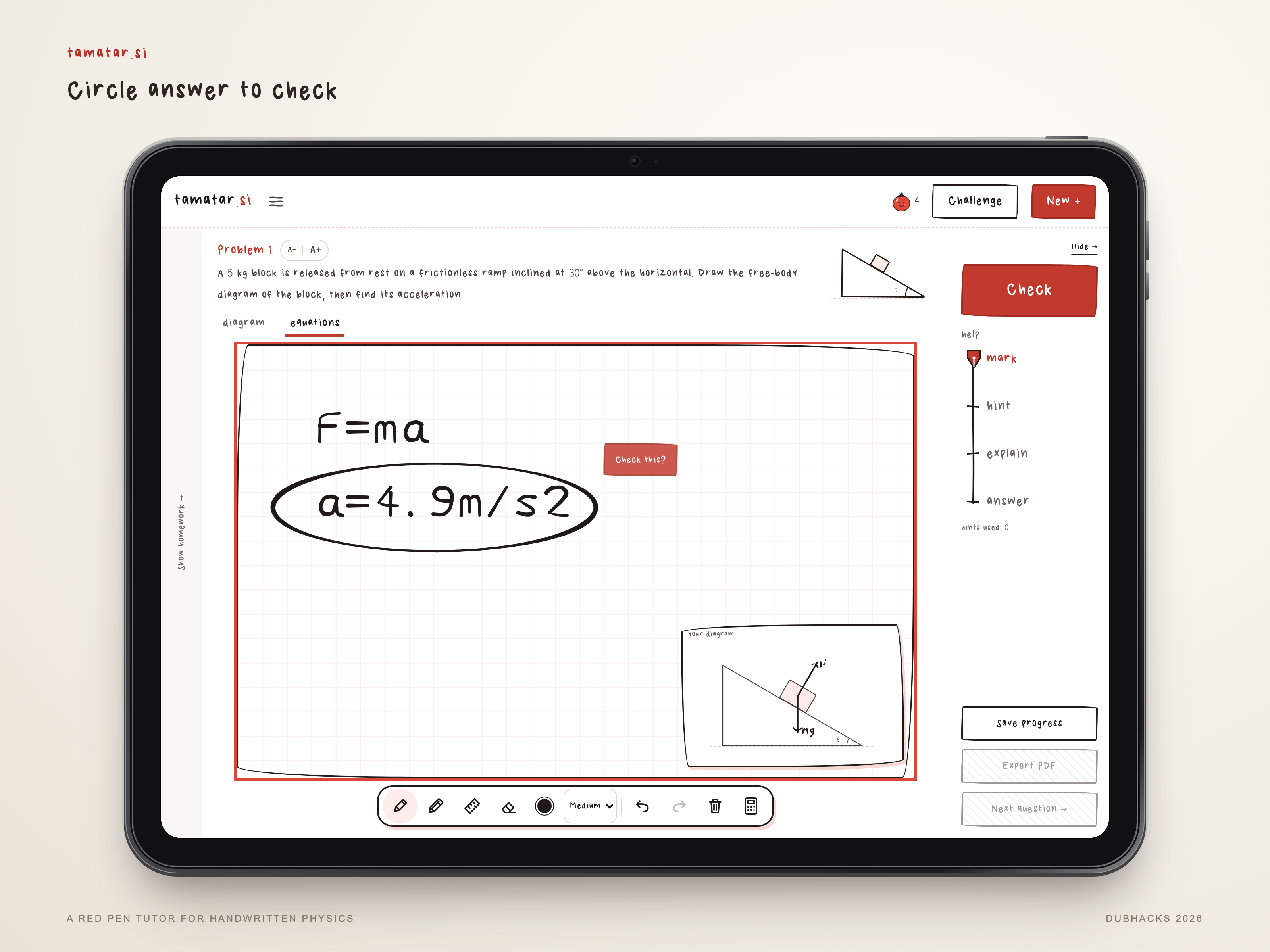
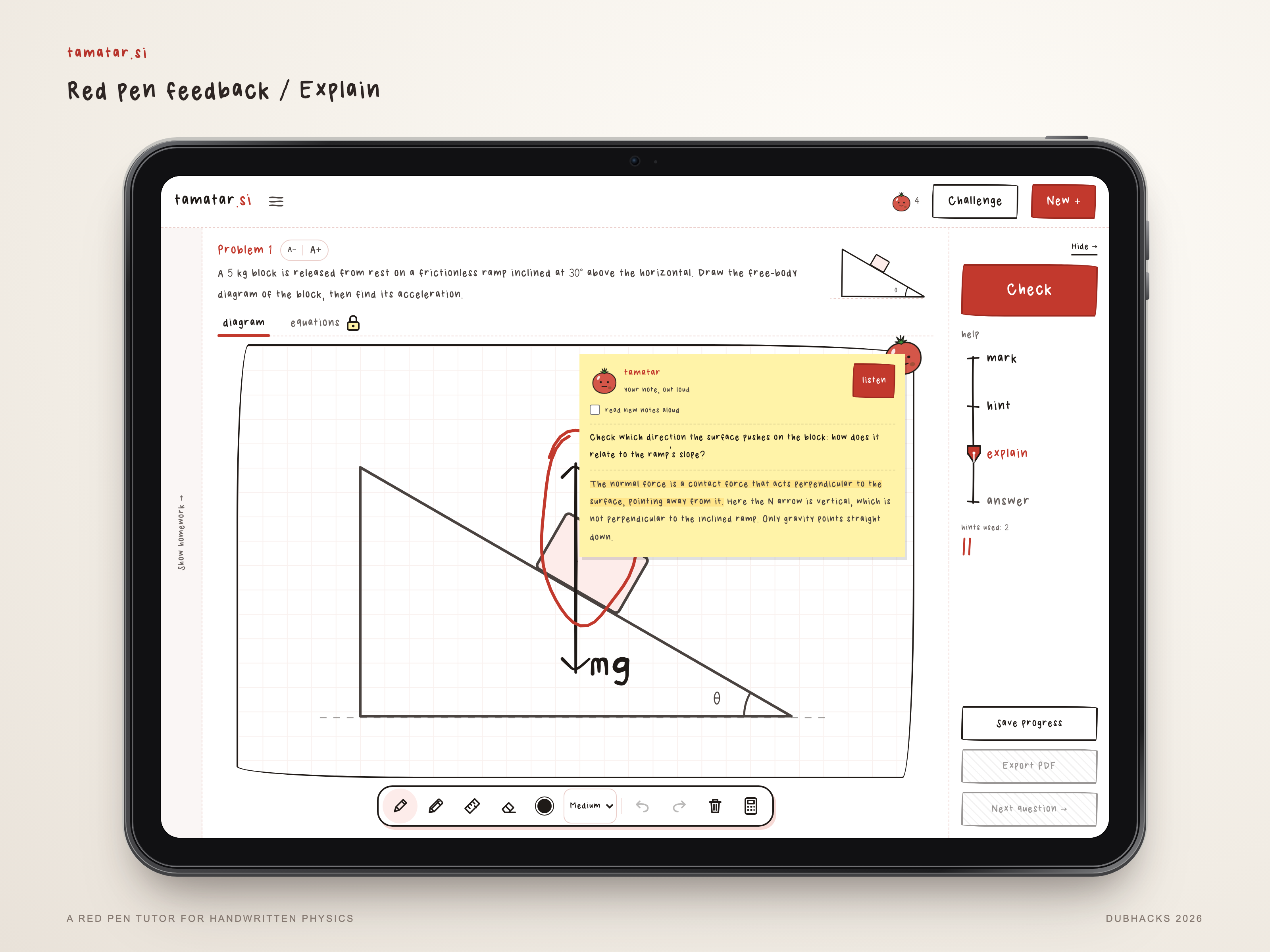
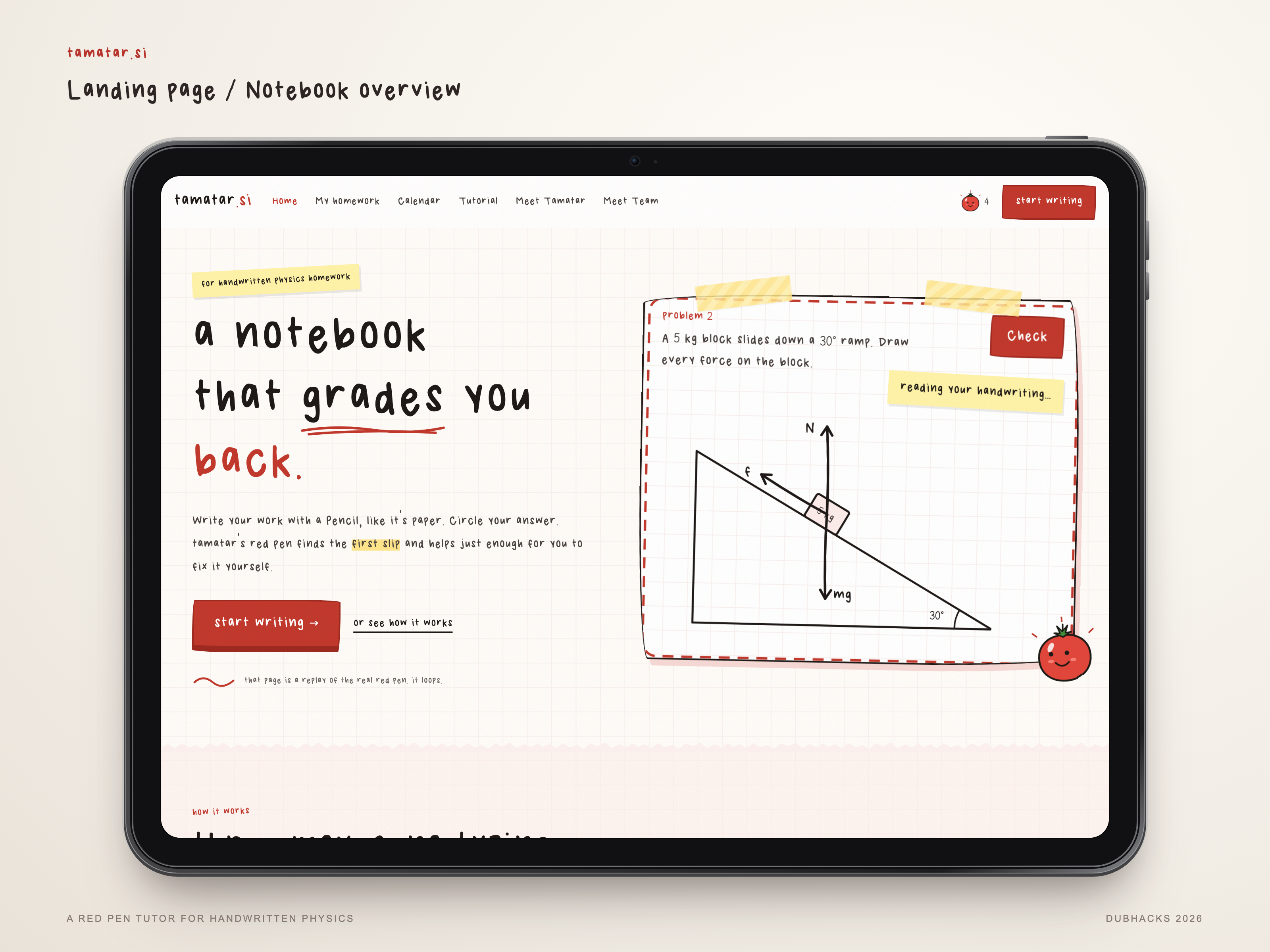
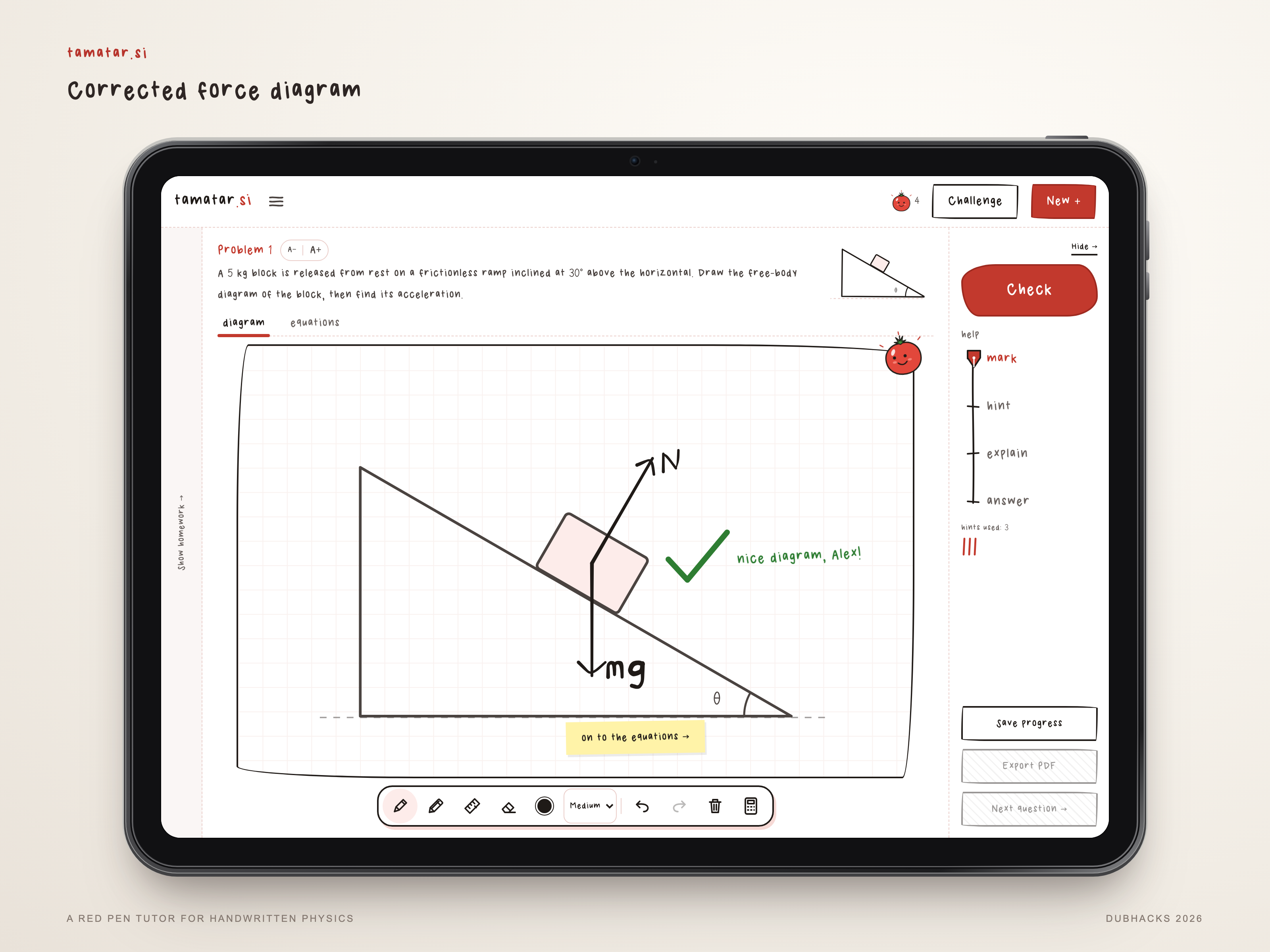
Tamatar reads handwritten physics diagrams and equations, finds the first incorrect step, and circles the mistake directly on your work.
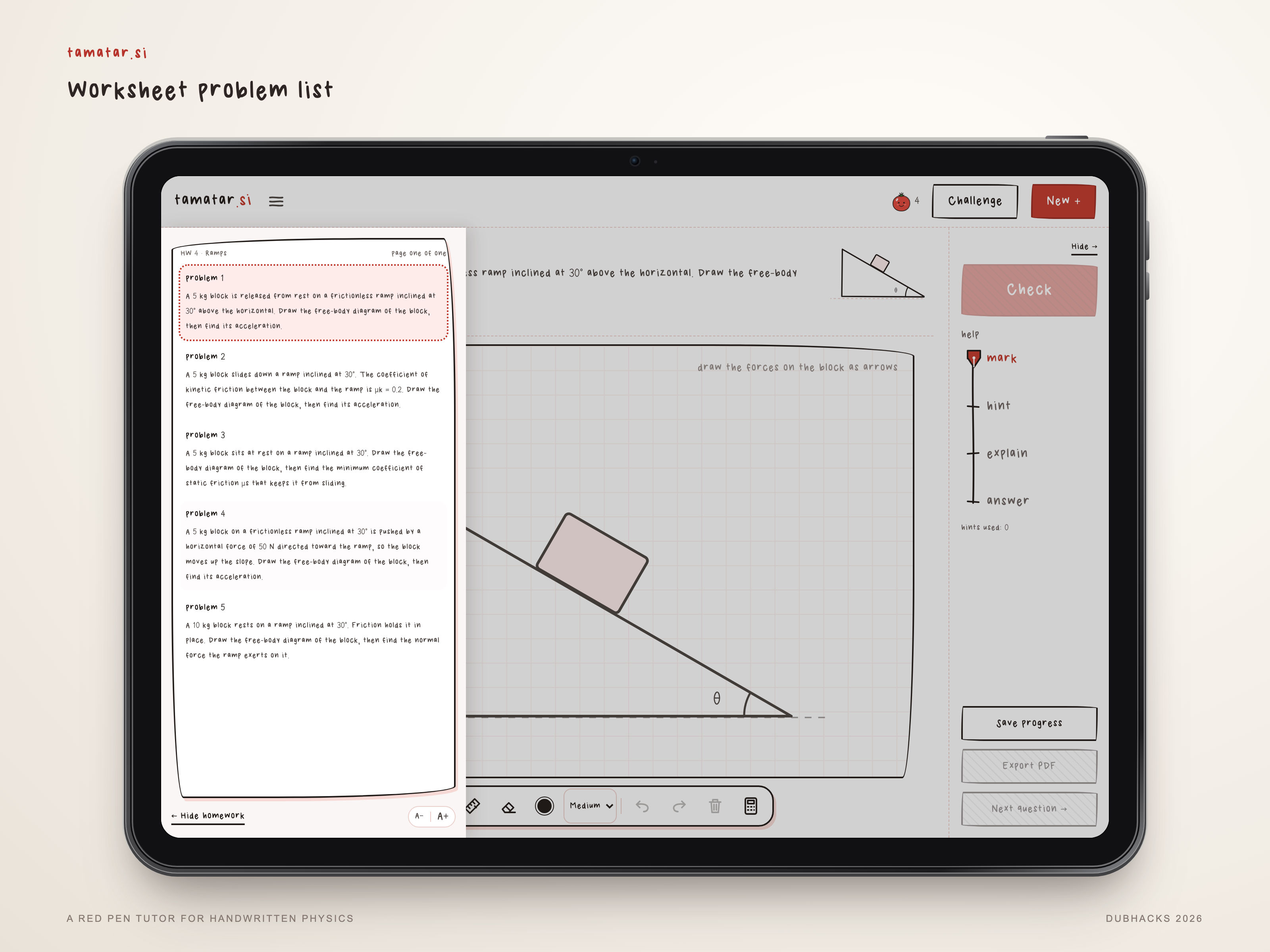
Students choose how much help to reveal through four levels: Mark → Hint → Explain → Answer. A small nudge comes first; the full solution is available when they need it.
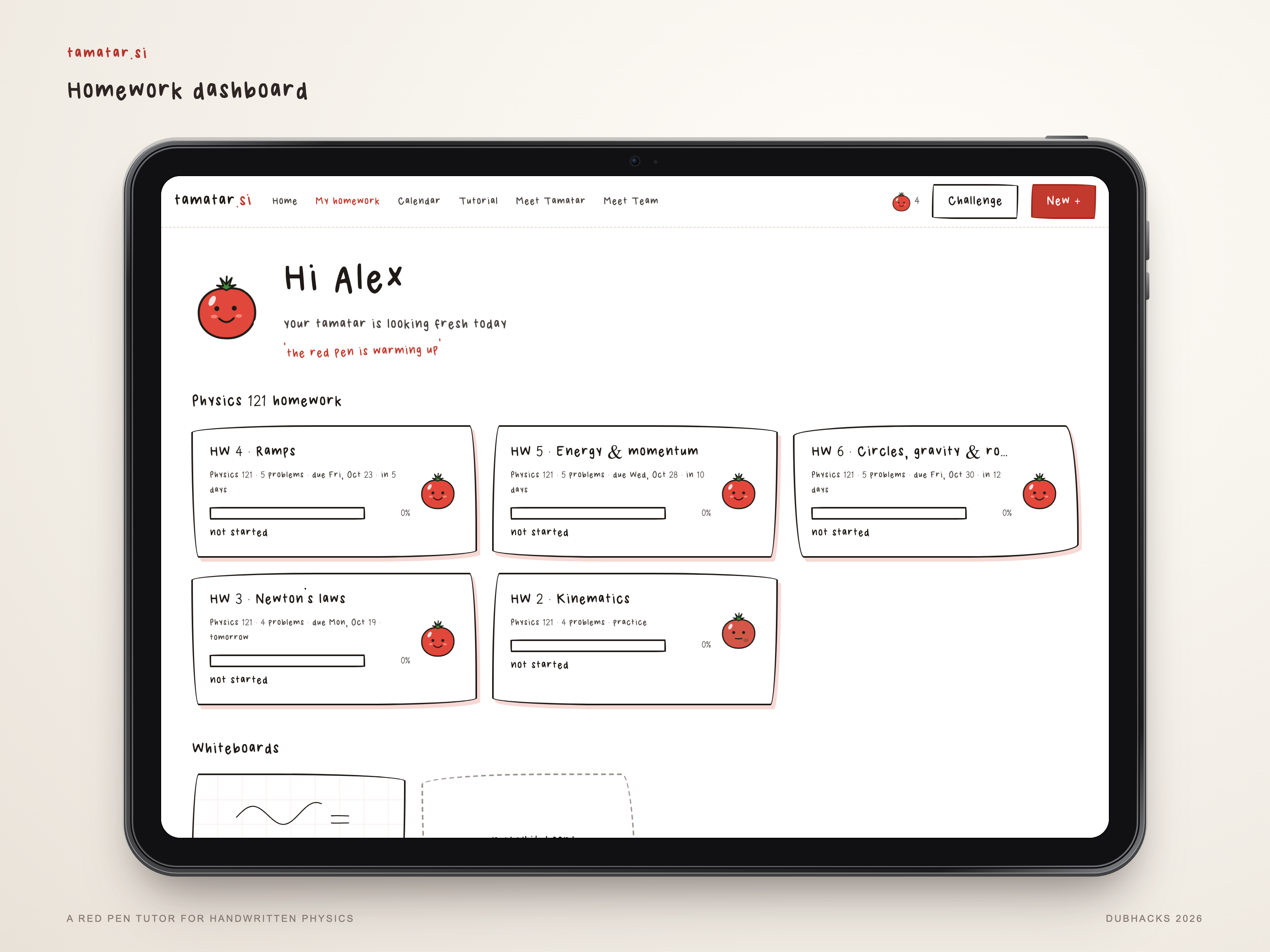
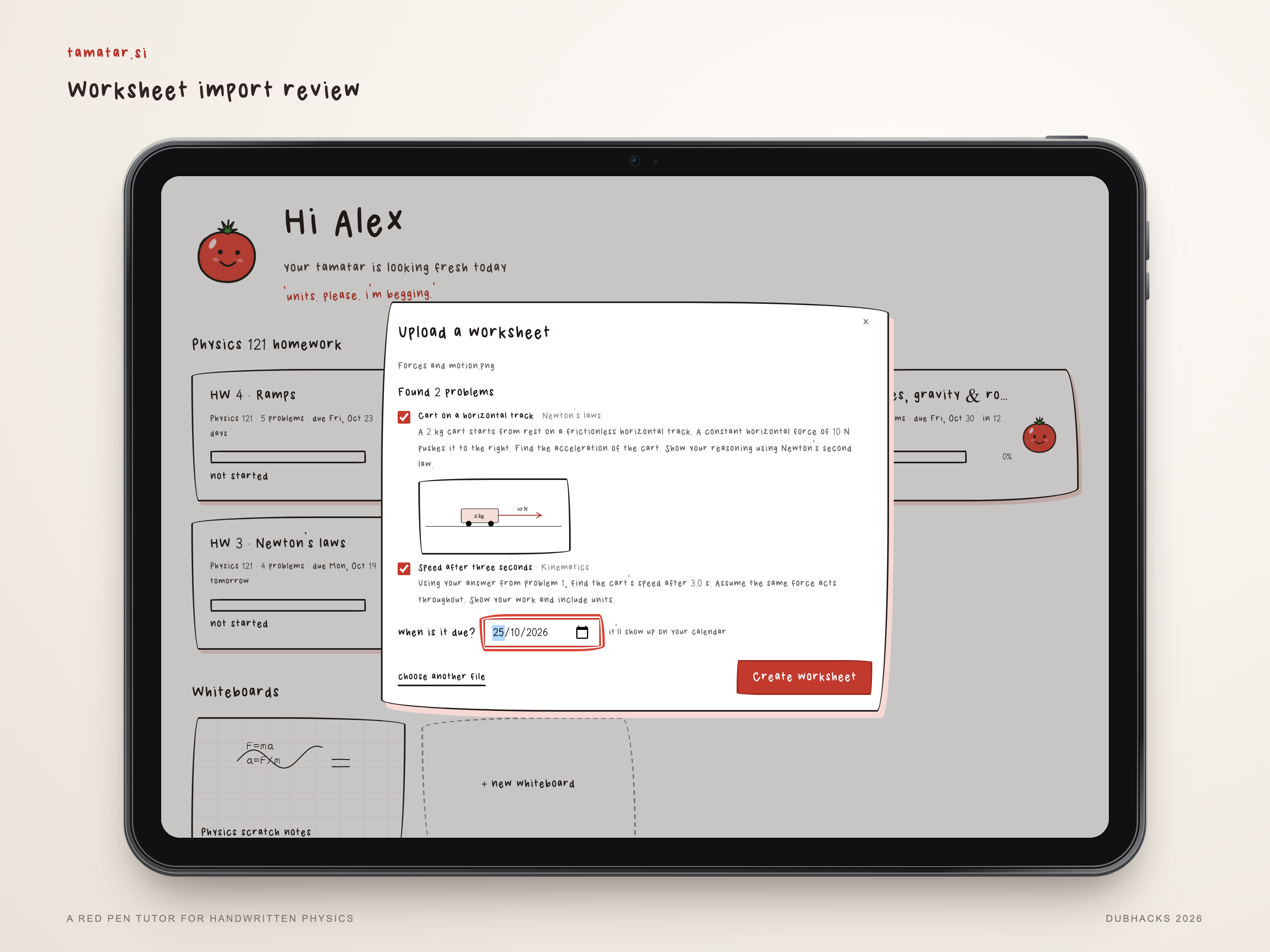
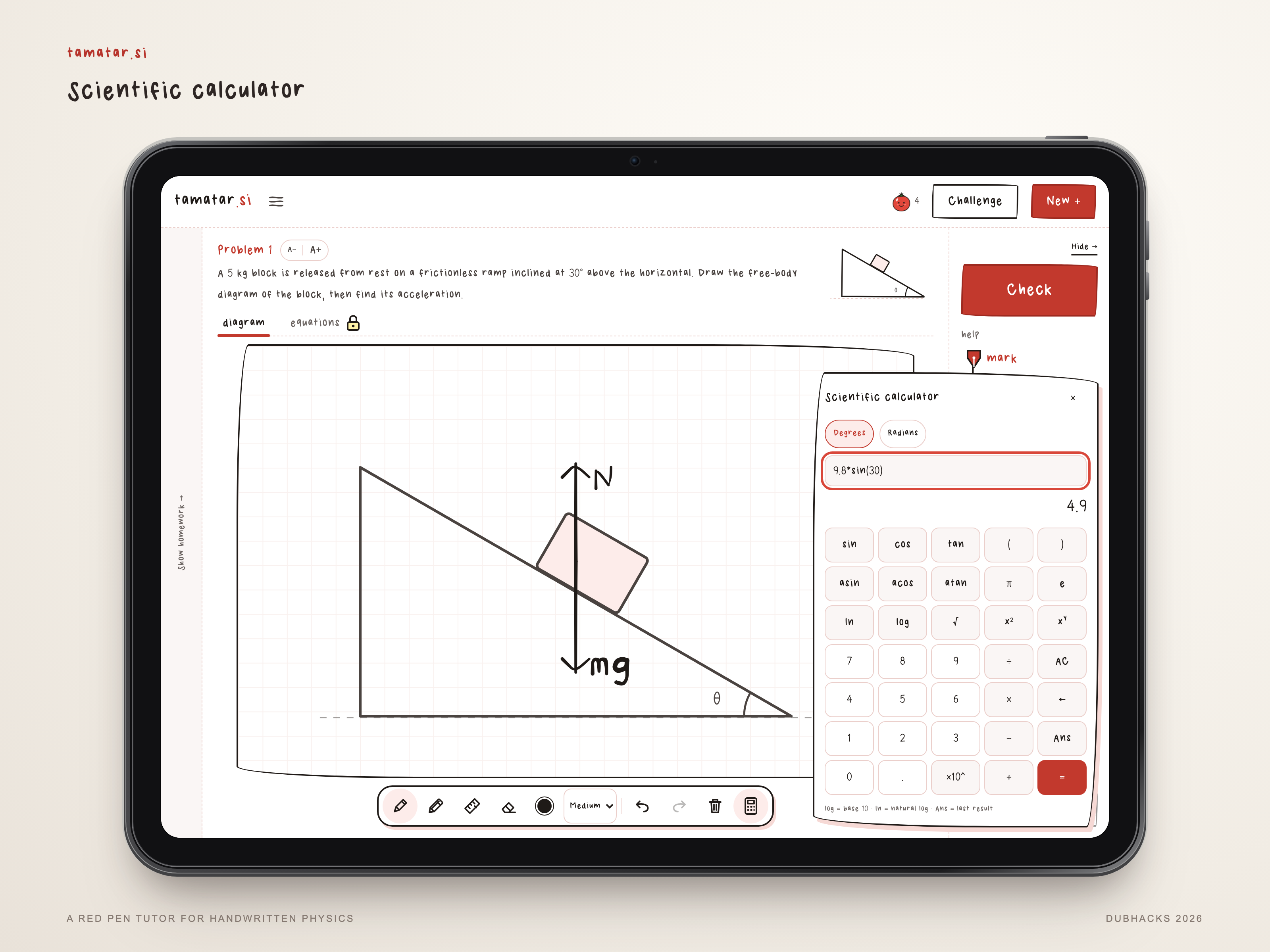
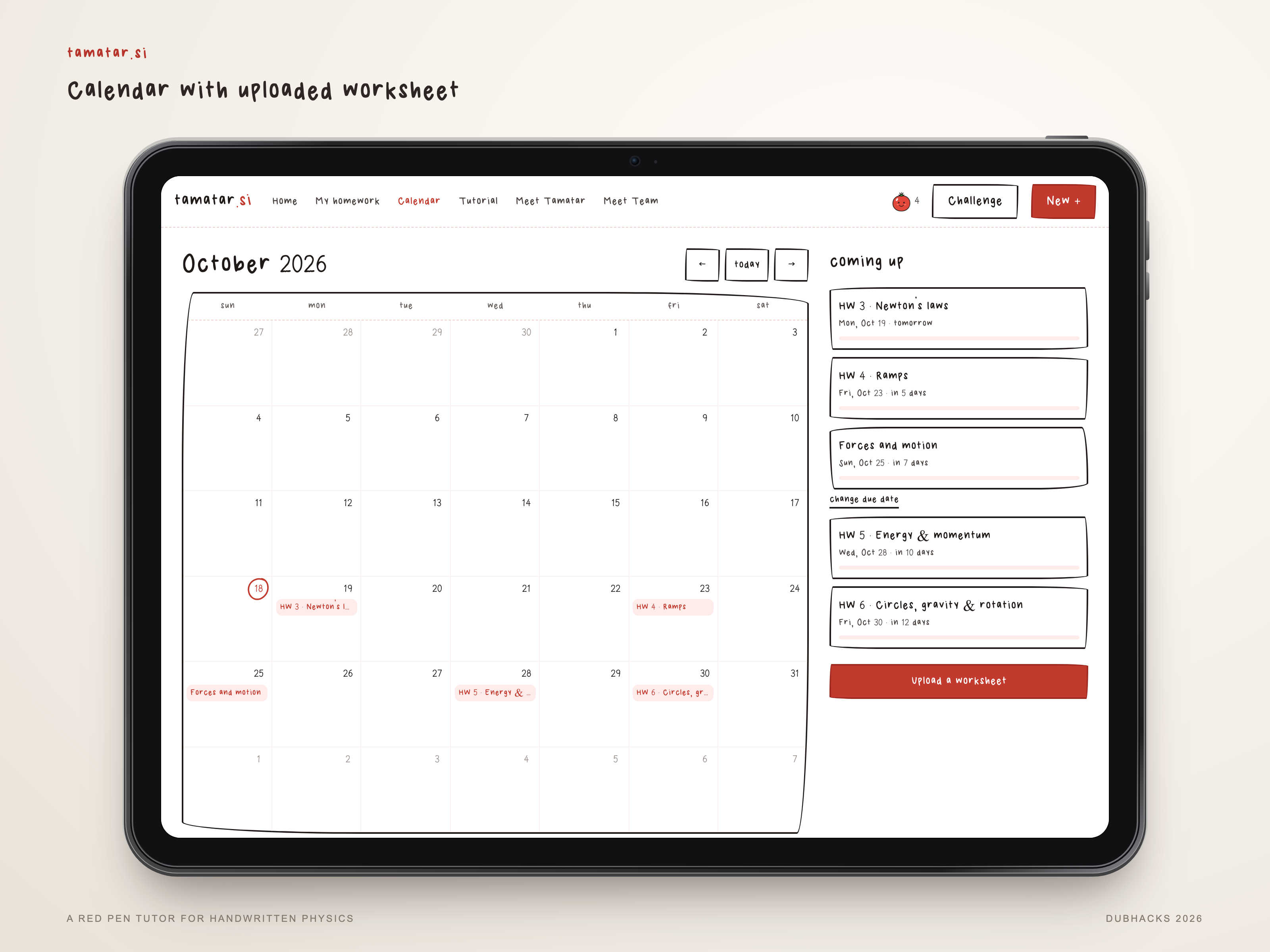
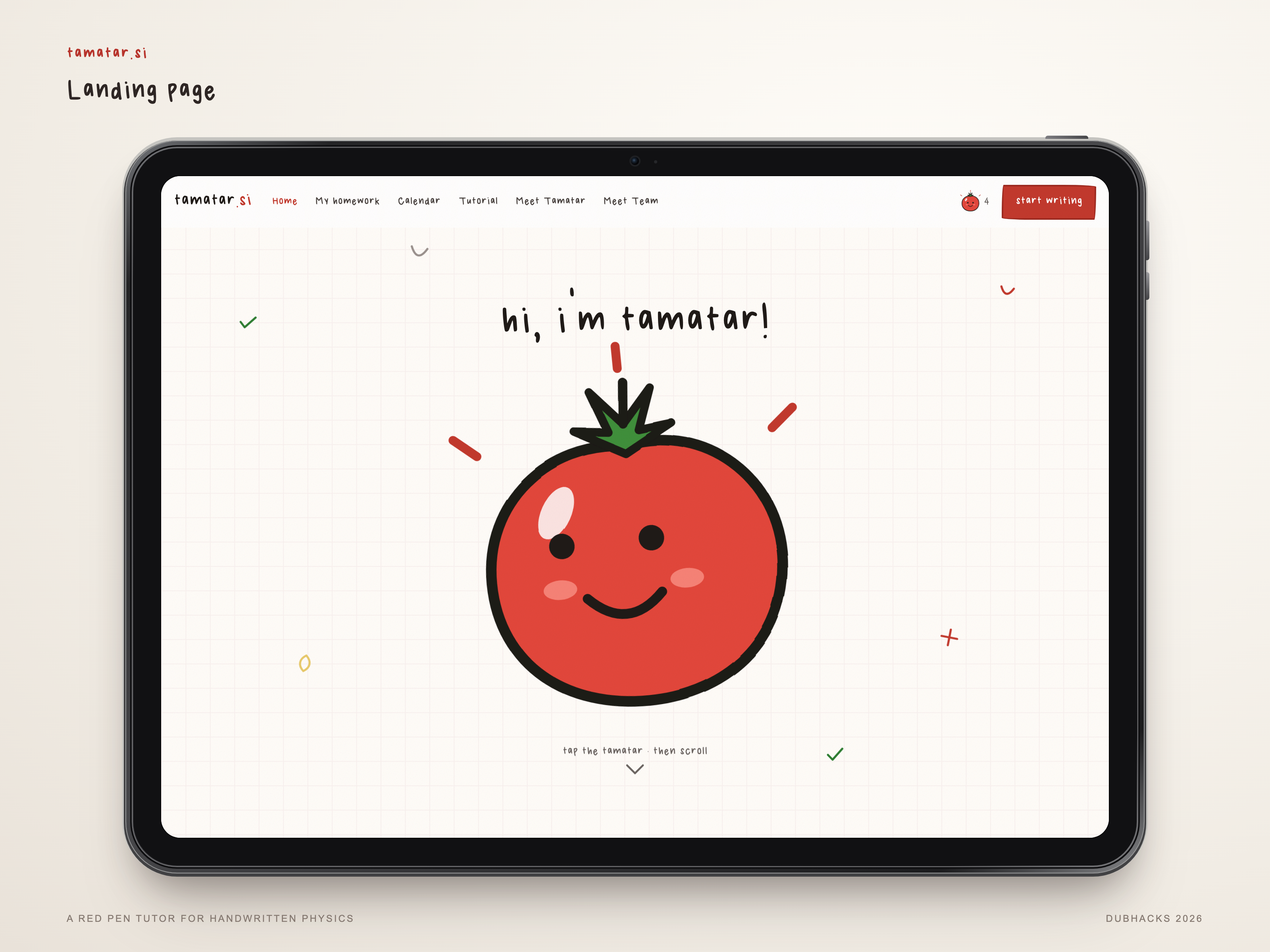
Students can write naturally on an iPad and import homework PDFs or worksheet photos. A tomato companion bruises with repeated mistakes and recovers as they improve. “Tamatar” means tomato in Hindi.
How we built it
We built Tamatar with Next.js, React, TypeScript, and Tailwind CSS, using a pressure-sensitive drawing canvas for handwritten work.
When a student presses Check, our backend sends an image of their work, the problem, and a reference solution to Anthropic’s Claude API. Claude returns structured feedback and coordinates identifying the mistake. The app uses those coordinates to place a red annotation on the student’s handwriting.
Each response includes all four help levels, so students can reveal more guidance without waiting for another request. We also integrated worksheet extraction and designed a notebook-style interface with our own handwriting font.
Challenges we ran into
Distinguishing incorrect physics from imperfect drawing was a major challenge. A shaky arrow can still represent the correct force, so we refined our grading instructions to consider labels, context, and intended relationships.
We also worked on locating mistakes accurately, interpreting ambiguous handwriting, and handling API delays and invalid responses. Feedback needs to be both conceptually useful and visually connected to the right part of the page.
Accomplishments that we're proud of
We connected handwritten input, physics reasoning, and visual feedback into one working experience.
We’re especially proud of giving students control over how much help they receive. They can start with a simple mark, try again, and ask for more guidance when they need it.
The notebook interface, custom handwriting font, and tomato companion also helped us make the experience feel personal and approachable.
What we learned
We learned that a useful tutor does more than produce correct answers. It helps students decide what to think about next.
Finding the first mistake gives students a manageable place to restart. Controlling how much feedback they see leaves room for independent reasoning.
We also learned that handwritten physics requires interpreting diagrams and equations together. A misplaced force arrow can explain every incorrect equation that follows it.
What's next for Tamatar
Our next step is to evaluate feedback accuracy and annotation placement on more real student handwriting, especially on iPad Safari.
We want to expand coverage across mechanics, improve worksheet import, and continue working with educators to refine the learning experience.
We also hope to join the University of Washington’s NEXT incubator to develop Tamatar beyond this hackathon. With mentorship and support, we want to test it with students and educators and work toward bringing it into classrooms.
Longer term, we envision a red pen tutor that works inside the note-taking apps students already use, bringing timely hints directly to their everyday homework.
Built With
- anthropic-api
- claude
- html5
- next.js
- pdf.js
- perfect-freehand
- react
- tailwind-css
- typescript
- zod

Log in or sign up for Devpost to join the conversation.