-
-
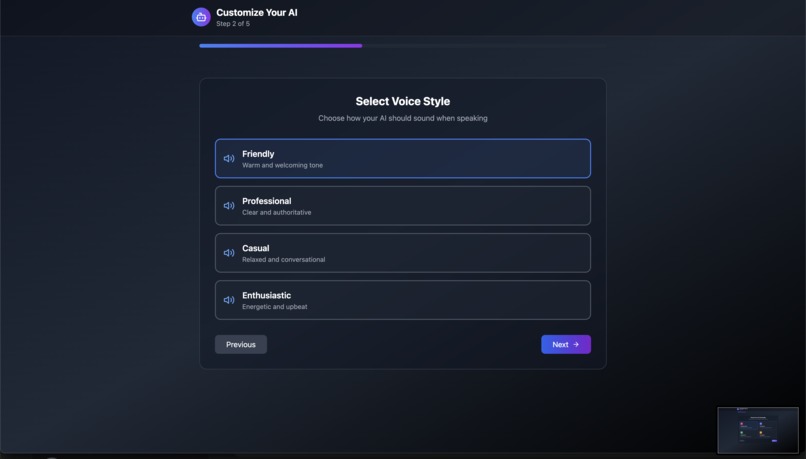
Customize AI #2
-
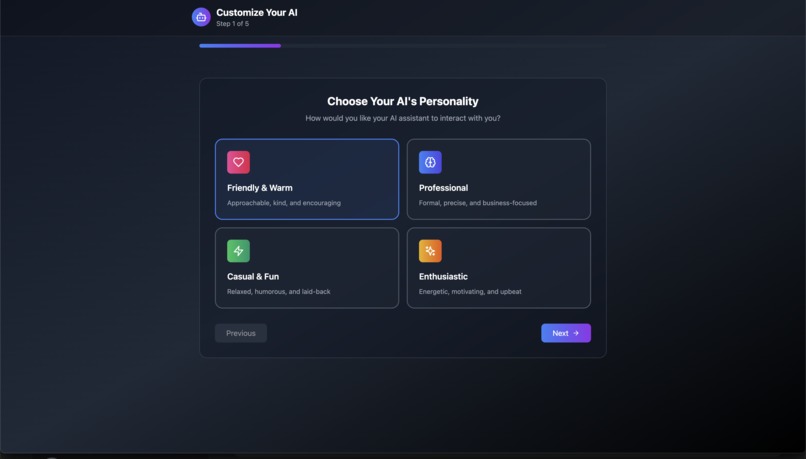
Customize AI #1
-
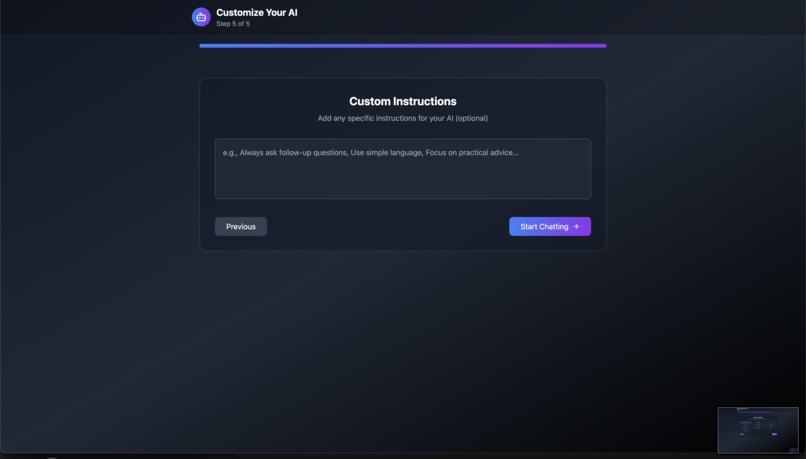
Customize AI #5
-
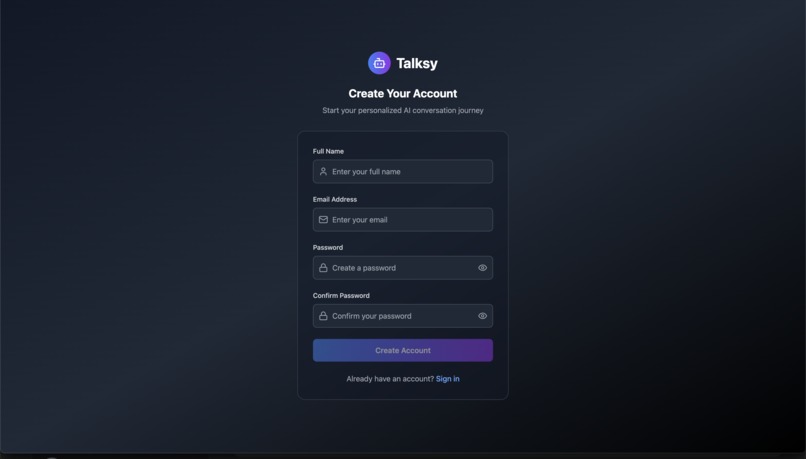
Sign In
-
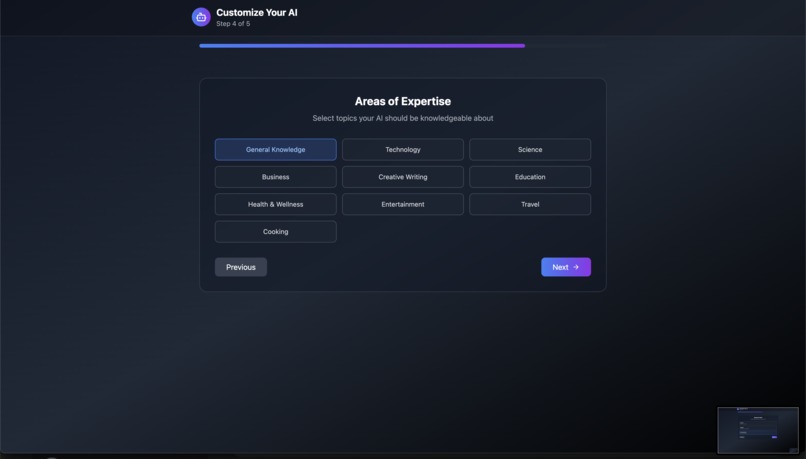
Customize AI #4
-
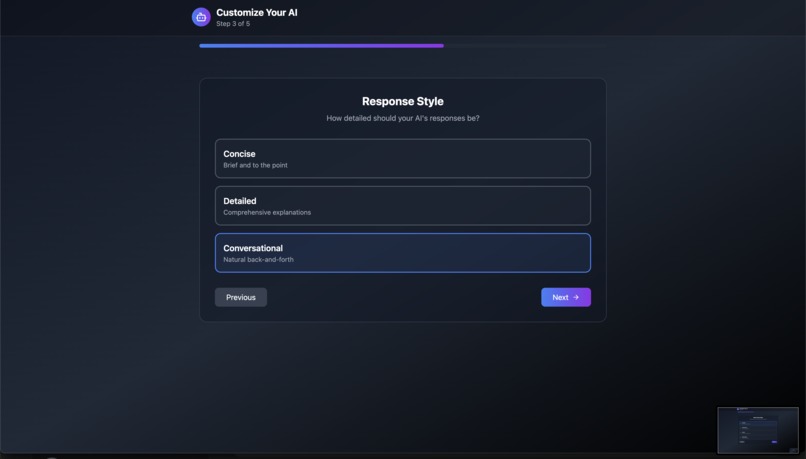
Customize AI #3
-
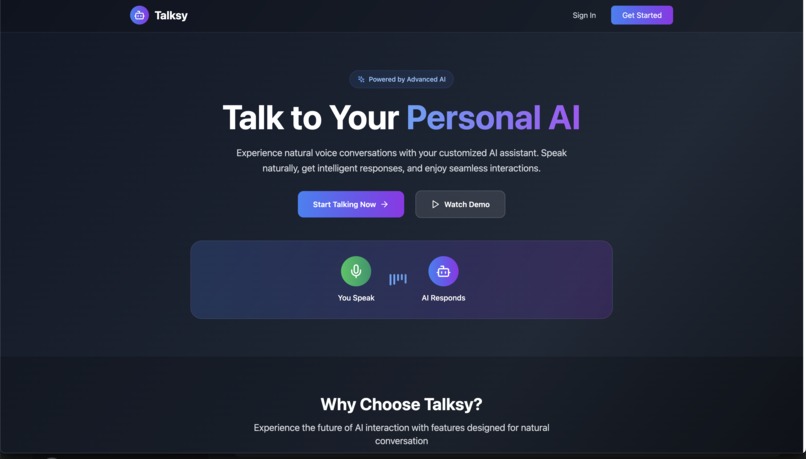
Landing Page
-
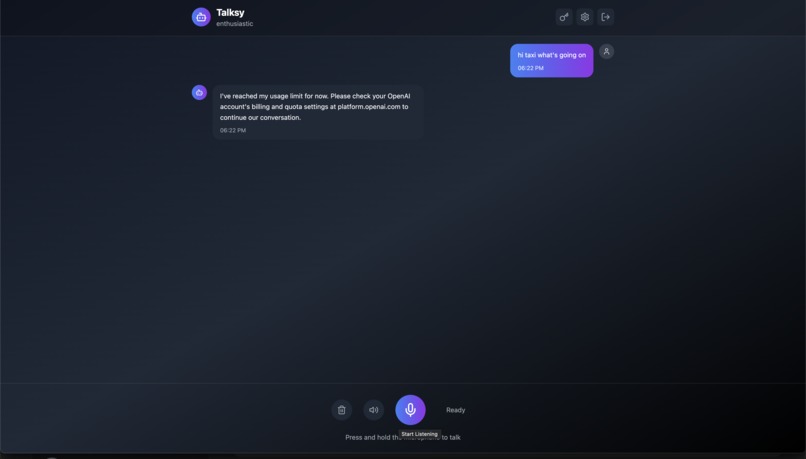
Talk to AI
-
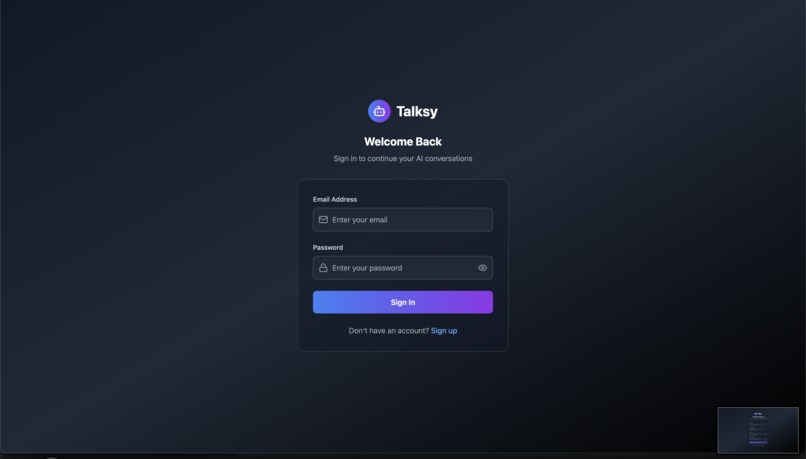
Login
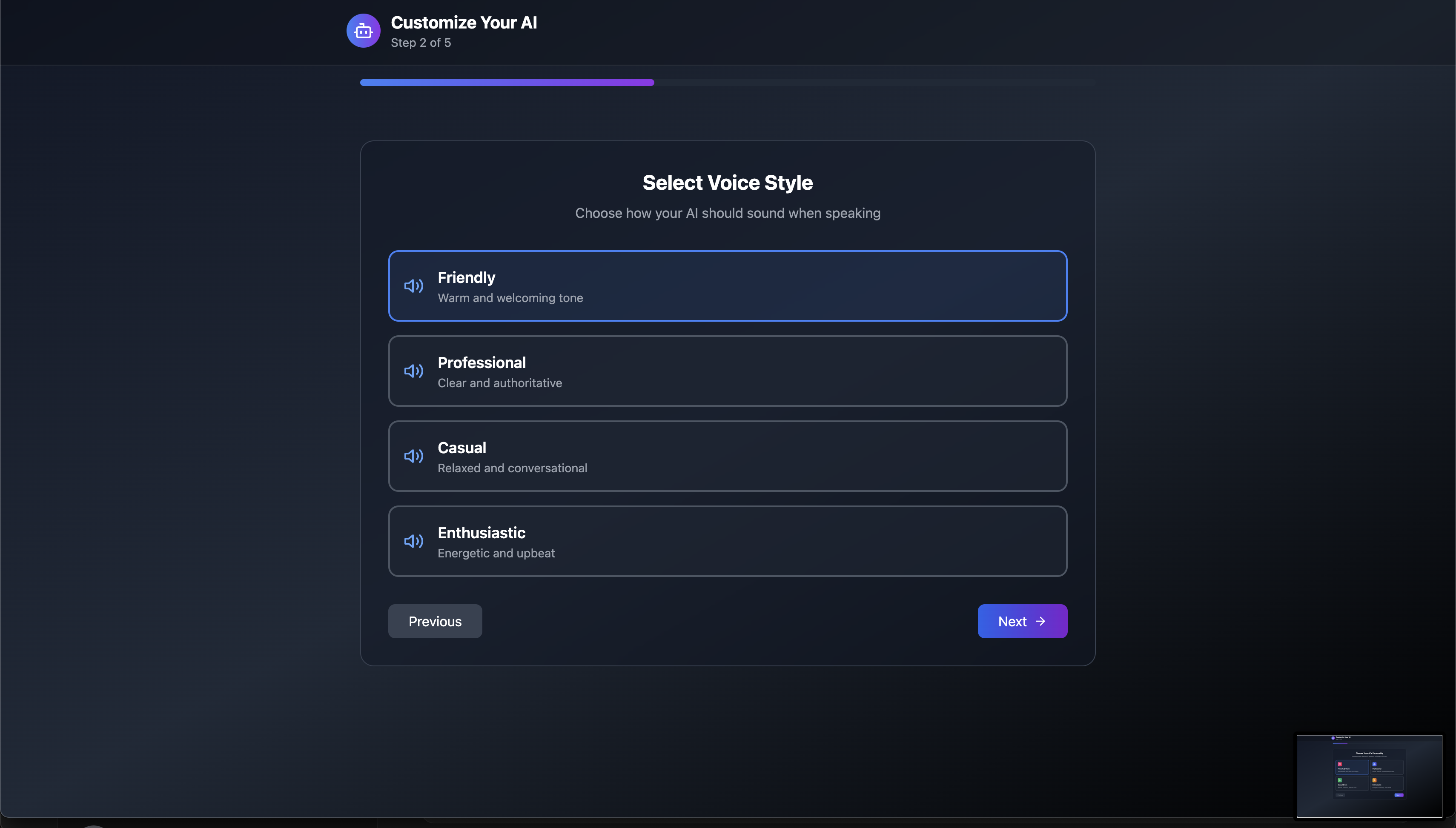
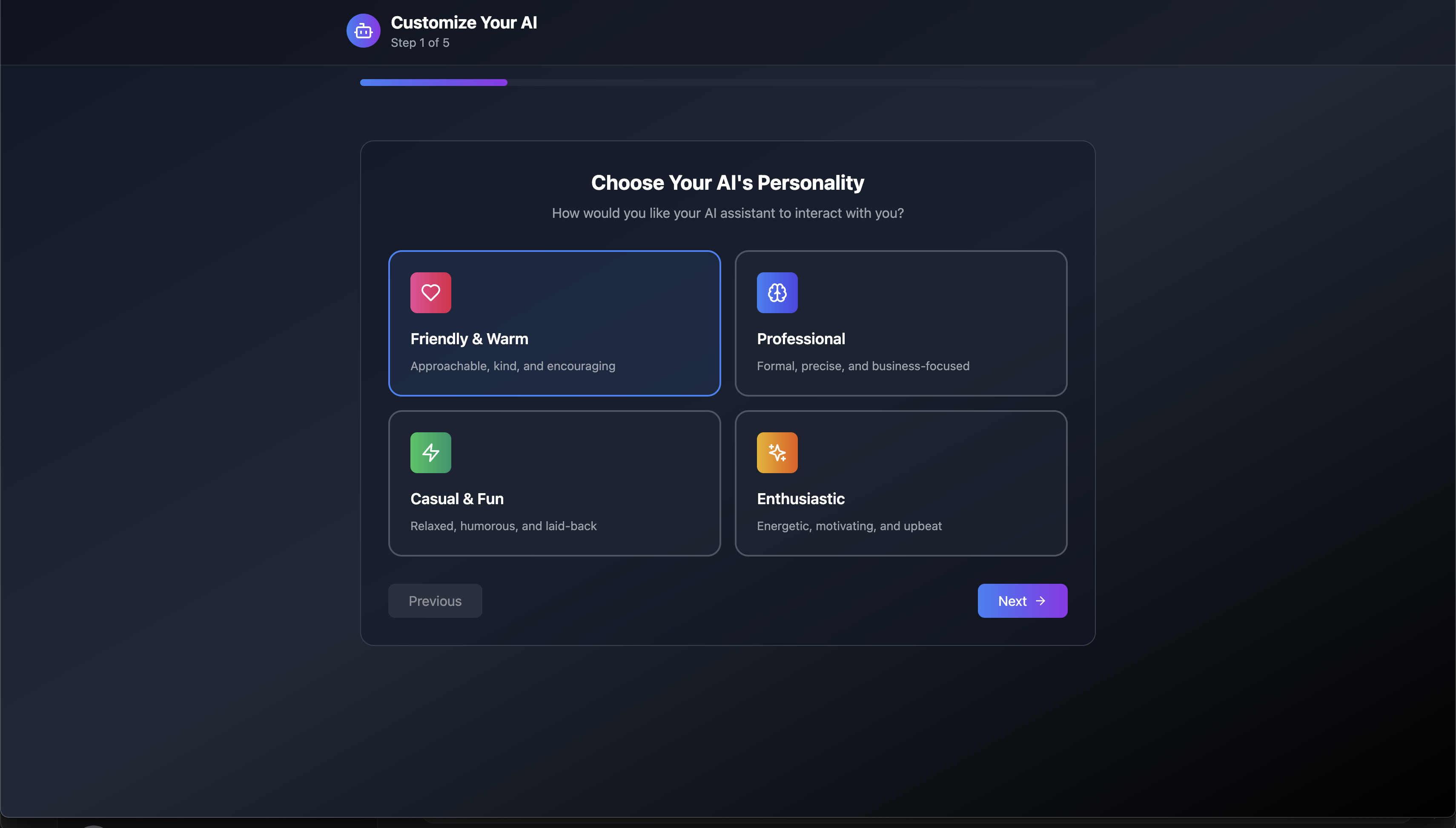
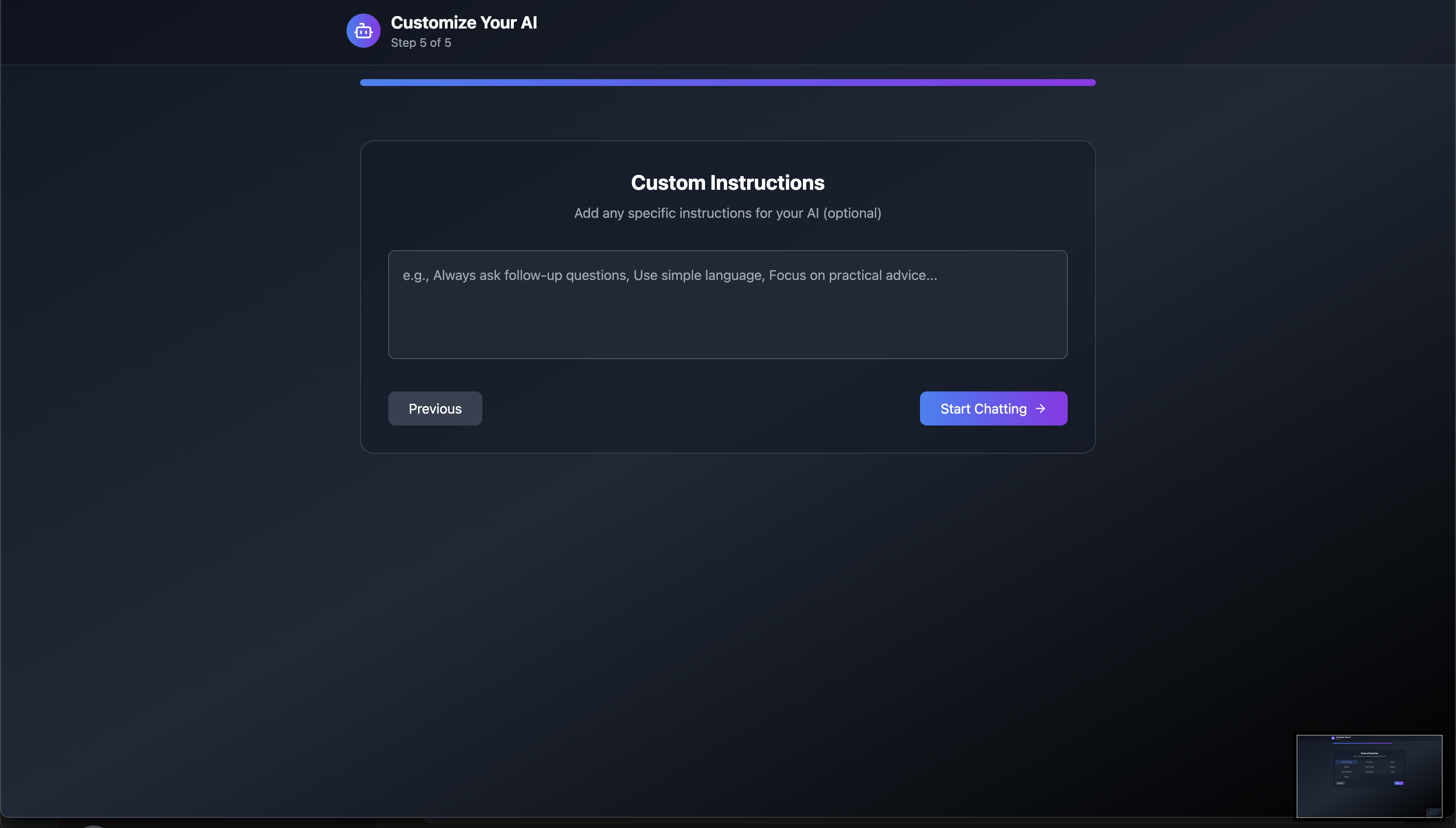
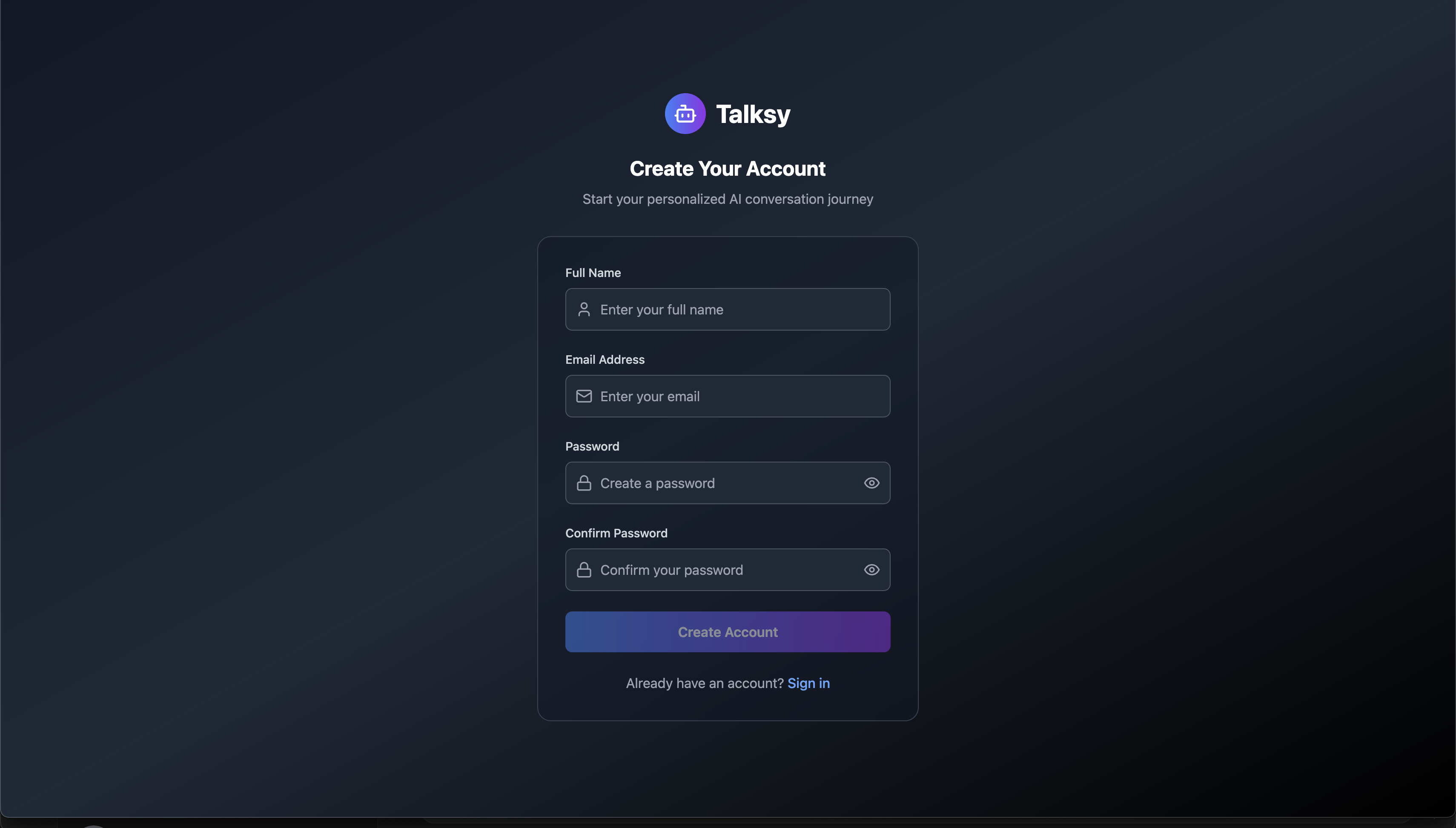
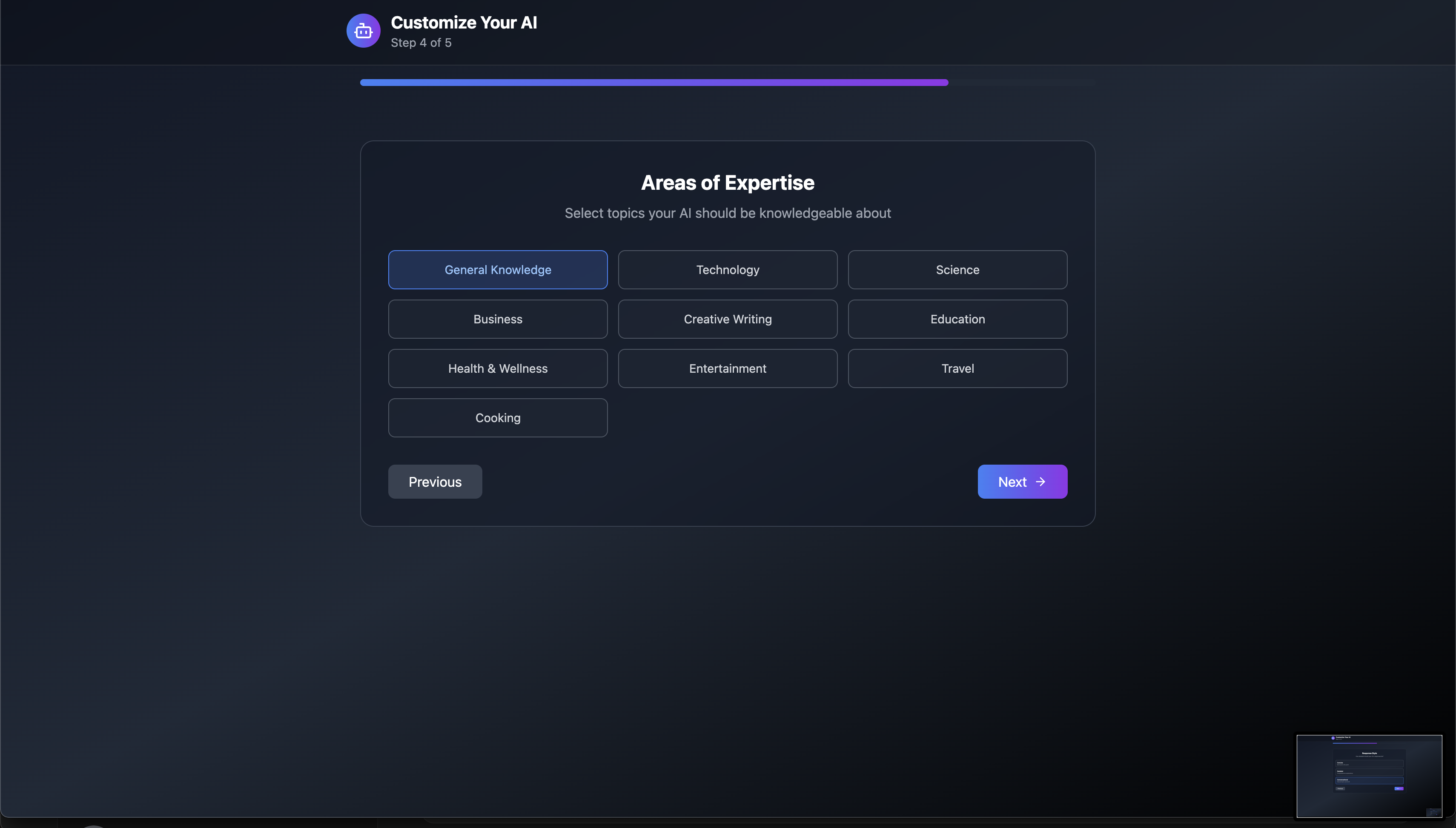
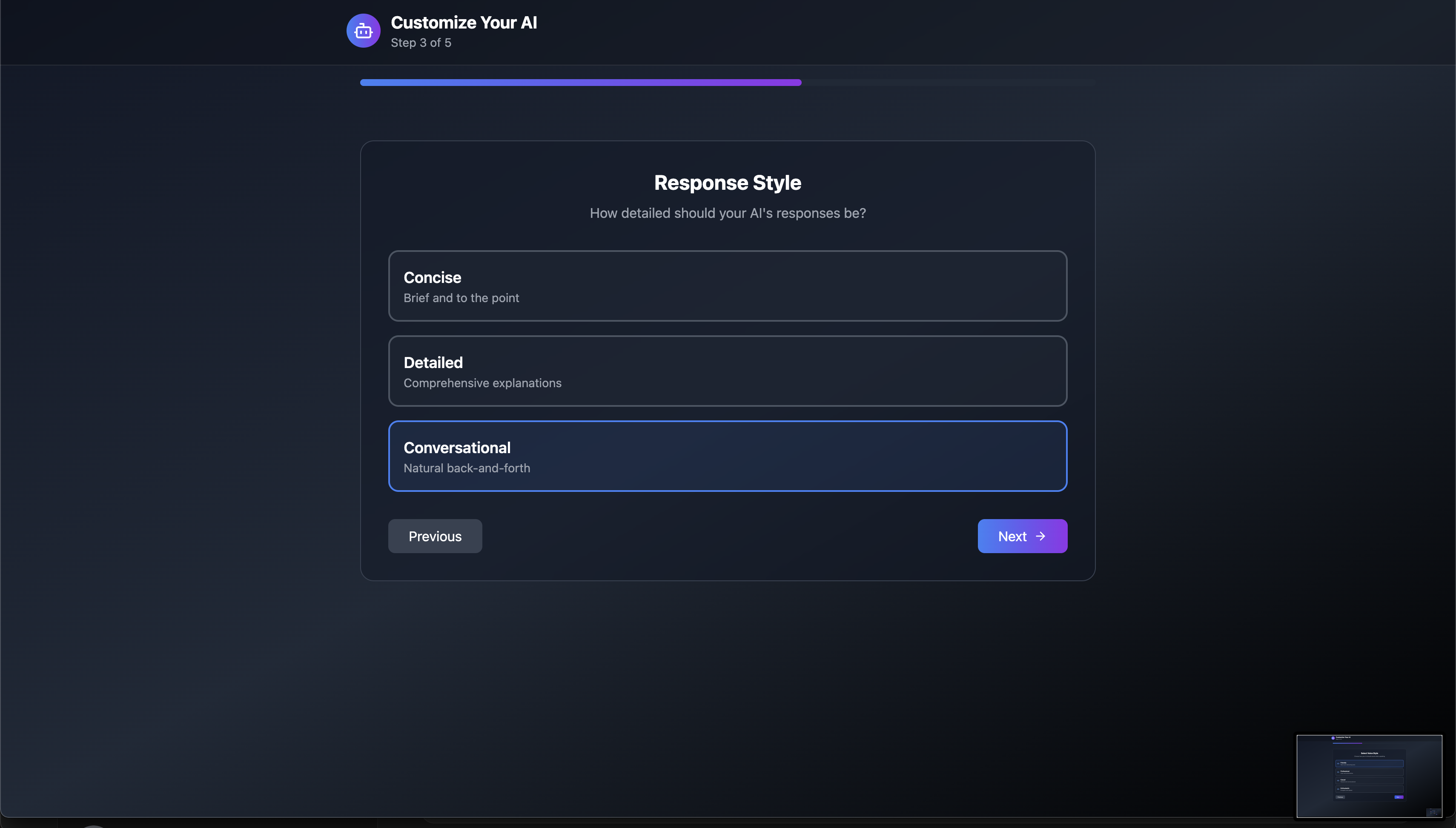
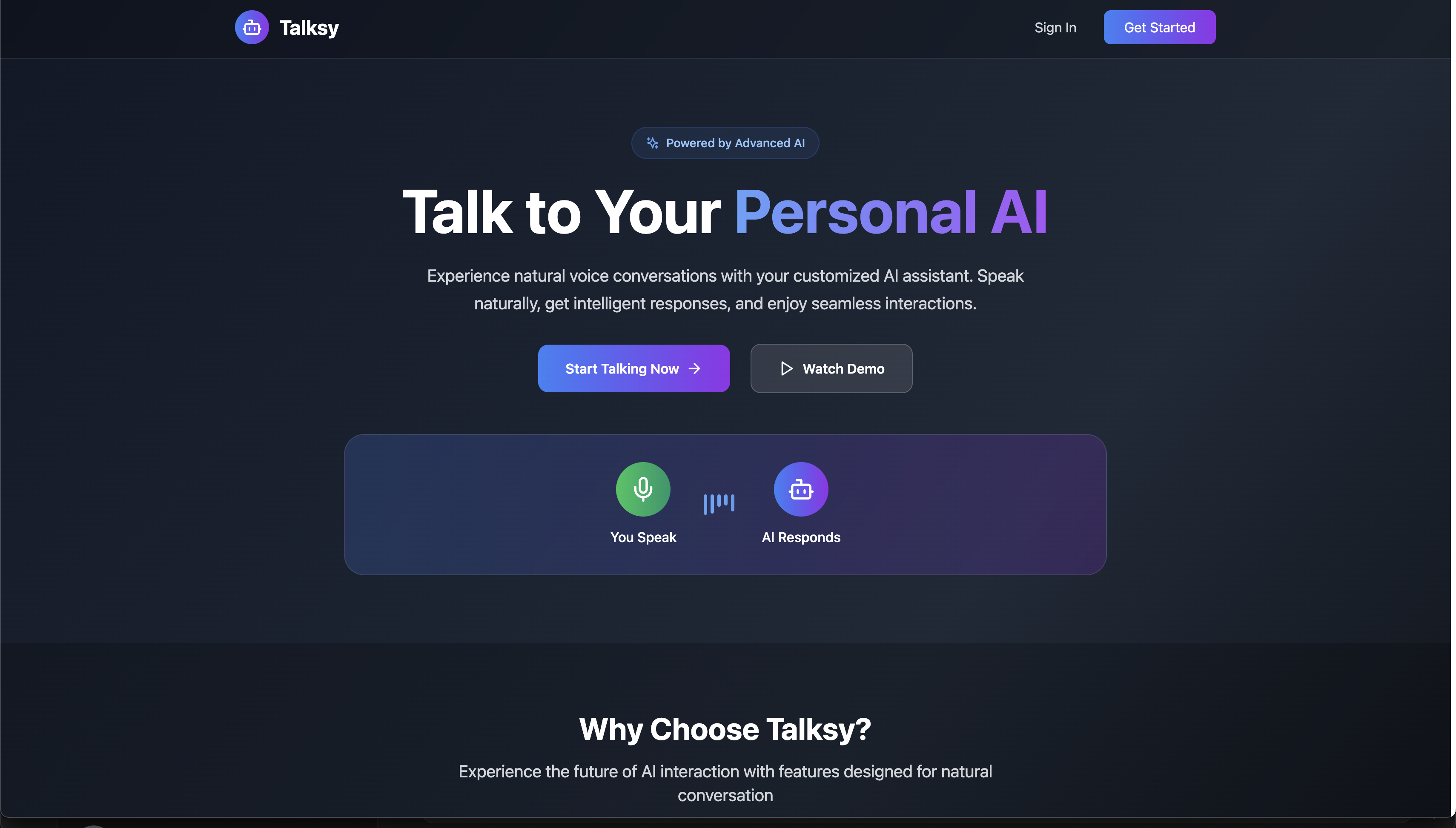
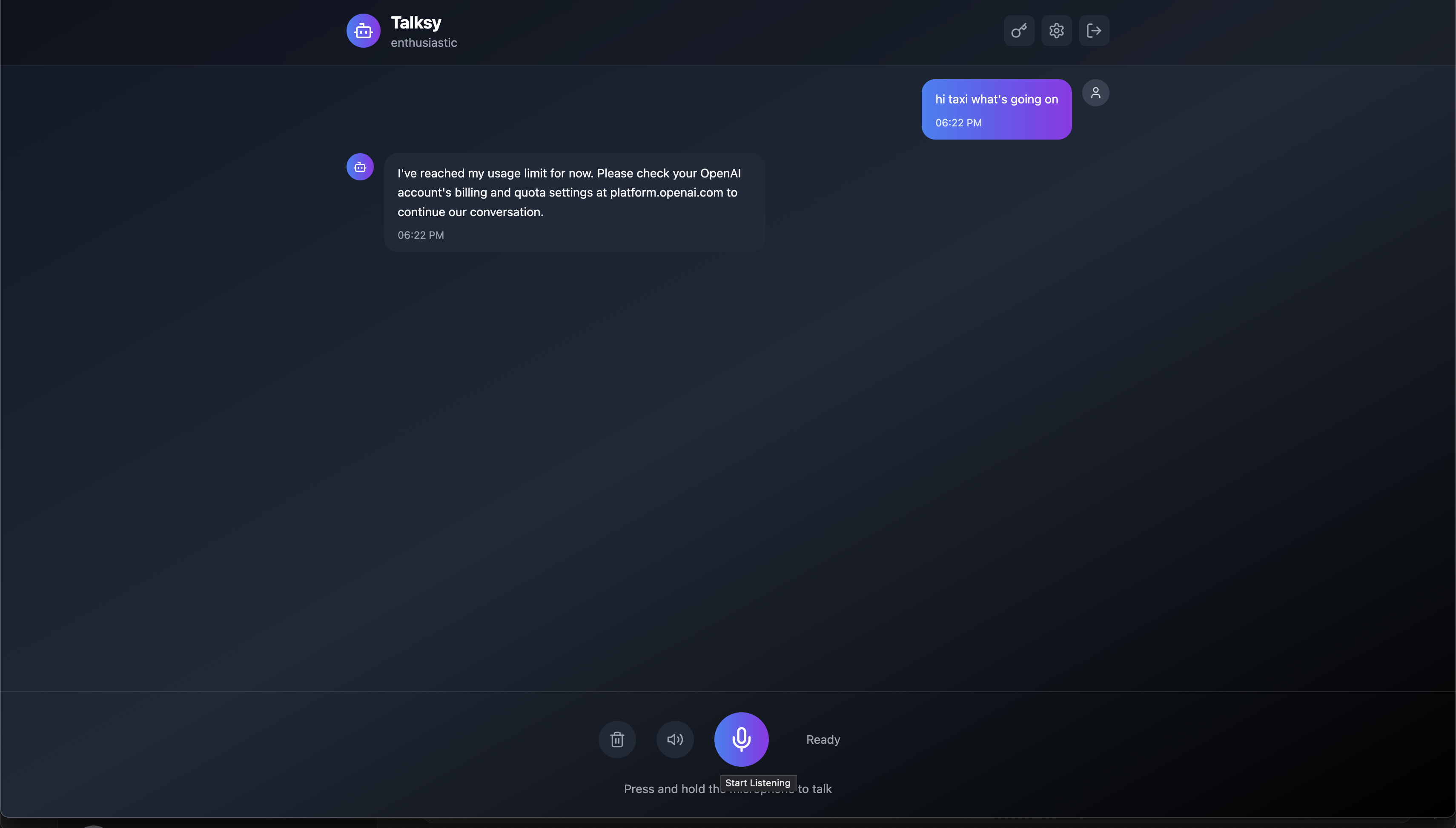
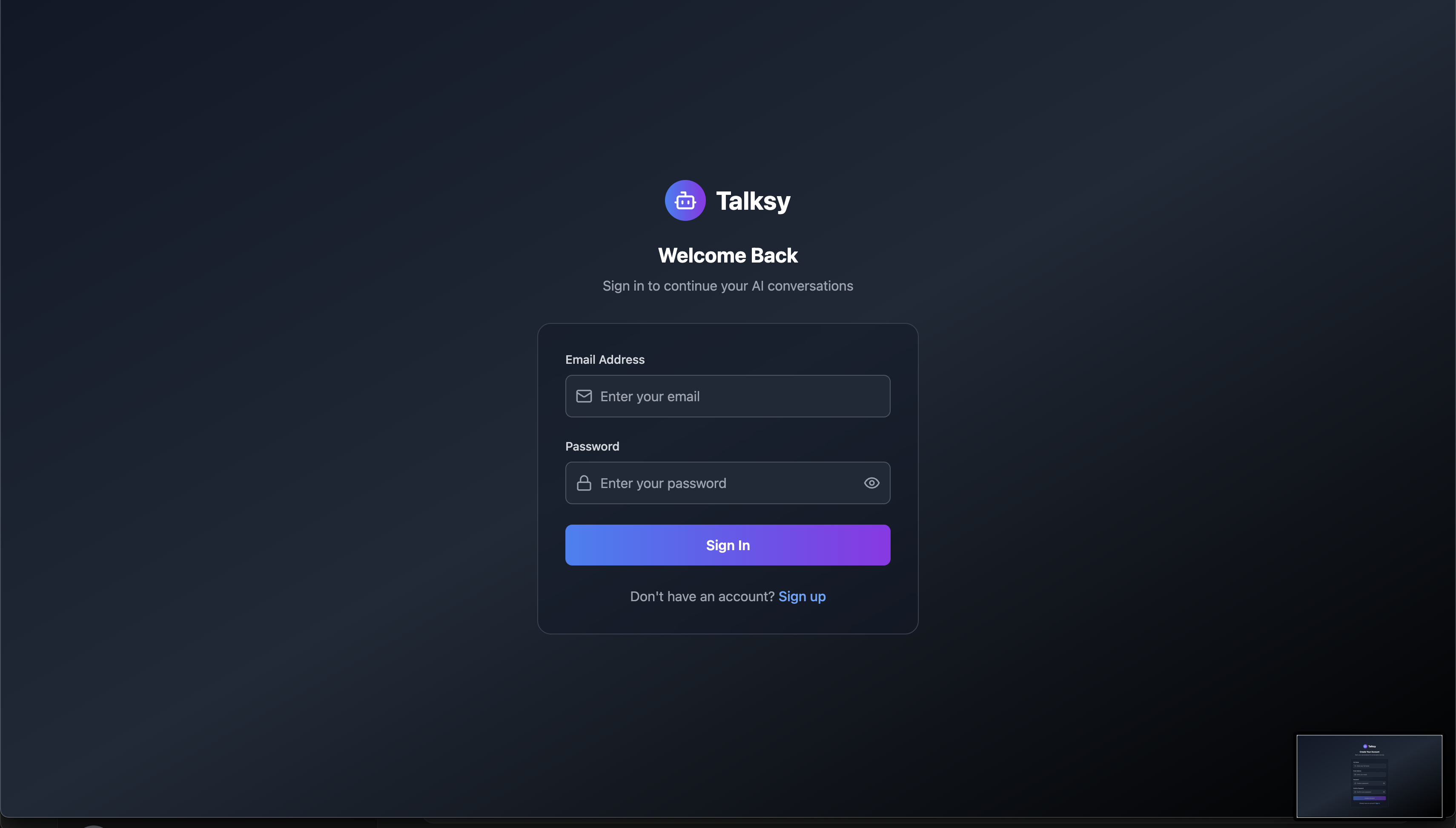
Inspiration The inspiration for Talksy came from the need for a safe, always-available space to talk about thoughts, feelings, and day-to-day challenges—without judgment. Many people, especially students and young adults, struggle to access mental health support or feel hesitant reaching out. Talksy bridges that gap by offering a conversational AI that listens, supports, and responds in real time—just like a friend or a therapist would.
What it does Talksy is a voice-interactive AI therapist app. Users can speak freely, and Talksy responds in real time using natural, friendly, and Gen Z-styled language. It allows users to:
Talk out loud and be heard by an AI.
Receive calm, empathetic, and helpful responses instantly.
Use a fun, voice-powered to-do list to offload stress and organize tasks.
Pick a day, describe how they feel or what’s on their mind, and receive support without having to type or book an appointment.
How we built it We built Talksy using:
React + Tailwind for a responsive and clean front-end interface.
Node.js + Express for managing API calls and user sessions.
OpenAI's GPT-4 for generating conversational responses tailored to a therapeutic tone.
Speech-to-text APIs (like Web Speech API) for capturing real-time voice input.
Text-to-speech tools to make the AI feel more like a real-time conversation partner.
MongoDB for storing user tasks and preferences securely.
Challenges we ran into Real-time voice syncing: Ensuring smooth transitions between user speech and AI response required a lot of tweaking.
Tone calibration: Making sure the AI responses stayed therapeutic, non-triggering, and sensitive to emotional cues.
Latency issues: Early builds had noticeable lag between speech and response, which broke immersion.
Maintaining user privacy and safety while still delivering a meaningful experience.
Accomplishments that we're proud of Created a fully functional AI therapist that talks and listens in real time.
Built a seamless to-do list feature that responds to voice commands.
Designed an intuitive UI that feels calming and personal.
Successfully matched the AI tone with how a compassionate friend or therapist would respond.
What we learned The importance of empathy when designing AI-driven tools.
Real-time interaction requires optimizing across multiple tools—from frontend audio capture to backend processing.
Subtle design choices (like pacing, tone, or even voice pitch) impact how “human” an AI feels.
Building for mental wellness demands a deeper focus on emotional safety and user boundaries.
What's next for Talksy – An AI Therapist Mood tracking and progress journaling features.
Daily check-ins and reminders tailored to emotional patterns.
Anonymous community support where users can share thoughts and encouragement.
Mobile app release to make Talksy more accessible on the go.
Emergency escalation tools that can help users get human support if needed.
And most importantly—continuing to evolve Talksy with compassion, care, and real user feedback.
Built With
- css
- html
- javascript
- react
- supabase


Log in or sign up for Devpost to join the conversation.