-
-
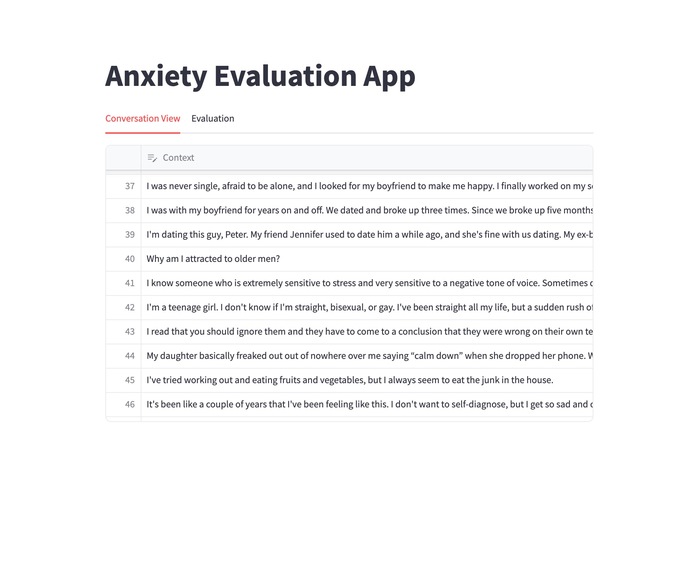
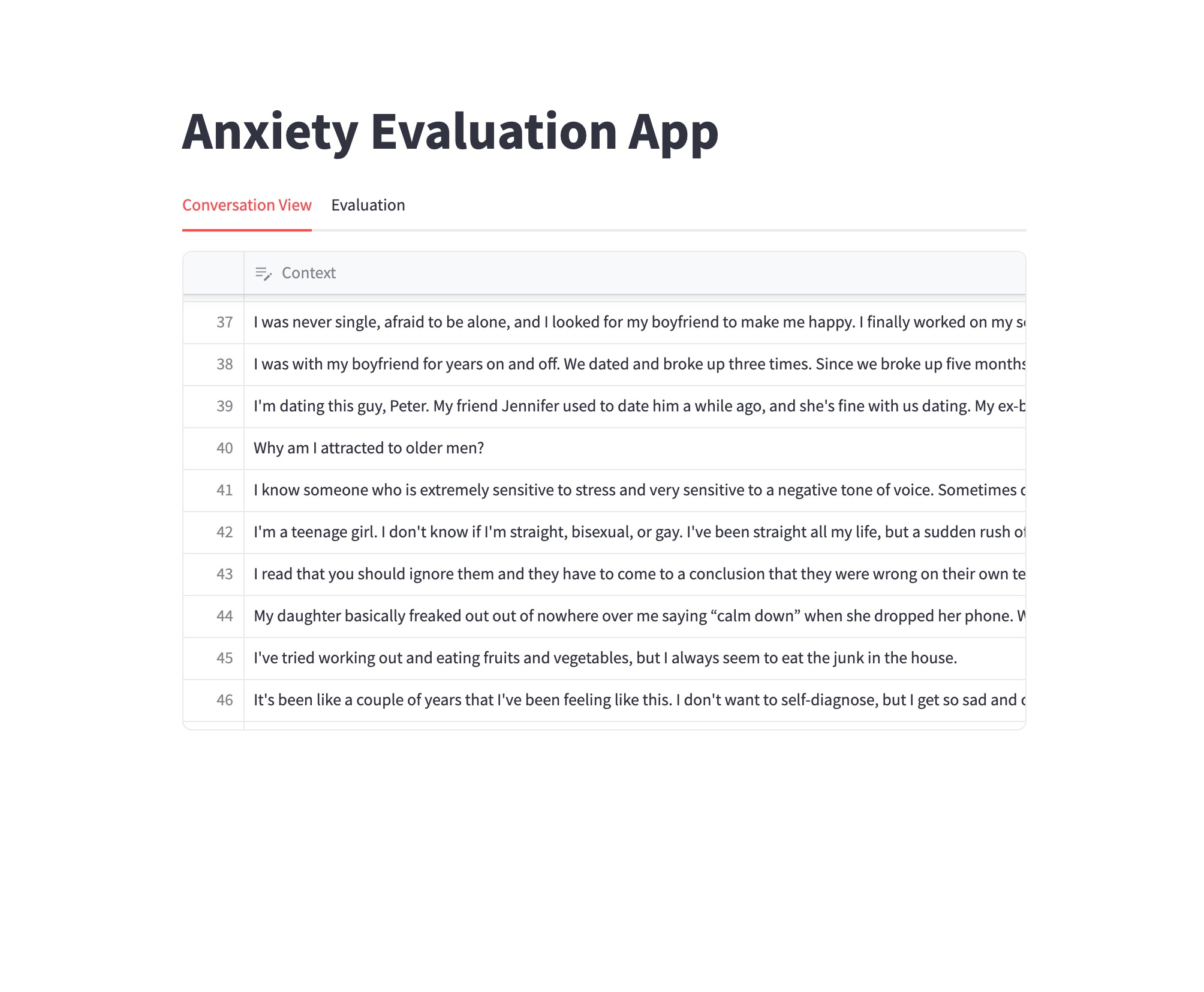
Streamlit Application with Preloaded Conversations from Kaggle Data
-
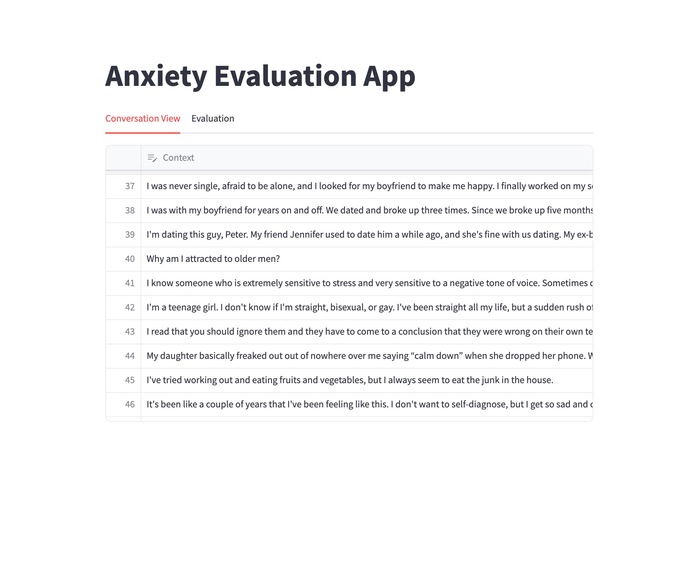
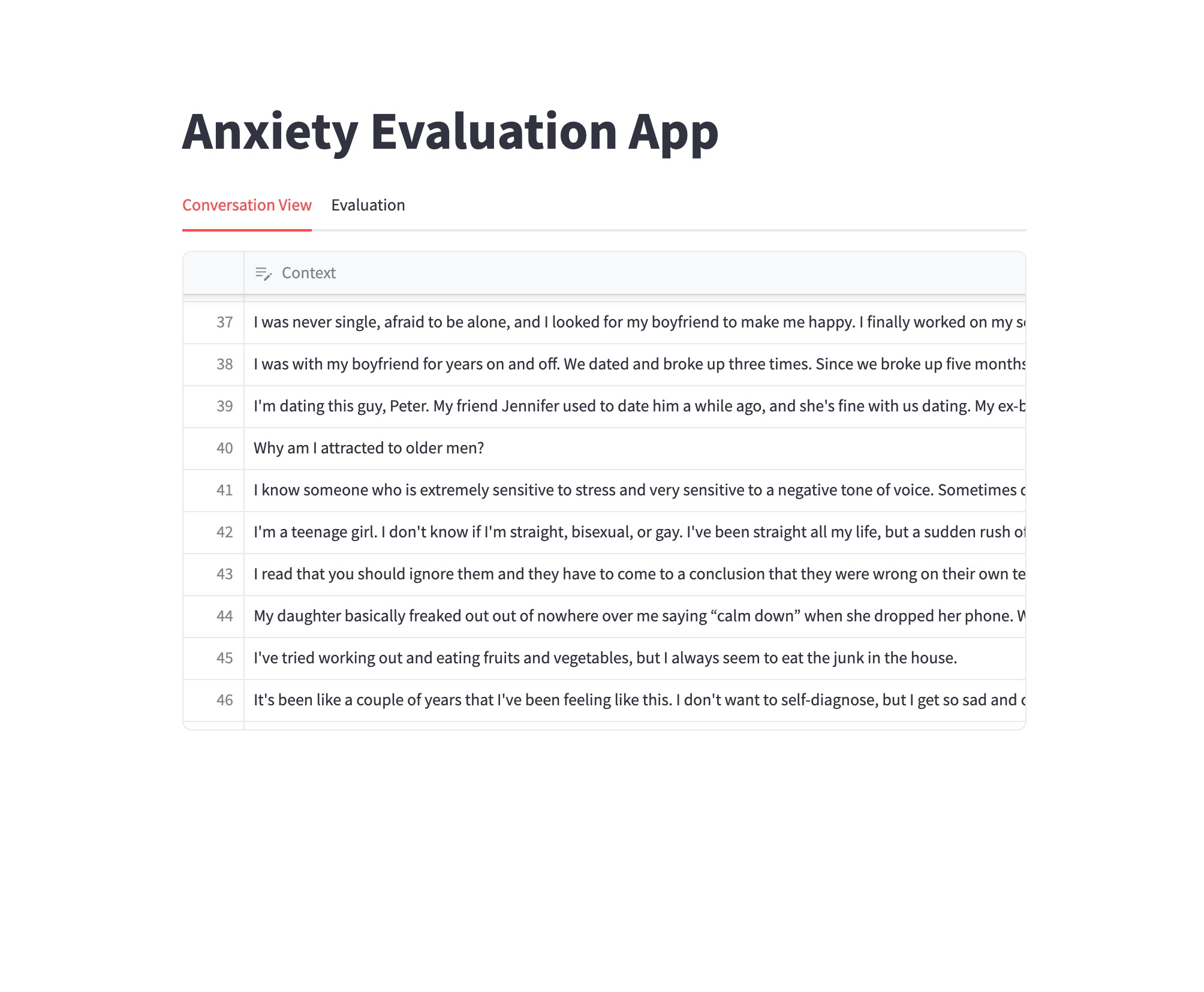
Streamlit Application with OpenAI Agent Response for Anxiety Profiling from Input Conversation
-
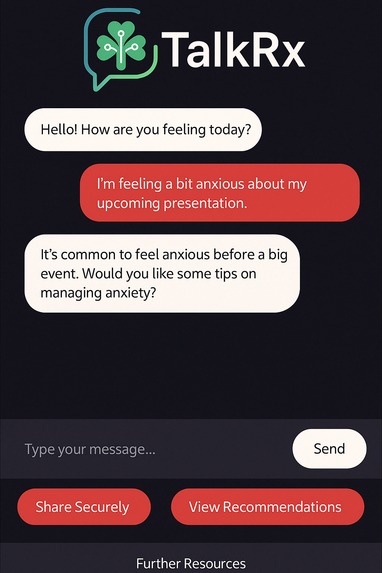
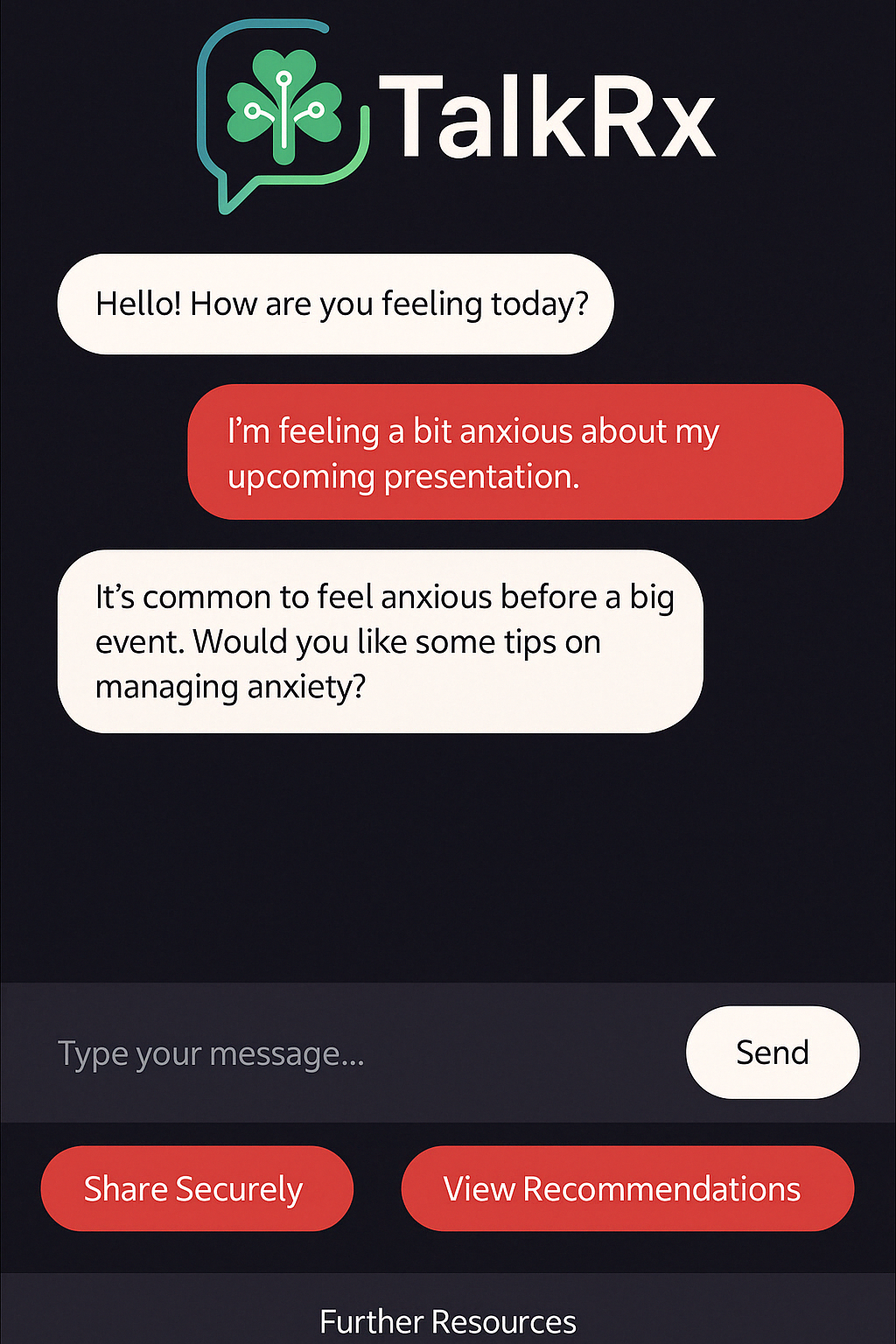
TalkRx Flutter app chat screen view showing conversation between the agent and user
-
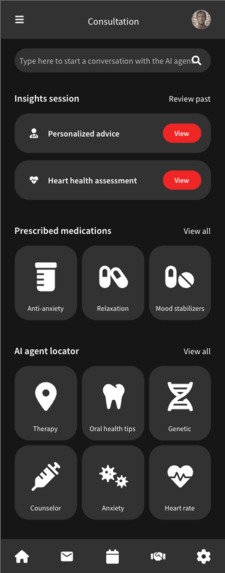
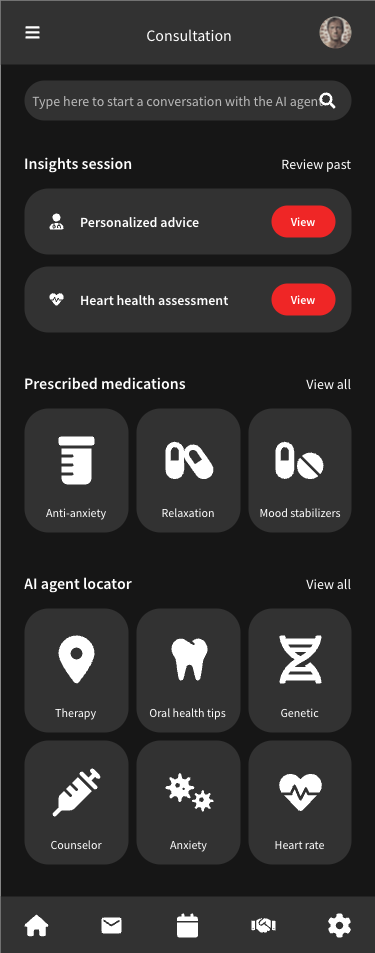
TalkRx Flutter app home page showing future options to enhance application functionality
TalkRx – AI‑Guided Anxiety Support Built for Responsible Healthcare
1. Inspiration
- An estimated 1 in 5 adults in the U.S. experience an anxiety disorder each year, yet more than half don’t receive treatment. We noticed two major gaps contributing to that. First, support isn’t always available when people need it most. Therapy requires time, money, and scheduling, which many people can't access on demand. Second, while AI chatbots are widely available, they often lack clinical accuracy, personalization, and trust. Some people also aren’t ready or willing to talk to a therapist directly due to stigma, fear, or just not knowing where to start. We wanted to build something that bridges all those gaps, that's more reliable than Googling symptoms, and more accessible than a therapy session. Our goal was to deliver real-time, evidence-based anxiety support that people can trust and actually use when they need it most.
2. What It Does
- TalkRx is a cross‑platform mobile system where anxiety patients chat with an AI companion that can:
- Extract an AnxietyProfile – symptoms, triggers, emotions, evidence, and a provisional DSM‑5‑TR / ICD‑10 diagnosis.
- Suggest evidence‑based next steps – psycho‑education, coping tips, and FDA‑approved (or off‑label) medication options.
- Share structured data with providers through FHIR v5 Patient + Observation resources, making human follow‑up fast and safe.
3. How We Built It
Architecture Diagram

Architecture Details
| Area | Key Work |
|---|---|
| Infrastructure | FastAPI microservices with LangServe + Model Context Protocol (MCP) for tool discovery; PostgreSQL & DuckDB (structured data), MongoDB (JSON chat logs); Docker‑ized on an SSDNodes VPS. |
| AI Layer | GPT‑4o via Langchain routes; custom AnxietyExtractor parses chat text into a Pydantic schema and stores it. |
| Clinical Layer | Curated DSM‑5‑TR ↔ ICD‑10 mappings and a medication knowledge‑base (doses, interactions, black‑box warnings). |
| App Layer | Flutter/Dart UI: Home + Chat dashboards consume REST endpoints; Streamlit evaluator lets clinicians review AI output and tune tone/safety. |
| Standards | FHIR v5 resources generated with fhirstarter; MCP enables the agent to call any microservice like a plug‑in. |
Team Roles
Rishov – backend, AnxietyExtractor, databases, FHIR, MCP. Usma – clinical rules, DSM/ICD mapping, medication DB, output validation. Mohith & Prakriti – Flutter UI, state management, API wiring with Dart. Miao – data persistence & privacy controls using Python, gRPC, and FastAPI
4. Core Features Delivered
- Agent Chat Service – OpenAI + LangServe endpoints.
- Patient Data & Anxiety Extractor Service – exposes MCP tools.
- AnxietyProfile extractor (Langchain‑powered).
- Clin‑grade tables: disorders + meds in Postgres via SQLAlchemy ETL.
- Flutter client (Home & Chat).
- Evaluator Web App – Streamlit tabs to view Kaggle chat data (DuckDB) and live‑test agent replies.
- One‑click VPS Deploy – all three services shipped in Docker.
5. Challenges & Solutions
- Scarce, clean mental‑health data → curated Kaggle conversations and hand‑labeled ICD‑10 examples.
- Empathy vs. accuracy → iterative tone tuning with evaluator tool.
- Hackathon time limit → feature flags: chat first, then meds, FHIR, gRPC/MCP.
- Dataset approvals (e.g., MIMIC‑IV) were slow → pivoted to public corpora from Kaggle mental healthcare datasets.
6. Accomplishments
- End‑to‑end pipeline: raw text → structured AnxietyProfile → tailored recommendations.
- 1,200‑entry medication DB with dosing, interactions, & special‑population notes.
- Seamless MCP mounting so GPT‑4o “discovers” any TalkRx tool without code changes.
- Flutter app live‑tests new patient chats and streams AnxietyProfiles instantly.
7. What We Learned
- Backend: mounting MCP servers inside FastAPI, generating FHIR v5 on the fly.
- Clinical: programmatic DSM‑5‑TR translation and scalable AI output QA.
- Frontend: Flutter for healthcare, async state, AI microservice orchestration.
- Full‑stack skills: privacy, logging, Docker deploy under 48 h.
8. Next Steps
- Ingest larger validated sets (e.g., DAIC‑WOZ) for model fine‑tuning.
- FHIR push to EHR sandboxes; pilot with university counseling centers.
- Expand user wellness: Calm‑style audio, journaling, peer groups.
- Pitch to VCs: reduce no‑shows, speed triage, inject structured data back into provider workflows.
9. Tech Stack
- Frontend – Flutter / Dart, Streamlit
- Backend – Python 3.12, FastAPI, LangServe, Langchain‑OpenAI (GPT‑4o), MCP
- Standards – FHIR v5, DSM‑5‑TR, ICD‑10
- Data – PostgreSQL, DuckDB, MongoDB
- DevOps – Docker, Docker‑Compose on SSDNodes VPS
Built With
- agentic-ai
- android
- android-studio
- dart
- docker
- docker-compose
- fastapi
- fhir
- flutter
- grpc
- jdk
- langchain
- model-context-protocol
- mongodb
- openai
- postgresql
- protobuf
- pydantic
- python
- requests
- rest
- sqlalchemy
- streamlit
- vps
- vs-code
- yaml
- zapp

Log in or sign up for Devpost to join the conversation.