-
-
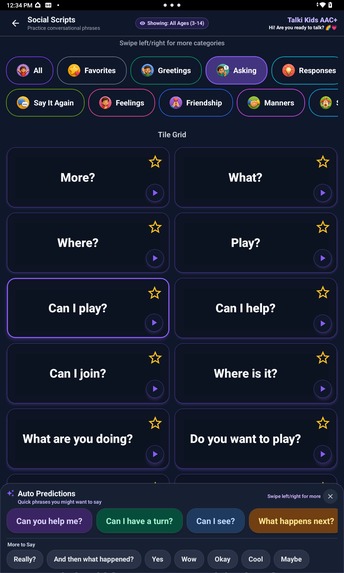
Social Scripts
-
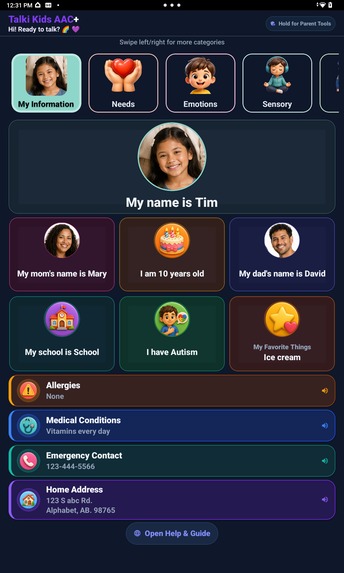
My Information
-
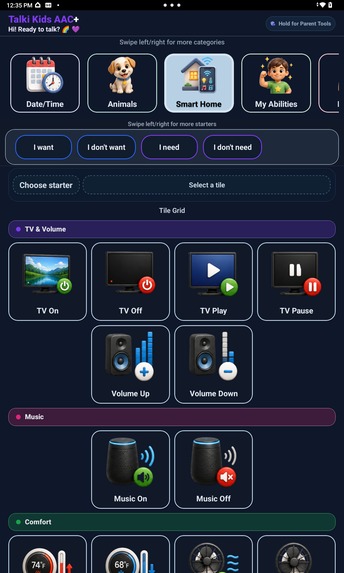
Smart Home
-
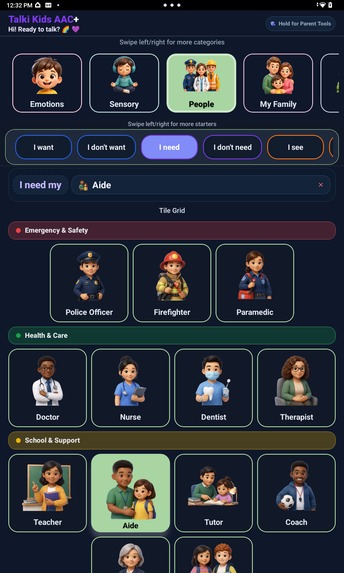
People
-
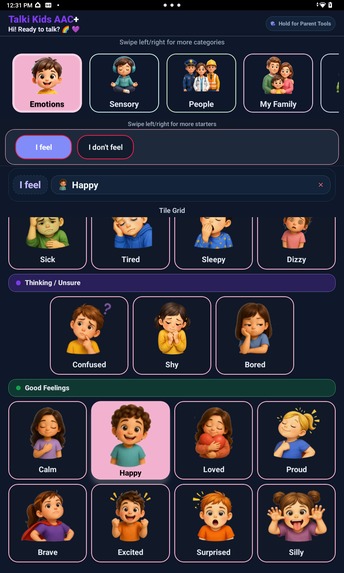
Emotions
-
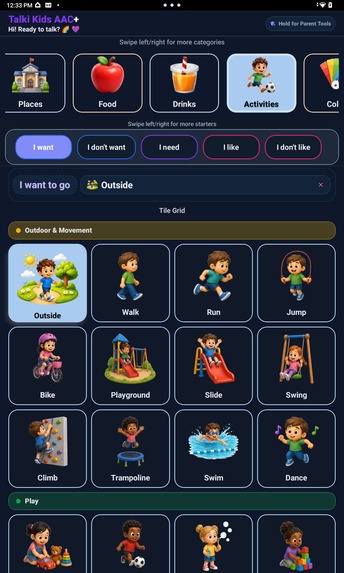
Activities
-
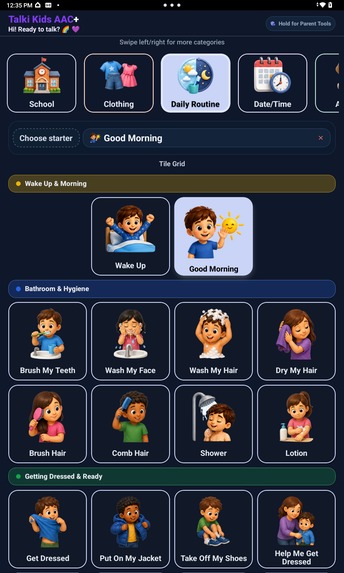
Daily Routines
-
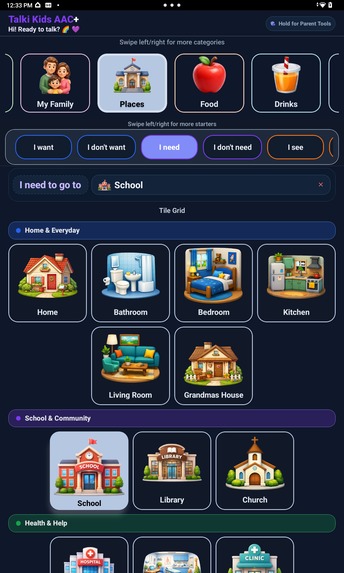
Places
-
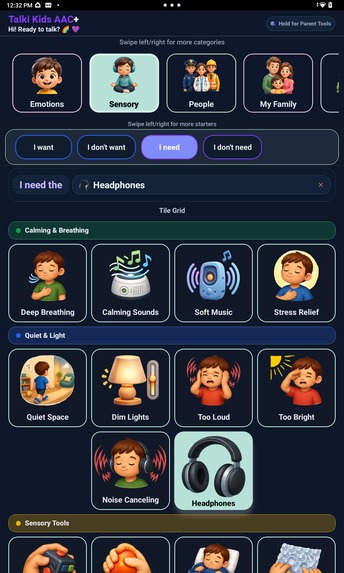
Sensory
-
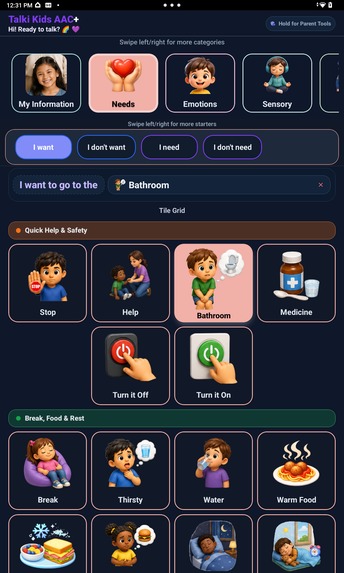
Needs
-
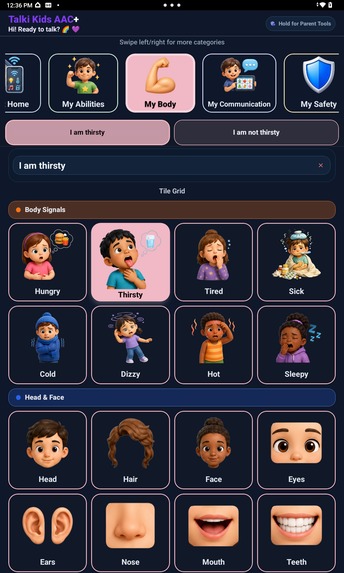
My Body
-
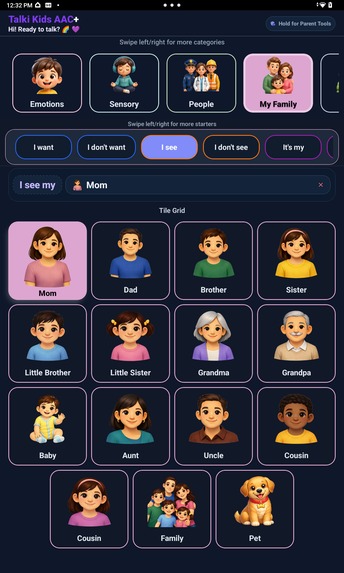
My Family
-
Alphabet
-
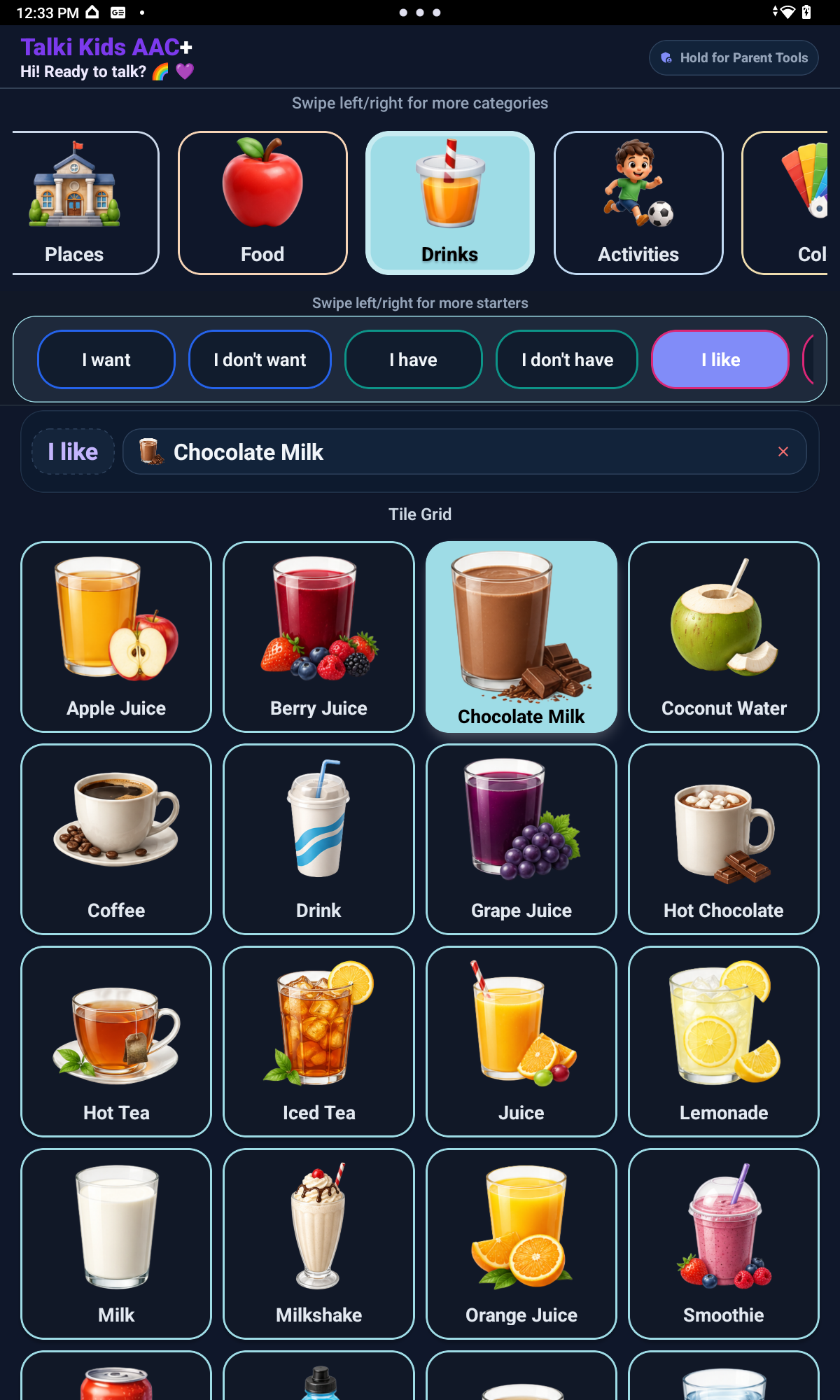
Drinks
-
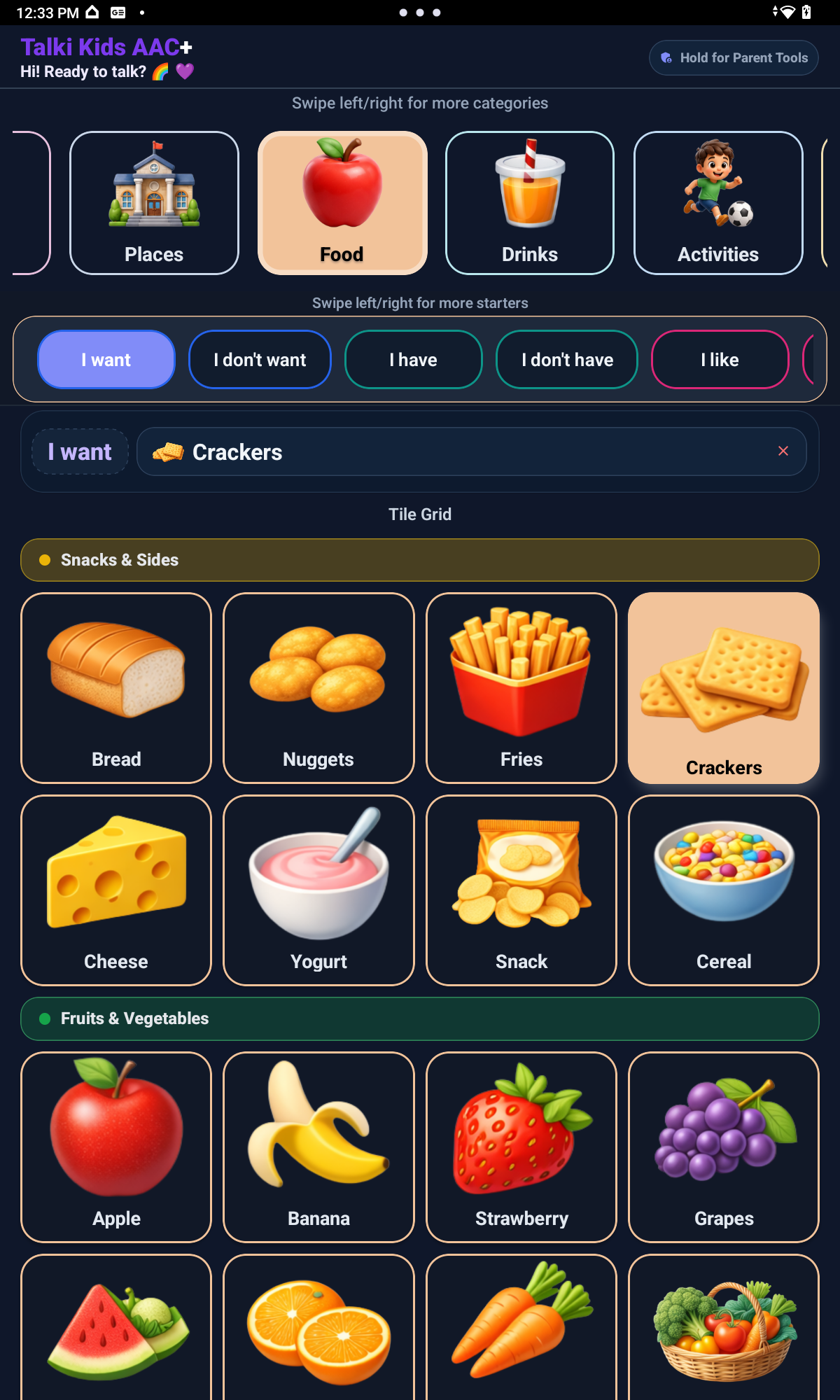
Food
Inspiration
Talki Kids AAC+ started at home, with my eight-year-old son, Bryce.
Bryce is autistic and has communication challenges. He often knows exactly what he wants, needs, or feels, but expressing it clearly can be difficult. As his father, I have watched that communication barrier turn into frustration—not because he has nothing to say, but because the people around him may not understand what he is trying to tell us.
I looked at existing AAC apps, but many felt too expensive, too overwhelming, or too limited for what we needed. I wanted something children could approach without being presented with too much at once, while still giving parents room to expand the experience over time.
That is why Talki Kids AAC+ has different support levels and parent-controlled visibility. A family can begin with fewer categories and choices, then gradually add more communication tools as the child becomes comfortable or their needs change.
I did not begin this project because AAC was a technology trend or because of a competition. I began it because my son needed another way to be heard. Eventually, I realized that other families might need something similar.
What Talki Kids AAC+ does
Talki Kids AAC+ is an offline visual AAC communication app for children with autism, speech differences, and other communication needs.
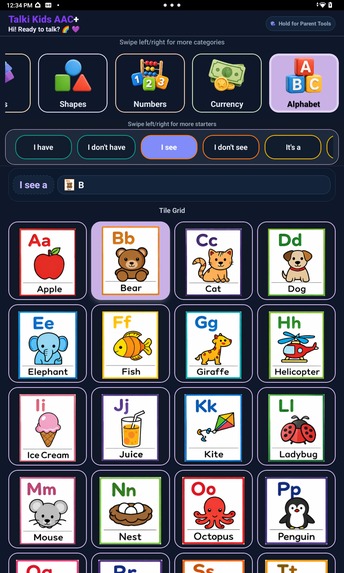
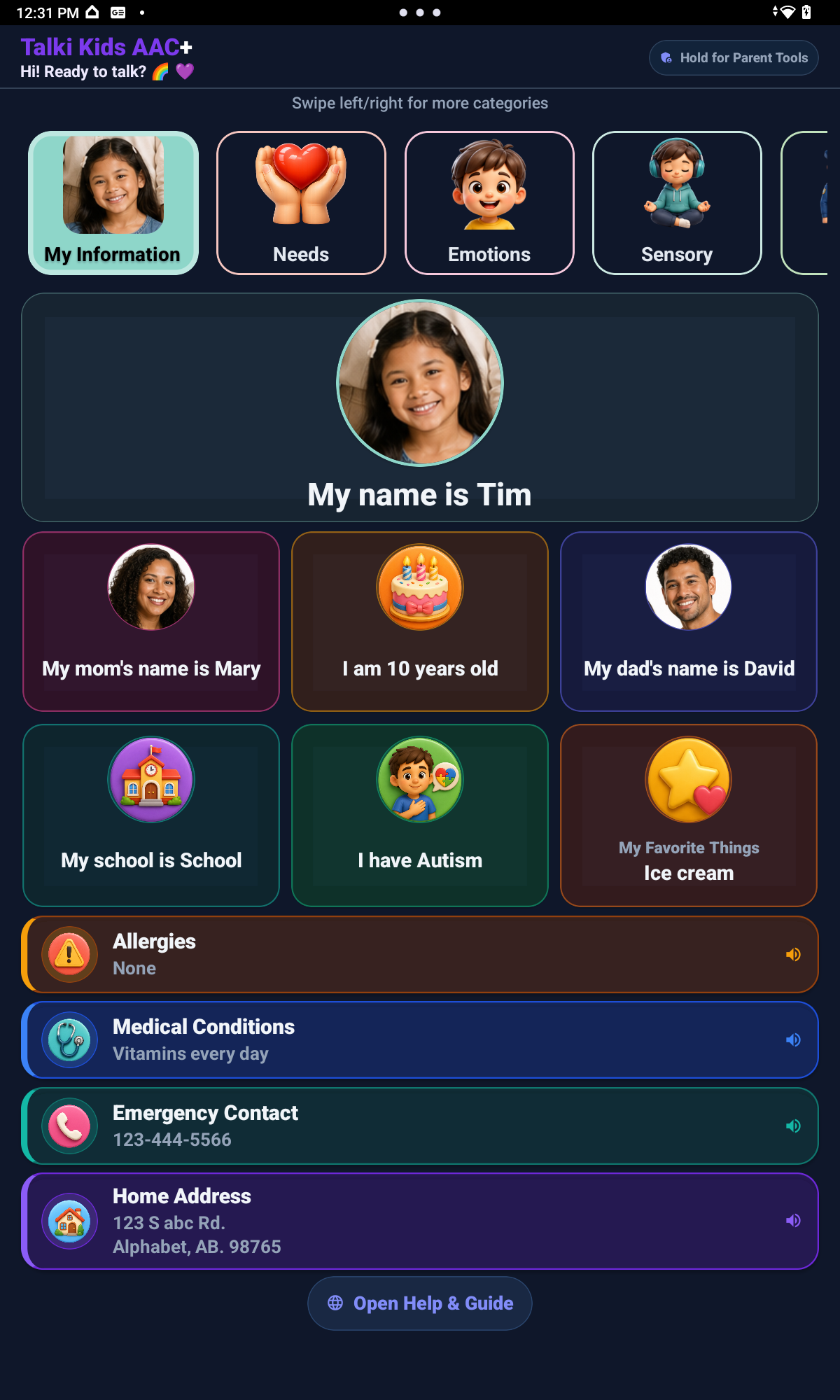
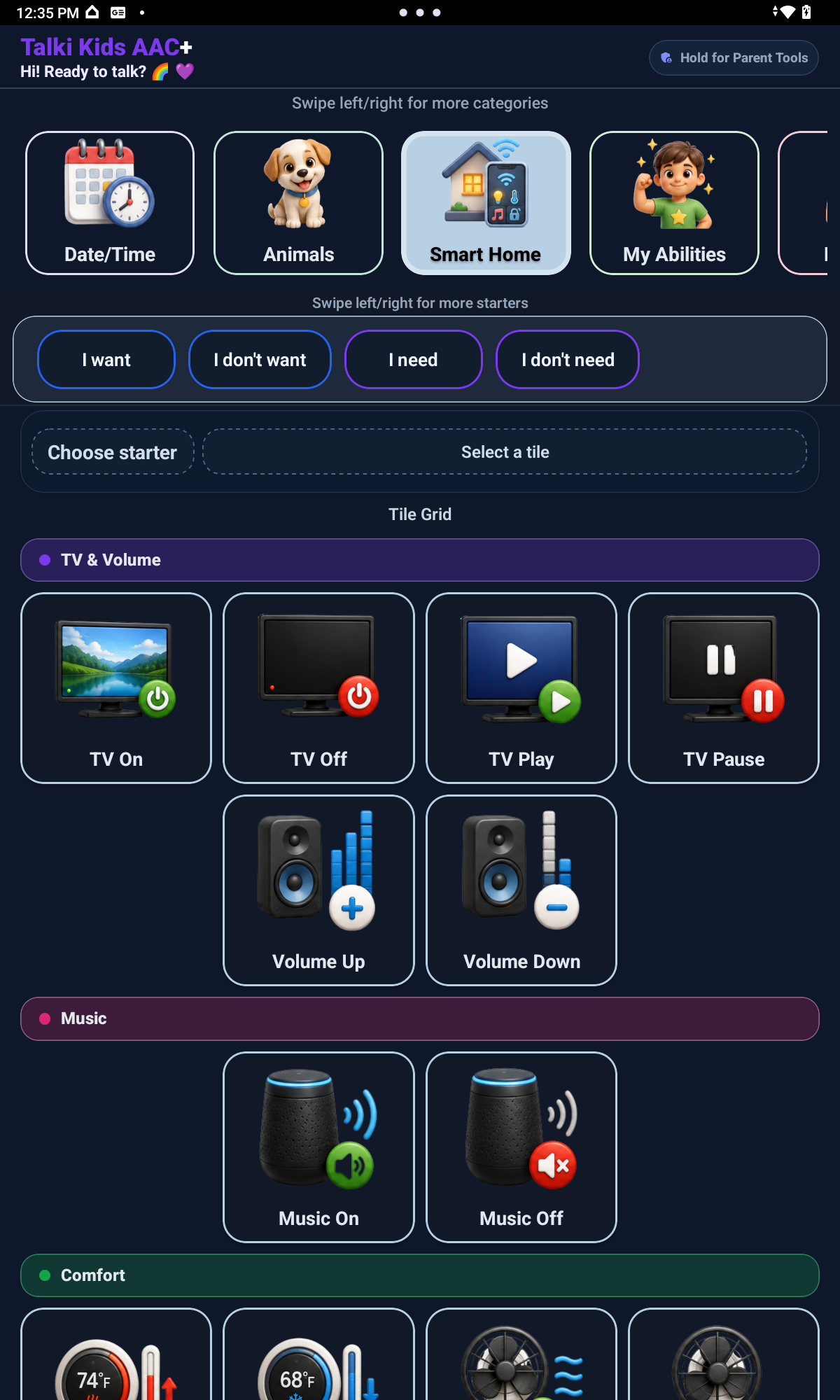
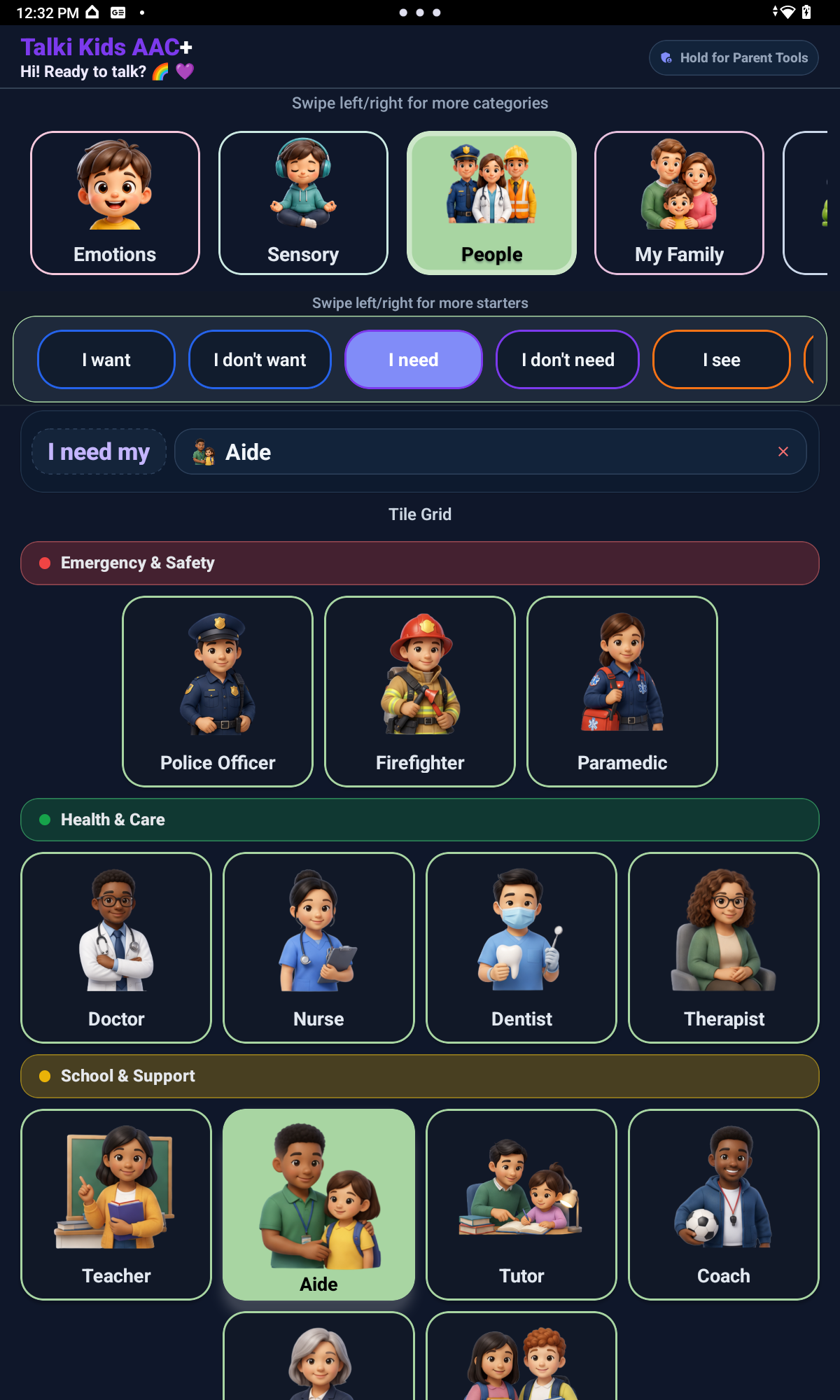
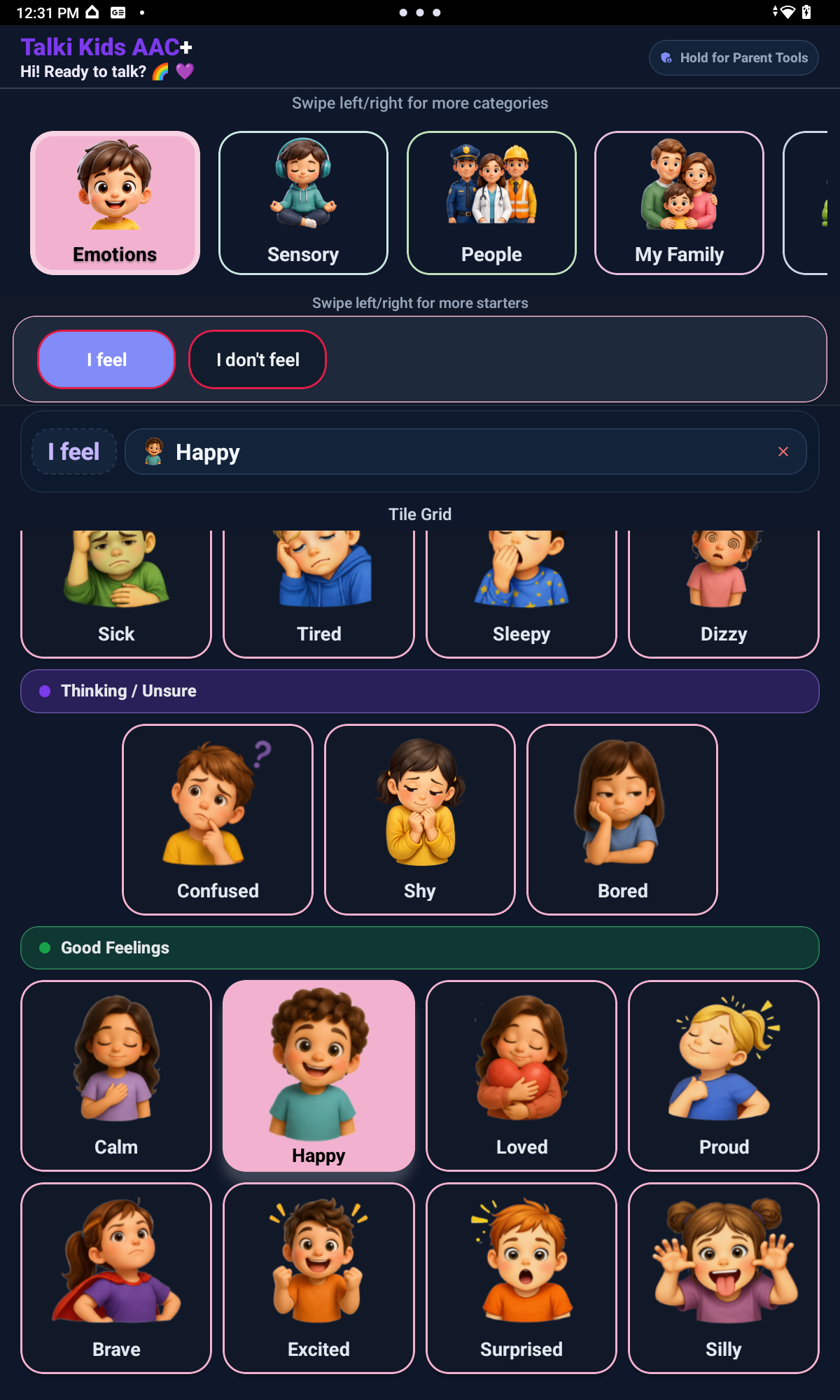
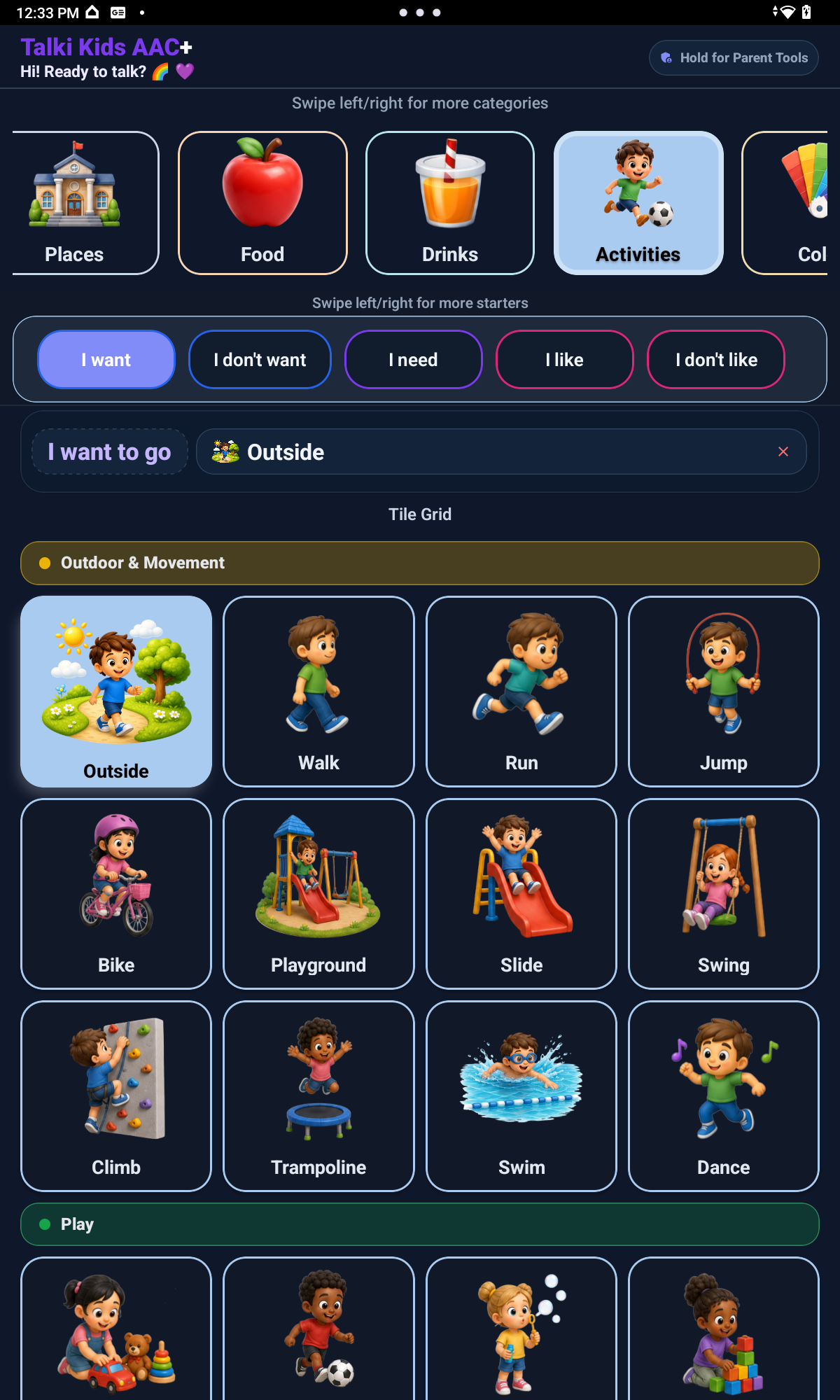
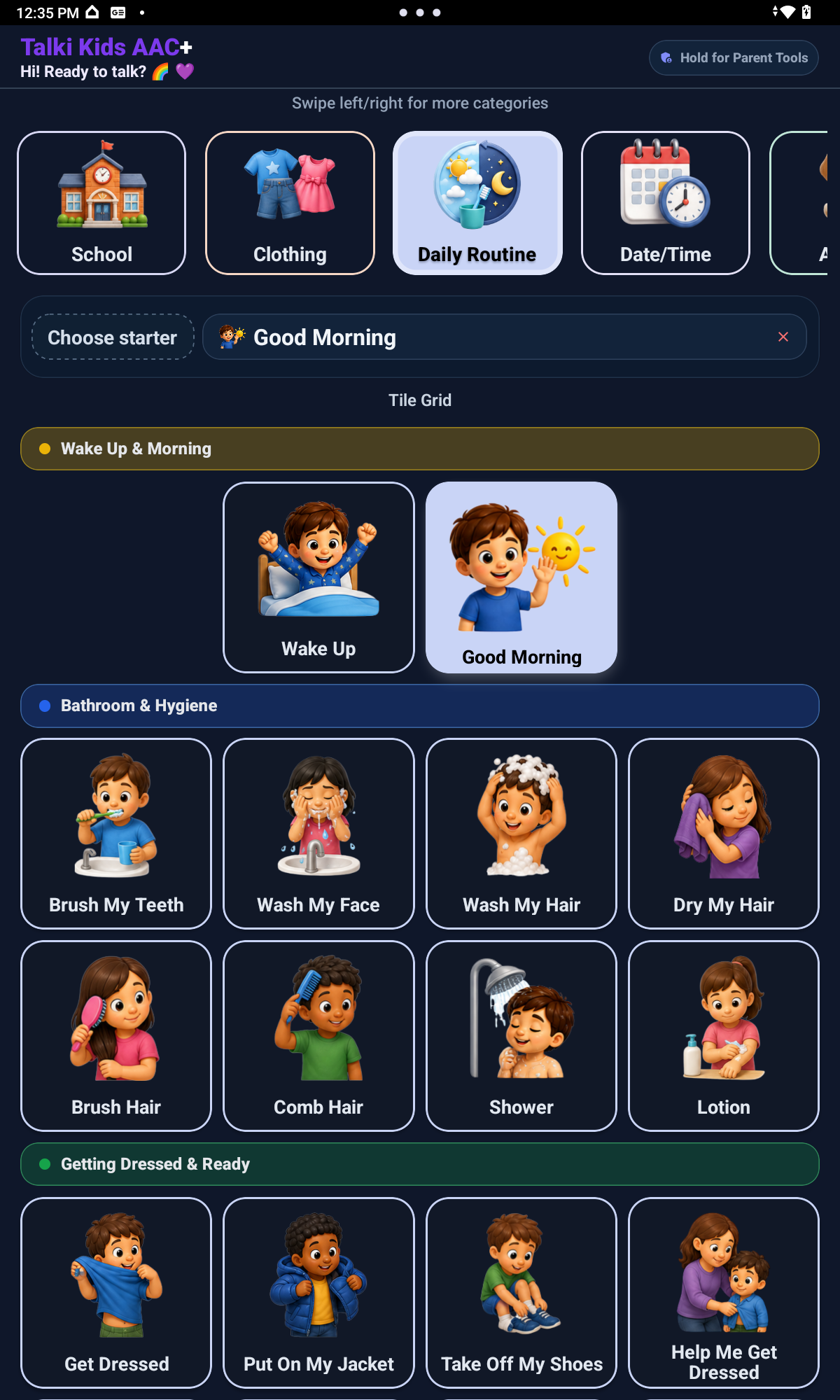
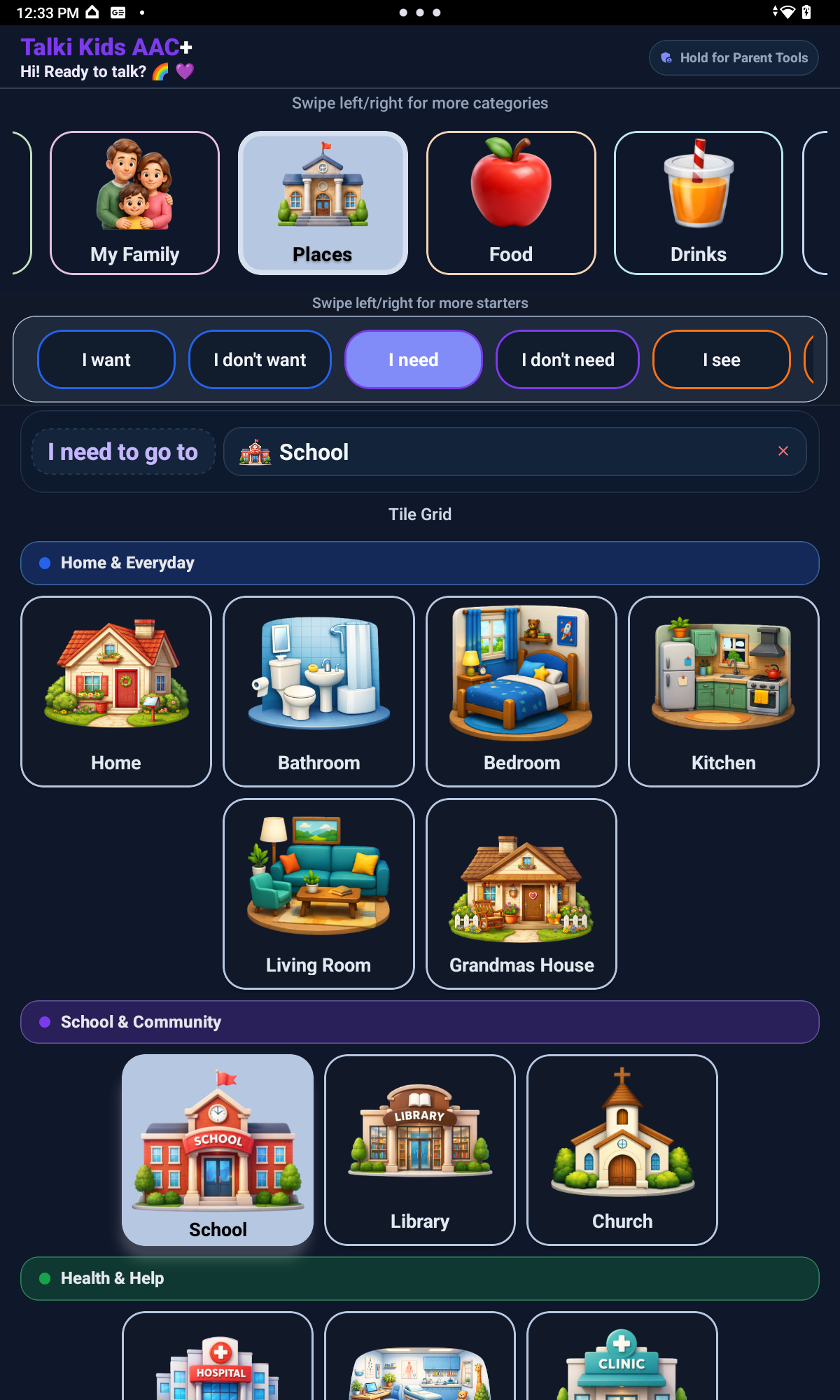
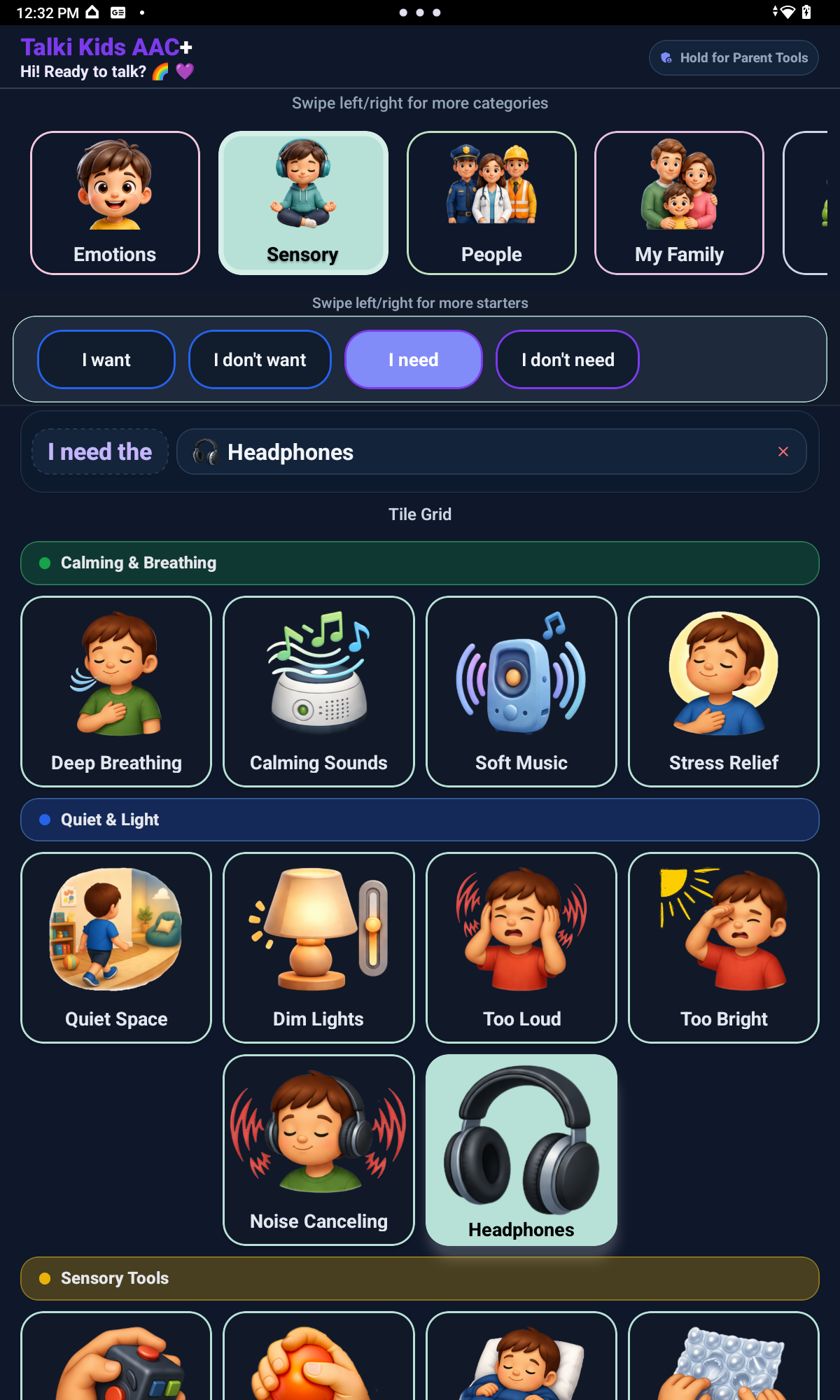
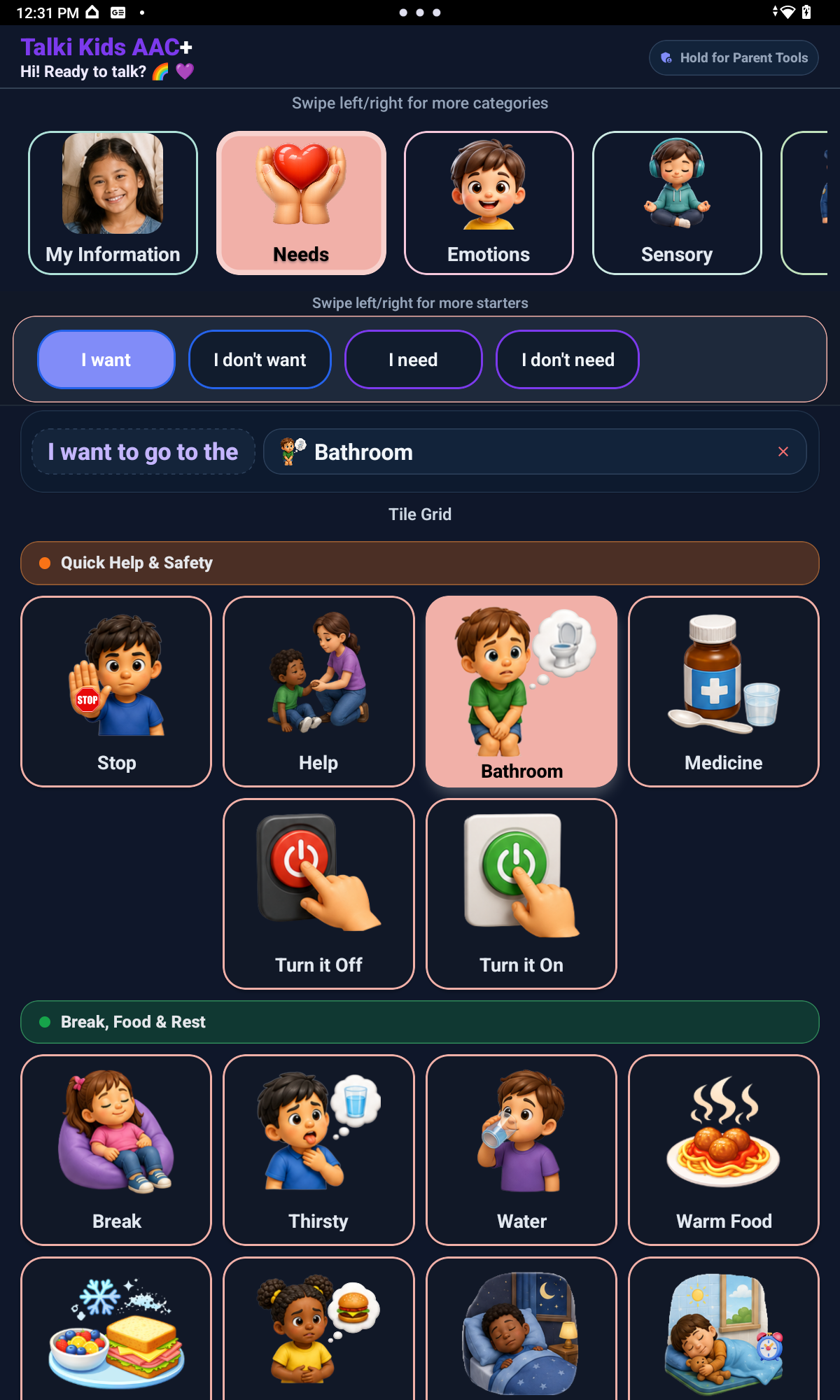
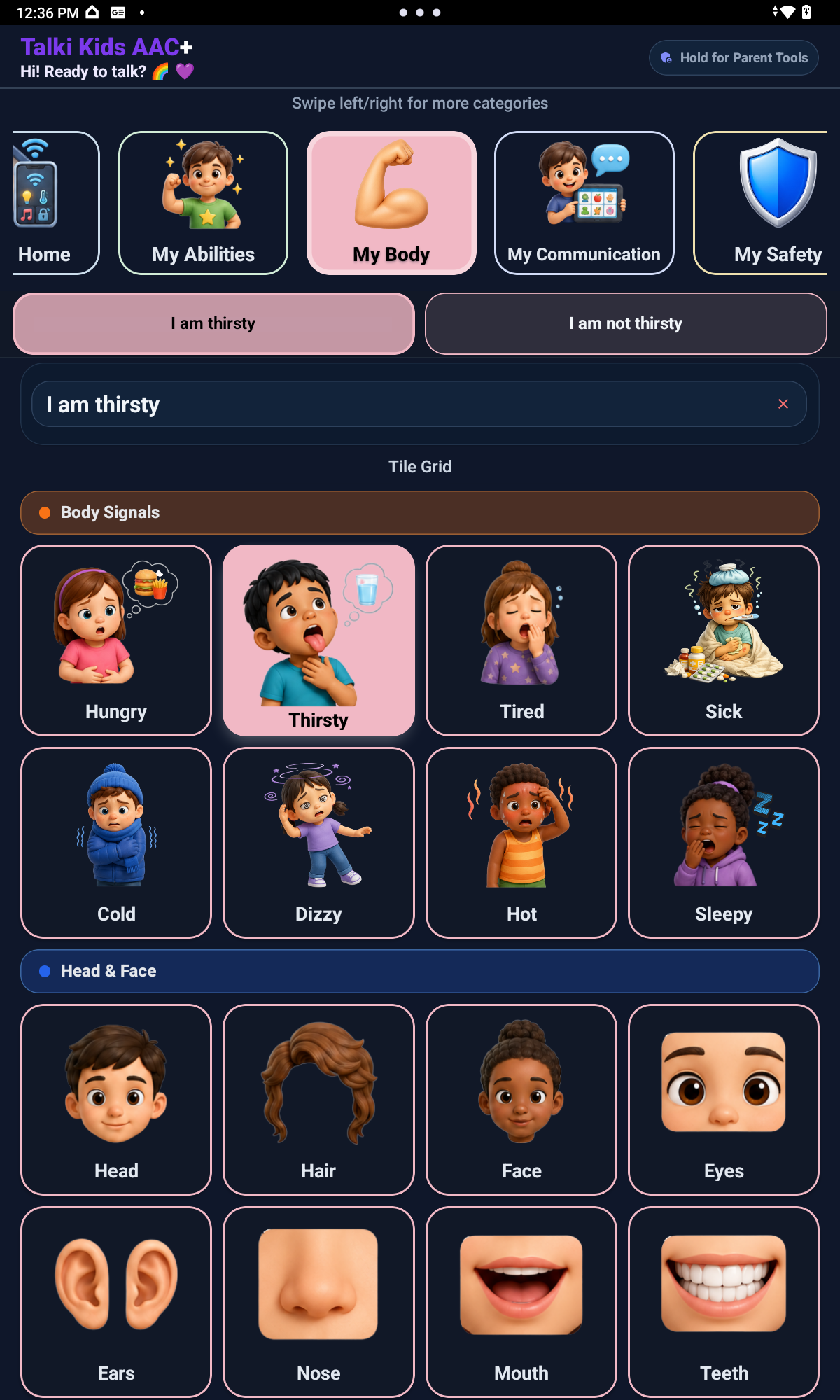
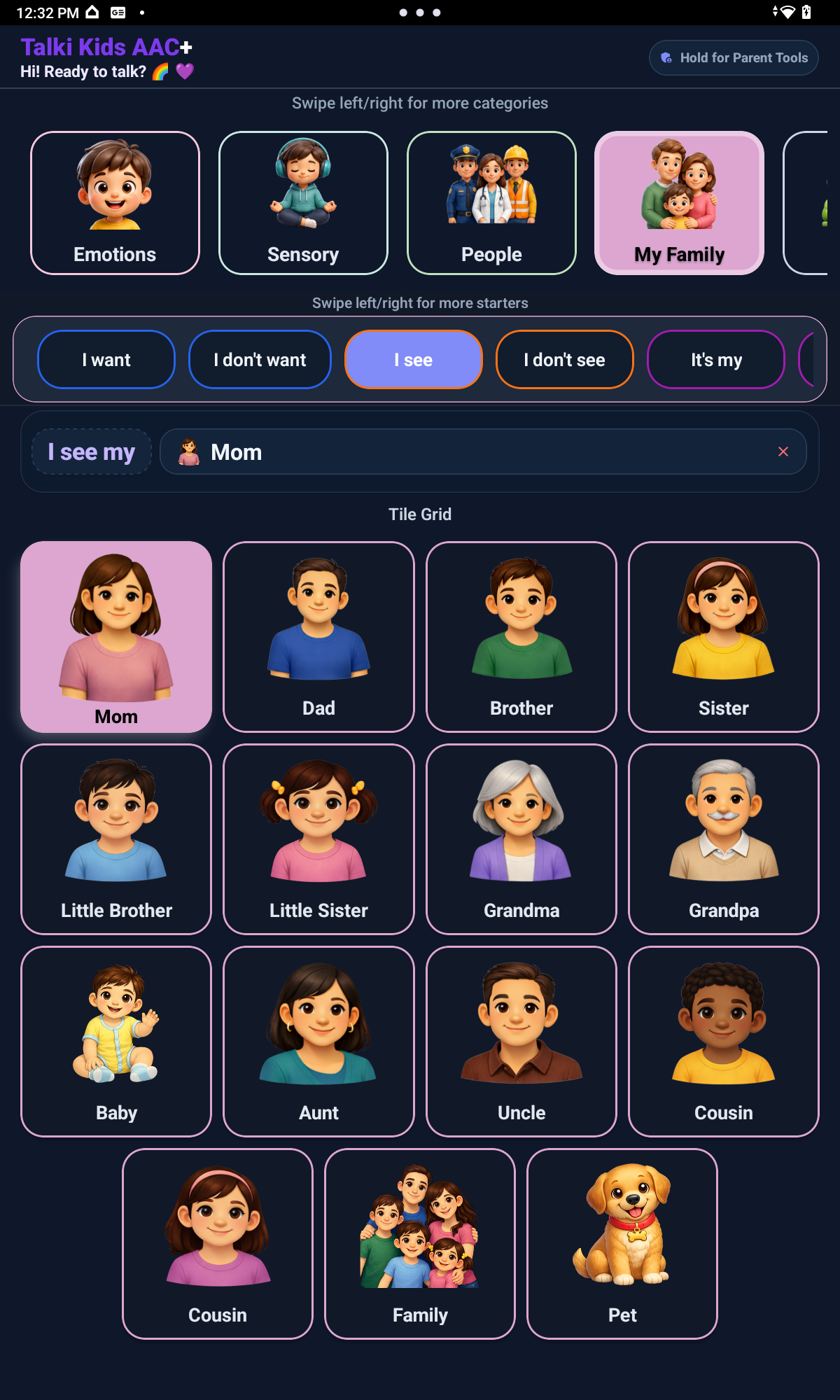
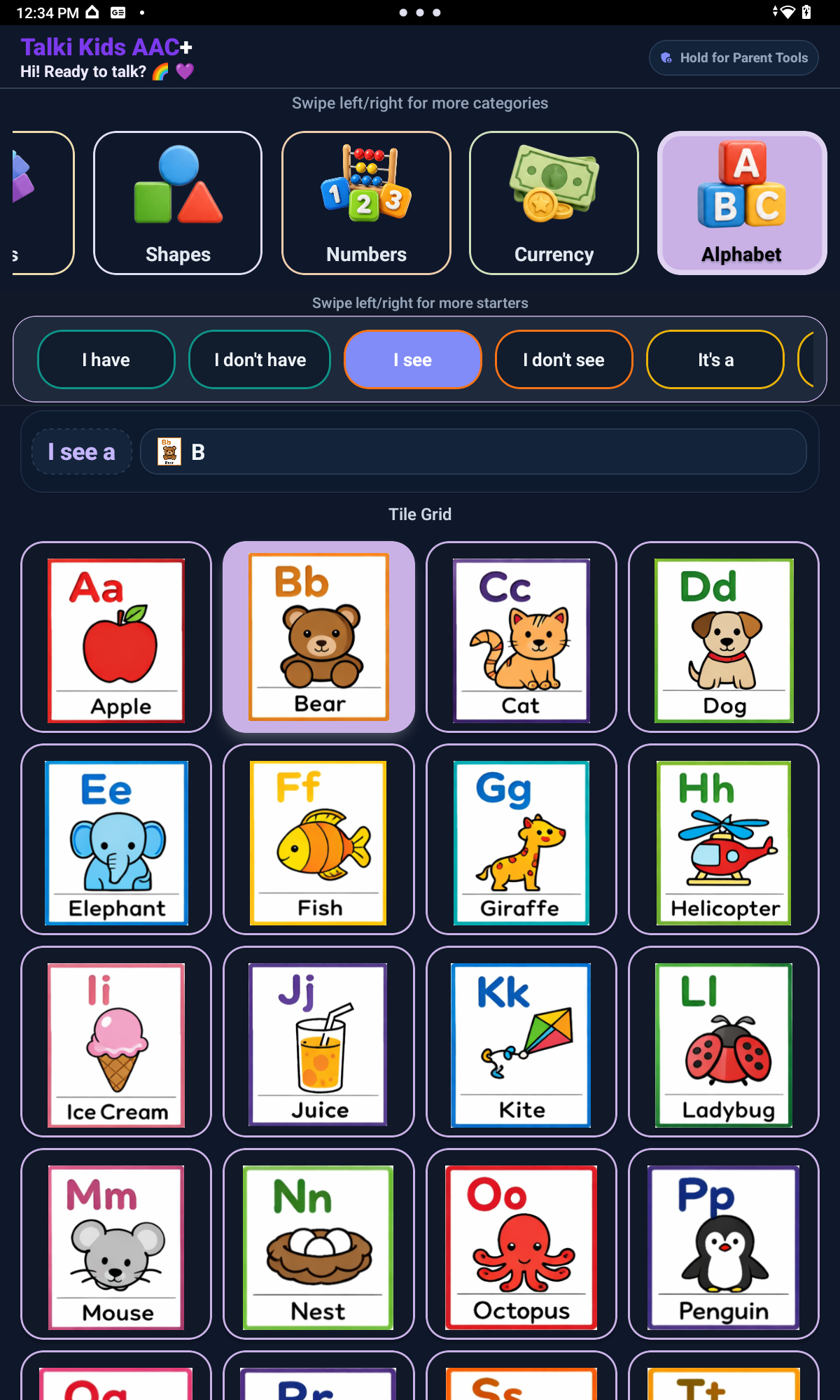
It includes 23 built-in categories covering needs, emotions, routines, family, school, sensory support, thoughts, social interaction, and everyday requests. It also includes Sentence Starters, Social Scripts, Quick Words, Auto Suggestions, My Thoughts, Free Talk, an alphabet board, a typing keyboard, My Information, and parent-managed visibility controls.
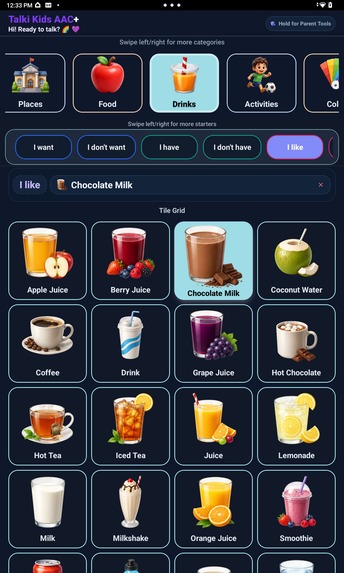
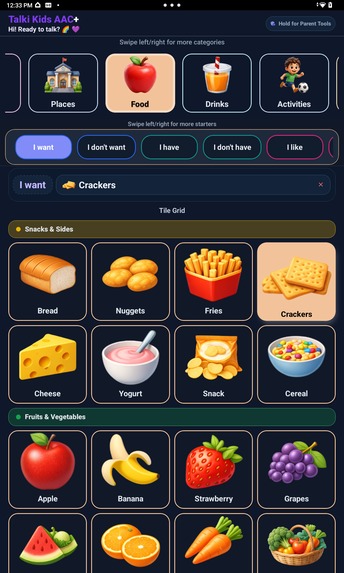
Parents and caregivers can create categories and tiles, use their own pictures, personalize labels, and decide which communication options appear on the child’s board. This allows the app to start small instead of immediately showing every available feature.
I also asked professionals familiar with children’s communication needs to review parts of the app, and I used their feedback to improve the experience.
Talki Kids AAC+ is a support tool. It does not diagnose conditions, provide medical advice, replace therapy, or replace recommendations from doctors and other professionals.
Privacy was also important to me. The app works offline, requires no account, and does not include advertising, analytics, cloud processing, or collection of a child’s communication.
A solo-developed app that families can actually use
Although Talki Kids AAC+ is published through my company, Smart Security Plus LLC, I am the solo developer behind it.
The app is already available through the Apple App Store, Google Play, and Amazon Appstore. On July 17, 2026, I submitted the latest update—including the new Talki Voice work—to all three stores.
ChatGPT Web and Codex have helped me throughout the development of the app, with Codex being my primary engineering tool. For the newest work, GPT-5.6 made a noticeable difference in how quickly I could reason through complicated changes, review their impact, and correct problems without losing control of the project.
What I added during Build Week
Talki Kids AAC+ existed before OpenAI Build Week, so I want to be clear about what was already part of the app and what I meaningfully extended during the event.
My main Build Week addition was Talki Voice, a new offline voice system for the app’s fixed English communication content. I also made significant improvements to the Auto Predictions used by Social Scripts.
The Build Week work included:
- Integrating Talki Voice into the React Native and Expo app
- Building Ubuntu and Kokoro voice-production workflows
- Using workers to process a large number of voice assets
- Creating deterministic mappings between phrases and audio files
- Separating fixed communication from private or personalized content
- Protecting device text-to-speech fallback behavior
- Correcting pronunciation and audio-consistency problems
- Checking for missing, duplicated, or unused voice assets
- Improving Social Scripts Auto Predictions
- Testing the changes on real phones and tablets
- Preparing the July 17 update for all three app stores
- Continuing the Spanish-language architecture and implementation
Building Talki Voice
I wanted the fixed communication tiles to sound more natural while keeping the app private and usable without internet access.
The solution became a hybrid voice system:
- Built-in category names and fixed communication tiles use bundled Talki Voice audio.
- Free Talk, My Information, names, custom labels, typed sentences, and other personal content use the device’s text-to-speech engine.
- If a Talki Voice file cannot be found, the app safely falls back to device text-to-speech.
This separation is important. Fixed phrases can use carefully reviewed audio, while a child’s private or changing information stays on the device.
The completed English Talki Voice baseline contains 4,434 verified manifest entries and corresponding audio files. My verification found no missing files, duplicate mappings, or orphaned assets in that baseline.
Kokoro handled the local voice synthesis. GPT-5.6 and Codex helped me build and troubleshoot the system around it: Ubuntu setup, worker coordination, processing scripts, file organization, phrase mappings, integration, verification, and release preparation.
Generating thousands of files was only one part of the job. Each phrase still had to reach the correct tile and behave properly inside the app.
Improving Social Scripts and Auto Predictions
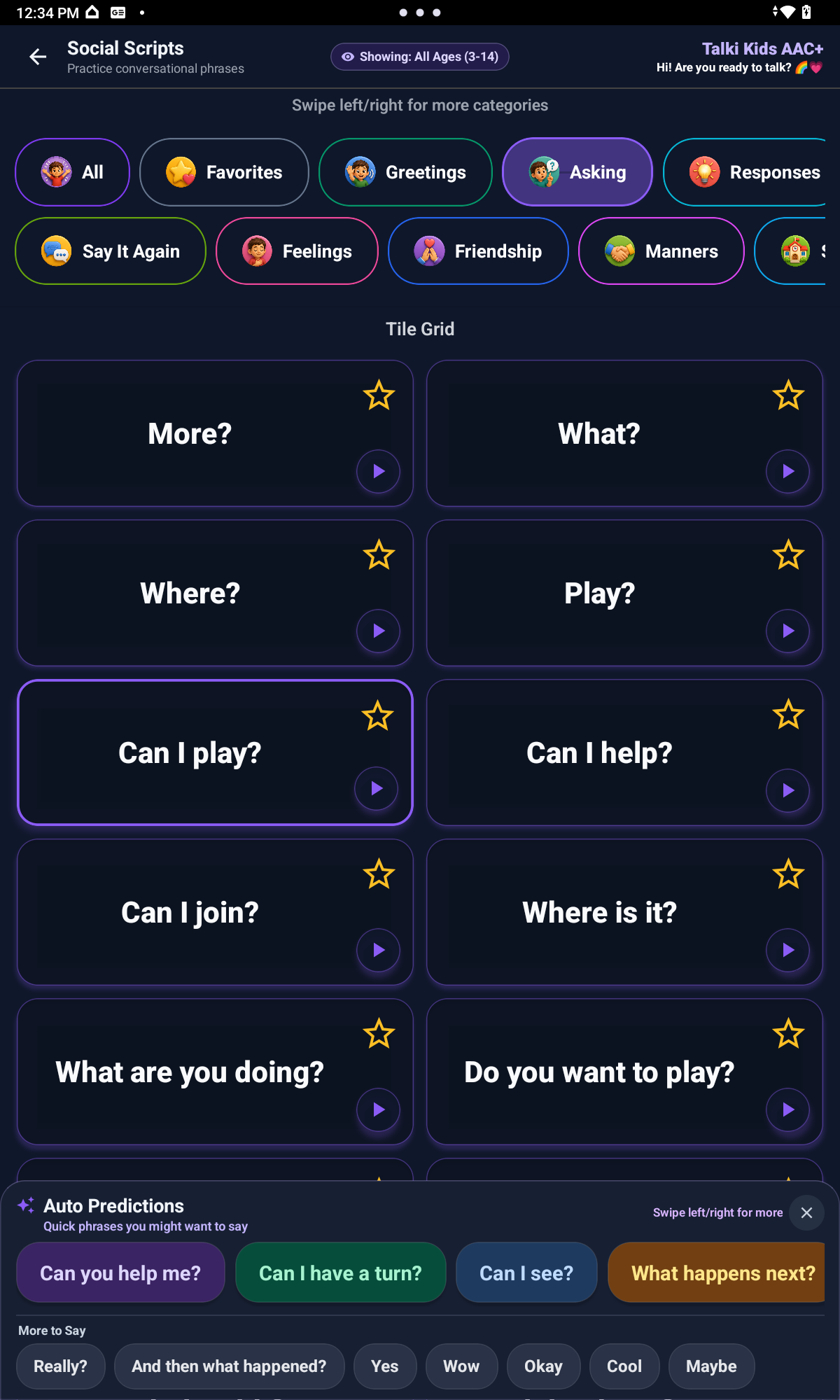
Social Scripts gives children prepared language for situations such as greetings, school, play, emotions, asking for help, and self-advocacy.
Auto Predictions helps the child continue from the current script by displaying compatible follow-up phrases. This means the child does not have to leave the interaction and search through the entire app for the next thing they want to say.
During Build Week, I used GPT-5.6 and Codex to audit and improve this logic. I reviewed phrase relationships, grammar compatibility, parent-selected communication levels, protected contracts, and the matrices connecting scripts with possible follow-up suggestions.
This is still an offline and controlled prediction system. It is not generating unpredictable messages for the child. The goal is to make the existing suggestions more useful and consistent with the current situation.
In an AAC app, this matters. A poor suggestion may distract or overwhelm the child. A good follow-up can help them finish a thought, answer someone, ask for help, or communicate that something is wrong.
How GPT-5.6 and Codex changed my development process
I used GPT-5.6 through ChatGPT Web and Codex, including High and Extra High reasoning for difficult technical work.
As a solo developer, I do not have separate architecture, engineering, language, quality-assurance, privacy, and release teams. Codex helped me work through many of those responsibilities while keeping the final decisions and approvals with me.
I used it to understand existing code before changing it, plan scoped implementations, diagnose Ubuntu and Kokoro problems, review mappings, catch regressions, inspect privacy boundaries, verify generated assets, and prepare production builds.
The increased speed helped, but the deeper reasoning was even more important. Talki Kids AAC+ has communication rules, parent settings, protected identifiers, voice mappings, visibility behavior, personalized content, and different device layouts. A change that looks small can affect something far away from the original file.
Because of that, I followed a controlled process:
Audit → approve → edit → verify → commit → push → build
Codex did more than create code. It helped me protect the work already completed by checking scope, preserving checkpoints, reviewing actual changes, questioning unsafe assumptions, and verifying results before I built a release.
That matters because this is not a game. An incorrect phrase, broken mapping, or unexpected regression can interfere with what a child is trying to communicate.
The hardest parts
One major challenge was producing consistent audio at this scale. Generating one phrase is simple. Producing thousands with understandable pronunciation, pacing, pitch, and tone is very different. Automation made the volume possible, but I still had to listen, review, correct, and regenerate problem phrases.
Mapping was another difficult area. Differences in punctuation, capitalization, apostrophes, Unicode characters, or filenames could stop the expected audio from playing. GPT-5.6 and Codex helped me create repeatable checks instead of depending only on manual inspection.
The other challenge was safely changing an app already running on real devices. I could not treat existing features as disposable. I needed staged changes, checkpoints, regression reviews, and real-device testing throughout the process.
Spanish is in development—not released yet
English Talki Voice is complete. Spanish is not currently available in the released app.
I am actively working on Spanish with GPT-5.6 and Codex for a future update. This involves much more than replacing English words with translations.
Spanish requires its own grammar rules, sentence order, gender and number agreement, compatible sentence endings, content matrices, protected contracts, voice mappings, fallback behavior, navigation checks, and visibility testing.
These details are especially important in AAC. Grammar and communication logic affect whether a completed sentence represents what the child intended to say.
Spanish is needed because many children communicate with families and communities that primarily speak Spanish. However, I will not call it complete or release it until the language, voices, mappings, fallbacks, and device behavior have been carefully tested.
What I learned
This project taught me that AI is most useful when it supports human responsibility instead of replacing it.
GPT-5.6 helped me move much faster, but I still needed to make the decisions, listen to the voices, test the devices, review the communication, and decide when something was safe enough to release.
I also learned how much accessibility depends on details that may look small from the outside. The pronunciation of one word, the order of a sentence, the number of visible tiles, or whether the app works without internet access can make a real difference for a child.
I am proud that, as one developer and one father trying to help his son, I was able to turn this idea into a working app available through three major app stores.
What comes next
My immediate goal is to finish and carefully verify Spanish support so families can choose a complete English or Spanish communication experience.
Talki Kids AAC+ began with Bryce. I hope it can also support other children who have something important to say and need a dependable way to be understood.

Log in or sign up for Devpost to join the conversation.