-
-
01-talk-me-out-hero
-
02-real-youcam-vto.
-
03-upload-once-try-many
-
04-my-fitting-room
-
05-decision-layer
-
06-product-proof
-
07-decision-layer
-
08-full-product-flow
-
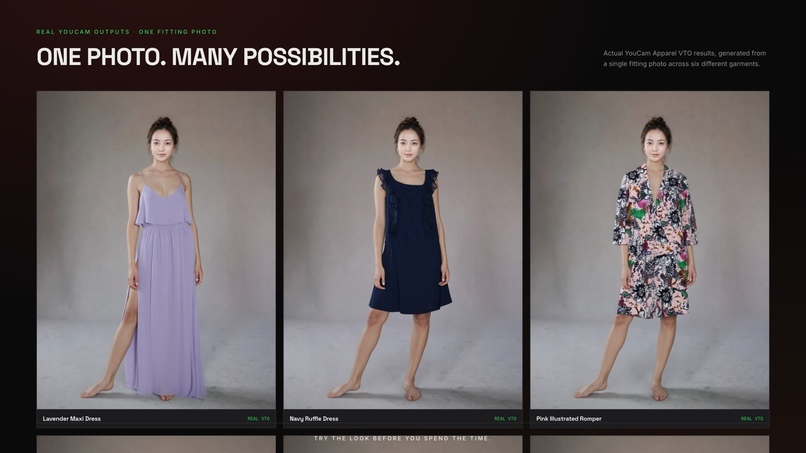
09-real-looks-gallery.
-
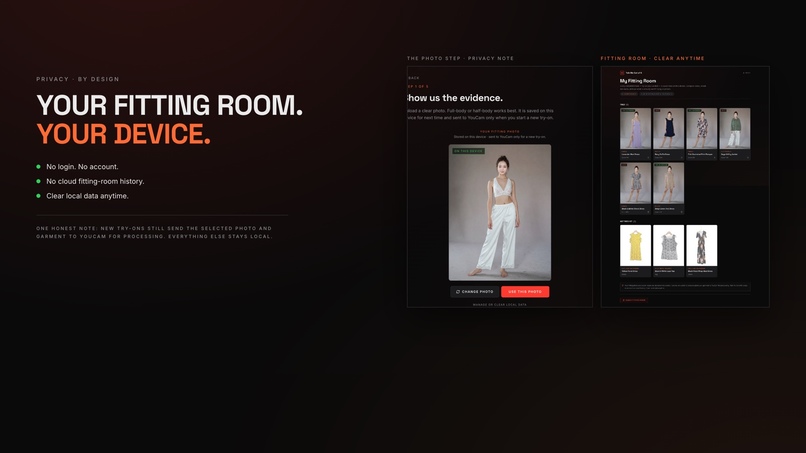
10-device-local
-
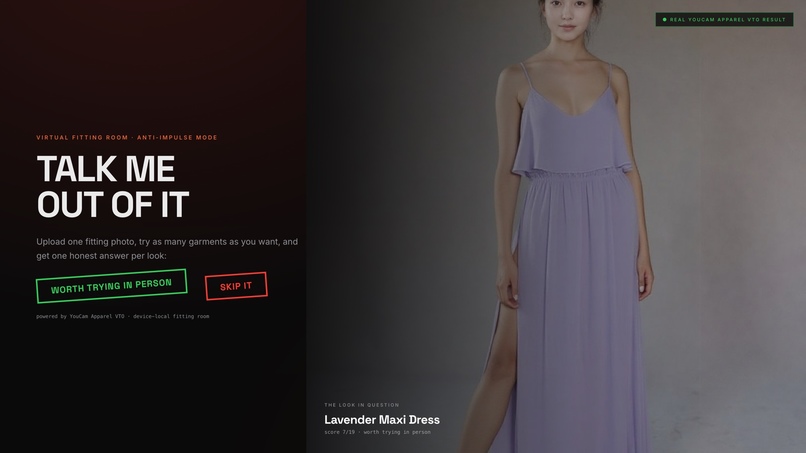
11-ending
Inspiration
Virtual try-on is getting very good.
With YouCam Apparel VTO, a garment can go from “maybe” to surprisingly convincing in seconds. That creates a new problem:
When everything looks a little too good, how do you decide what is actually worth trying for real?
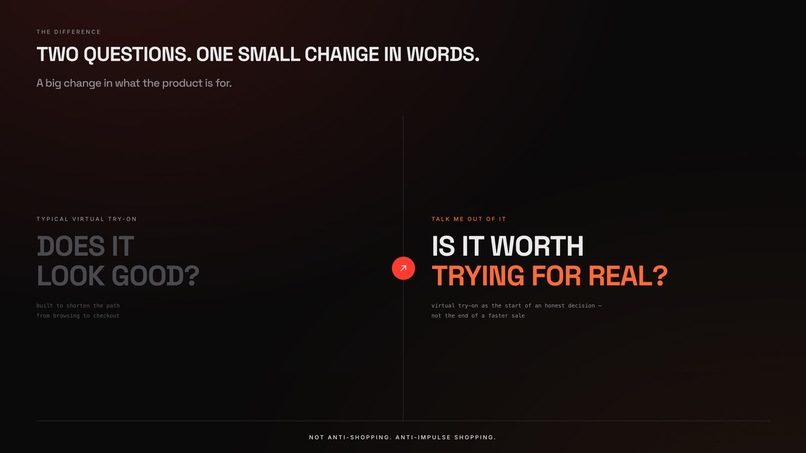
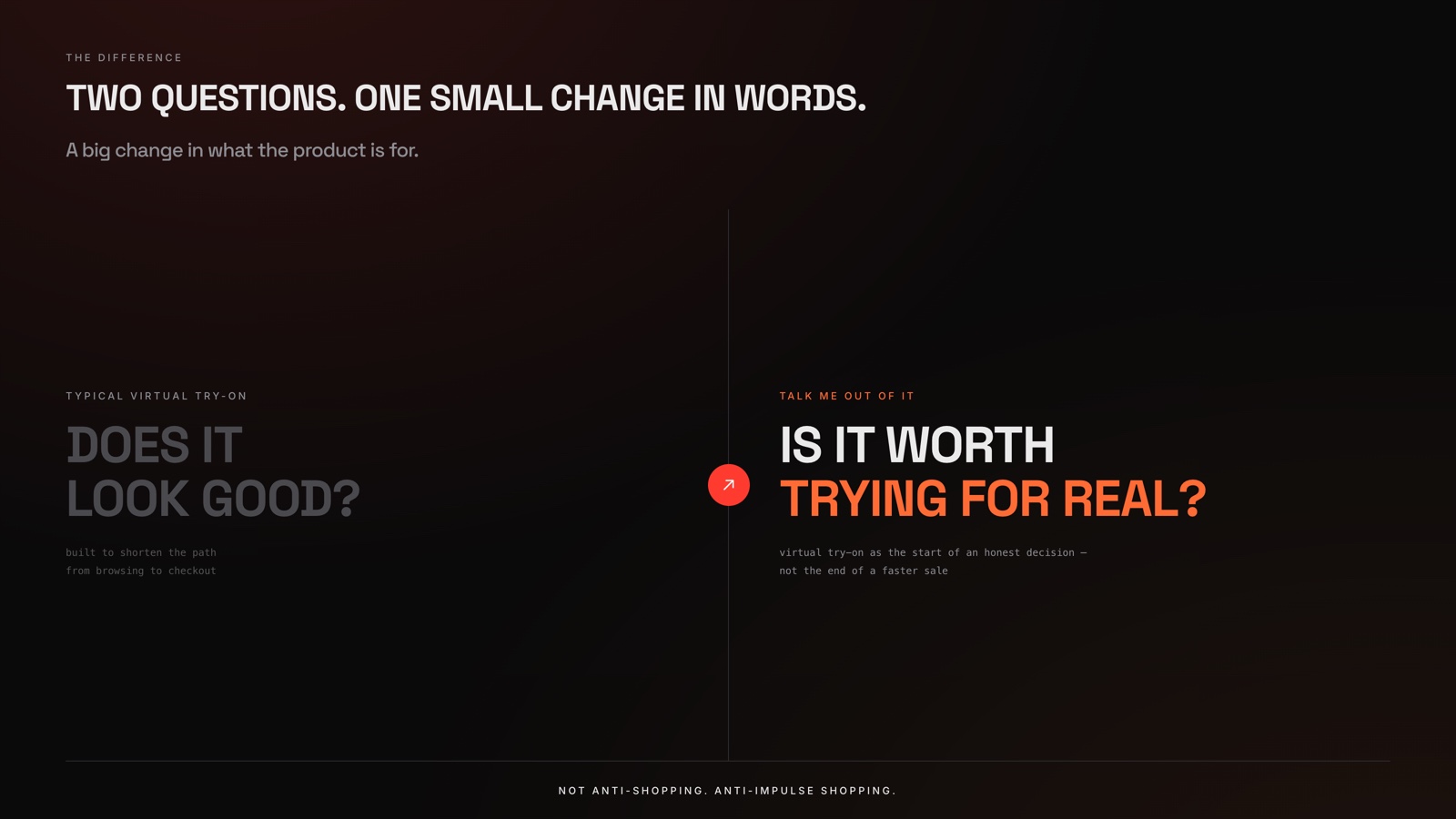
Most virtual try-on experiences focus on visualization: Does this look good on me?
We wanted to explore the next question:
Is it worth continuing to consider?
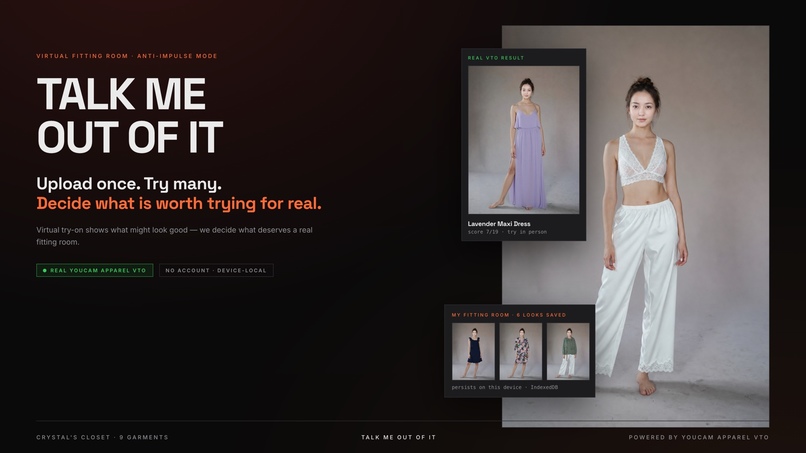
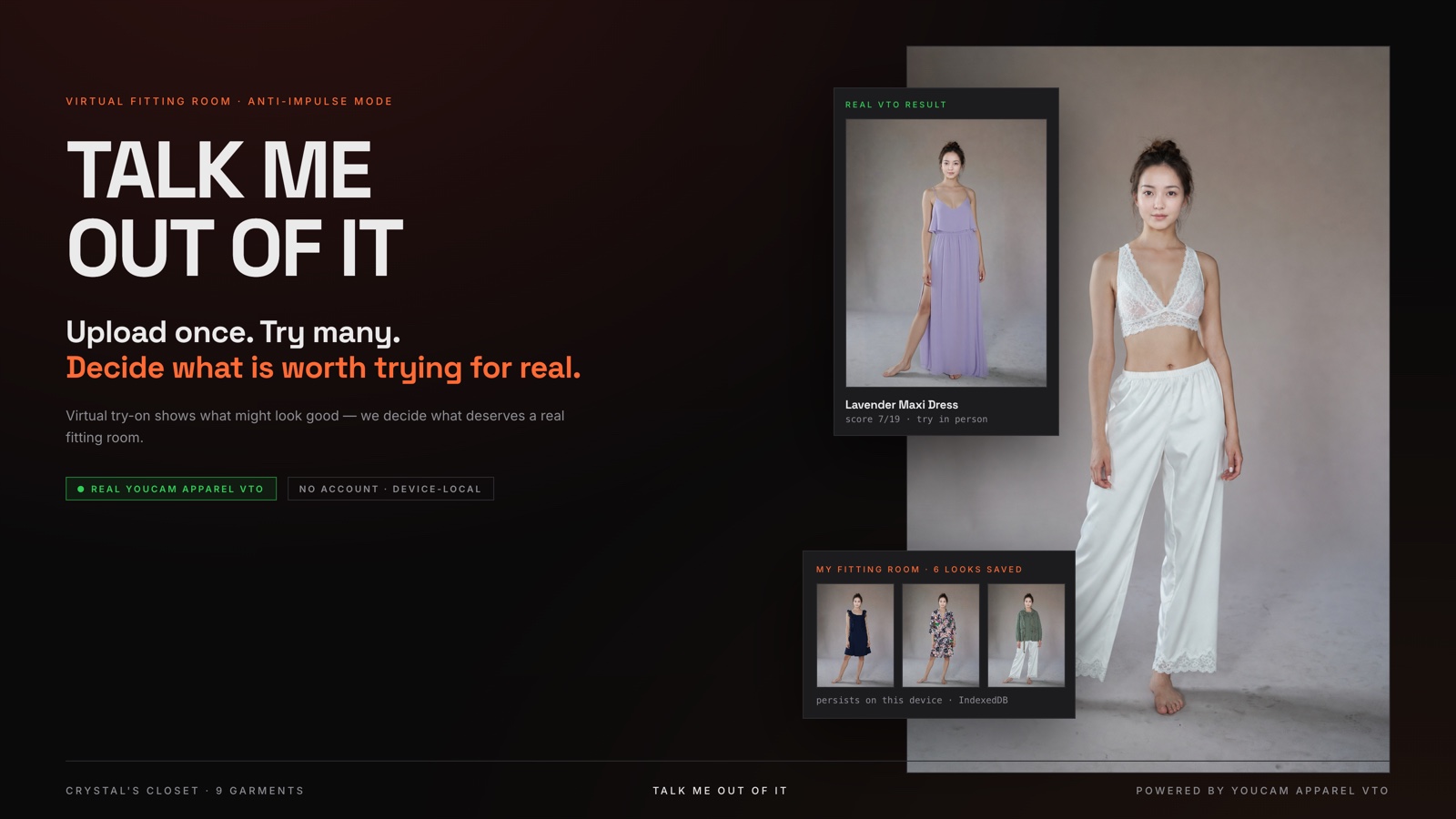
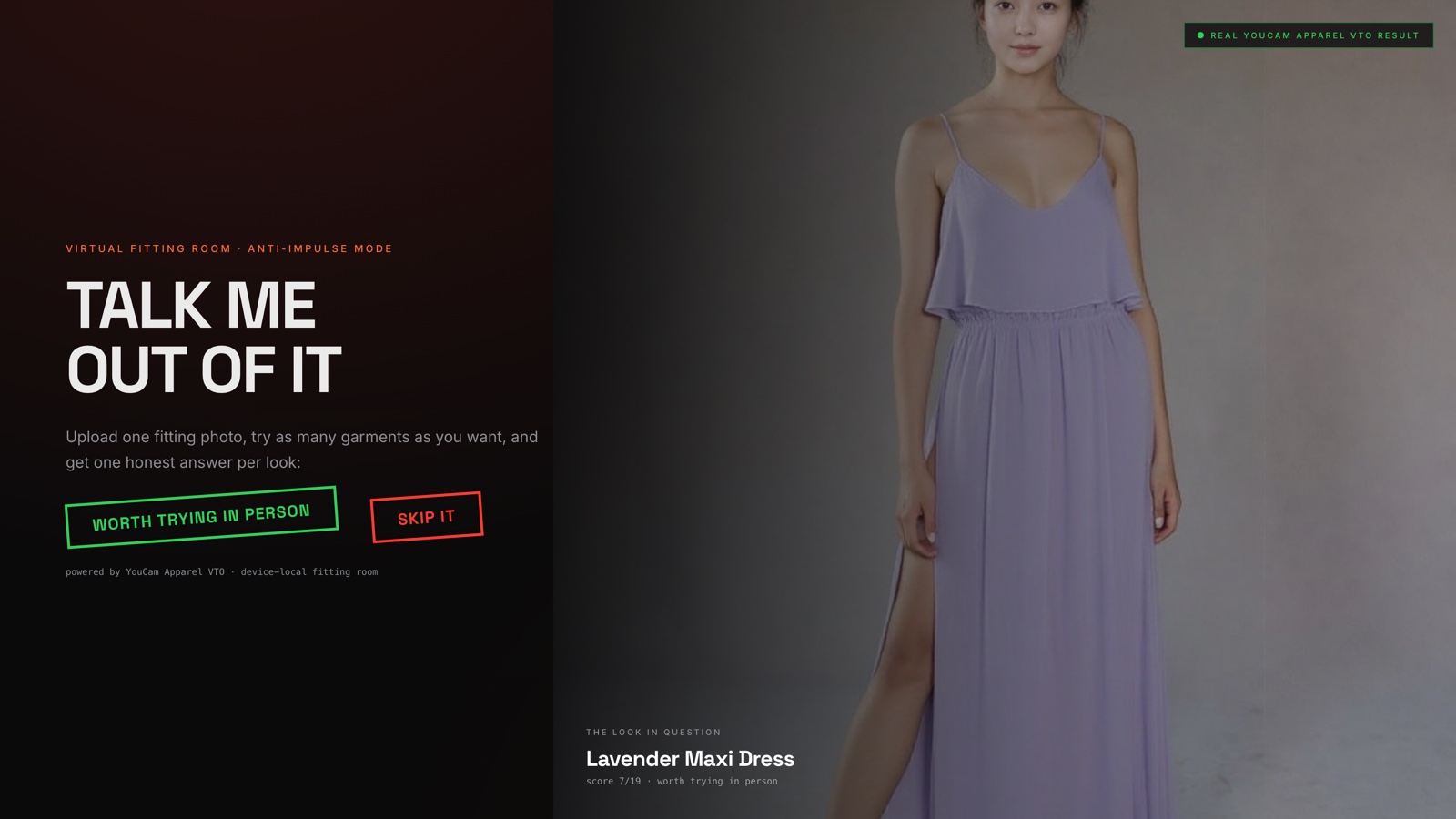
Talk Me Out of It is a brutally honest fitting-room friend built on top of YouCam Apparel Virtual Try-On.
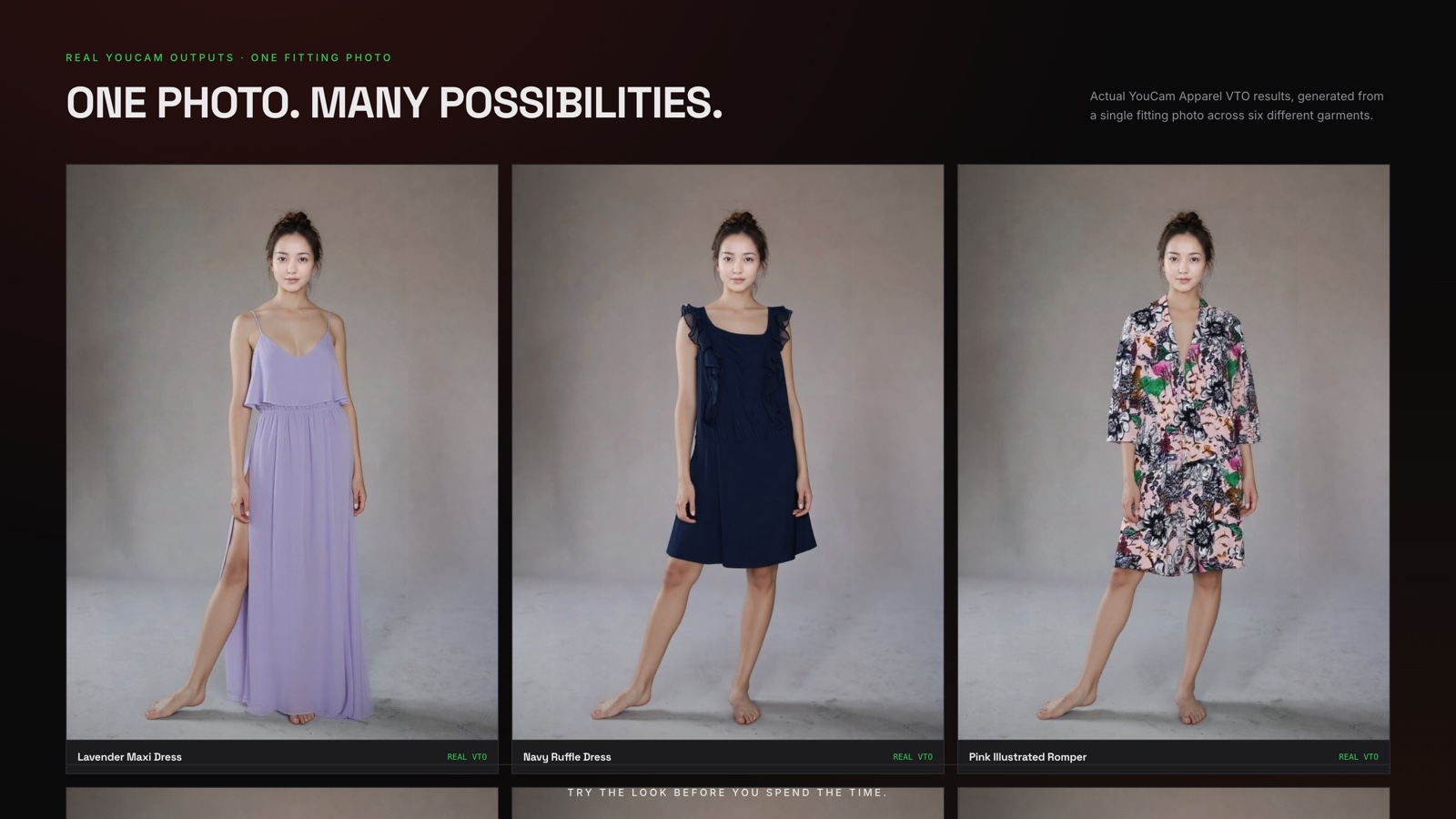
You can upload one fitting photo, try multiple garments, keep completed looks in a persistent fitting room, and then use five practical reality checks to decide what deserves the next step.
The final product-facing decision is intentionally simple:
- WORTH TRYING IN PERSON
- SKIP IT
The goal is not to discourage shopping.
It is to let people explore freely without treating every successful virtual try-on as a purchase decision.
What it does
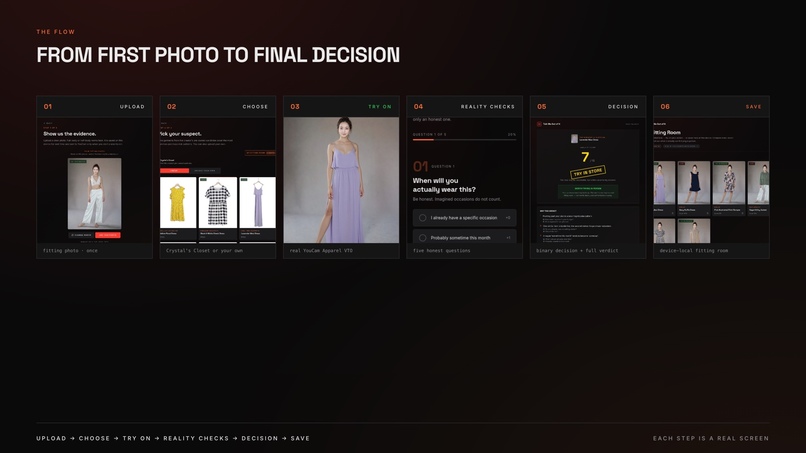
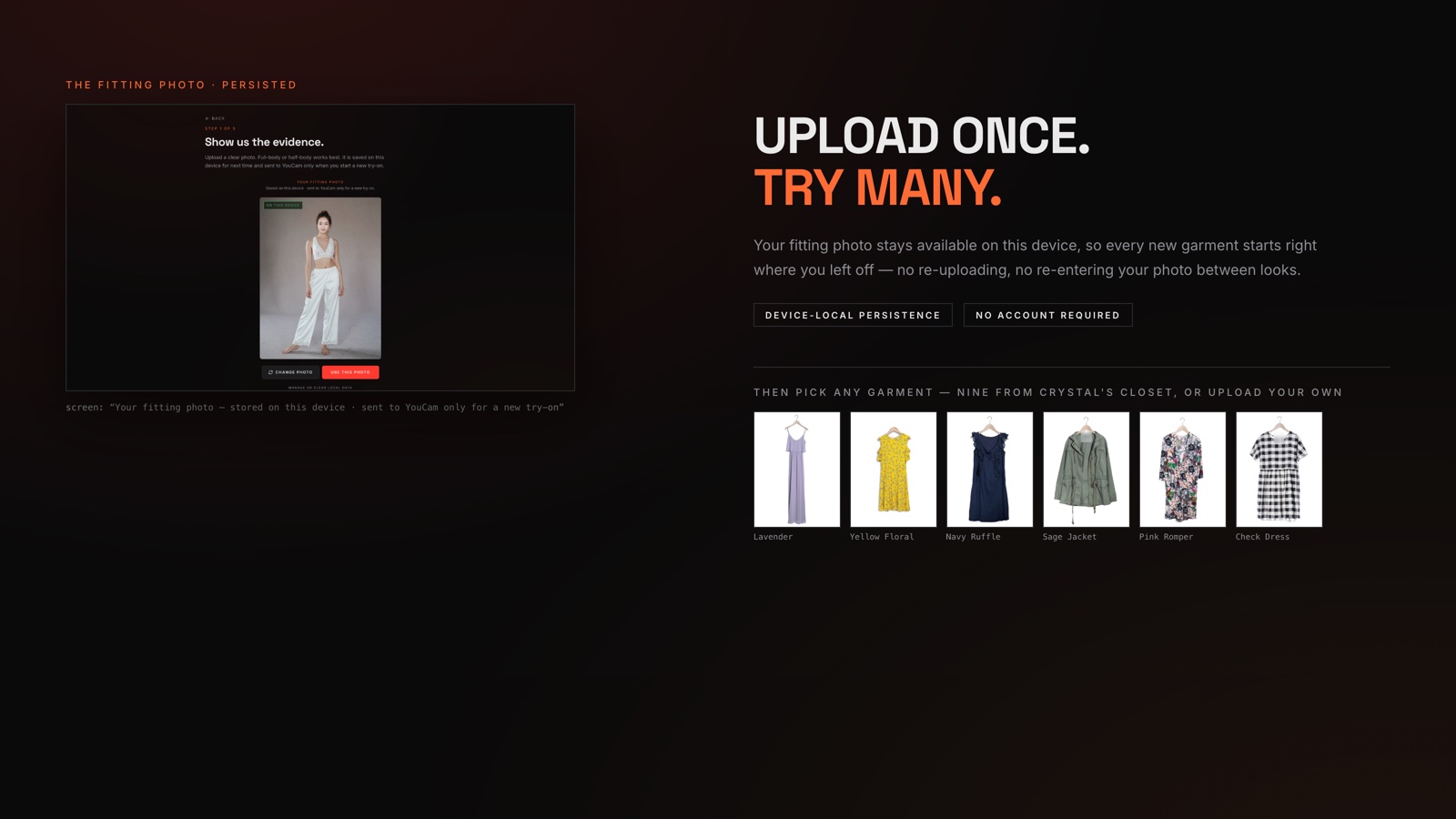
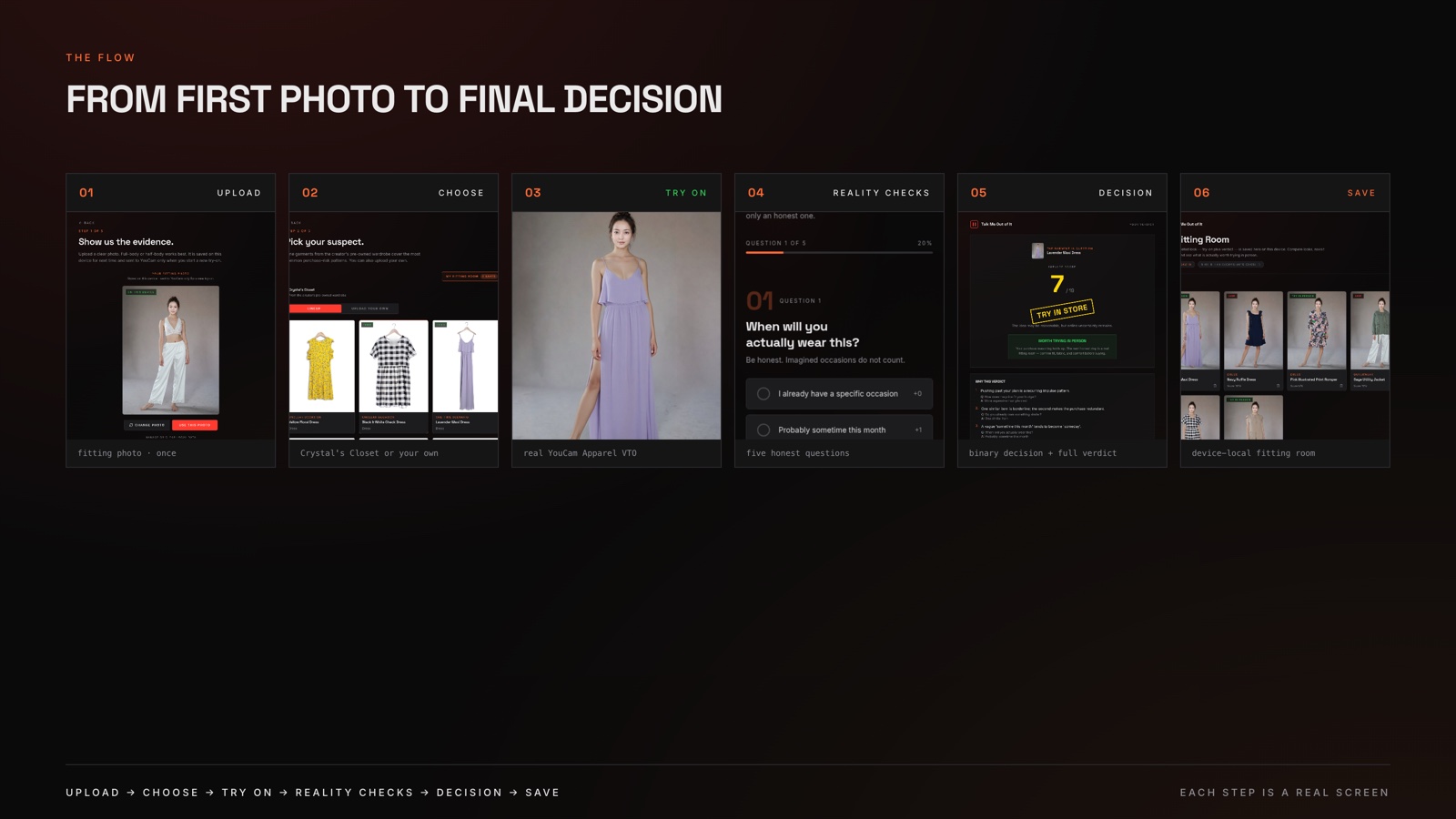
1. Upload once
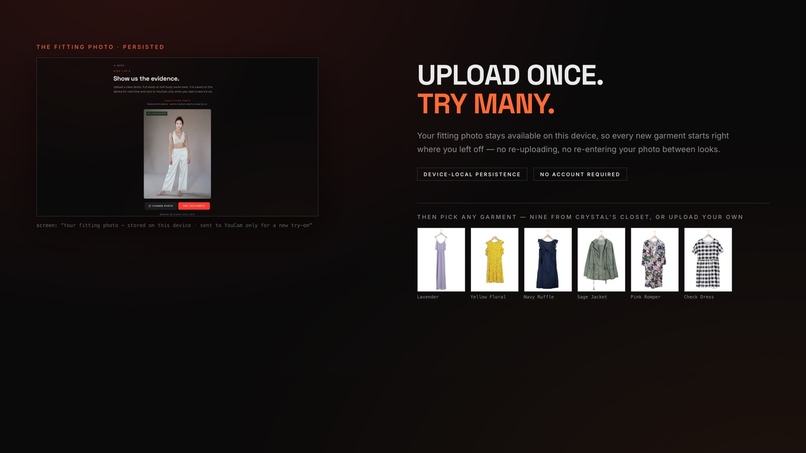
The user uploads a clear half-body or full-body fitting photo.
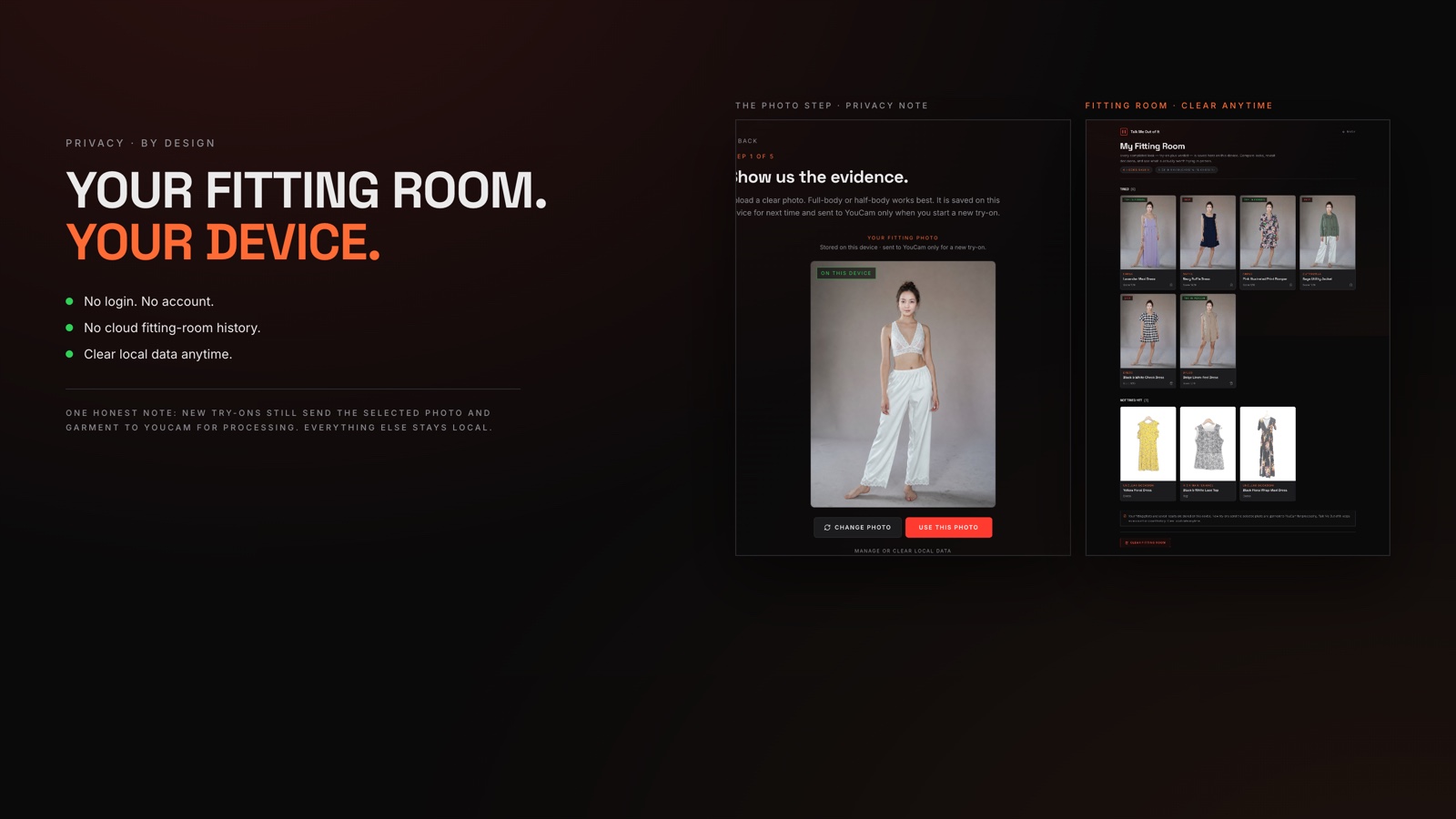
That photo remains available on the device for the fitting-room session, so the user does not need to upload it again for every garment.
There is no account and no cloud fitting-room history.
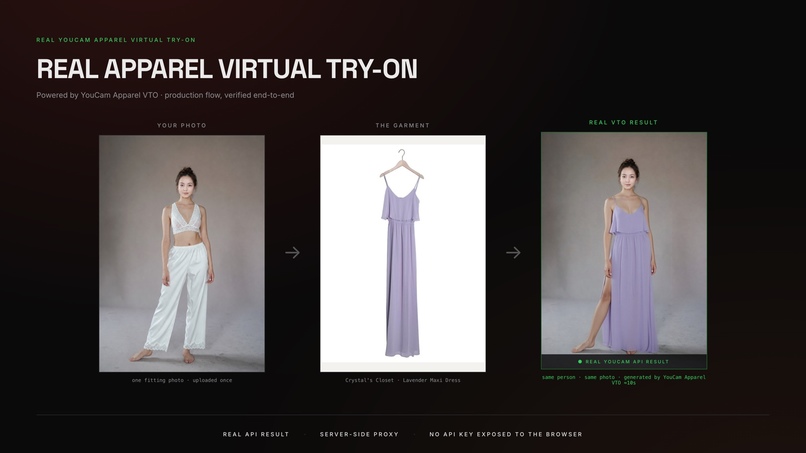
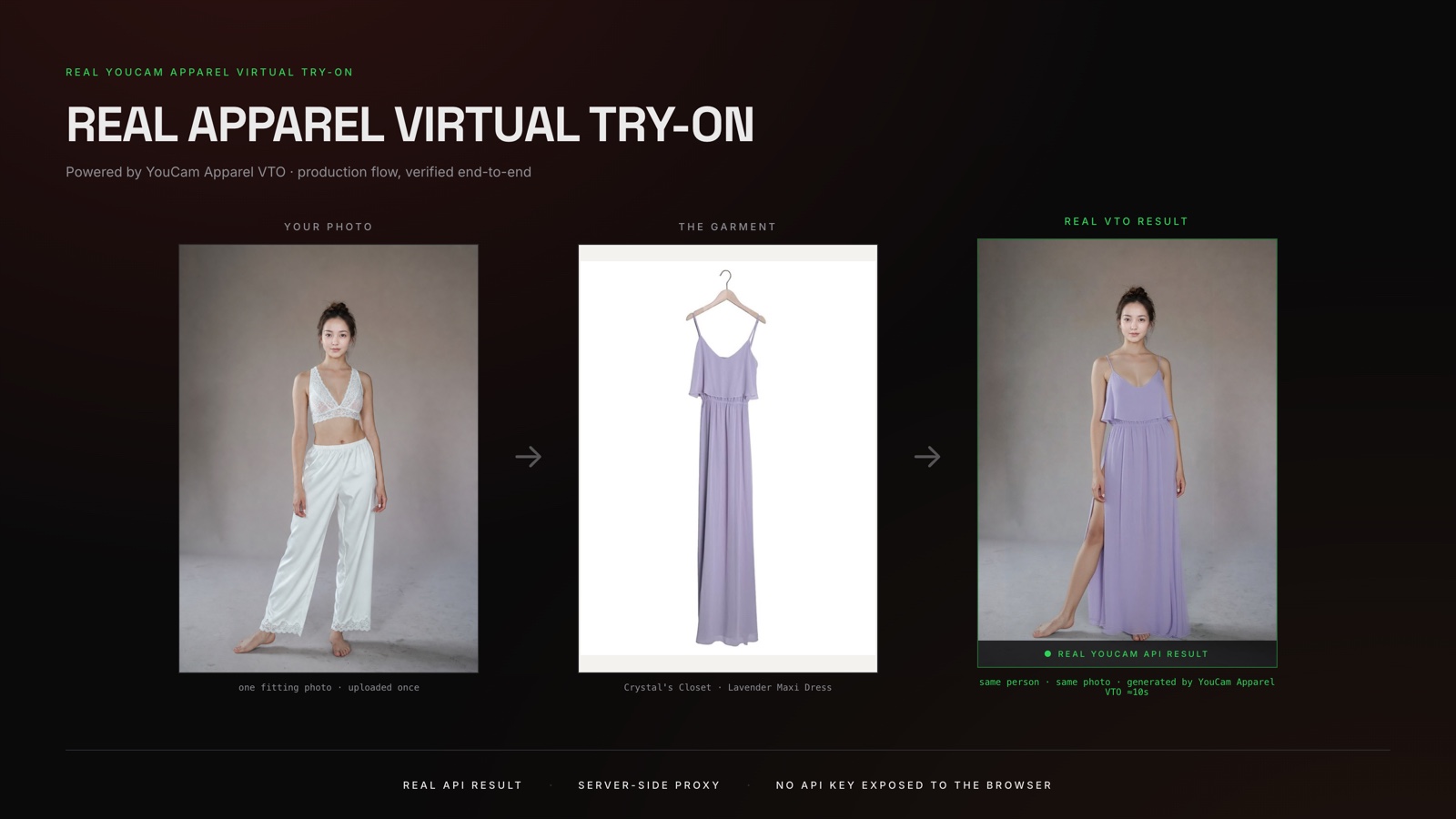
When the user starts a new try-on, the selected fitting photo and garment are sent to YouCam for processing.
2. Try many
The user can begin with Crystal’s Closet, our nine-piece sample wardrobe, or upload their own garment image.
Each new garment is processed through the YouCam Apparel Virtual Try-On API.
When the live integration succeeds, the interface clearly identifies the result as a real YouCam API result.
3. Keep the looks
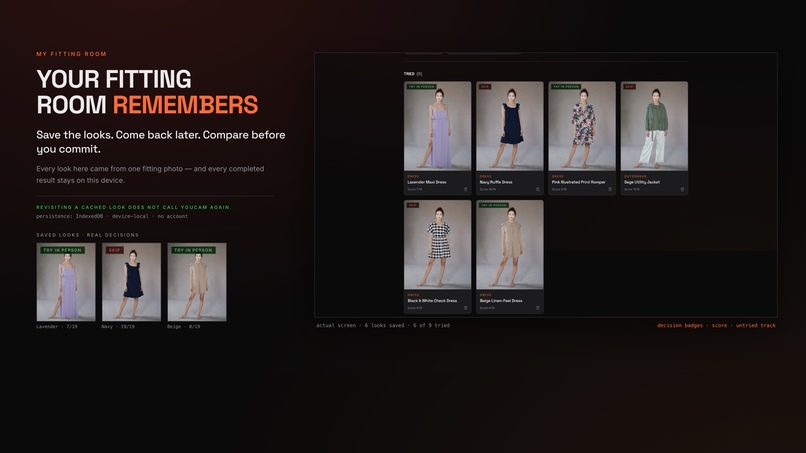
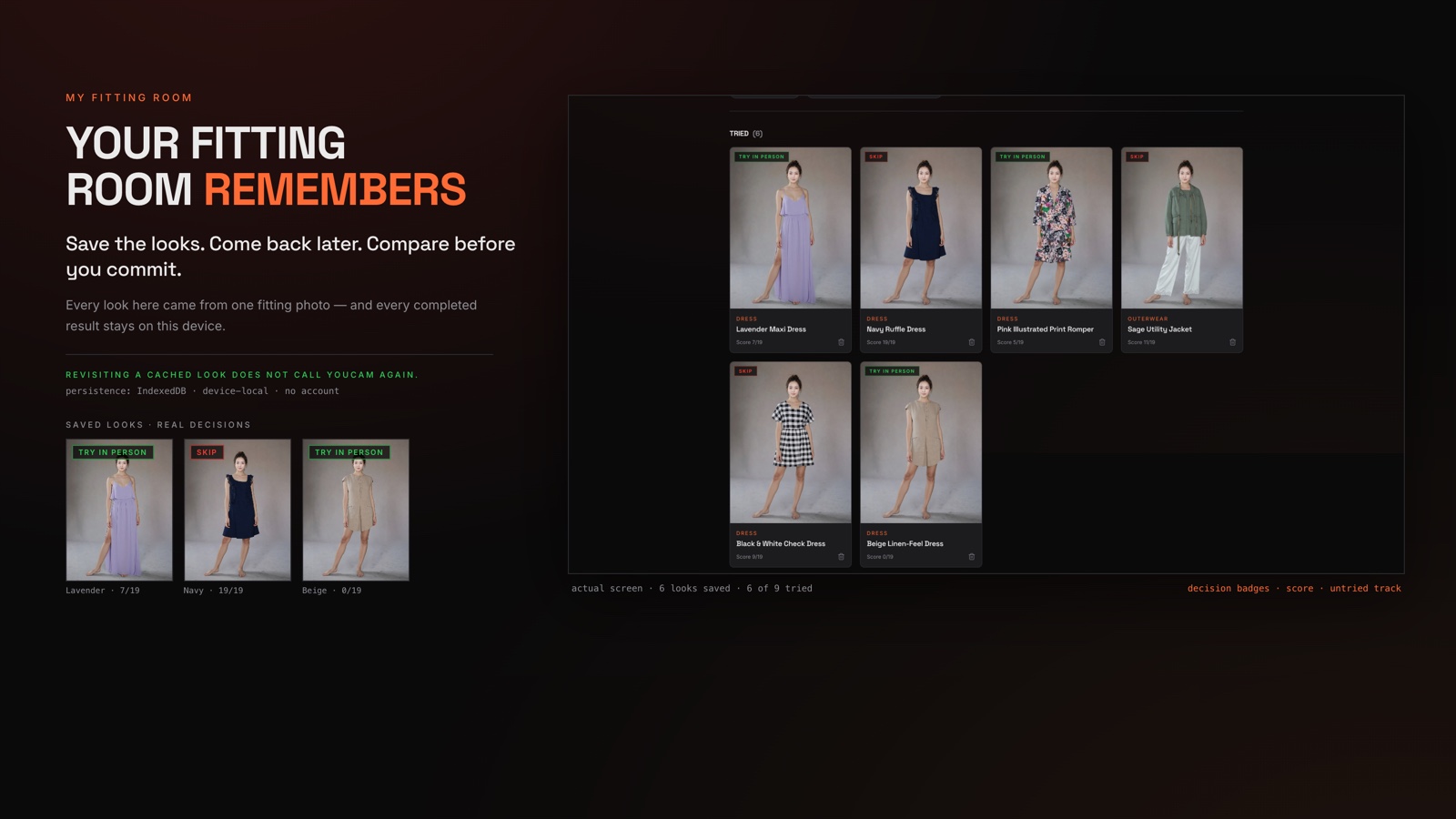
Every completed try-on can be saved into My Fitting Room.
This changes the experience from a one-off API demo into an ongoing comparison space.
Users can:
- try several garments from one fitting photo
- keep completed looks together
- revisit them later
- compare different decisions side by side
Completed results are cached locally on the device. Reopening an already completed look does not call YouCam again.
If the fitting photo is replaced or removed, the saved fitting-room results are cleared to avoid mixing looks from different people.
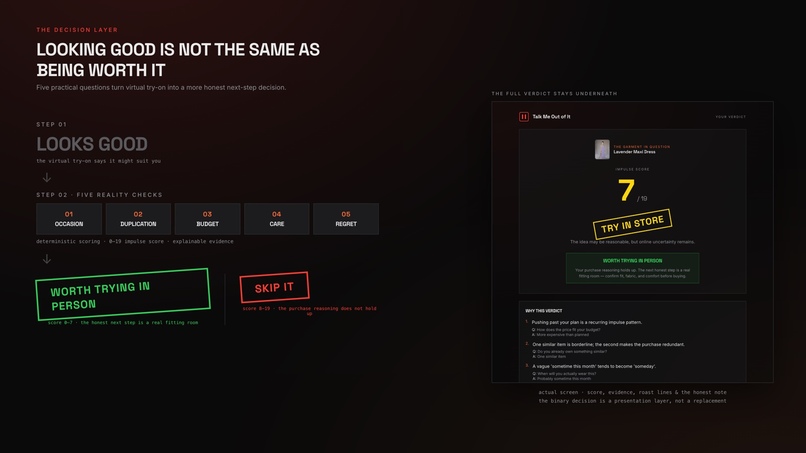
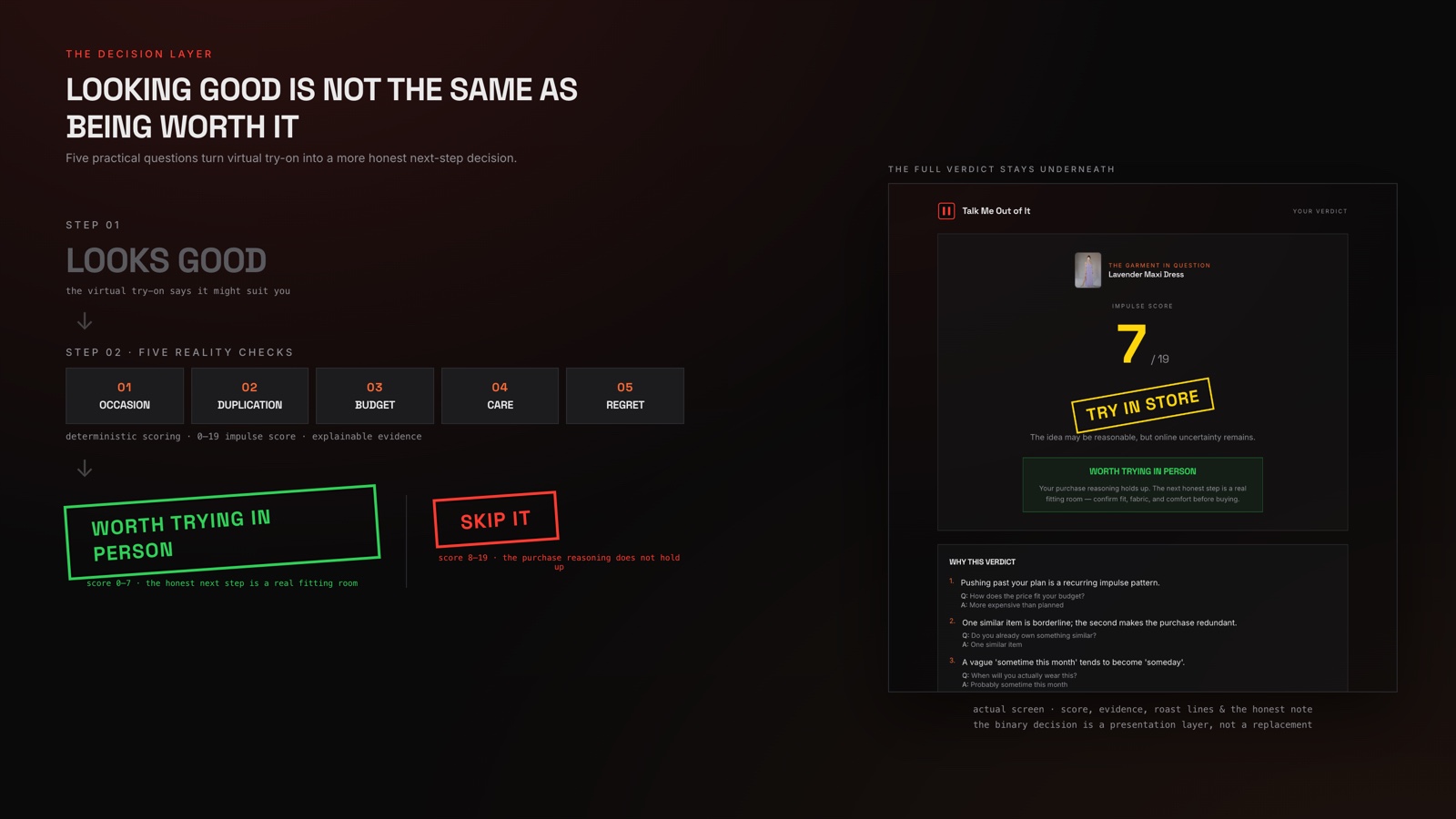
4. Answer five reality checks
Virtual try-on can show the visual possibility.
The decision layer asks about the things an image cannot know:
- Occasion — When will you actually wear it?
- Duplication — Do you already own something similar?
- Budget — Does the purchase fit the plan?
- Care — Are you willing to live with its care requirements?
- Regret — How likely are you to wish you had skipped it?
5. Get one clear next step
The answers feed a deterministic 0–19 impulse score.
Underneath, the system retains four detailed verdict bands:
- BUY IT
- TRY IN STORE
- BORROW OR RENT
- WALK AWAY
But the product-facing decision is deliberately reduced to two outcomes:
WORTH TRYING IN PERSON
or
SKIP IT
The result also explains which answers influenced the decision.
There is no language model generating the verdict, and the same answers always produce the same result.
Most importantly, the product never critiques the user’s body, size, age, skin tone, attractiveness, disability, gender expression, or any other visible physical characteristic.
Its honesty is directed at the purchase decision, never the person.
How we built it
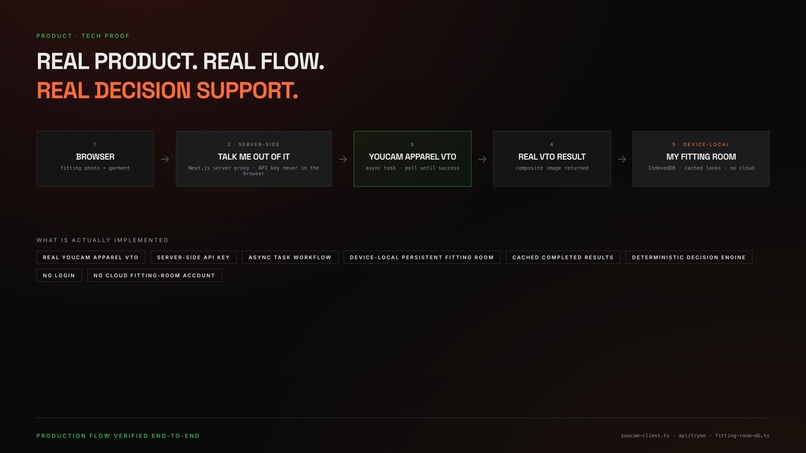
Talk Me Out of It is a Next.js, React, and TypeScript web application deployed on Vercel.
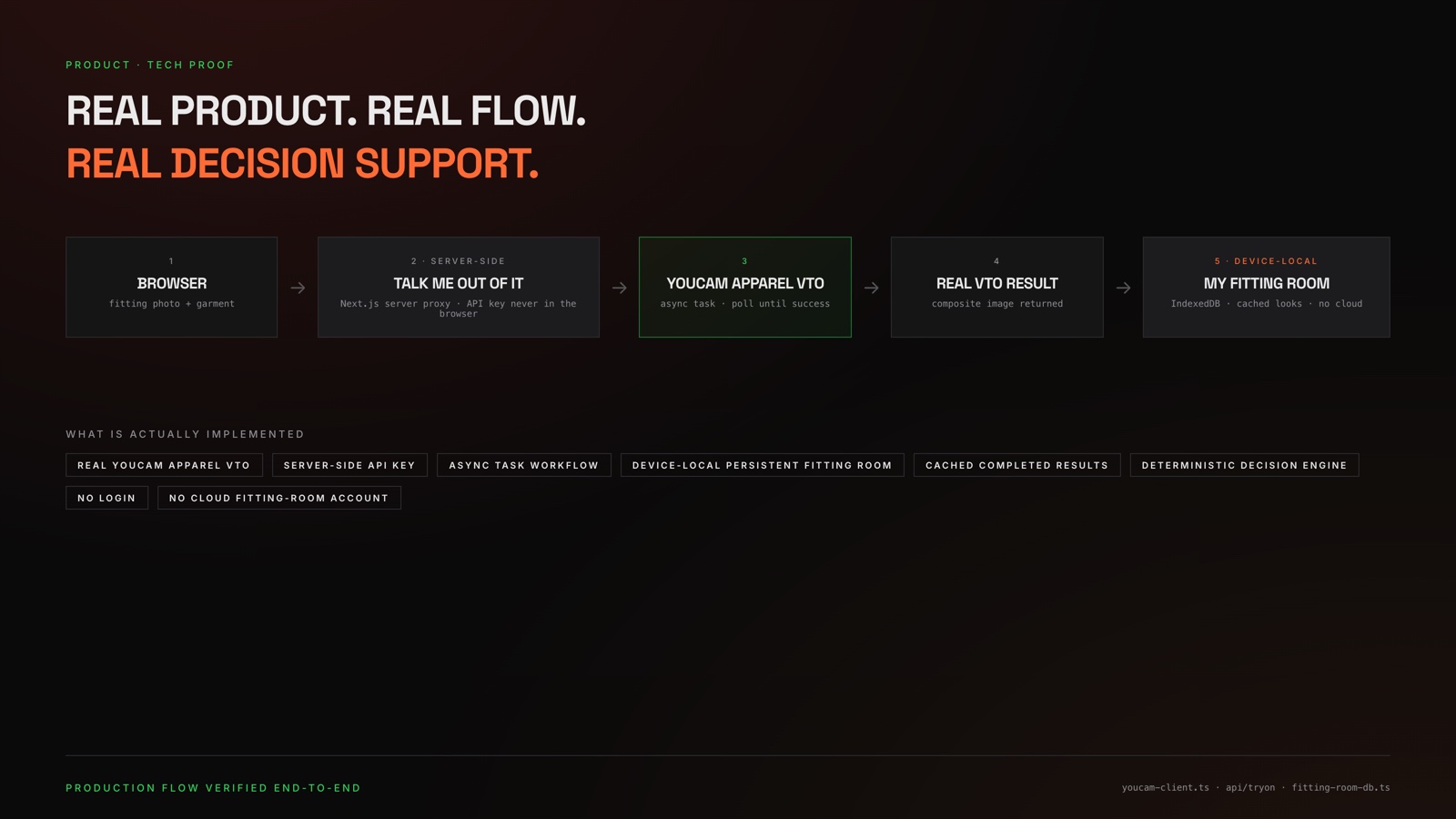
The application integrates the YouCam Apparel Virtual Try-On API through a server-side Next.js route so the API key is never exposed in the browser.
A new try-on follows the full asynchronous workflow:
- Validate the fitting photo and garment image
- Normalize the uploaded images
- Request YouCam upload URLs
- Upload the person and garment images
- Create an Apparel VTO task
- Poll until the task completes
- Retrieve the generated composite
- Return the real result to the product interface
The fitting-room persistence layer uses browser-side storage.
The current fitting photo and completed looks stay on the device rather than being stored in a user account or cloud fitting-room database.
This lets us support a very simple experience:
Upload once. Try many. Come back later.
The decision engine is intentionally deterministic rather than generative.
Each response to the five reality checks has a defined risk value. The score is reproducible, testable, and explainable, and the writing around the verdict is fixed rather than dynamically generated.
Challenges we faced
Turning a virtual try-on into a real product flow
The first version proved the basic sequence:
photo → garment → YouCam result → questions → verdict
But it still behaved like a single-use demo.
The bigger product challenge was realizing that people do not evaluate clothes one at a time in isolation. They try several things, compare them, leave, come back, and change their minds.
That led us to build My Fitting Room and make the fitting photo persistent.
The experience became:
one photo → many looks → saved comparisons → one next-step decision per look
Integrating the full asynchronous YouCam workflow
Apparel VTO is not a single request.
We had to coordinate file validation, image uploads, task creation, polling, result retrieval, timeouts, error states, and production deployment.
We also wanted the product to make a clear distinction between a real API result and any non-live state.
Keeping one fitting room tied to one person
Persistence introduced a new privacy and data-integrity problem.
If someone changed the fitting photo while old looks remained cached, the fitting room could accidentally contain results belonging to different source photos.
We therefore clear saved fitting-room results when the person photo is changed or removed.
Designing honesty without cruelty
“Brutally honest” is fun as a product voice, but it can easily turn into appearance criticism.
We set a strict rule:
Critique the garment and the purchase reasoning, never the person.
The five questions are about occasion, duplication, budget, care, and regret — never somebody’s body.
Reducing a nuanced score to a useful decision
Our original system exposed four verdicts.
They were explainable, but they created too much decision detail at the exact moment when the user needed clarity.
We kept the deterministic four-band engine underneath, while simplifying the product-facing outcome to:
WORTH TRYING IN PERSON / SKIP IT
That gave us the nuance of an explainable score without making the final action complicated.
Accomplishments that we are proud of
We are proud that Talk Me Out of It became more than a virtual try-on demonstration.
The final product connects:
- a real YouCam Apparel VTO production integration
- one persistent fitting photo
- multiple real try-on results from the same person
- a device-local My Fitting Room
- cached completed looks that can be reopened without another API call
- custom garment uploads
- five practical reality checks
- a deterministic, explainable decision engine
- two clear product-facing outcomes
- strong privacy and cache-isolation boundaries
- safe, non-appearance-based writing
Most importantly, YouCam is not a decorative effect in the experience.
The try-on creates the tempting visual possibility.
Talk Me Out of It asks what should happen after that moment.
Virtual try-on shows you what might look good.
Talk Me Out of It helps you decide what deserves a real fitting room.
What we learned
The biggest lesson was that a better virtual try-on creates a new design opportunity.
When visualization becomes easier and more convincing, the next valuable layer may not be another recommendation.
It may be decision support.
We also learned that persistence changes the meaning of a product.
Saving one result is a convenience.
Saving several completed looks from the same fitting photo creates a fitting room — a place where users can compare possibilities over time instead of making every decision immediately.
We learned that explainability can also be simple.
Five explicit questions and deterministic rules can be more useful than an opaque model telling someone what to buy.
And we learned that virtual and physical fitting rooms do not need to compete.
Virtual try-on can narrow the field quickly.
A real fitting room can still confirm fabric, comfort, fit, and movement.
Our job is to help decide which options deserve that next step.
What’s next
The hackathon version focuses on proving one complete experience:
Upload once. Try many. Keep the looks. Decide what is worth trying for real.
Future versions could extend that fitting room with richer product context such as:
- retailer product links and metadata
- price and cost-per-wear information
- optional wardrobe-duplication history
- care reminders
- borrowing or rental alternatives
- post-purchase regret feedback
- retailer insights around keep-rate and decision quality
A retailer-facing version could measure something beyond conversion:
not only whether a shopper buys, but whether they are likely to keep, use, and feel good about the decision.
For now, the product promise is deliberately simple:
Try everything. Buy everything—oh, no.
Keep the ones actually worth trying for real.
Built With
- ai
- api
- apparel
- computer
- css
- e-commerce
- fashion
- framer
- motion
- next.js
- react
- sharp
- sustainable
- tailwind
- tech
- try-on
- typescript
- vercel
- virtual
- vision
- youcam
- zustand


Log in or sign up for Devpost to join the conversation.