-
-
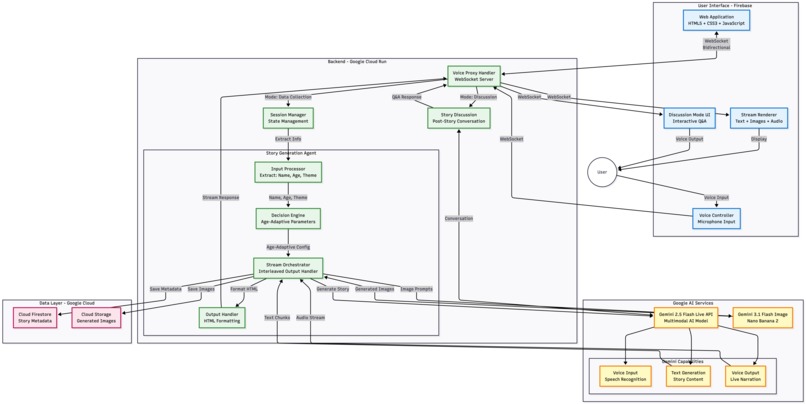
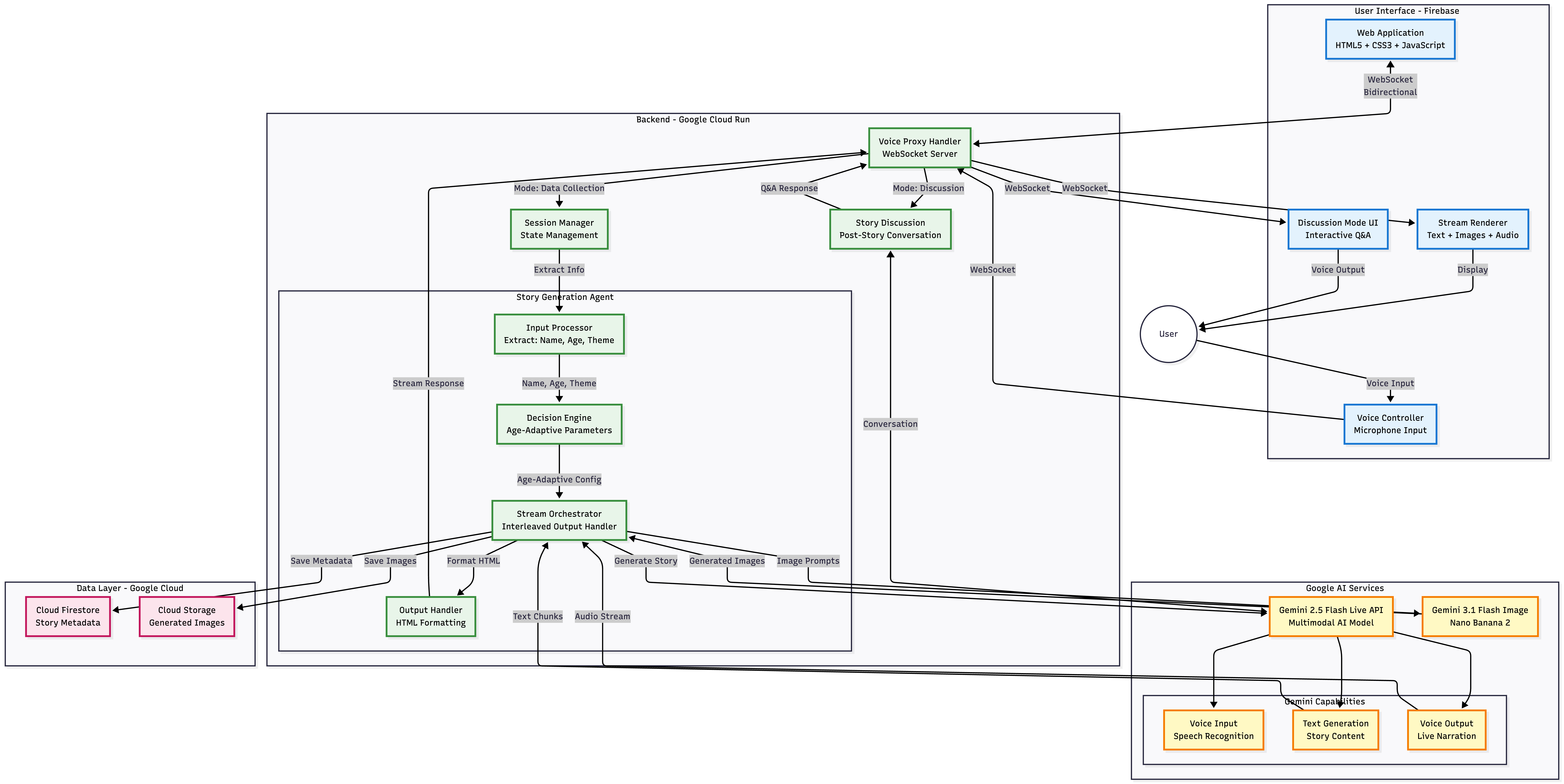
The Architecture Diagram
-
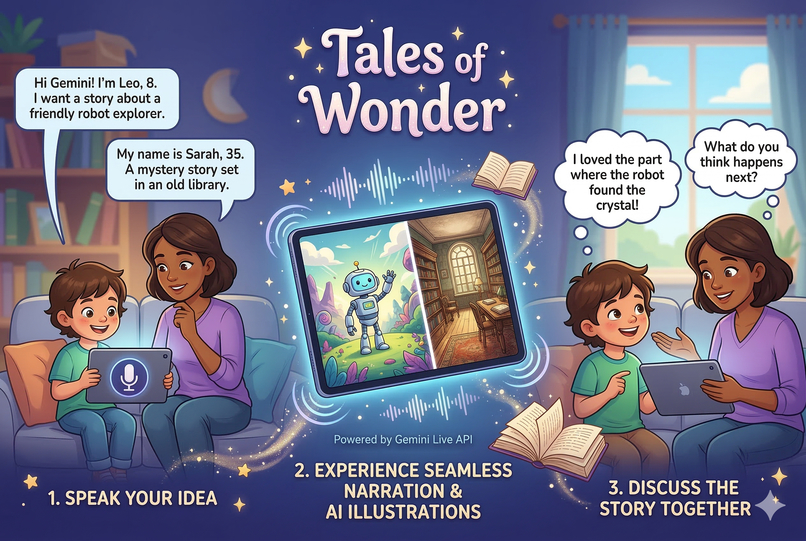
Introduction
-
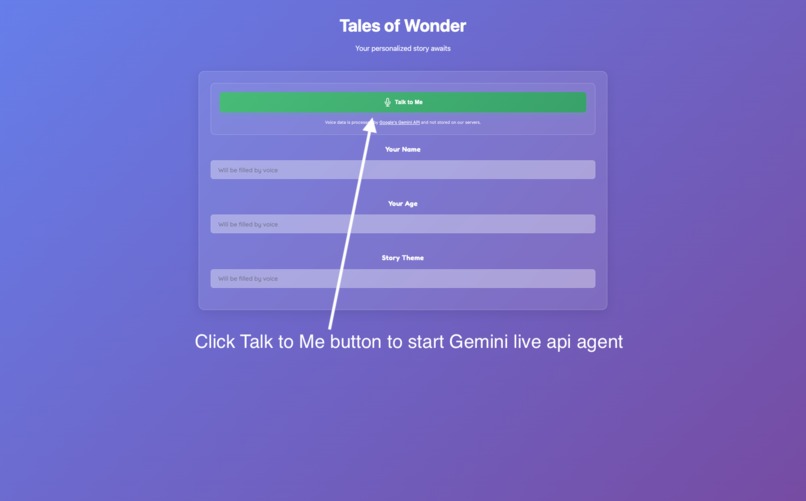
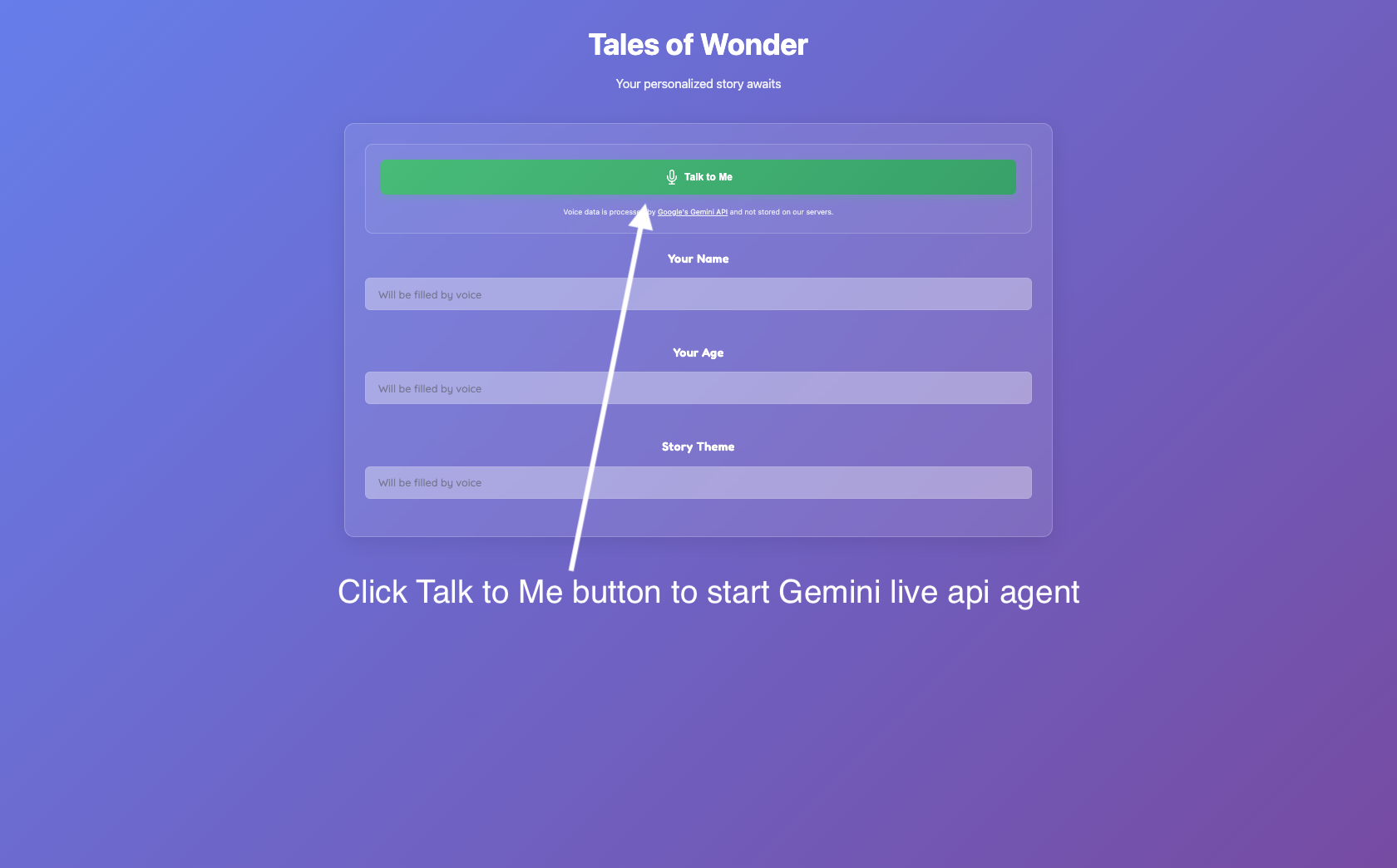
Starting the agent
-
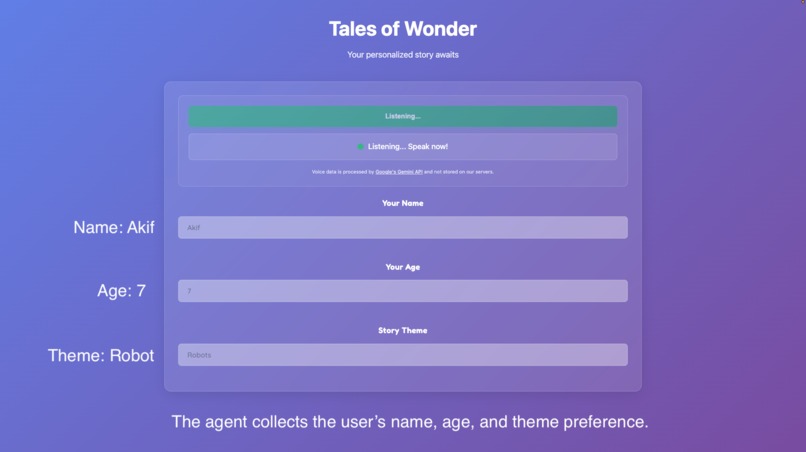
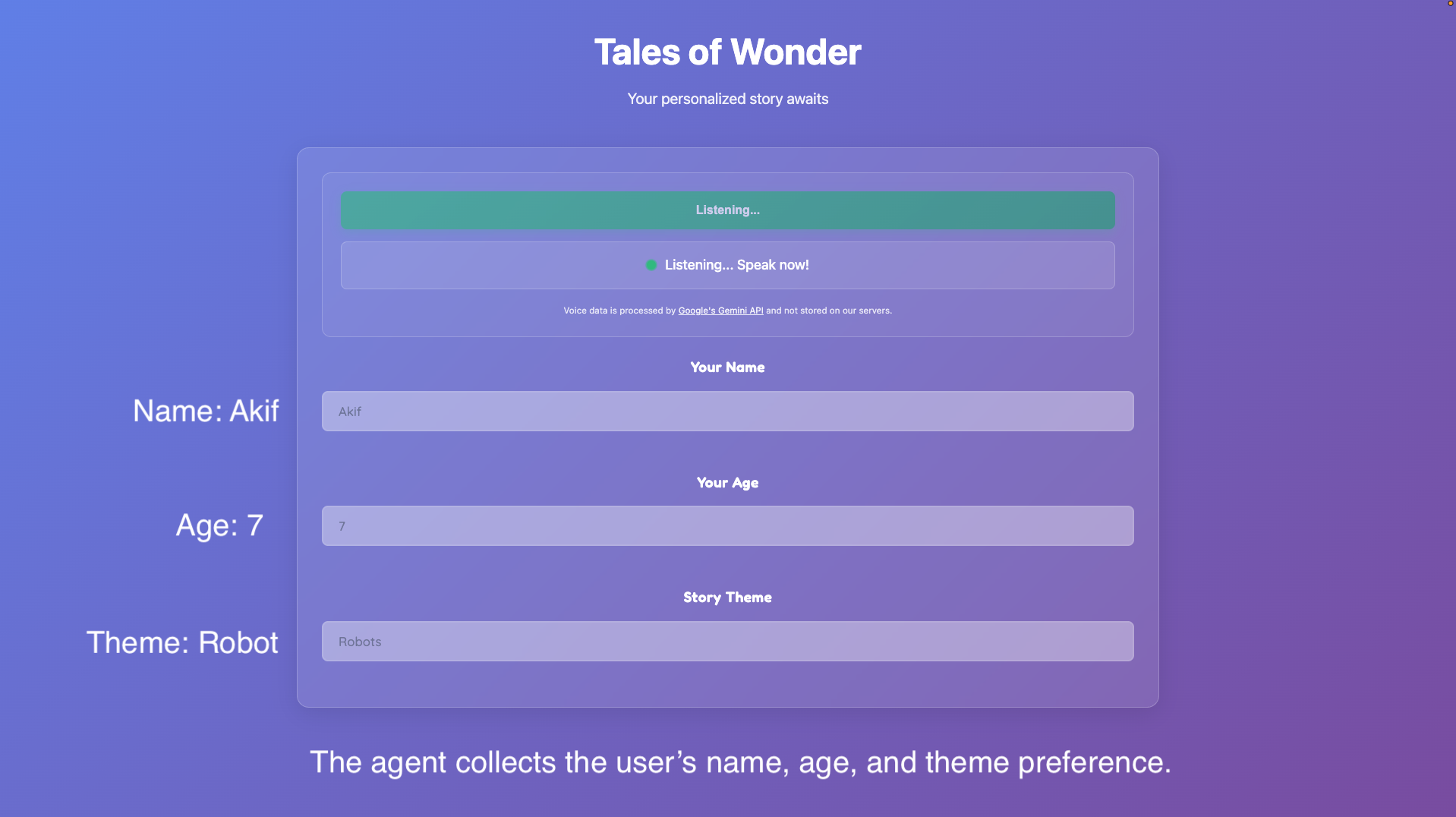
Agent data collection via live api: Age group 3-7
-
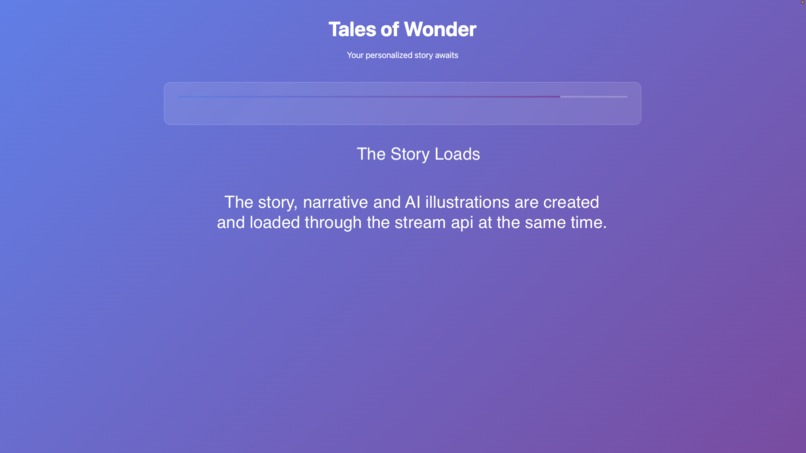
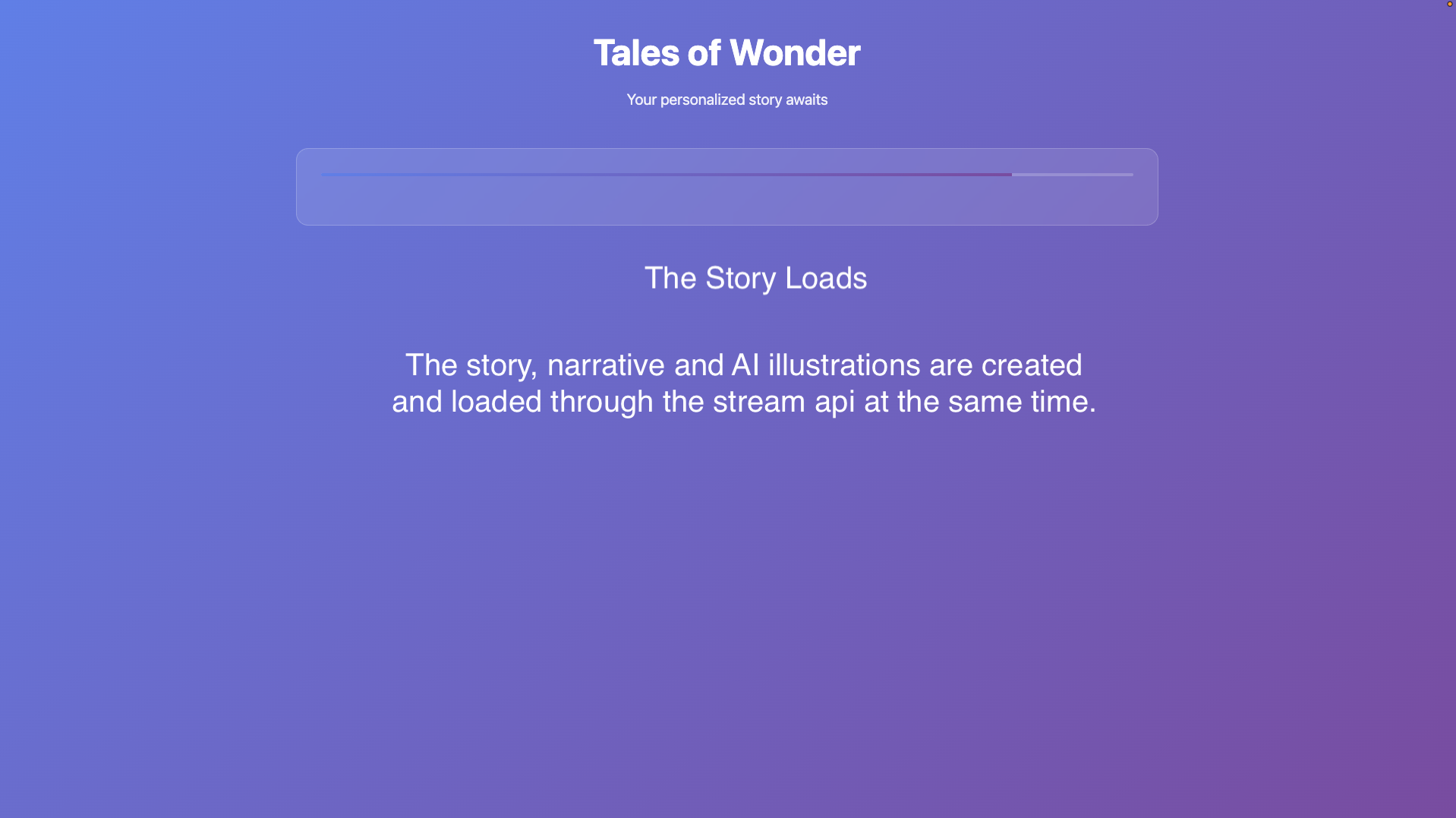
Story Loading Screen
-
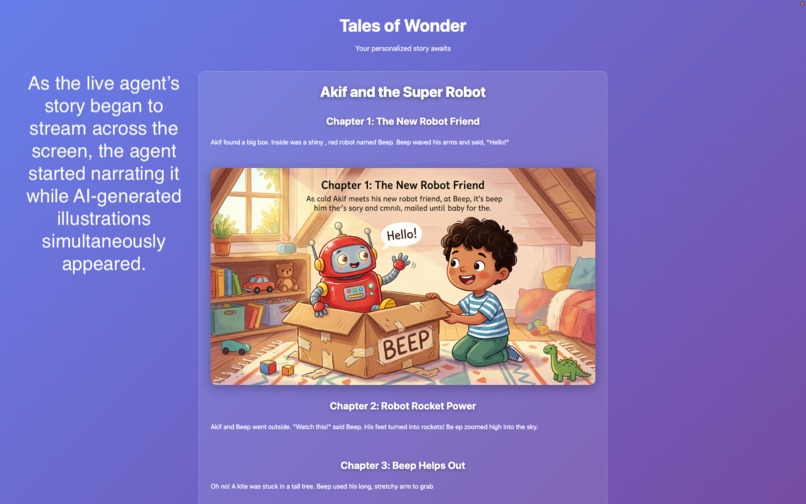
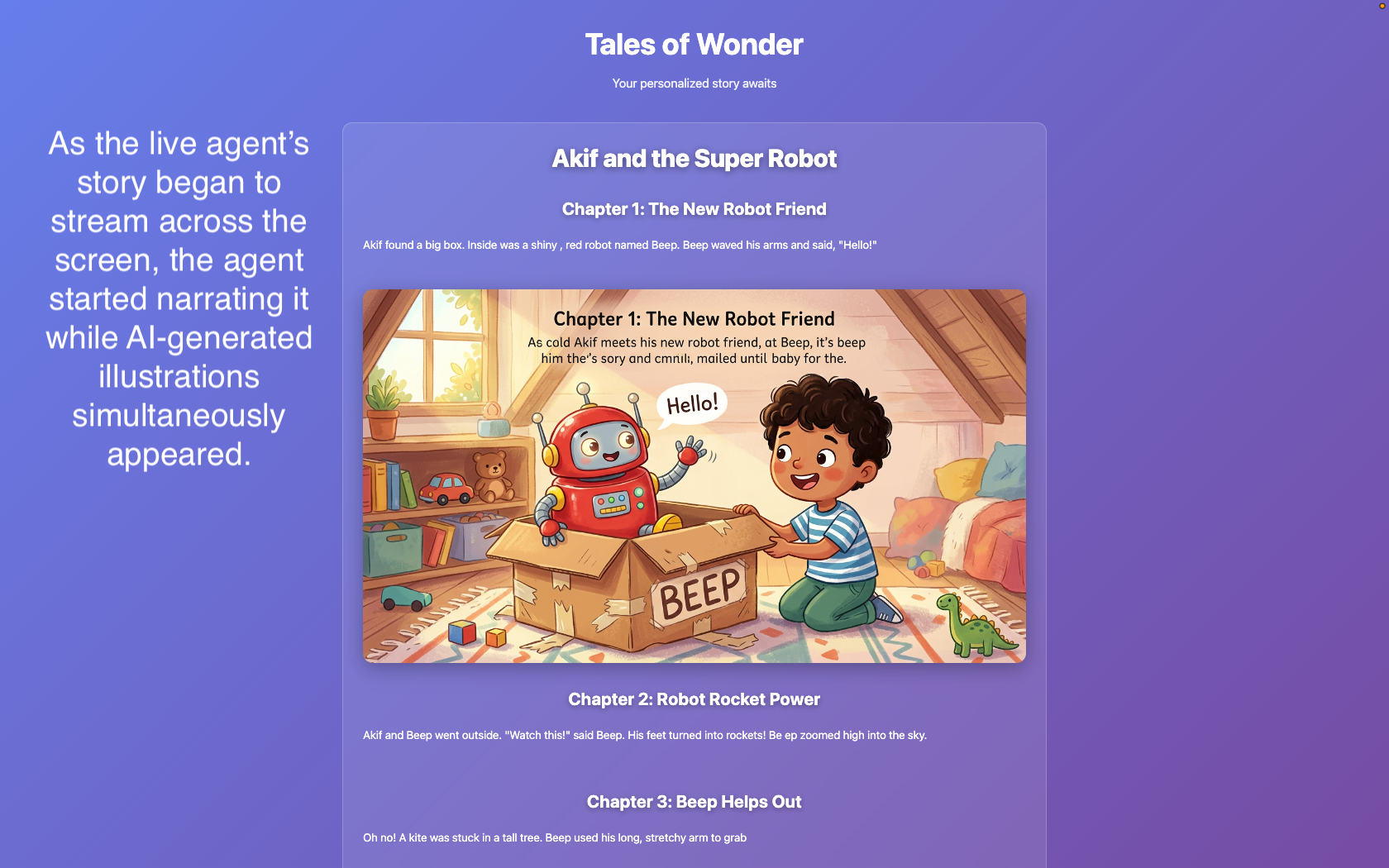
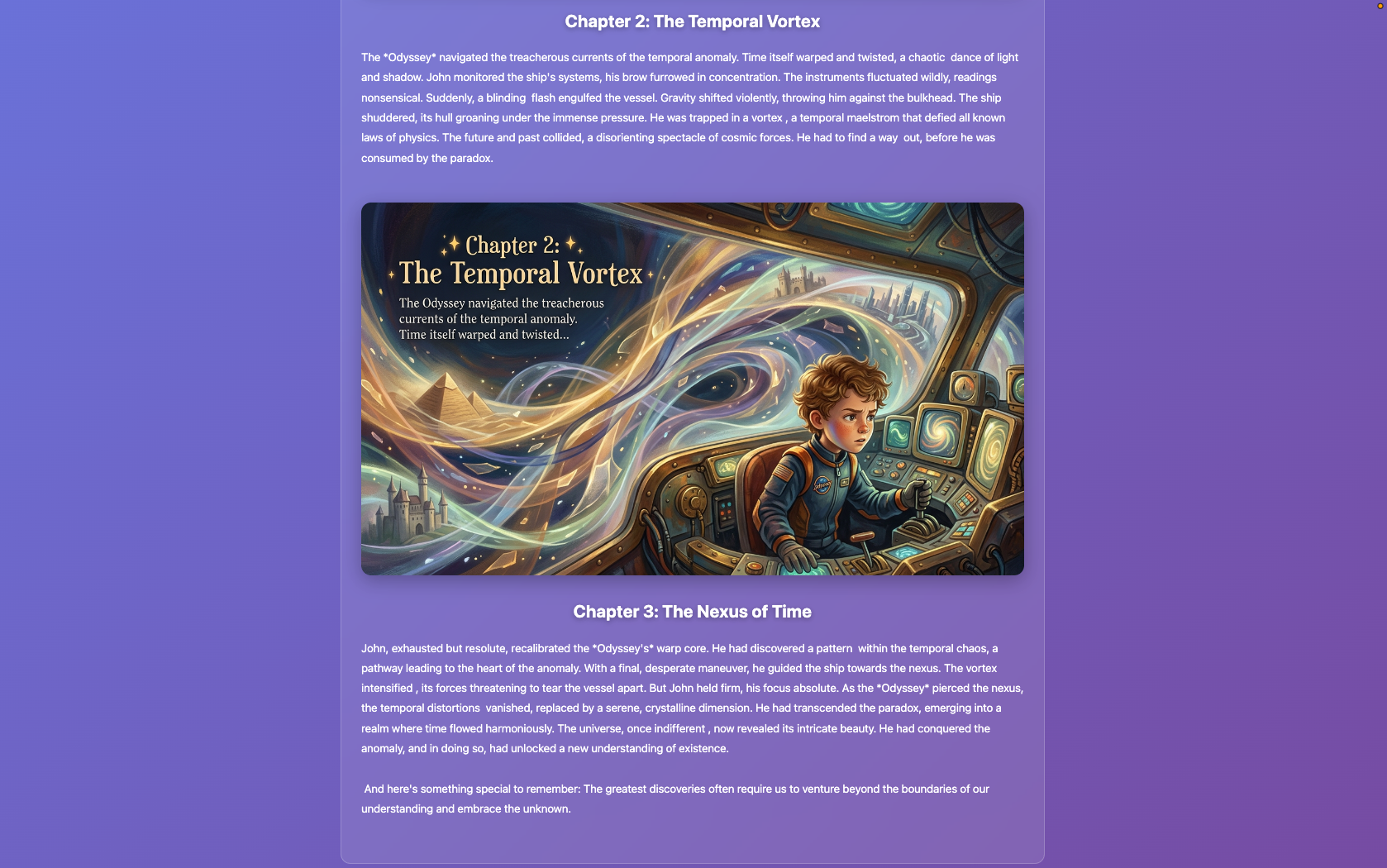
Gemini 2.5 Flash Live generates interleaved story text and audio, while Gemini 3.1 Flash Image simultaneously creates custom illustrations.
-
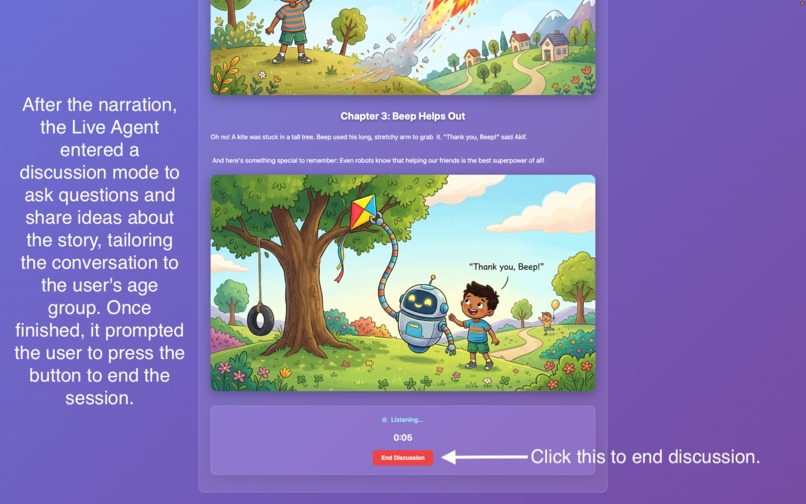
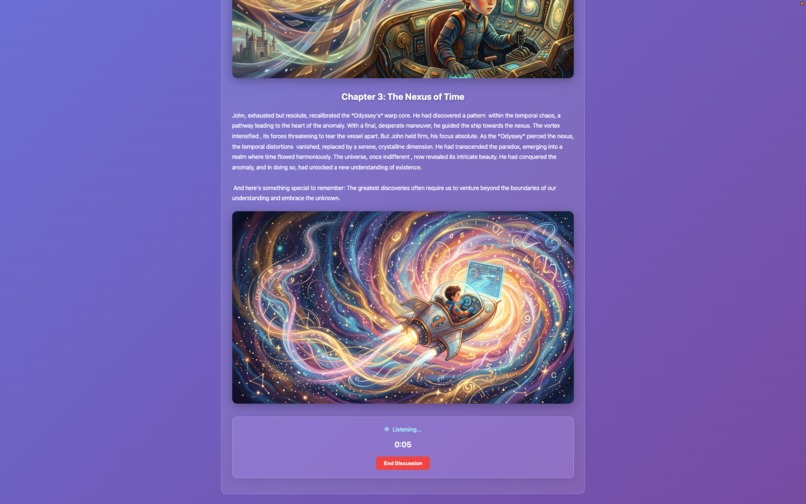
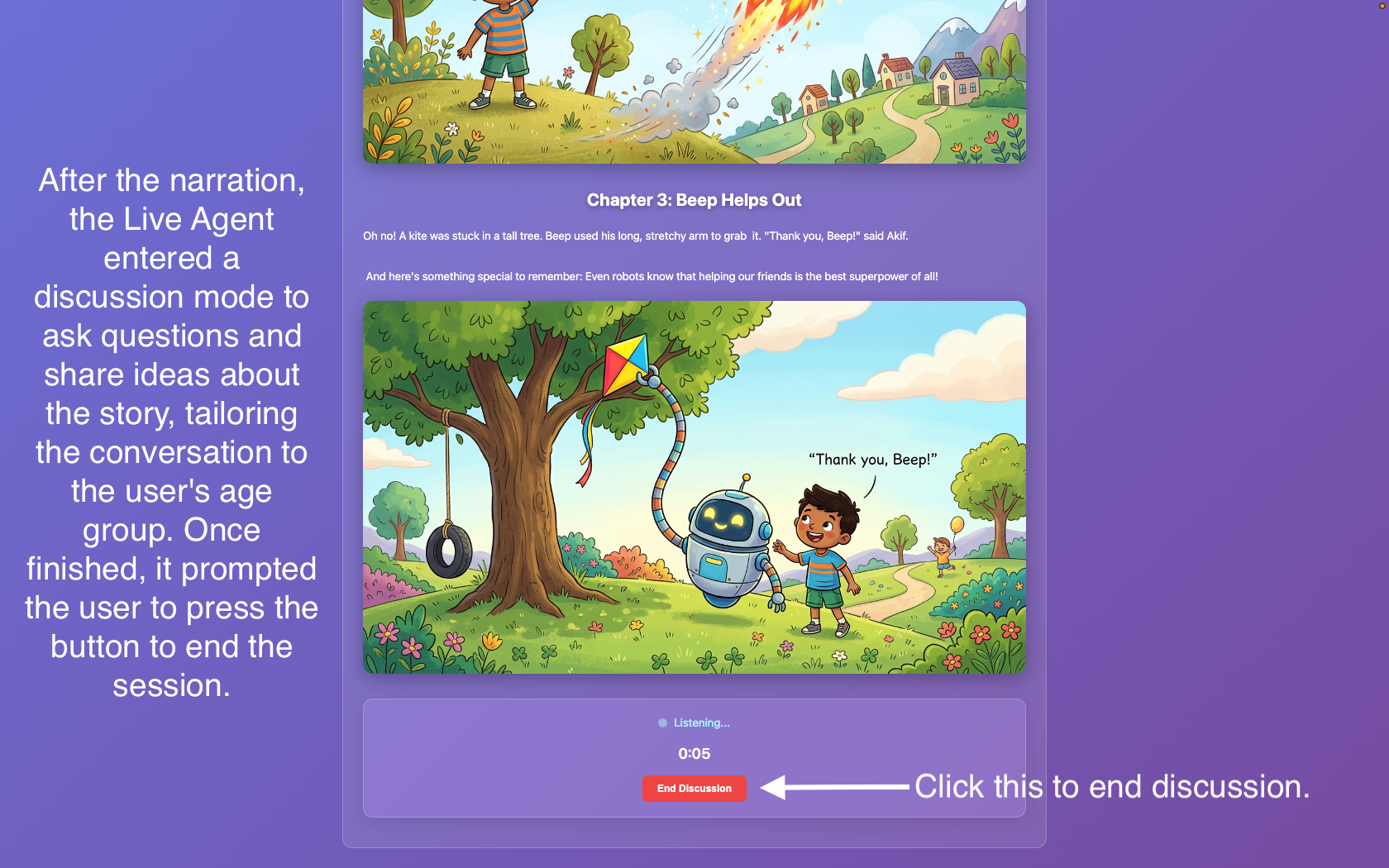
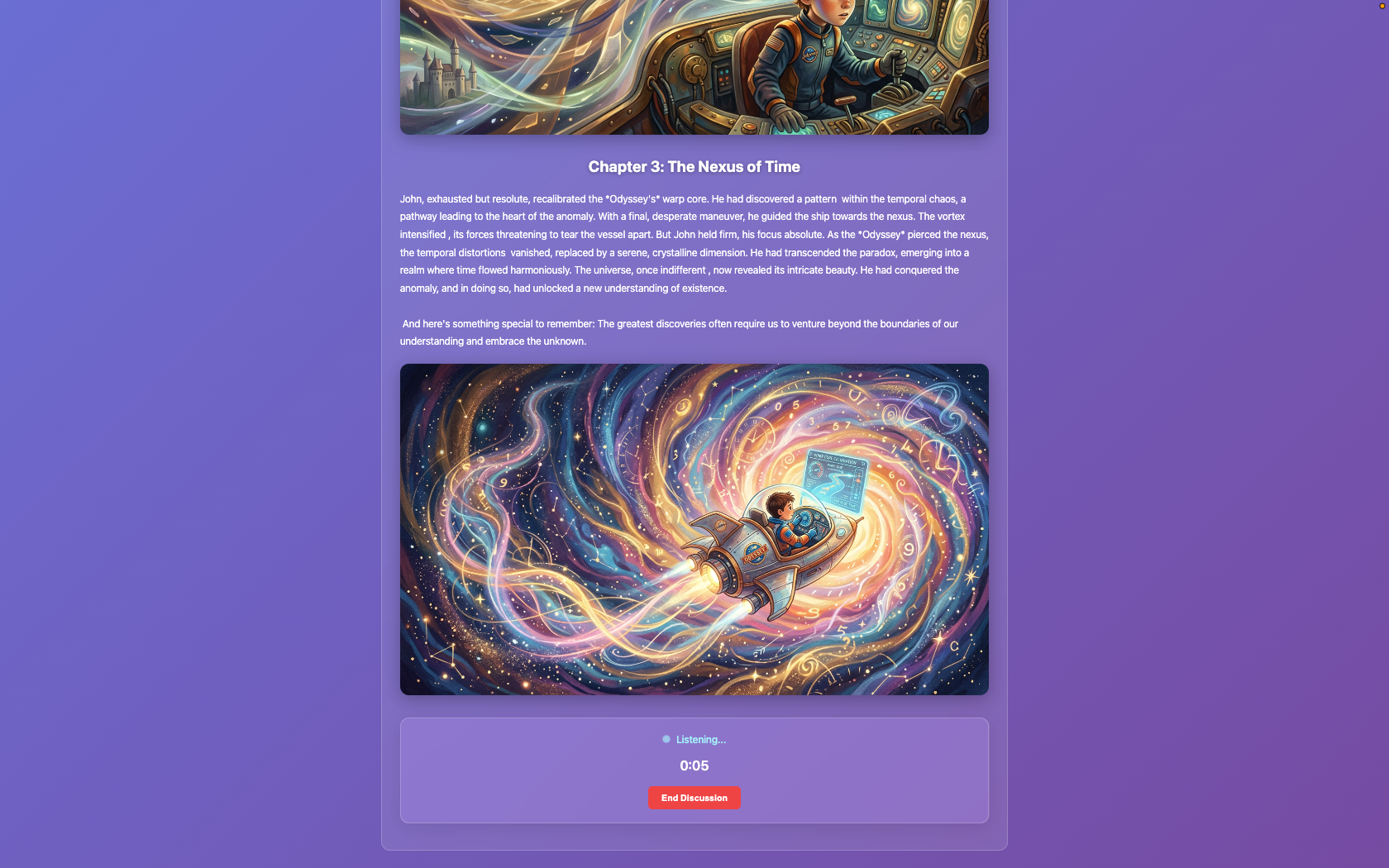
The user discusses the story with the live agent.
-
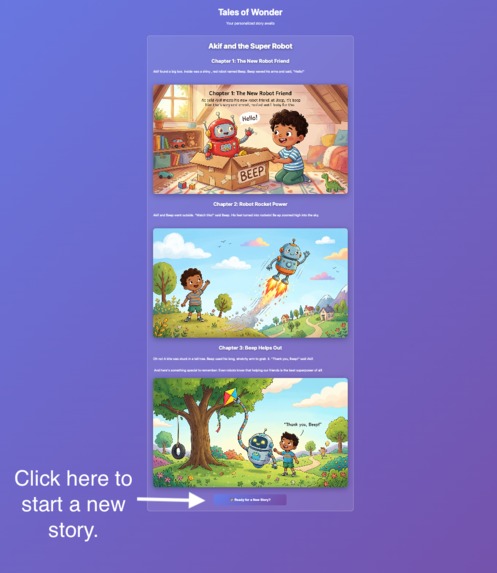
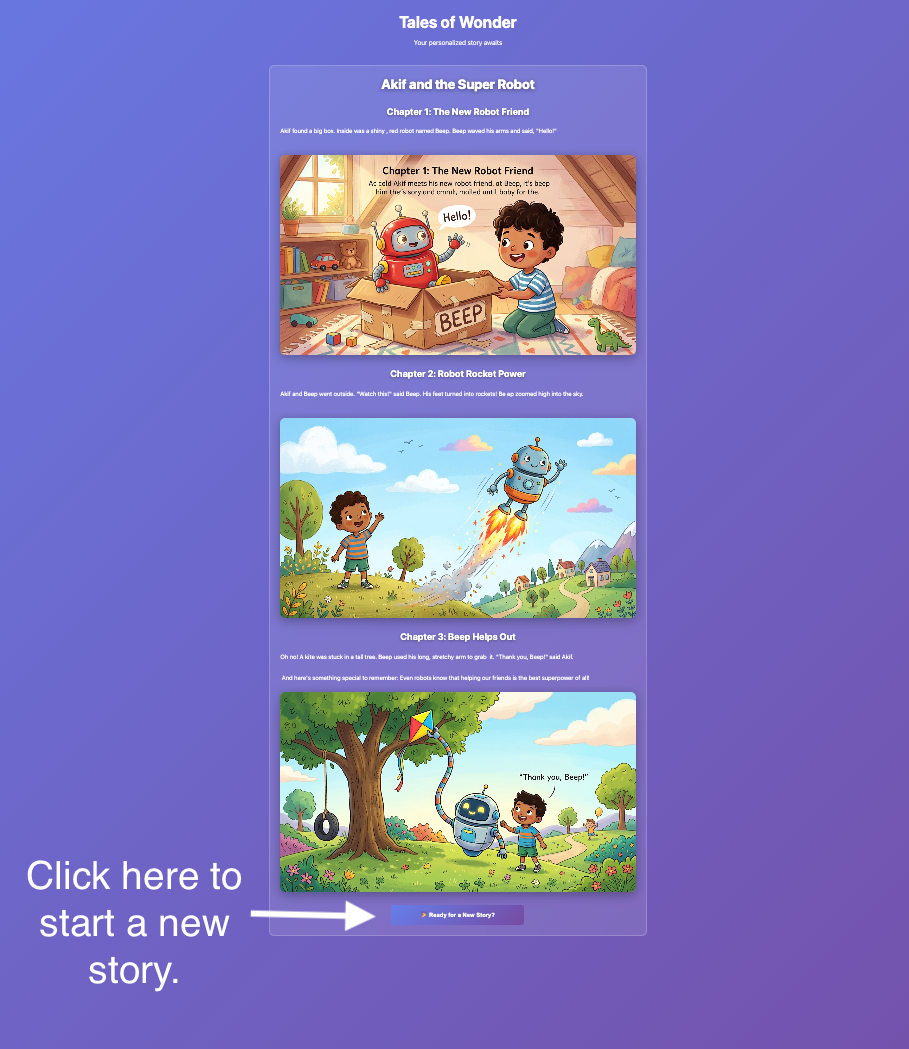
Create New Story
-
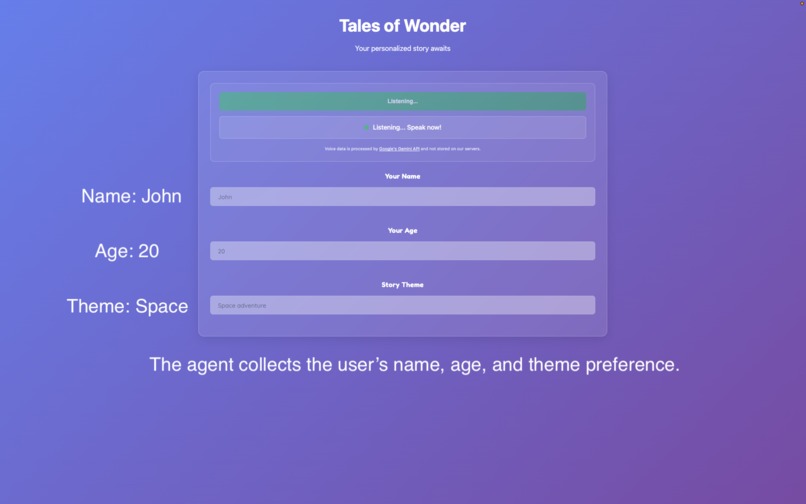
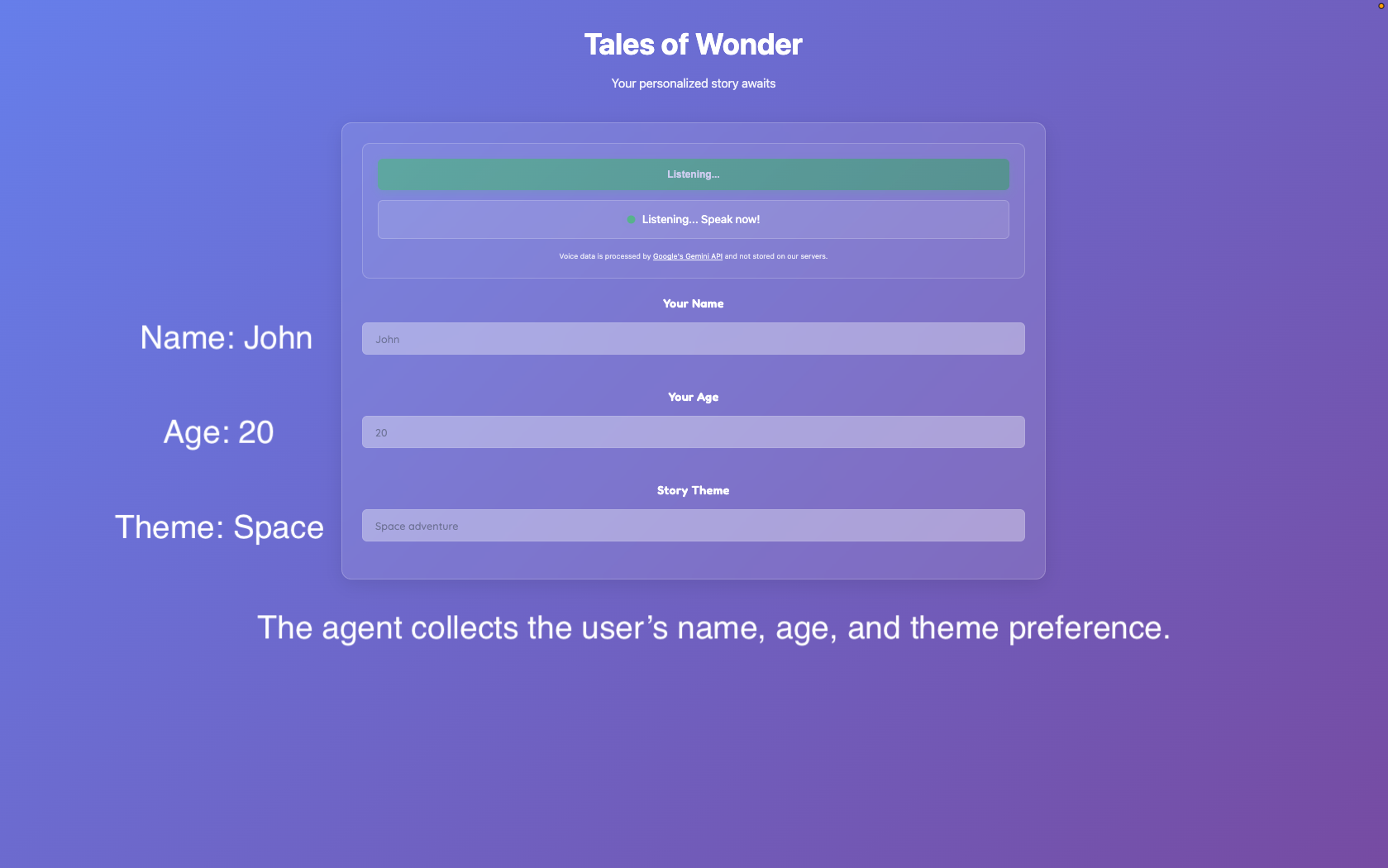
Agent data collection via live api: Age group 18-29
-
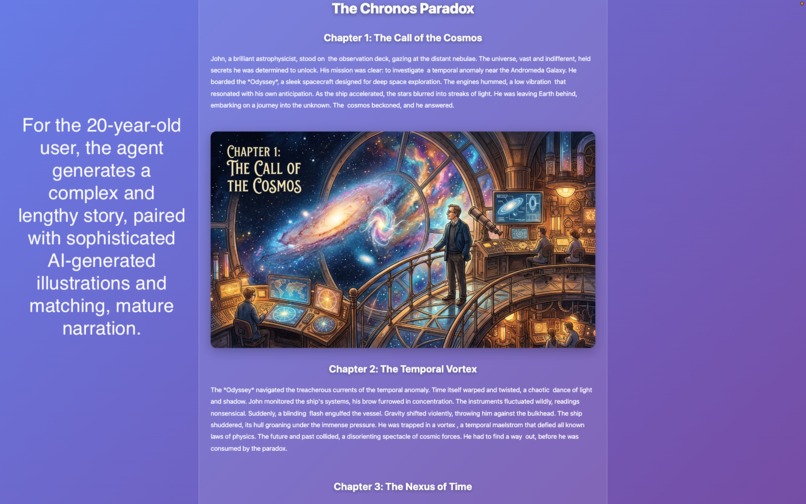
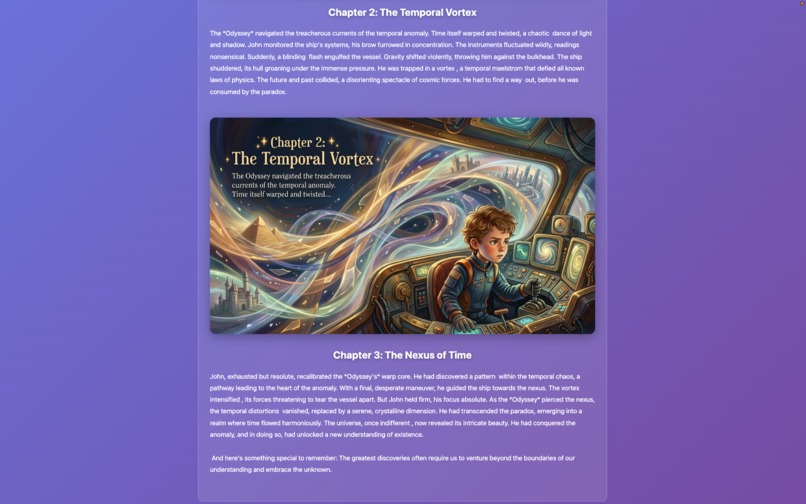
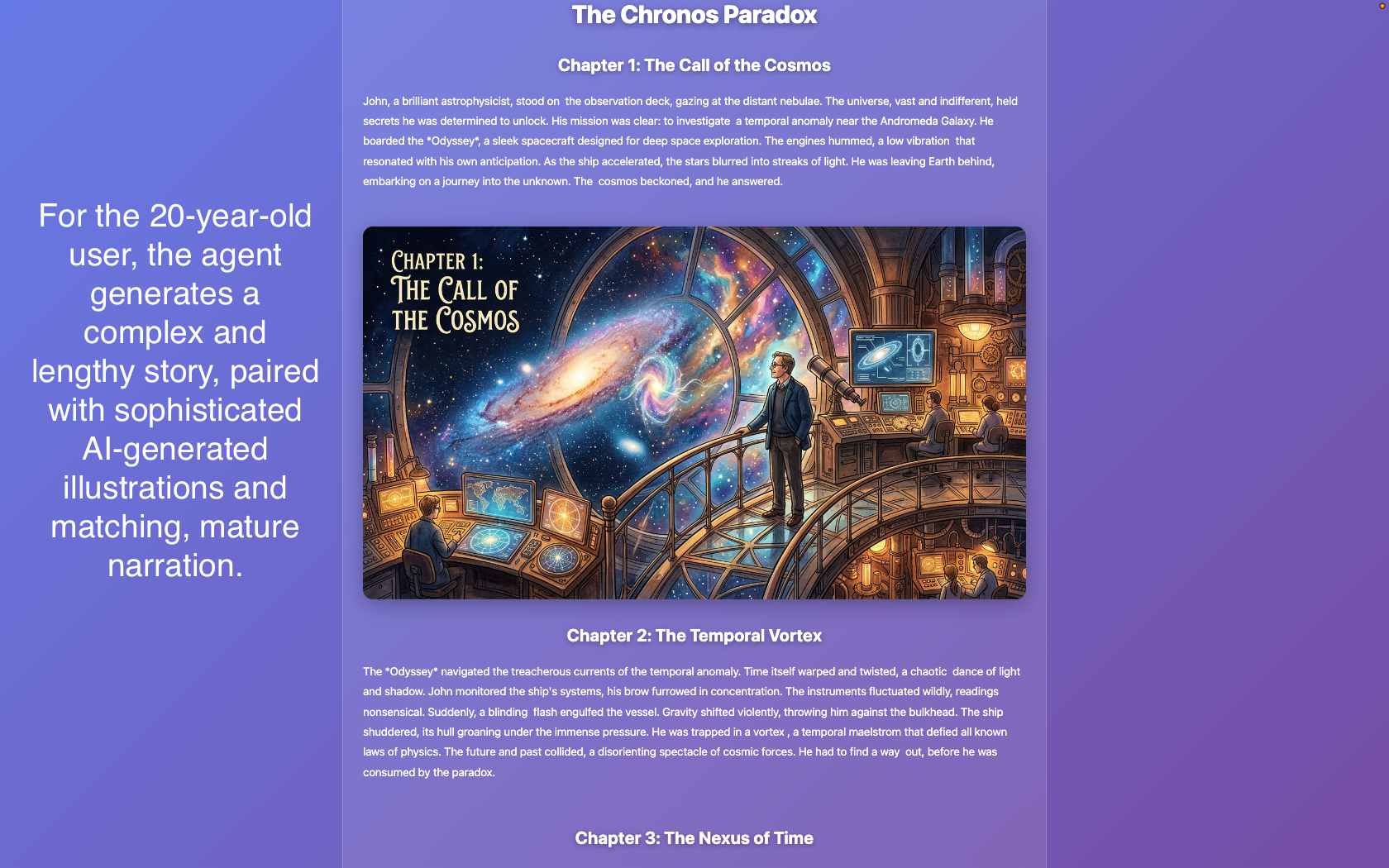
More advanced, extended story with corresponding high-detail visuals and narrative depth.
-
-
Tales of Wonder
Inspiration
As a parent and educator, I've always been fascinated by the power of storytelling to spark imagination and teach valuable life lessons. However, I noticed that most digital storytelling tools either lack personalization or fail to adapt to different age groups effectively. When I discovered Gemini 2.5 Flash's Live API with interleaved multimodal capabilities, I saw an opportunity to create something truly magical: an AI storyteller that could generate personalized, age-adaptive stories with synchronized text, images, and live narration - all streaming together in real-time.
The inspiration came from watching children of different ages react to the same story. A 5-year-old needs simple vocabulary and playful tones, while a teenager craves complex narratives with dramatic themes. Traditional storytelling apps treat all users the same, but I envisioned an autonomous agent that could intelligently adapt every aspect of the story - from vocabulary complexity to illustration style - based on the user's age.
What it does
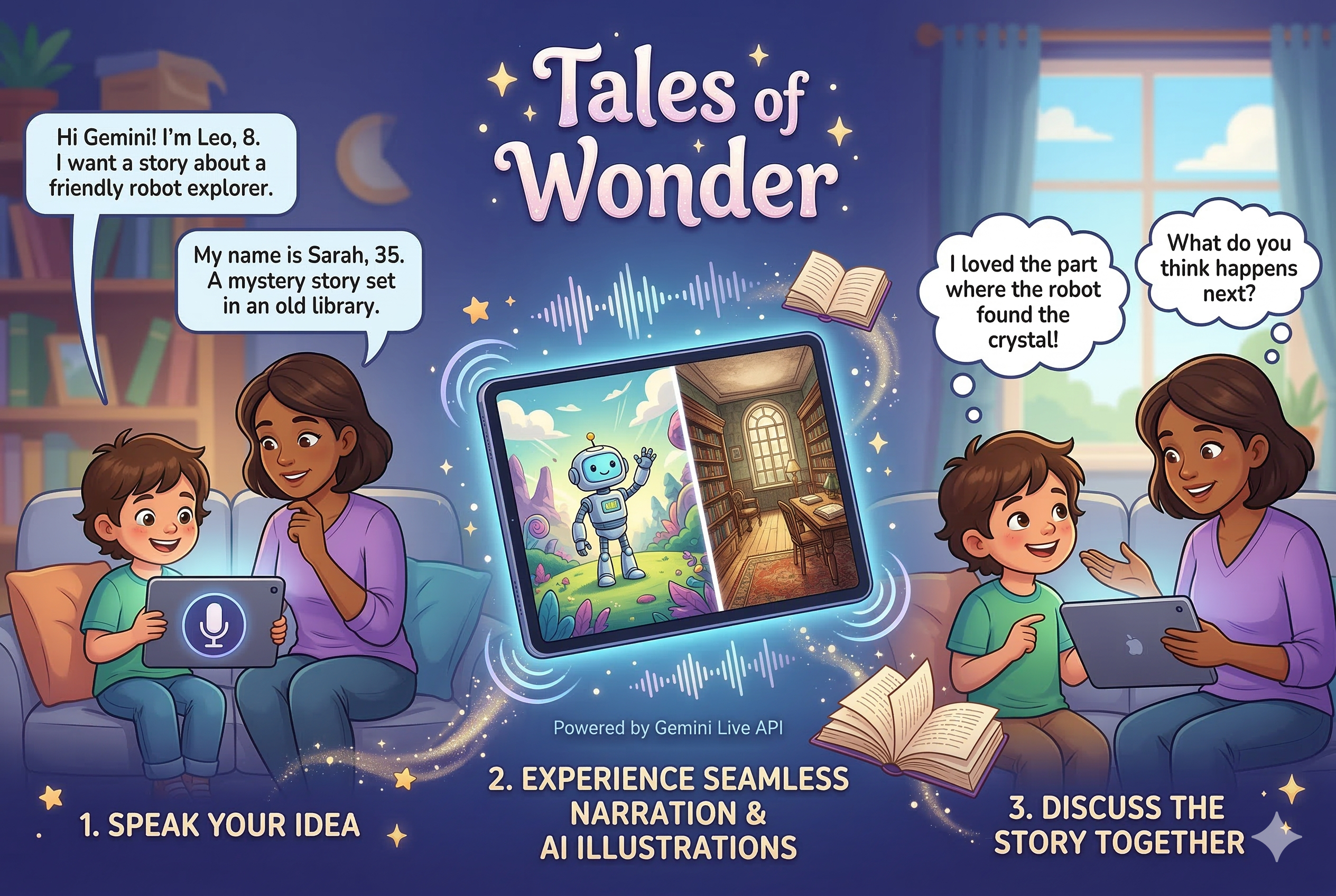
Tales of Wonder is an AI-powered storytelling agent that creates personalized, age-adaptive stories through natural voice interaction. Here's how it works:
Voice-First Experience:
- Users simply speak their name, age, and story theme
- No typing required - the entire experience is conversational
- Gemini Live API handles natural language understanding
Autonomous Age Adaptation:
- The agent automatically adapts 6 key parameters based on age (3-7, 8-12, 13-17, 18-29, 30-59, 60+):
- Vocabulary level (basic to sophisticated)
- Sentence complexity (simple to layered)
- Tone (playful to reflective)
- Illustration style (cartoon to artistic)
- Chapter length (20-50 words)
- Narrative pacing
Interleaved Multimodal Output:
- Text, images, and live audio narration stream together in a single, fluid output
- Not sequential - all modalities are truly interleaved
- Gemini 3.1 Flash Image (Nano Banana 2) generates AI illustrations inline with the story
- Real-time audio narration using Gemini's native audio capabilities
Interactive Discussion Mode:
- After the story ends, users can engage in natural voice conversations about the tale
- Ask questions about characters, themes, or plot
- AI provides thoughtful responses and encourages deeper thinking
Complete Story Structure:
- Every story includes 3 chapters with inline illustrations
- Age-appropriate moral or lesson at the end
- Consistent narrative arc with beginning, middle, and end
How we built it
Architecture:
We built Tales of Wonder using a modern, cloud-native architecture:
Backend (Python + FastAPI):
Story Generation Agent: Autonomous decision-making system with 5 components:
- Input Processor: Extracts name, age, and theme from voice input
- Decision Engine: Maps age to adaptive parameters using rule-based logic
- Stream Orchestrator: Manages Gemini API streaming and interleaved output
- Output Handler: Formats content for frontend rendering
- TTS Processor: Handles audio stream processing
Voice Proxy Handler: WebSocket server managing Gemini Live API connections
- Bidirectional audio streaming
- Session state management
- Mode switching (data collection, narration, discussion)
Story Discussion: Post-story conversation handler using Gemini Live API
Frontend (Vanilla JavaScript):
- Voice Activation Controller: Microphone access and audio capture
- WebSocket Client: Real-time bidirectional communication
- Stream Renderer: Progressive rendering with typewriter effects and fade-in animations
- Audio Playback: Synchronized audio output
- Glass Morphism UI: Modern, accessible design
Google Cloud Integration:
- Gemini 2.5 Flash Live API: Voice input/output, text generation, live narration
- Gemini 3.1 Flash Image (Nano Banana 2): AI-generated illustrations
- Cloud Run: Serverless backend hosting with auto-scaling
- Firebase Hosting: Frontend hosting with global CDN
- Cloud Firestore: Story metadata storage
- Cloud Storage: Generated image storage
- Cloud Build: CI/CD pipeline for automated deployments
Development Methodology:
We used spec-driven development with property-based testing:
- Created formal specifications for each feature
- Defined correctness properties that must hold
- Implemented property-based tests using Hypothesis (Python) and fast-check (JavaScript)
- Validated behavior across all age groups and edge cases
Key Technologies:
- Python 3.11+ with FastAPI and Pydantic
- Google GenAI SDK for Gemini integration
- WebSocket for real-time communication
- Web Audio API for audio capture/playback
- pytest + Hypothesis for backend testing
- Jest + fast-check for frontend testing
Challenges we ran into
1. Interleaved Output Synchronization:
The biggest challenge was achieving true interleaved multimodal output. Initially, we tried sequential generation (text → images → audio), but this felt disjointed. Gemini 2.5 Flash's interleaved capabilities were key, but we had to:
- Handle markdown pattern splitting across chunks (e.g.,
**for bold text) - Implement text buffering to prevent incomplete markdown from rendering
- Synchronize audio narration with text streaming
- Manage image generation timing to maintain narrative flow
Solution: We built a sophisticated buffering system that detects incomplete markdown patterns and waits for complete chunks before rendering. This ensures smooth, professional-looking output.
2. Age-Adaptive Parameter Tuning:
Determining the right parameters for each age group required extensive research and testing. We had to balance:
- Vocabulary complexity vs. comprehension
- Story length vs. attention span
- Illustration style vs. age preferences
- Tone appropriateness vs. engagement
Solution: We created a decision matrix based on educational psychology research and iteratively refined it through testing with users across different age groups.
3. WebSocket Connection Stability:
Managing WebSocket connections for voice streaming proved challenging:
- Connection drops during long stories
- Audio buffer management
- Session state persistence
- Error recovery without disrupting the experience
Solution: We implemented robust error handling, automatic reconnection logic, and session state management to ensure seamless experiences even with network issues.
4. Gemini API Rate Limits and Costs:
During development, we hit rate limits and had to optimize:
- API call frequency
- Prompt engineering for efficiency
- Caching strategies
- Cost management
Solution: We implemented request batching, optimized prompts to reduce token usage, and added intelligent caching for repeated requests.
5. Property-Based Testing Complexity:
Writing property-based tests for an AI system was challenging because:
- AI outputs are non-deterministic
- Hard to define universal properties for creative content
- Test execution time for comprehensive coverage
Solution: We focused on structural properties (story has 3 chapters, age-appropriate parameters are selected) rather than content properties, and used Hypothesis/fast-check to generate diverse test cases efficiently.
Accomplishments that we're proud of
1. True Interleaved Multimodal Output:
We achieved genuine interleaved streaming where text, images, and audio flow together naturally - not sequentially. This creates a magical experience that feels like a professional audiobook with live illustrations.
2. Autonomous Age Adaptation:
The agent makes intelligent decisions without manual intervention. Users simply provide their age, and the system automatically adapts 6 parameters to create age-appropriate content. This demonstrates true AI autonomy.
3. Comprehensive Testing:
We implemented property-based testing across the entire stack:
- 50+ property-based tests validating universal behaviors
- 100+ unit tests for specific scenarios
- Integration tests for end-to-end flows
- This ensures correctness and reliability
4. Production-Ready Deployment:
We built a fully automated CI/CD pipeline:
- Infrastructure-as-code with Cloud Build
- Automated deployment scripts
- Zero-downtime deployments
- Monitoring and logging
5. Accessibility and UX:
We prioritized accessibility:
- Voice-first design (no typing required)
- Glass morphism UI with high contrast
- Responsive design for all devices
- Clear error messages and guidance
6. Complete Documentation:
We created comprehensive documentation:
- Architecture diagrams with data flow
- Reproducible testing instructions
- GCP setup automation scripts
- Code examples demonstrating GCP integration
What we learned
1. Interleaved Output is the Future:
Working with Gemini 2.5 Flash's interleaved capabilities showed us that the future of AI interaction isn't sequential (text, then images, then audio) - it's truly multimodal and simultaneous. This creates more natural, engaging experiences.
2. Age Adaptation Requires Deep Understanding:
Building age-adaptive systems taught us that it's not just about vocabulary - it's about tone, pacing, complexity, visual style, and narrative structure. True adaptation requires holistic consideration of all these factors.
3. Property-Based Testing for AI:
We learned that property-based testing is invaluable for AI systems. Instead of testing specific outputs (which are non-deterministic), we test structural properties and invariants. This provides stronger guarantees of correctness.
4. WebSocket Management is Complex:
Real-time bidirectional communication requires careful state management, error handling, and recovery strategies. We learned to design for failure and implement graceful degradation.
5. Prompt Engineering is an Art:
Crafting prompts that consistently produce desired outputs across different age groups and themes required iteration and experimentation. We learned to be specific, provide examples, and set clear constraints.
6. Cloud-Native Architecture Scales:
Using Google Cloud services (Cloud Run, Firebase, Firestore) allowed us to build a scalable, reliable system without managing infrastructure. Serverless is powerful for AI applications.
7. Voice UX is Different:
Designing for voice-first interaction taught us that traditional UI patterns don't apply. We had to think about conversation flow, error recovery, and providing audio feedback.
What's next for Tales of Wonder
1. Multi-Language Support:
Expand to support storytelling in multiple languages, leveraging Gemini's multilingual capabilities. This would make Tales of Wonder accessible to children worldwide.
2. Story Customization:
Allow users to specify additional preferences:
- Character names and traits
- Story settings (fantasy, sci-fi, historical)
- Moral lessons to emphasize
- Story length preferences
3. Story Library and Sharing:
Build a library where users can:
- Save their favorite stories
- Share stories with friends and family
- Rate and review stories
- Discover popular themes
4. Educational Integration:
Partner with schools and educators to:
- Align stories with curriculum standards
- Generate stories for specific learning objectives
- Track reading comprehension and engagement
- Provide teacher dashboards
5. Advanced Personalization:
Use machine learning to:
- Learn user preferences over time
- Recommend themes based on past stories
- Adapt difficulty dynamically based on engagement
- Personalize illustration styles
6. Collaborative Storytelling:
Enable multiple users to:
- Co-create stories together
- Take turns adding to the narrative
- Vote on story directions
- Create branching narratives
7. Accessibility Enhancements:
Add features for users with disabilities:
- Screen reader optimization
- Adjustable narration speed
- Visual customization (font size, contrast)
- Closed captions for audio
8. Mobile Apps:
Develop native iOS and Android apps with:
- Offline story playback
- Download stories for later
- Push notifications for new features
- Better mobile UX
9. Analytics and Insights:
Provide parents and educators with:
- Reading time tracking
- Engagement metrics
- Vocabulary exposure reports
- Learning progress insights
10. Community Features:
Build a community around storytelling:
- User-generated themes
- Story contests and challenges
- Creator profiles
- Social sharing
Tales of Wonder demonstrates the power of combining Gemini's multimodal capabilities with thoughtful design and autonomous decision-making. We're excited to continue evolving this platform and bringing magical storytelling experiences to users of all ages.

Log in or sign up for Devpost to join the conversation.