Talent Scout AI — About the Project
Inspiration
We’ve all been to hackathons where the most brilliant minds go unnoticed because their talent isn't immediately visible. Recruiters and mentors often miss out on the most promising developers, designers, and thinkers—not due to lack of skill, but because there's no scalable way to evaluate participants fairly and in real-time. We wanted to solve that.
Talent Scout AI was built to democratize visibility and surface hidden talent through real-time data and AI-driven analysis.
What it does
Talent Scout AI is a platform that:
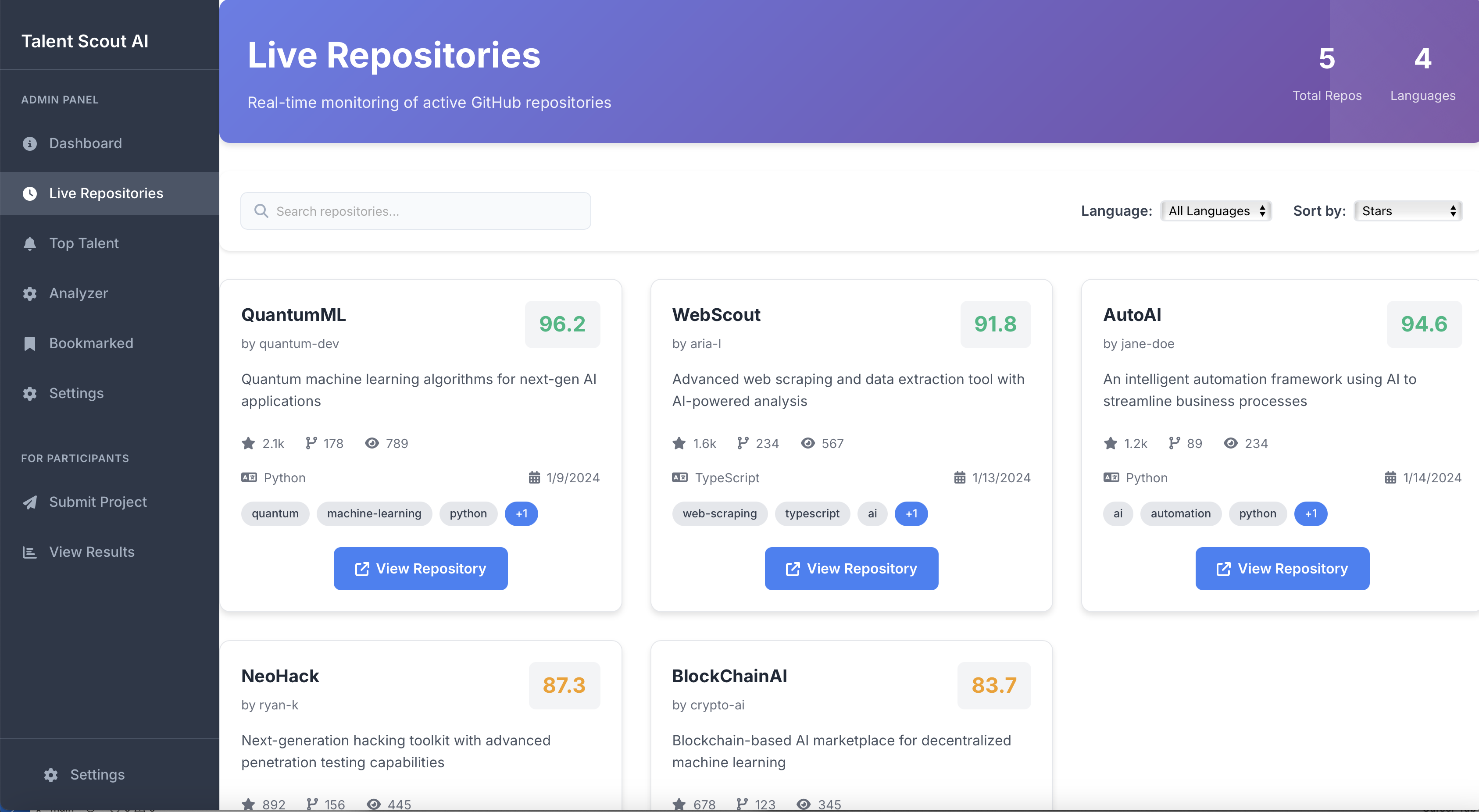
- Scrapes GitHub, LinkedIn, and optional blogs using BrightData
- Analyzes code structure, README content, and design elements using LlamaIndex and GPT-4
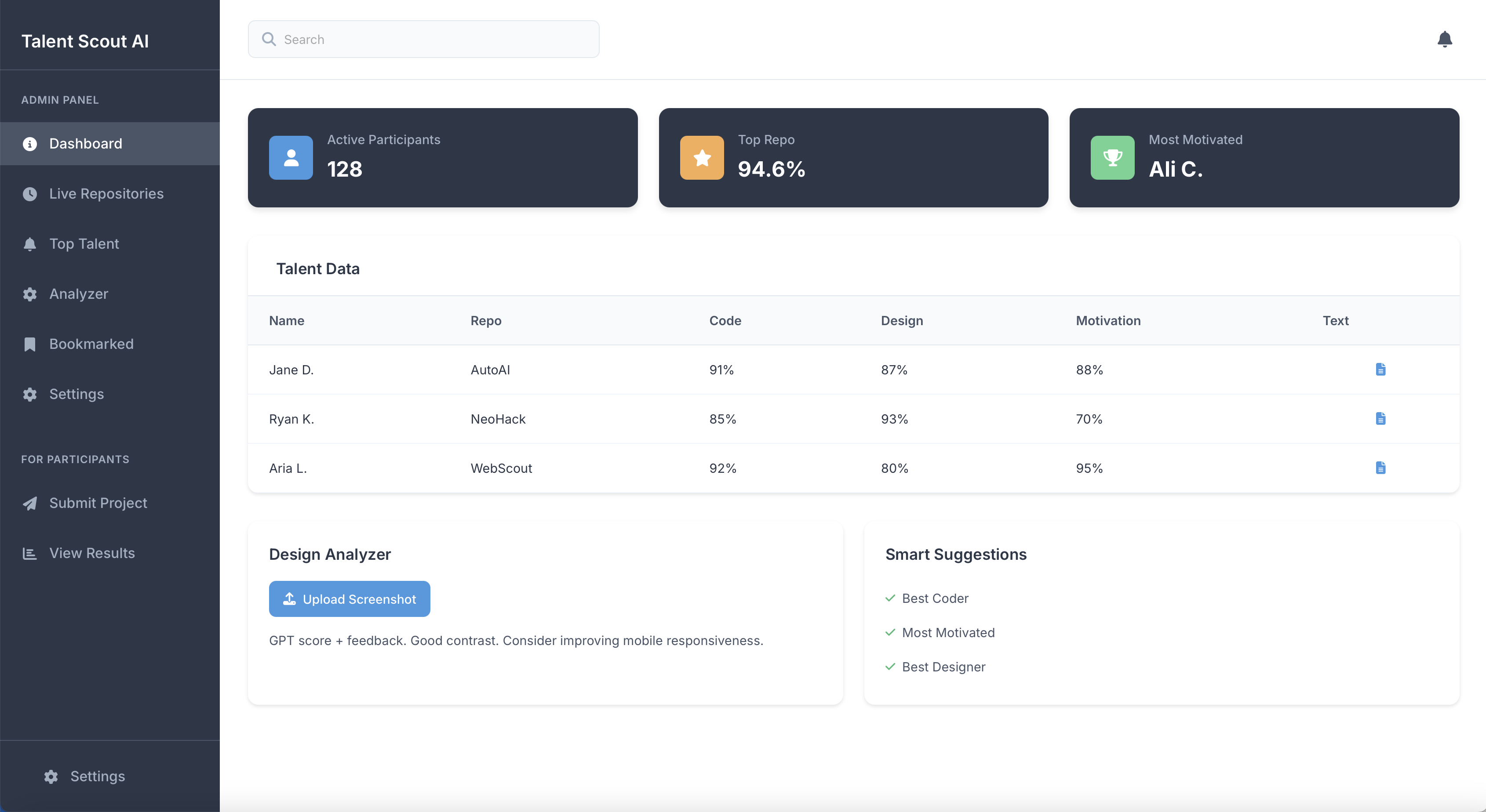
- Scores participants based on:
- Code Quality
- Innovation
- UI/UX Design
- Motivation and consistency
- Team collaboration dynamics
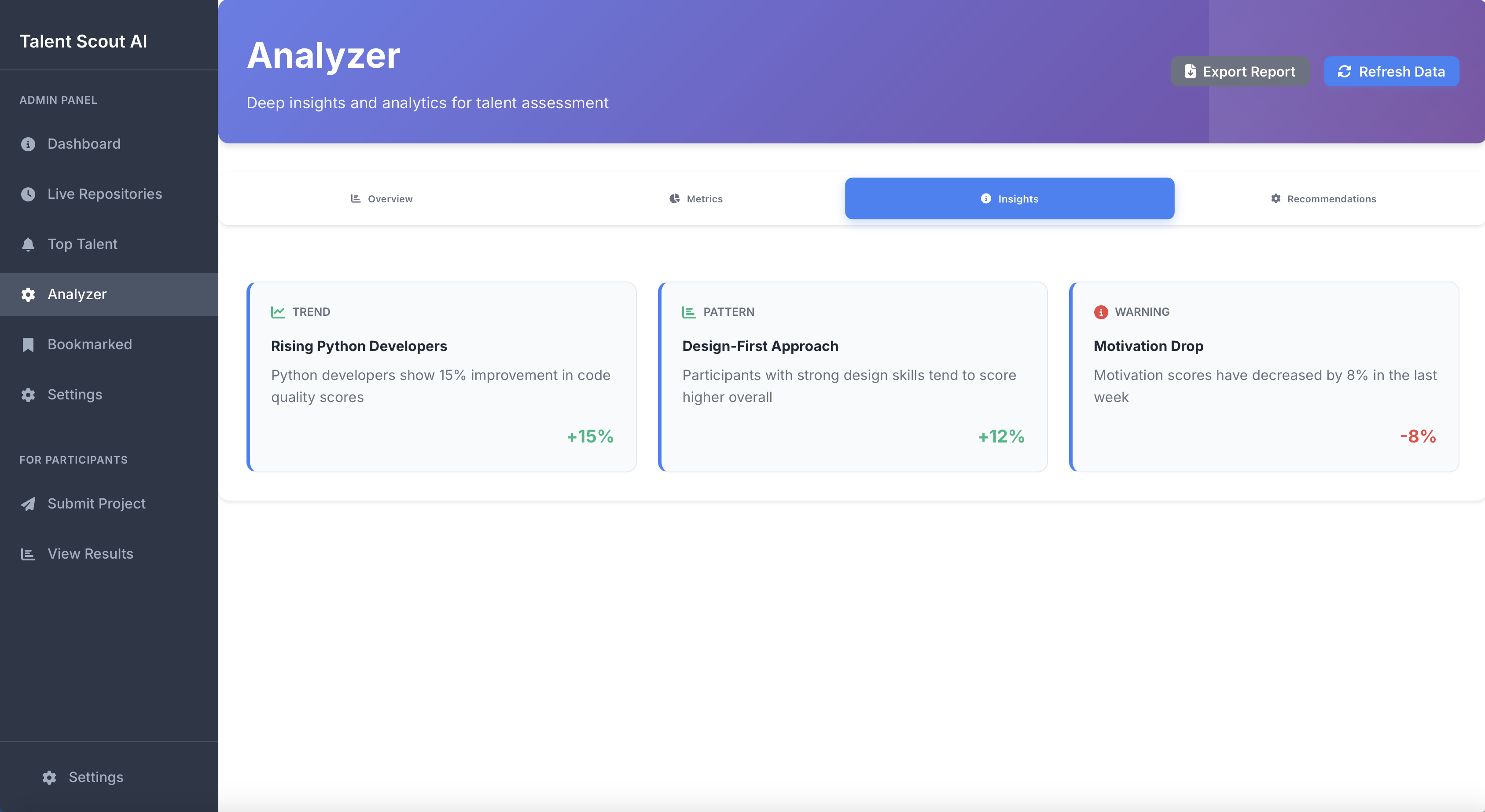
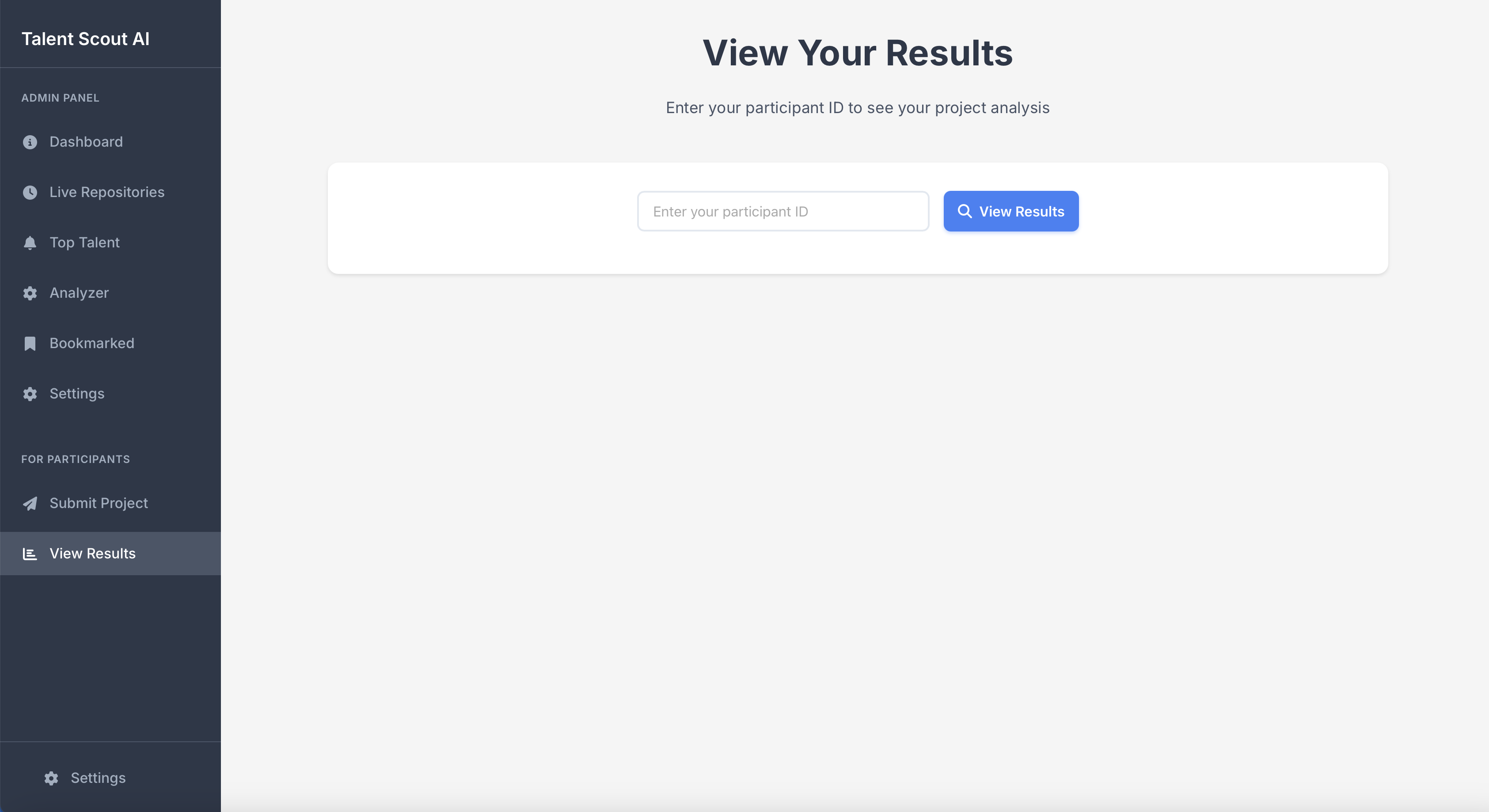
- Displays a real-time dashboard with sortable rankings, participant insights, and contact reveals
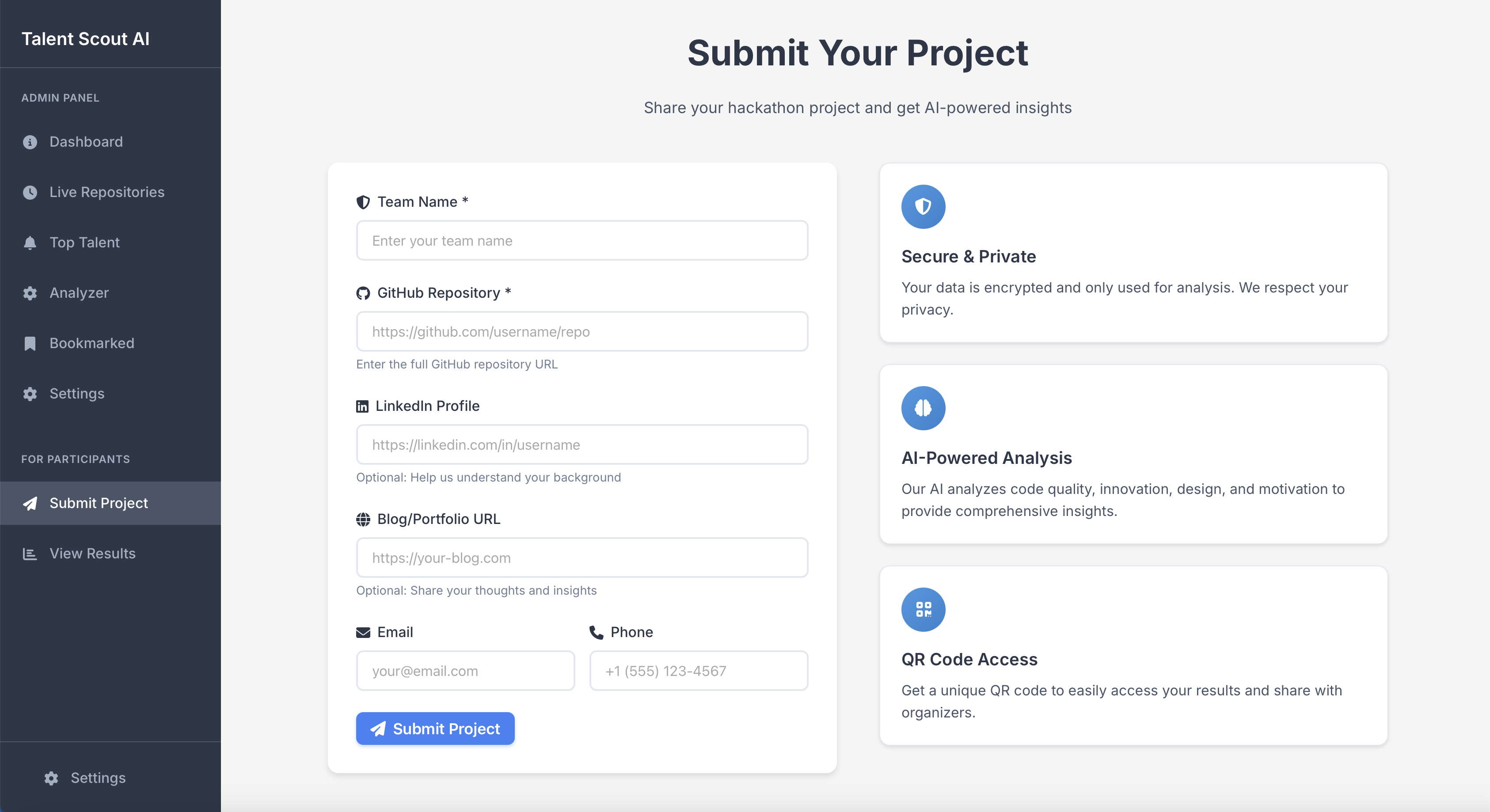
- Supports QR code-based or manual submission for participants
How we built it
- Frontend: HTML, CSS, JavaScript (inspired by CodeSage-style UI)
- Backend: Node.js + Express
- Scraping: Bright Data MCP
- AI Layer: GPT-4 via OpenAI and LlamaIndex
- Workflow Orchestration: Orkes (Netflix Conductor)
- Database: PostgreSQL (with optional Firebase support)
- Hosting: Vercel (frontend), Render or Heroku (backend)
- QR Integration: html5-qrcode for in-person check-ins
We modularized our backend to separate scraping, AI evaluation, scoring logic, and database updates. Each service is independently testable and orchestrated in flows via Orkes.
Challenges we ran into
- Inconsistent or missing README structures across GitHub repositories
- Rate limits and access variability with LinkedIn scraping
- Designing a motivation classifier that was both fast and reasonably accurate
- Building a multi-step AI analysis pipeline that remains responsive
- Keeping the dashboard performant while showing live-updating participant data
Accomplishments that we're proud of
- End-to-end flow from user submission to ranked output, fully functional
- Successfully orchestrated multiple asynchronous scraping and analysis jobs
- Built a clean and responsive UI usable on desktop and mobile
- Scaled the architecture to support multiple concurrent submissions
- Enabled AI-generated summaries and scores that are actually meaningful
What we learned
- Practical integration of scraping, AI reasoning, and frontend presentation
- How to deploy and chain together cloud-based microservices using Orkes
- The importance of good UX when the user is not a developer (e.g., sponsors and mentors)
- That a well-written GitHub README can be as powerful as a résumé or pitch
We also deepened our understanding of AI as a reasoning layer, not just a generative tool.
What's next for Talent Scout AI
- Add resume parsing and NLP-generated participant bios
- Improve the motivation model using time-series and sentiment analysis
- Deploy a public-facing “talent portal” for hiring partners and VCs
- Add clustering and filtering by skillset, location, or project type
- Implement bias mitigation and transparency in scoring logic
We envision Talent Scout AI becoming a standard at hackathons, accelerators, and coding bootcamps, helping organizations spot, understand, and support the most promising talent from day one.
Built With
- css
- express.js
- html5/css3
- llamaindex
- node.js
- tailwind
- typescript

Log in or sign up for Devpost to join the conversation.