-
-
3
-
2
-
1
Inspiration
Technical recruiters waste hours manually reading hundreds of resumes to normalize skills, often getting distracted by superficial formatting or corporate jargon. We wanted to build an automated, objective tool that strips away the noise and instantly reveals a candidate's true technical alignment using data-driven metrics.
What it does
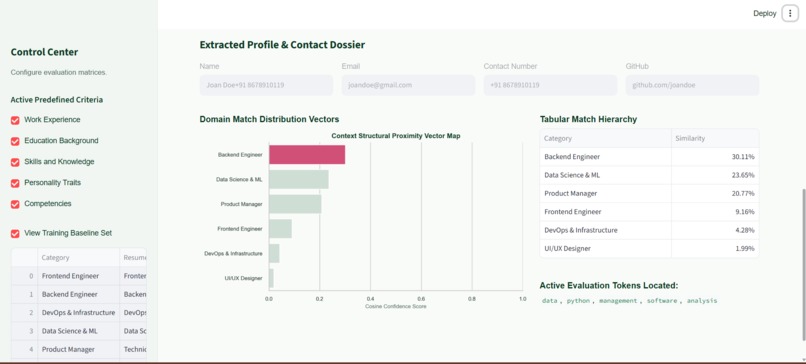
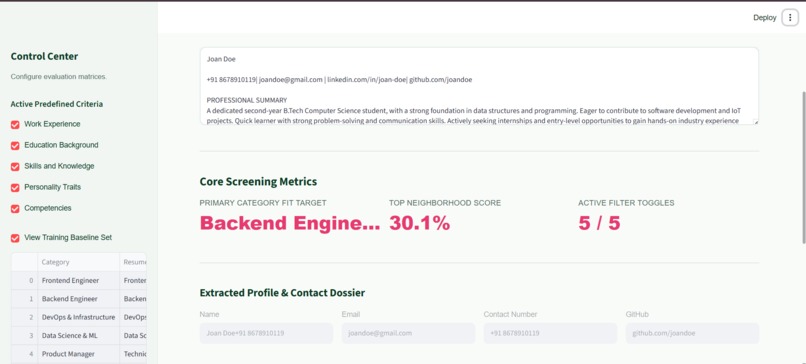
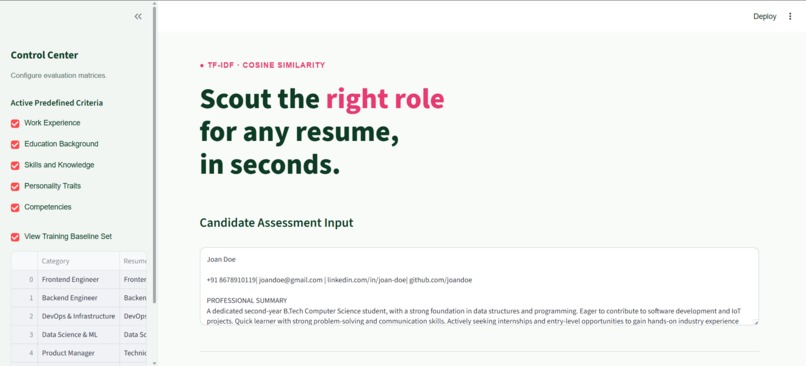
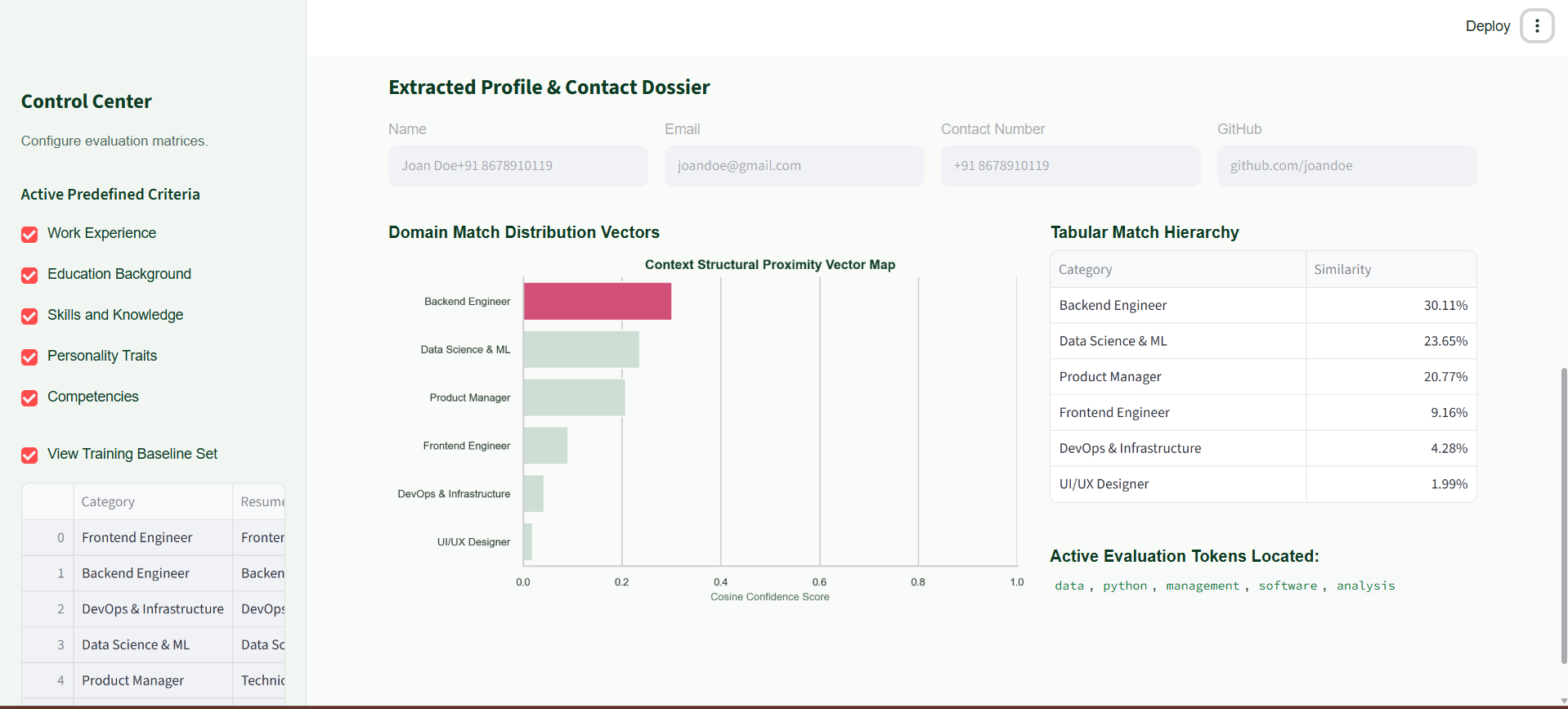
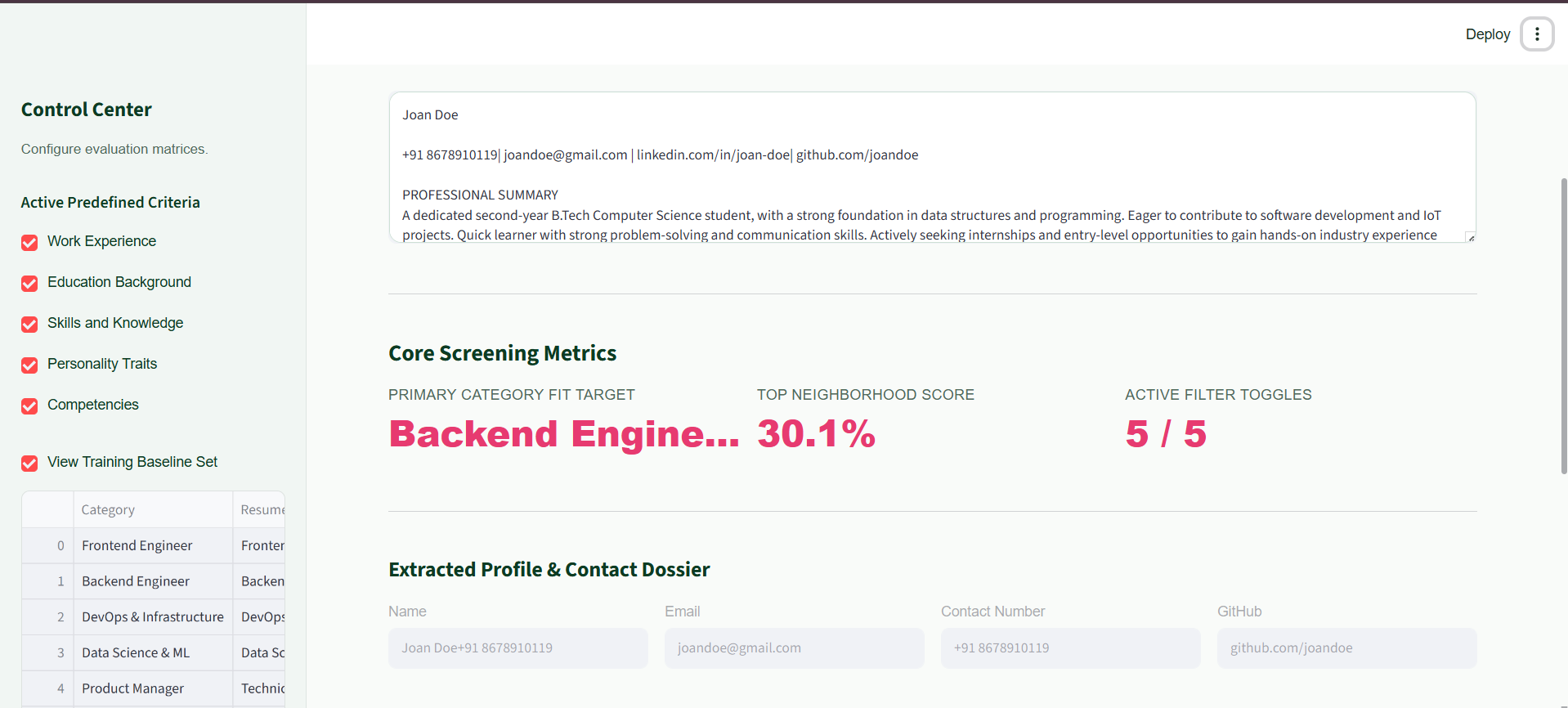
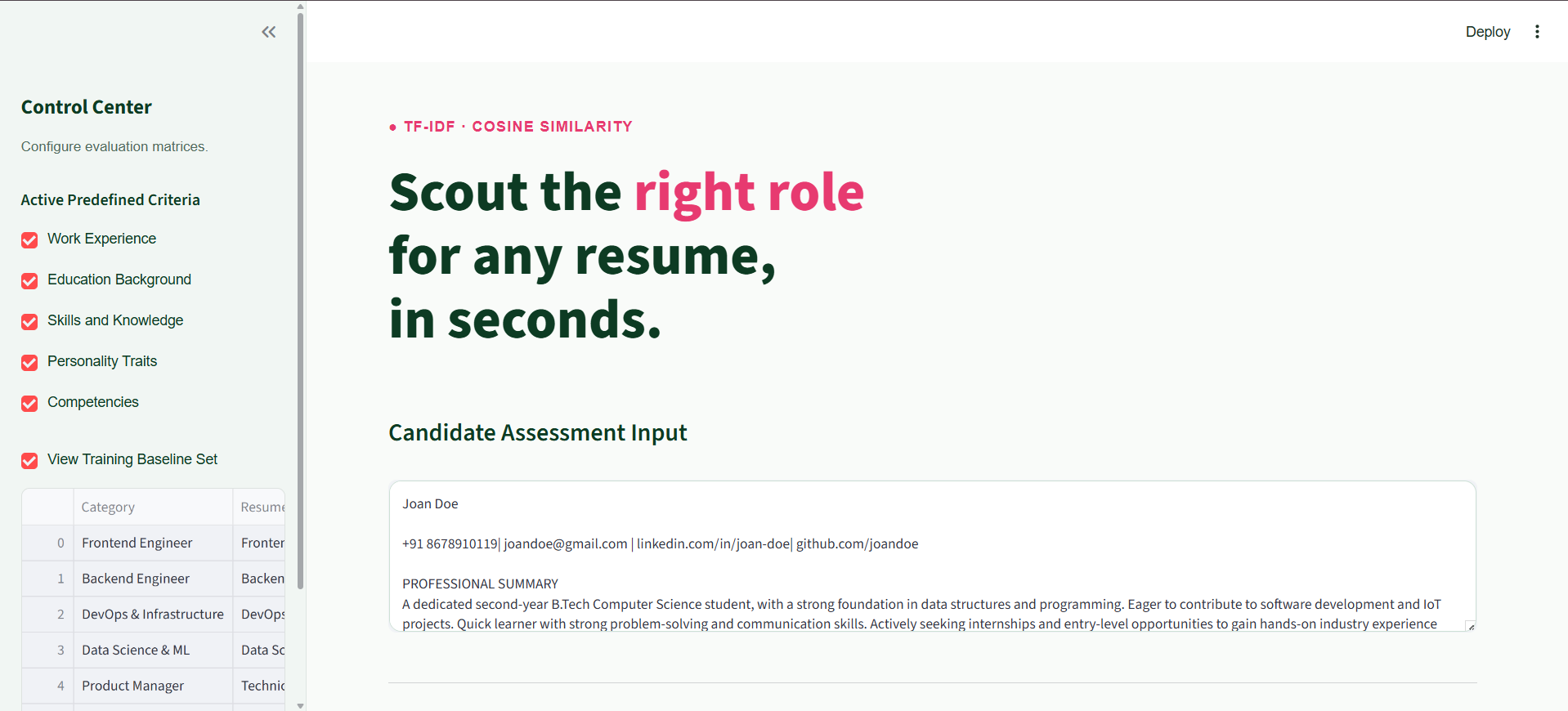
TalentScout Intelligence maps any raw resume text onto standardized organizational job profiles in seconds. It extracts basic contact information, highlights active evaluation keywords, and provides a matching hierarchy with a visual similarity breakdown across key domains like Frontend, Backend, DevOps, Data Science, and Design.
How we built it
The application is engineered with a Streamlit frontend and powered by a scikit-learn machine learning core:
- Text Processing: Users can toggle criteria (like experience or education) in the sidebar. The system uses localized regular expressions (
re) to dynamically filter the text corpus based on these selections. - Vectorization: The text is transformed into numerical weights using TF-IDF Vectorization, identifying the significance of technical terms across domains.
- Classification: A K-Nearest Neighbors (KNN) model checks the spatial orientation between the candidate vector and baseline profiles, utilizing Cosine Similarity to calculate exact match percentages.
Challenges we ran into
- Fragile Profile Extraction: Resumes have highly erratic layouts. Standard regex patterns for names and contact info easily break, requiring us to design robust fallback structures to prevent application crashes.
- Dynamic Dataset Mutation: Re-calculating vector maps on the fly when users toggle sidebar criteria threatened to leak state data across evaluations. We solved this by implementing strict pandas deep copies to isolate each session's pipeline.
Accomplishments that we're proud of
We successfully built a zero-overhead, privacy-first screening application that requires no API keys, no expensive model training, and zero cloud computing delays. It performs semantic classification entirely through local mathematical operations.
What we learned
We proved that resource-heavy Large Language Models (LLMs) aren't always necessary for deterministic classification. When evaluating specialized domain keywords, classic vector geometry provides transparent, audit-ready, and lightning-fast results.
What's next for TalentScout
The next milestone for TalentScout is adding multi-file batch parsing so hiring managers can drag and drop an entire folder of profiles at once, alongside expanding the baseline training pool to include non-engineering roles like Growth Marketing and Sales.
Built With
- matplotlib
- pandas
- python
- re
- scikit-learn
- seaborn
- streamlit

Log in or sign up for Devpost to join the conversation.