-
-
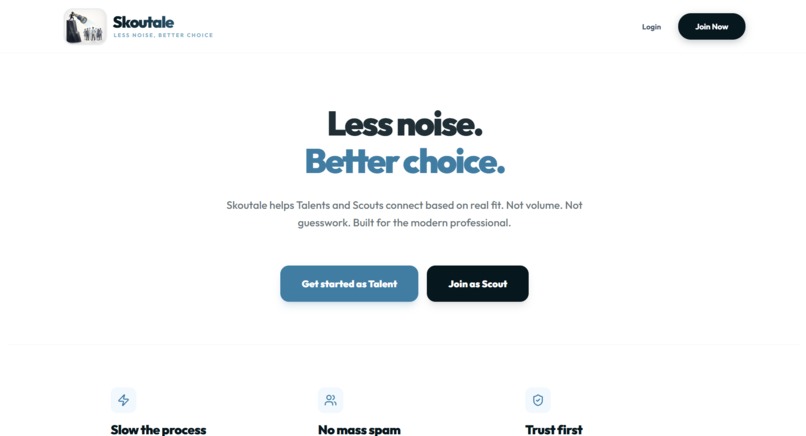
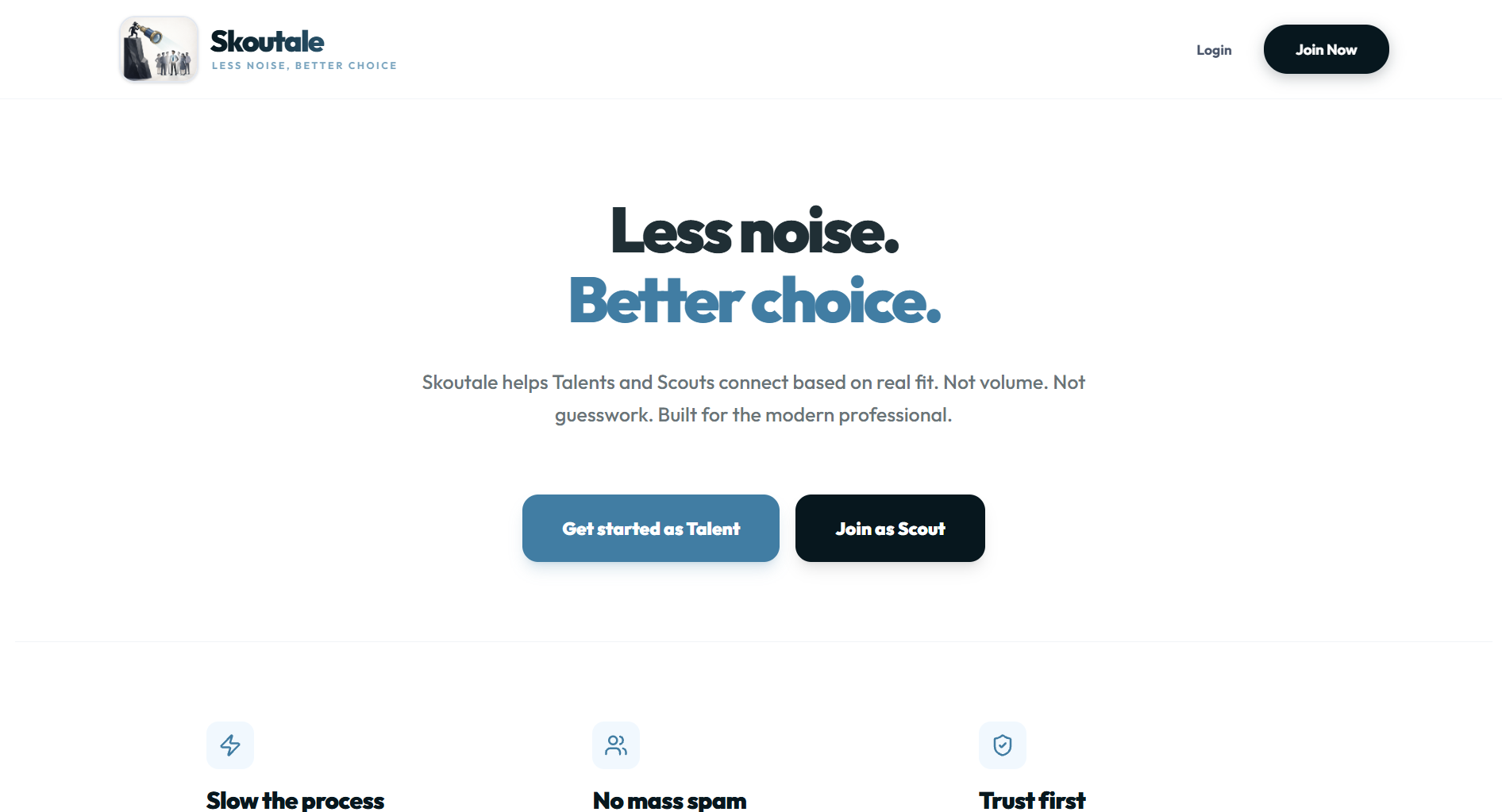
Landing page
-
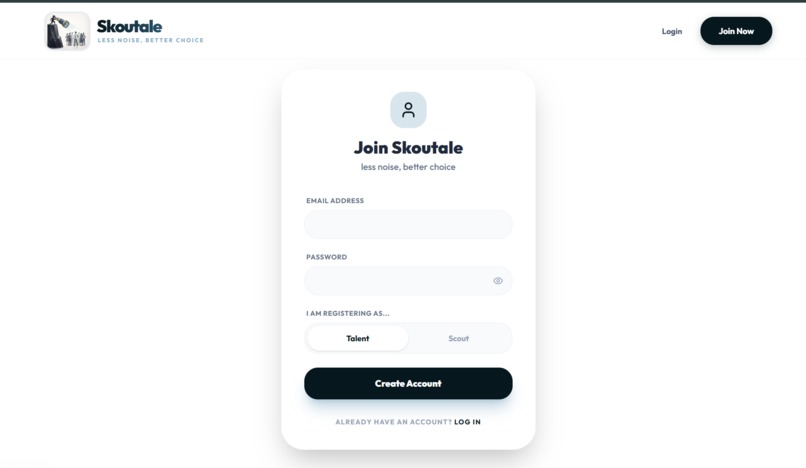
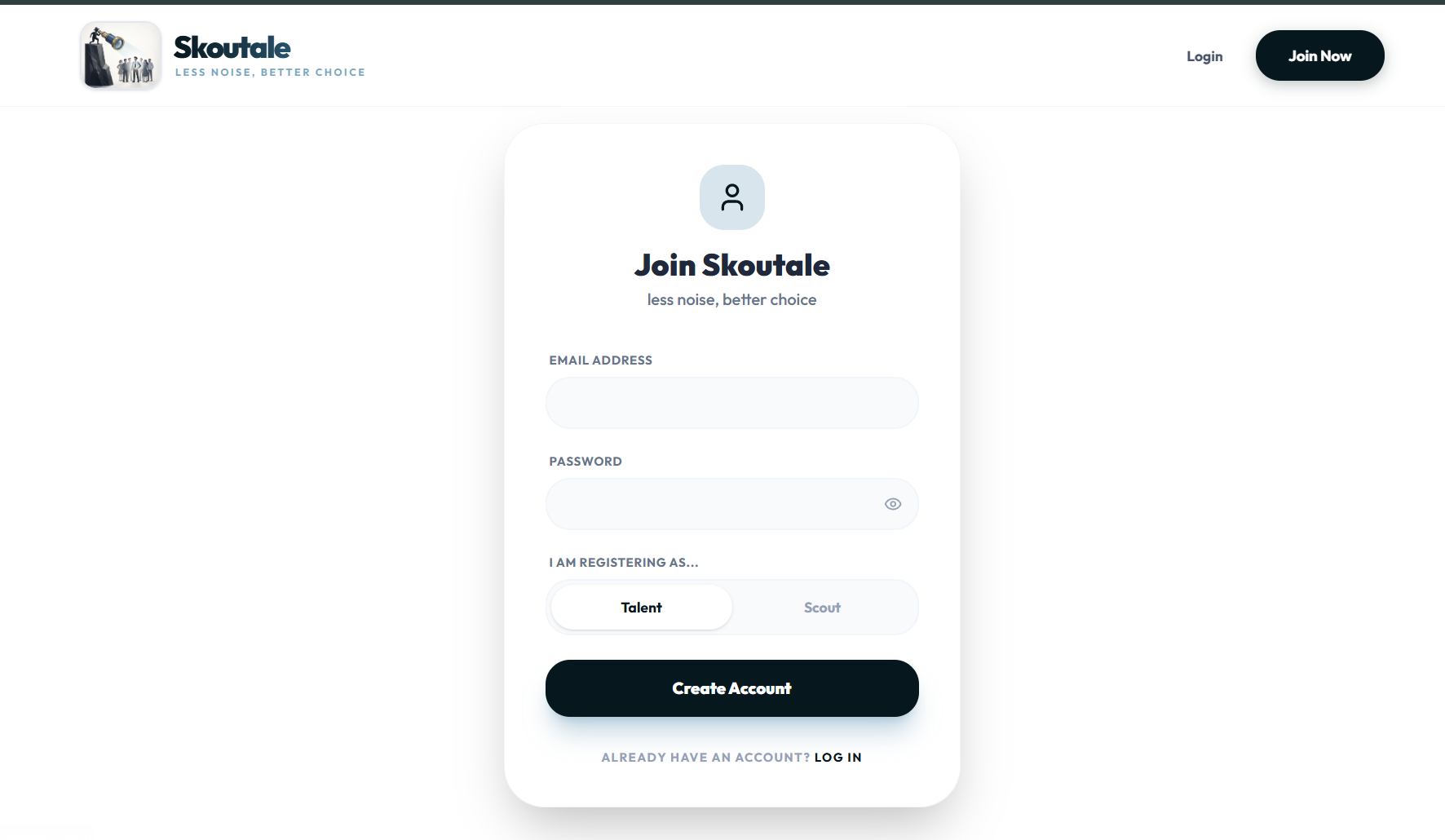
Register page
-
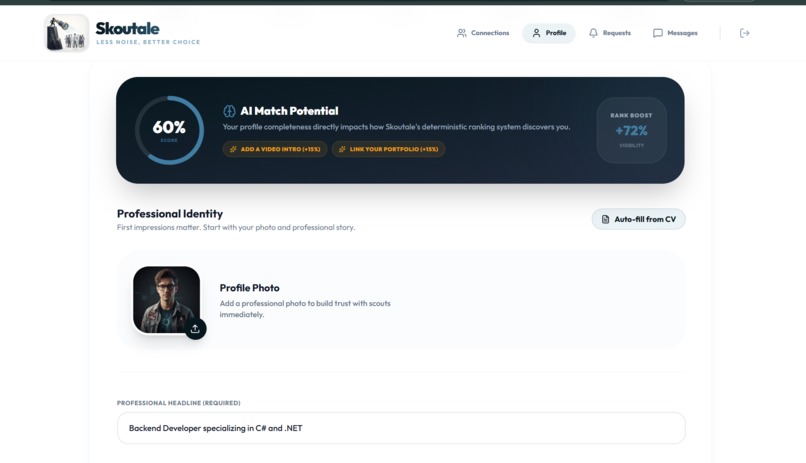
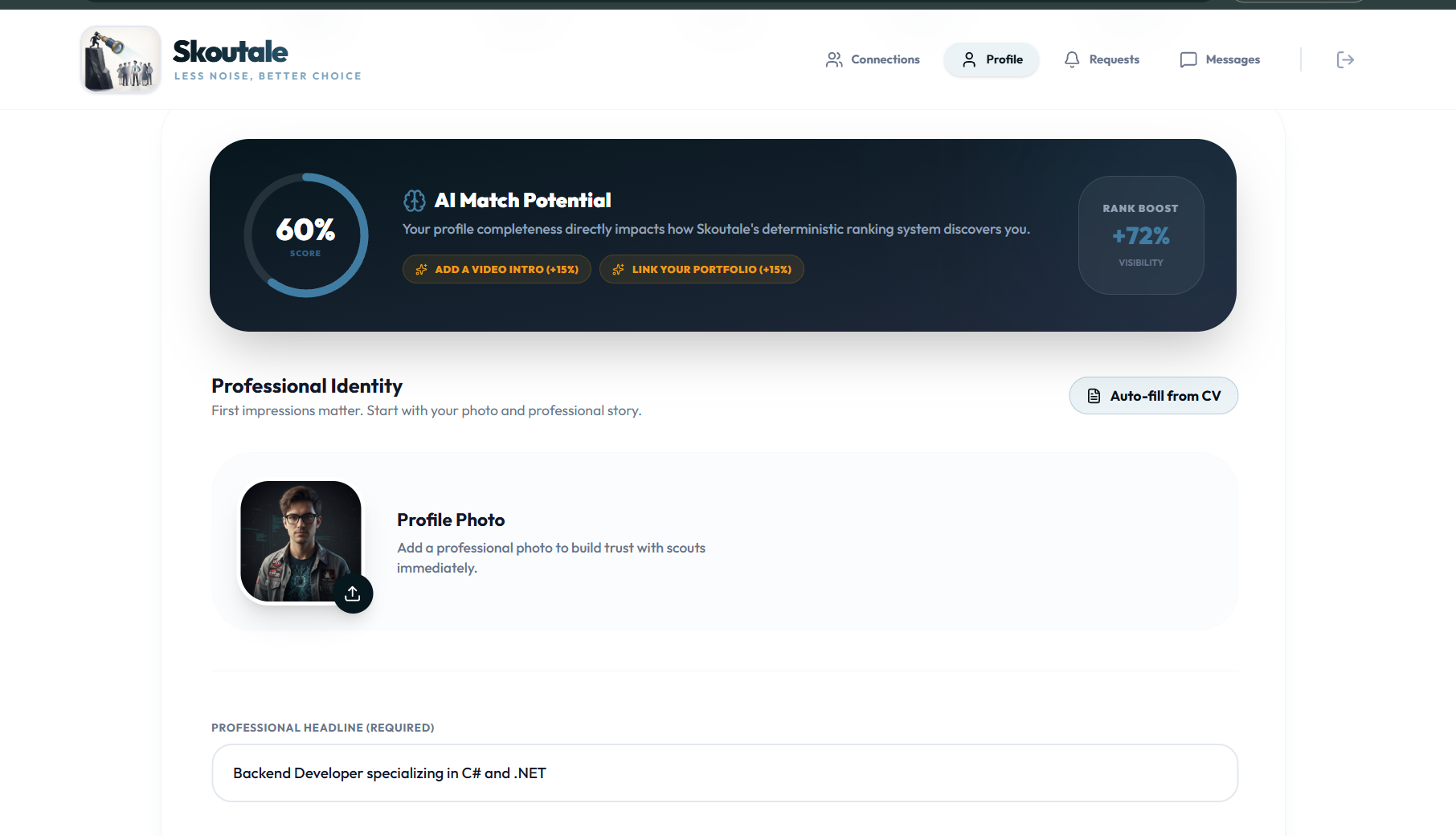
Talent profile
-
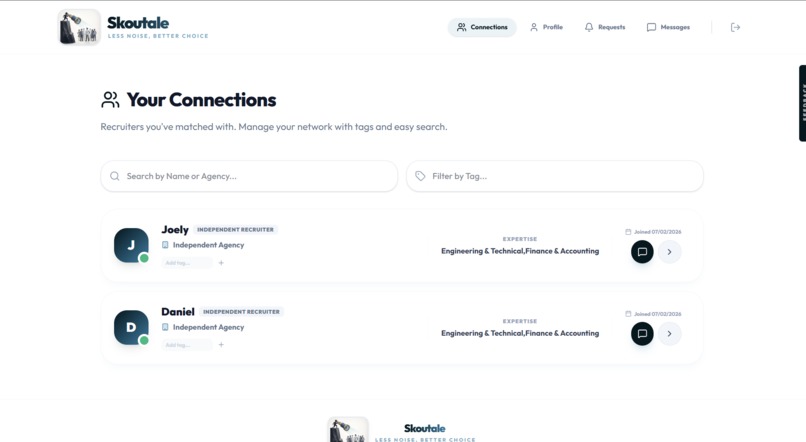
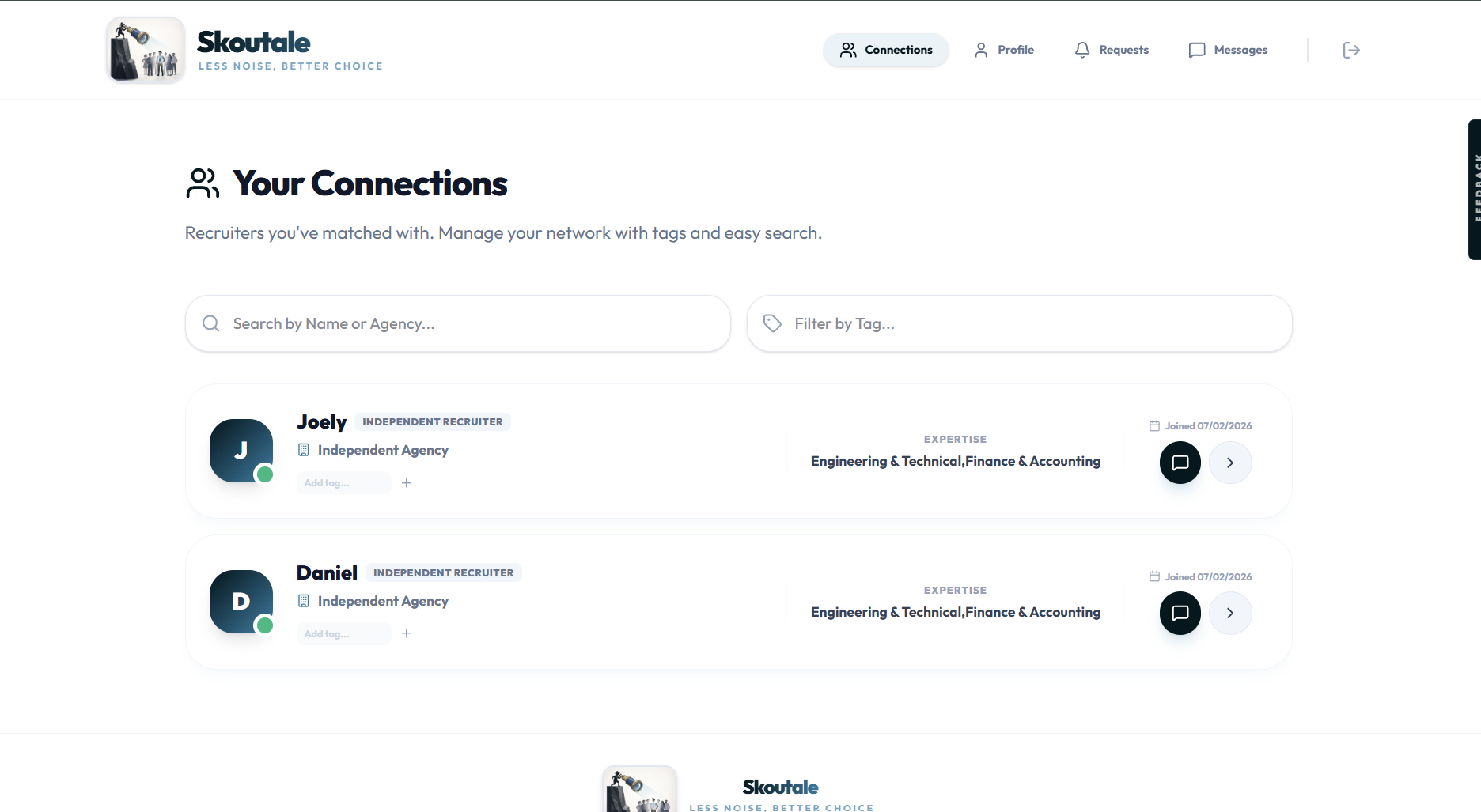
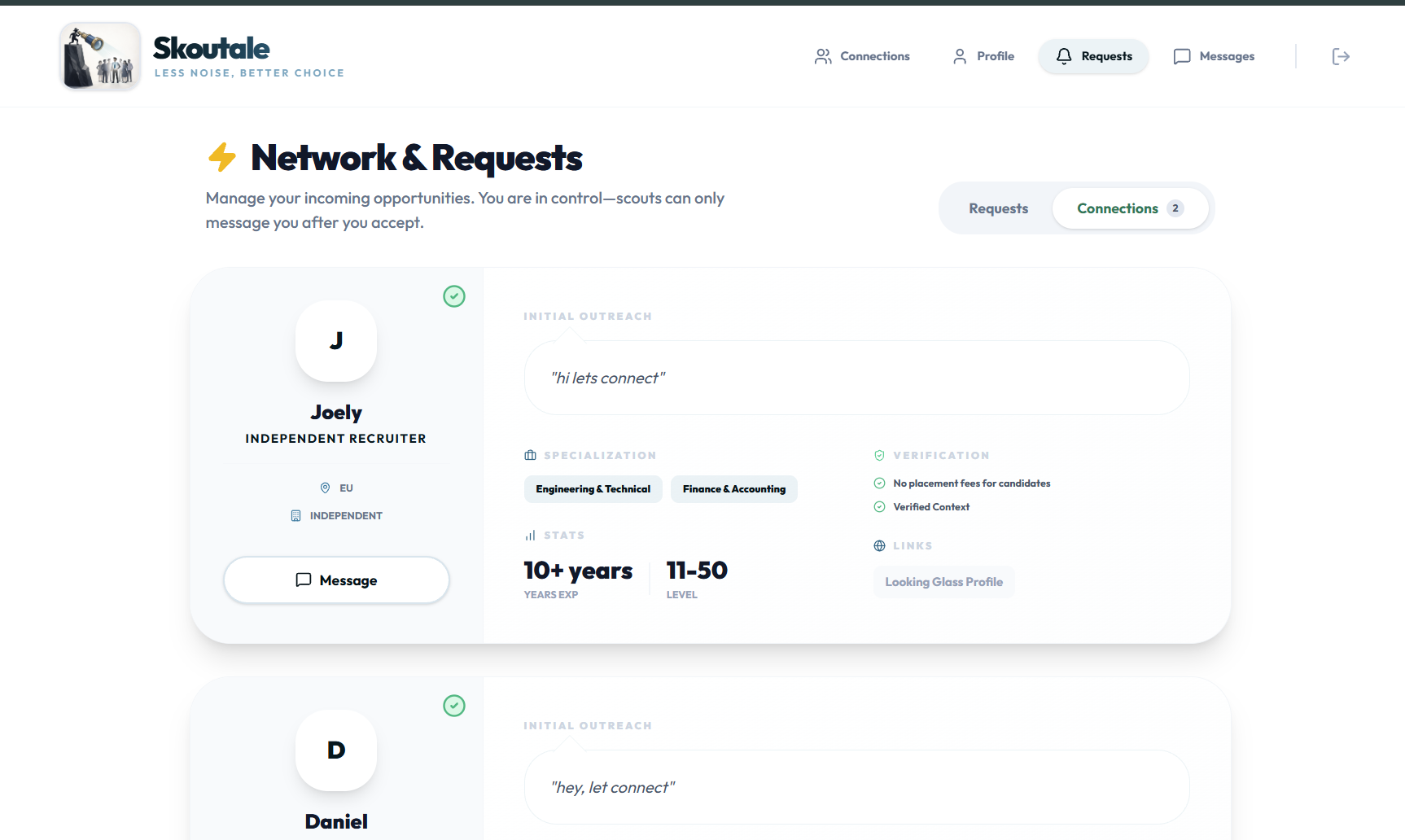
Talent connections
-
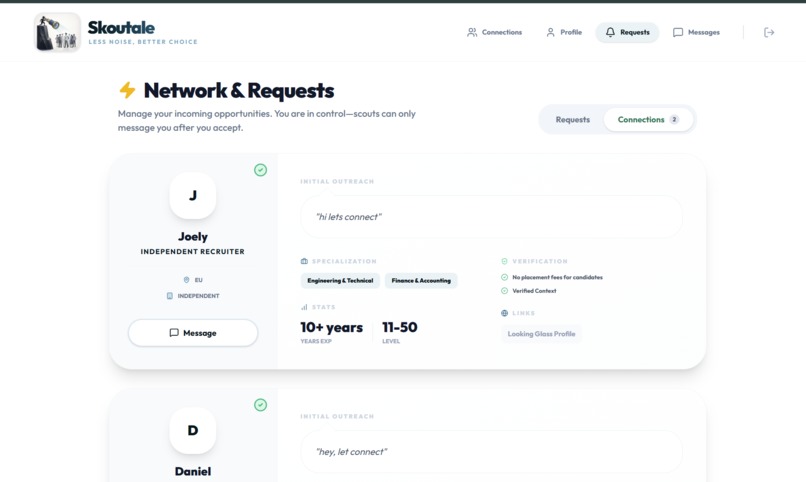
Talent request and connections
-
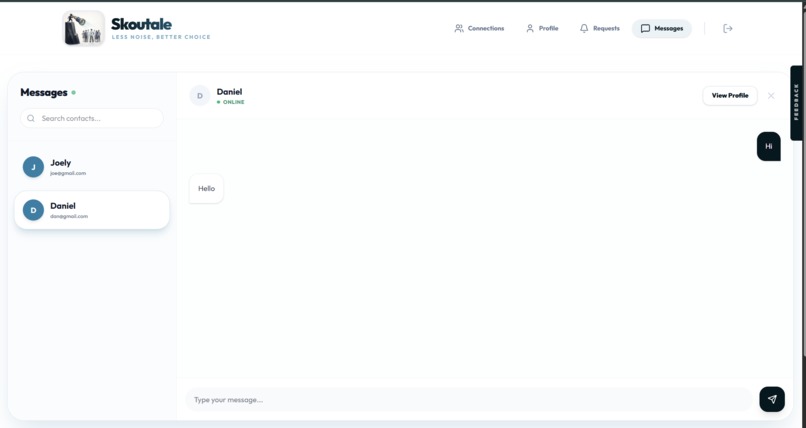
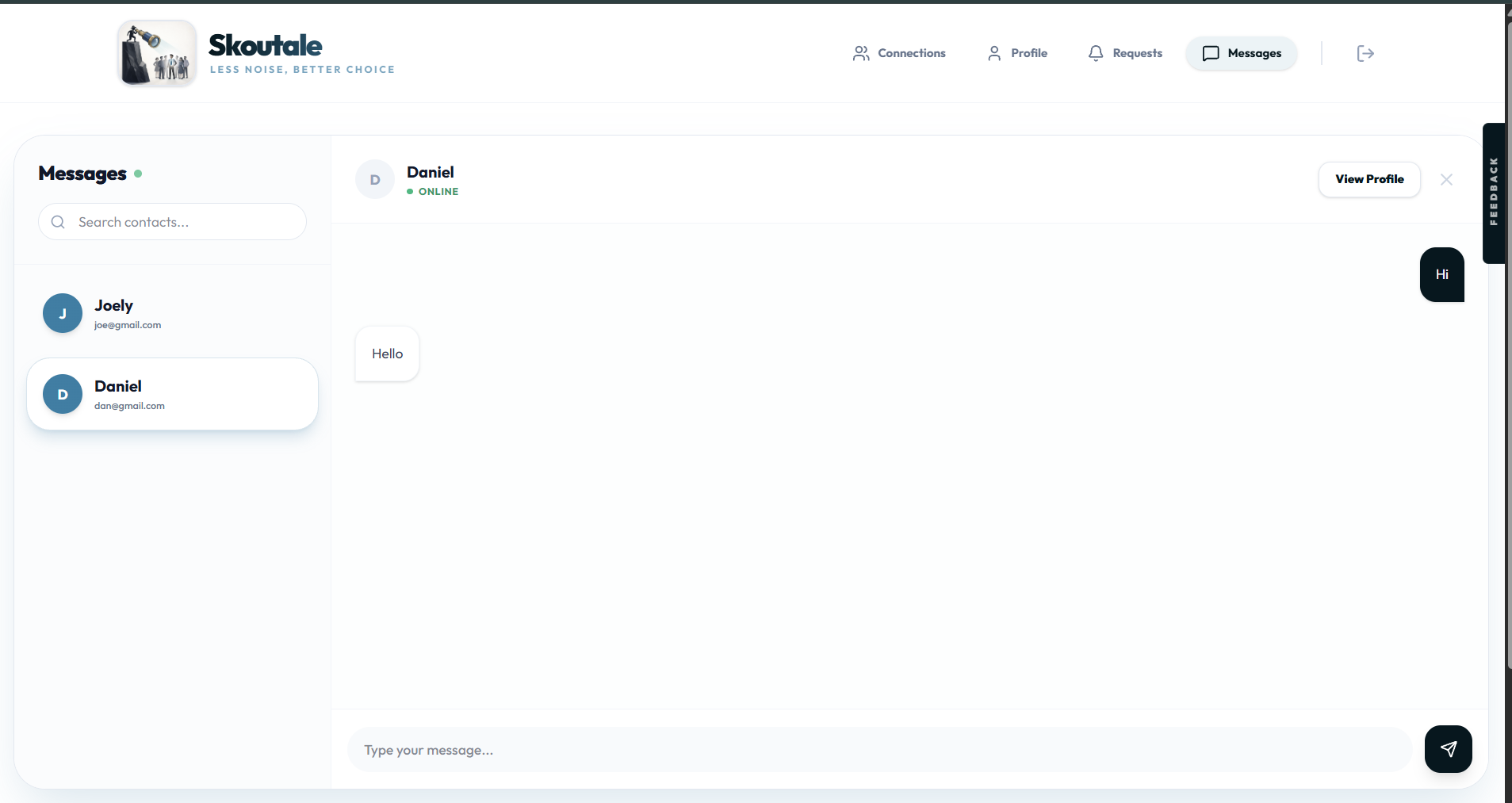
Chat screen
-
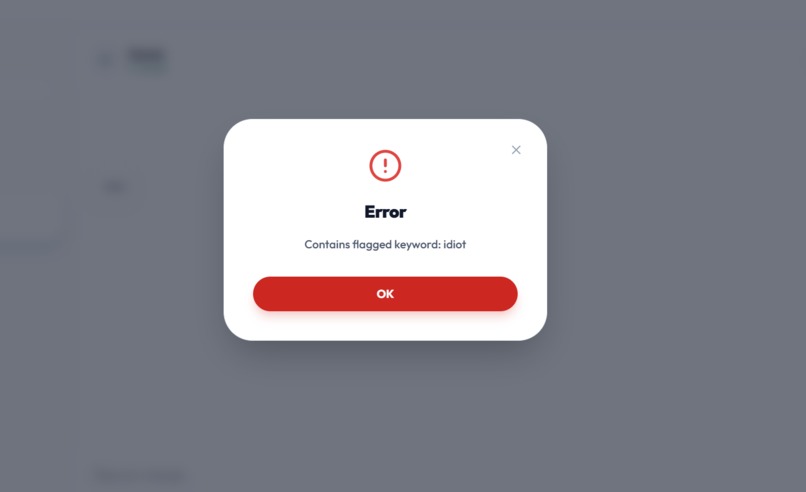
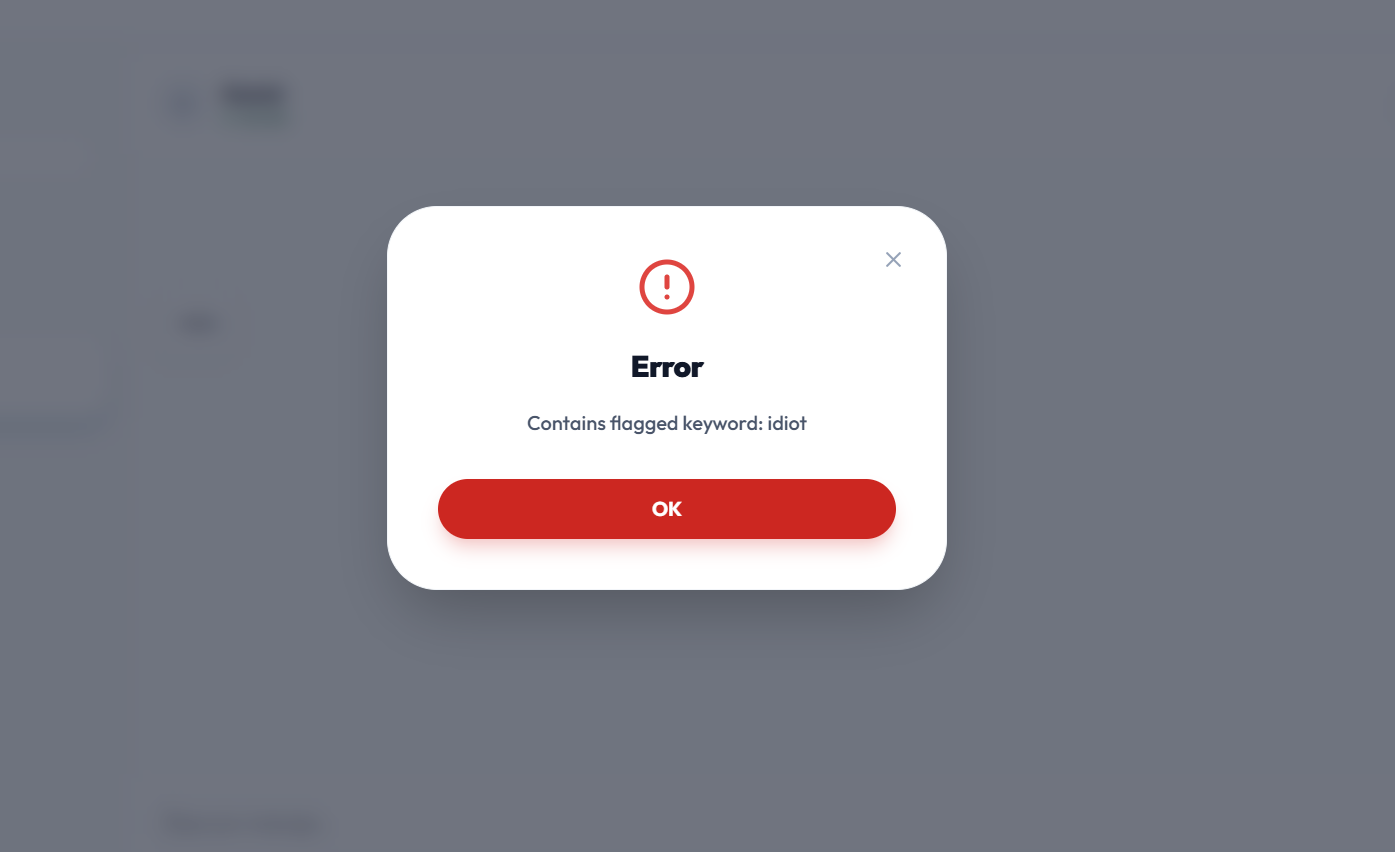
Flag abusive content
-
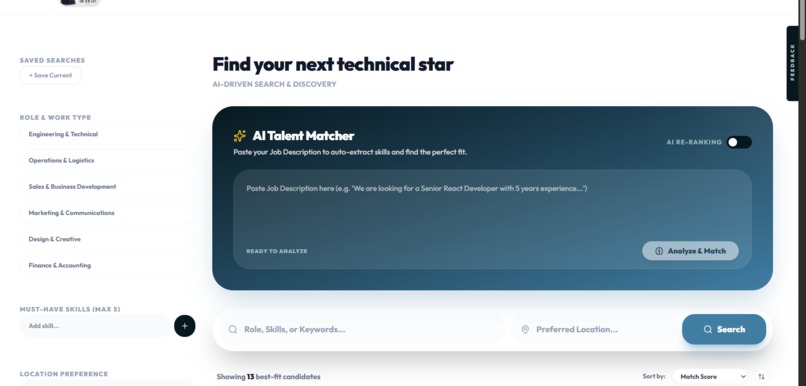
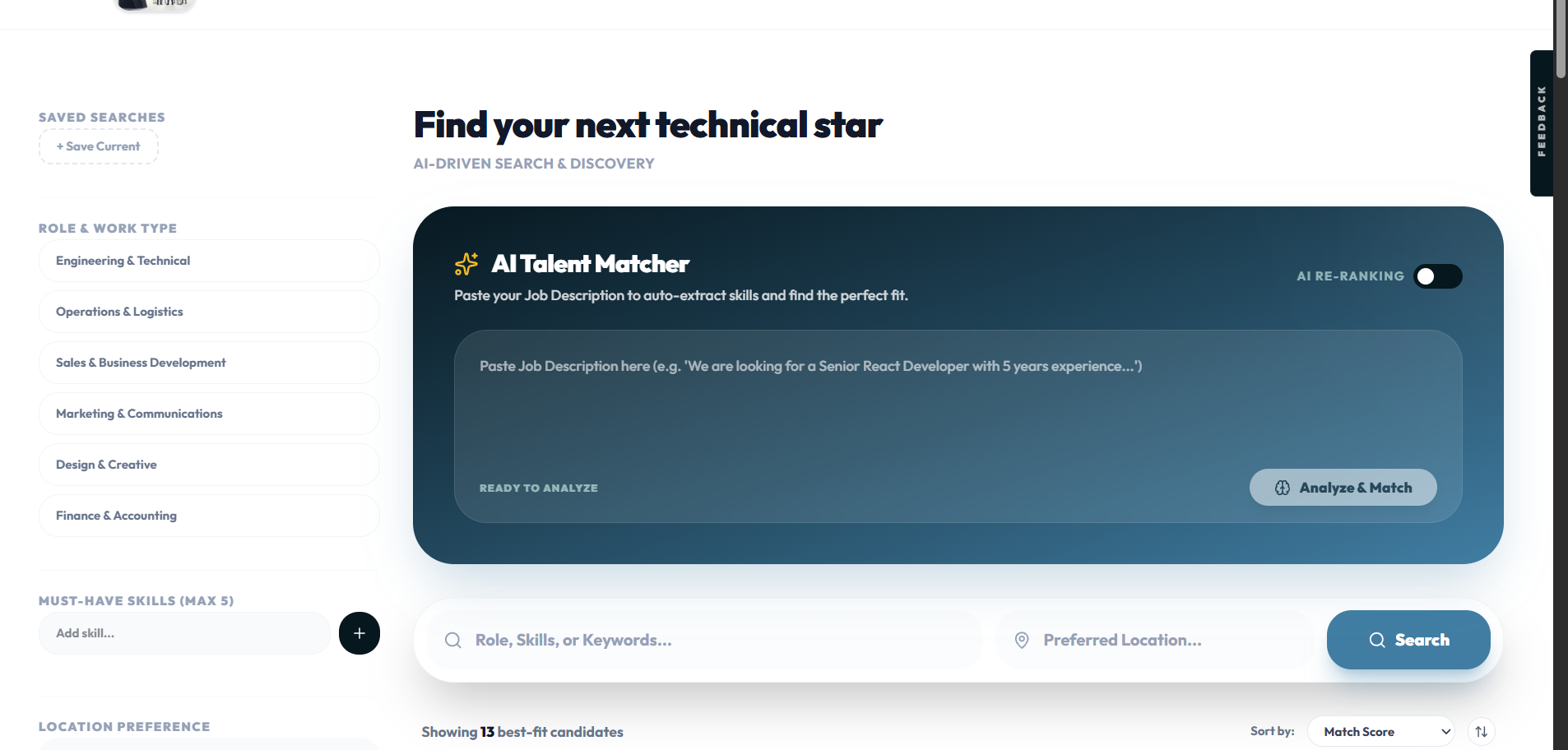
Scout landing page
-
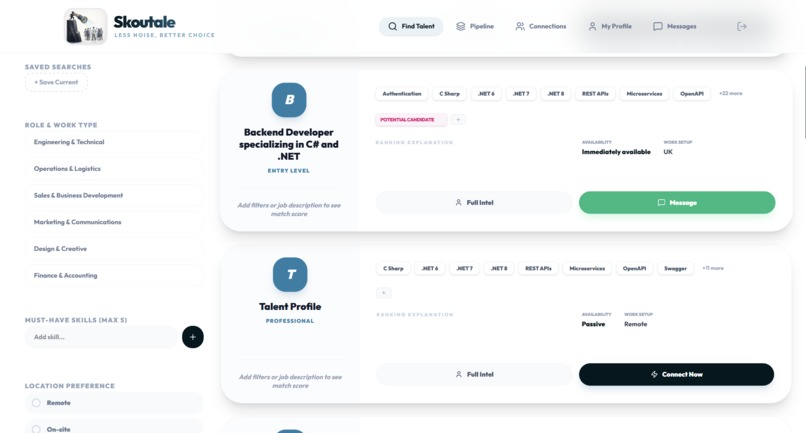
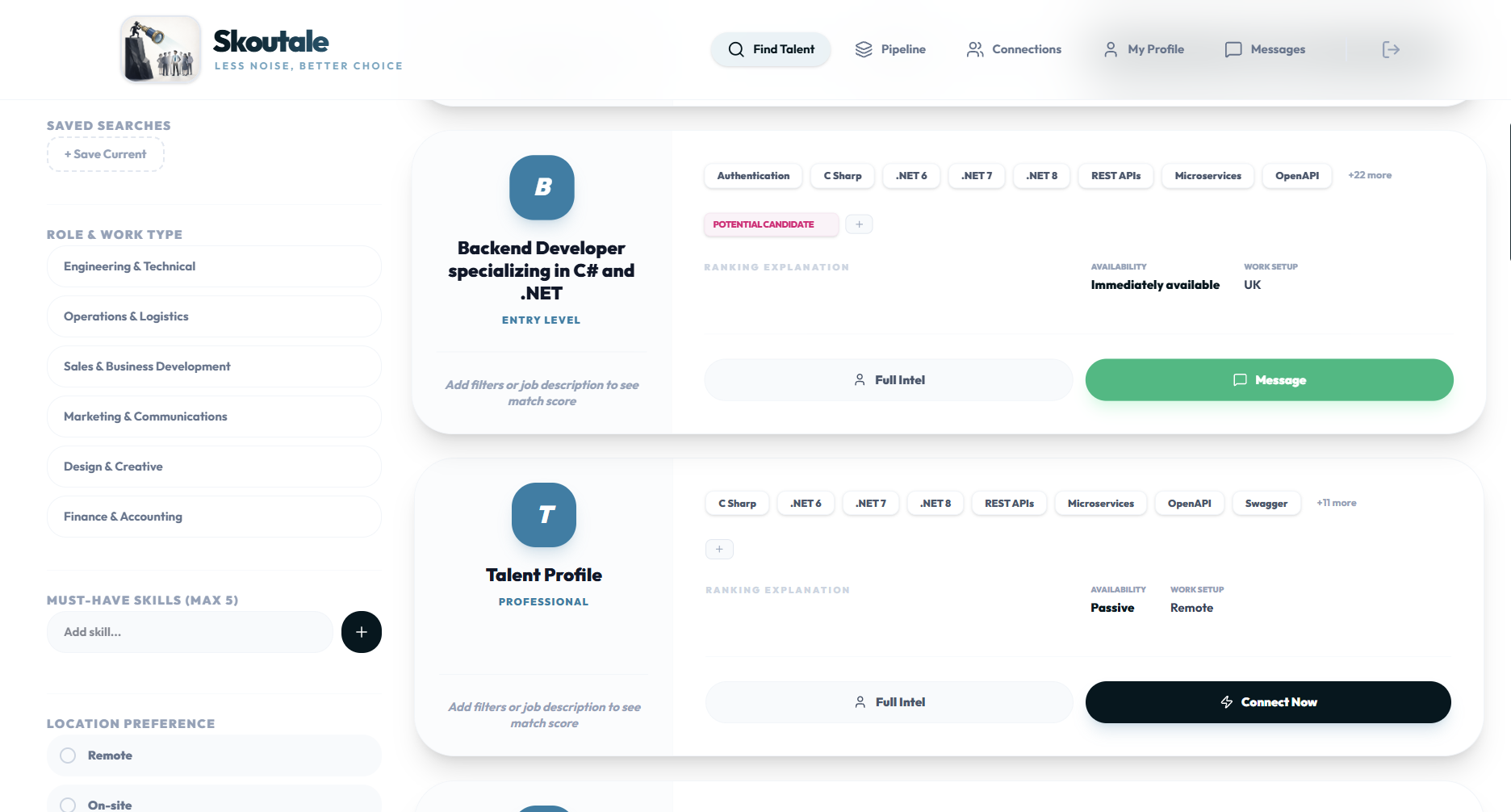
Talent cards from AI search results
-
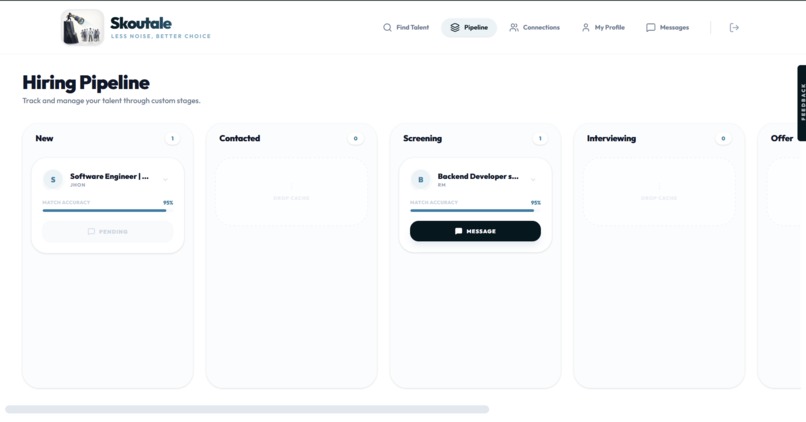
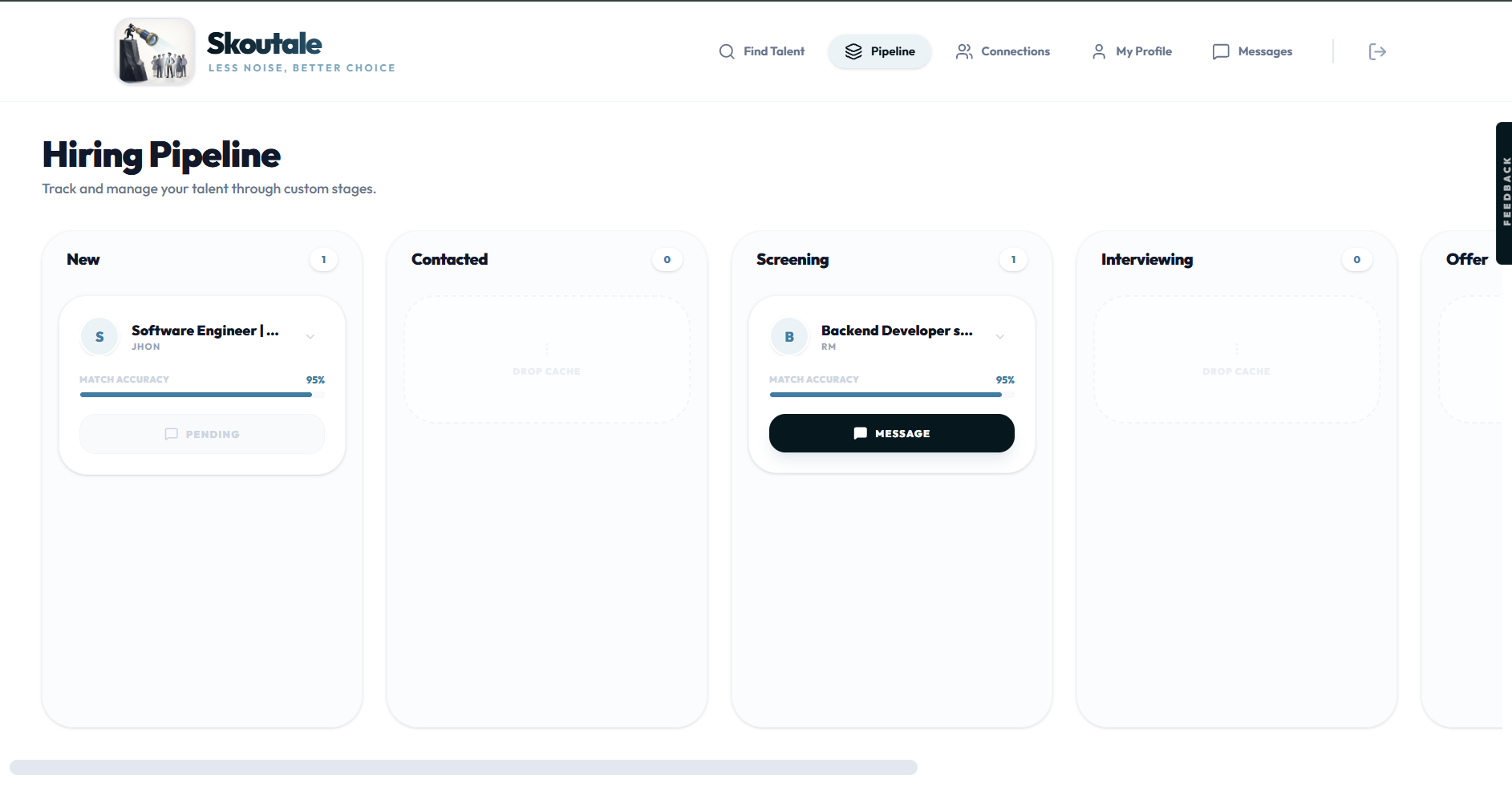
Kanban piple line for scout
-
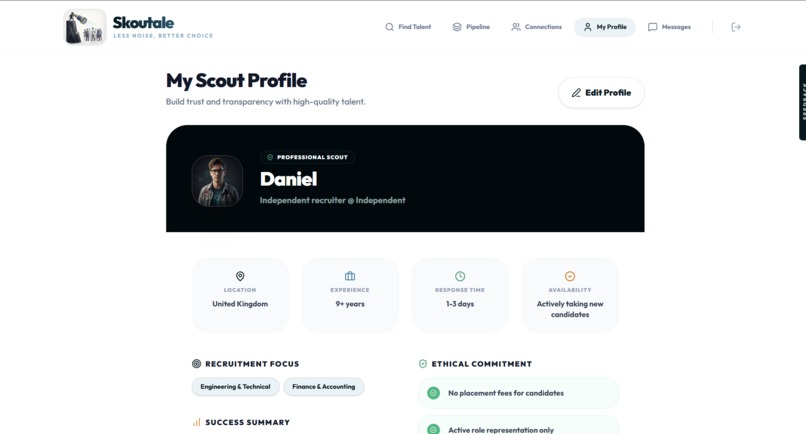
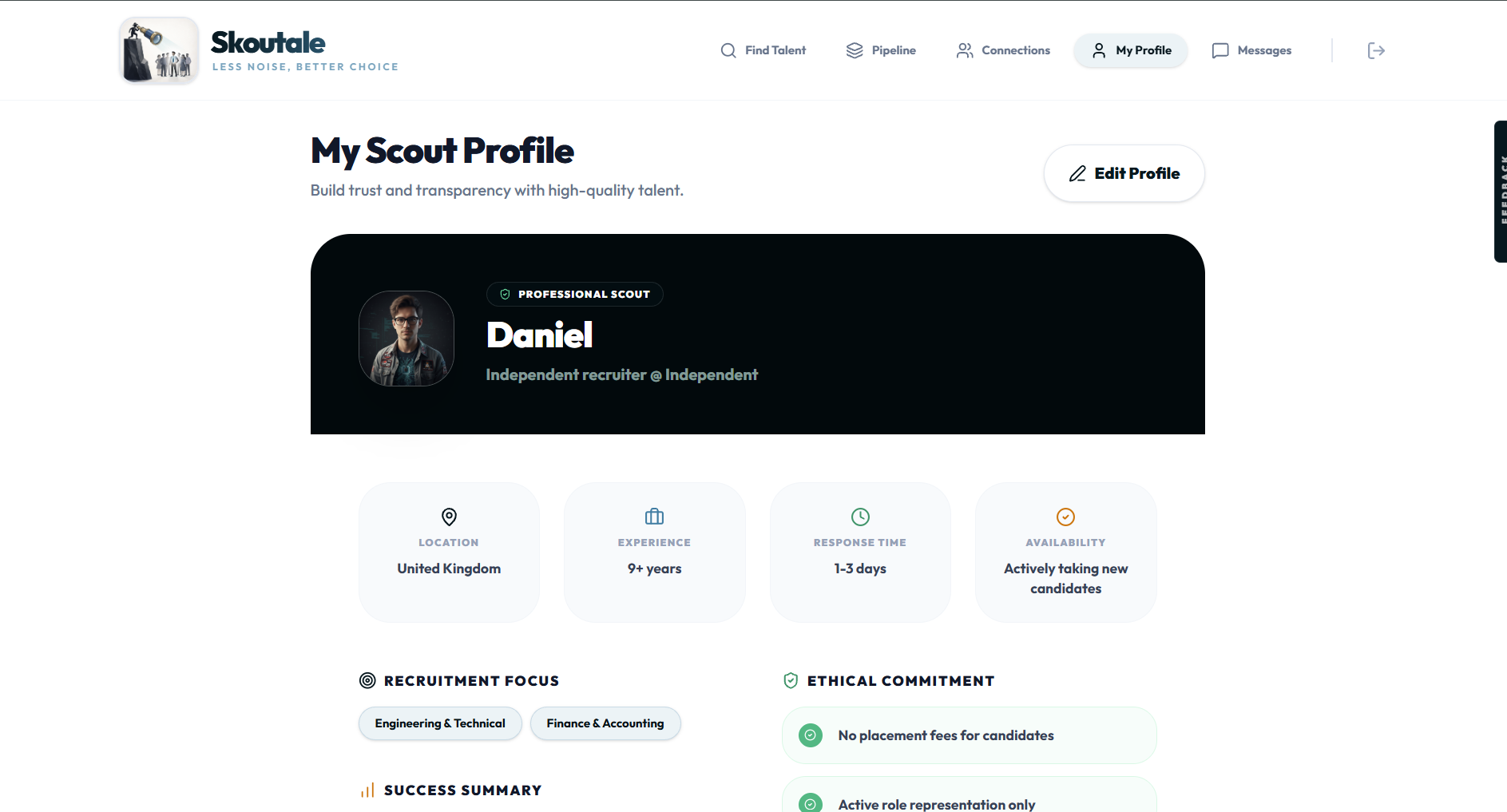
scout profile card
-
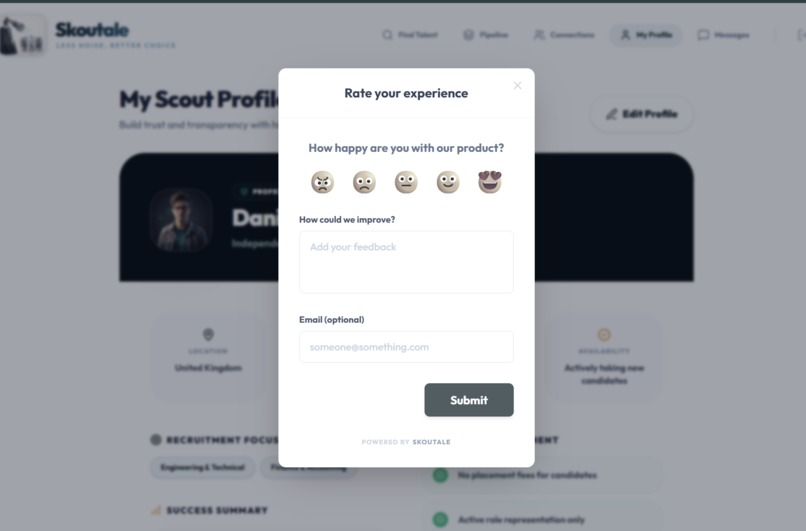
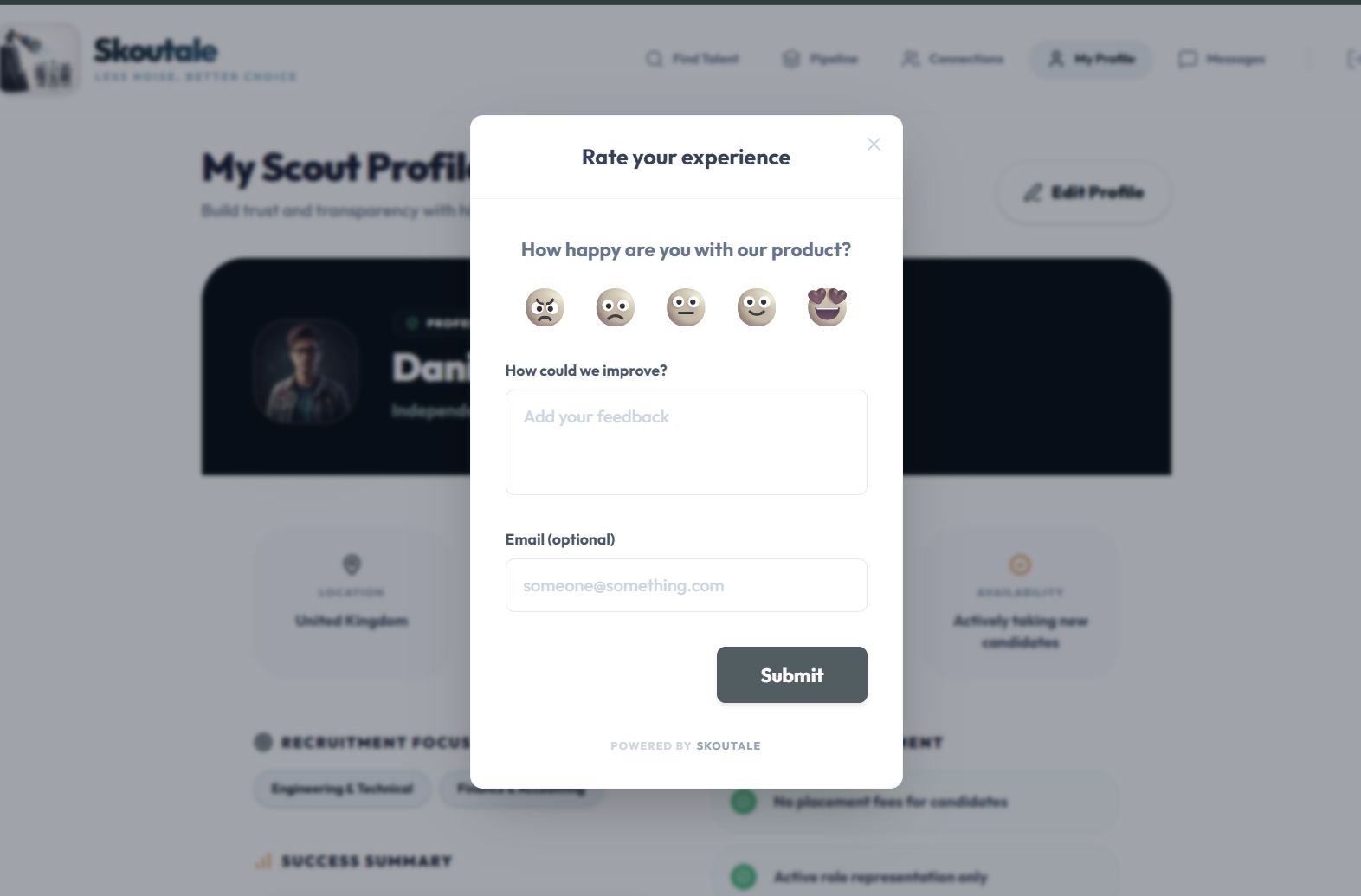
Feed back for application
Skoutale. A Product Built by Solving Real Problems
Skoutale is a hiring platform shaped by direct experience, constraints, and learning through execution.
The focus was not hype. The focus was understanding real pain points and building a structured response.
Why This Project Started
Personal Friction With Existing Platforms
I previously built a personal project called CVCraft, an ATS scoring and resume suggestion platform using LLMs.
The intent was practical. Improve resumes. Demonstrate applied AI skills. Create better career opportunities.
After sharing it publicly, I was asked to take it down due to perceived conflict of interest, even though my employer does not operate in this domain.
That moment highlighted a gap.
- You cannot fully express your work on LinkedIn.
- You cannot fit real depth into a CV.
- Personal projects that showcase capability often live outside accepted platforms.
This created the first motivation. There should be a place designed for real professional identity, not compressed summaries.
Recruiter Pain Points Became Clear
I spoke with several recruiters to understand their challenges.
Common issues came up repeatedly.
- Extremely high application volume.
- AI-generated or heavily manipulated CVs.
- Difficulty trusting early-stage signals.
- Genuine candidates getting lost.
One key insight stood out. Recruiters are struggling to verify authenticity at scale.
This is not a tooling issue alone. It is a structural issue in how hiring platforms work.
The Core Idea
Instead of mass applications, Skoutale is built around controlled connections.
The concept is simple.
- Recruiters search with intent.
- Talent controls visibility.
- Contact happens only after mutual approval.
This removes noise on both sides and restores trust.
What We Learned While Building It
This project pushed us into areas we had not worked with before.
Building With AI as a Development Partner
We used a vibe coding tool called Antigravity to build the full stack using React, Node, and SQLite. For the core intelligence layer, we used the Gemini 3 Flash Preview model as the LLM and gemini-1.5-flash, gemini-2.0-flash as fallback. Key learnings:
- How to use context prompting effectively.
- How to guide AI to build consistent end-to-end flows.
- When to rely on AI and when to override it manually.
We explored concepts like RAG and MCP. We chose not to include them because they did not solve a direct problem in this product. That decision itself was a learning. Not every trend belongs in every system.
Real-Time Communication and Moderation
We implemented real-time chat using WebSockets and an XMPP server.
This was new territory.
- Two-way communication at scale.
- Low latency requirements.
- Handling presence and message delivery.
The hardest part was moderation.
- Messages must not be delayed.
- Abuse still needs to be detected and acted on.
- The system must protect users without breaking conversations.
This opened up future scope. AI-assisted moderation can become a core platform capability.
Deploying With Cost Constraints
We wanted to go live without burning money.
We chose Fly.io for deployment.
- Simple local integration.
- Fast publishing with minimal setup.
Challenges we solved:
- Free-tier resource limits.
- Frontend and backend could not run on the same instance.
- Services had to be split and communicate reliably.
This required learning fly.toml configuration in depth. We iterated through failures, adjusted resource usage, and finally stabilized the deployment.
The result was a live system with controlled cost and clear architecture.
Product Structure and Value
For Talent
- Structured identity beyond a CV.
- Controlled visibility.
- Clear feedback on profile quality.
- No unsolicited contact.
This addresses the problem of underrepresentation and loss of control.
For Recruiters
- Intent-based search.
- Deterministic ranking.
- Manageable pipelines.
- Fewer but higher-quality conversations.
This addresses time waste and trust erosion.
Business Potential
Skoutale is designed with sustainability in mind.
Potential directions include:
- Freemium talent profiles.
- Paid recruiter access and pipelines.
- Verification and trust layers.
- Enterprise hiring workspaces.
- AI-powered moderation and insights.
The market signal is clear. Hiring platforms are noisy. Trust is declining. Both sides want fewer interactions with higher confidence.
Closing Thought
Skoutale started as a response to personal friction. It evolved through learning new technologies. It was shaped by real recruiter conversations. It was built under cost and technical constraints.
This is not just a side project. It is a structured attempt to fix a broken interaction model in hiring.
I am open to collaboration. I am open to partnerships. I am interested in exploring this as a real business opportunity.

Log in or sign up for Devpost to join the conversation.