-
-
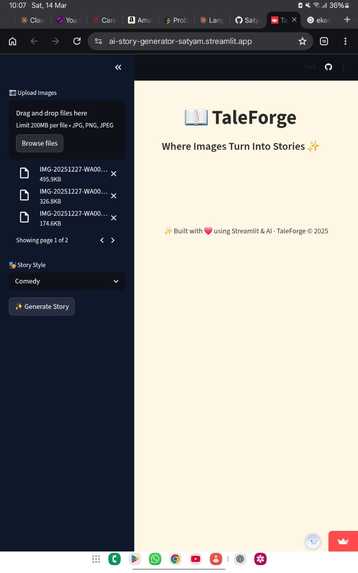
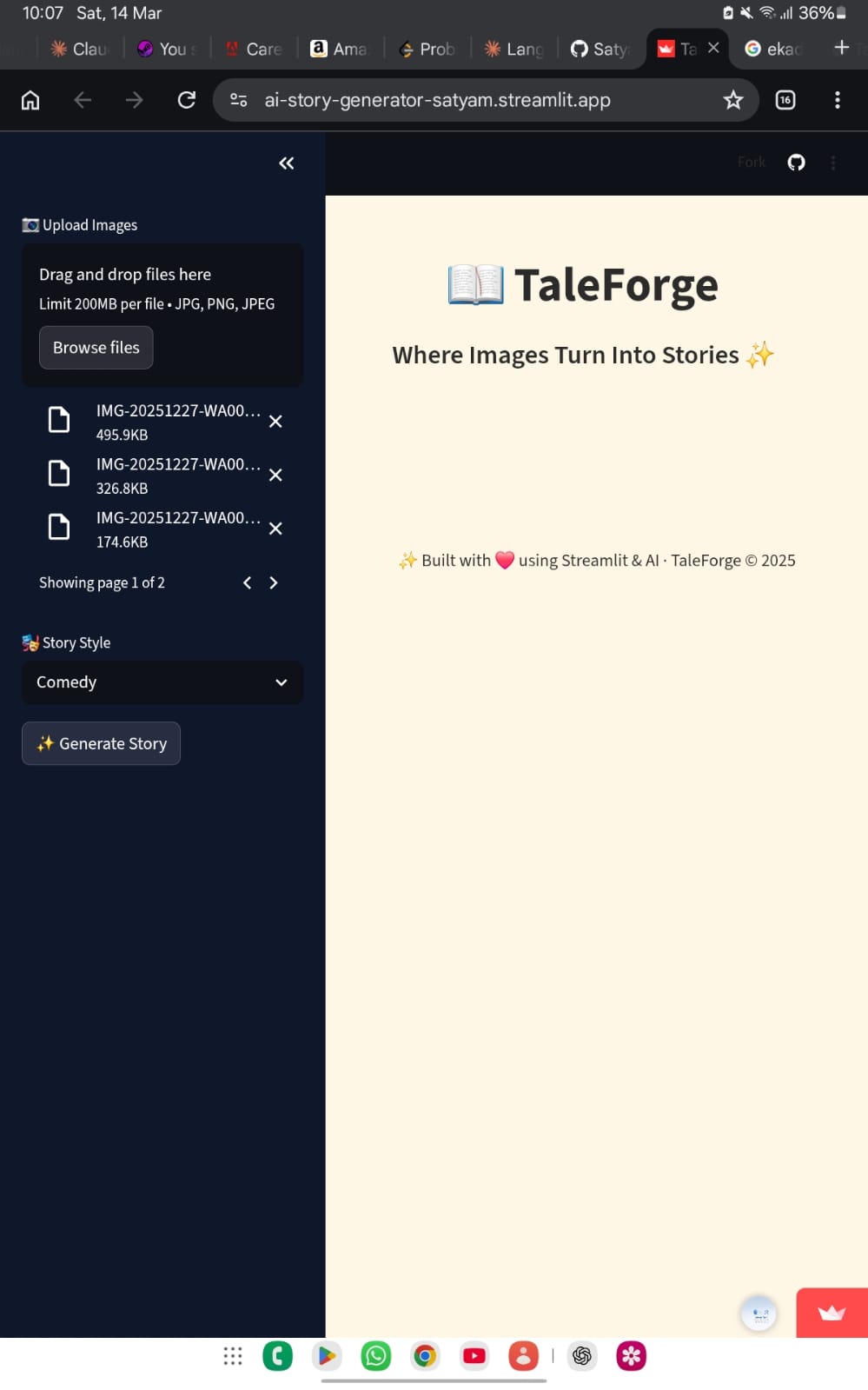
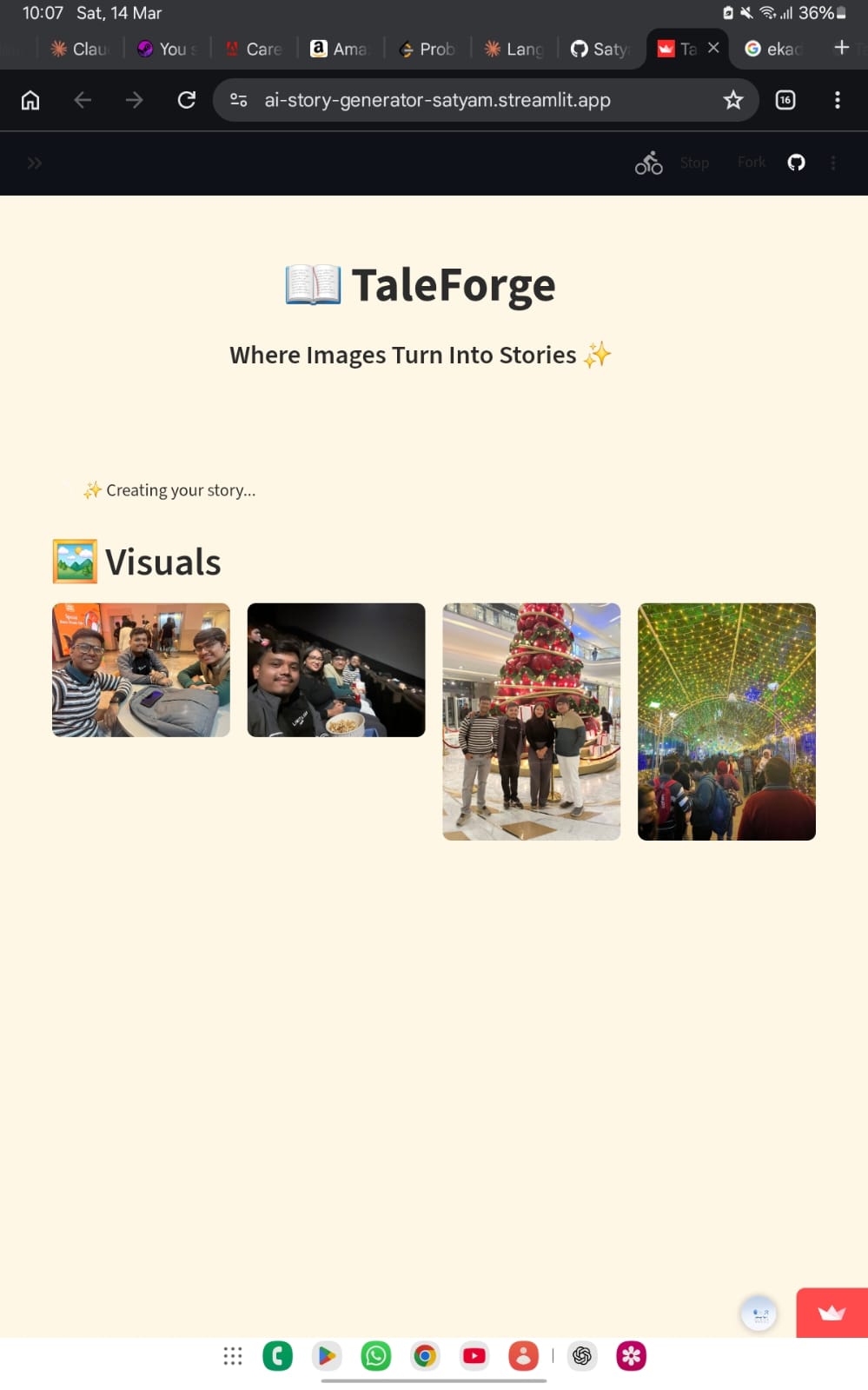
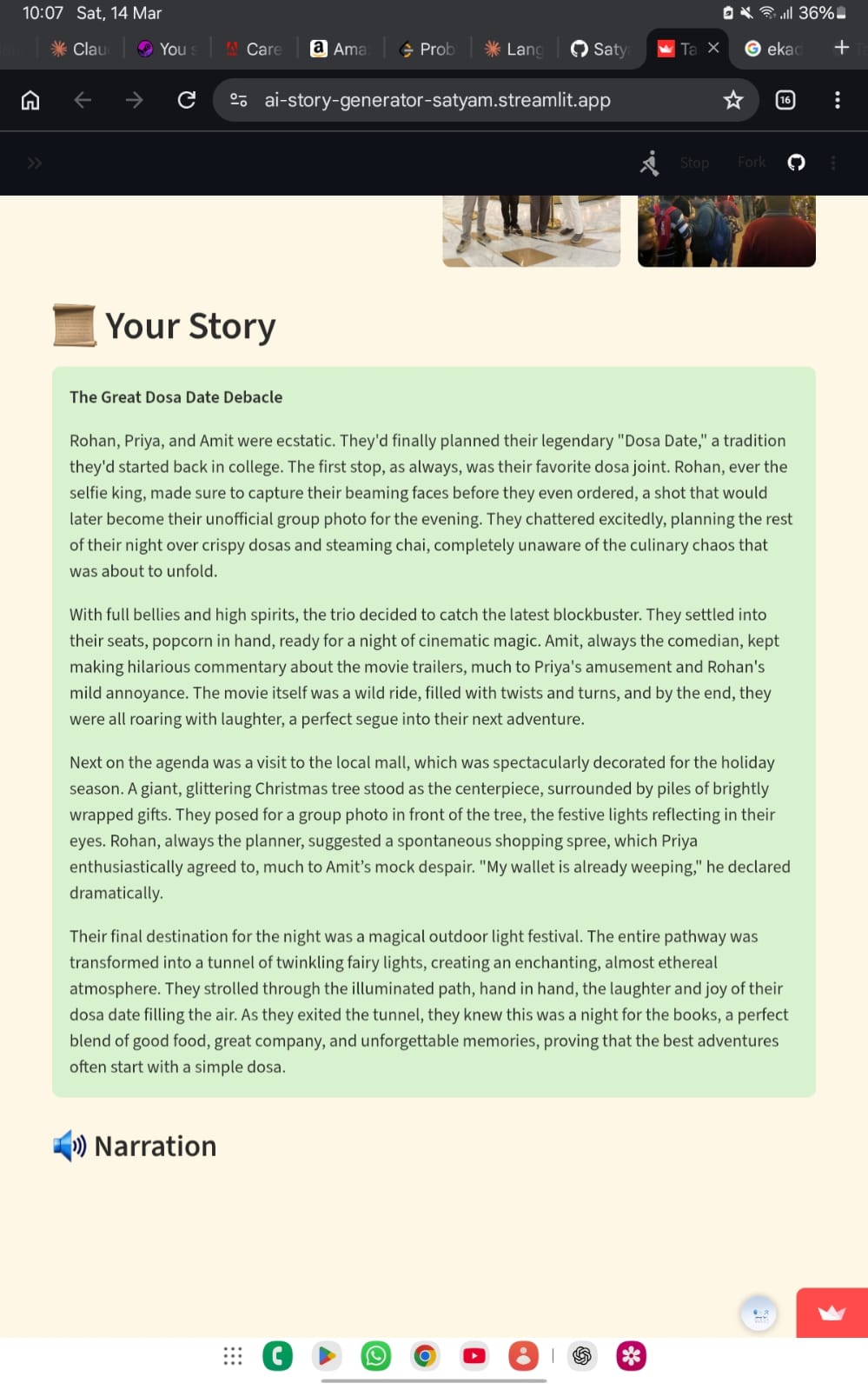
UI of my app
-
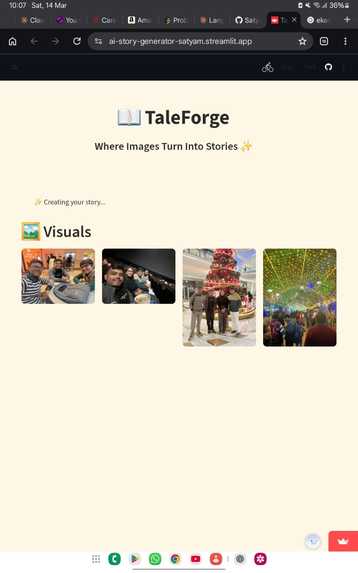
Visuals
-
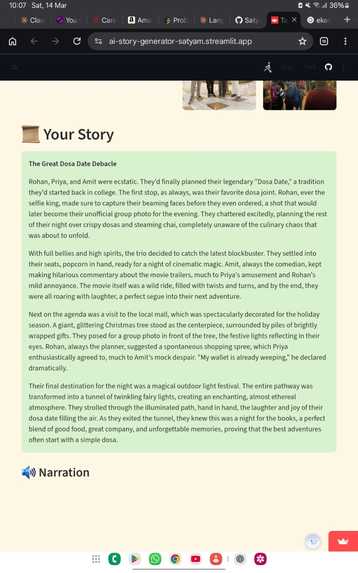
Story generated with comedy genre.
Inspiration
Storytelling is one of the oldest and most powerful ways humans share ideas and emotions. At the same time, modern AI systems are becoming increasingly capable of understanding images and generating natural language. The inspiration behind TaleForge was to combine these two capabilities — visual understanding and narrative generation — into a collaborative AI system that can turn images into meaningful stories. Rather than using a single prompt to generate text, we wanted to explore the concept of agentic AI systems, where multiple specialized AI agents work together to solve a complex task. This approach mirrors how humans collaborate: one agent understands the scene, another plans the story, another writes it, and another critiques the result. TaleForge was built to demonstrate how multi-agent AI architectures can transform raw visual data into structured narratives.
What it does TaleForge is an AI-powered storytelling system that converts uploaded images into immersive stories. Users can upload multiple images, select a genre, language, and story length, and the system generates a coherent narrative based on the visual content of those images. The system uses a multi-agent pipeline where different AI agents collaborate to build the final story. The pipeline includes: Vision Agent – analyzes images using Gemini Vision and extracts detailed scene descriptions Scene Extraction Agent – converts visual descriptions into structured scene data Story Planner Agent – designs a narrative structure based on the scenes Story Generator Agent – writes a complete story following the plan Critic Agent – evaluates coherence and quality of the generated story The final result is an engaging narrative story grounded in the visual scenes provided by the user. The platform also includes: interactive Streamlit interface AI-generated story narration downloadable PDF version of the story customizable genre and language options
How we built it TaleForge was built using a modular multi-agent AI architecture. The system combines visual understanding models, local large language models, and orchestration frameworks. Key components include: Gemini Vision API Used to analyze images and generate detailed scene descriptions. LangGraph Used to orchestrate the multi-agent pipeline and manage the flow of information between agents. LangChain Used to integrate language models into the agent workflows. Ollama + Qwen2.5 Used as a local language model for planning, generating, and reviewing stories. Streamlit Used to build the interactive user interface where users upload images and generate stories. Additional features include: Text-to-Speech narration using gTTS Story PDF export using ReportLab Image processing using Pillow The result is a complete end-to-end AI storytelling system that transforms images into structured narratives.
Challenges we ran into One of the main challenges was designing a reliable multi-agent workflow. Ensuring that each agent correctly interpreted the outputs of previous agents required careful prompt engineering and structured data formatting. Another challenge was performance optimization. Since the system involves multiple agents and large language model calls, we needed to optimize the pipeline to reduce latency and improve responsiveness. We also faced challenges in ensuring that the generated stories remained coherent across multiple scenes, especially when images represented different environments or contexts. Solving these issues required refining prompts, improving structured outputs, and carefully designing the flow of information between agents. Accomplishments that we're proud of We are proud of successfully building a fully functional agentic AI storytelling pipeline. Some key accomplishments include: Designing a multi-agent AI architecture using LangGraph Integrating Gemini Vision for scene understanding Creating a structured storytelling workflow from images Building an interactive and polished Streamlit application Implementing narration and downloadable story output Successfully combining visual AI and generative AI into one cohesive system TaleForge demonstrates how specialized AI agents can collaborate to perform complex creative tasks.
What we learned Through this project we gained valuable experience in: designing agent-based AI systems orchestrating workflows using LangGraph prompt engineering for multi-agent communication integrating vision models with language models building end-to-end AI applications We also learned that structured intermediate representations (scene data, story plans) significantly improve the quality and reliability of generative AI systems.
What's next for TaleForge There are several exciting directions to expand TaleForge. Future improvements include: generating illustrated storybooks from images adding multi-chapter story generation improving the critic agent to automatically refine weak narratives enabling collaborative storytelling between multiple users supporting more advanced visual reasoning across larger image sequences We also plan to explore integrating real-time multimodal models to make the storytelling experience even more interactive. TaleForge represents an early step toward AI systems that can collaboratively interpret visual experiences and transform them into meaningful narratives.

Log in or sign up for Devpost to join the conversation.