-
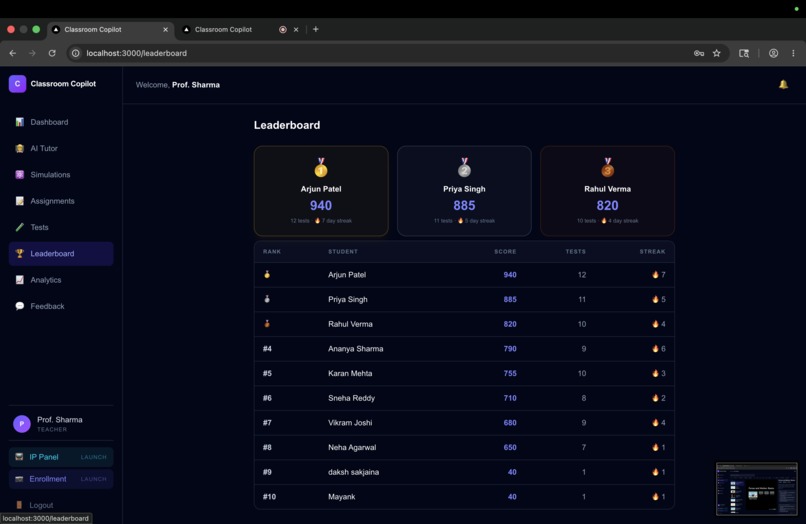
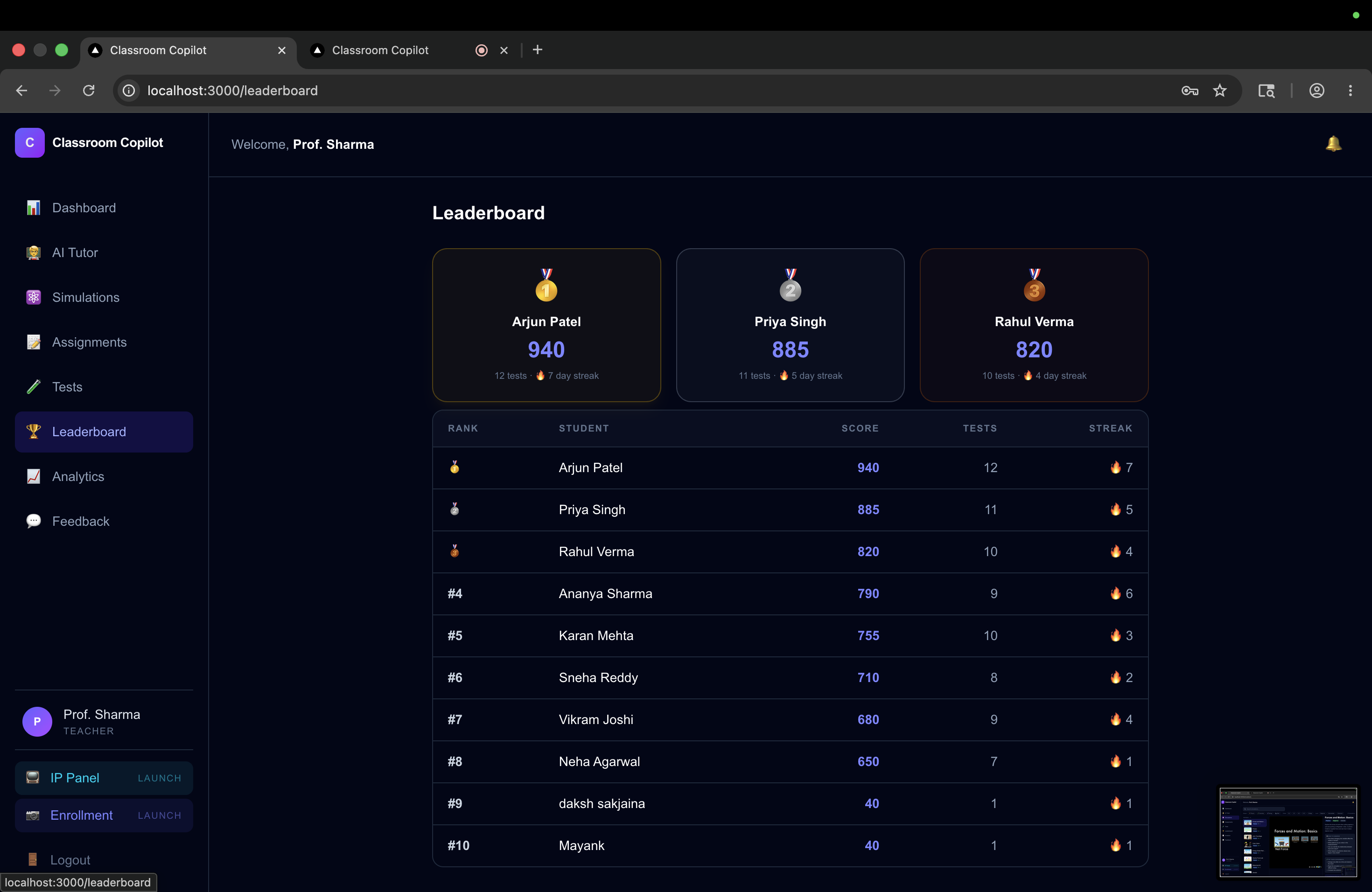
Leaderbaord
-
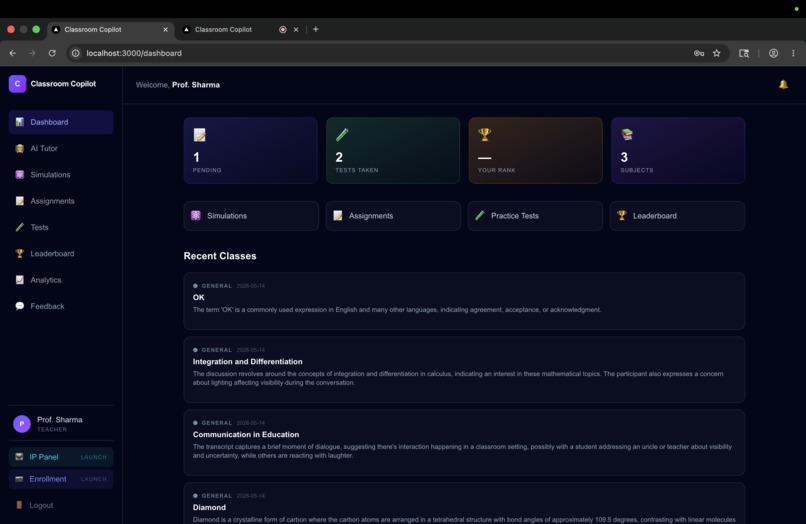
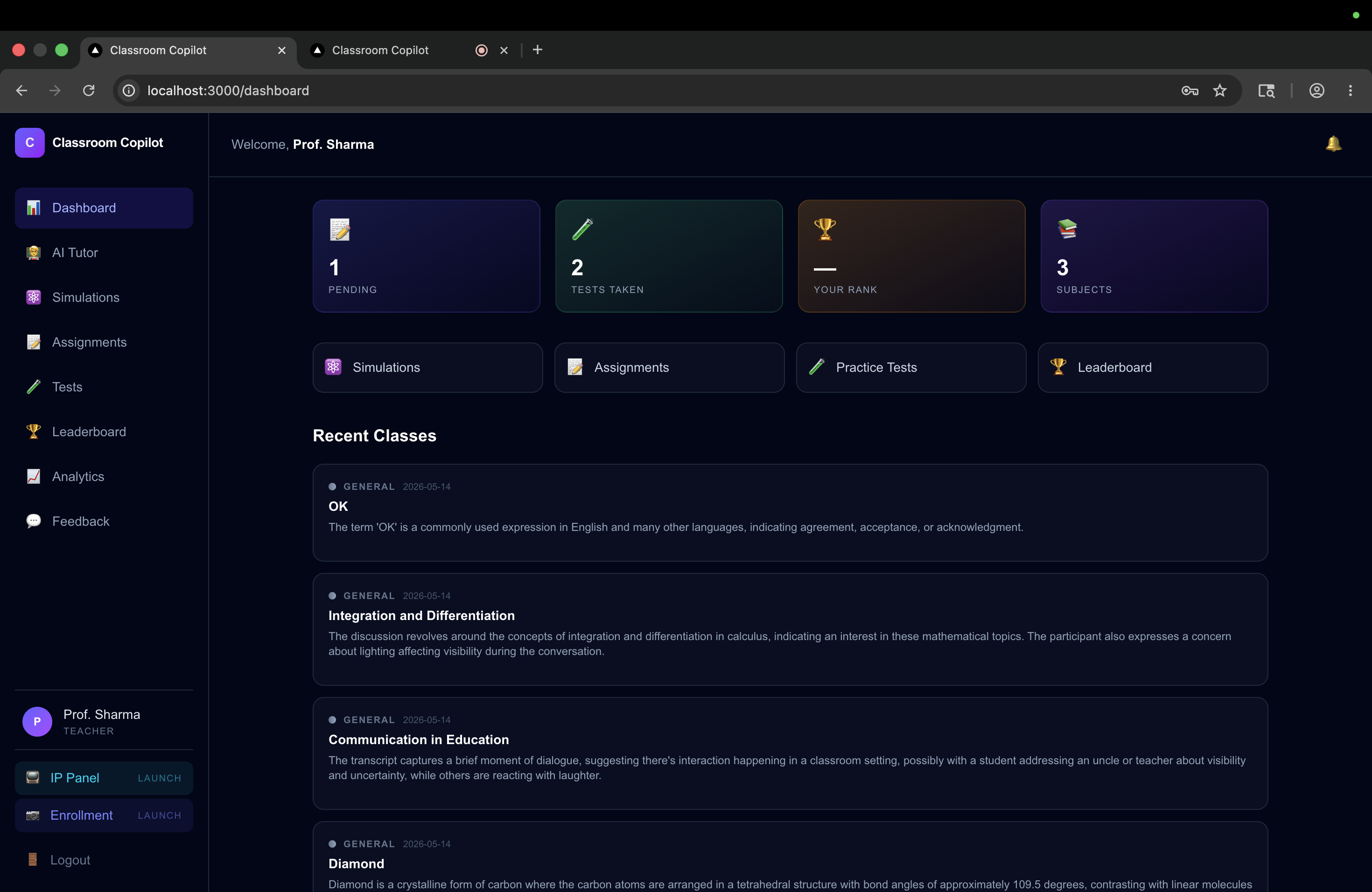
Primary student Dashboard
-
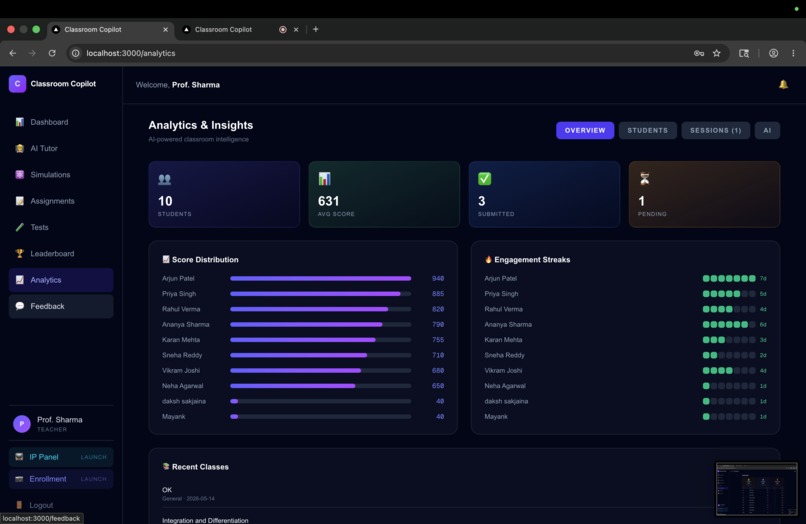
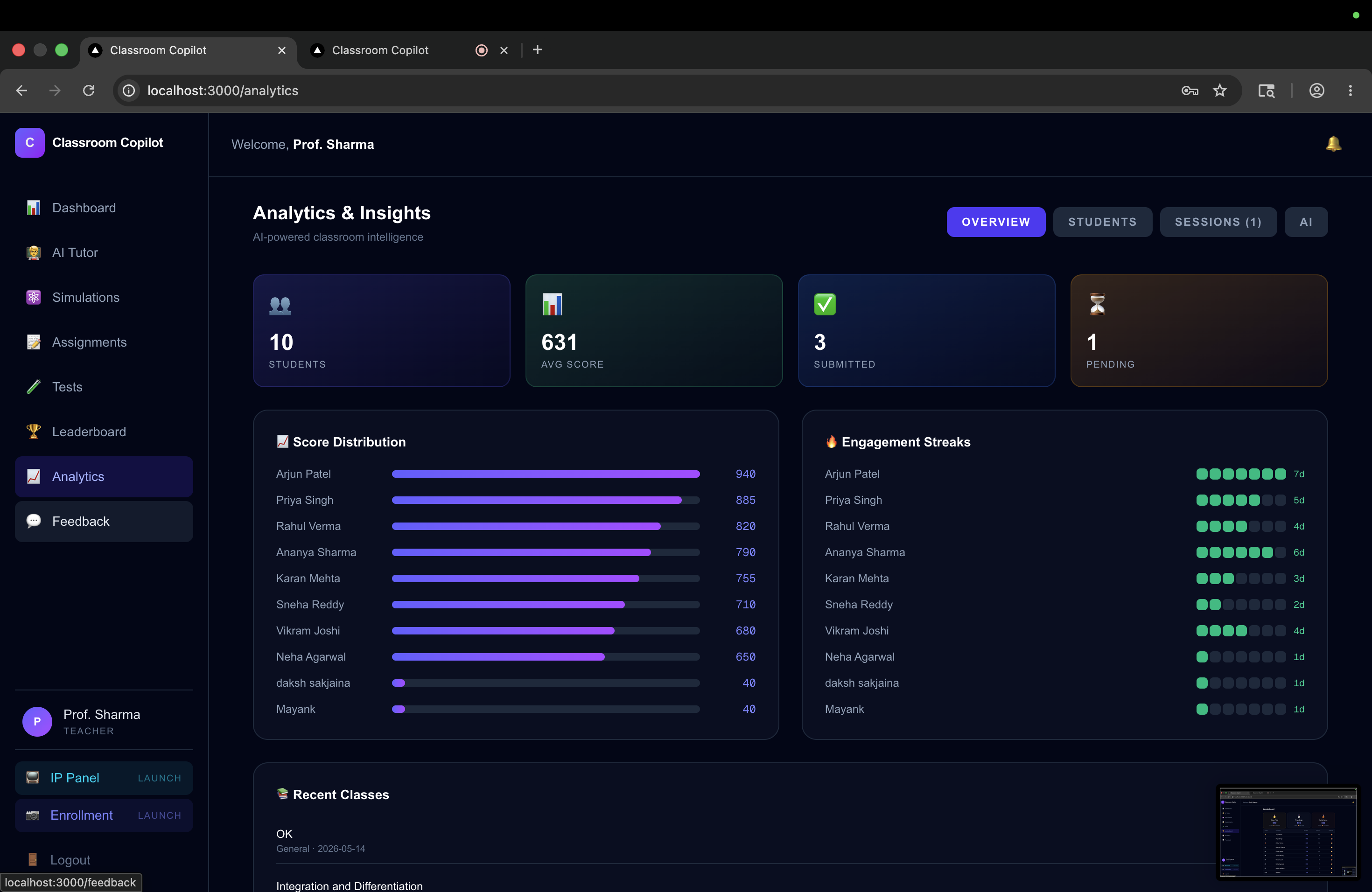
Analytics
-
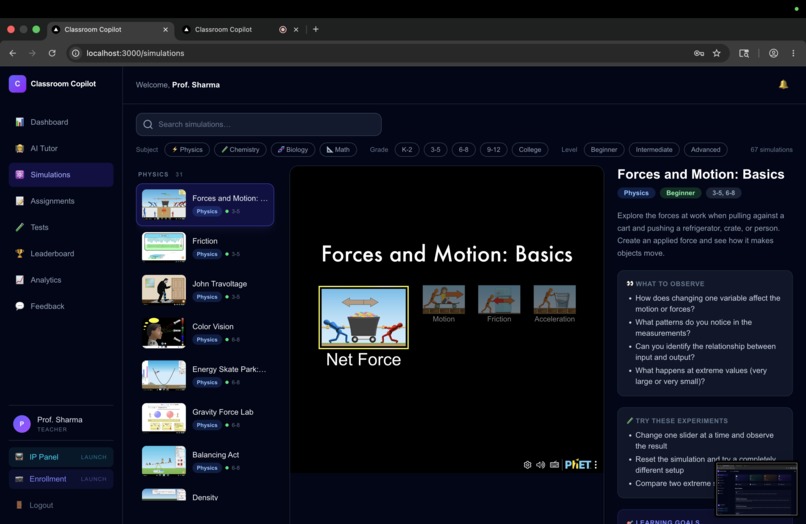
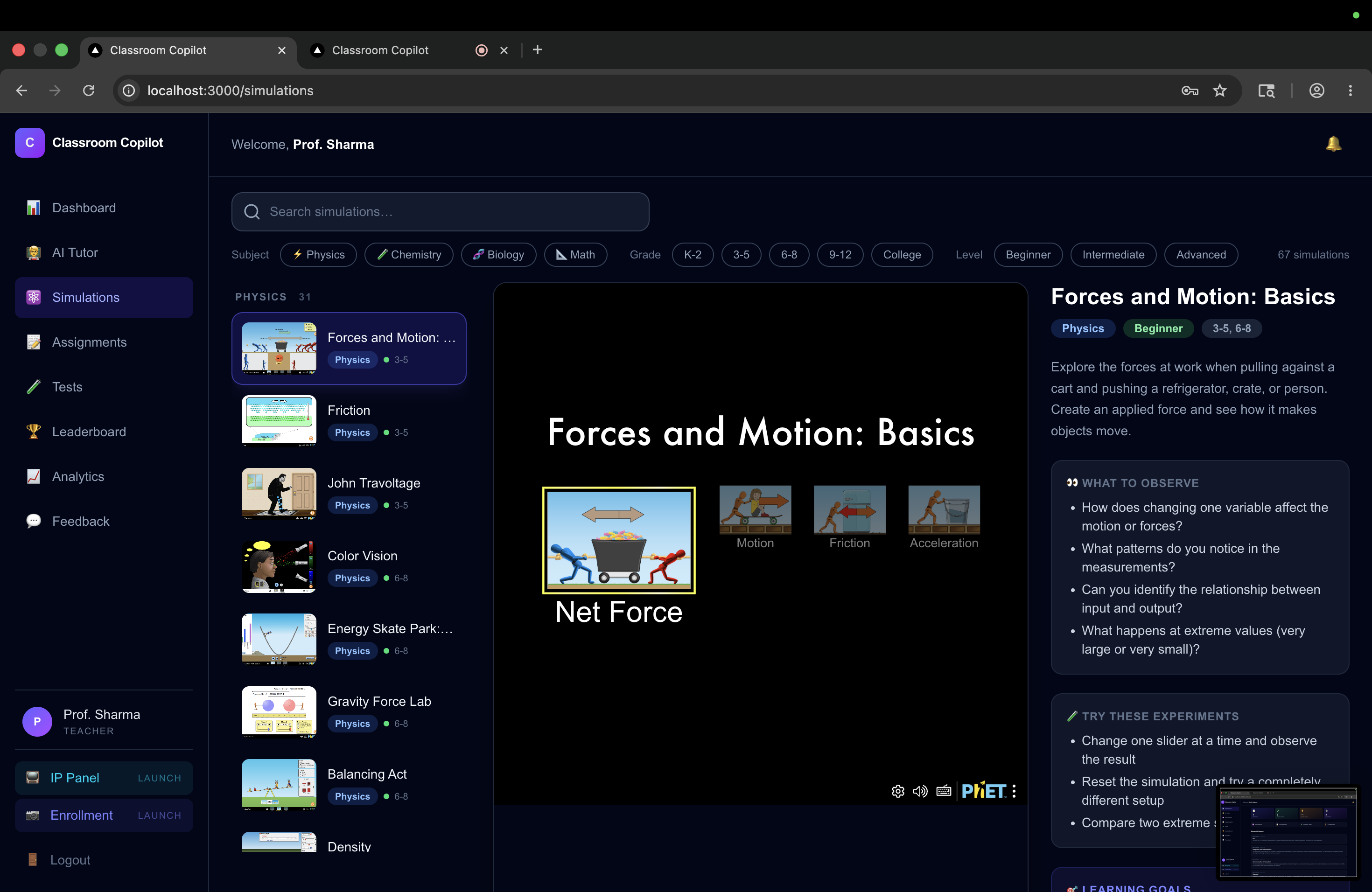
Simulations ,
-
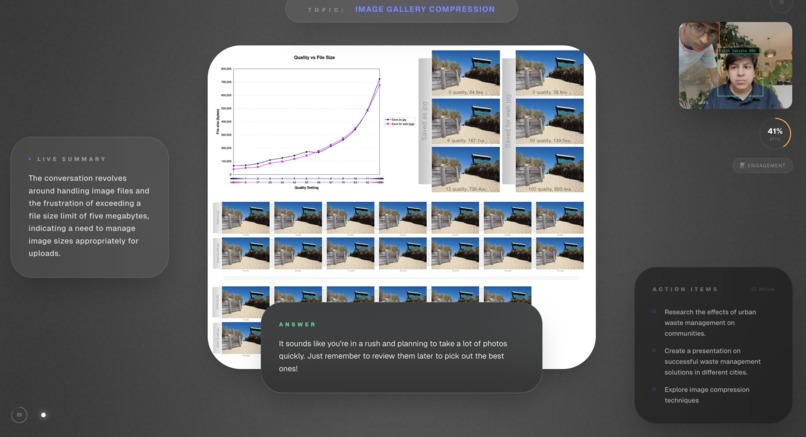
Demo of IIP
VIDEO IS ON GITHUB
Inspiration
Modern classrooms are still largely built around one-way teaching, despite students learning in completely different ways. Some students are visual learners, some understand through interaction, while others need personalized explanations or more engagement to stay focused.
We noticed that while schools have smart boards and digital tools, they are usually disconnected, static, and not context-aware. Teachers often switch between presentations, videos, attendance systems, quizzes, and assignments manually, which interrupts the flow of teaching. At the same time, students rely on fragmented platforms like Teams or WhatsApp that were never truly designed for physical classrooms.
We wanted to build an AI-native classroom system that acts like a real-time educational companion , one that listens to the lecture, understands the topic being taught, and instantly transforms it into interactive visual learning experiences while also supporting teachers, students, and school administrators through a unified platform.
What it does
Talantir is an AI-powered classroom and adaptive learning platform built as a supplement to traditional education.
The platform has two major components:
1. AI Smart Classroom System (Interactive Panel Layer)
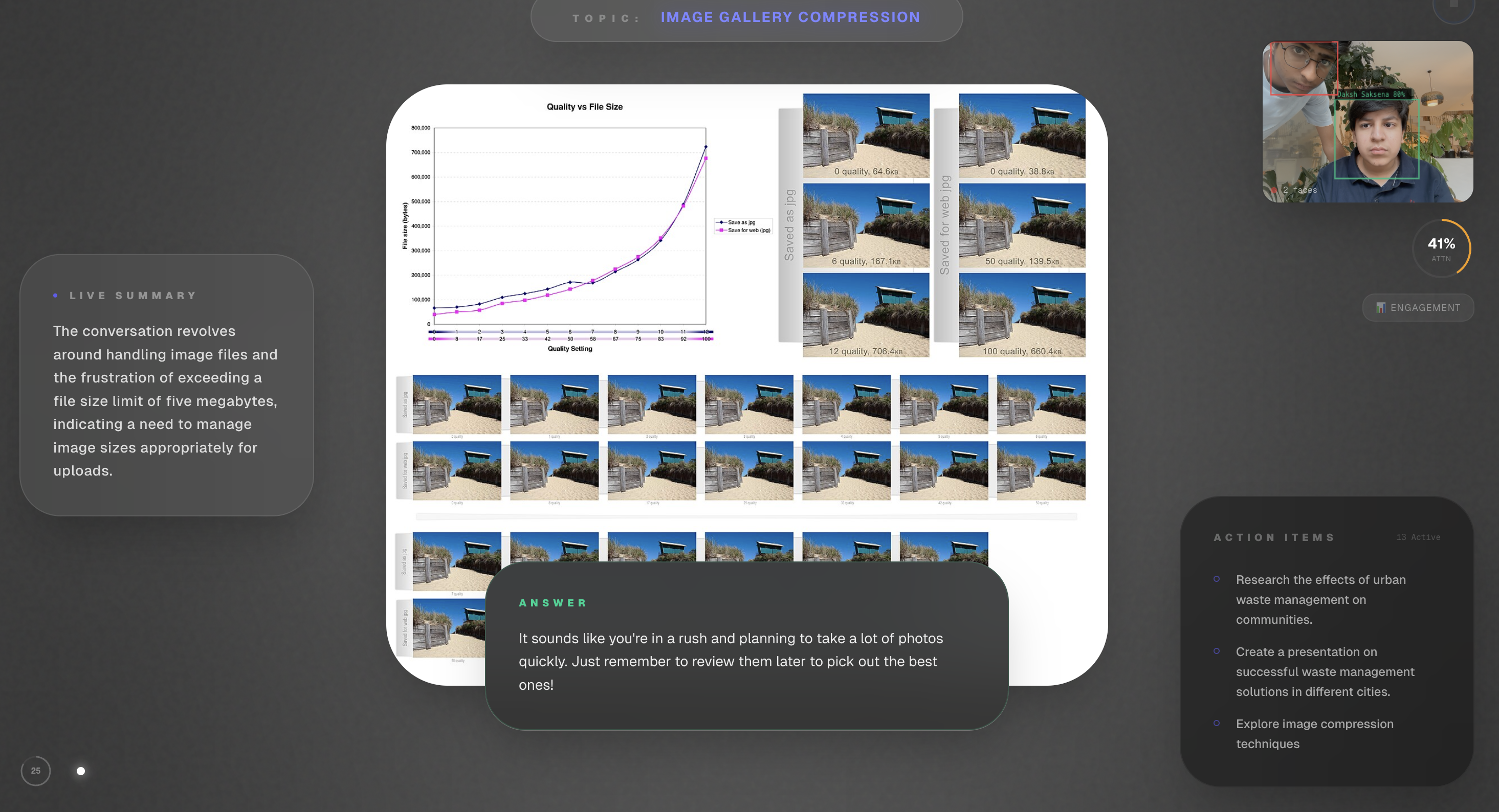
Talantir runs directly on classroom interactive panels (IIPs) and listens to live classroom discussions in real time. Using speech recognition and contextual AI understanding, it dynamically displays the most useful educational content for the current topic being taught.
Depending on the subject, Talantir can:
- Launch interactive simulations from platforms like PhET
- Display diagrams, GIFs, images, and short videos
- Generate real-world visualizations of concepts
- Answer student questions contextually
- Create live summaries and revision notes
- Generate presentations for future reference
- Record homework, assignments, and class to-dos
The classroom assistant also supports:
- AI-generated quizzes and polls
- Automatic attendance
- Classroom monitoring and engagement tracking
- Participation analytics
- Focus and attention scoring
- ADHD-friendly calming visuals and adaptive patterns
- Voice-based interaction with students and teachers
2. Unified School Dashboard
Talantir also includes a complete multi-role dashboard system for:
- Students
- Teachers
- Administrators
The dashboard acts as a centralized school platform replacing fragmented systems currently spread across apps like Teams, WhatsApp, and parent portals.
Features include:
- Assignments and submissions
- Practice tests
- AI-generated class summaries
- Reminders and notifications
- Student feedback systems
- Performance analytics
- Participation tracking
- Learning insights for teachers
Teachers receive AI-generated recommendations such as:
- Which students need additional support
- Which students are highly engaged
- Participation improvement suggestions
- Classroom trend analysis
Students get access to an advanced AI tutor:
A high-context, multimodal AI tutor capable of voice interaction, whiteboard explanations, simulations, videos, and adaptive teaching styles for competitive exam preparation and personalized learning.
How we built it
We designed Talantir as a modular AI-first platform combining:
- Real-time speech recognition
- Context-aware LLM pipelines
- Retrieval-based educational grounding
- Interactive classroom UI systems
- Dashboard analytics
- Adaptive learning workflows
The architecture combines:
- Live audio transcription
- Topic extraction pipelines
- Educational content retrieval
- Simulation orchestration
- AI tutoring agents
- Classroom analytics engines
For the frontend, we focused heavily on creating a clean, distraction-free interface optimized for real classroom usage.
The dashboard ecosystem was designed around role-based workflows so students, teachers, and administrators each get interfaces tailored to their needs.
The AI tutor system was built around multimodal interaction:
- Voice
- Whiteboard explanations
- Simulations
- Visual aids
- Adaptive conversational tutoring
Challenges we ran into
One of the biggest challenges was designing a system capable of understanding live classroom context in real time without overwhelming either the teacher or students.
Another major challenge was balancing automation with usability. Many educational tools become too complicated for teachers to use naturally in classrooms. We had to ensure Talantir enhanced teaching instead of interrupting it.
We also faced challenges with:
- Real time latency
- Educational content grounding
- Topic relevance filtering
- Attention analysis
- Multimodal synchronization between audio, visuals, and simulations
Designing analytics that were actually meaningful, instead of just generating random metrics was another important challenge.
Accomplishments that we're proud of
We are proud that Talantir reimagines the classroom as an intelligent, adaptive environment instead of just digitizing traditional teaching methods.
Some accomplishments we are especially proud of:
- In our School , we approached the principal and pitched the idea to her, she loved the idea and decided to demo it with the classrooms the coming year. were also proud of the building process where we:
- Built a real-time AI classroom assistant concept
- Combined simulations, tutoring, analytics, and dashboards into one ecosystem
- Designed accessibility-focused learning support
- Created a platform that supports multiple learning styles
- Built an AI tutor capable of multimodal interaction
- Replaced fragmented school tools with a unified platform vision
We are also proud of how scalable the idea is from schools and coaching centers to hybrid learning environments.
What we learned
Through building Talantir, we learned that educational technology should not replace teachers it should amplify them.
We also learned how important contextual grounding is for AI in education. Generic AI responses are not enough in classrooms; the system must deeply understand what is currently being taught and adapt instantly.
On the technical side, we learned:
- Real-time AI orchestration
- Educational retrieval systems
- Designing low-distraction interfaces
- Multimodal AI interaction
- Analytics pipeline design
- Human centered classroom UX
Most importantly, we learned that engagement and understanding matter far more than simply delivering information.
What's next for Talantir
Our next goal is to turn Talantir into a fully deployable classroom intelligence platform.
Future plans include:
- After the demo we plan to apply it to all the classrooms in school and then surrounding schools too.
- Deeper integration with school hardware
- Add more languages to support
- Emotion and engagement-aware teaching adaptation
- Personalized learning pathways
- AR/VR-powered educational simulations
We also want to build a scalable ecosystem where schools can plug in custom educational content, simulations, and teaching modules tailored to their curriculum.
Built With
- css-in-js
- d:id-api
- deepgram-nova-2
- gemini-2.5
- html5-mediarecorder
- humeaiapi
- next.js
- openai-gpt-4o
- phet-interactive-simulations
- react
- svg
- tailwind-css
- typescript
- web-speech-api
- websockets
- wikimedia-commons-api


Log in or sign up for Devpost to join the conversation.