-
-
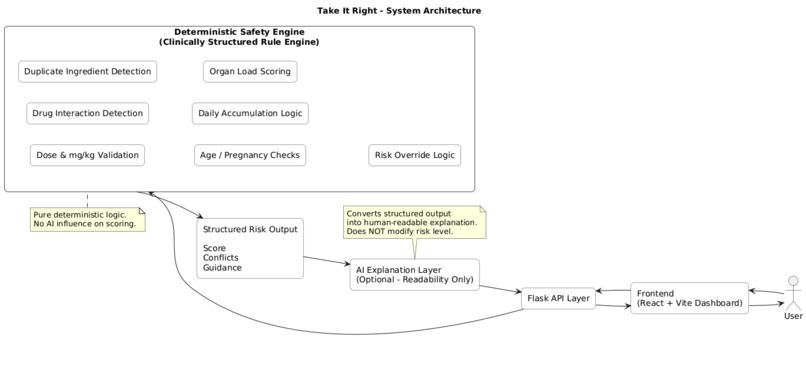
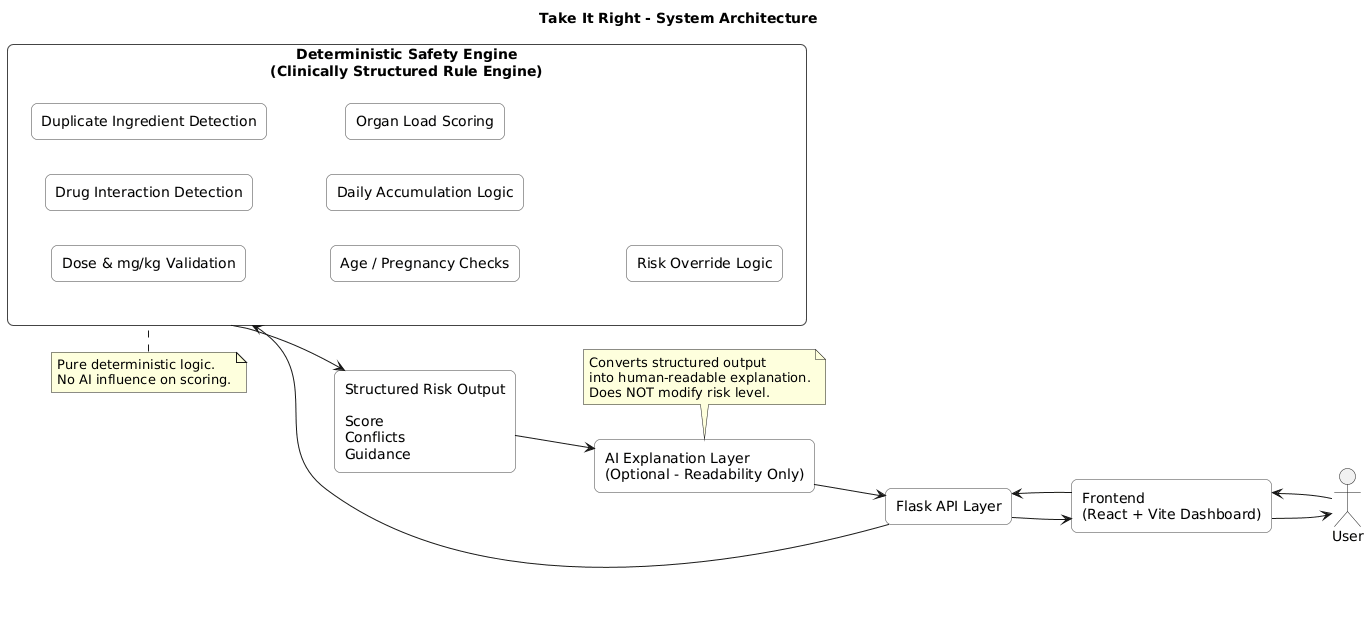
Clinically structured rule engine. Risk scoring is deterministic; AI only generates explanations, never alters risk.
-
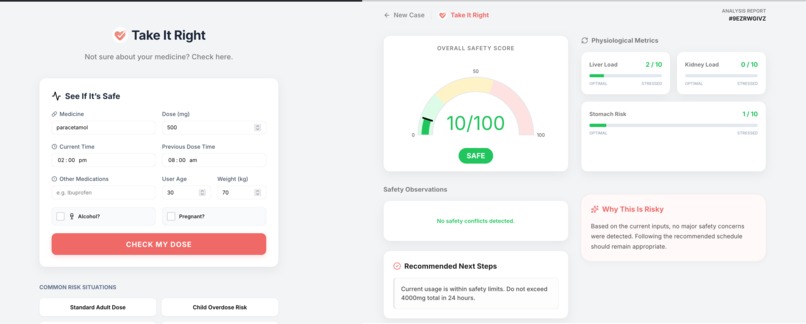
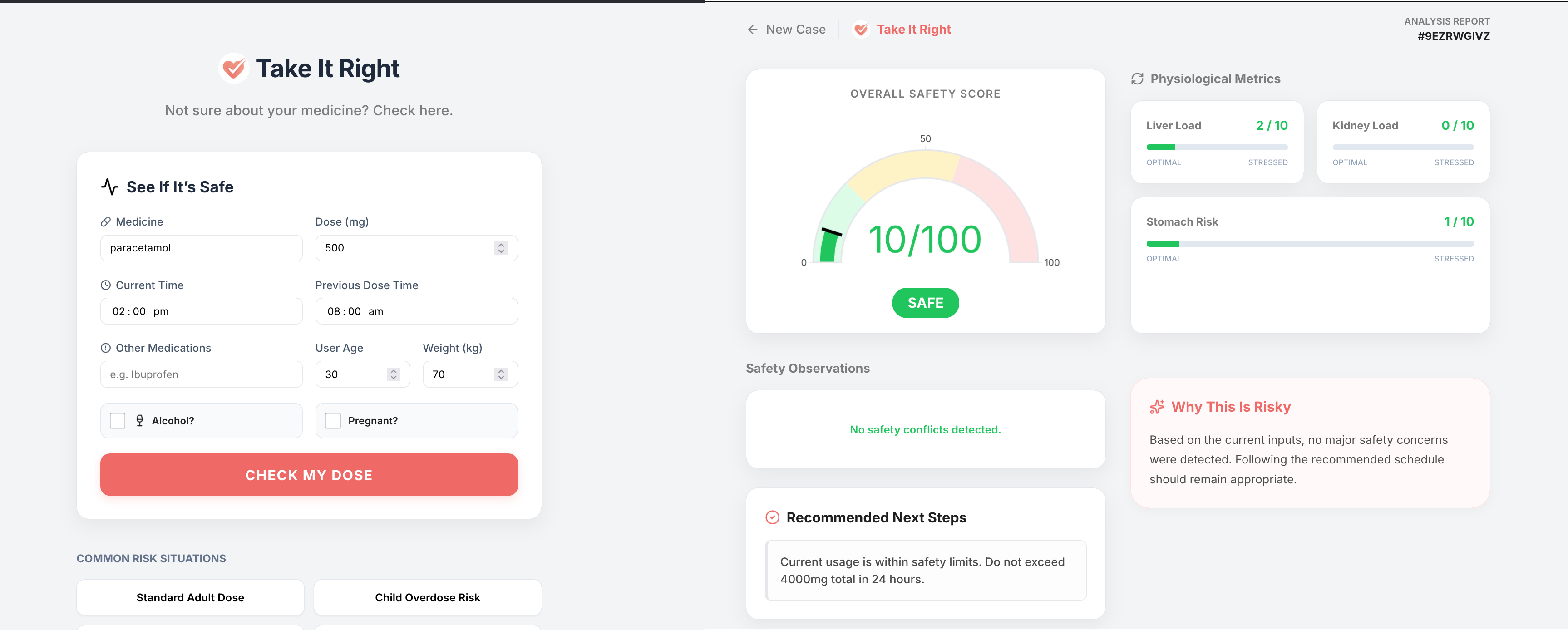
Dose, timing, and organ load validated. No conflicts detected. System returns SAFE classification.
-
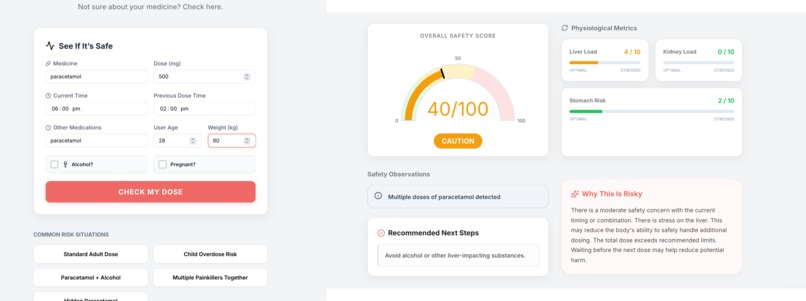
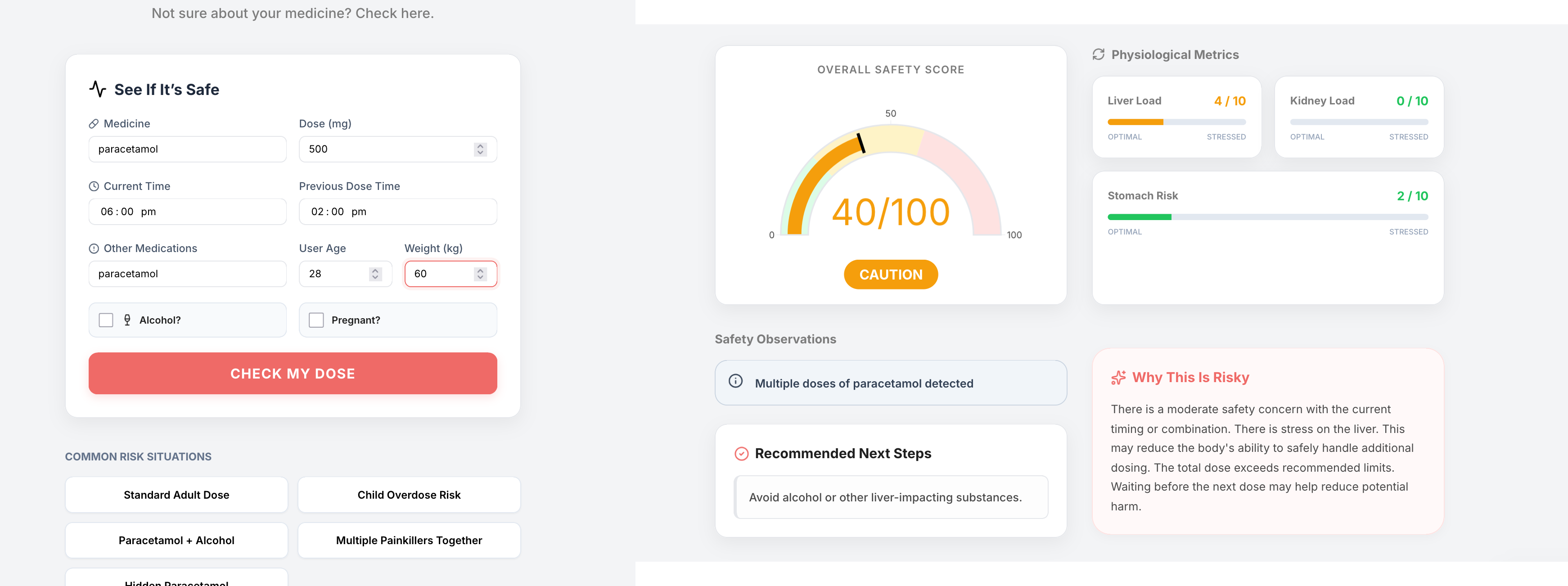
Repeated dosing triggers accumulation logic and organ load scoring, resulting in a CAUTION risk classification.
-
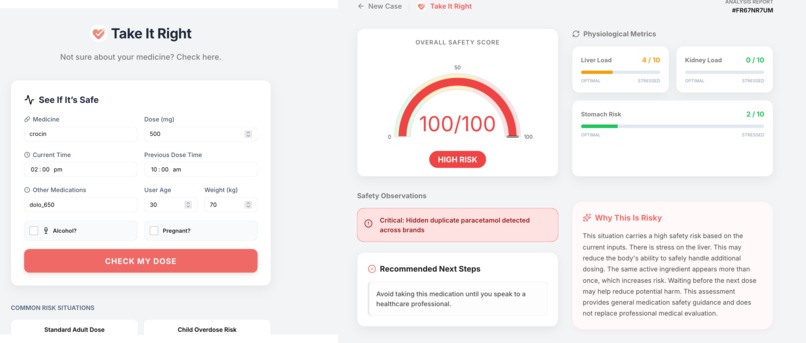
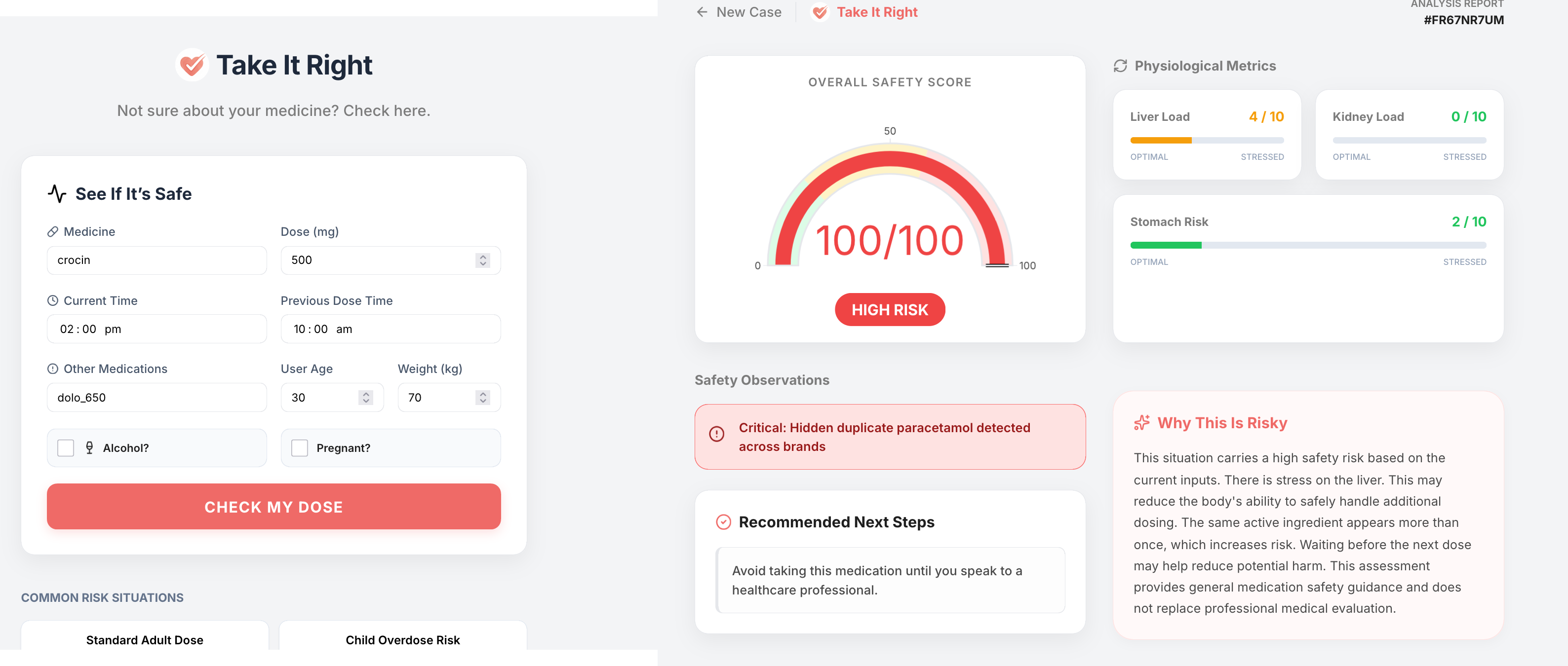
Duplicate paracetamol detected across brands. Deterministic engine escalates to HIGH RISK with structured guidance.
-
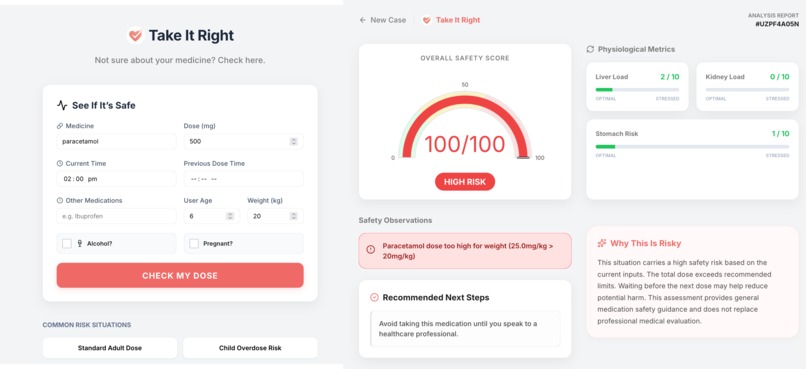
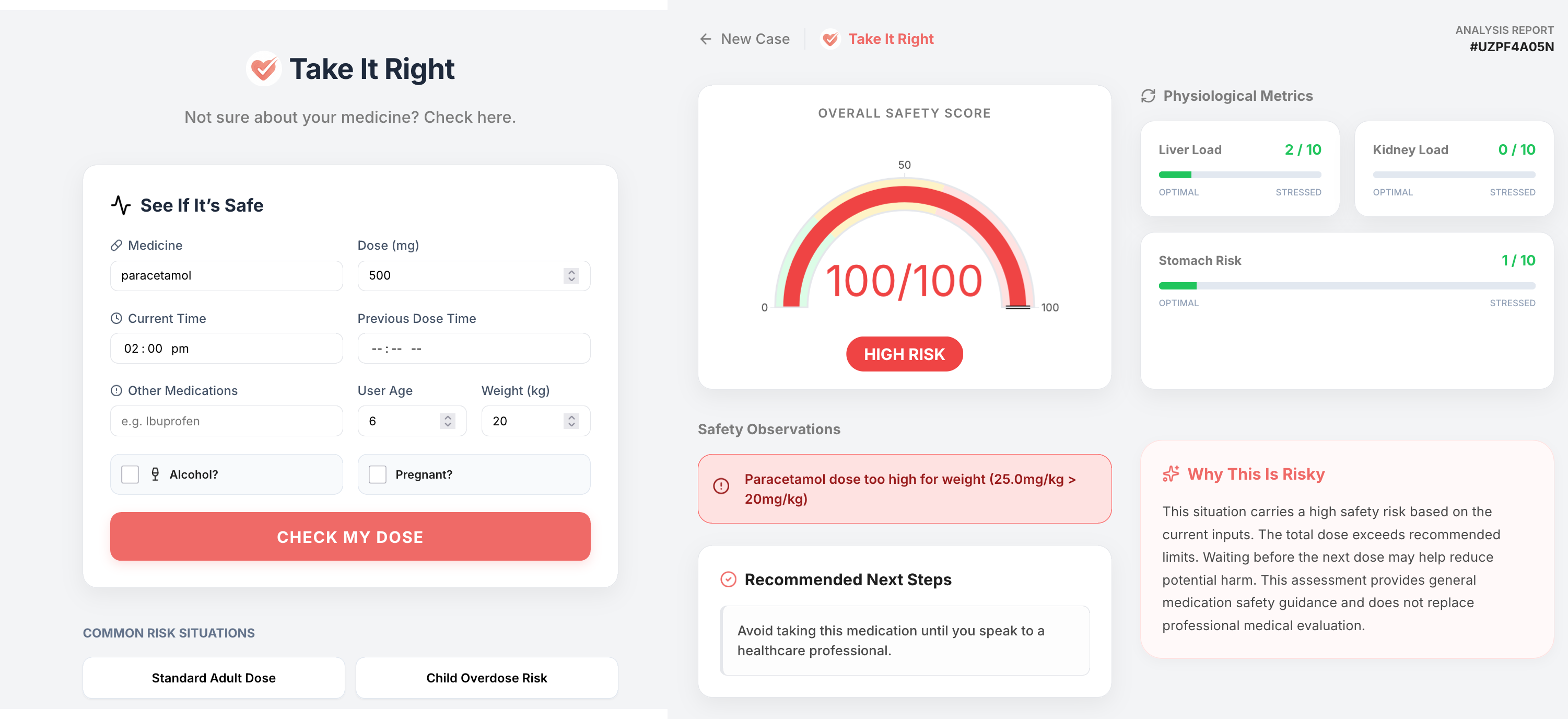
Weight-based mg/kg validation flags unsafe pediatric dosing and deterministically escalates to HIGH RISK.
-
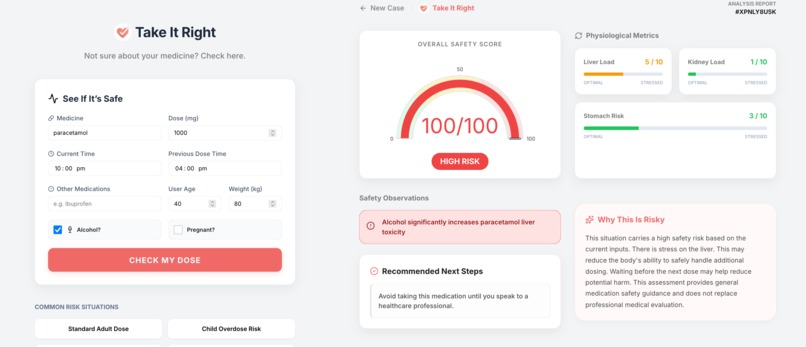
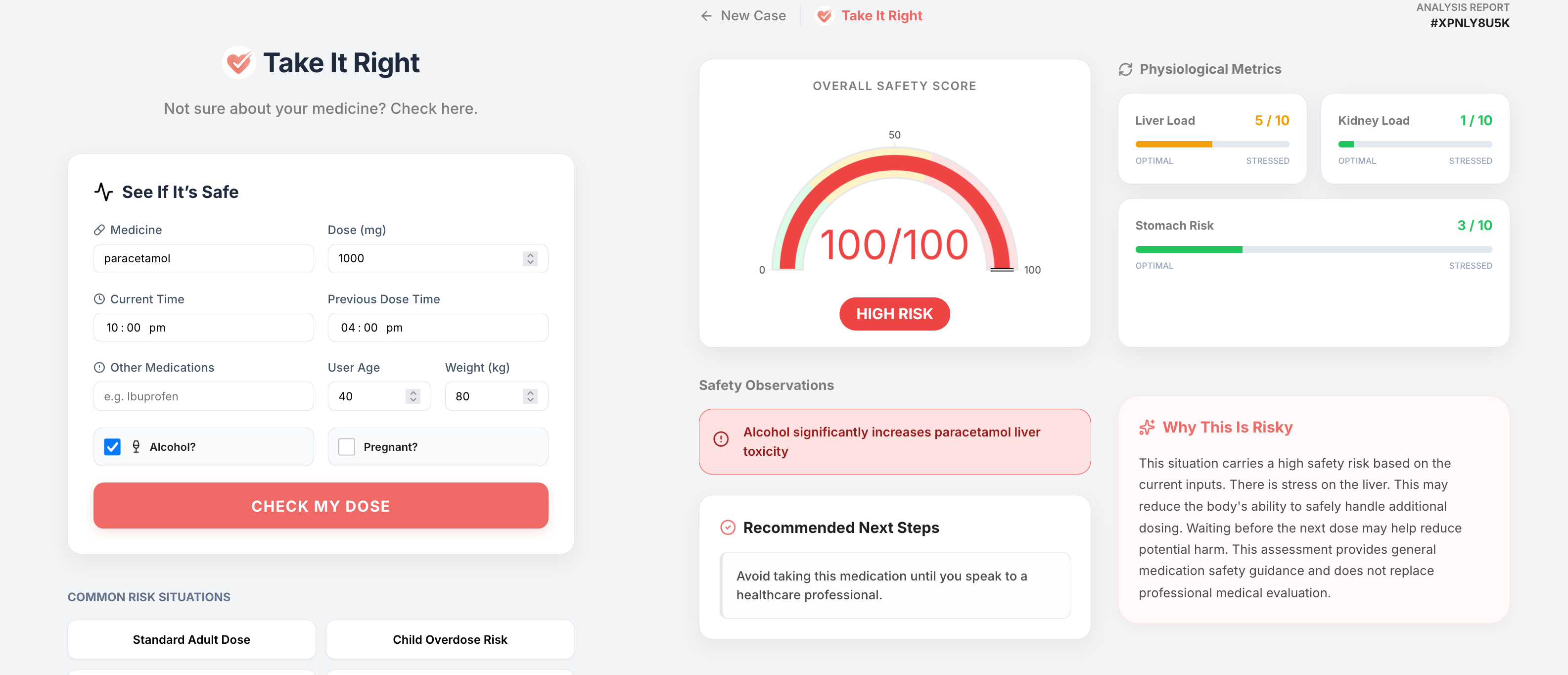
Alcohol interaction rule increases liver toxicity risk and triggers automatic HIGH RISK escalation.
Take It Right — Deterministic Medication Safety Before Harm Compounds
Inspiration
At 8:00 AM, someone takes a headache tablet. At 1:00 PM, they take a cold medicine. At 9:00 PM, another dose before bed. There’s alcohol at dinner.
Every decision follows the label. Every dose feels safe.
By midnight, they’ve unknowingly crossed the safe daily limit for a liver-toxic ingredient.
No alarms. No warning. No obvious mistake.
This is how most preventable medication harm happens.
Not from reckless misuse. From normal decisions made across time:
- Two brands with the same hidden ingredient
- A “safe” repeat dose taken too soon
- Cold medicine + pain reliever stacking
- Pediatric dosing guesswork
- Alcohol mixed with common OTC drugs
- NSAIDs combined without realizing it
Individually safe. Together, sometimes dangerous.
Medication safety is not a guessing problem. It is a rules problem across time.
Take It Right was built to detect preventable medication risk before it compounds into harm.
Instead of asking AI to estimate risk probabilistically, this project asks:
Can everyday medication safety be evaluated using transparent, deterministic medical logic — with AI used only to explain results?
What It Does
Take It Right is a deterministic medication safety engine that evaluates real-world dosing decisions across time before risk escalates.
It models everyday scenarios:
- Repeating doses
- Combining medications
- Mixing with alcohol
- Pediatric dosing
- NSAID stacking
- Hidden duplicate ingredients
The system analyzes a dose timeline, detects cumulative risk patterns, and surfaces conflicts before harm occurs.
The engine evaluates 15+ structured safety rules:
- Weight-based dosing validation (mg/kg)
- Daily cumulative dose limits
- Single-dose maximum limits
- Time-spacing violations
- Alcohol interaction escalation
- NSAID stacking detection
- Hidden duplicate ingredient expansion
- Age and pregnancy contraindications
- Organ stress scoring (liver, kidney, stomach)
Output includes:
- Quantitative risk score (0–100)
- Risk category: SAFE / CAUTION / HIGH RISK
- Deterministic HIGH-RISK overrides
- Structured conflict detection
- Clear, actionable guidance
- Visual dose timeline
- Organ load indicators
This tool does not replace clinicians. It prevents avoidable mistakes before they stack into harm.
Key Innovation
Most health tools rely on probabilistic AI predictions.
Medication safety should not depend on probabilistic guesses.
Take It Right separates safety decisions from AI entirely.
All risk classification is computed using deterministic medical logic:
- Transparent rules
- Reproducible outcomes
- Auditable decisions
- Deterministic HIGH-RISK overrides
AI is used only after the decision is made — to translate structured results into clear language.
AI can explain risk. It cannot change it.
This separation ensures:
- Reliability
- Accountability
- Auditability
- Reduced hallucination risk
- Safety-first behavior
In safety-critical contexts, that boundary matters.
System Architecture
Deterministic Safety Engine (Python + Flask)
The core engine evaluates:
- Dose thresholds
- mg/kg pediatric validation
- Time-spacing logic
- Ingredient duplication
- Contraindications
- Interaction escalation
Critical violations trigger deterministic HIGH-RISK overrides that cannot be downgraded by AI.
All scoring and classification occur here.
This ensures:
- Interpretability
- Reproducibility
- Auditable outcomes
AI Explanation Layer
After structured evaluation, an AI module converts results into plain-language guidance.
The AI:
- Summarizes conflicts
- Explains risks clearly
- Provides understandable next steps
The AI does not:
- Change scores
- Downgrade risk
- Modify decisions
Safety decisions remain deterministic.
Frontend
Built with React, Vite, and Plotly.js to visualize:
- Risk gauge
- Organ load indicators
- Conflict cards
- Dose timeline
- Escalation triggers
- Actionable guidance
The interface makes cumulative risk visible before harm occurs.
Challenges
Designing a safety-first system required balancing precision and usability.
Key challenges:
- Designing an interpretable scoring model
- Preventing duplicate conflict inflation
- Implementing HIGH-RISK overrides correctly
- Modeling cumulative dosing across time
- Enforcing strict AI boundaries
In safety systems, clarity is as important as correctness.
Impact & Usefulness
Many medication errors involve common over-the-counter drugs taken exactly as people believe is safe.
These mistakes are:
- Preventable
- Common
- Often invisible until damage accumulates
Take It Right helps detect:
- Cumulative overdosing
- Hidden duplicate ingredients
- Alcohol interactions
- Unsafe pediatric dosing
- NSAID stacking
- Dangerous time-spacing violations
The system demonstrates how AI can support understanding without replacing structured safeguards.
Goal: detect risk before it compounds.
What We Learned
Building for safety-critical scenarios changes system design:
- Determinism builds trust
- Clear boundaries improve accountability
- Interpretability matters more than novelty
- Responsible AI often means limiting AI
Constraint is a design decision.
What’s Next
- Expand medication database coverage
- Add deeper interaction modeling
- Strengthen pediatric and geriatric rules
- Refine organ load scoring
- Validate against clinical dosing guidelines
- Explore consumer and clinical integrations
Long-term vision: A scalable, safety-first medication decision support system.
Final Statement
Medication mistakes rarely look dangerous in the moment. They accumulate quietly across hours and days.
Take It Right demonstrates a safety-first model for AI-assisted healthcare:
Deterministic logic for decisions. AI for explanation.
By making cumulative risk visible and auditable, this system helps people recognize danger early — before routine decisions compound into preventable harm.

Log in or sign up for Devpost to join the conversation.