-
-
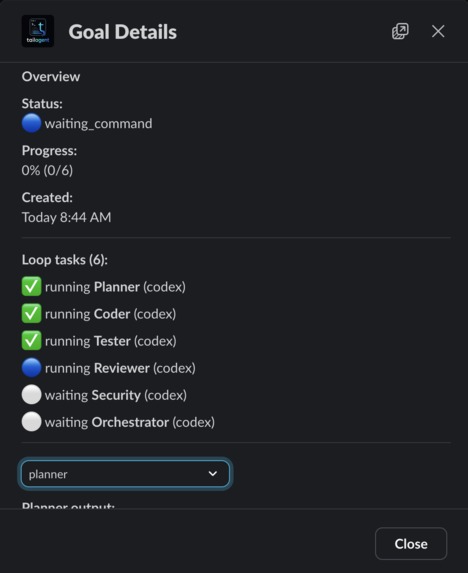
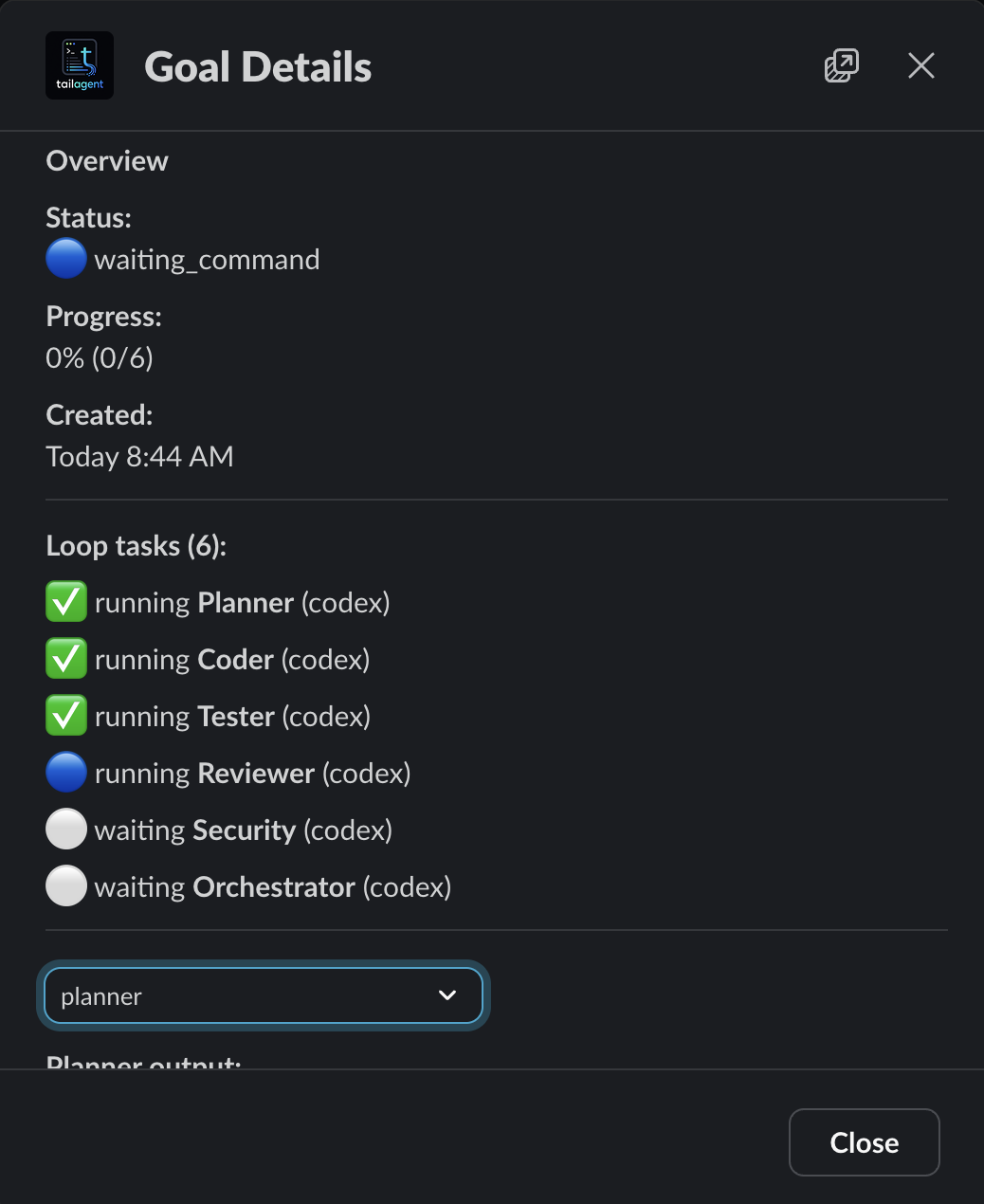
goal tasks
Inspiration
I wanted local AI coding agents to be usable by a team, not just by one person in a terminal. Slack felt like the right place to make loop engineering visible, safe, and easy to control.
What it does
tailagent-slack runs locally and lets me use Slack to instruct, approve, stop, and orchestrate AI coding agents. It supports goals, task loops, approval lists, and multi-agent management from Slack.
How we built it
I built a Slack app, a dev cloud relay, and a local connector. Slack is the control room, the relay routes messages, and the connector runs agents on my machine so code, secrets, and execution stay local.
Challenges we ran into
The hardest part was balancing automation with control. I had to make goals, tasks, approvals, stops, workspaces, and multiple agents understandable without filling Slack with noisy messages.
Accomplishments that we're proud of
I’m proud that tailagent-slack makes loop engineering approachable from Slack. A team can approve work, follow progress, manage agents, and keep local execution under human control.
What we learned
I learned that agent orchestration is mostly a product design problem. The important part is helping people understand what the agent is doing, what happens next, and how to safely intervene.
What's next for tailagent-slack
Next I want to polish orchestration, improve multi-agent handoffs, publish the dev connector flow, and make Slack-based approvals, task threads, and audit trails smoother for real teams.

Log in or sign up for Devpost to join the conversation.