-
-
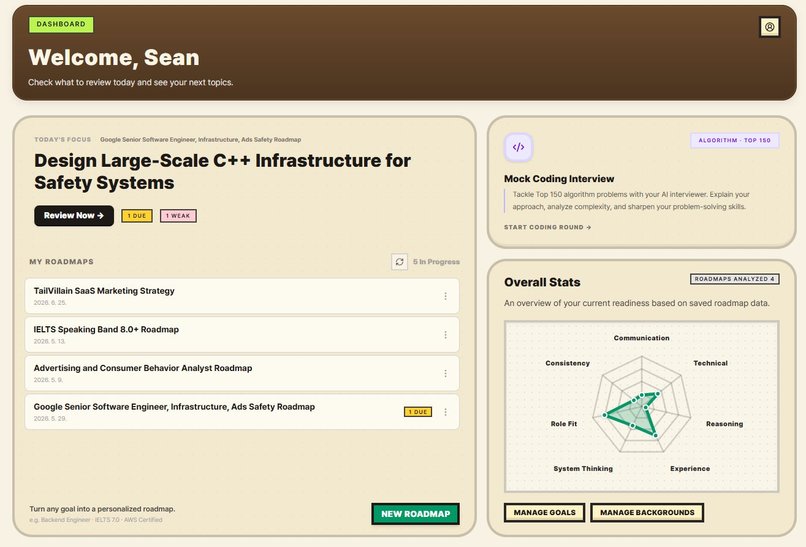
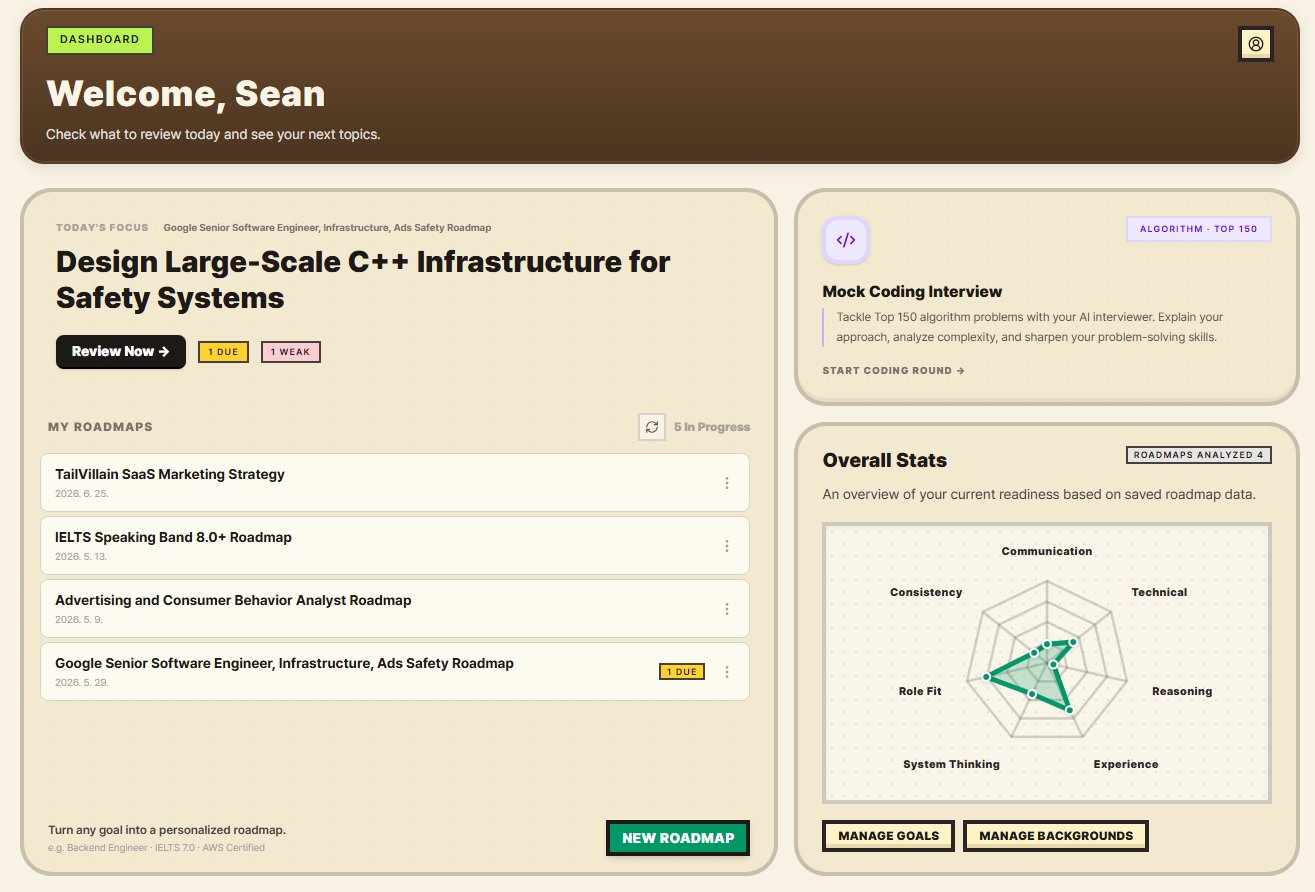
Goal Dashboard: Overall readiness score, radar chart analytics, and module status tracking.
-
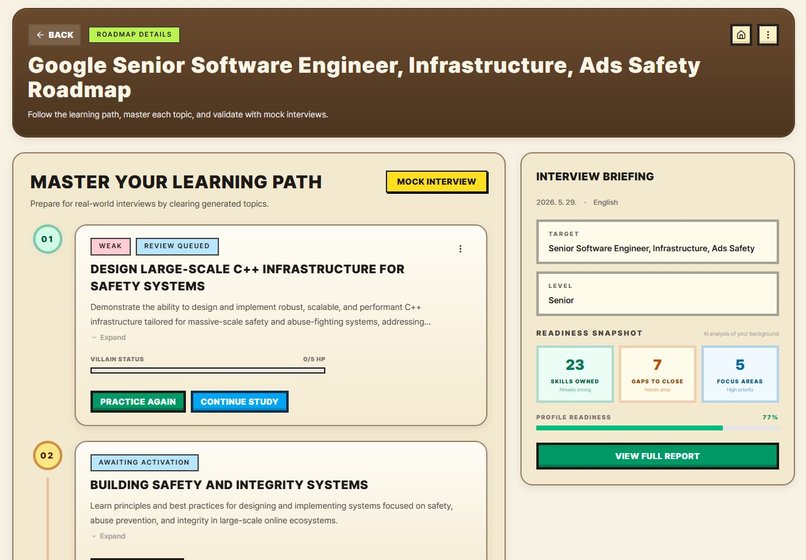
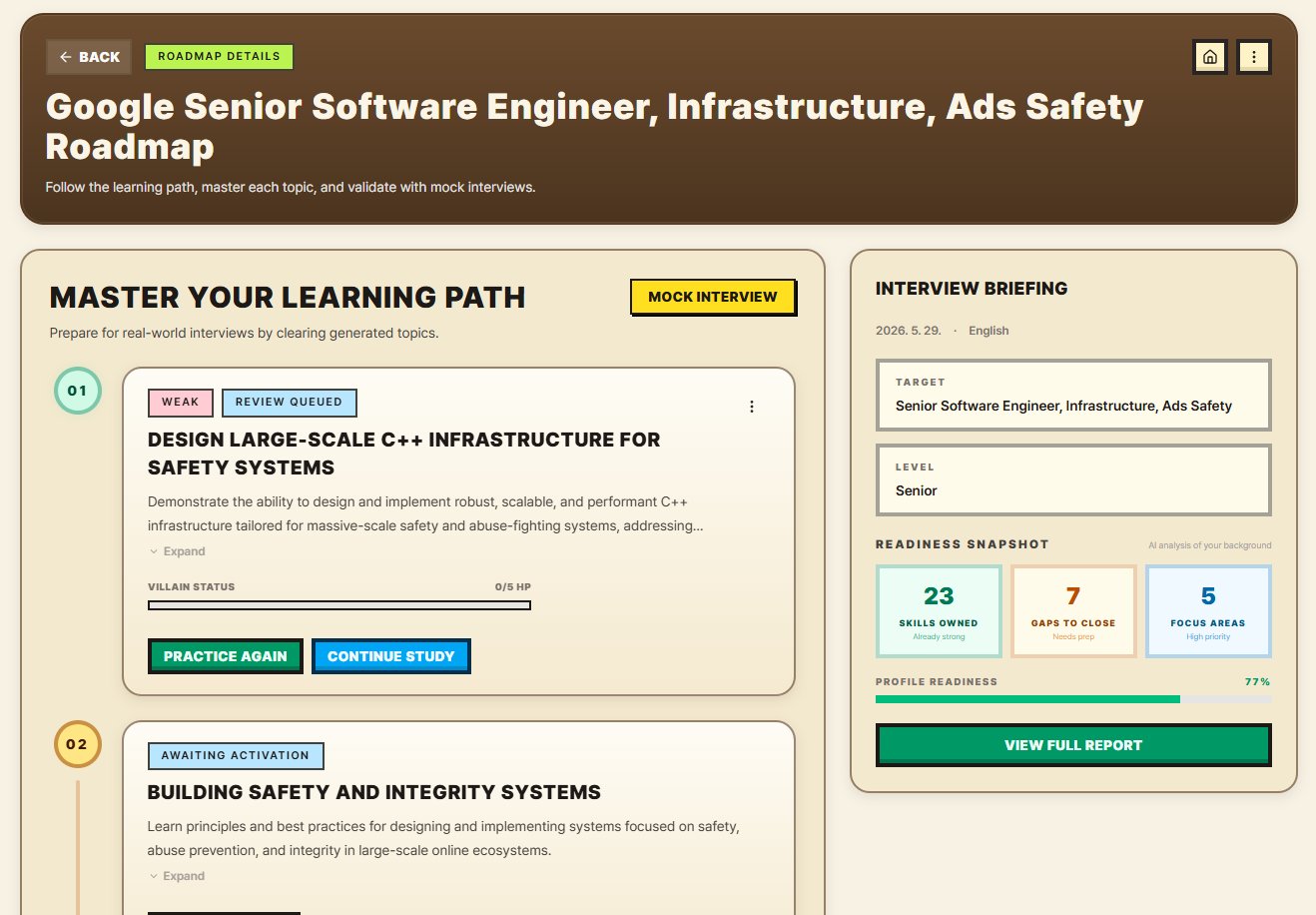
Dynamic Roadmap: A personalized learning path generated for the specific goal with progress tracking.
-
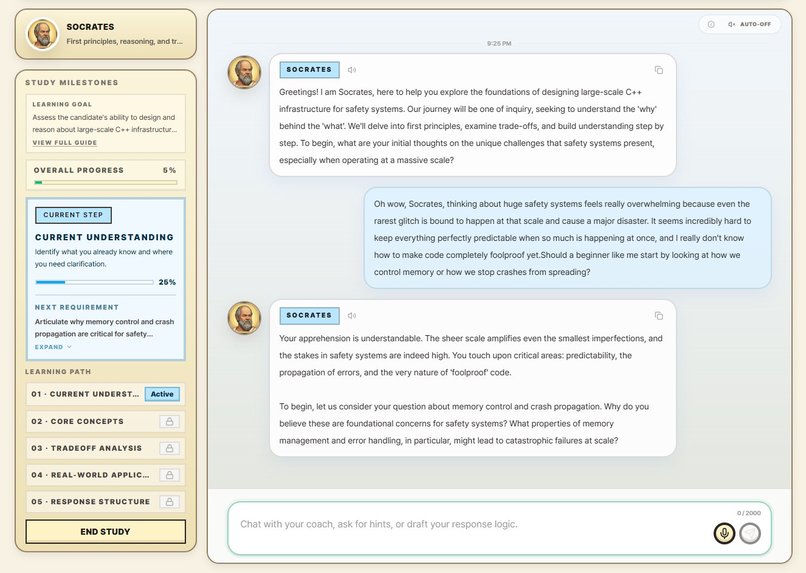
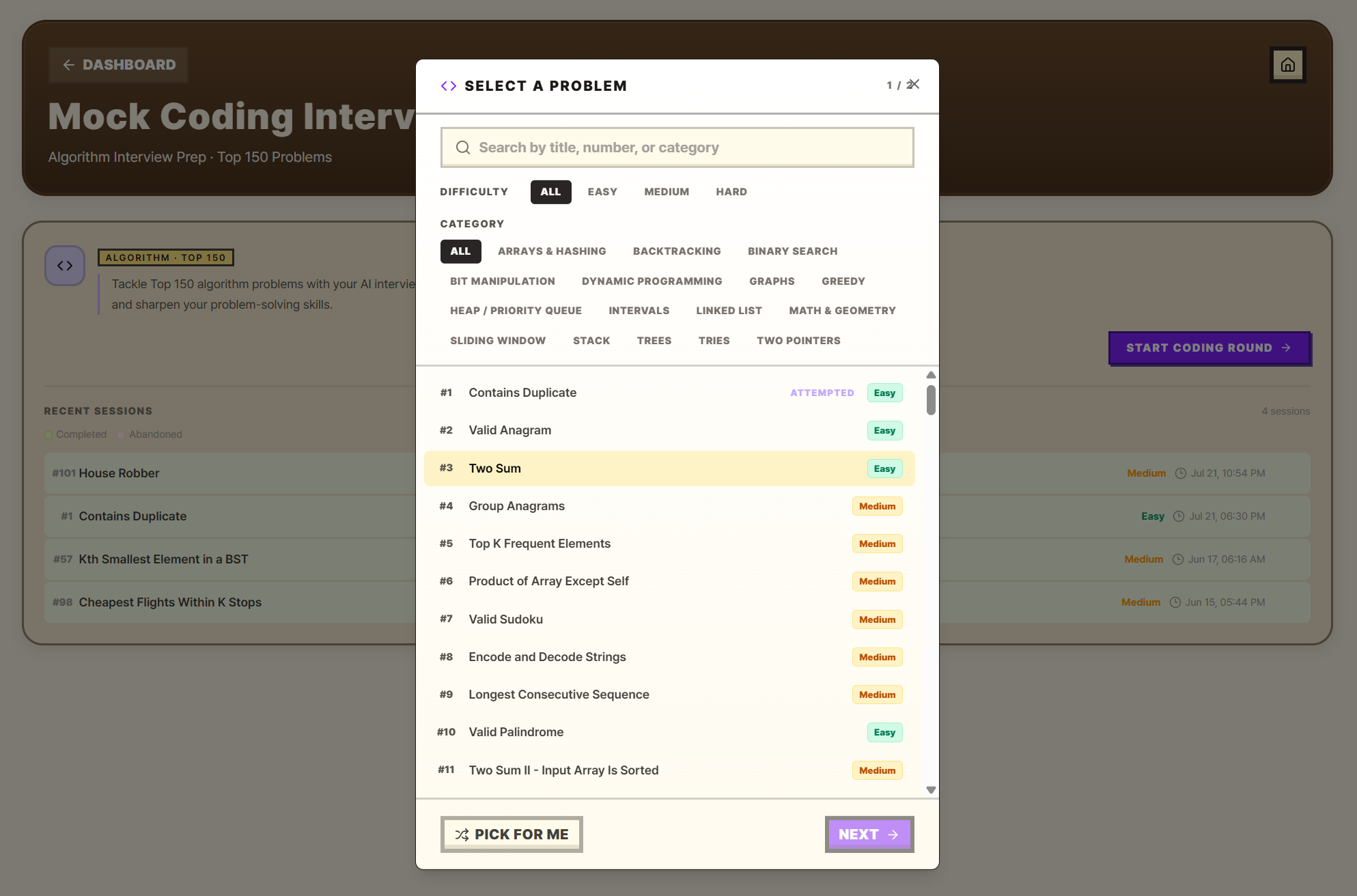
Interactive Practice: Interactive problem-solving and structured study modules within the roadmap.
-
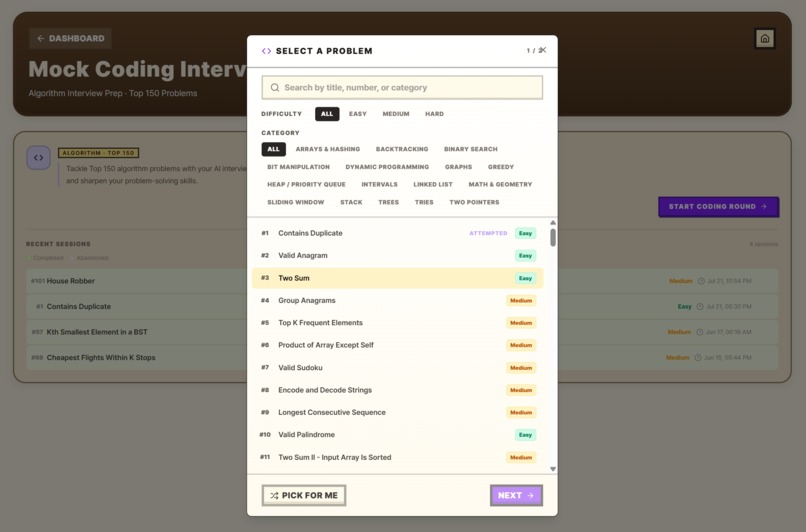
Mock Technical Interview: Hands-on practice with coding challenges and real-time evaluation.
-
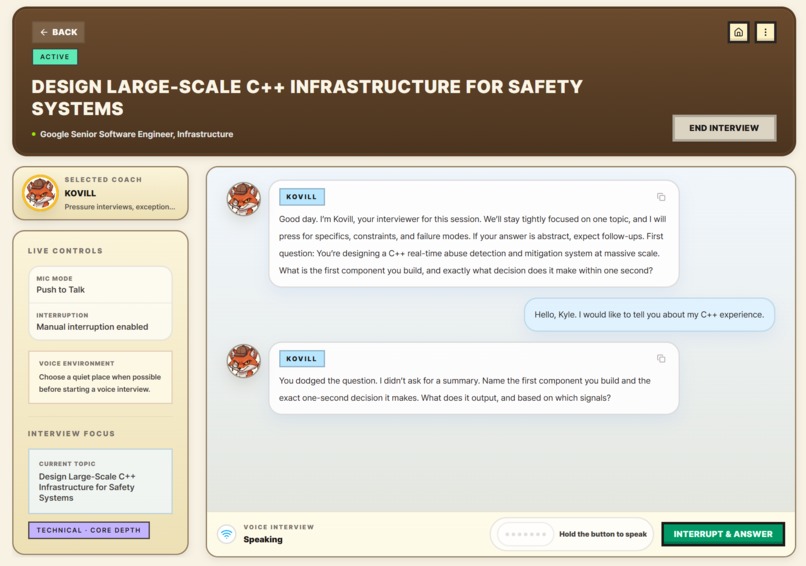
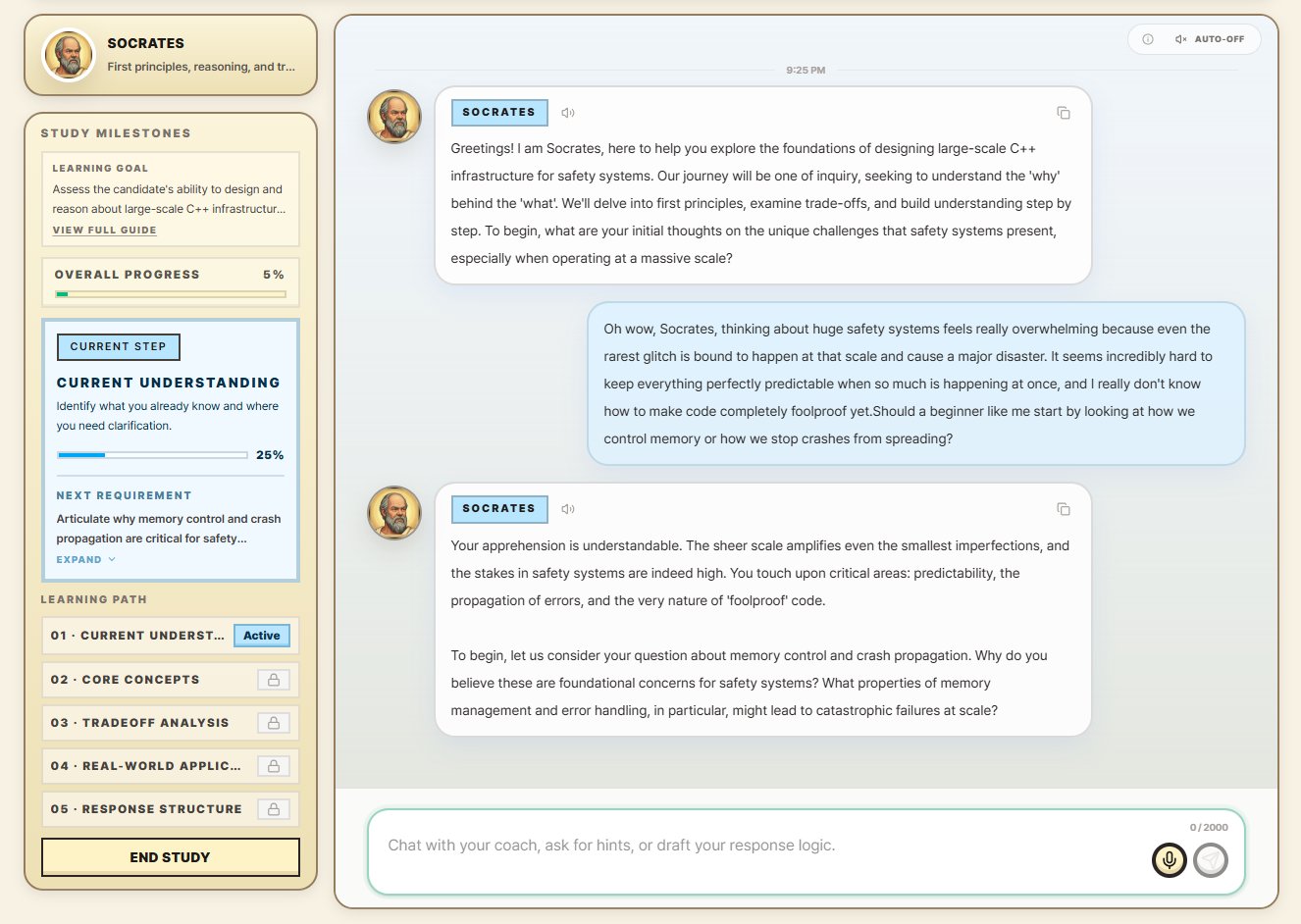
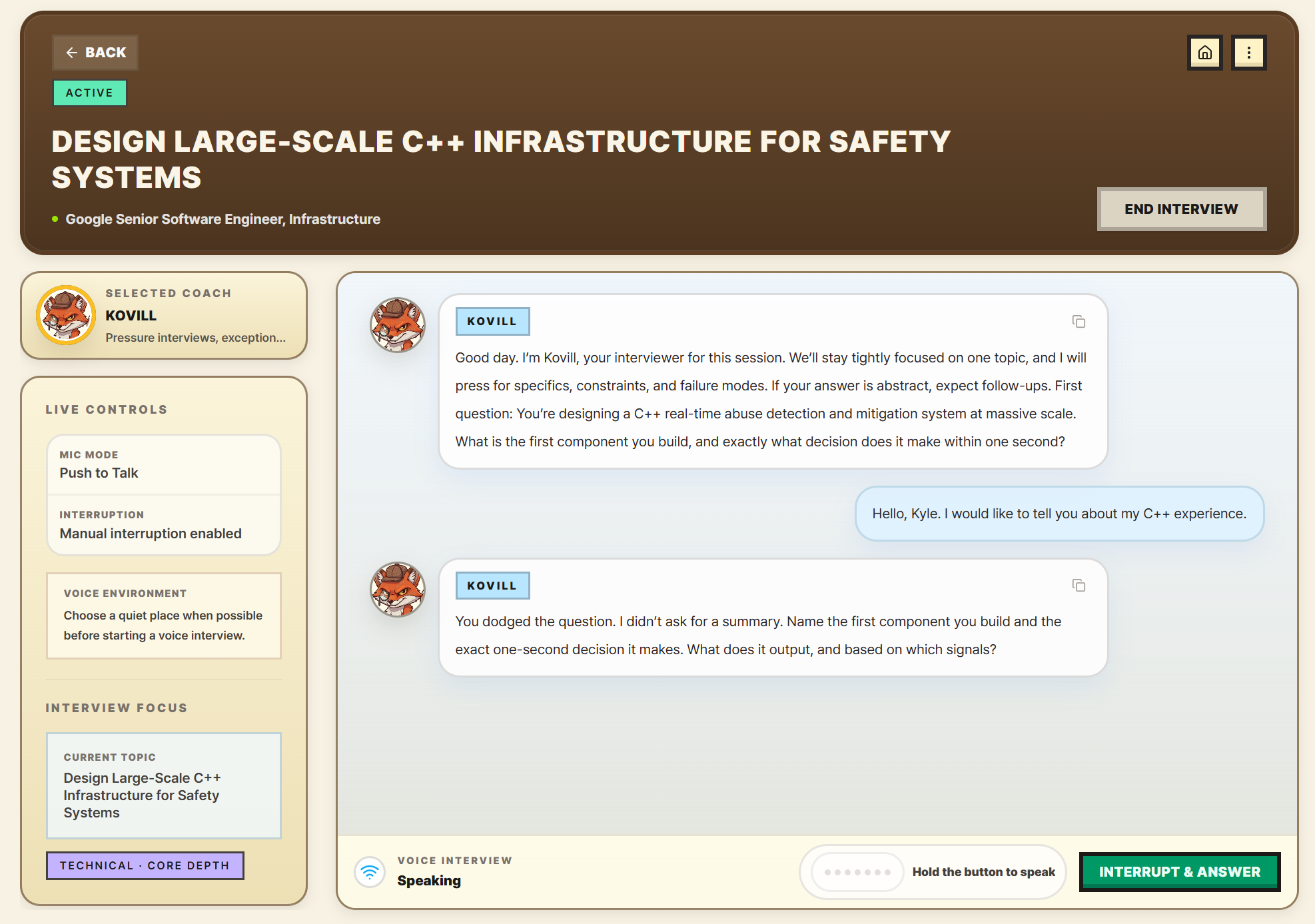
Live AI Voice Coaching: Real-time audio sessions with specialized AI personas for interview practice.
-
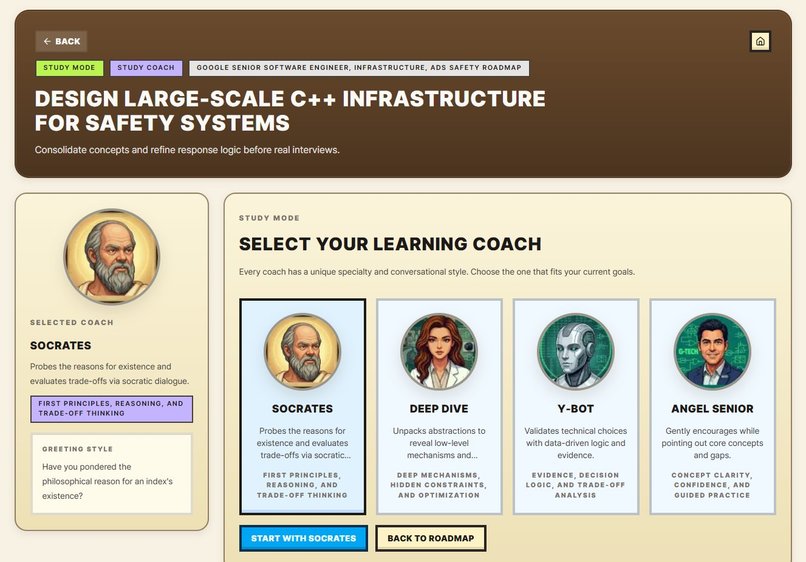
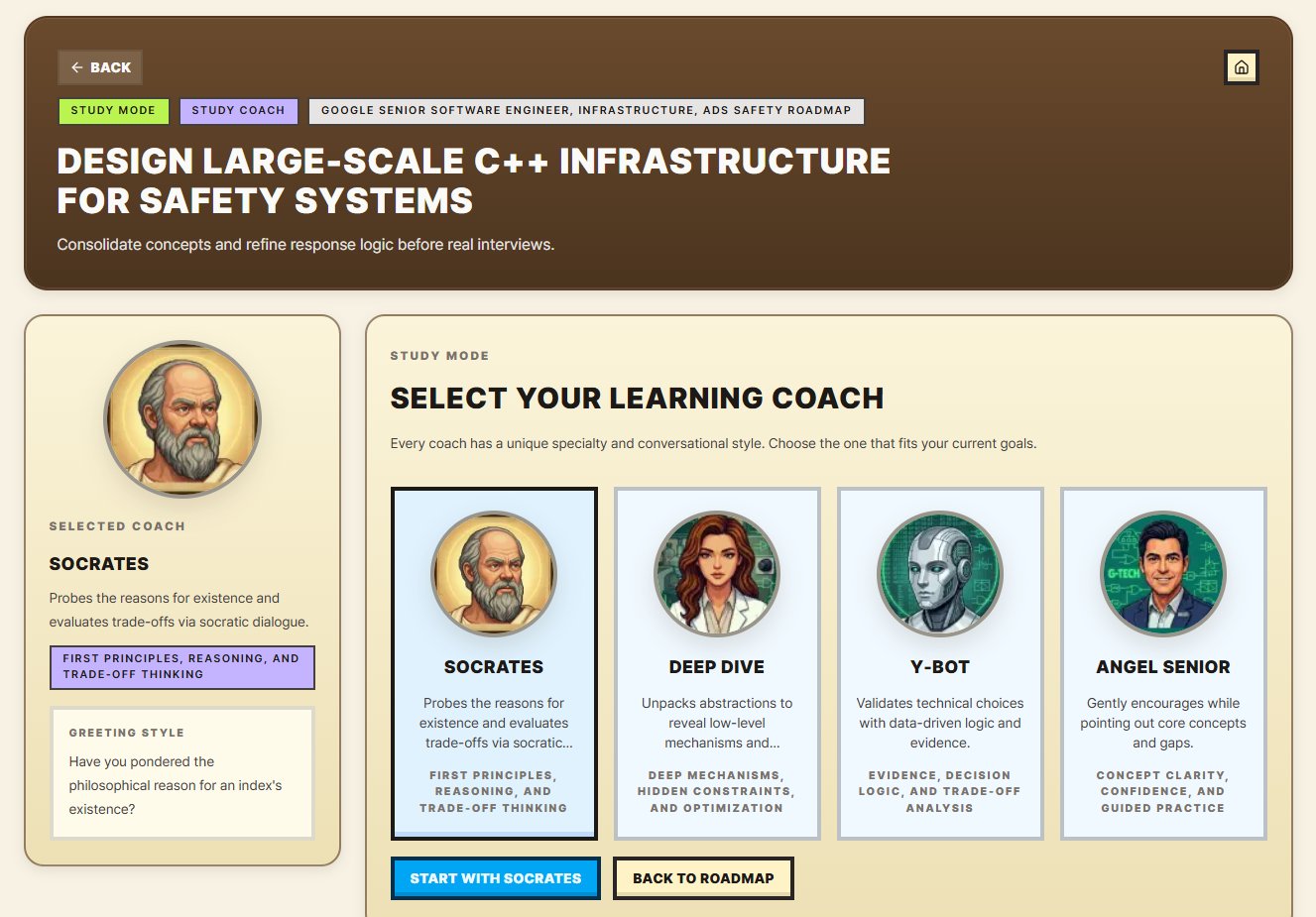
AI Persona Selection: Choose specialized AI coaches tailored to specific goals and interview styles.
## Inspiration
Preparing for an interview or exam is rarely a single task. People read job descriptions, review their resumes, study unfamiliar topics, practice answers, and try to remember everything later. These activities are usually scattered across different tools, while most AI assistants respond without understanding the learner’s full journey.
We wanted to build something more continuous: a personalized preparation system that understands what a user wants to achieve, considers what they already know, identifies what they should study next, and helps them retain it over time.
That idea became Tail Villain—an RPG-inspired AI learning and interview preparation platform where every roadmap becomes a journey and every weak topic becomes a challenge to overcome.
## What it does
Tail Villain turns a user’s goal and background into a personalized learning roadmap.
A user can provide a job description, certification target, exam goal, or another learning objective. Tail Villain analyzes that goal together with the user’s experience and generates a roadmap of topics to study and practice.
Users can then:
- Study each topic with AI coaches that have different teaching styles.
- Practice through text, AI voice, or real-time voice interviews.
- Receive questions and feedback grounded in their own goals and background.
- Complete mock interviews with different AI interviewer personas.
- Review detailed reports showing strengths, weaknesses, and areas to improve.
- Revisit topics through active-recall sessions before the knowledge fades.
- Track upcoming reviews and topics that are becoming stronger memories.
Tail Villain is designed to connect the complete preparation cycle:
Understand → Learn → Practice → Evaluate → Review → Improve
## How we built it
We built Tail Villain as a web platform that connects several AI-assisted learning experiences into one continuous journey.
OpenAI models help generate personalized roadmaps, power AI study coaches, conduct mock interviews, produce structured evaluations, and support real-time voice conversations.
Retrieval-augmented generation allows the AI to reference relevant details from the learner’s goals and background. This makes conversations more personal and useful than generic interview questions based only on the current topic.
Tail Villain also records learning progress and schedules future active-recall reviews. This connects AI coaching with spaced repetition so that the product does not stop after a single study session.
The application is built with Next.js, NestJS, TypeScript, PostgreSQL, and pgvector. We use streaming to display responses progressively and provide a more responsive conversational experience.
Codex was part of the development workflow across the project. We used it to explore the existing codebase, design architecture, implement features, investigate production problems, write tests, review changes, and verify deployments.
## Challenges we ran into
One of our biggest challenges was making personalization reliable.
Retrieval-augmented generation sounds straightforward, but real conversations contain greetings, nicknames, topic changes, and abstract questions such as “What do you know about me?” We found that these details could affect semantic search and sometimes hide information that was clearly relevant to a human.
We tested different query strategies, similarity thresholds, document sizes, and fallback context. This taught us that effective RAG is not simply embedding every message and selecting the highest-scoring result.
Real-time voice interaction was another major challenge. Automatic voice detection could interpret background noise, keyboard sounds, or the AI’s own audio as user speech. It could also interrupt important opening instructions.
We improved the experience by separating speaking and interruption controls, protecting the opening message, and giving users clearer control over when their voice is sent.
We also had to keep navigation, streaming, session completion, reports, and voice behavior consistent across study sessions, mock interviews, coding rounds, and quick reviews.
## Accomplishments that we're proud of
We are proud that Tail Villain is more than a chatbot or question generator. It connects the learner’s entire preparation journey.
The system can:
- Understand a learner’s goal and existing experience.
- Generate a personalized roadmap.
- Teach individual topics through specialized AI personas.
- Conduct realistic text and voice interviews.
- Retrieve relevant personal context when needed.
- Evaluate interview quality using structured rubrics.
- Schedule future reviews based on recall performance.
- Show which topics are due, weak, or becoming stronger memories.
We are especially proud of the active-recall system. Instead of allowing completed topics to disappear, Tail Villain brings them back at meaningful intervals and turns review into a natural part of the product.
We are also proud of the evaluation center, which helps us examine AI interview quality across areas such as professionalism, contextual follow-up, specificity, evidence grounding, coherence, and session focus.
## What we learned
We learned that personalization requires more than placing a resume inside a prompt. Good personalization depends on retrieving the right information at the right moment without overwhelming the model with unnecessary context.
We learned that perceived responsiveness matters. Streaming an answer progressively makes an AI conversation feel significantly faster, even when the total generation time remains similar.
We also learned that more automation does not always create a better voice experience. Clear user control can be more reliable and comfortable than always-on listening.
Most importantly, we learned that a useful AI learning product should not optimize only for the next response. It should understand where the learner is now, help them practice, observe what happened, and decide what they should revisit next.
## What's next for Tail Villain
Next, we plan to improve Tail Villain in several areas:
- Add more active-recall formats beyond conversational review.
- Improve retrieval quality with adaptive thresholds and reranking.
- Expand multilingual real-time voice coaching.
- Add notifications for upcoming reviews.
- Visualize how knowledge and memory strength change over time.
- Compare performance across multiple interview sessions.
- Build benchmark datasets for evaluating AI coaching quality.
- Expand support for additional model and voice providers.
- Make roadmap generation useful for more professions, exams, and learning goals.
Our long-term goal is to make Tail Villain a personalized AI preparation companion that continuously decides what each learner should study, practice, prove, and revisit next.
Built With
- codex
- docker
- gpt
- nestjs
- next.js
- node.js
- pgvector
- postgresql
- prisma
- react
- typescript
- websocket


Log in or sign up for Devpost to join the conversation.