-
-
Home
-
Dashboard
Inspiration
As a founder I attend countless pitch nights, demo days, and coffee meet-ups. By the end of each week my pockets are stuffed with business cards and my LinkedIn inbox is full of “nice to meet you” messages, but when a real problem surfaces I cannot remember which of those contacts actually fits the challenge. I wanted a tool that would treat every introduction as data, tie it to my business goals, and surface the one expert or company that can move the needle right now. Tagramp began as that personal itch: turning random networking into a goal-centric, ROI-driven engine for growth and collaboration.
What it does
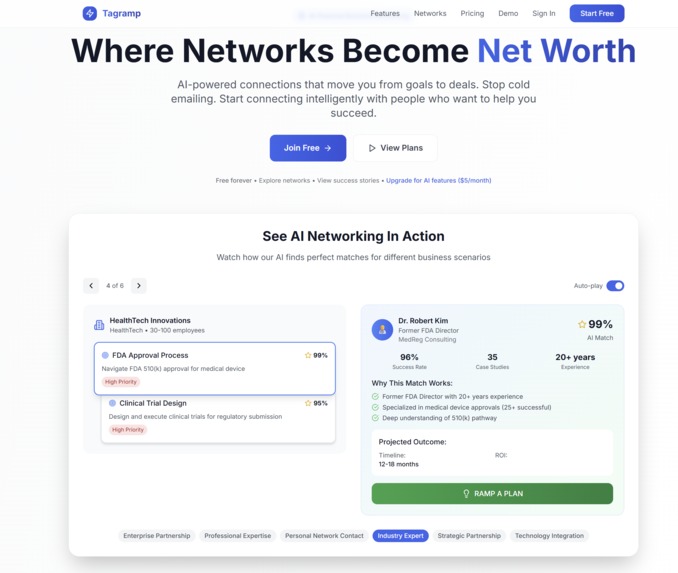
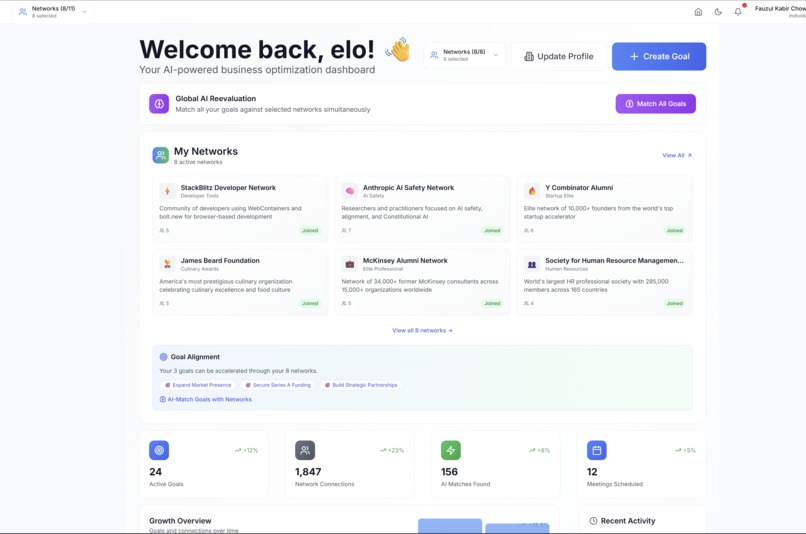
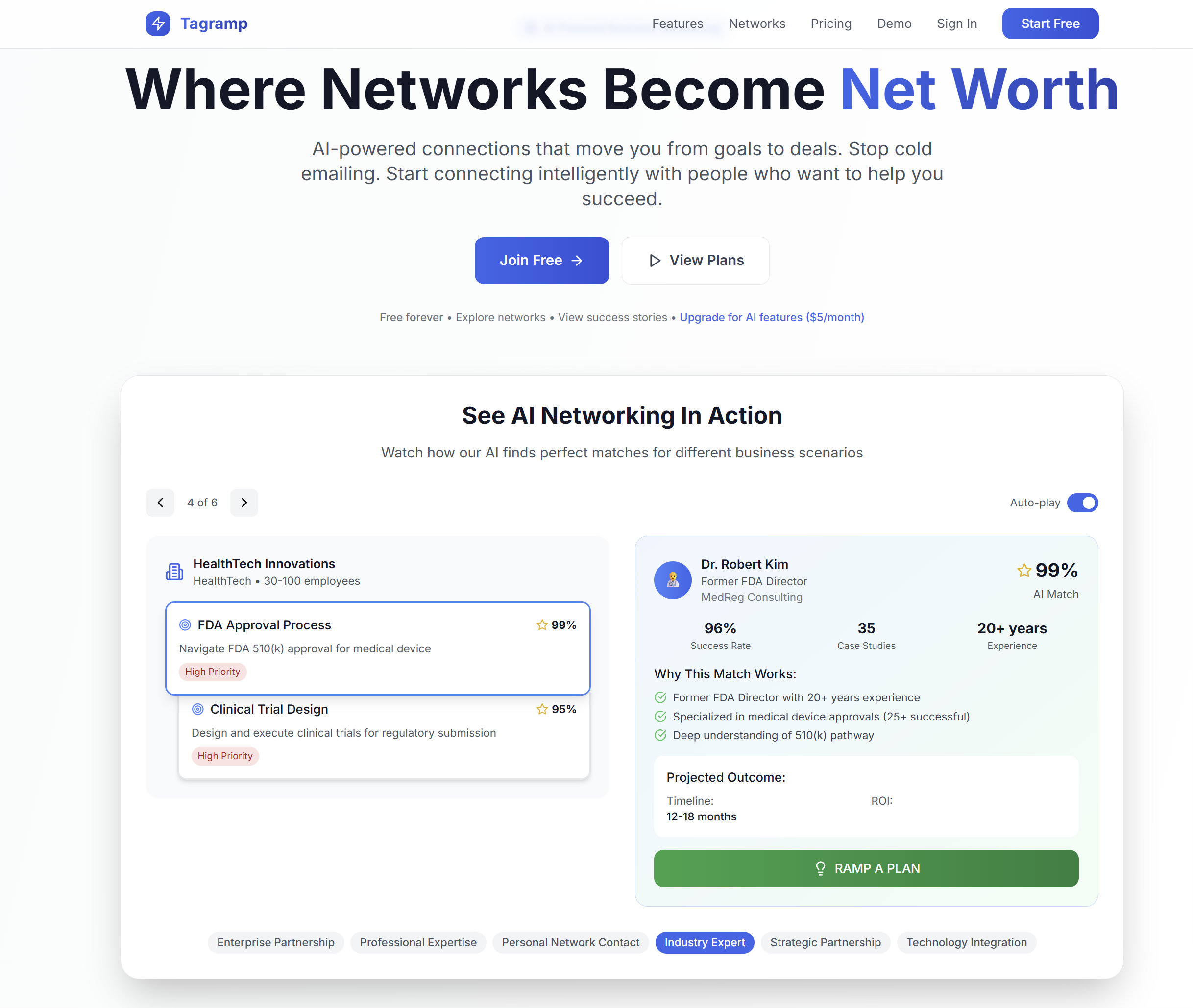
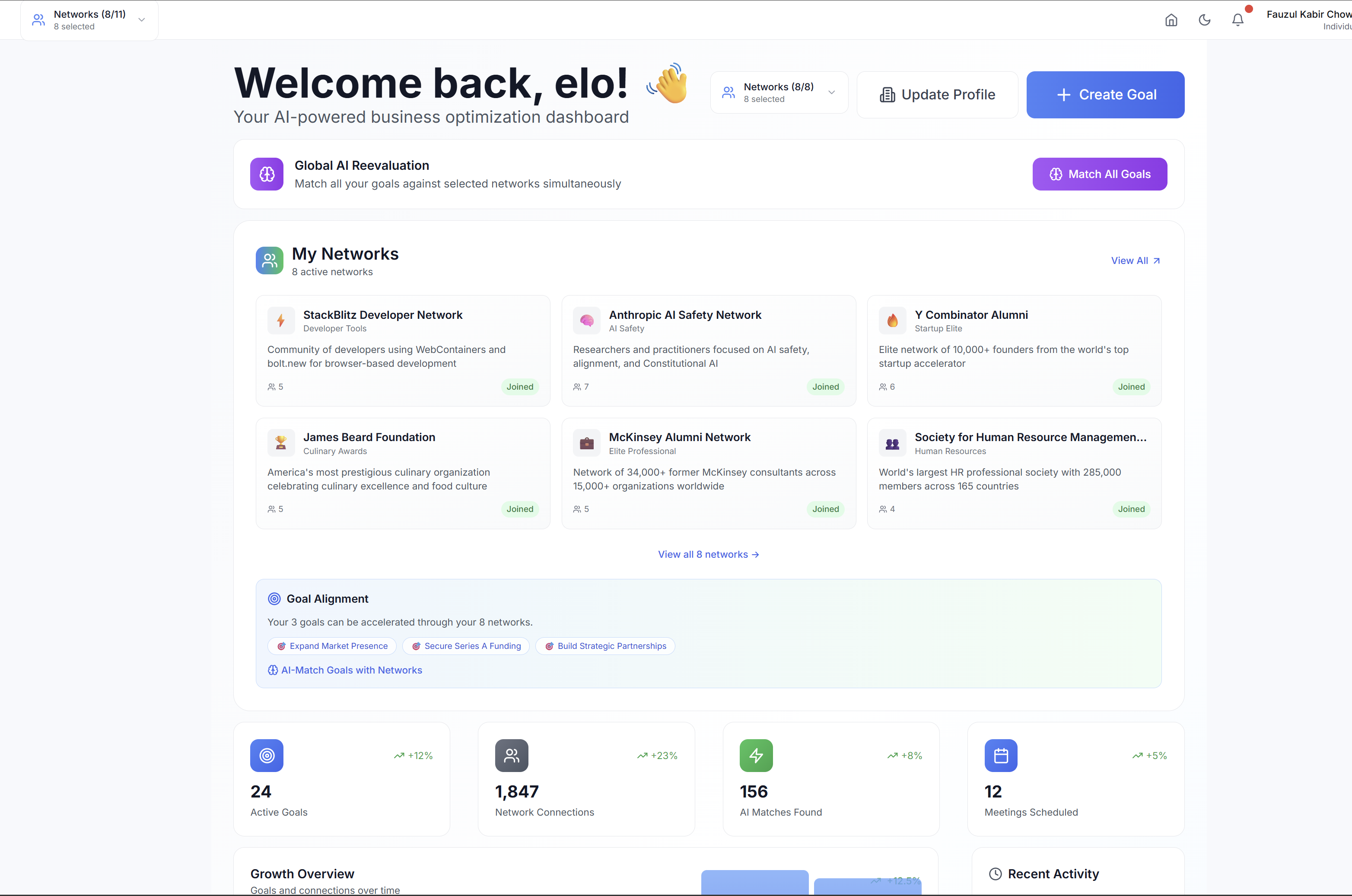
Tagramp is an AI-first SaaS platform that converts static contact lists into living, goal-oriented opportunities.
AI profile generation I paste a website URL, PDF deck, or plain text. Natural-language models summarise the material and create a concise company or personal profile plus a short list of top-level goals.
Goal-centric matching Those goals feed an intelligent matcher that scans verified professionals and organisations—either public communities or networks I import. The algorithm scores each potential connection on relevance, complementary expertise, and past success.
Instant collaboration framework When a match is found the system produces a “Ramp-a-Plan,” an editable roadmap and a ready-to-send introduction email. Instead of starting from “let’s grab coffee,” both sides see clear next steps and mutual value from day one.
Monetisable networks As a community owner I can charge subscription fees so only vetted members appear in match results, which preserves quality and creates a revenue stream.
Built-in relationship tracking A light CRM layer records email threads, Slack or WhatsApp chats, calendar events, and call notes so progress is measurable from first hello to closed deal.
Free users can browse and search manually, but AI-powered actions unlock with a five-dollar personal plan or a twenty-dollar organisation plan.
How I built it
The project was created in a five-day hackathon sprint.
- Bolt.new generated roughly eighty percent of the responsive interface and component code, letting me focus on logic rather than layout.
- Supabase supplies authentication, Postgres storage, and real-time updates for goals and matches.
- Gemini handles language understanding for profile summarisation, goal extraction, and match reasoning.
- Cursor and Perplexity accelerated code tweaks and helped seed realistic professional profiles for demo data.
The entire flow—from first prompt to working MVP—fit within a single free Bolt weekend.
Challenges I ran into
- Context creep in Bolt: long chat histories caused the tool to overwrite whole files instead of applying precise edits. I ended up cloning the project fifteen times to keep sessions manageable.
- Token ceilings: Gemini limits forced careful prompt budgeting just as the Supabase integration came online.
- Local payment barriers: many processors do not serve Bangladeshi founders, complicating the roadmap for in-app billing.
- Solo-founder bandwidth: balancing hackathon hours with the day-to-day demands of my agency required strict prioritisation.
Accomplishments that I'm proud of
Tagramp now signs users up, generates AI profiles and goals, returns meaningful matches, drafts Ramp-a-Plans, and records interactions in the CRM, all behind subscription gating that actually works. Achieving that breadth of functionality in less than a week, using mostly prompt engineering and low-code tools, proves that modern AI tooling can radically compress build cycles.
What I learned
- Precise, focused prompts are more reliable than long conversational instructions when driving code-generation tools.
- Duplicating a project and pruning history is an effective safety valve when an AI IDE drifts off course.
- Goal-based networking resonates: early testers immediately saw how matching around explicit objectives beats collecting generic contacts.
- A single builder can ship an end-to-end SaaS by leaning on AI accelerators and keeping scope disciplined.
What's next for Tagramp
My immediate roadmap is to migrate language workloads from Bolt development servers to scalable cloud functions, integrate recurring payments through RevenueCat or any provider that will onboard a Bangladeshi entity, and launch a closed beta with a handful of founder communities. Medium term I plan to refine the match engine into a real-time co-pilot that suggests conversation starters and predicts partnership success. Long term the goal is to position Tagramp as the default trust layer for B2B collaboration, where every professional introduction arrives pre-qualified, goal-aligned, and ready to create measurable business value.
Built With
- bolt
- css
- react
- supabase
- typescript
- vite

Log in or sign up for Devpost to join the conversation.