

Inspiration
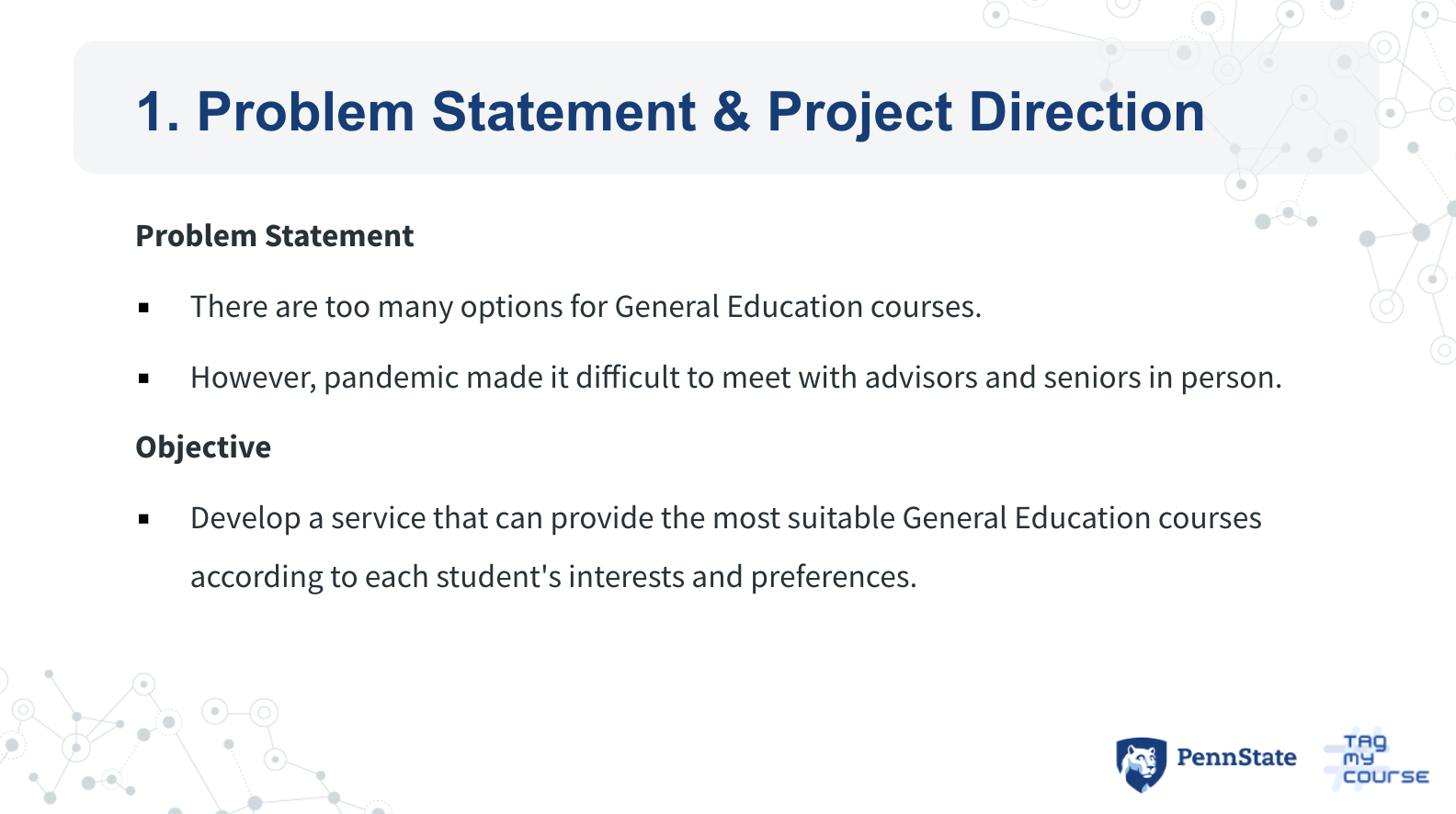
The General Education course is a compulsory course that all Penn State students must complete in order to graduate. Also, it is a great opportunity for students to explore, discover things they did not know before, and learn to do things they have not done before. However, choosing the proper general education course which suits each individual's interests and preferences can be stressful. Especially due to the difficulty of meeting in person with academic advisors and interacting with the seniors on-campus during pandemics, we wanted to develop a service that can help students find the best general education to facilitate their college life.
What it does
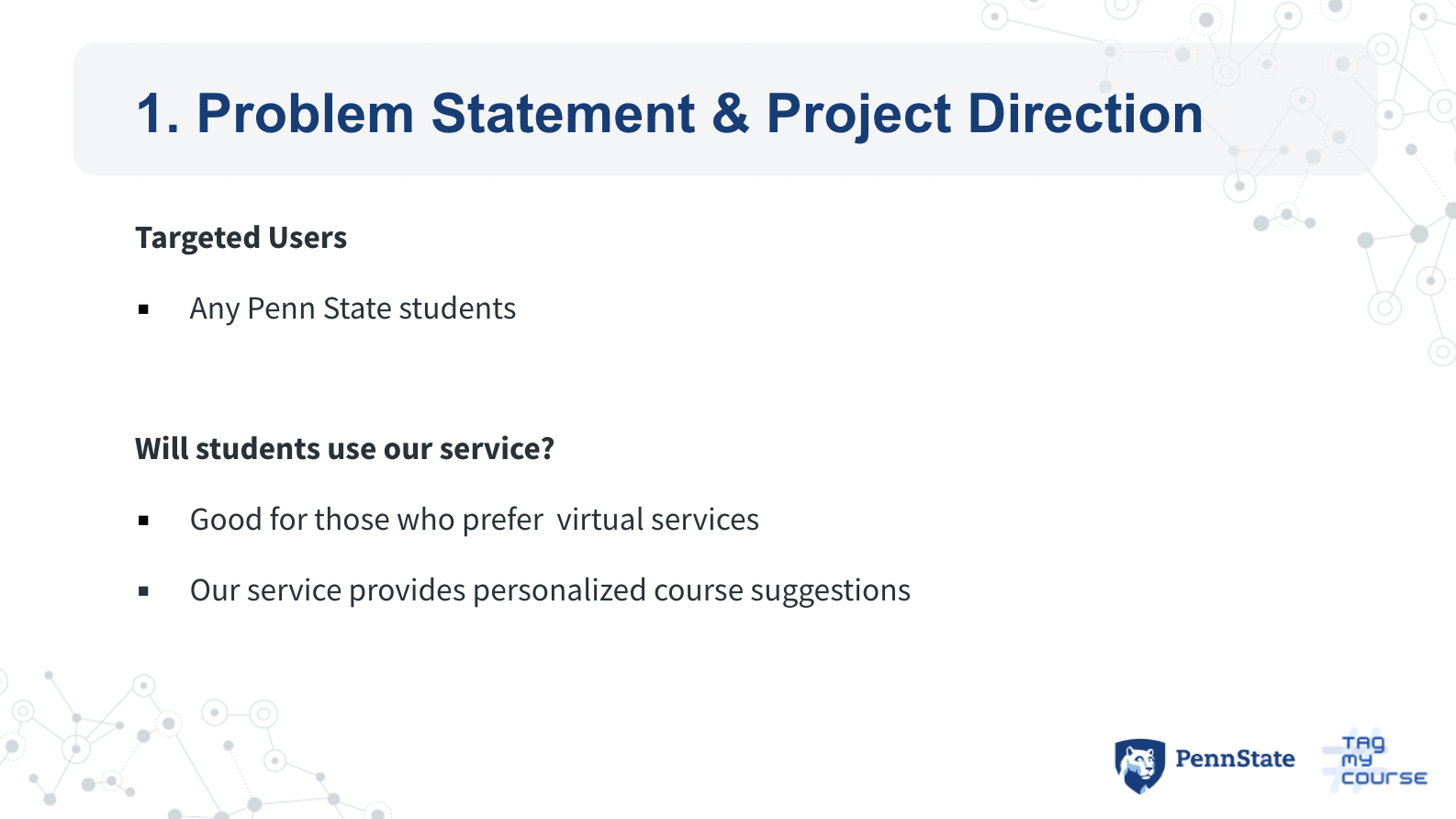
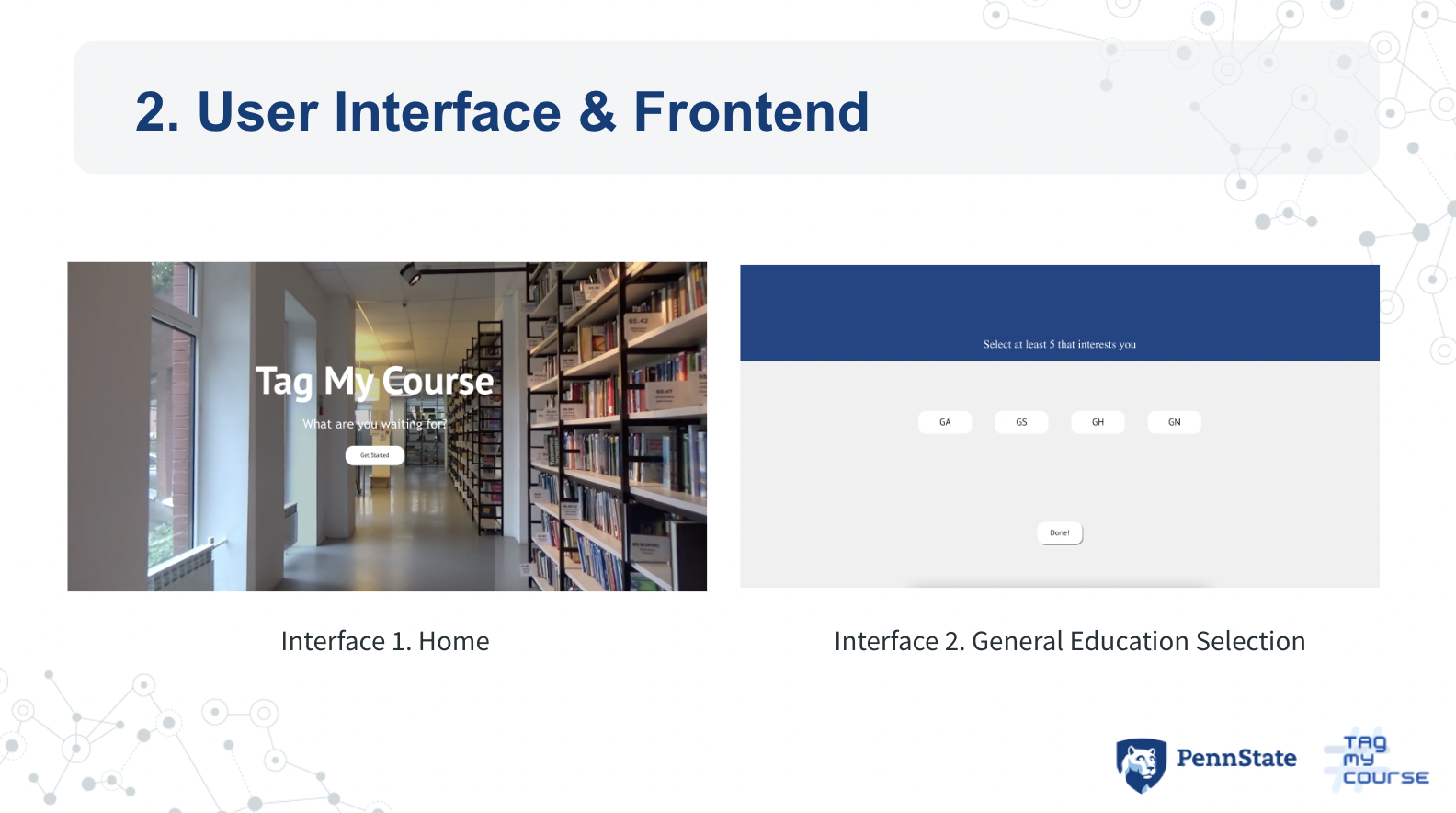
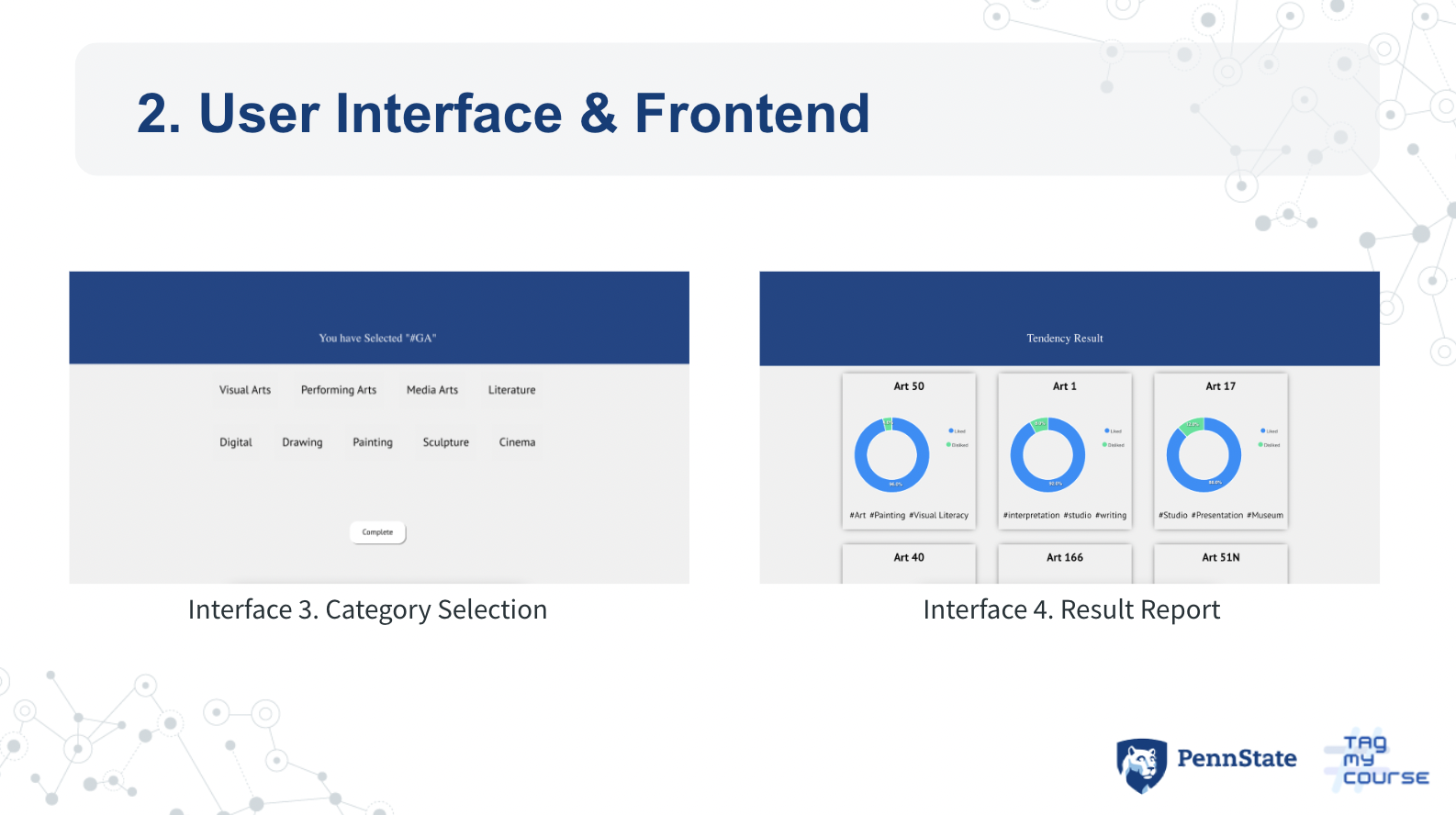
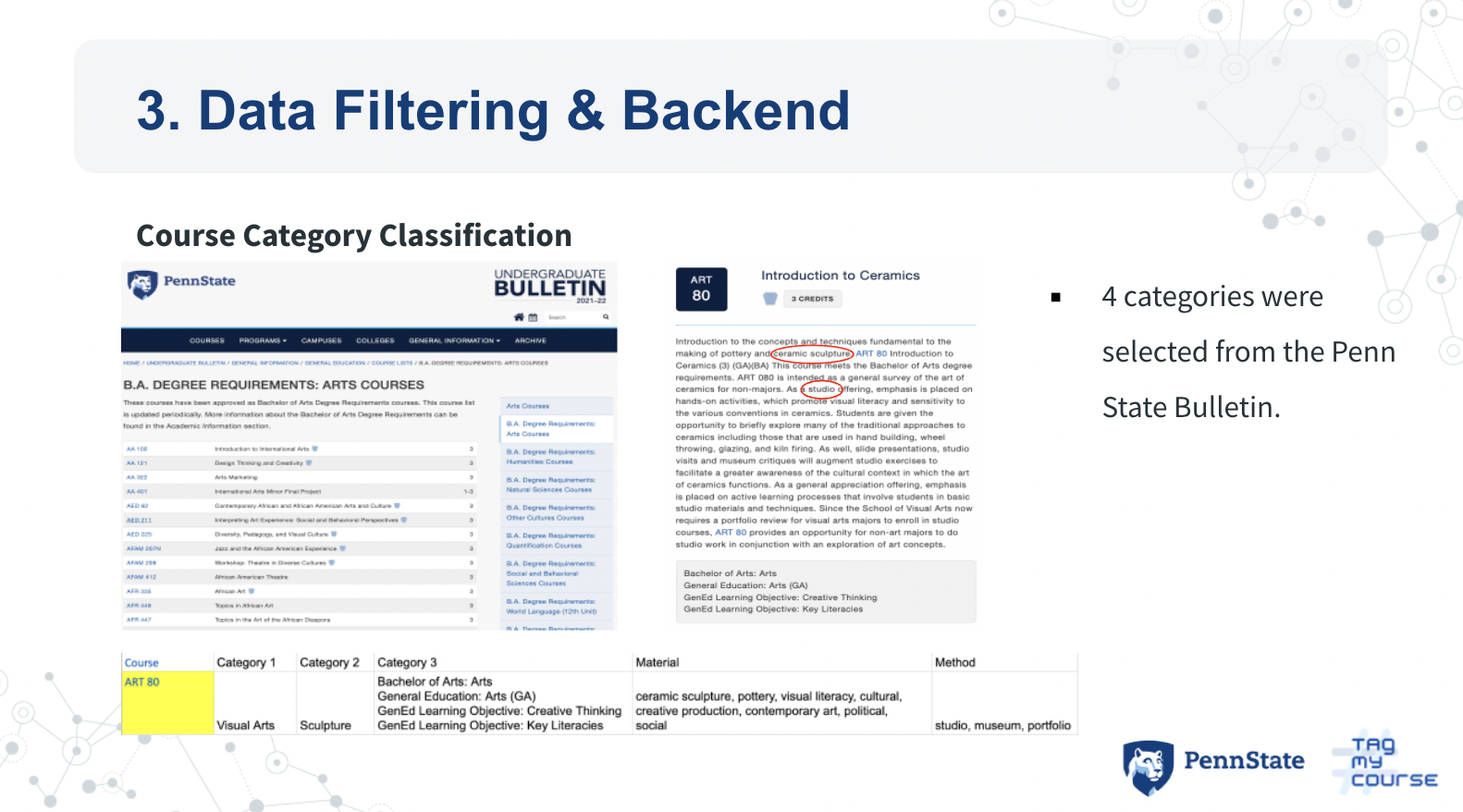
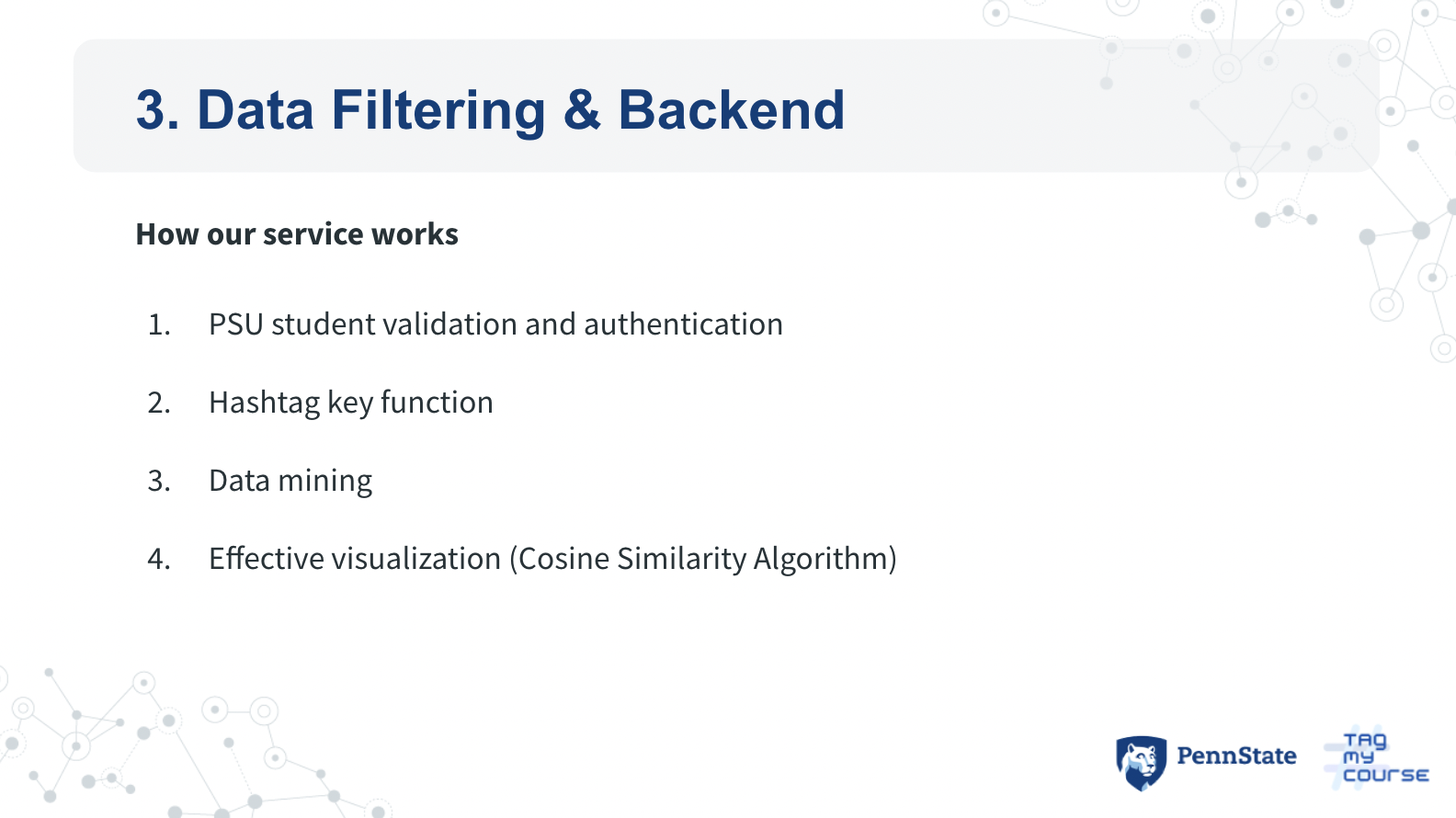
Our web-based services allow Penn State students to find the best General Education courses based on their interests and preferences. First, the service will offer several course categories such as different material contents and learning styles for you to choose from. As the students choose the category options, the algorithm will automatically recommend other related choices depending on their previous selections. This will help to narrow down the process of getting the best matching results. Then, the algorithm will analyze and compare the likelihood of the other students who chose similar category hashtags as you. The algorithm of Sklearn Cosine Similarity was utilized. As an outcome, the General Education courses with the similarity percentage along with their top material and style hashtags will be provided. This result will give you an insight into whether you would like the courses. In addition, the platform allows you to filter to see which courses have the most and least matching percentage with you and other students with similar interests and preferences.
How we built it
Frontend (ReactJS)
Backend (NodeJS)
UI/UX
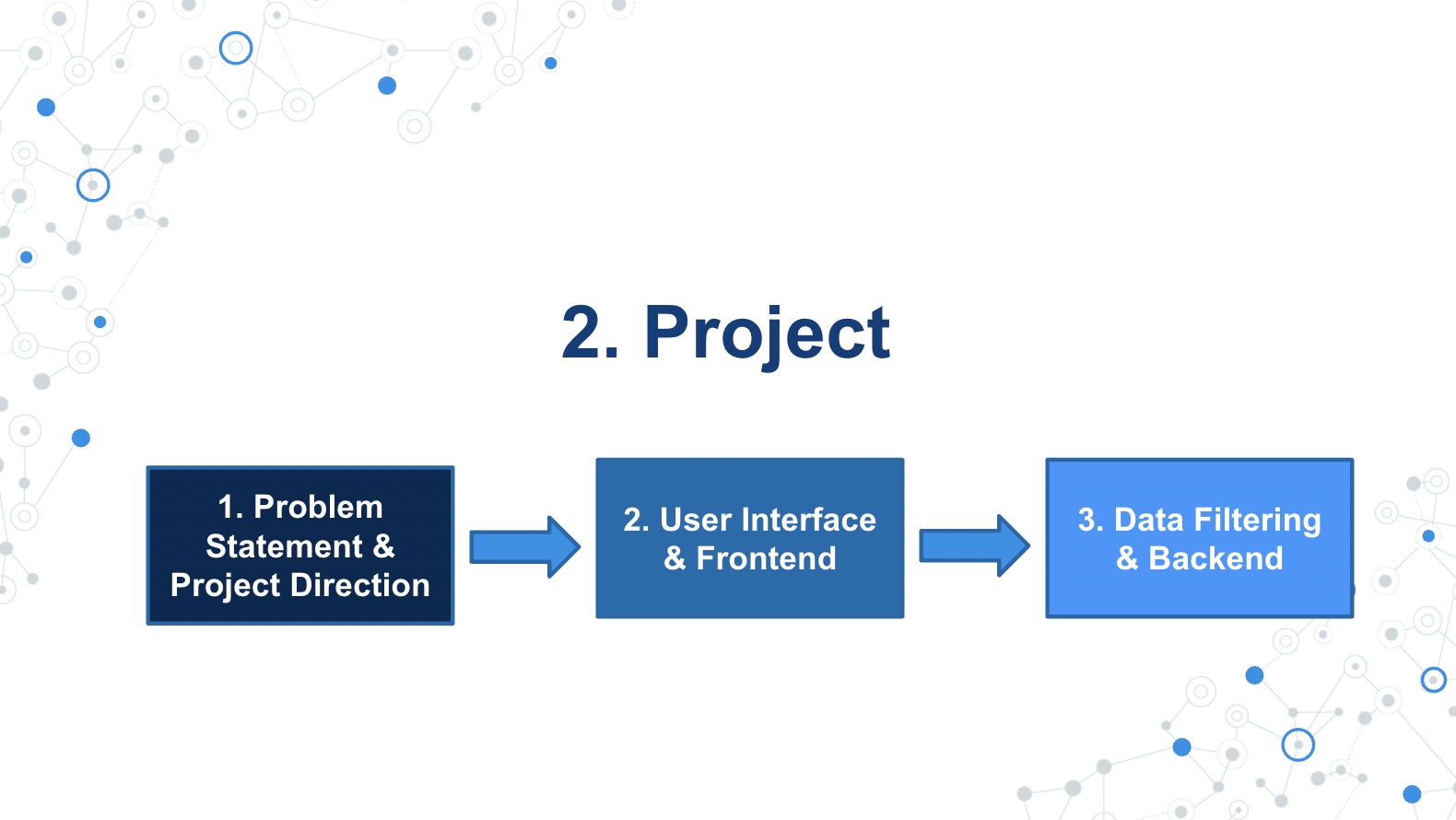
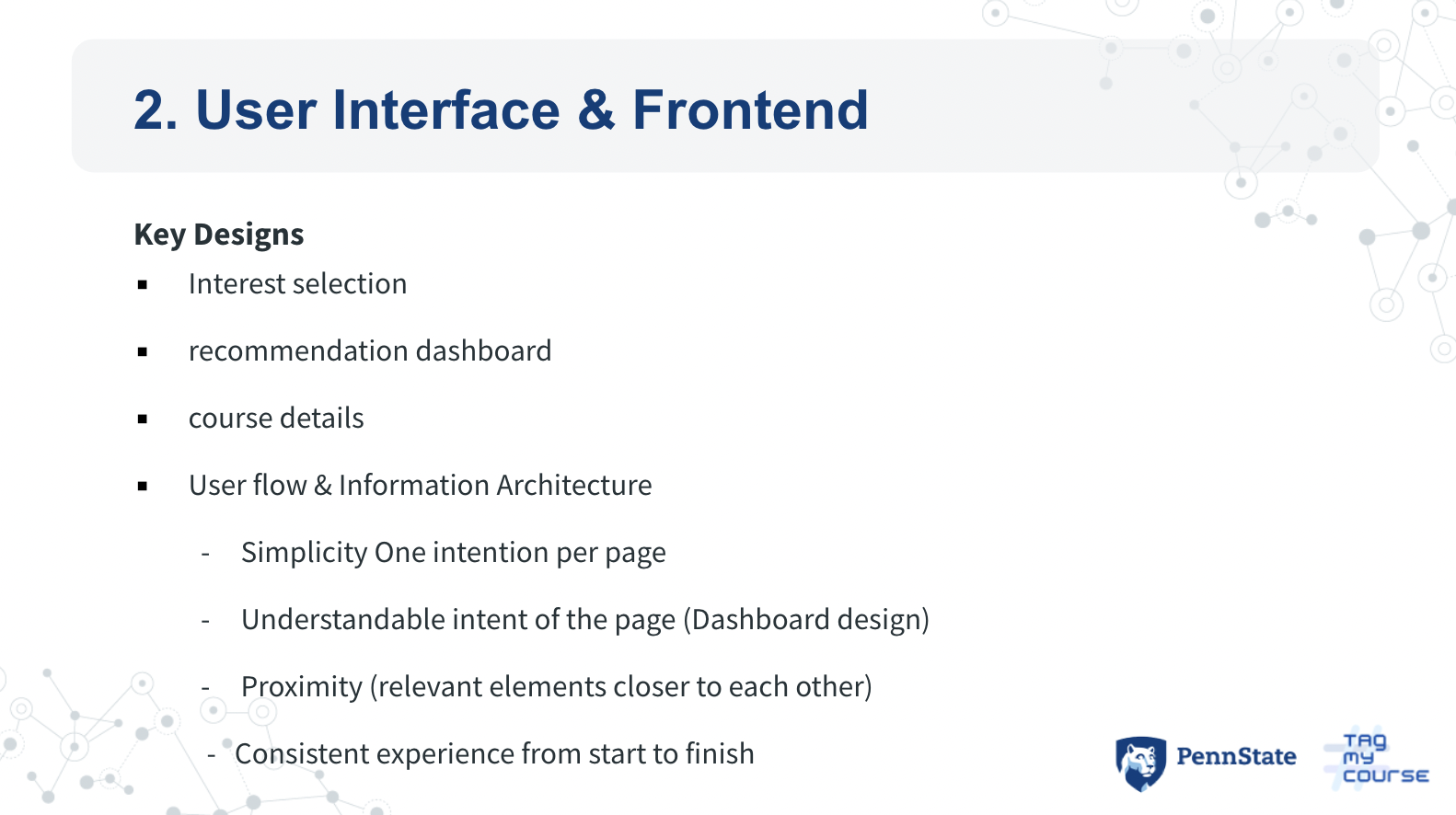
We aimed to determine the way to meet the needs of students at Penn state by coming up with a use case for seeking general education courses based on their interests and preferences. We considered the key functions of the application should be interest selection, recommendation dashboard, and course details. As a user inputs their choice of category options, the application should navigate them to the visual which the user can perceive and help them select to view the course details. After determining the purposes of each function, we designed the user flow and information architecture. Since the simplicity of the application can lead the user to quickly understand the intention and even increases visibility, we designed one goal per page to be defined. Icons and relevant elements were placed closer to each other for the user to identify and navigate more easily, yet appear unique from the entire page. We also visualized the data on the result report page for users to feel more comfortable determining which course they should choose. To provide a better experience from start to finish, we directed users to a view after view with relevant and limited functions to end up at the end goal of the platform: leading users to the course details page. Moreover, because the thought process of the user is affected mainly through the text and the visuals, we focused on presenting functions accordingly with friendly content that is self-explanatory, rather than creating a highly-structured layout.
Challenges we ran into
- No previous database to train the model
- Allocation of functions on each page
Accomplishments that we're proud of
Accomplished the goal to navigate users to understandable intent by keeping simplicity and proximity.
What we learned
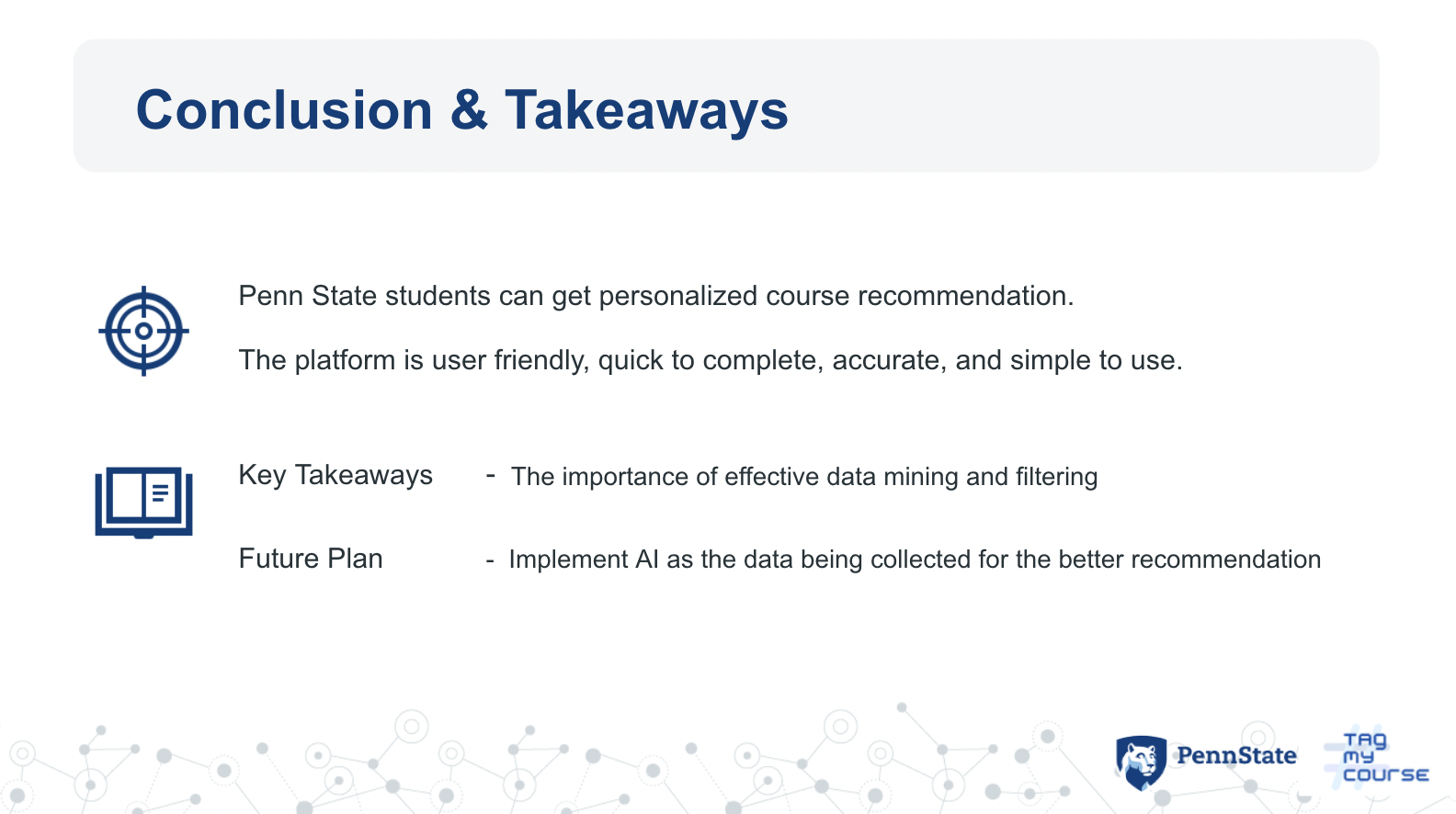
We learned the importance of effective data mining and filtering. It is critical since it is directly related to the accuracy of the recommendation result.
What's next for Untitled
The more users we have, the more data is being collected. Therefore, we’ll be having a bigger database which means our service can use AI to provide better results.


Log in or sign up for Devpost to join the conversation.