-
Presentation Deck
-
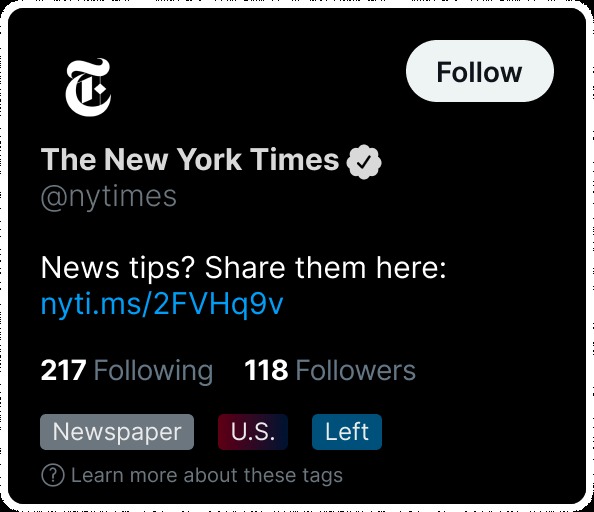
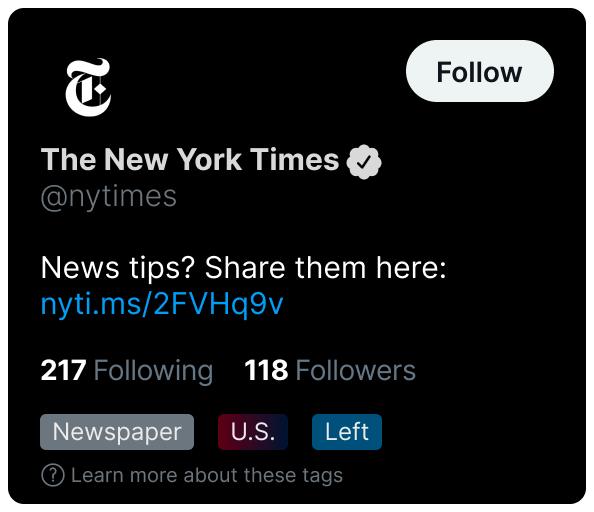
Early mock-up
-
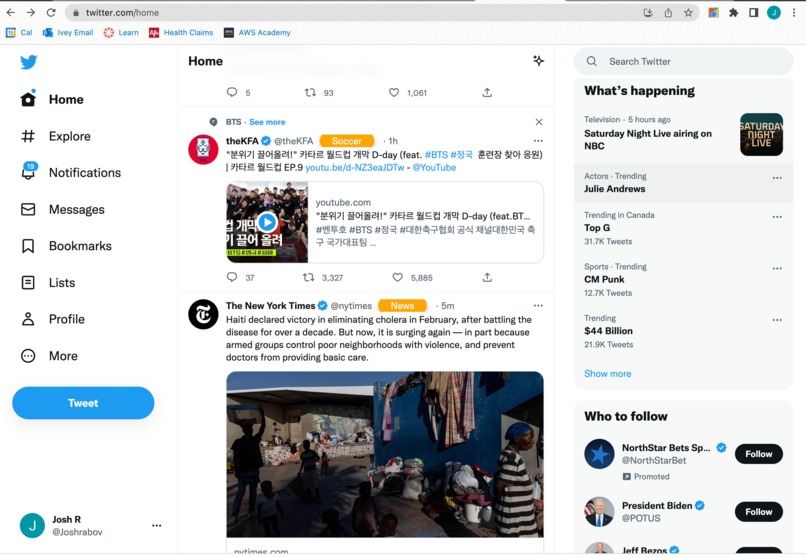
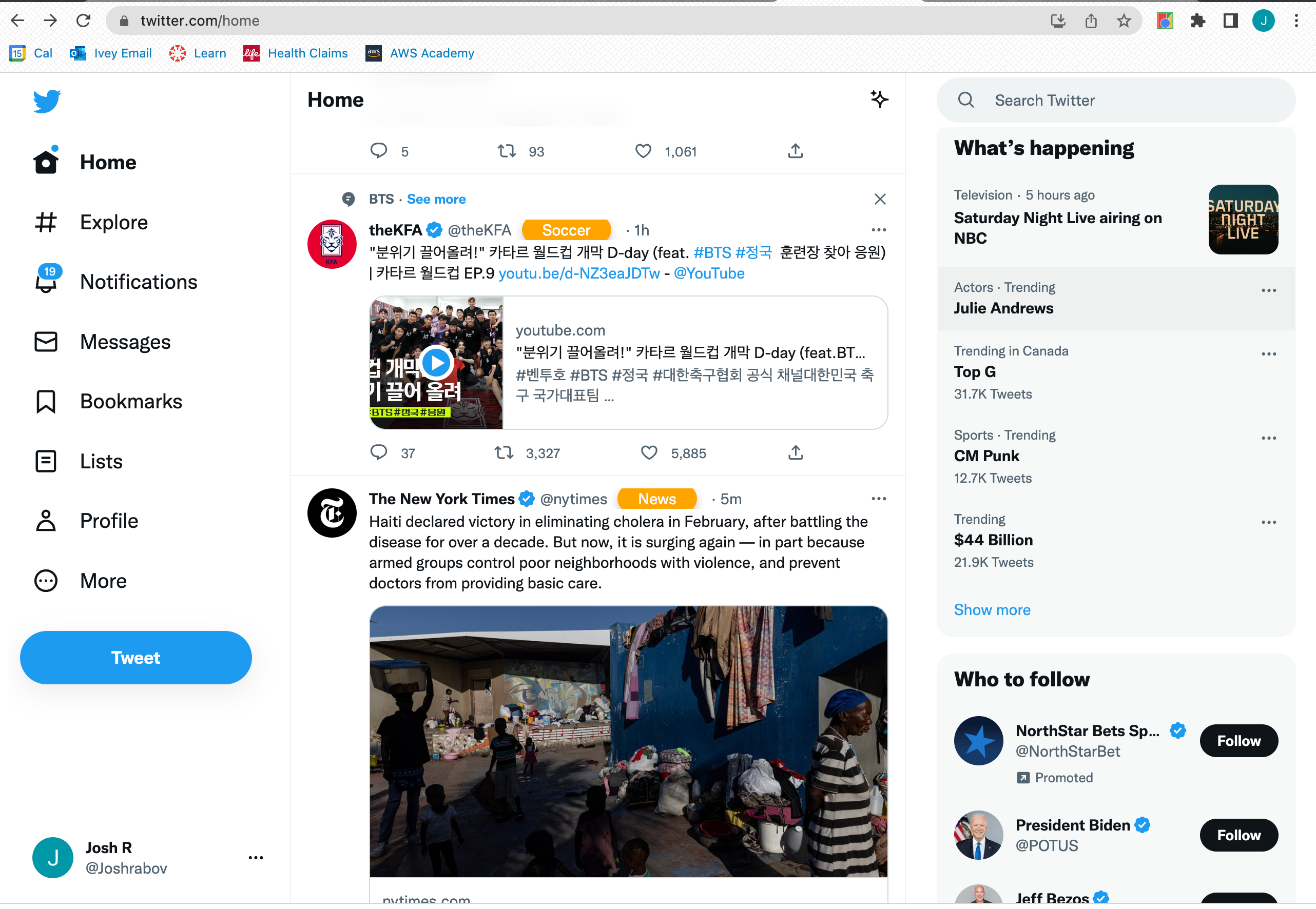
Demo screenshot
-
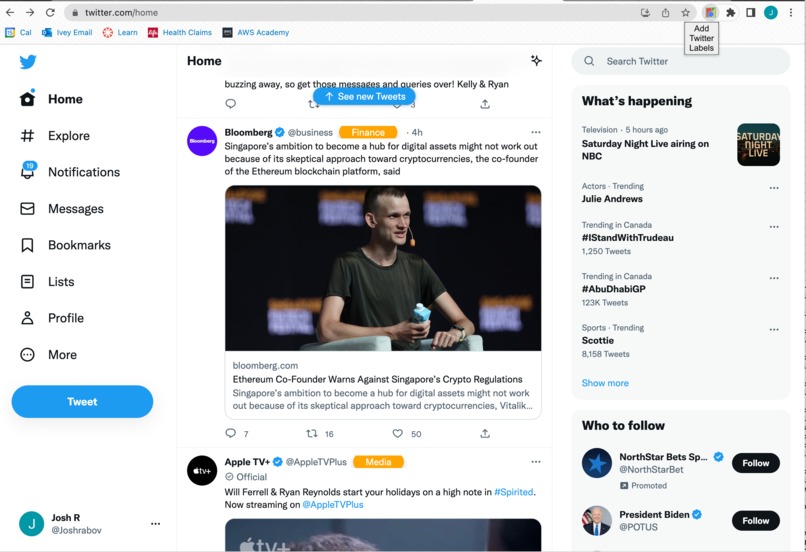
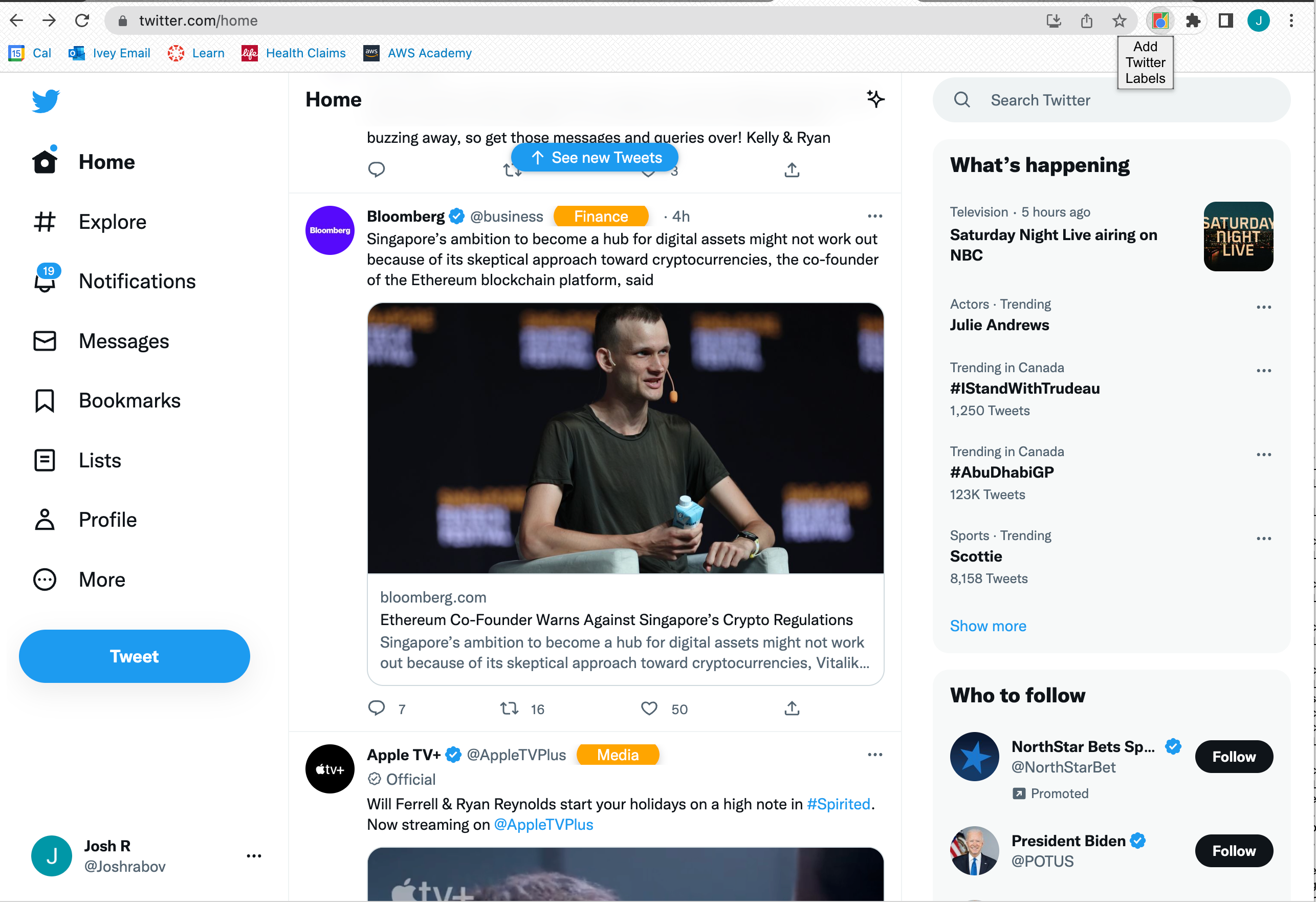
Demo screenshot

🌟 Inspiration
Twitter bombards users with constant floods of tweets consisting of a wide range of facts and opinions. Users are faced with the challenge of trying to understand the context behind each individual tweet without fully understanding who it is that posted. This can lead users to consume misinformation and propaganda from a lack of awareness. Now imagine if you could quickly see a summary of the background of users on your Twitter feed: education, profession, political beliefs; in order to add some additional context to their Tweets.
Introducing Tagify: where we introduce context to your content.
🔍 What it does
Tagify is a Chrome extension that uses natural language processing to analyze Twitter tweets. With the quick hover of a mouse, Tagify displays informative labels providing important context behind tweets from users on your explore page. Details about profession, political views, and even geographical location will be visible through badges for users to make informed judgments from the tweets they read.
⚙️ How we built it
Our tech stack consists of Javascript, React, Node, Express, and HTML/CSS, while utilizing AWS with Twitter and Cohere APIs.
🚧 Challenges we ran in to
- Providing relevant tags for sample posts that allows the cohere API to understand and give accurate and description feedback.
- Interacting with the Twitter HTML to find the right place to overlay the UI.
- Connecting the front-end of our Chrome extension to an AWS server.
🏆 Accomplishments that we’re proud of
- Creating overlays for already existing web structures.
- Understanding how NLP works and familiarizing ourselves with Cohere’s API, Javascript and React.
📚 What we learned
Through Hack Western 9, we learned a variety of different frameworks and techniques to build Tagify, some of which include: React and NLP. This was also the first time any of us have attempted building a Chrome extension. We overlooked the capabilities of Chrome extension and encountered issues importing data using node on the back-end. However, in the process of debugging we learned a lot about the inner workings of extensions.
🚀 What’s next for Tagify?
- Diversifying training material for the A.I. create more accurate results.
- Expanding Tagify’s use case to other social media platforms.
- Improving the efficiency of our code.


Log in or sign up for Devpost to join the conversation.