Inspiration
We wanted to answer one question: what if you could play tag inside a real place? Not a cartoon level, not a stylized map, an actual photorealistic environment captured from the real world. Games have always built fake worlds. We wanted to flip that and drop players into real ones.
What it does
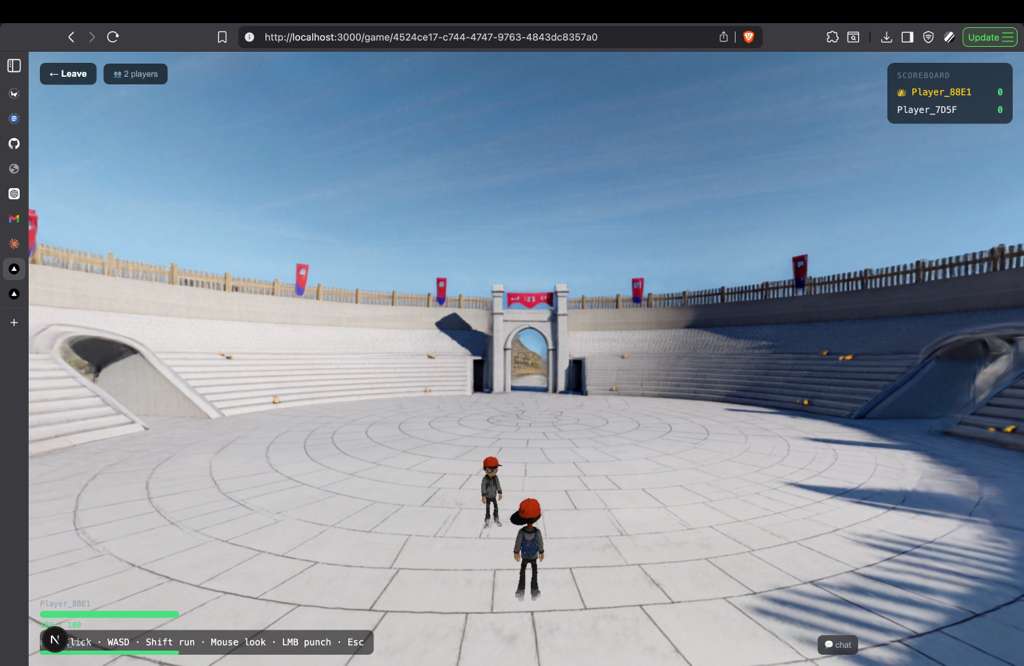
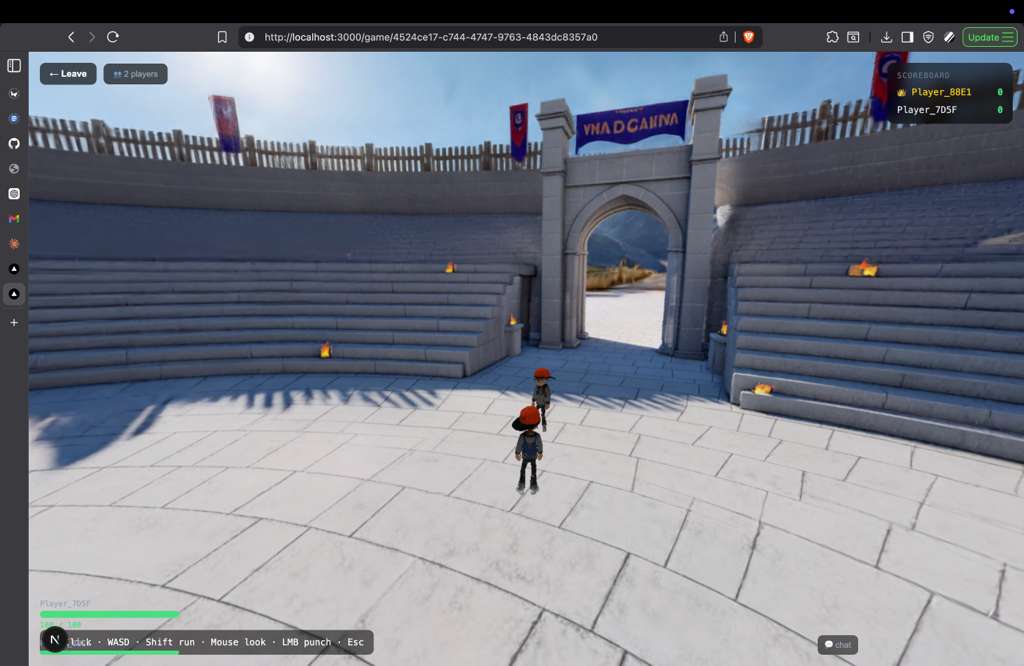
Big Think Tag Game is a multiplayer tag game played inside Gaussian Splat scenes, photorealistic 3D environments reconstructed from real-world footage. Multiple players can spawn into the same world, each with their own split-screen view. One player is IT. They chase the other. When they touch, the tag transfers. It's the simplest game in the world but the world it's played in is real.
How we built it
Next.js + TypeScript for the full-stack framework Three.js for 3D rendering and character physics Gaussian Splat rendering via @sparkjsdev/spark — this is what makes the environments photorealistic FBX character animations (idle, walk, run) loaded dynamically via FBXLoader WebSockets for the multiplayer lobby — room creation, joining, host management Split-screen rendering using Three.js scissor/viewport — each player gets their own camera perspective in real time Added hitbox to the players.
Challenges we ran into
Gaussian Splat rendering and Three.js don't naturally play nice together, syncing the SparkRenderer with split-screen scissor rendering took significant trial and error. Getting FBX animations to face the correct direction relative to the camera (especially on diagonals) was surprisingly subtle. Building a tag system that felt fair, not flickery, not laggy meant carefully tuning the immunity window and collision radius. And making two independent player cameras share one WebGL context without tearing the scene apart was its own puzzle.
Accomplishments that we're proud of
Photorealistic environments running in a browser with two live players, zero downloads, and a working tag mechanic that's something you don't see every day. The split-screen feels natural. The IT ring pulses. The tag flash hits at the right moment. For something built this fast, it actually feels like a game.
What we learned
Gaussian Splat technology is far more game ready than people think the hard part isn't the splat, it's everything around it. Character controllers, camera rigs, and multiplayer sync all have to be rebuilt from scratch when your "level" is a point cloud instead of a mesh. We also learned that simple game mechanics shine hardest when the environment does the heavy lifting. Tag needs no tutorial when the world around you is real.
What's next for TagGame
More arenas- any real-world space can become a level. We want user-uploaded splats. Mobile support- touch joysticks, gyro camera, same split-screen experience Online multiplayer- move from local split-screen to networked play across devices More game modes- freeze tag, hide and seek, capture the flag — all inside real environments Leaderboards and rooms- the lobby system is already built; ranked matches are next
Built With
- nextjs

Log in or sign up for Devpost to join the conversation.