-
-
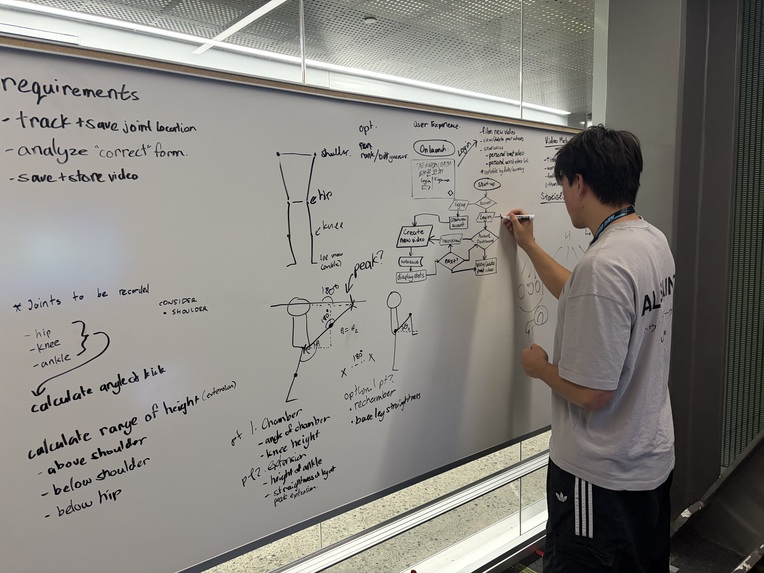
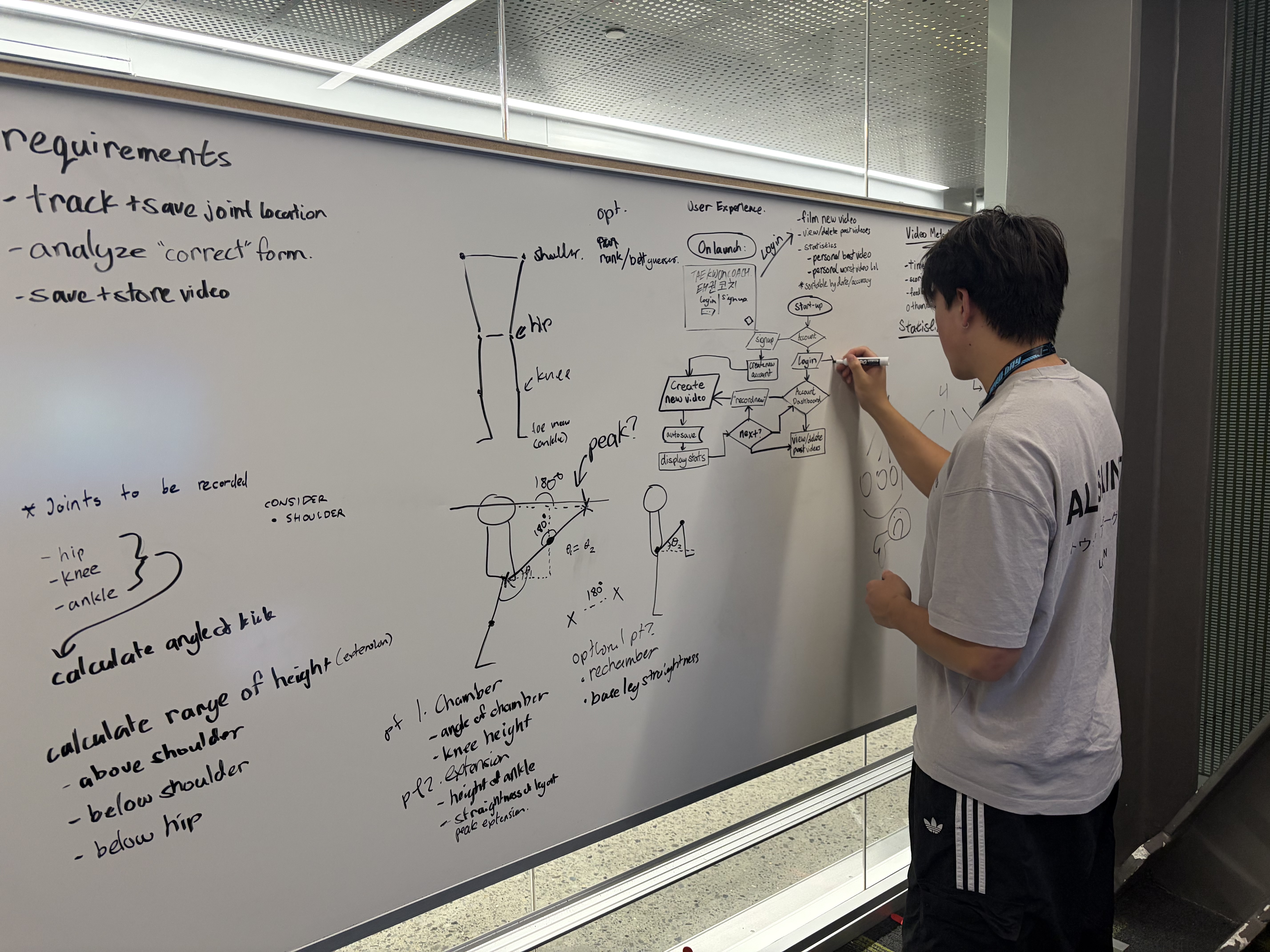
Designing UML diagram
-
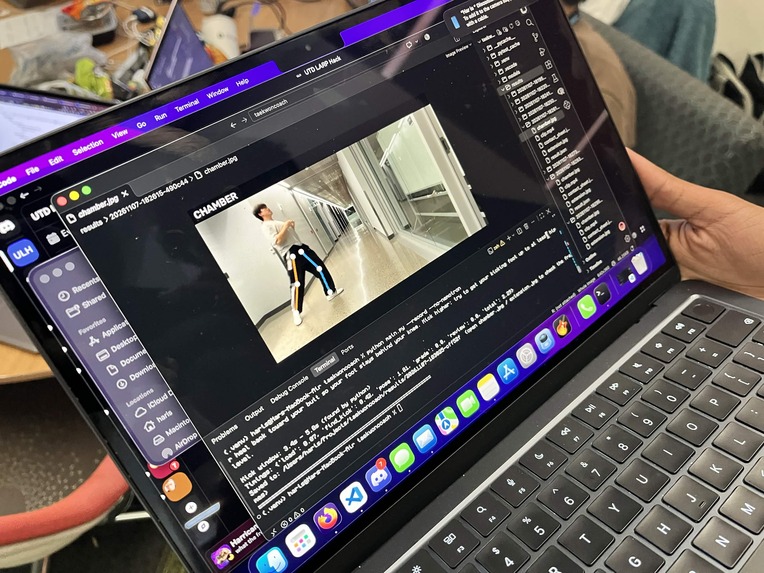
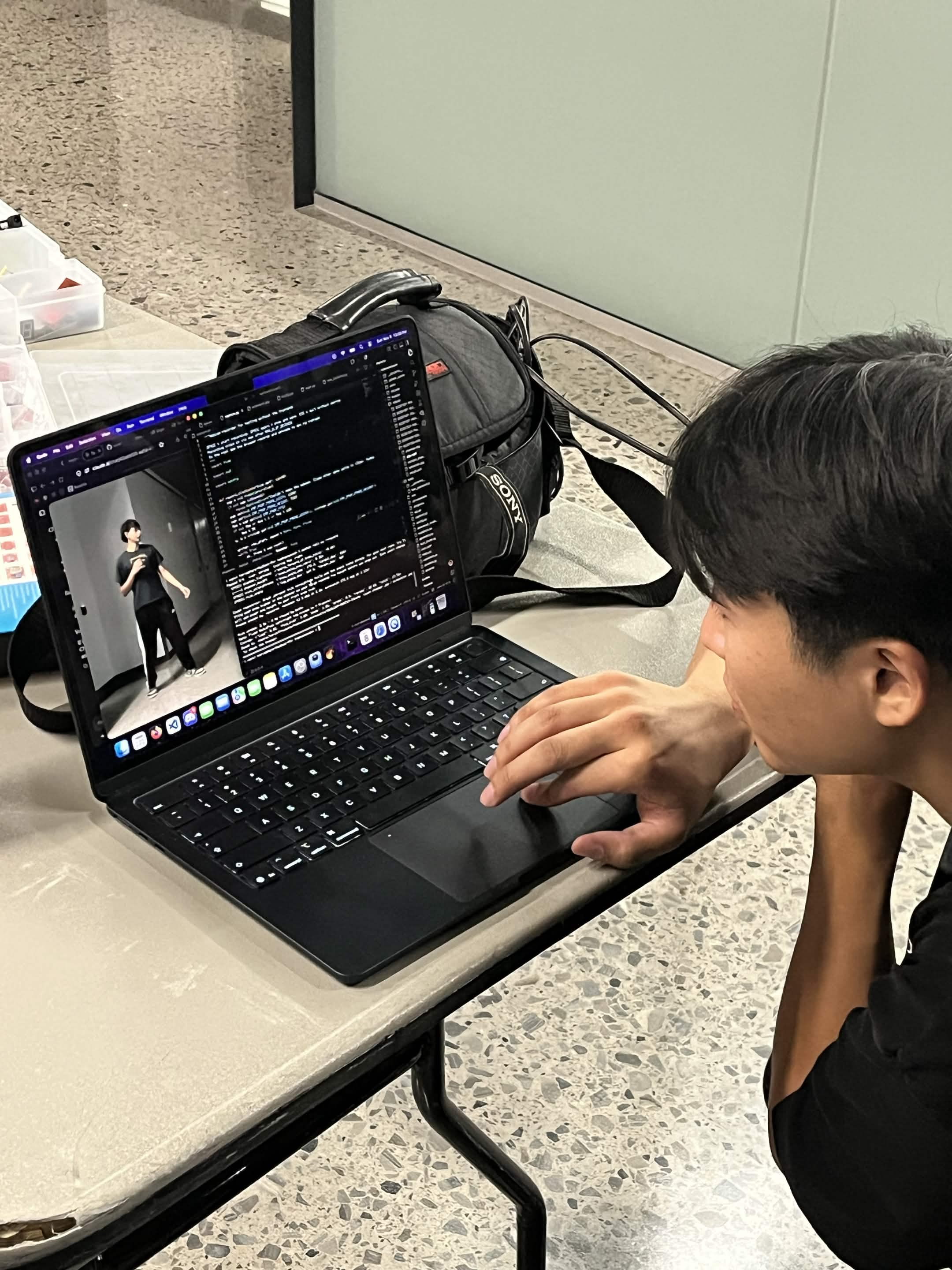
Demo of recording process
-
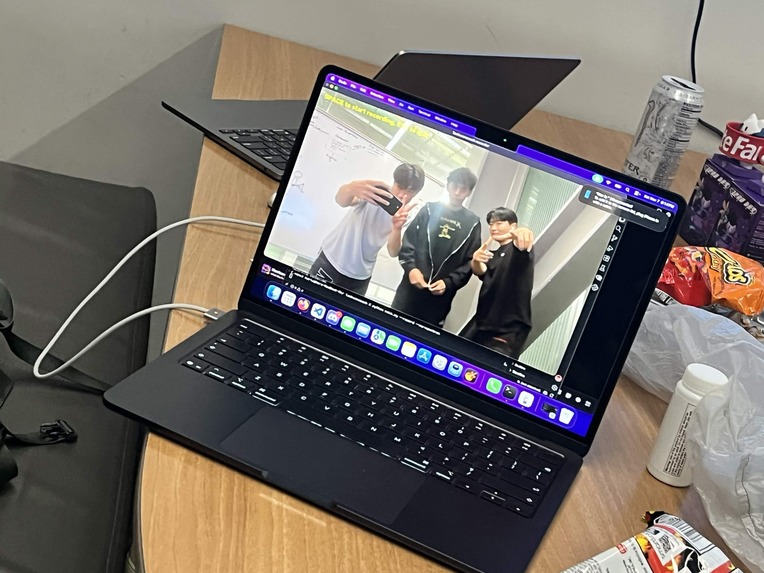
STEP ONE COMPLETE
-
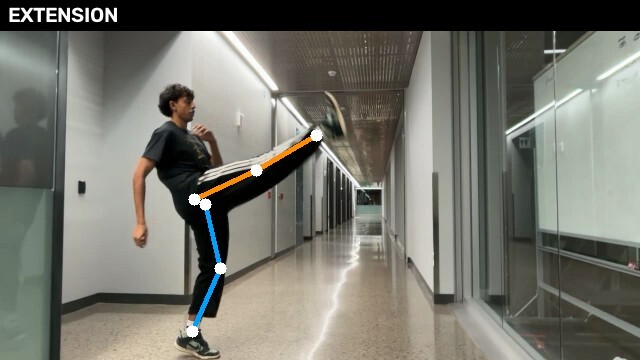
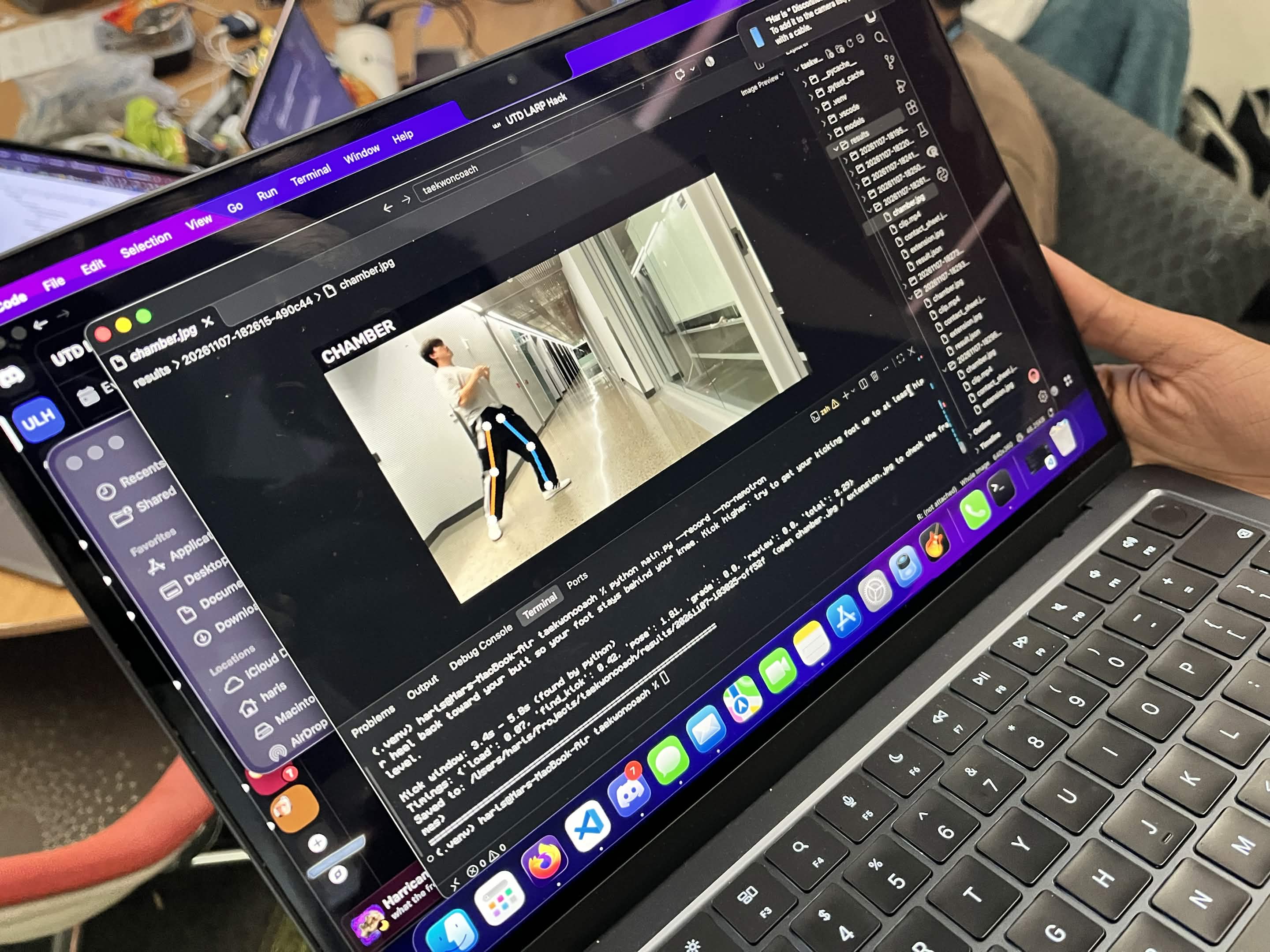
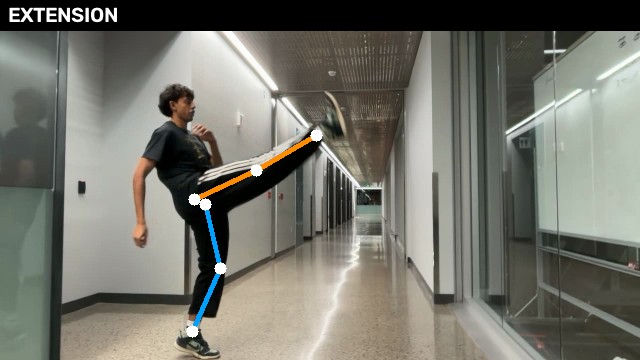
A good capture of extension frame
-
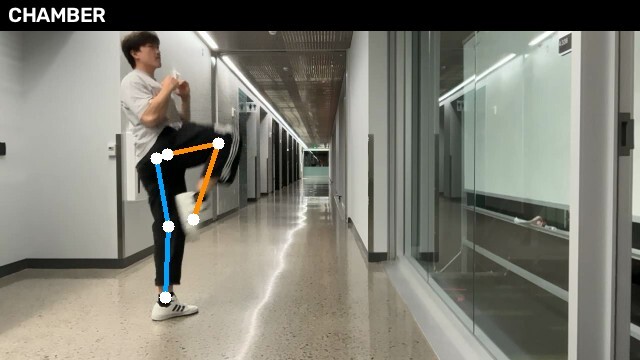
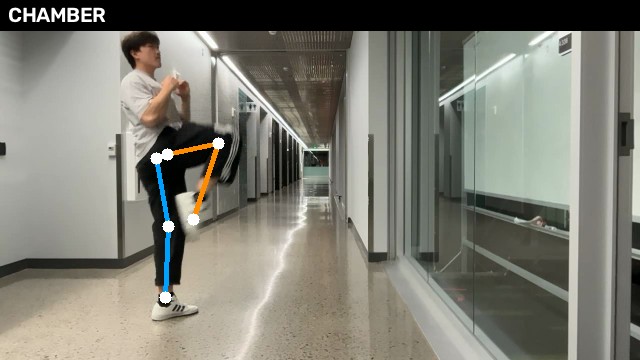
A good capture of chamber frame
-
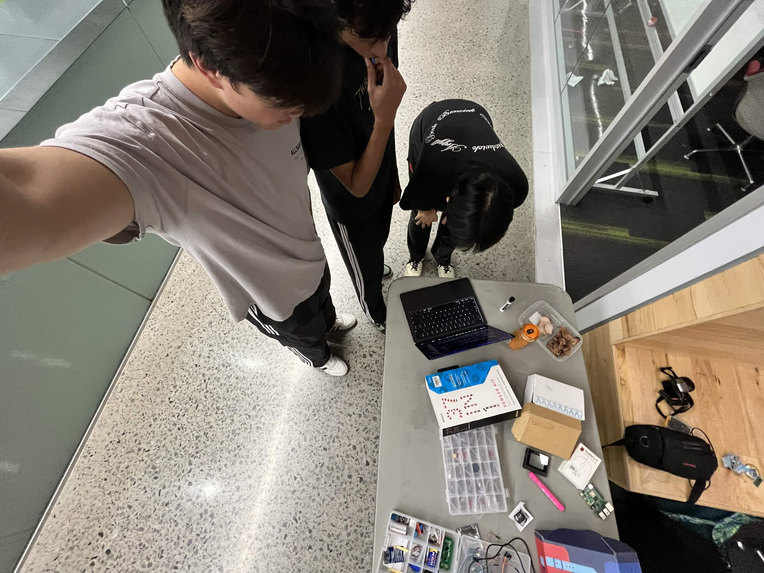
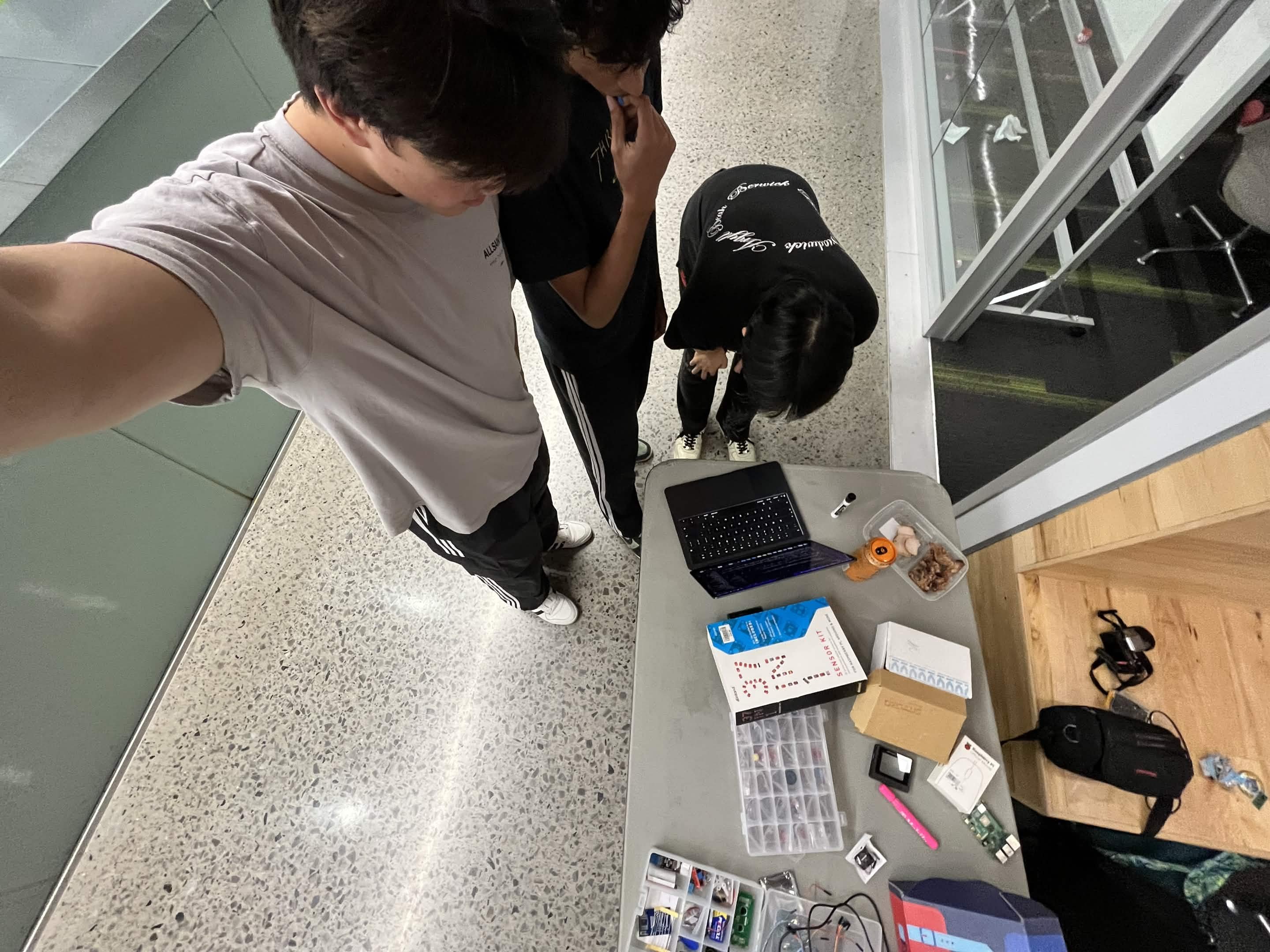
frustration with code ensues~
-
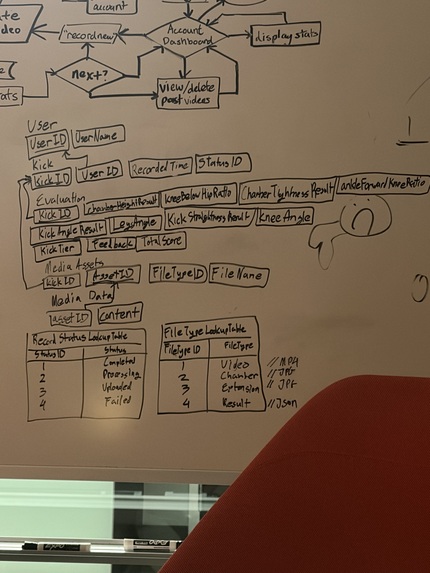
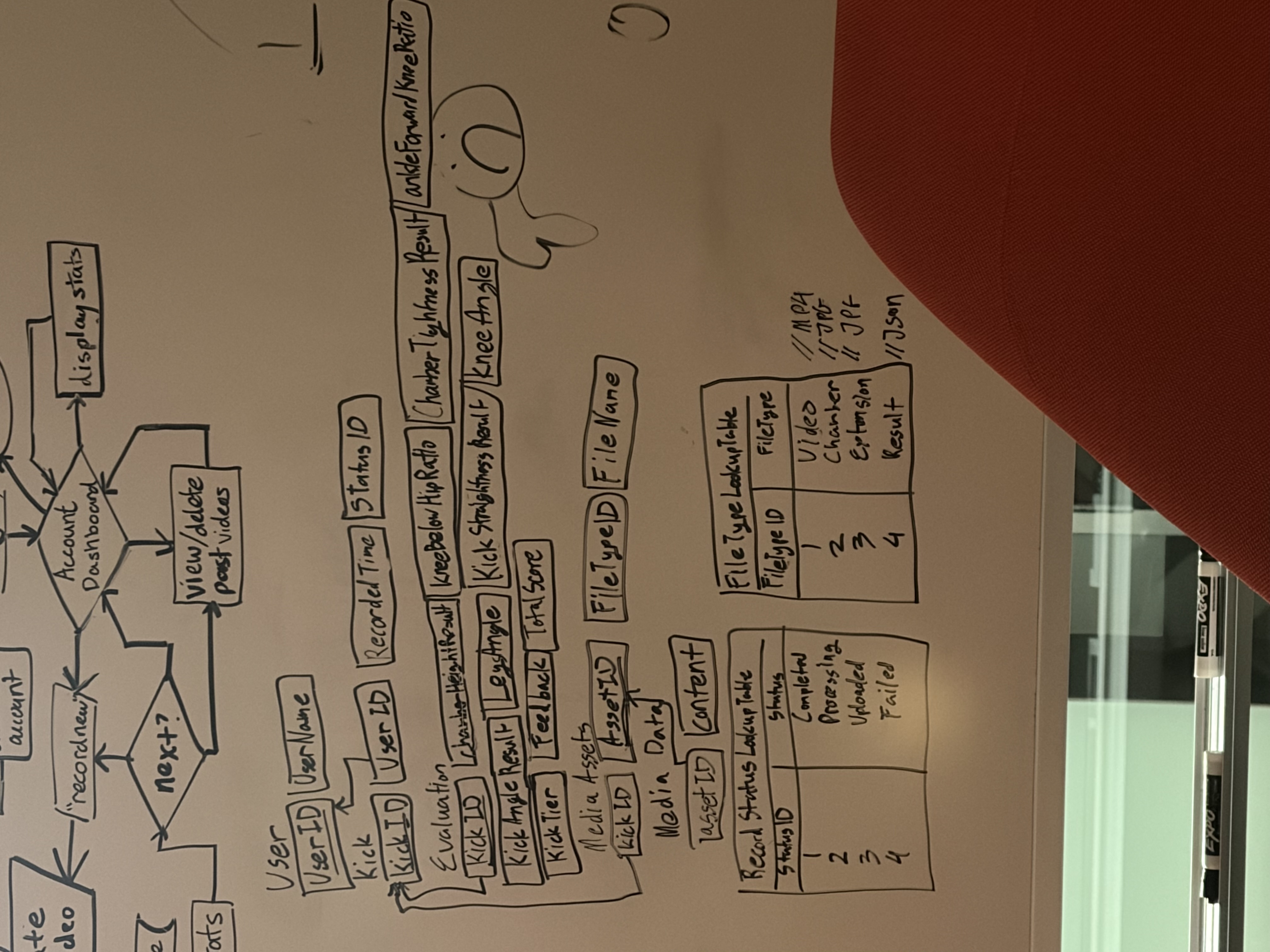
Database diagram
-
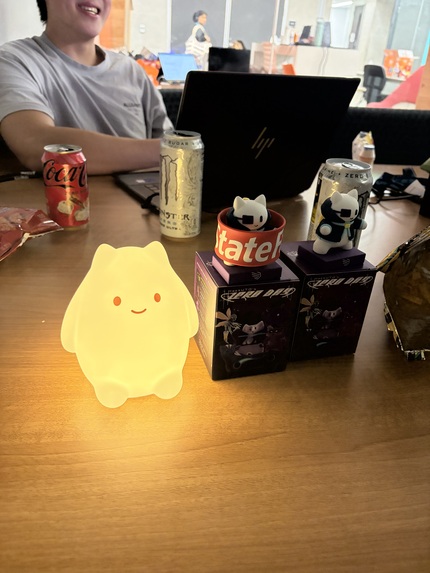
What got us through the night
-
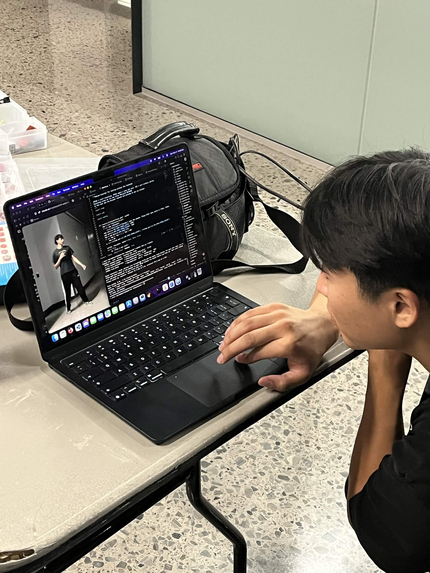
working hard or hardly working?
-
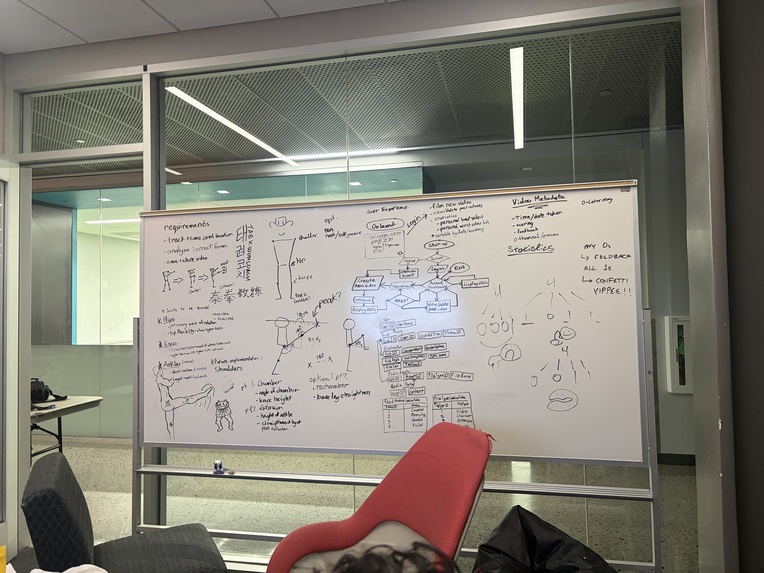
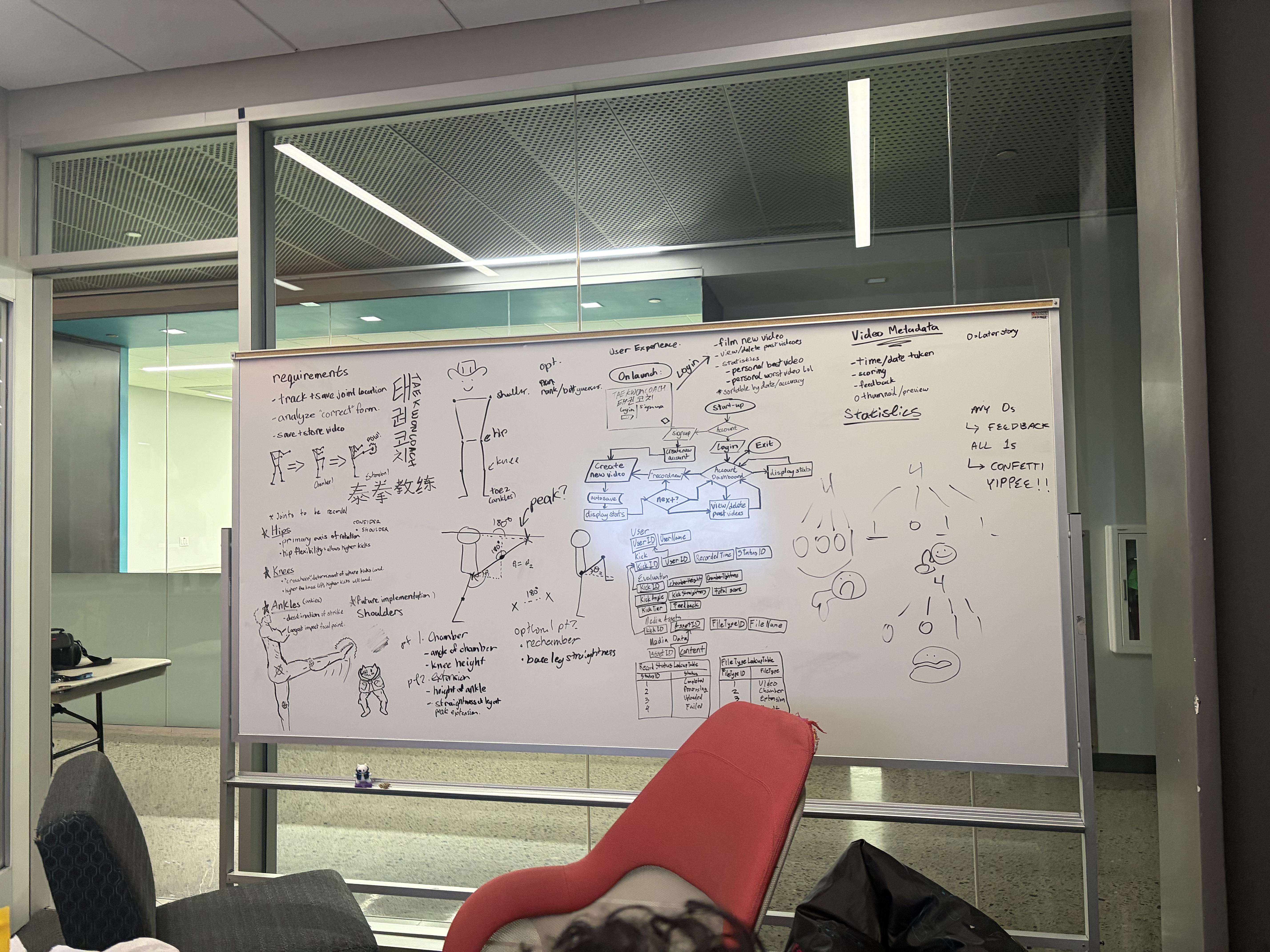
Our complete ideation board
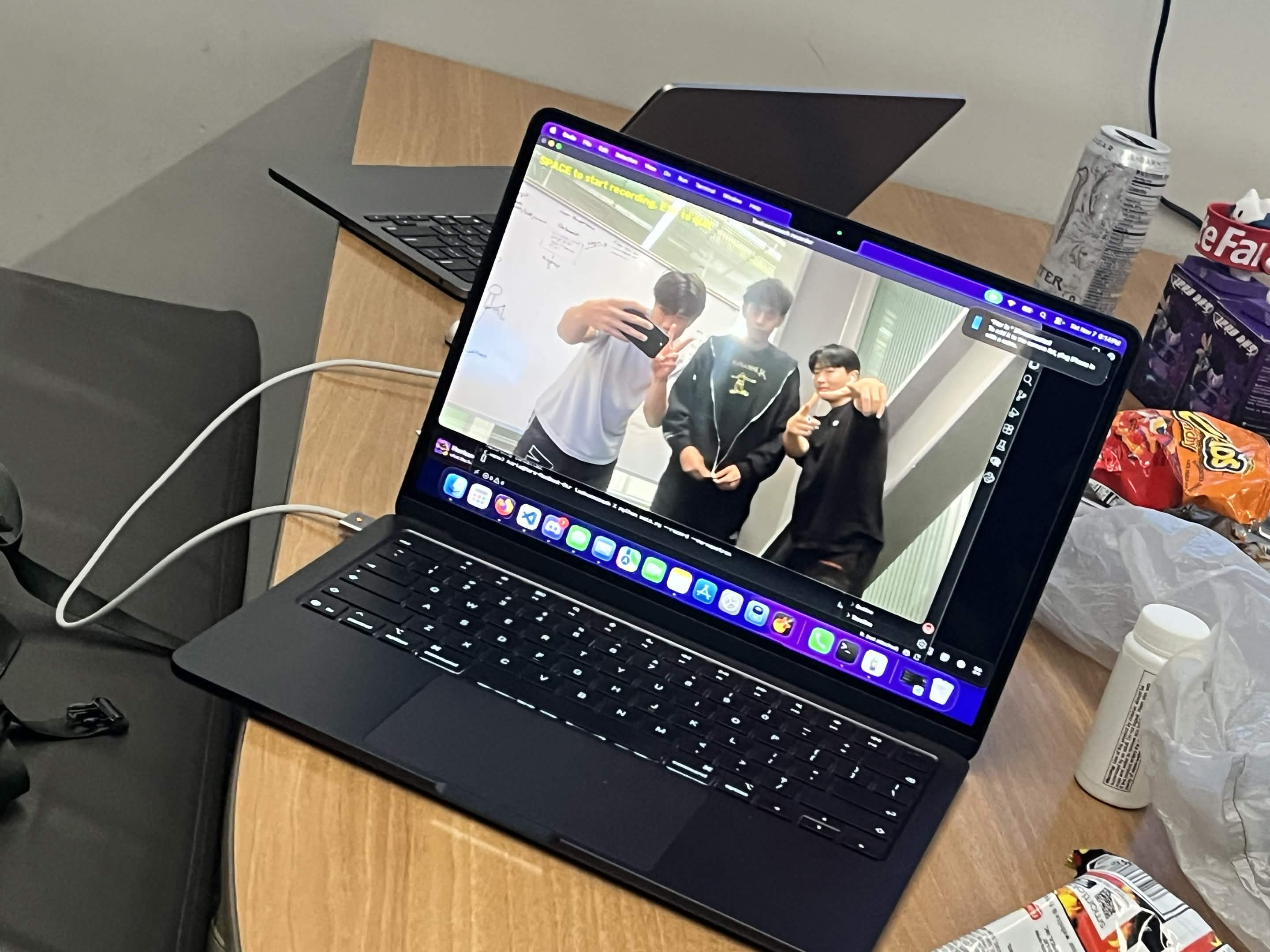
Inspiration
All three of us are actively practicing the UTD Taekwondo club. Two of us teach a variety of age groups, from kids as young as 8 to elders past their 70's trying to stay in shape. Coincidentally, we all share the same major as well as the same hobby. What sense does it make for us NOT to work on something we love? On top of that, this idea has been something that's been stirring in our heads for quite a while, and this hackathon deemed the perfect opportunity for us to turn a dream into reality.
What it does
Our main goal with our project is to help martial artists on any skill level to be able to get real-time feedback, both in and out of the practice rooms. With something as simple as your laptop camera, users can record themselves demonstrating their kicks, and are scored on how well-executed the kick was. Not only does the program grade you, but due to our database, you'll be able to visualize your progress over time.
How we built it
Starting off from the drawing board (a rather vast white board), we laid out the functional requirements we needed for our idea to grow. We needed to find an inexpensive way to track human movement quickly and accurately. Naturally that led us to putting our heads into computer vision. Using our martial arts experience, we needed to define what a perfect kick looks like. At this point, we knew what we wanted to do. We needed a database to store video files, our mainframe, our backend, and we needed something to judge how well a kick was executed, leading us to SpacetimeDB and Nemotron (AI agent recommended to us by Sophie from NVIDIA).
Challenges we ran into
Figuring our how to link together github and external apps together itself was a very deep challenge for us. We had already had an idea of what we wanted to do, however the biggest thing limiting us was our lack of experience working with AI and working with API keys, learning how to use them on the spot, even.
Accomplishments that we're proud of
Truthfully, we were truly flabbergasted of our own abilities. We already have a basic knowledge about how to deliver beautiful and powerful kicks. Yet after applying our physics skills alongside, we discovered the true entertainment of arithmetic. Beside the trigonometry, learning how to use Nemotron was absolutely fantastical, although a little hair-pulling at the start. Also, our whiteboard looks pretty cool. Never would we have thought that our software engineering class would have such an impact on our approach to developing this program (waterfalling, diagrams, etc). On a side note, funnily enough, as the project further and further developed, our teammate started getting more and more perfect scores. At first we were skeptical about him finding a way to cheat. But the more we looked and and analyzed the freeze frames, we realized he had made LOTS of progress within the past 24 hours alone with the program.
What we learned
We furthered our insight on API keys, as well as mediapipe. Being able to trace 33 known body part targets in an image and compiling them together to create a skeleton. Making passes with an agent in VSCode was something that we had never seen before, and discovering the pumps within each other stuck out the most for us. AI integrations turned out to be a lot more simple and less daunting than we imagined.
What's next for Taekwon-Coach
We already had big plans for this app, and our imaginations grow more rapid than our typing skills. As of right now as we type this, we currently have tracking for hips, knees, and ankles, which are all essential to delivering kicks in taekwondo. However, there is more to taekwondo than what we can express currently. Taekwondo has brought us so much joy, learning even the most minute things about technique piques our interests. The slightest turn of hip, timing the lift of a knee and ankle to deliver the strongest impact possible. There are so many things that we can implement, yet. Another thing that we have prepared in the future is taekwondo poomsae, which is the art form of taekwondo. Essentially pre-arranged choreographed patterns that take years and sometimes decades of hard work to perfect varies from master to master. Using taekwoncoach can provide some form of standard to what looks perfect. Our next shot if we win NVIDIA, would be 3D modeling for our program. Using multiple cameras from varying angles allows us to create a 3D visual, in the future may be able to project in 3D. cool, right?
