Inspiration
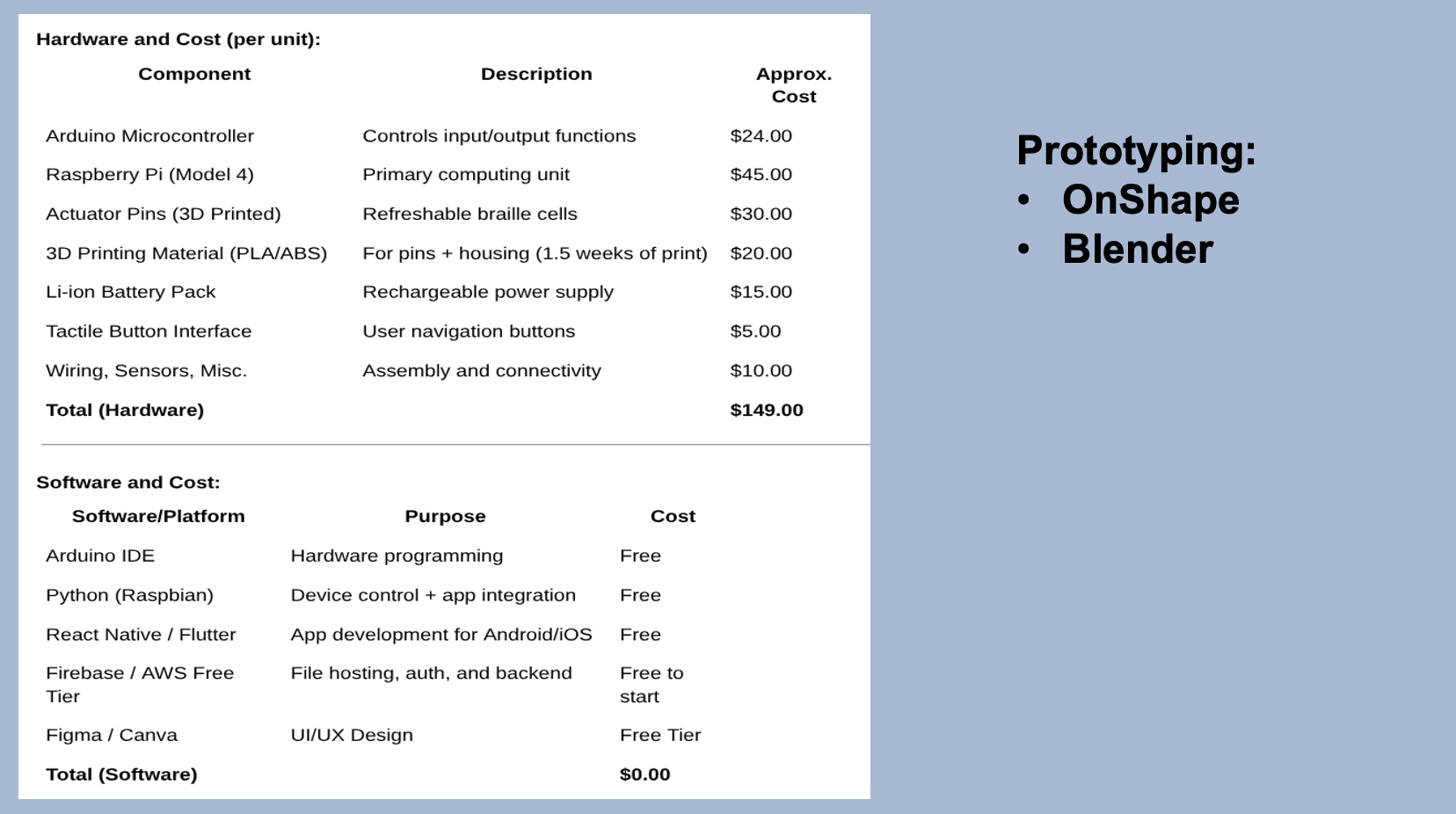
According to the Global Burden of Disease Study, over 295 million people suffer from moderate to severe vision impairment, with 43.3 million completely blind. During a visit to a Blind Welfare Centre in Trinidad and Tobago, a volunteer shared: “Right now, education is almost impossible for these people. We try to make them more self-sufficient, but we have no real teaching tools.” This resonated with us deeply. Existing Braille readers don’t support graphics, and high-end devices like the HumanWare Monarch cost up to $18,000, well out of reach for most. We knew we had to act.
What it does
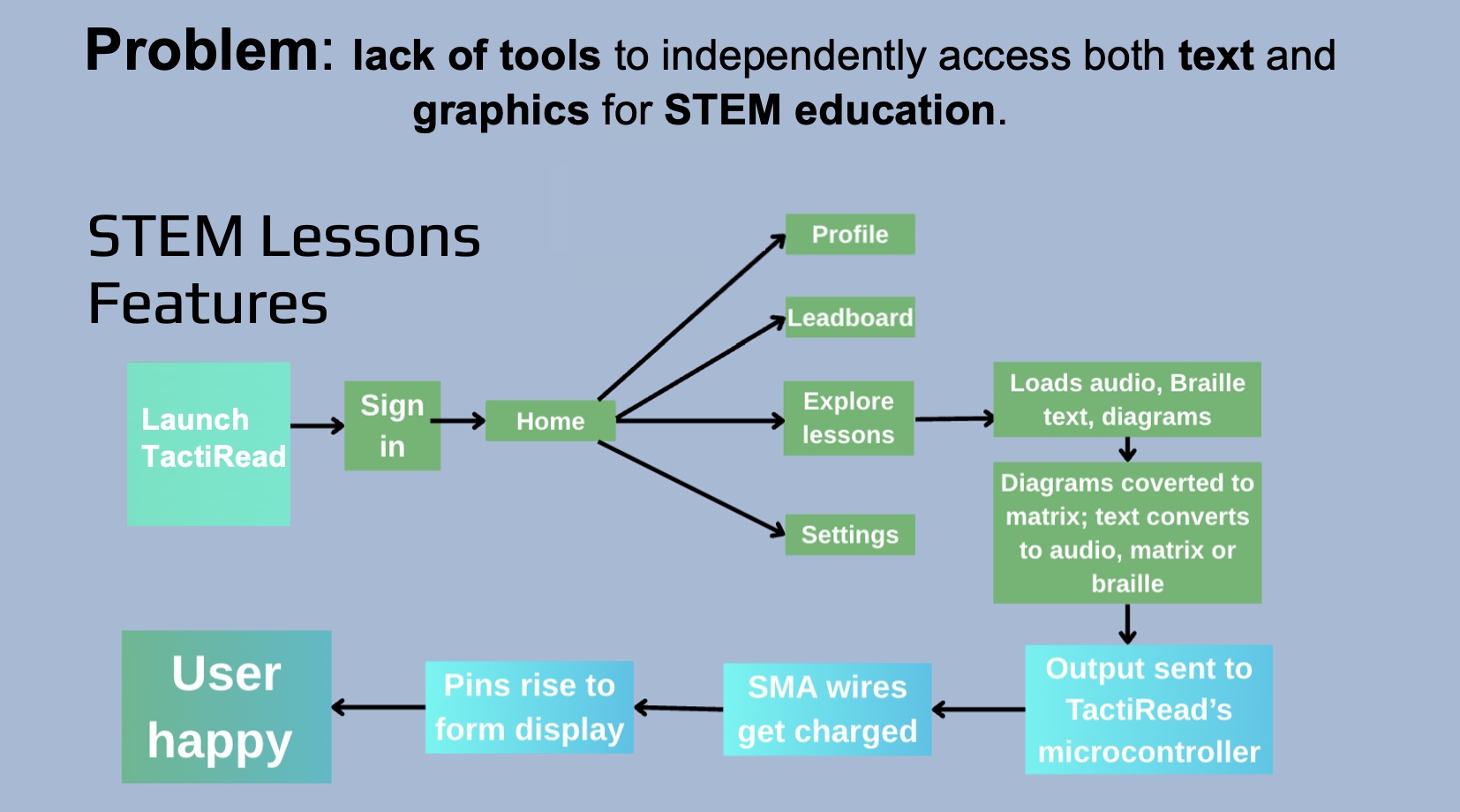
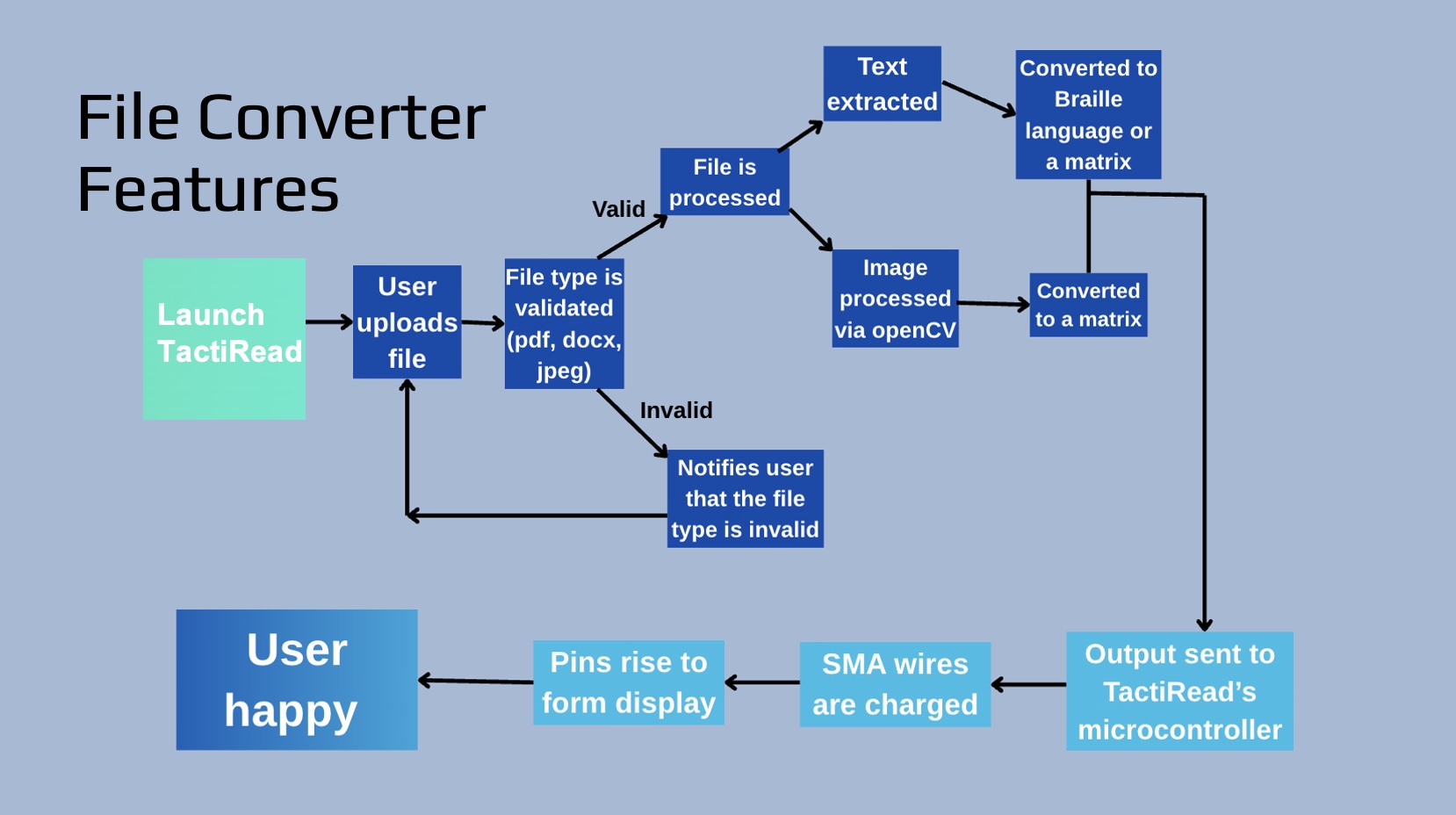
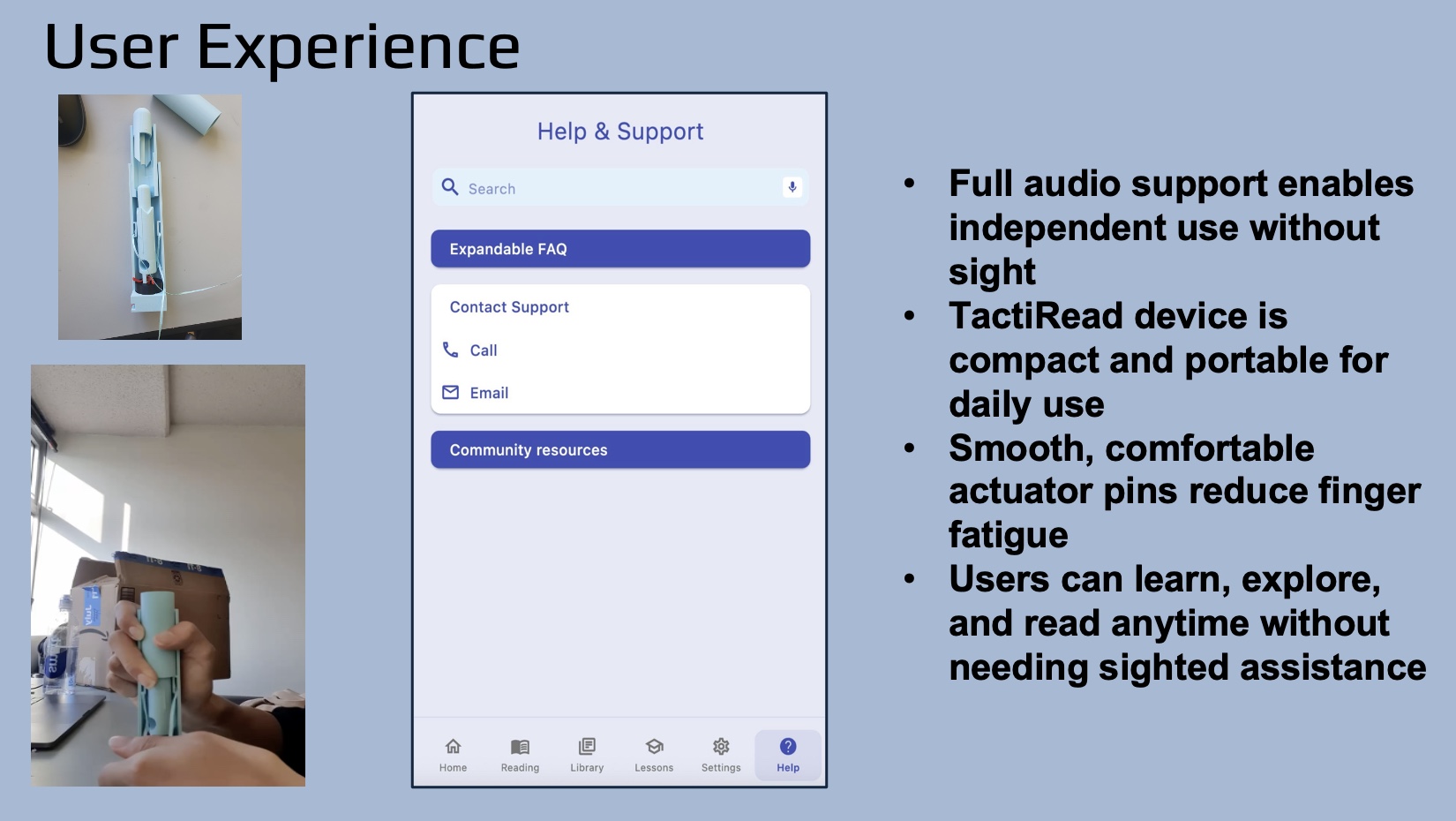
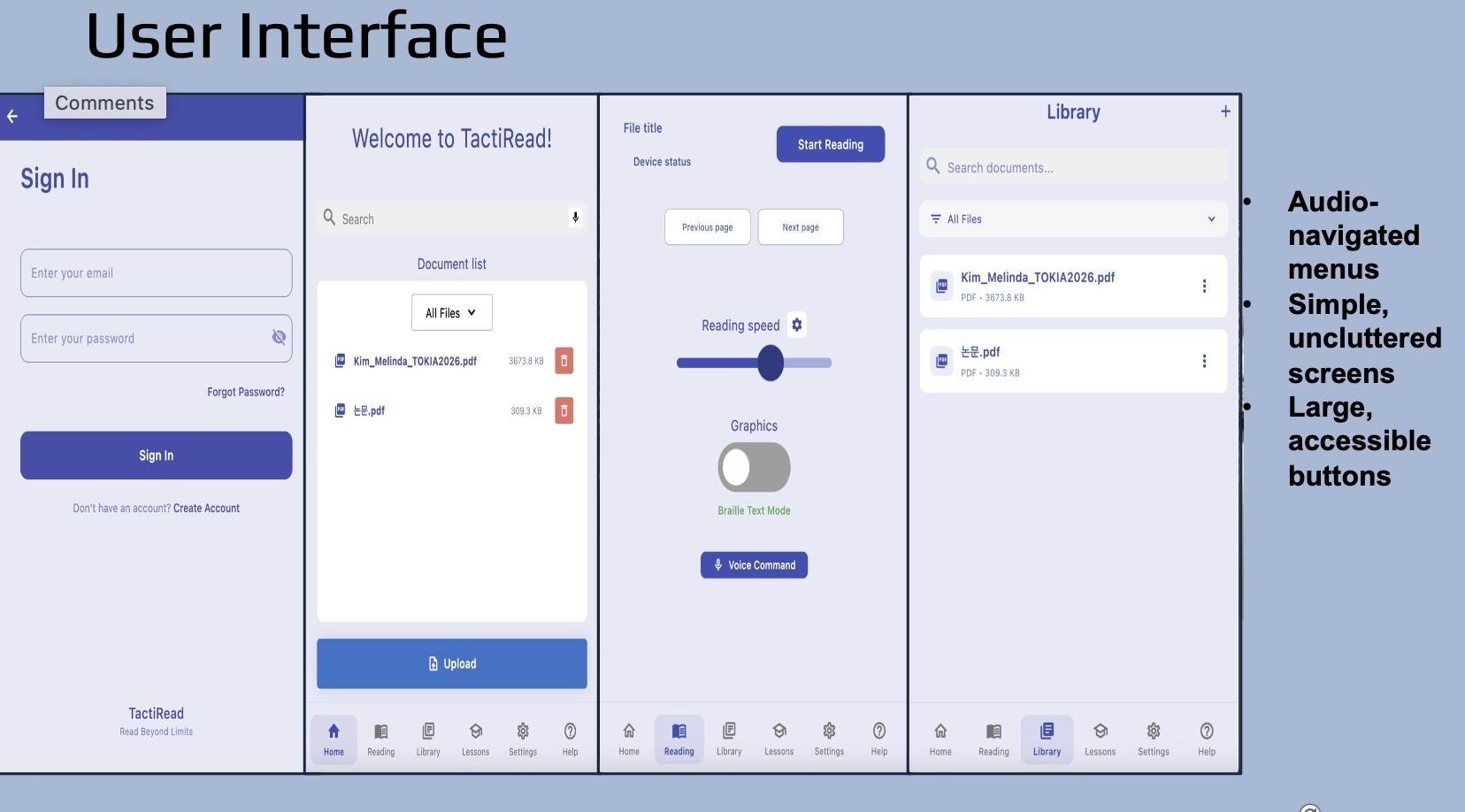
TactiRead is a next-generation Braille display that allows visually impaired users to read both text and tactile graphics on a single, portable device. It converts diagrams, charts, and images into raised touchable surfaces alongside Braille text. Paired with an audio-guided mobile app, TactiRead supports common file types like PDFs, DOCX, and JPEGs, enabling independent learning without the need for custom materials or constant assistance.
How we built it
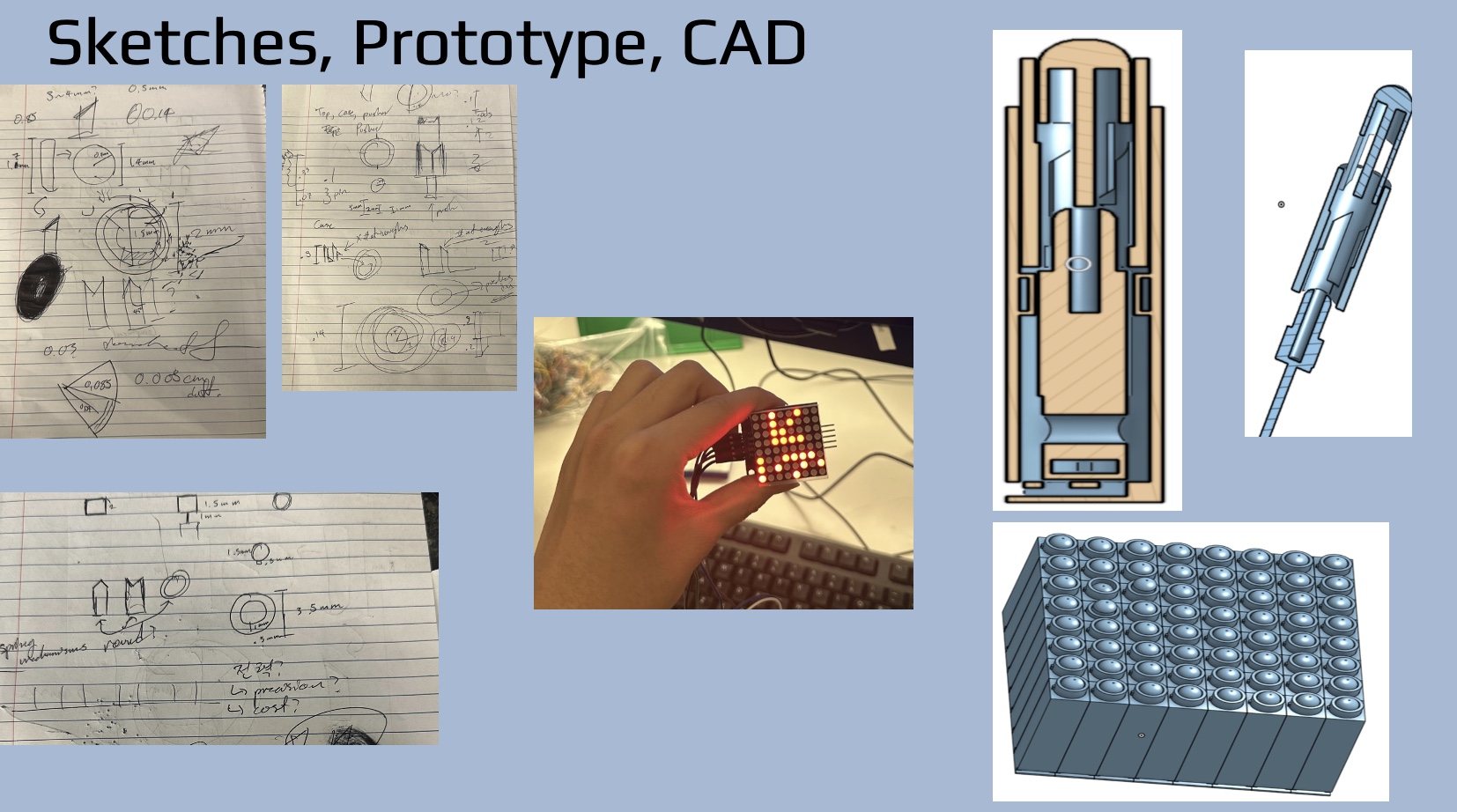
We started by developing a modular pin grid system powered by Shape Memory Alloy (SMA) wires, enabling each pin to rise or lower dynamically based on input data. Using OpenCV, images and diagrams are converted into matrices for tactile rendering. For Braille mode, we built a custom parser that translates uploaded documents into Braille format. All processed data is sent to the device for real-time tactile feedback.
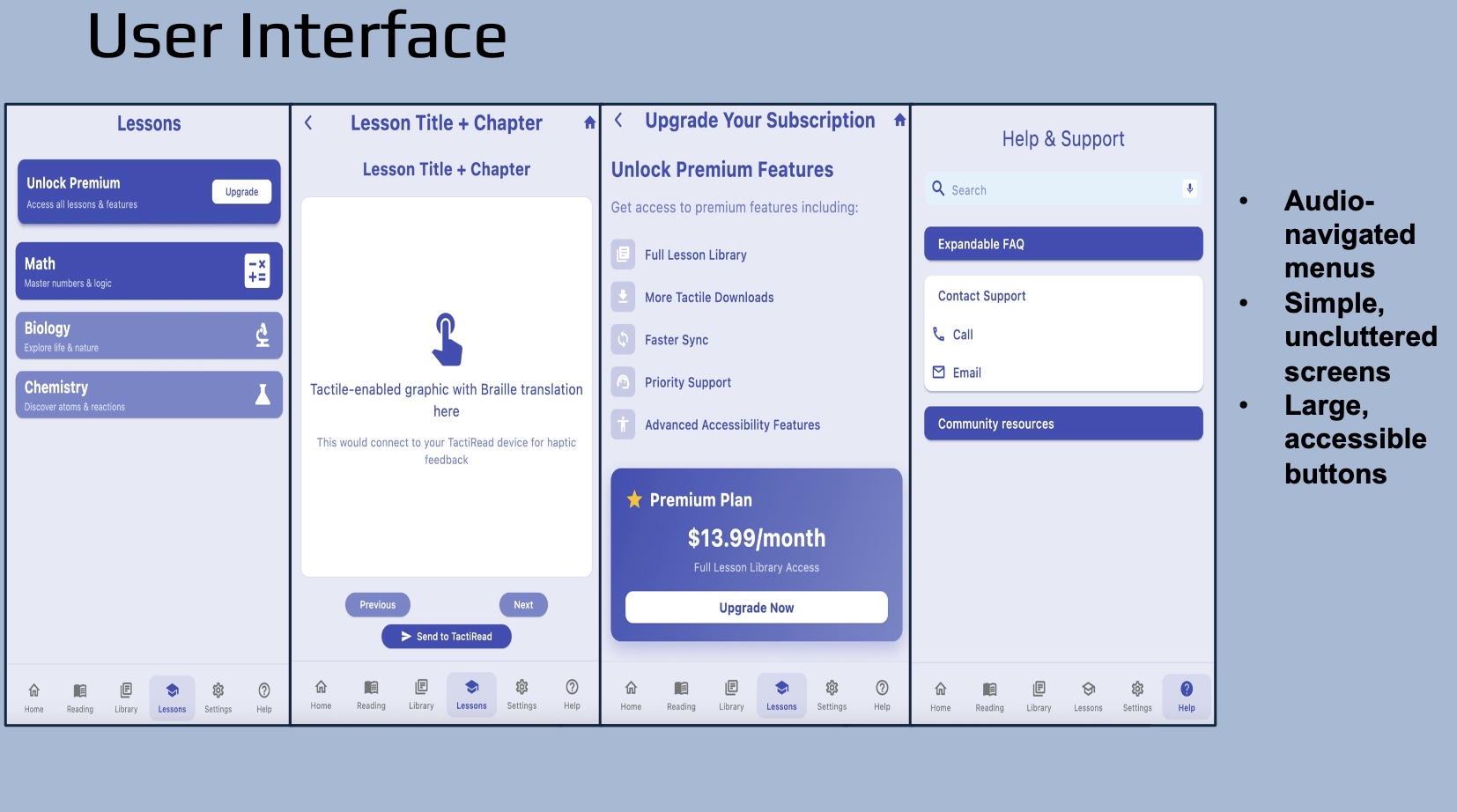
To support the device, we designed a freemium mobile app that includes Audio-guided navigation, Braille text rendering, Tactile STEM courses and Built-in technical support.
Challenges we ran into
Making the system modular and repairable, ensuring one faulty pin doesn’t make the device unusable. Getting a 3d printed model due to the precision of the measurements. Ensuring tactile accuracy in charts and images without overwhelming the user. Developing a file processing pipeline that reliably handles complex formats like multi-page PDFs.
Accomplishments that we're proud of
Created an accessible app ecosystem that bridges hardware and content delivery for the blind community. Built a repairable pin-grid system, reducing long-term costs for families and institutions. Partnered with a Blind Welfare Centre for real-world testing and feedback.
What we learned
Real-world feedback from users is invaluable, many of our features came directly from conversations with blind students and educators. Accessibility is key. What seems like a small convenience (eg. audio help) makes a huge difference to someone navigating learning in the dark.
What's next for TactiRead - team 14
Have a complete 3d model of our product for testing

Log in or sign up for Devpost to join the conversation.