-
-
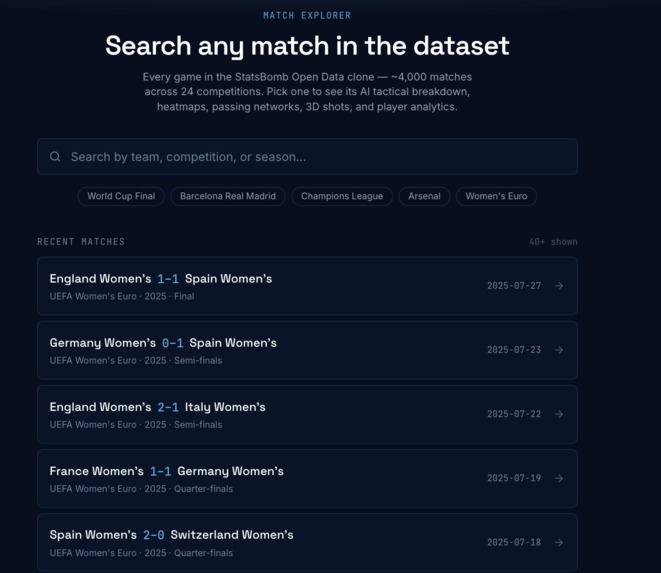
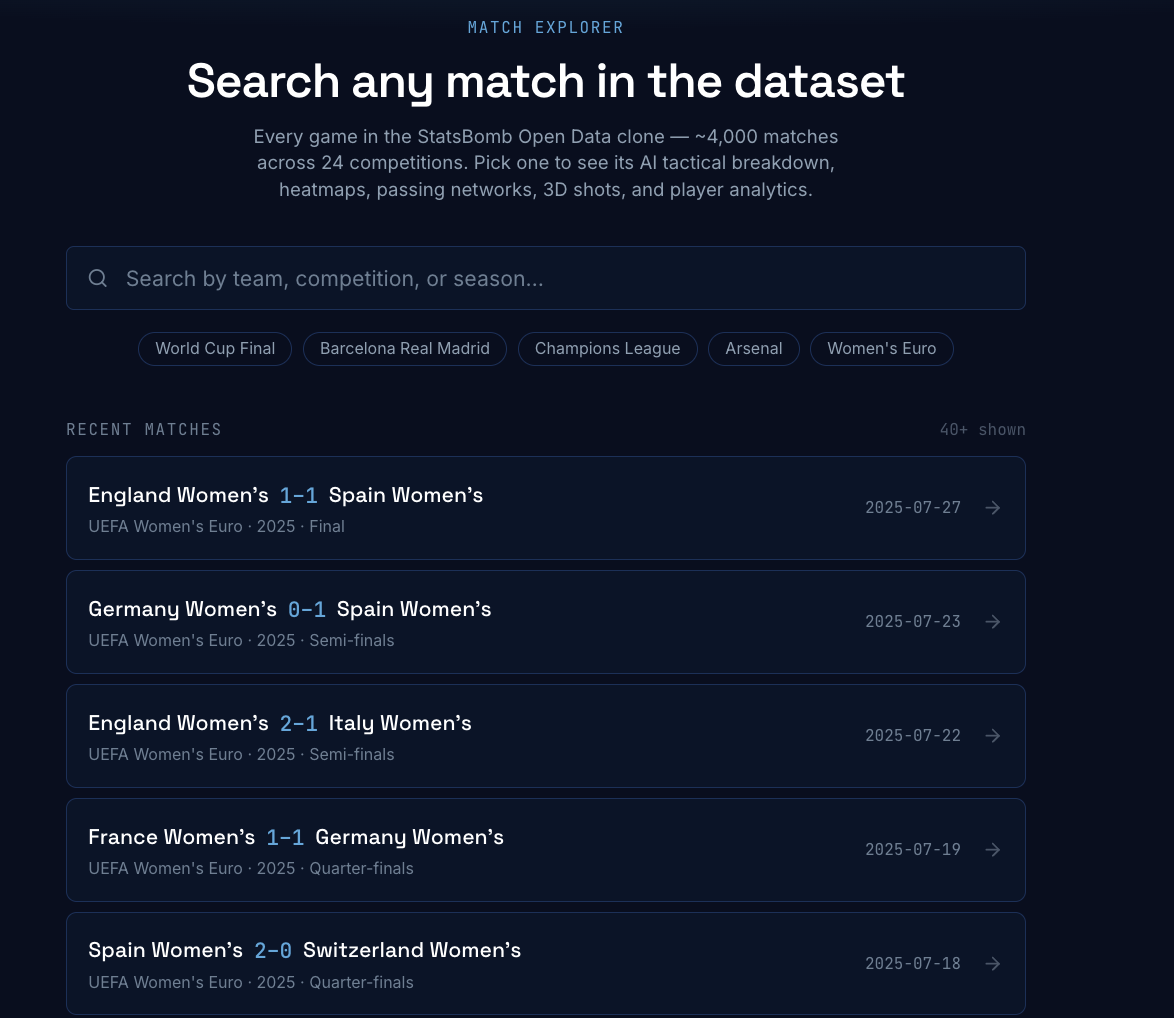
Search page for any match in the imported dataset
-
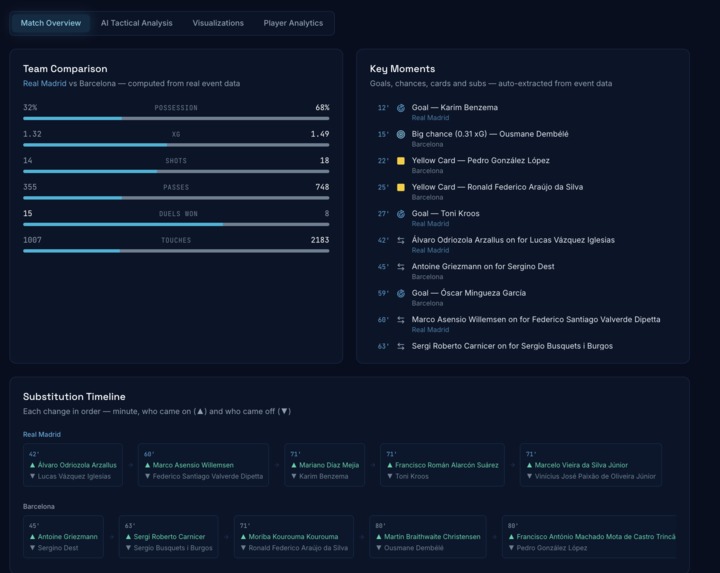
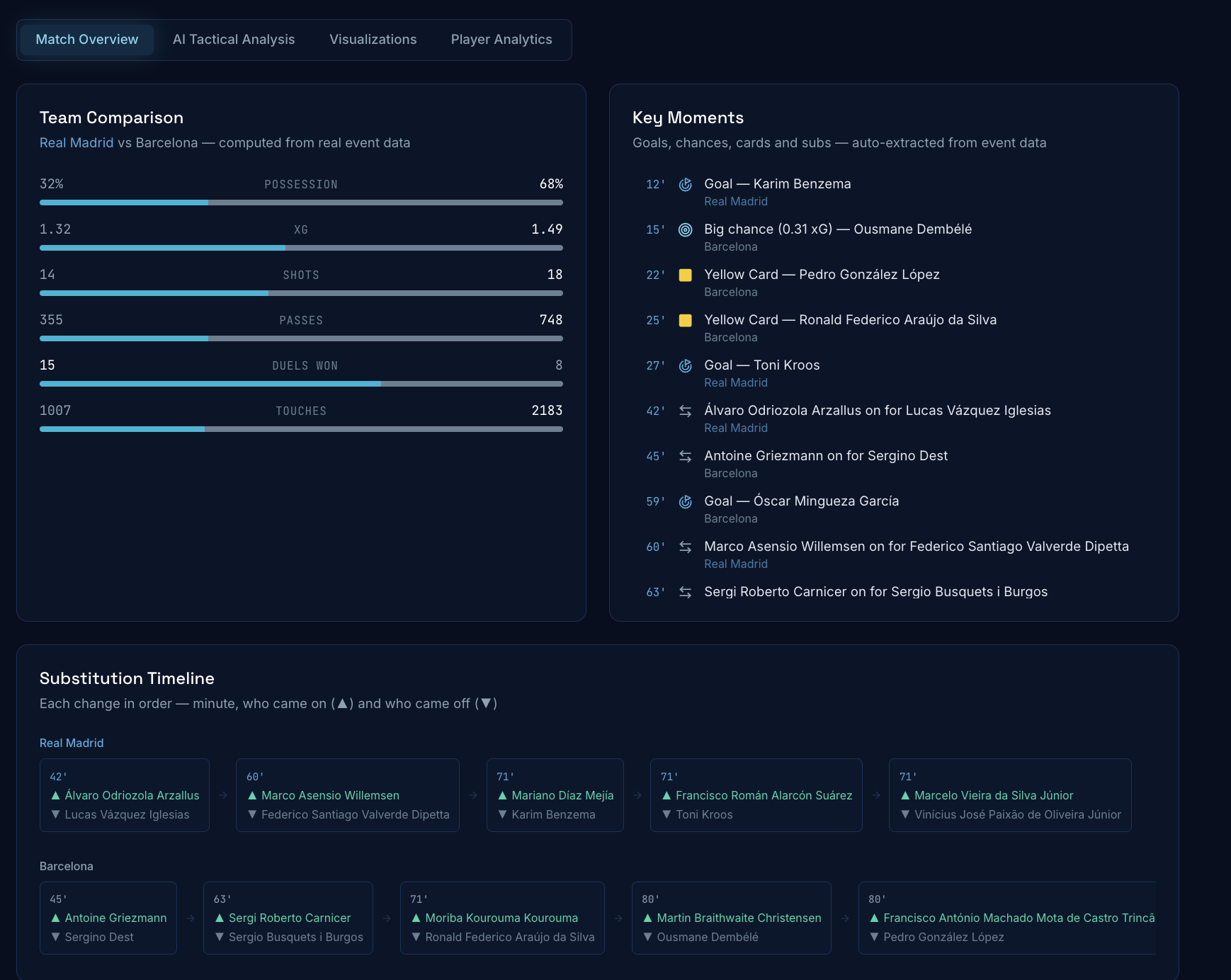
Statistics breakdown, enhanced timeline, and substitution timeline
-
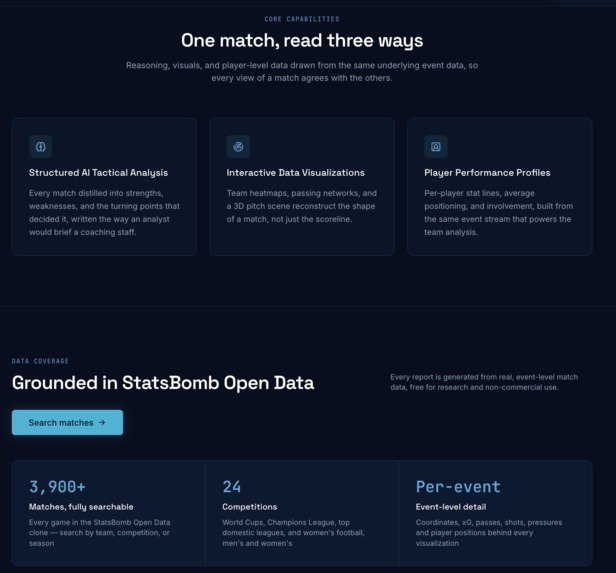
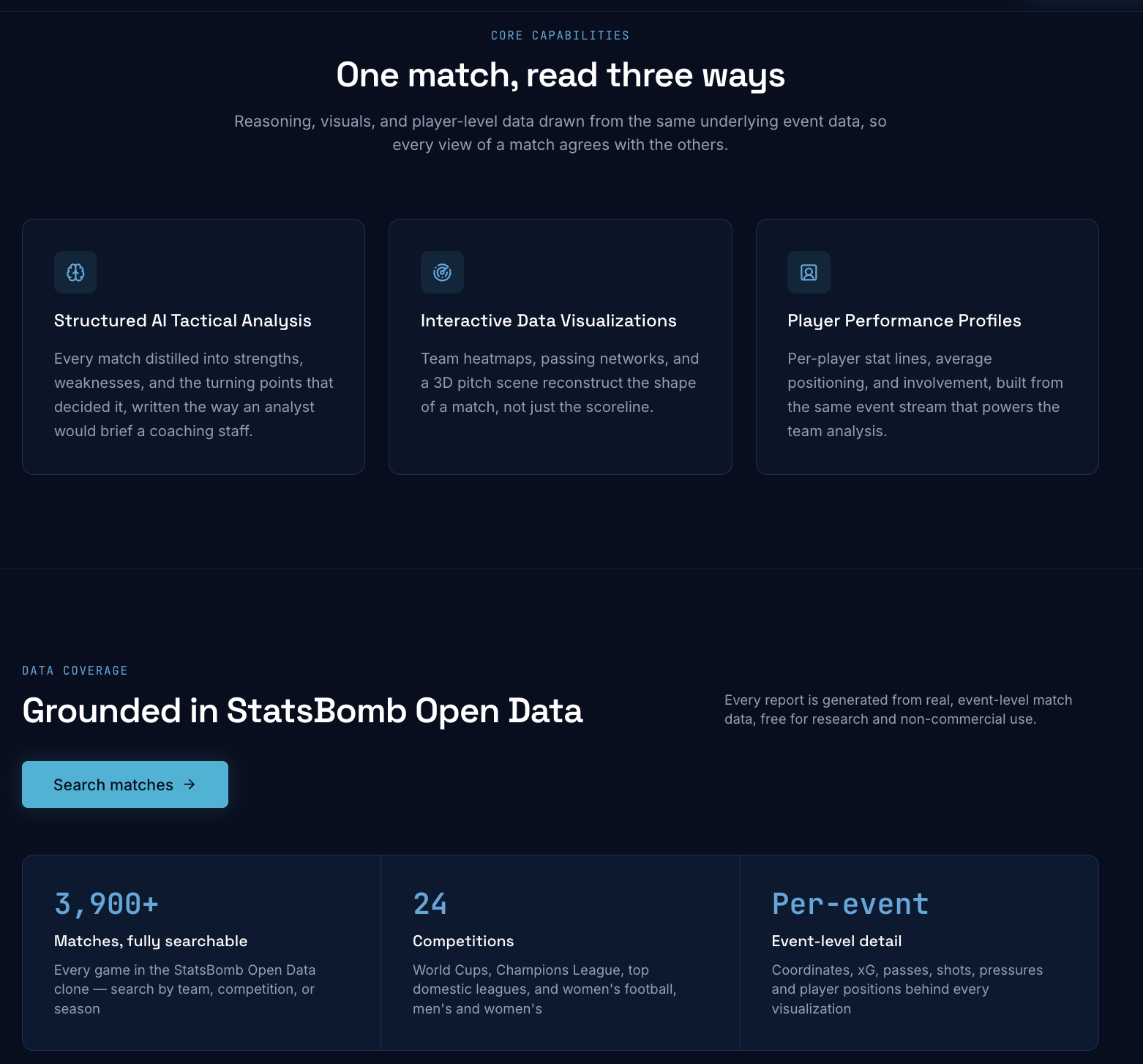
Landing page
-
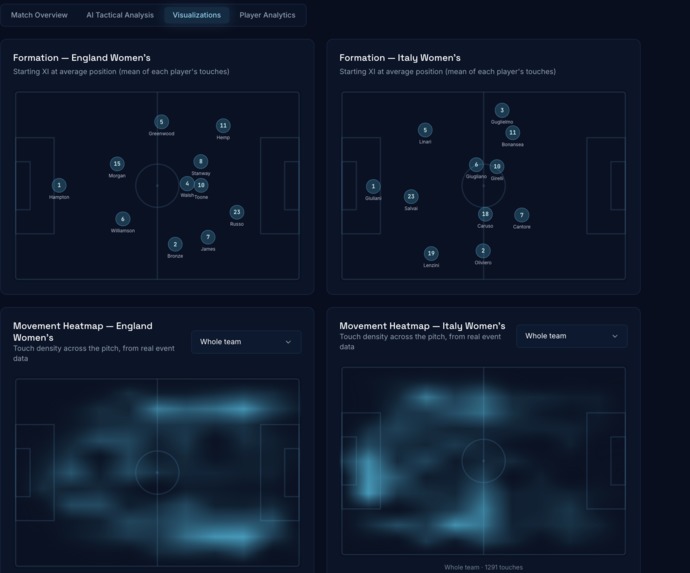
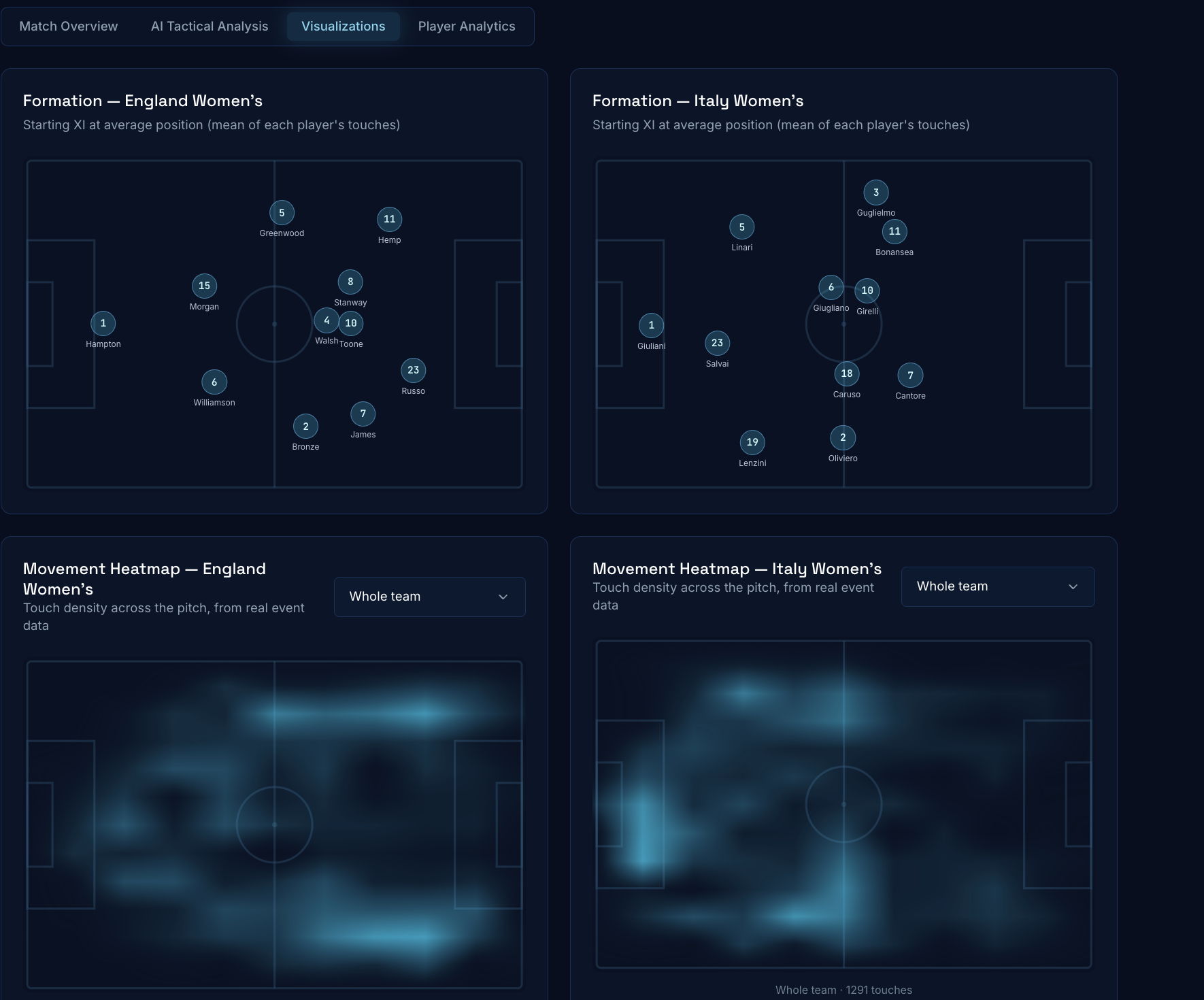
Heatmap/player formations
-
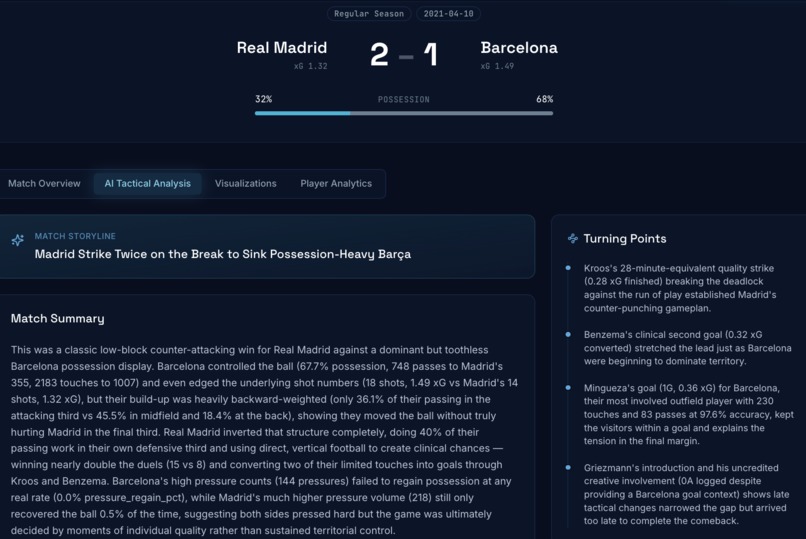
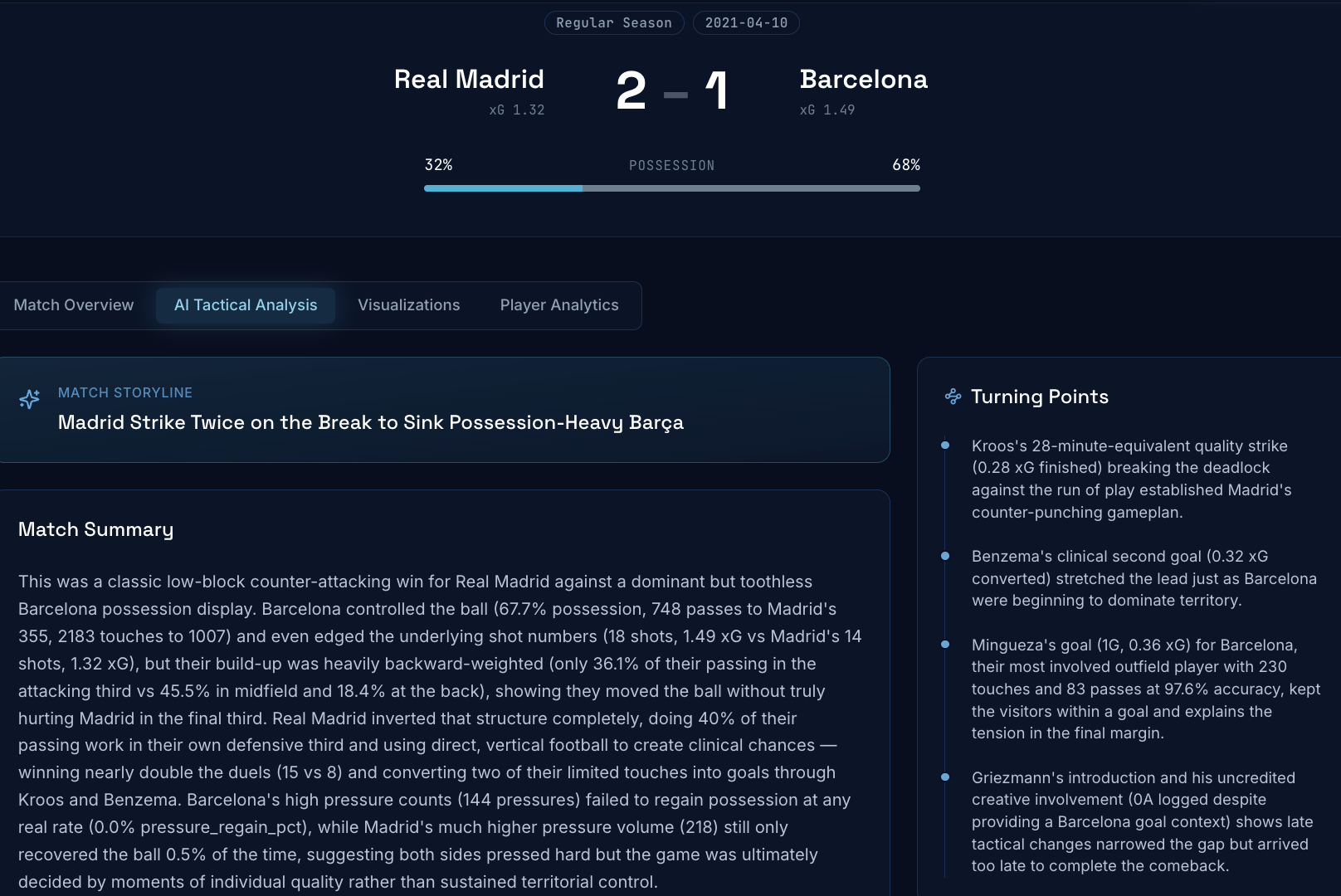
AI Match summary, overview and match timeline
Inspiration
Modern football analytics generate thousands of events per match, but turning that data into meaningful tactical insights still requires significant expertise. While fans and analysts have access to advanced metrics like expected goals (xG), passing networks, and touch maps, interpreting those statistics requires experience and time. We wanted to build a platform that bridges the gap between raw football data and tactical understanding by using AI as a reasoning layer. Rather than creating another chatbot or commentary generator, our goal was to build an analyst-grade tool that explains why a match unfolded the way it did.
What it does
TactiqAI is an AI-powered football analytics platform that transforms StatsBomb event data into actionable tactical insights. Users can browse historical matches, explore interactive heatmaps, passing networks, shot maps, and 3D visualizations, then receive structured AI-generated tactical analysis based on computed match statistics. The AI identifies each team's strengths and weaknesses, key turning points, standout performers, and evidence-backed tactical observations, making advanced football analytics accessible to coaches, analysts, and fans.
How we built it
We built TactiqAI using Next.js, TypeScript, and Tailwind CSS for the frontend, creating an interactive dashboard with Plotly heatmaps, React Flow passing networks, and Three.js visualizations. On the backend, we used FastAPI, Python, and Pandas to process thousands of StatsBomb event records into meaningful football metrics such as xG, possession, pass accuracy, player touches, and progressive passes. These engineered features are then sent to Claude as structured JSON, allowing the LLM to generate analyst-style tactical insights instead of reasoning over raw event data. Finally, Supabase is used to cache processed statistics and AI analyses for fast retrieval.
Challenges we ran into
One of the biggest challenges was working with event-level football data. StatsBomb provides thousands of nested JSON events per match, so we first had to engineer meaningful features before AI could reason effectively. We also had to carefully design prompts and structured outputs so the model produced reliable tactical insights rather than generic commentary. On the frontend, integrating multiple visualization libraries while keeping the interface responsive required significant iteration and debugging.
Accomplishments that we're proud of
We're proud of building an end-to-end applied AI system rather than simply integrating an LLM into a chatbot. TactiqAI combines data engineering, interactive visualizations, and structured AI reasoning into a cohesive platform that demonstrates a practical application of large language models. We also successfully transformed complex football event data into intuitive visual analytics that help users better understand matches.
What we learned
This project reinforced how important feature engineering is when building AI applications. We learned that LLMs perform significantly better when reasoning over structured, domain-specific statistics rather than raw data. We also gained experience integrating AI into a larger analytics pipeline, combining traditional data processing, visualization, and machine learning to create a more reliable and useful product.
What's next for TactiqAI
Our next goal is to support live match analysis, allowing users to receive tactical insights as games unfold. We also plan to add player and team comparison tools, retrospective coaching recommendations, richer visualizations, and computer vision models that analyze broadcast footage alongside event data. Long term, we envision TactiqAI becoming an AI-powered tactical analysis platform for coaches, analysts, clubs, and football fans.
Built With
- anthropic
- api
- css
- fastapi
- javascript
- json
- nextjs
- pandas
- python
- sql
- supabase
- tailwind
- typescript


Log in or sign up for Devpost to join the conversation.