-
-
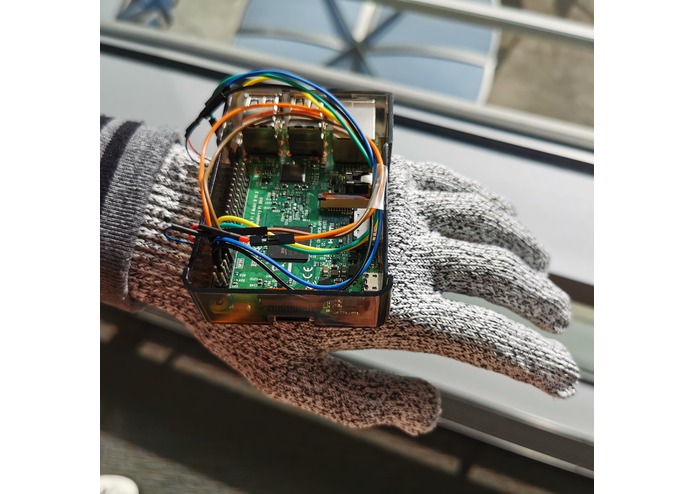
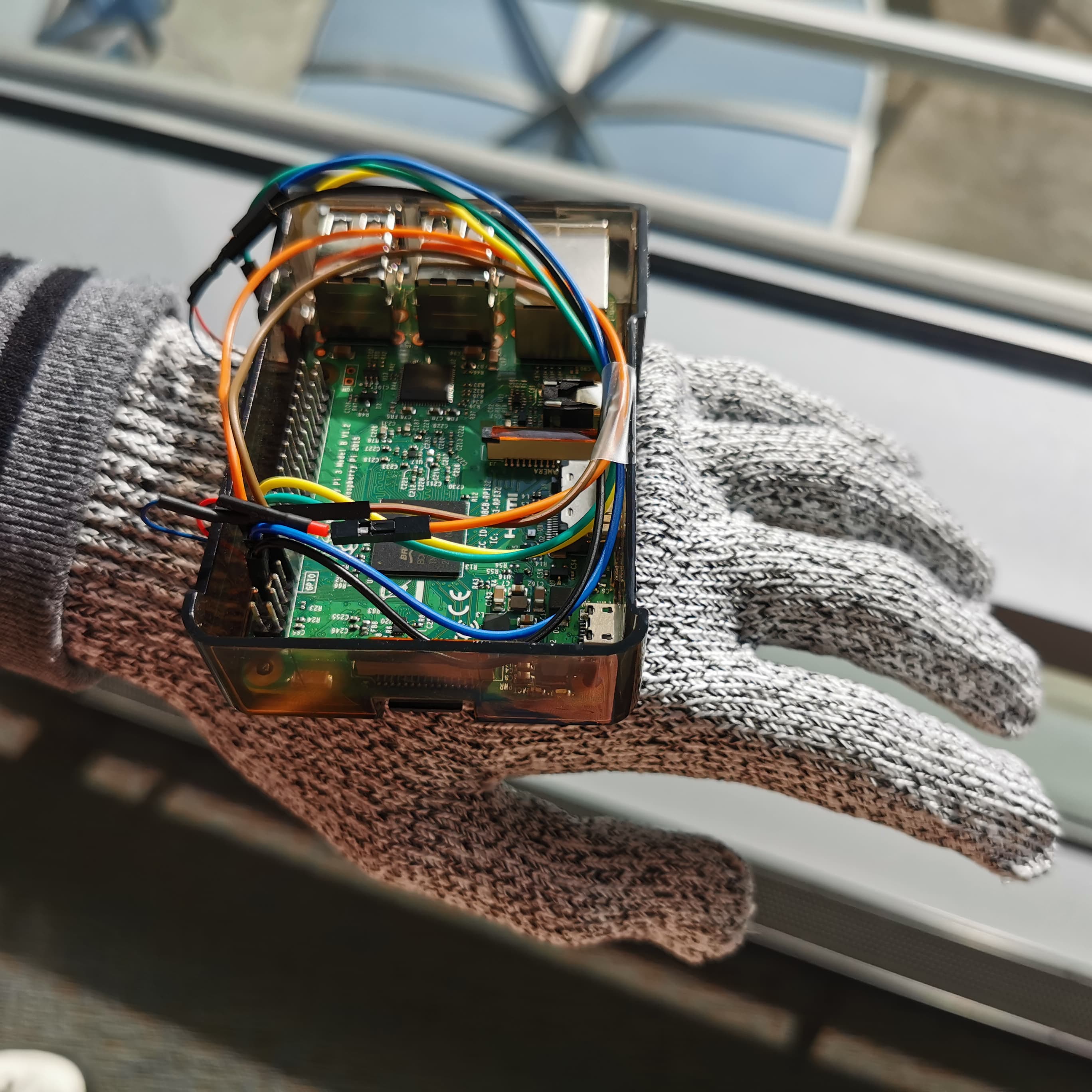
Tactile Navi mounted on the back of a glove
Project presentation link: https://docs.google.com/presentation/d/12gHjIjsEEhJqDECsIlv7ubJlGz3gjm6668VwjXpvEoM/edit?usp=sharing
Inspiration
Many people who are visually or hearing impaired have difficulty using navigation apps like Google Maps. Those who are visually impaired are unable to follow visual cues and those who are hearing impaired are unable to follow verbal cues from such apps.
What it does
Tactile Navi provides a convenient alternative to navigation apps like Google Maps for the visually and hearing impaired. Instead of on-screen or spoken instructions, vibrating discs on a glove are used to direct users.
How we built it
For the programming aspect of our project, we created a script that scrapes all the information that we need and sends commands to our Tactile Navi device. The script uses Google’s geocode API to extract the user’s starting location, final destination, and directions to get from point A to point B. It also constantly scrapes the user’s current location. When the user arrives at a location where they must make a turn, the script will trigger a slight tap on the back of the user’s hand in the direction of the turn. The user also receives a constant forward tap when they should continue walking straight without turning left or right. We condensed our project to have it run on a raspberry pi and to use small vibrating discs so that it can be mounted easily on the back of a glove as you see here.
Challenges we ran into
The team had trouble figuring out how exactly to use Google's Geocode and Geolocation API as well as the raspberry pi as they are all tools that the entire team had no previous experience in.
Accomplishments that we're proud of
As a group of beginner hackers, our team is proud of the amount we were able to learn and accomplish within 24 hours. We came in as beginners with basic python knowledge and left with knowledge on how to use Google's Geocode and Geolocation API, HTTPS requests, and raspberry pis.
What we learned
We learned how to use Google's Geocode and Geolocation API and HTTPS requests to scrape and parse information from Google Maps. Our team also gained knowledge on the use of raspberry pis and the vibrating discs.
What's next for TactileNavi
With further development, Tactile Navi will replace the white cane. We will implement an ultrasonic sensor to alert the user of obstacles in their surroundings. It can also be further mobilized by reducing its size for added convenience. The future implications of Tactile Navi are huge. Help us in getting 1.4 billion people on the road.
Built With
- google-geocode-api
- python
- raspberry-pi
- vibrating-discs


Log in or sign up for Devpost to join the conversation.