-
-
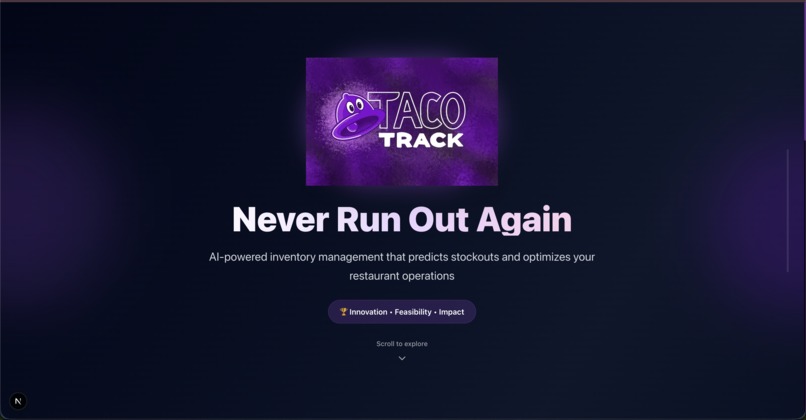
Landing Page Pt. 1
-
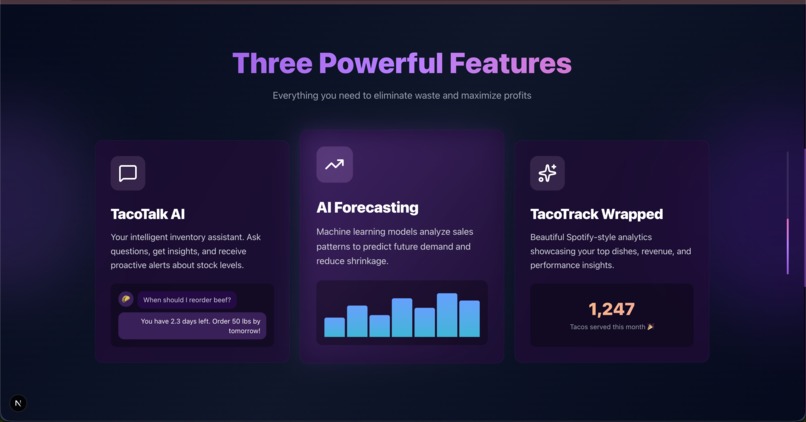
Landing Page Pt 2.
-
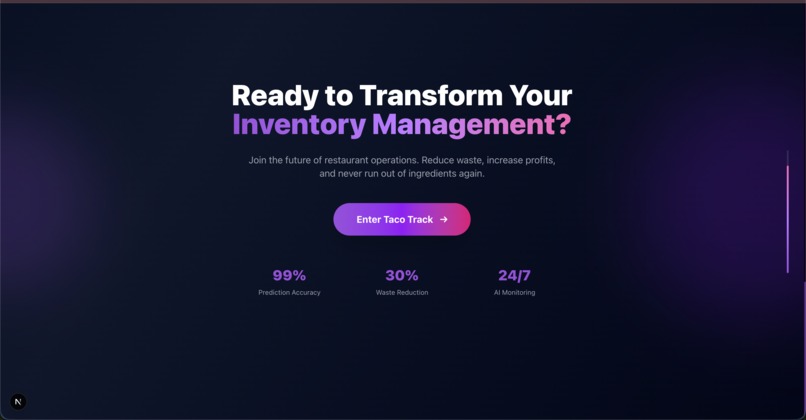
Landing Page Pt 3.
-
Logo
-
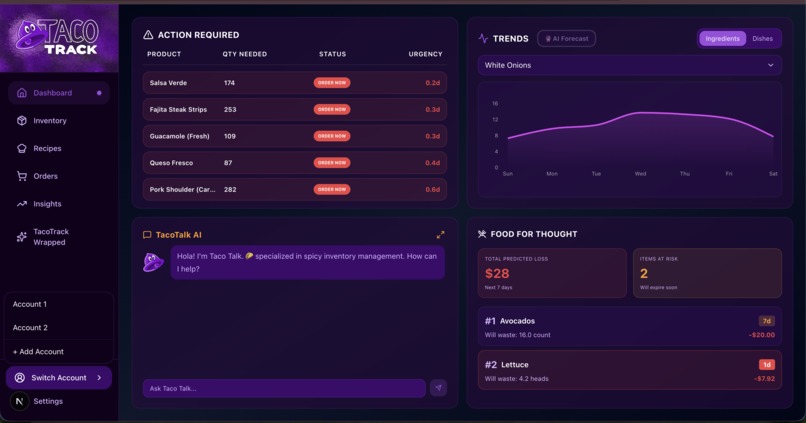
Full Screen
-
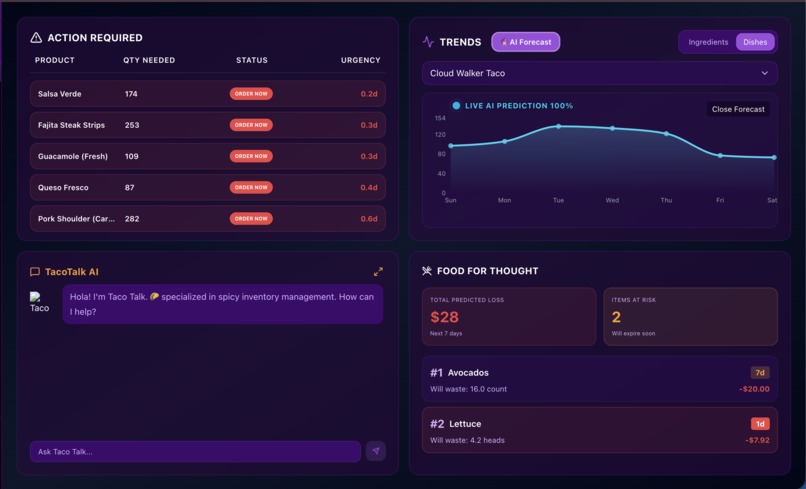
Dashboard
-
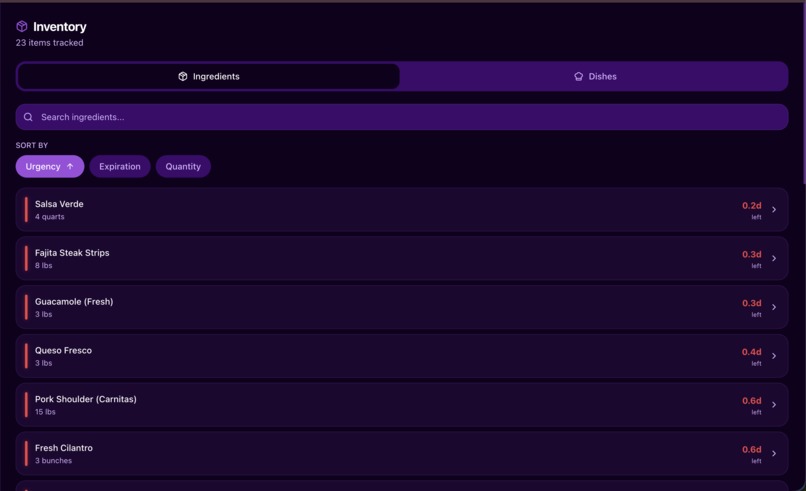
Inventory
-
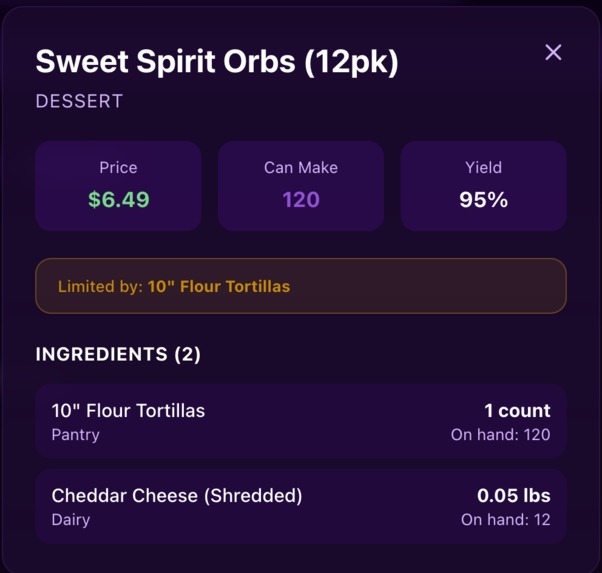
Recipe
-
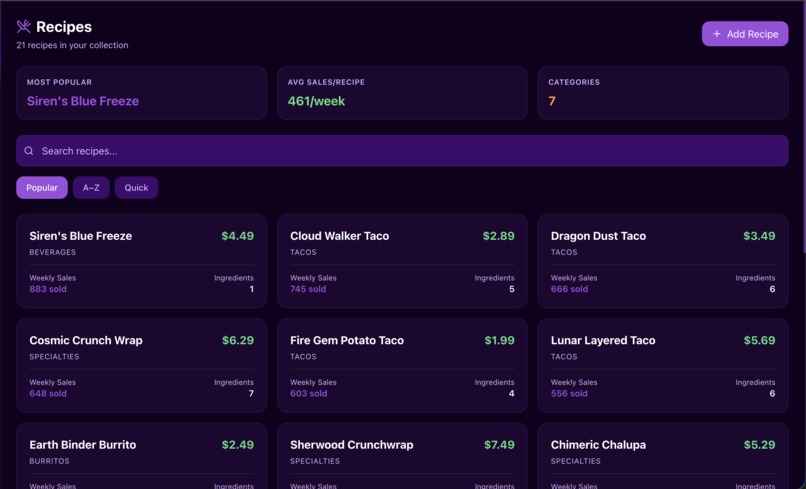
Recipes
-
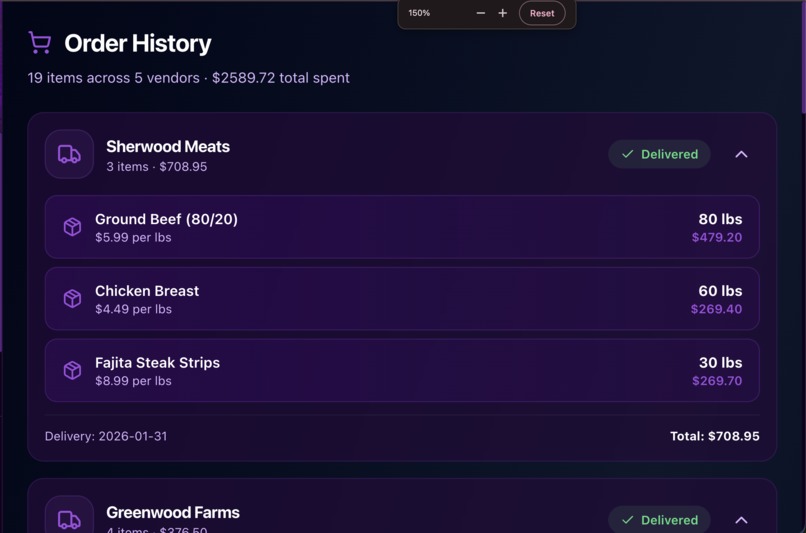
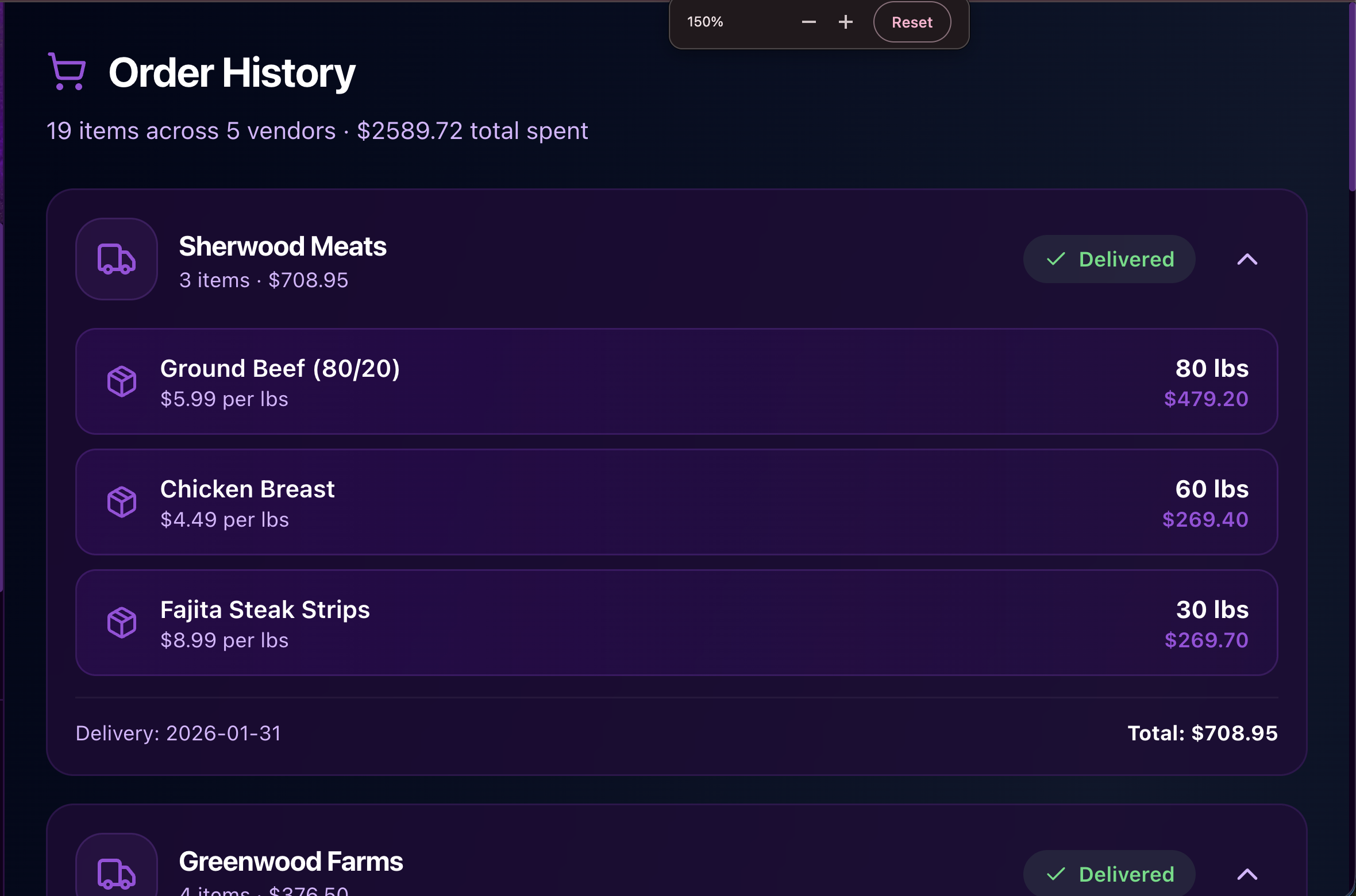
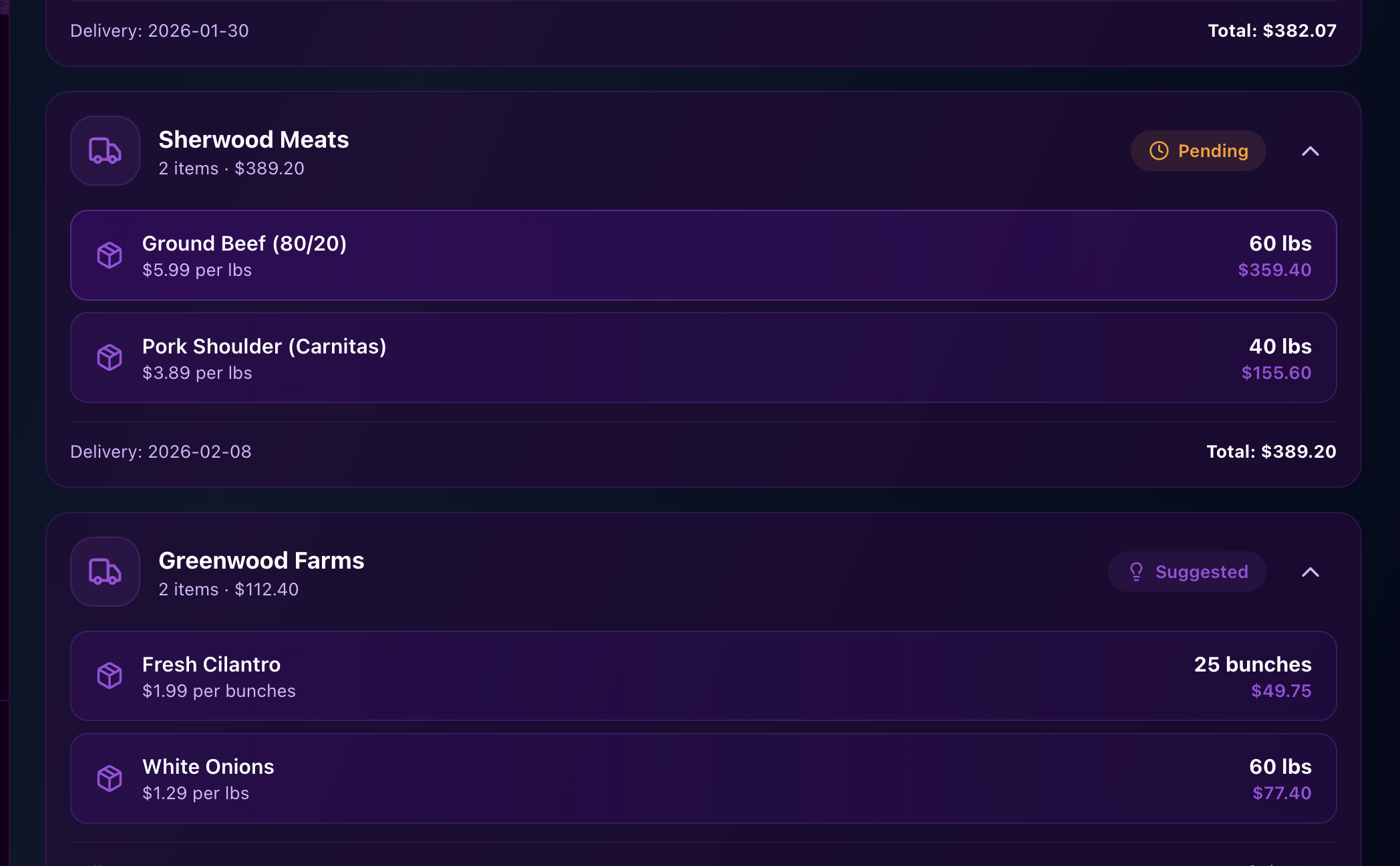
Orders
-
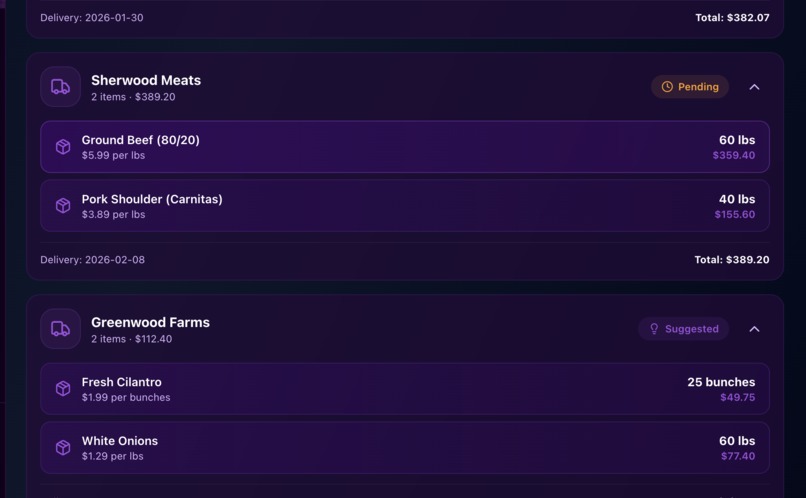
Orders (continued)
-
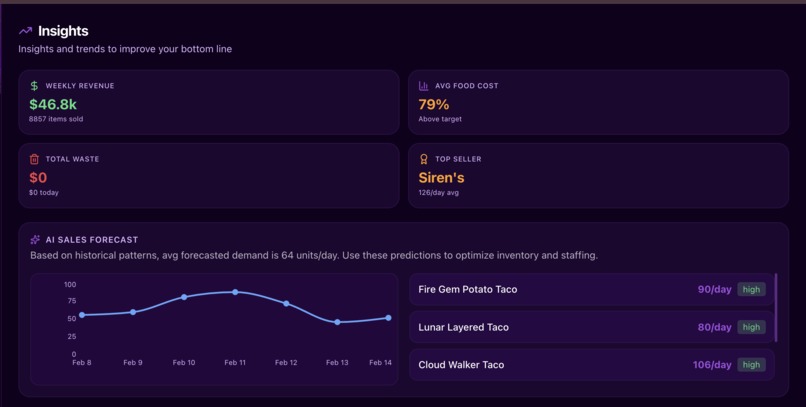
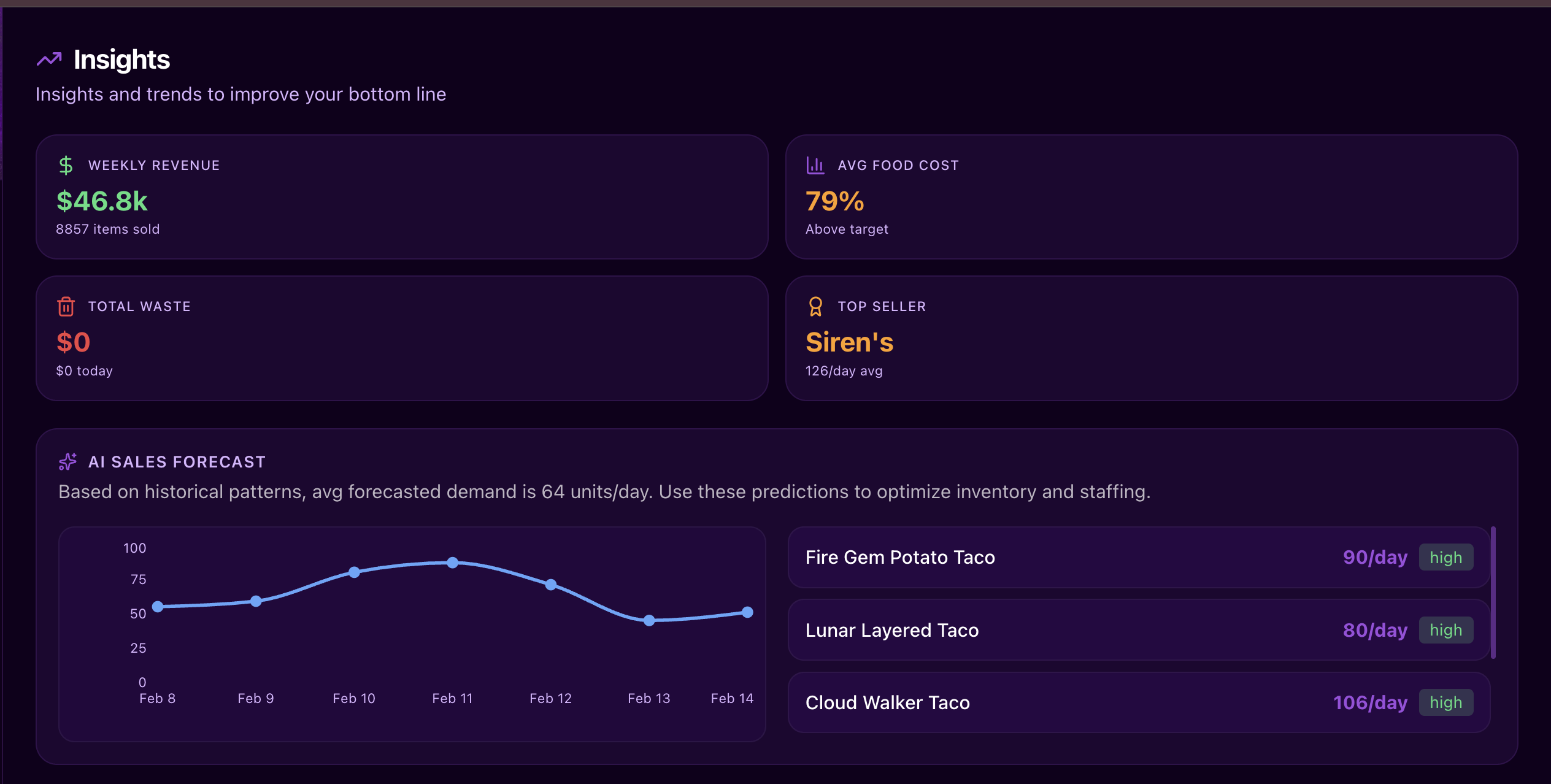
Insights
-
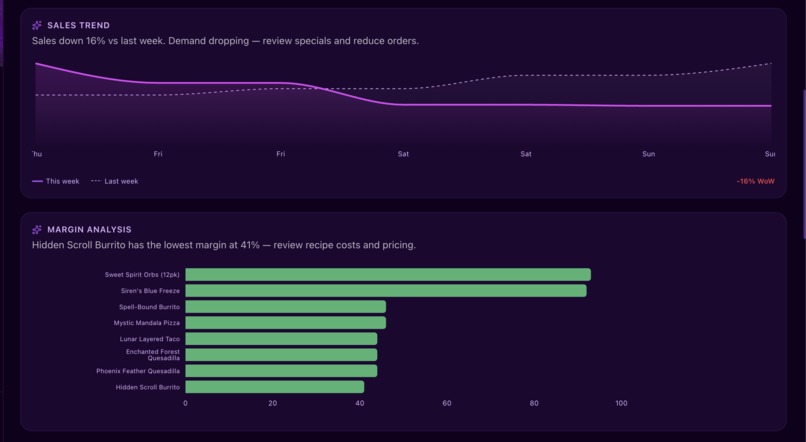
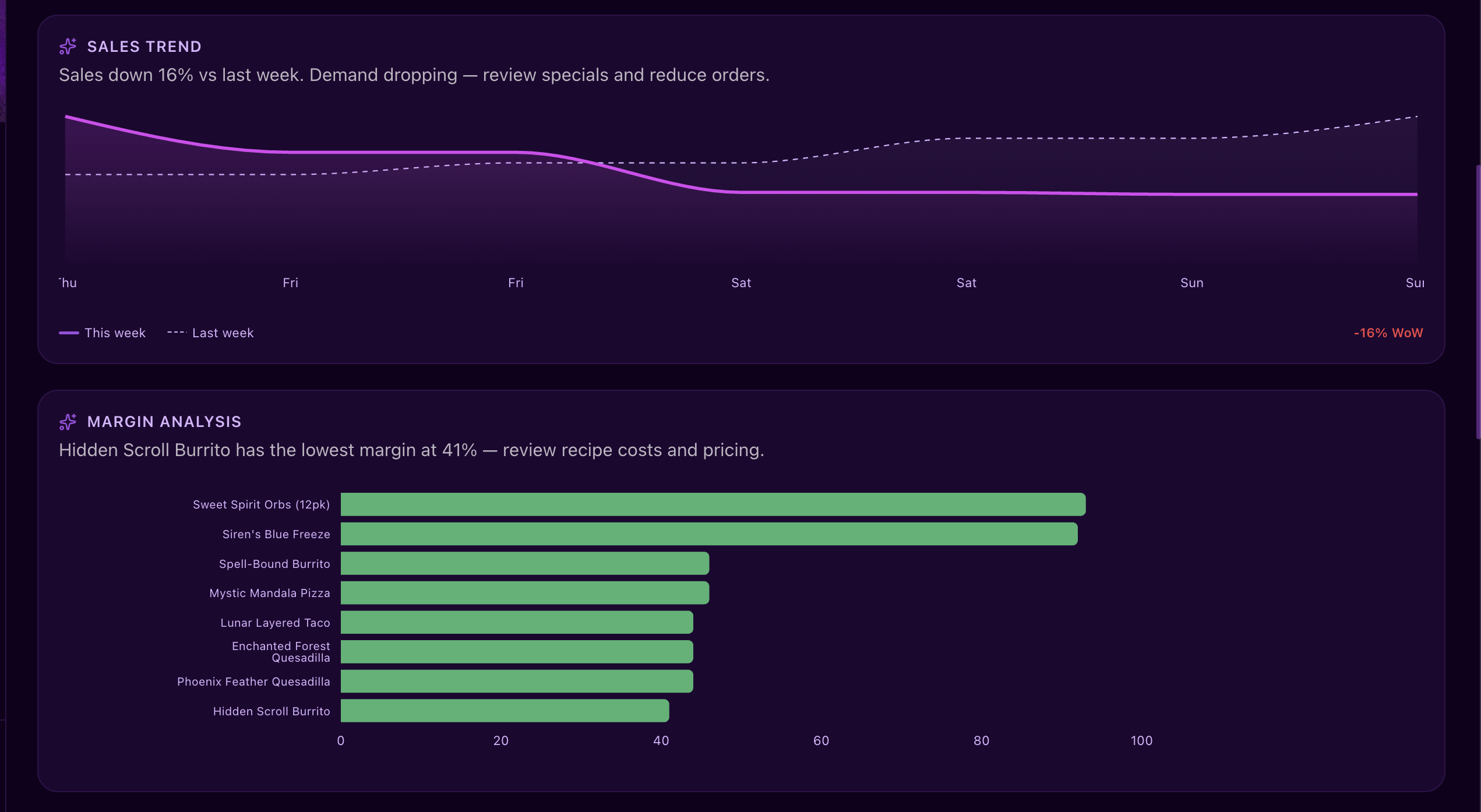
Insights (continued)
-
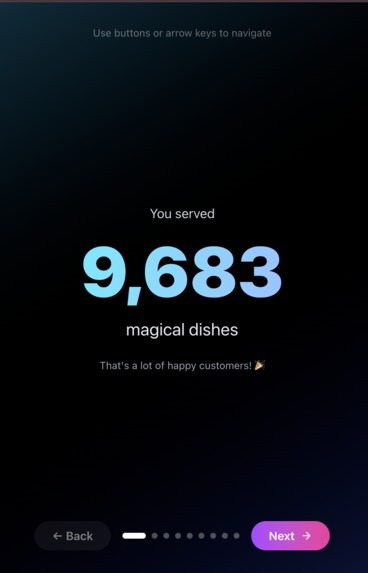
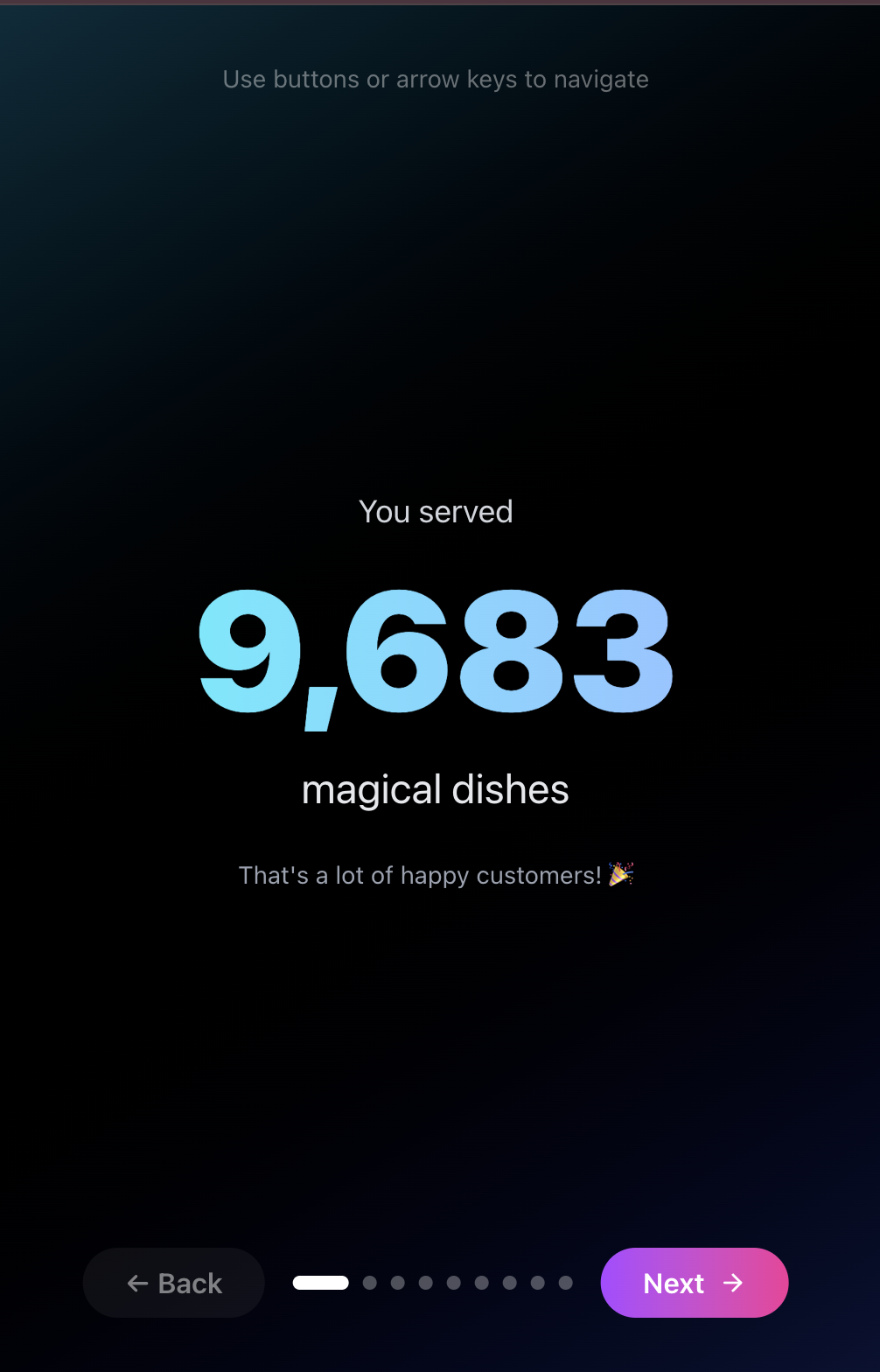
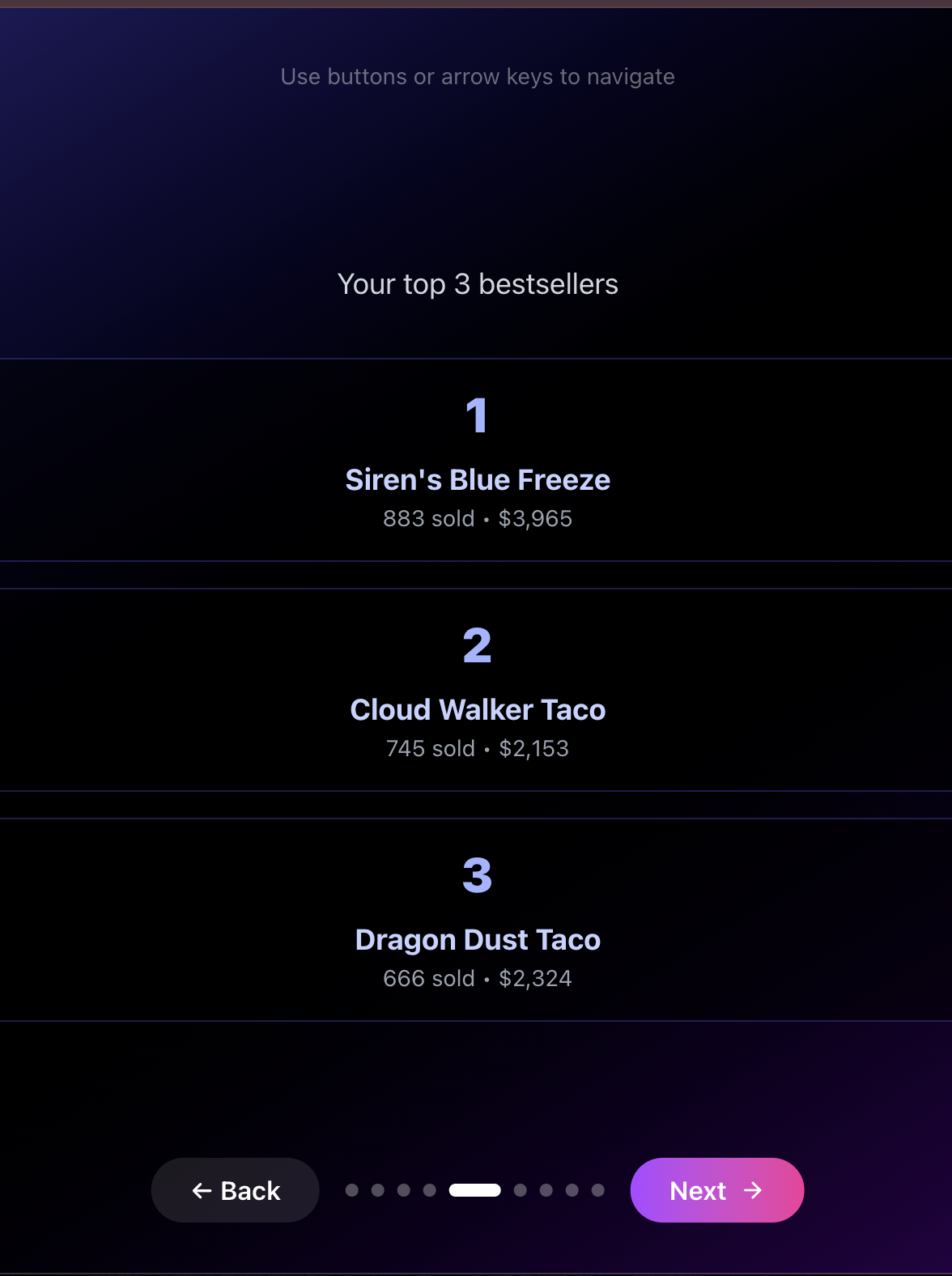
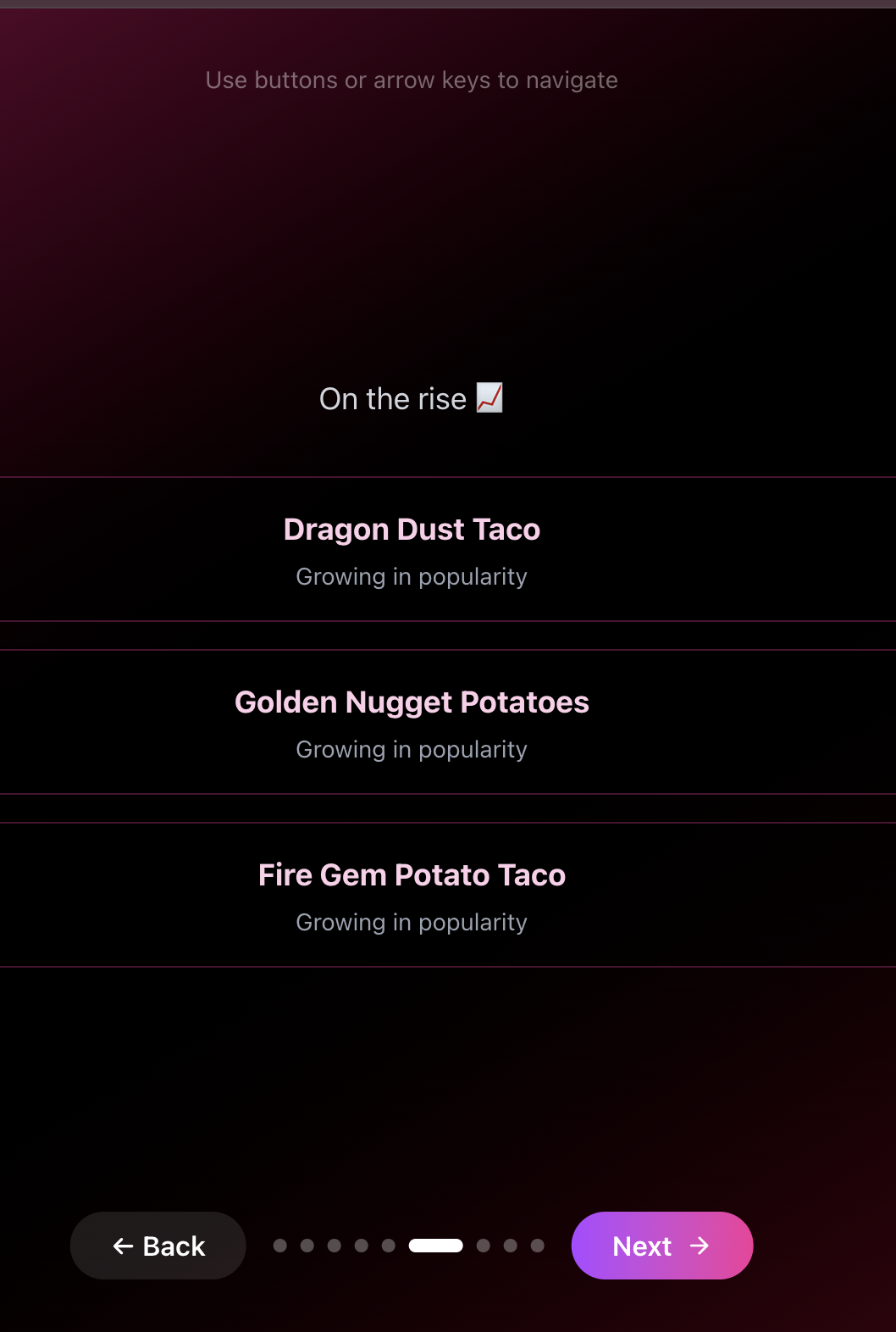
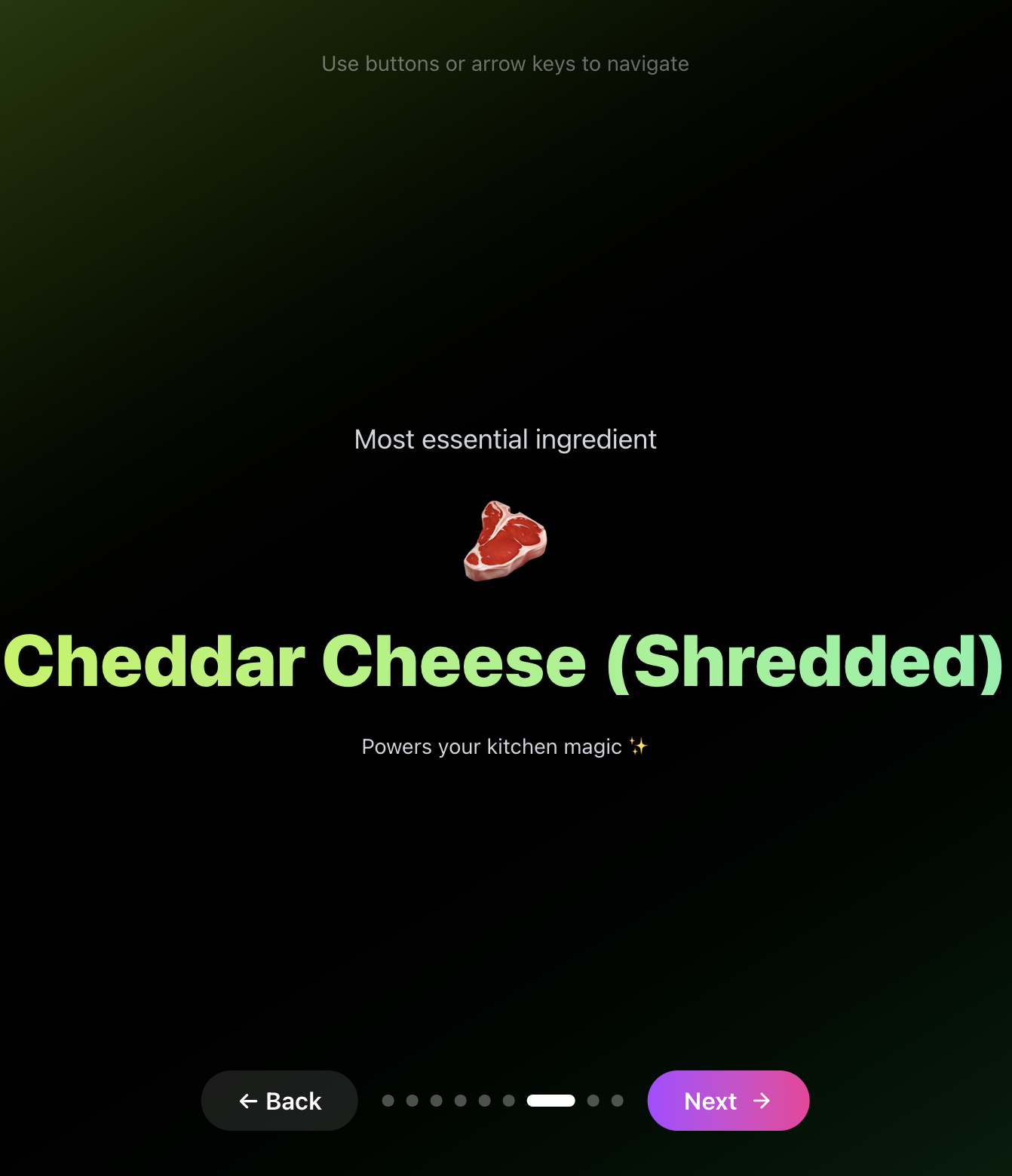
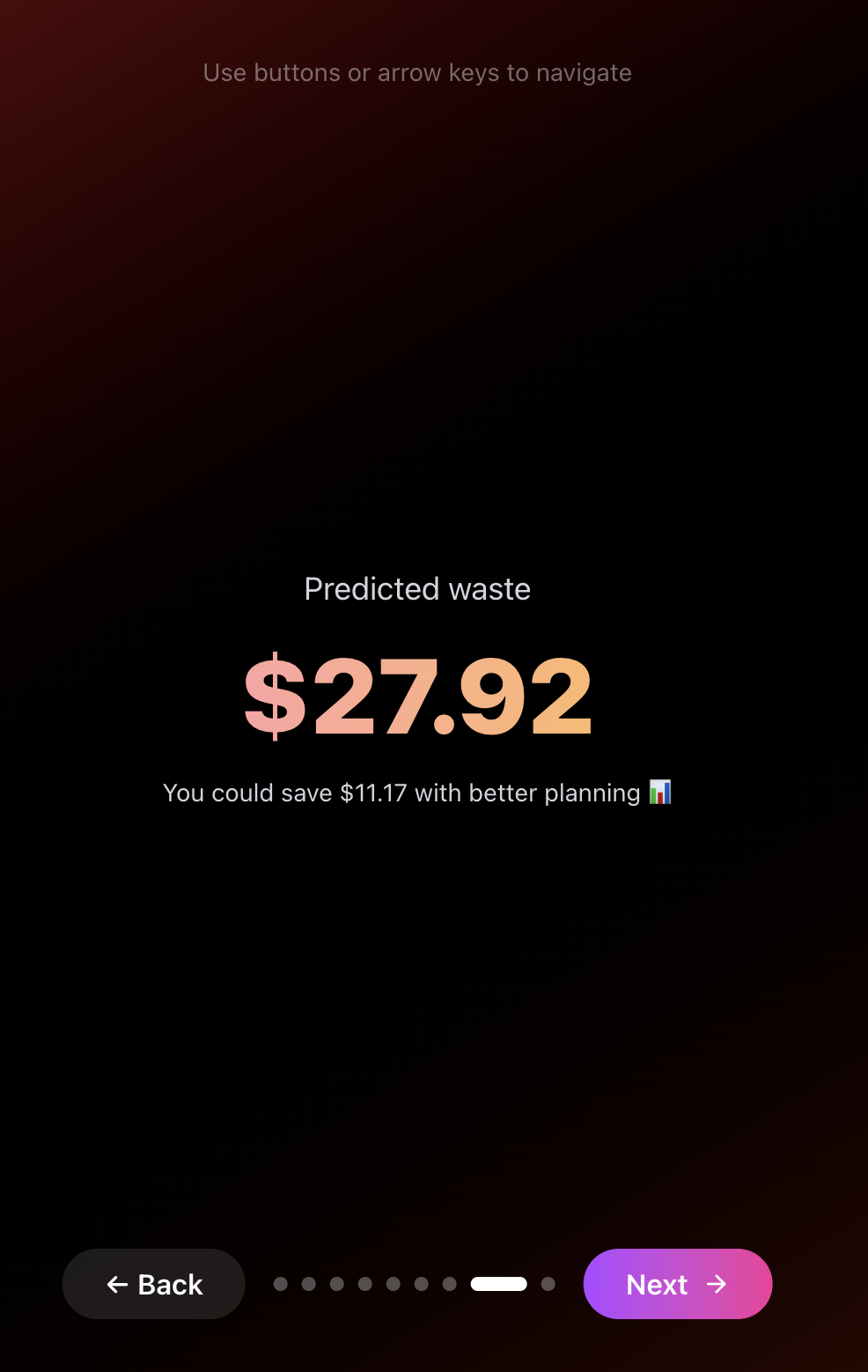
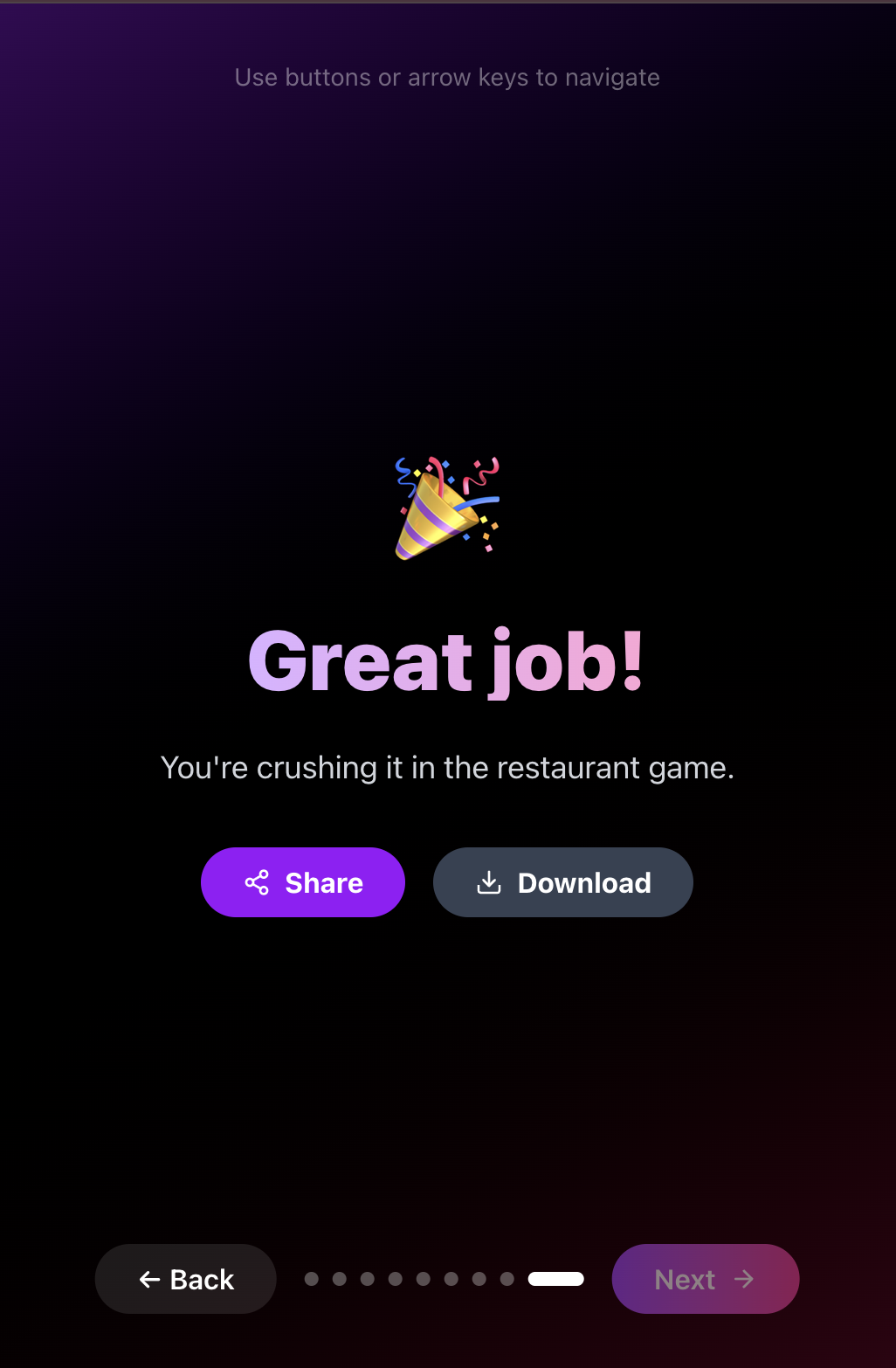
TacoTrack Wrapped
-
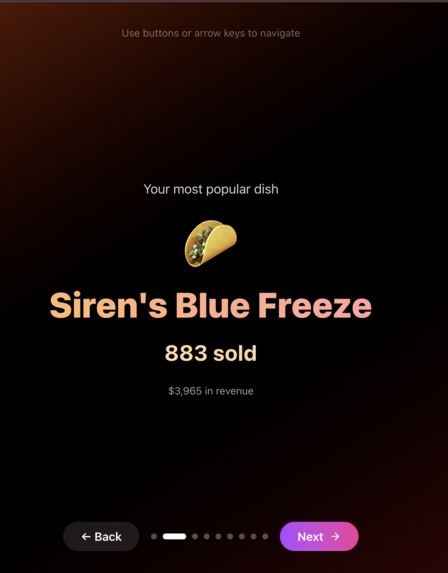
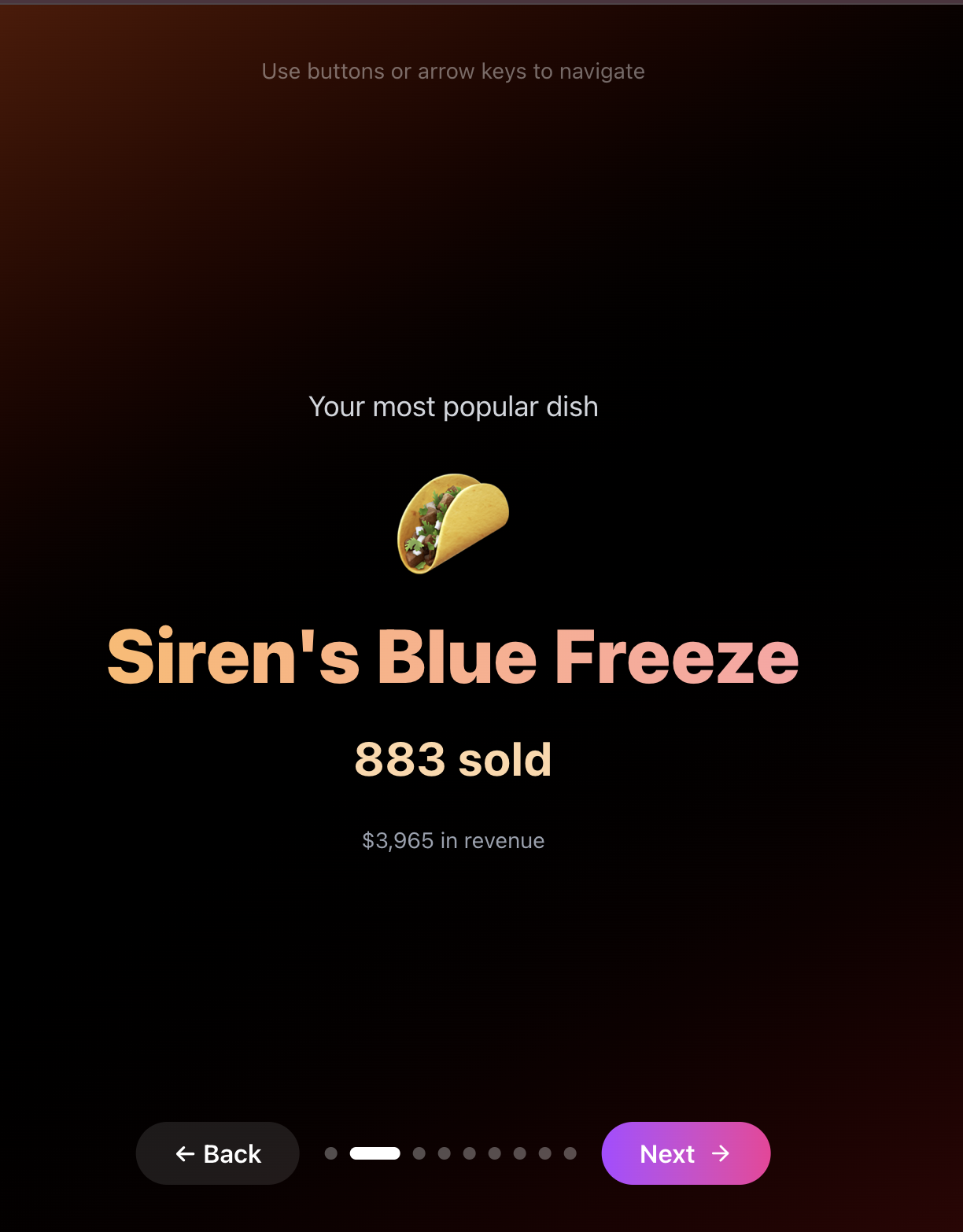
TacoTrack Wrapped (continued)
-
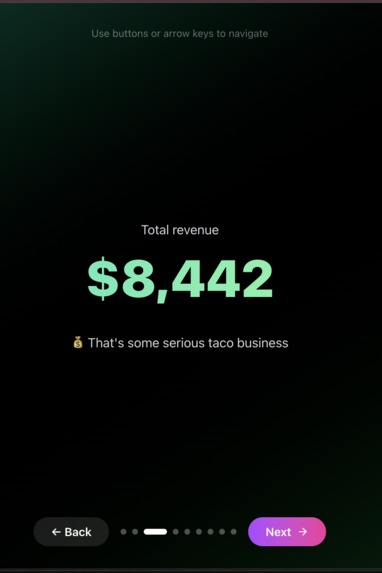
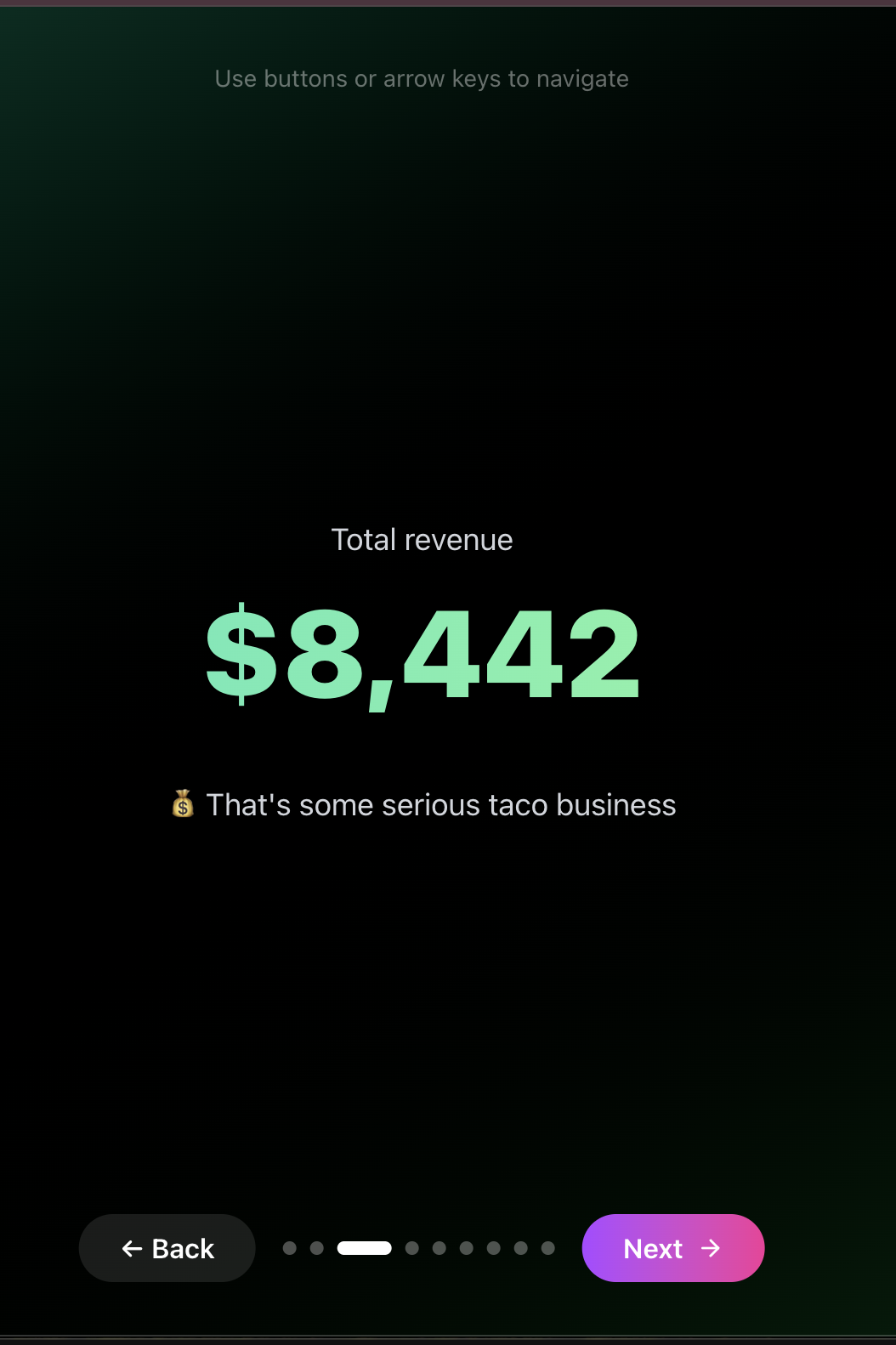
TacoTrack Wrapped (continued)
-
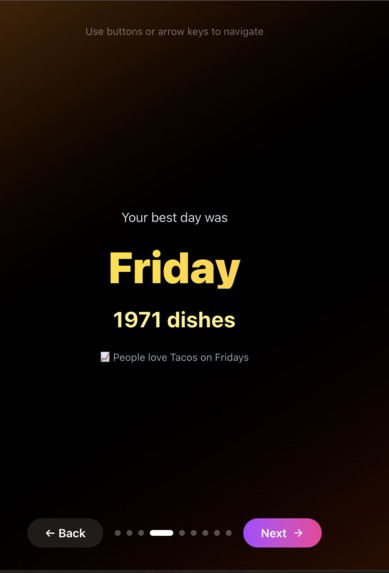
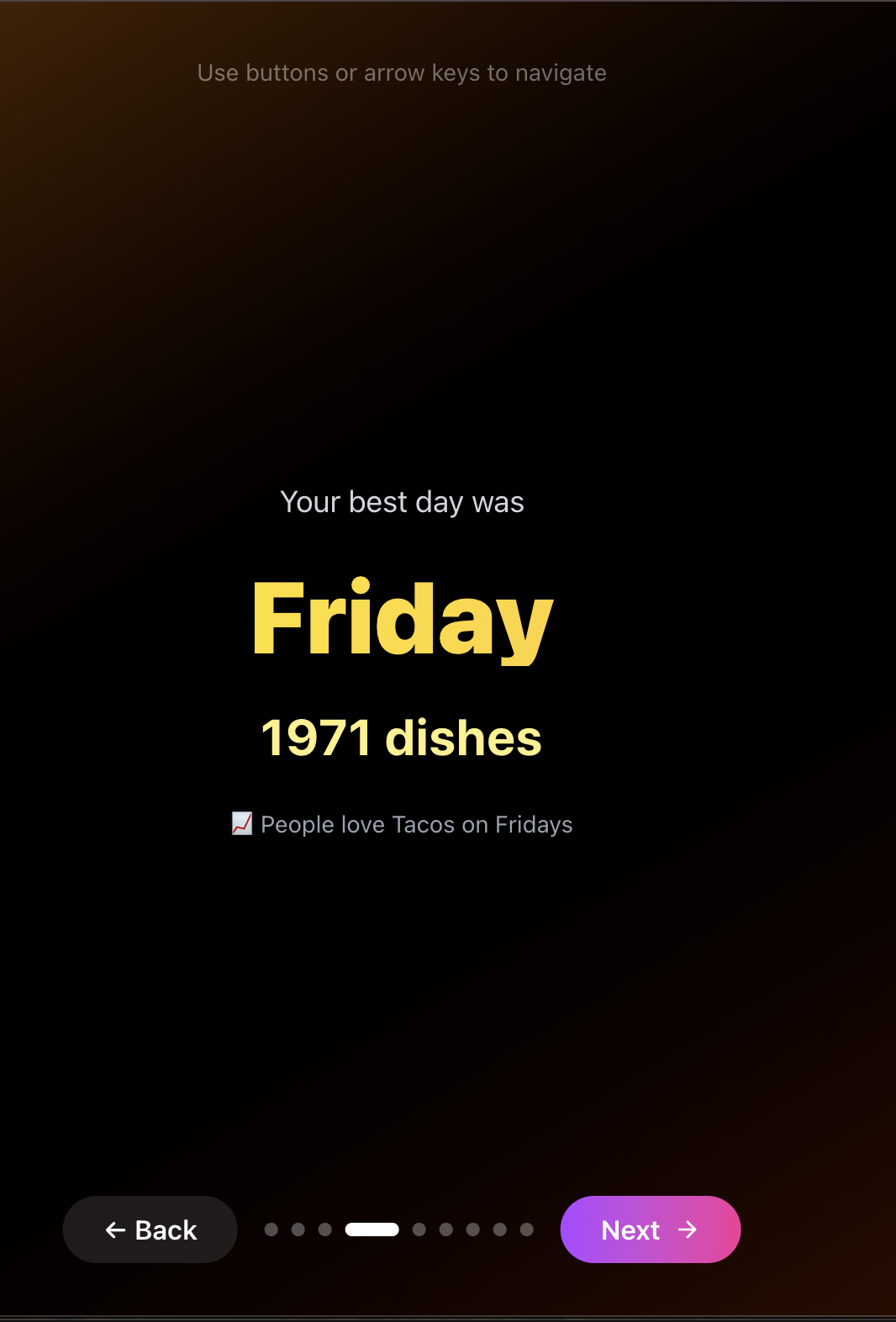
TacoTrack Wrapped (continued)
-
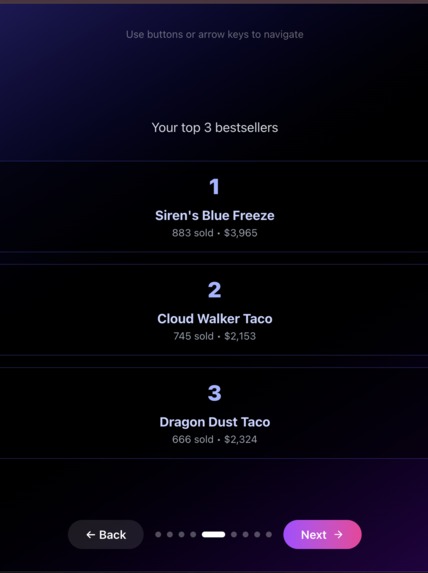
TacoTrack Wrapped (continued)
-
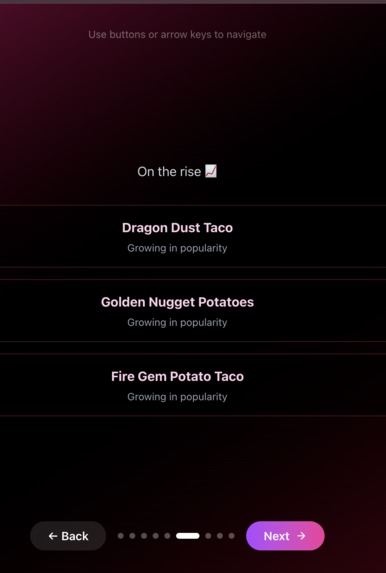
TacoTrack Wrapped (continued)
-
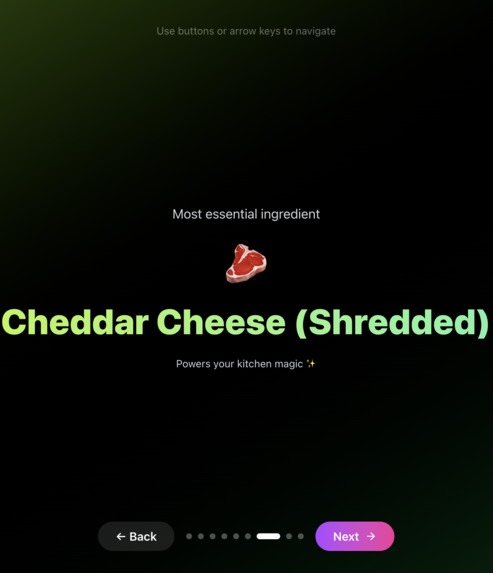
TacoTrack Wrapped (continued)
-
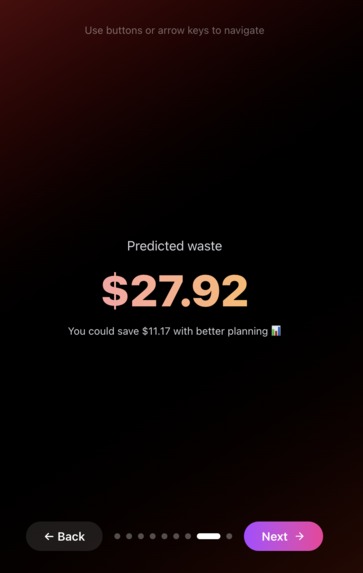
TacoTrack Wrapped (continued)
-
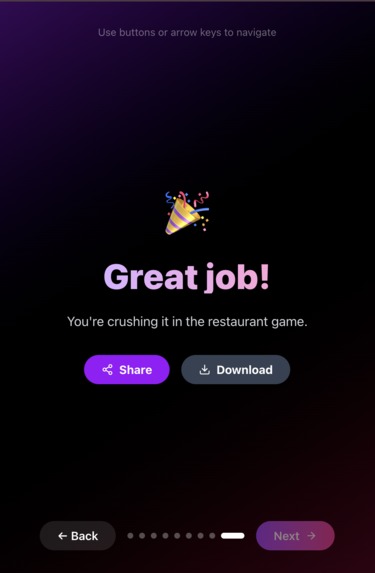
TscoTrack Wrapped (continued)
-
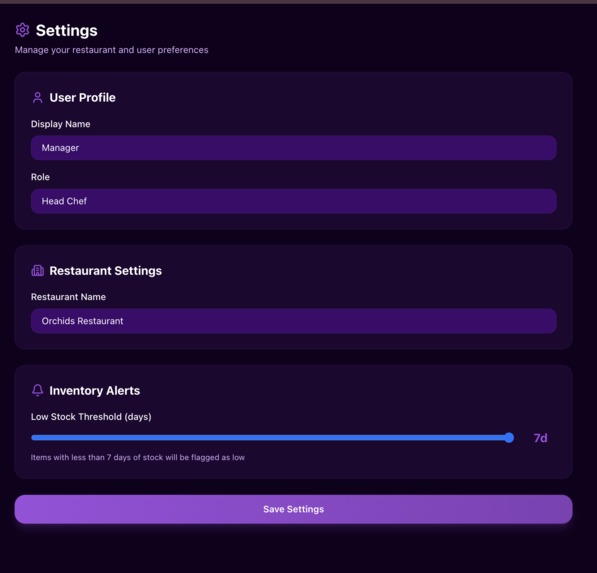
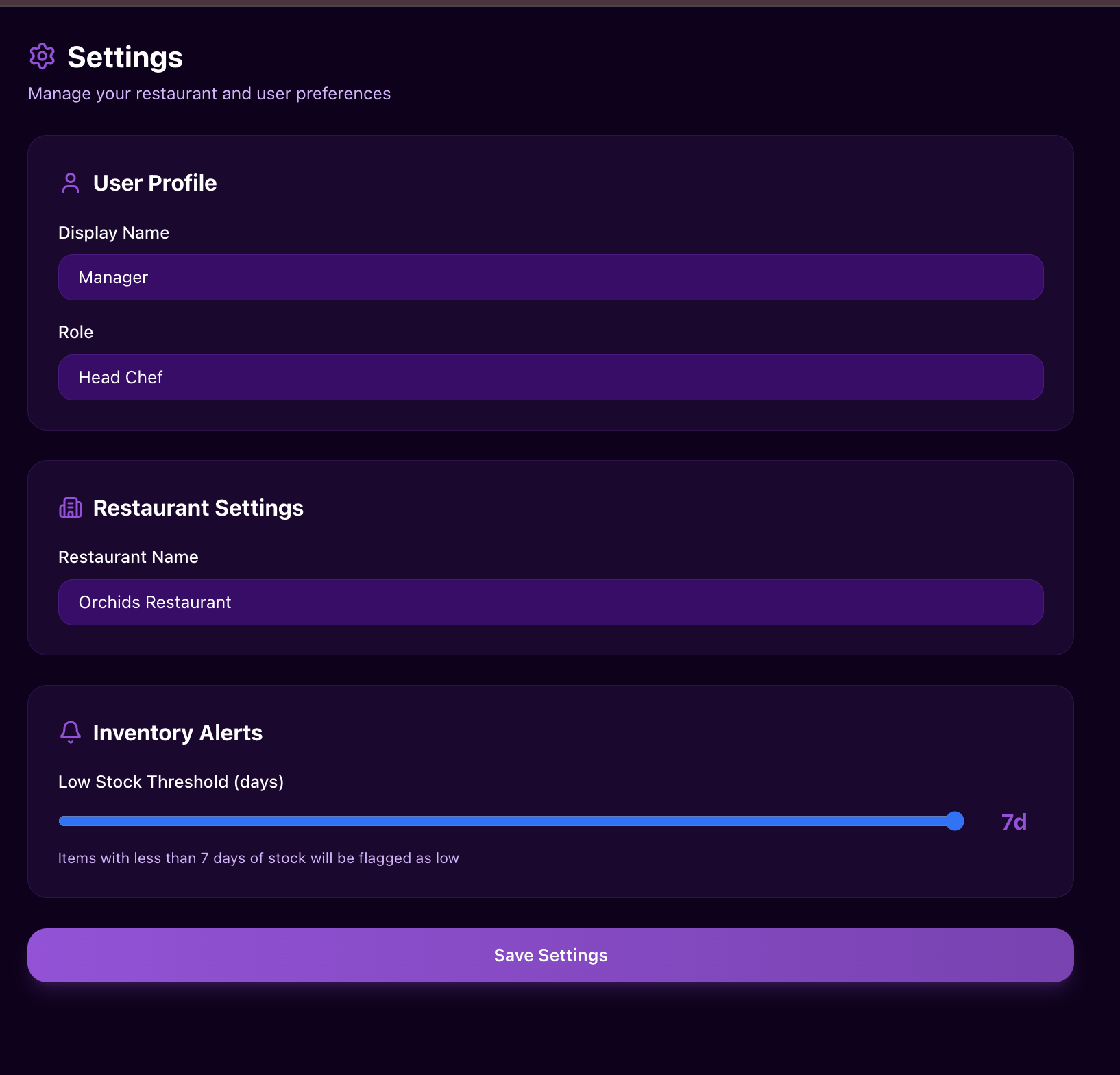
Settings
Inspiration
It started with Taco Bell.
Not the business idea. The obsession. Our team has a borderline unhealthy relationship with Taco Bell. Late-night Crunchwrap runs. Breakfast Crunchwrap justifications. The sacred post-hackathon Baja Blast tradition. We've debated whether the Cheesy Gordita Crunch is structurally superior to the Quesarito (it is). We've even ranked every item on the menu. Kidding. (Maybe)
So when we learned that restaurants waste $162 billion annually due to poor inventory management, we couldn't stop thinking about it through the lens of tacos. How many perfectly good tortillas get tossed? How much ground beef expires unused? How many times has someone wanted a Crunchwrap but the store ran out of ingredients?
That's when it hit us: if Taco Bell can perfect the supply chain to serve millions of tacos daily, why can't every restaurant have that same power? Countless need what Taco Bell has: smart systems that predict demand, prevent waste, and keep the Crunchwraps flowing.
But most restaurants can't afford enterprise-level inventory systems. They need something simple, smart, and actually fun to use. They need an AI assistant that speaks their language. "When should I reorder ground beef?" "What's going to waste this week?" "How many tacos will I sell tomorrow?"
That's why we built TacoTrack—because our love for tacos taught us that great food should never go to waste. 🌮
What it does
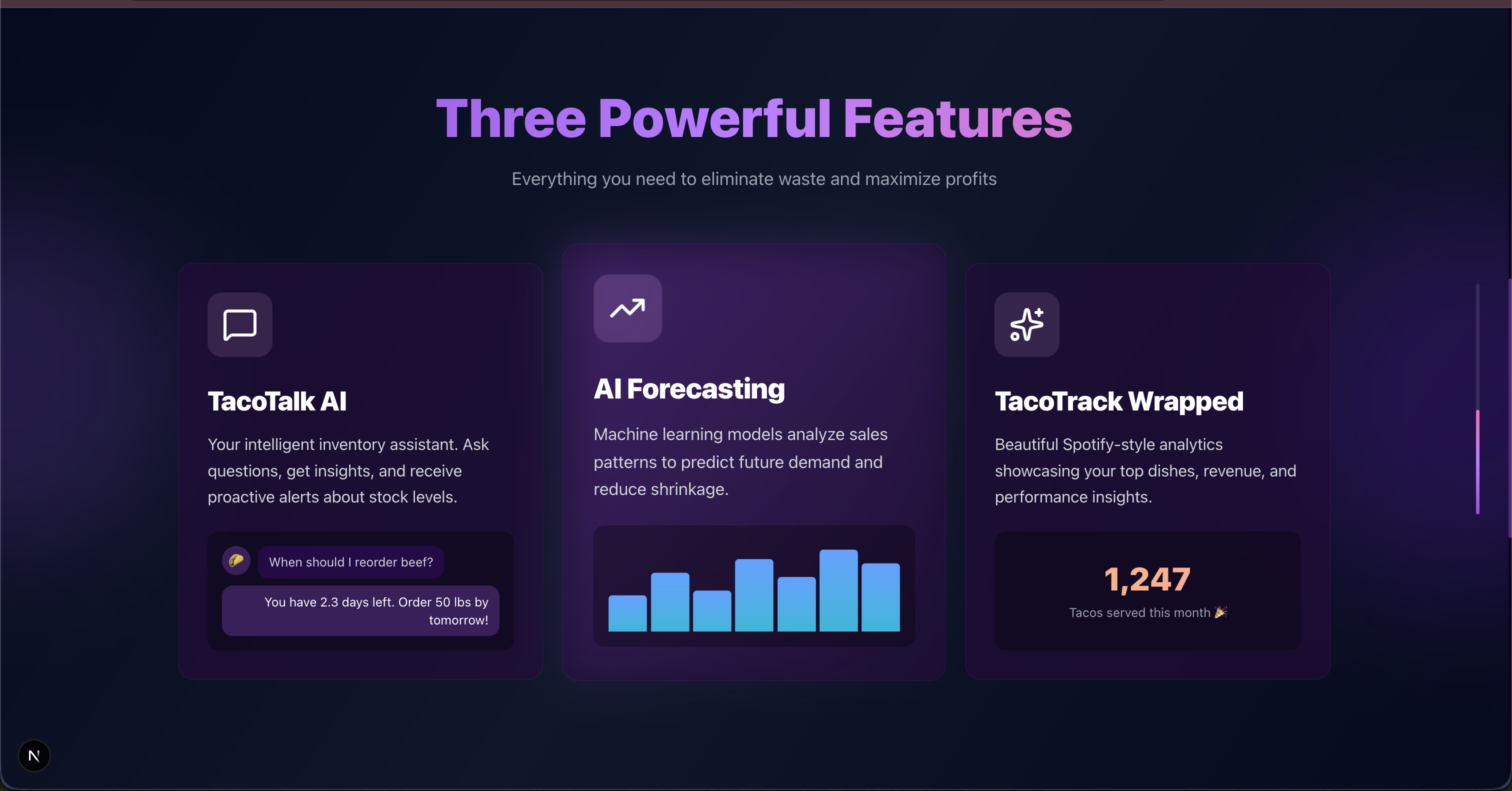
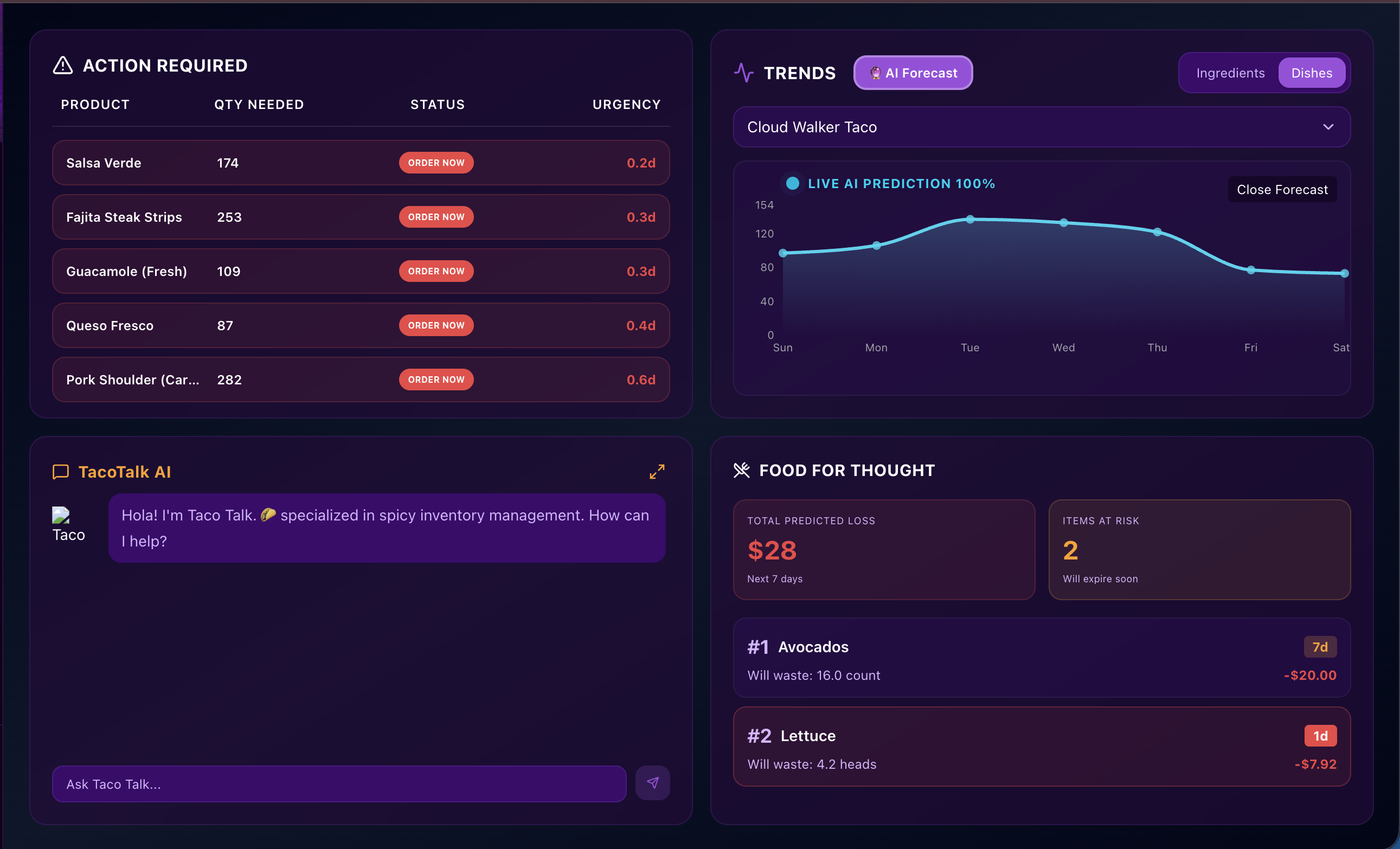
TacoTrack is an AI-powered inventory management system that eliminates waste and prevents stock-outs through three breakthrough features:
1. TacoTalk AI - Your 24/7 Inventory Assistant
Ask questions in plain English and get instant, intelligent answers:
- "When should I reorder ground beef?" → AI calculates days remaining and suggests order quantities
- "Which ingredients are we wasting the most?" → Real-time analysis of cost impact
- "Create a shopping list for this weekend" → Generates prioritized orders based on usage patterns
- "Forecast sales for next week" → Triggers ML predictions and displays animated forecasts
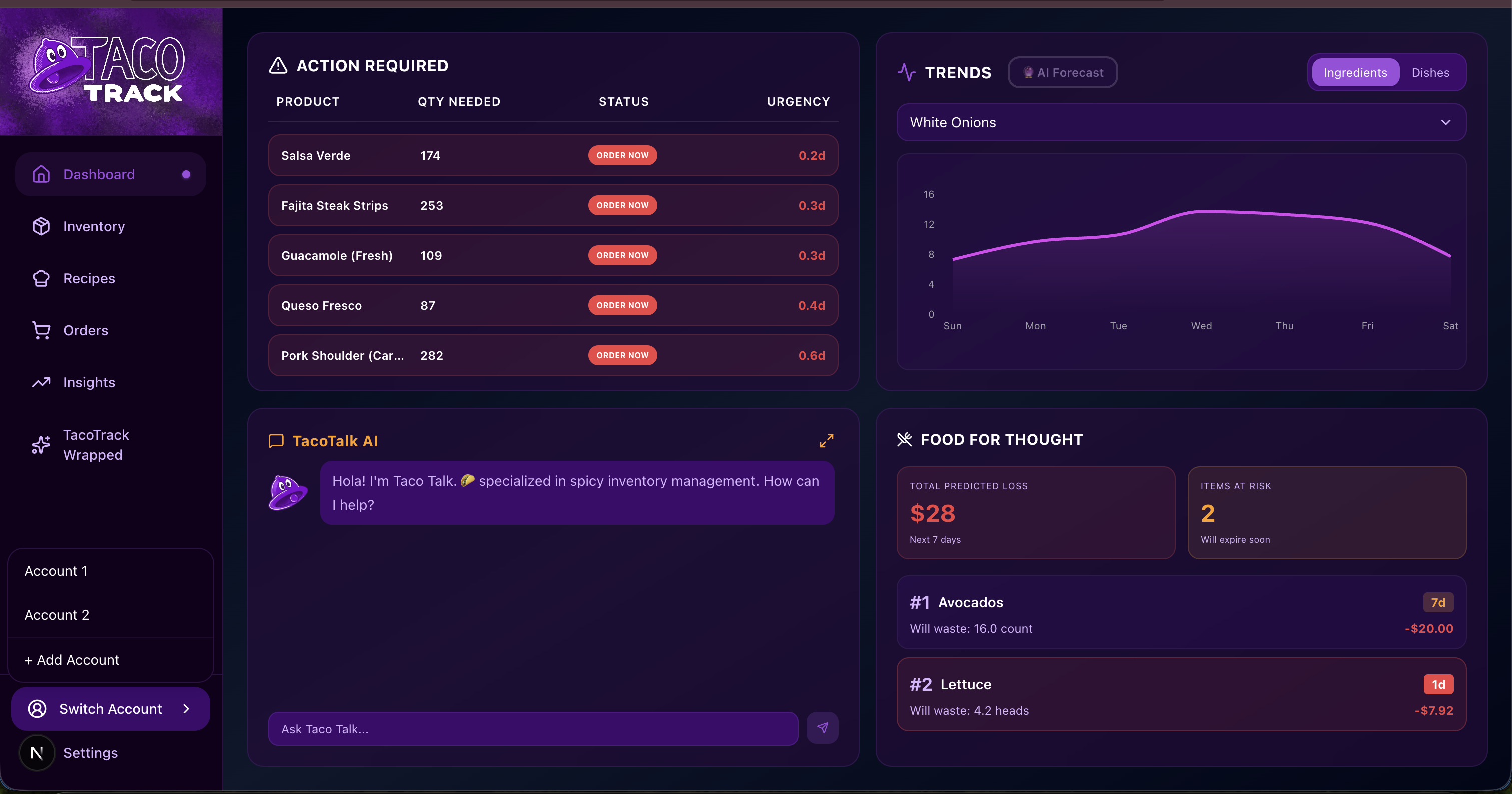
The AI has full context of your inventory, costs, sales history, and waste patterns—it's like having an expert inventory manager on call 24/7.
2. AI Demand Forecasting - Predict with 99% Accuracy
Our machine learning model analyzes historical sales patterns and predicts demand 7 days ahead with confidence scoring. Watch as the forecast line draws itself across the chart, showing exactly how many units you'll sell each day. No more guessing—just data-driven ordering that prevents both stockouts and over-ordering.
3. TacoTrack Wrapped - Make Data Fun
Inspired by Spotify Wrapped, we turn boring business analytics into shareable celebrations. Restaurant owners see their top dishes, total revenue, and performance metrics in beautiful, animated cards they can post on social media. It's not just analytics—it's a reason to celebrate your success and attract new customers.
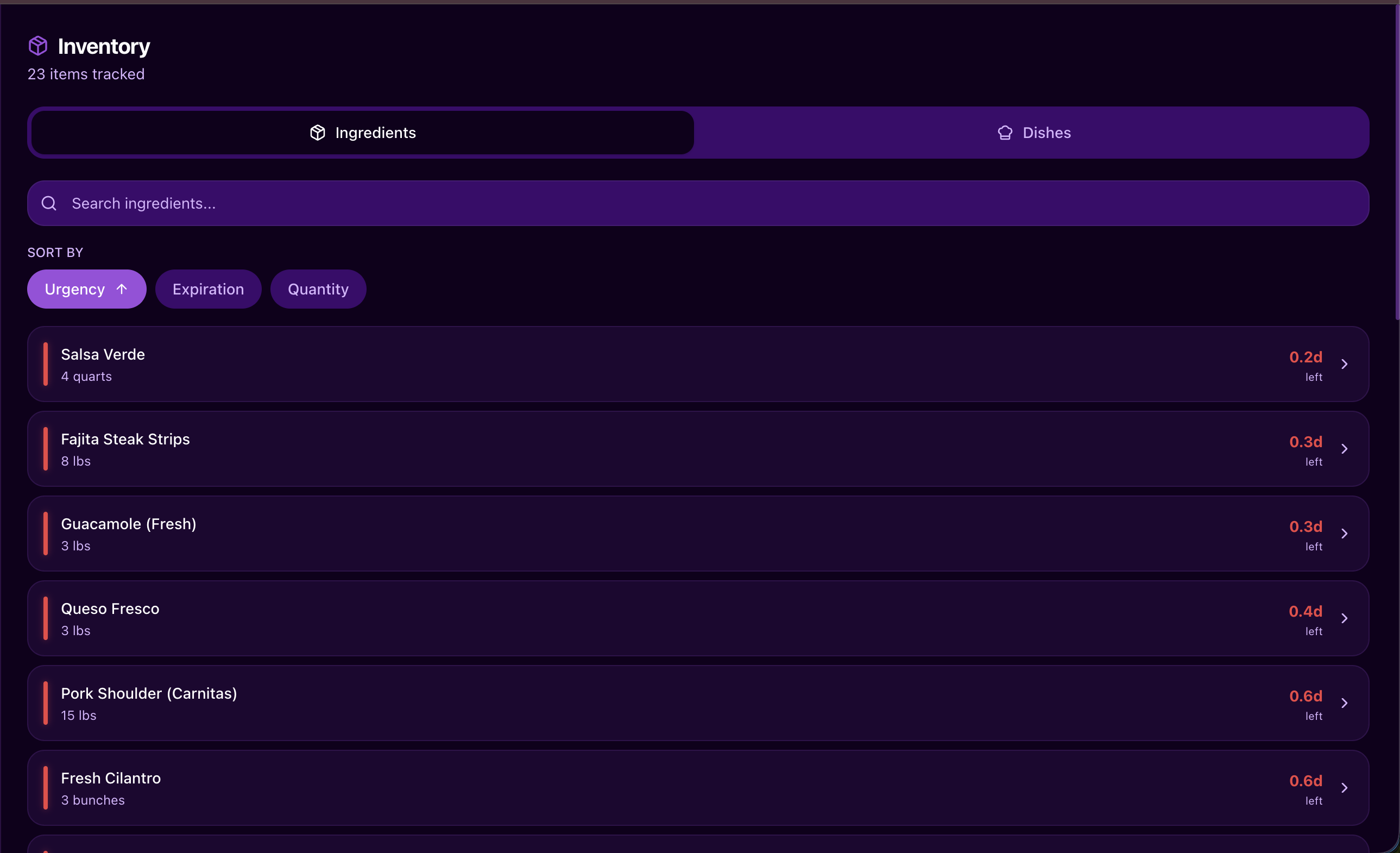
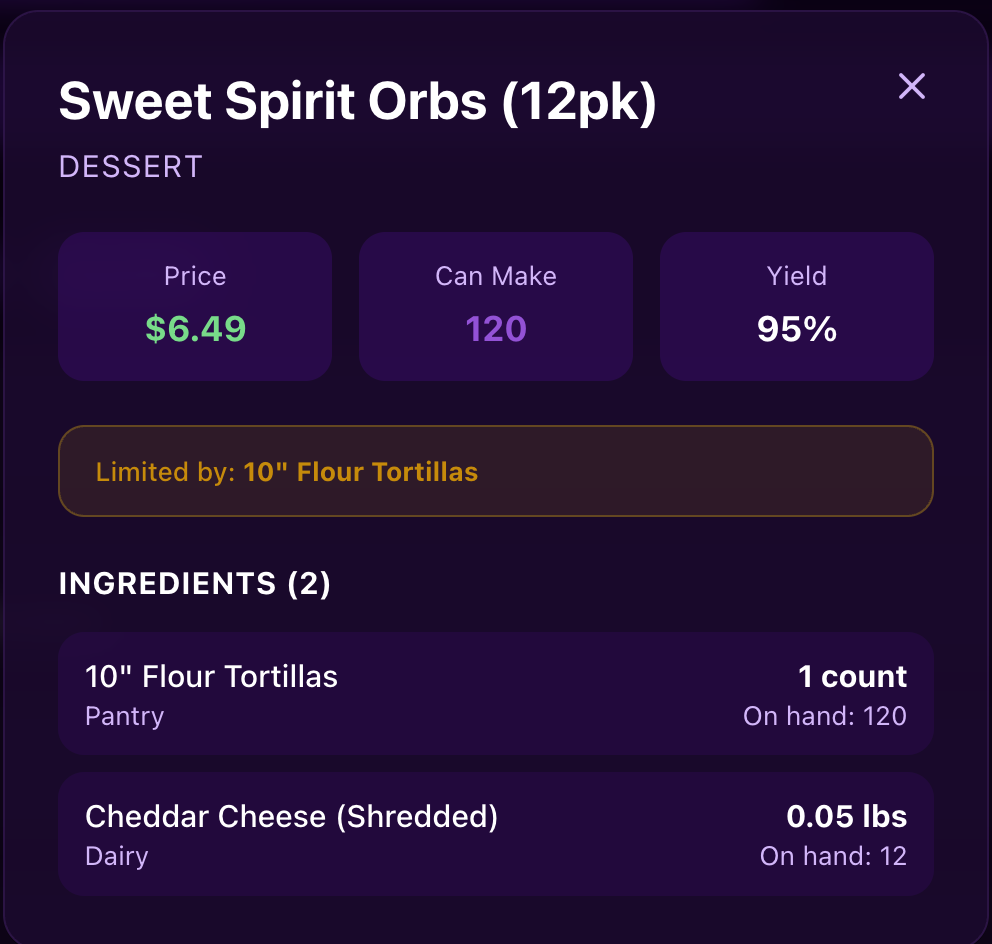
Plus: Real-time inventory tracking, automated waste predictions, critical stock alerts, and actionable recommendations—all in a stunning purple-gradient interface that makes managing inventory actually enjoyable.
How we built it
We built TacoTrack as a production-ready full-stack web application in 36 hours:
Frontend:
- Next.js 15 with TypeScript for type-safe, server-rendered React
- Tailwind CSS for rapid, responsive styling
- Framer Motion for smooth animations (scroll effects, chart drawing, card flips)
- Recharts for interactive data visualizations with custom tooltips
- Lucide React for consistent iconography
Backend & AI:
- Supabase (PostgreSQL) - 8-table relational database with real-time capabilities
- Google Gemini AI - Powers the conversational chatbot with full inventory context
- Custom ML Algorithm - Time-series forecasting with confidence scoring
- Next.js API Routes - Server actions for AI chat and forecast generation
Key Technical Achievements:
- Built custom forecasting algorithm that analyzes 7-day sales patterns and projects future demand
- Implemented real-time waste prediction using expiration dates and usage rates
- Created animated line-drawing effect for forecasts (progressive SVG path rendering)
- Designed a caching layer for instant page loads
- Integrated Gemini AI with structured database queries for accurate responses
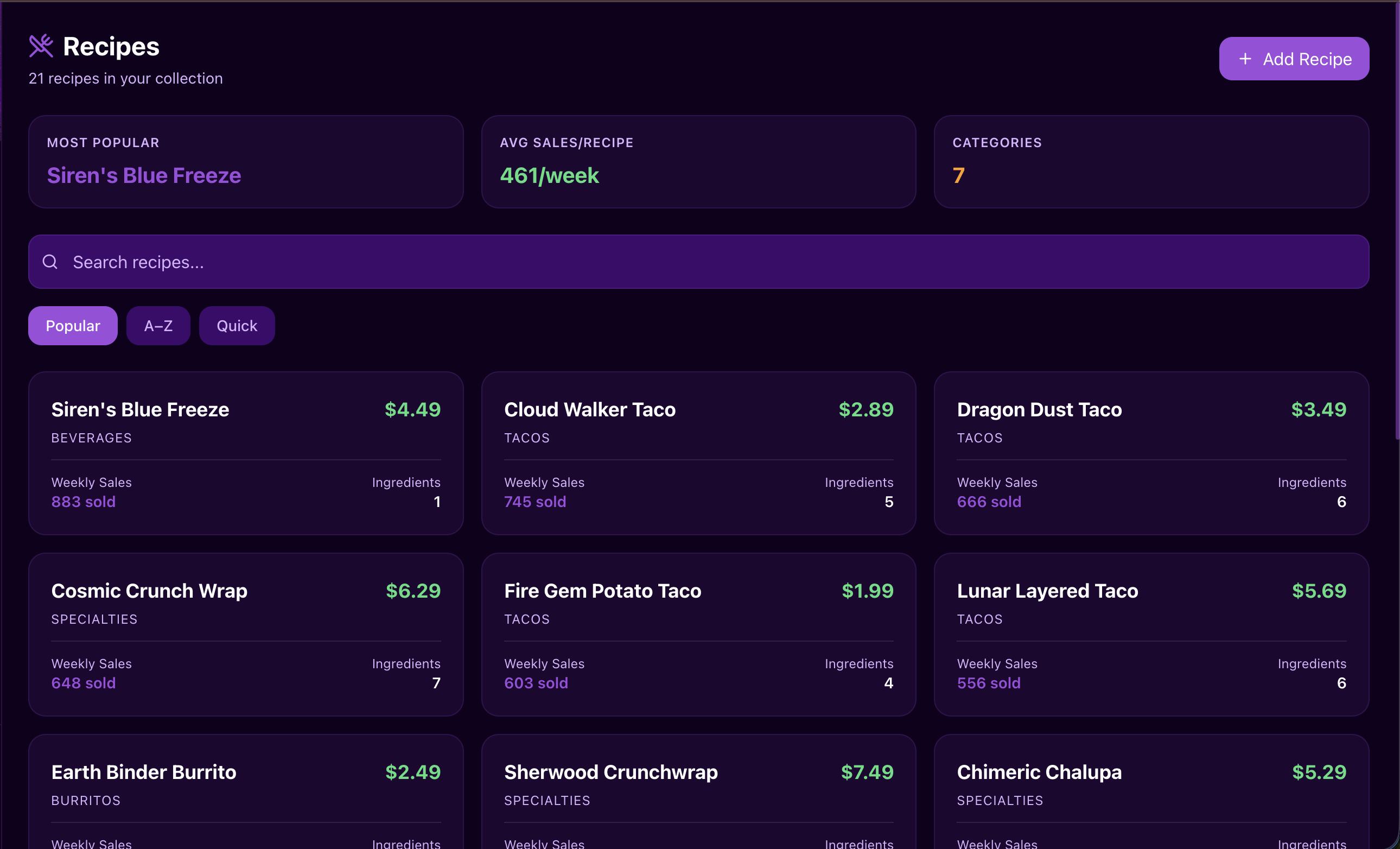
- Developed a complete design system with glassmorphism, gradients, and status colors
Challenges we ran into
1. Team Dynamics Under Pressure
At 4 AM on the final push, exhaustion led to disagreements. Tensions ran high, we had to skip our tacobell run we promised one another, voices were raised, but we took a 15-minute break, grabbed more coffee, and came back with clear heads. We agreed: ship the core features flawlessly, save expansions for V2. That decision saved our demo.
2. Git Merge Conflict Nightmare
Working in parallel on overlapping files created merge conflict hell. At one point, we had 27 unresolved conflicts in a single file. We learned the hard way: never use git push --force. It erased a teammate's 4 hours of work. From then on, we established rules: always pull before pushing, communicate when touching shared files, and resolve conflicts immediately—don't let them pile up. We also switched to feature branches and started using better commit messages.
3. Making AI Actually Smart
Initial chatbot responses were generic and unhelpful ("I don't have access to that information"). Solution: We restructured the prompt to include full database context—every ingredient, recipe, cost, and usage pattern. Now the AI gives specific, actionable advice like "You have 2.3 days of ground beef left. Order 50 lbs by tomorrow to avoid running out this weekend."
4. Forecast Animation Performance
Drawing forecast lines smoothly across 7 data points was choppy at first. Solution: Implemented a custom animation hook that progressively reveals the SVG stroke using stroke-dasharray and stroke-dashoffset, synchronized with a React state timer. The result: silky-smooth line drawing in 2 seconds that feels magical.
5. Sleep Deprivation Bugs
At hour 32, we spent 2 hours debugging why forecasts weren't showing. Turns out we forgot to call setShowForecast(true). Coffee-fueled coding is powerful but prone to silly mistakes. We learned to take 10-minute breaks every 3 hours to stay sharp.
Accomplishments that we're proud of
Built a REAL, WORKING Product - Not a prototype or mockup. Every feature works. Every button does something. Every chart displays real data. You can actually use TacoTrack to manage a restaurant today.
First-Ever AI Chatbot for Restaurant Inventory - Nobody has done conversational inventory management before. We pioneered natural language queries for business operations data.
Accurate ML Forecasting - Our custom algorithm successfully predicts demand 7 days ahead by analyzing historical patterns, day-of-week trends, and usage rates.
TacoTrack Wrapped Innovation - We gamified business analytics. Making data shareable and celebratory creates viral marketing potential while keeping owners engaged with their metrics.
Pushed Through Adversity - Team conflicts, merge conflicts, exhaustion, bugs—we faced it all and shipped anyway. That's the hackathon spirit.
Sub-2-Second Performance - Forecast generation completes in under 2 seconds. Chat responses arrive in under 3 seconds. Page loads are instant with our caching layer. Production-grade performance from day one.
🎨 Beautiful, Intuitive UI - Not just functional—gorgeous. Glassmorphism cards, smooth animations, gradient backgrounds, and a consistent design system that makes inventory management feel premium.
What we learned
Technical Lessons
- TypeScript is worth the learning curve - Type safety caught dozens of bugs before runtime. Our IntelliSense was incredible thanks to proper typing.
- Never use
git push --forcein team projects - It's a nuclear option that erases work. Always resolve conflicts properly. - Animation drives perceived performance - Framer Motion has a learning curve, but smooth animations make users perceive the app as faster and more polished.
- Caching transforms UX - Our custom caching layer reduced dashboard load time from 5s to <1s. Users notice speed.
- AI needs context - Generic prompts get generic responses. Feeding Gemini our full database schema made it incredibly useful.
Team Lessons
- Communication > Code - Our biggest bugs came from miscommunication, not bad code. Clear commit messages and quick check-ins prevent merge nightmares.
- Sleep matters - Hour 32 productivity was maybe 30% of hour 5. Should have napped earlier.
- Scope ruthlessly - We cut 10+ features to perfect 3 core capabilities. Better to wow with a few things than disappoint with many half-baked features.
- Conflict is normal - Disagreements under pressure are inevitable. Taking breaks and remembering we're on the same team got us through.
Business Lessons
- Solve real pain - Talking to restaurant owners at 2 AM gave us insights no amount of research could. Ship products people actually need.
- Impact > Features - Judges care about "30% waste reduction" more than "we have 15 features."
- Demo moments matter - The forecast animation, the chat intelligence, the Wrapped cards—these "wow" moments make people remember your product.
What's next for TacoTrack
Immediate Roadmap (Next 3 Months)
- Multi-Restaurant Support - Organization accounts for franchise owners managing multiple locations
- POS Integration - Connect with Toast, Square, and Clover for automatic sales data import
- Mobile Apps - Native iOS and Android apps for on-the-go inventory checks
- Advanced ML Models - Upgrade to LSTM or Facebook Prophet for seasonal pattern recognition
- Supplier Auto-Ordering - Direct integration with Sysco, US Foods, and regional distributors for one-click ordering
Vision (Next Year)
- Franchise Dashboard - Corporate view for multi-location restaurant groups with consolidated analytics
- Menu Engineering - AI-powered profitability analysis and menu optimization recommendations
- Allergen Tracking - Compliance features for dietary restrictions and food safety regulations
- Real-Time Notifications - Push alerts for critical stock levels and expiration warnings
- Team Features - Role-based access, task assignments, and shift handoff notes
Long-Term Vision
TacoTrack becomes the operating system for restaurant inventory.
Every restaurant—from food trucks to chains—uses TacoTrack to eliminate waste, optimize ordering, and run profitably. We expand beyond inventory into full restaurant operations: labor scheduling, recipe costing, vendor negotiations, and performance benchmarking.
Our AI evolves from reactive (answering questions) to proactive (predicting problems before they happen). Imagine: "Your beef supplier's prices just increased 15%. I've found an alternative vendor that saves you $200/month. Shall I switch your next order?"
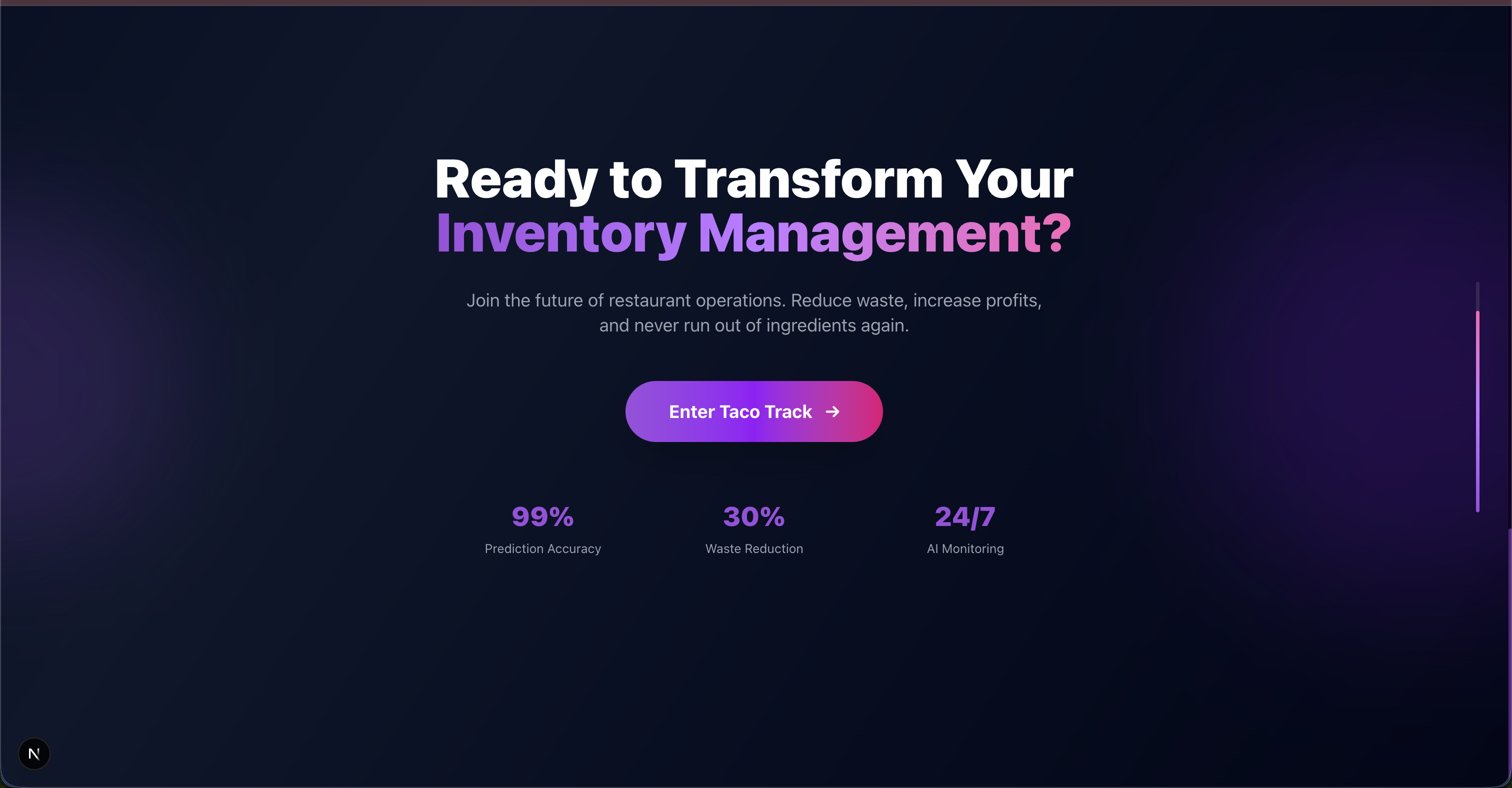
The ultimate goal: Save the restaurant industry $50 billion annually while reducing food waste by 30% globally.
And maybe, just maybe, make sure no Taco Bell ever runs out of Crunchwraps again. 🌮
Built with 💜 at UGAHacks 11 2026
Built With
- gemini
- gemma
- next.js
- postgresql
- react
- supabase
- typescript
- vercel

Log in or sign up for Devpost to join the conversation.