-
-
Tabyst overview
-
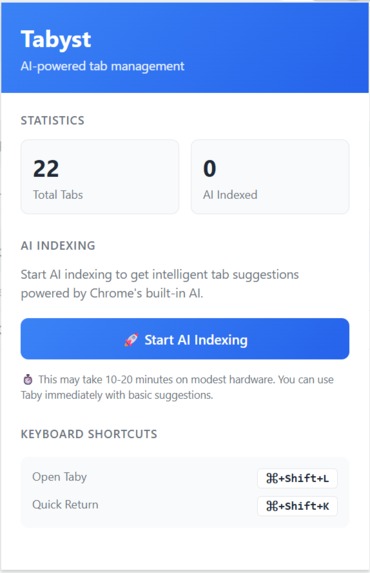
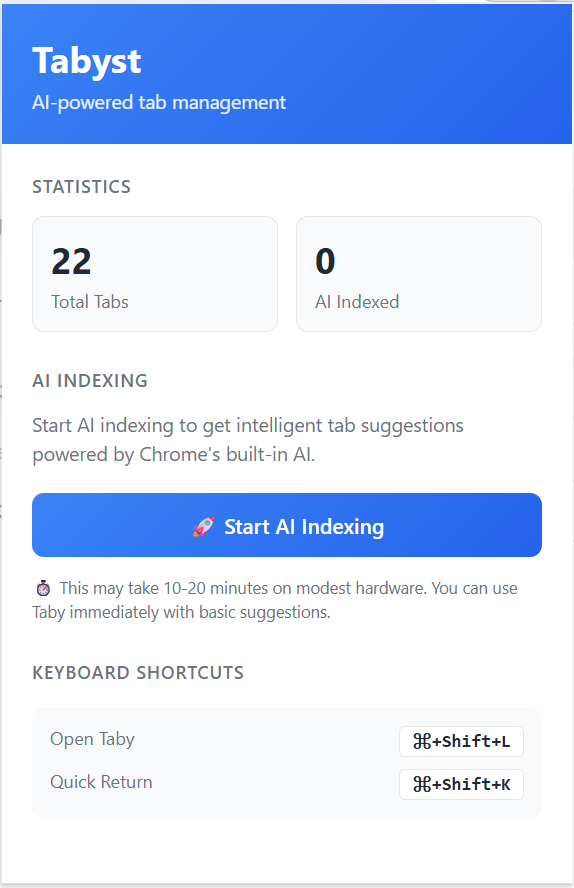
Tabyst Chrome extension popup
-
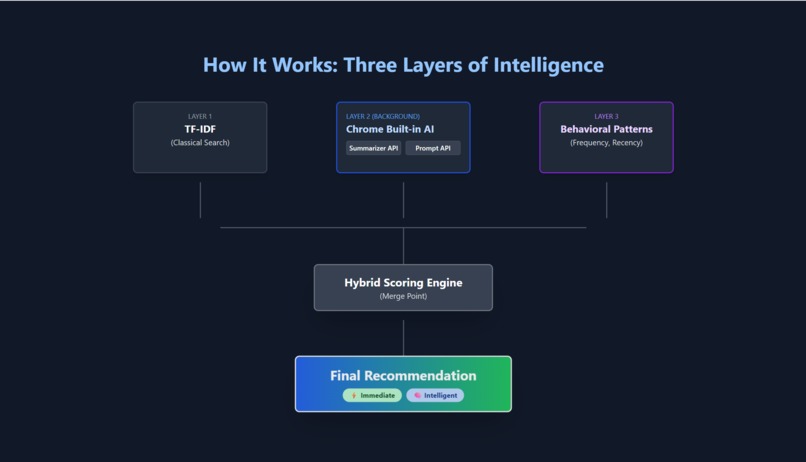
Tabyst Architecture
-
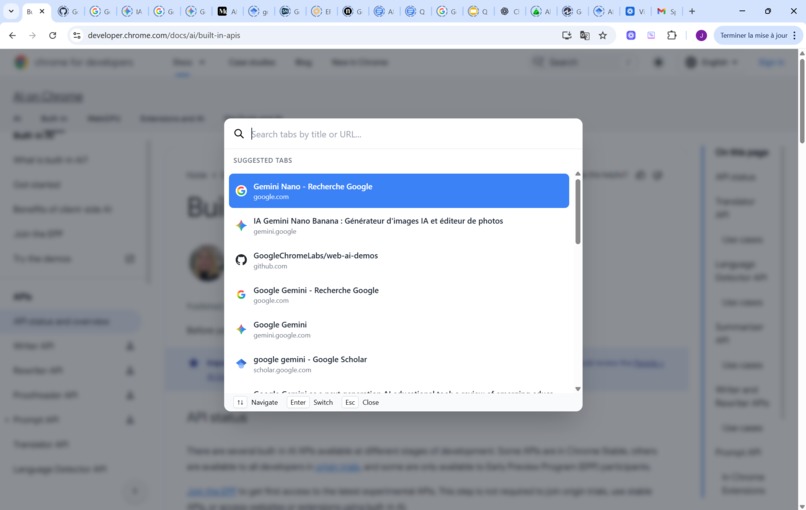
Tabyst smart tab suggestions 1
-
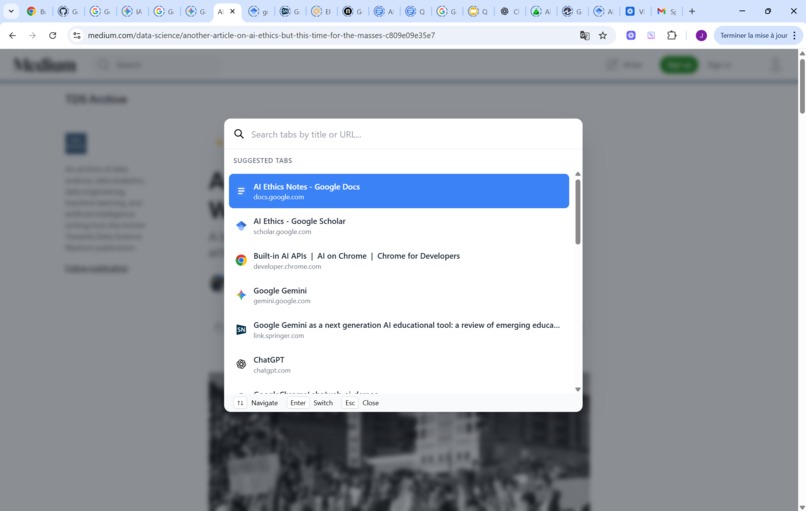
Tabyst smart tab suggestions 2
-
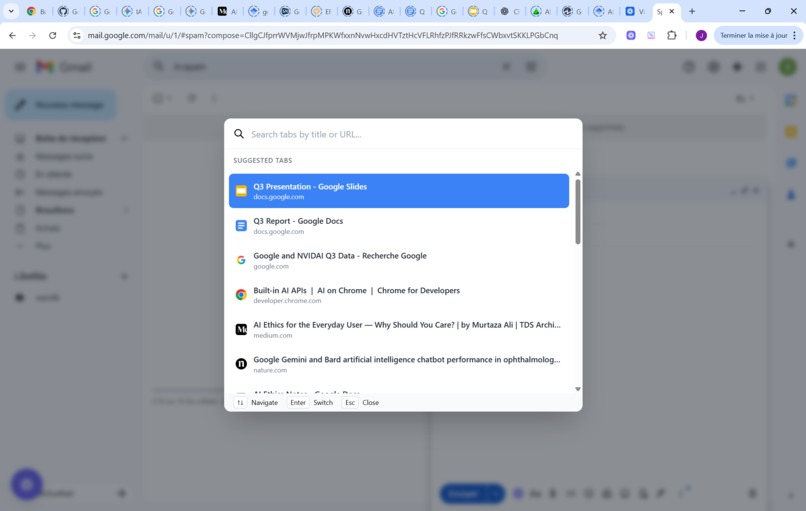
Tabyst smart tab suggestions 3
Tabyst - Chrome AI Challenge 2025 Presentation
Inspiration
The inspiration for Tabyst comes from a universal frustration we've all experienced: the overwhelming chaos of modern browsing. We've watched countless people—students, researchers, developers, professionals—drown in a sea of browser tabs. Dozens, sometimes hundreds of tabs open simultaneously, each representing a task, an idea, a moment of curiosity. The constant context switching, the mental fatigue of searching for "that one tab," the accidental closures of important work—it's a productivity crisis hiding in plain sight.
But what struck us most was the privacy cost of existing solutions. Every tab management extension we tried demanded access to our browsing history, sent our data to the cloud, tracked our behavior. We realized that solving this problem shouldn't require sacrificing our digital privacy. When Chrome announced their Built-in AI APIs, we saw the perfect opportunity: What if we could build an intelligent tab manager that never sends a single byte of your browsing data anywhere? What if the AI that understands your tabs lived entirely on your machine, respecting your privacy while dramatically improving your productivity?
We wanted to build more than just a search tool; we wanted to build a compassionate AI companion for your browser, one that understands context, learns your workflows, and helps you navigate the digital chaos—all while keeping your data completely private.
What it does
Tabyst is a privacy-first, AI-powered browser tab management extension that transforms how you navigate and organize your digital workspace. It acts as an intelligent companion that understands not just the titles of your tabs, but their content, context, and relationships.
The system works in two modes:
For Instant Results (Lite Mode): Even during the initial indexing phase, Tabyst provides lightning-fast tab suggestions using our custom TF-IDF implementation. This ensures you can start being productive immediately—no waiting for AI to finish processing.
For Intelligent Recommendations (Hybrid Mode): Once Chrome's Built-in AI has analyzed your tabs, Tabyst transforms into a sophisticated recommendation engine. It doesn't just match keywords; it understands meaning. The AI:
- Summarizes tab content into digestible 200-word summaries
- Extracts entities (people, organizations, products mentioned)
- Identifies topics and themes across your browsing
- Maps relationships between semantically related tabs
- Detects workflow patterns in your navigation habits
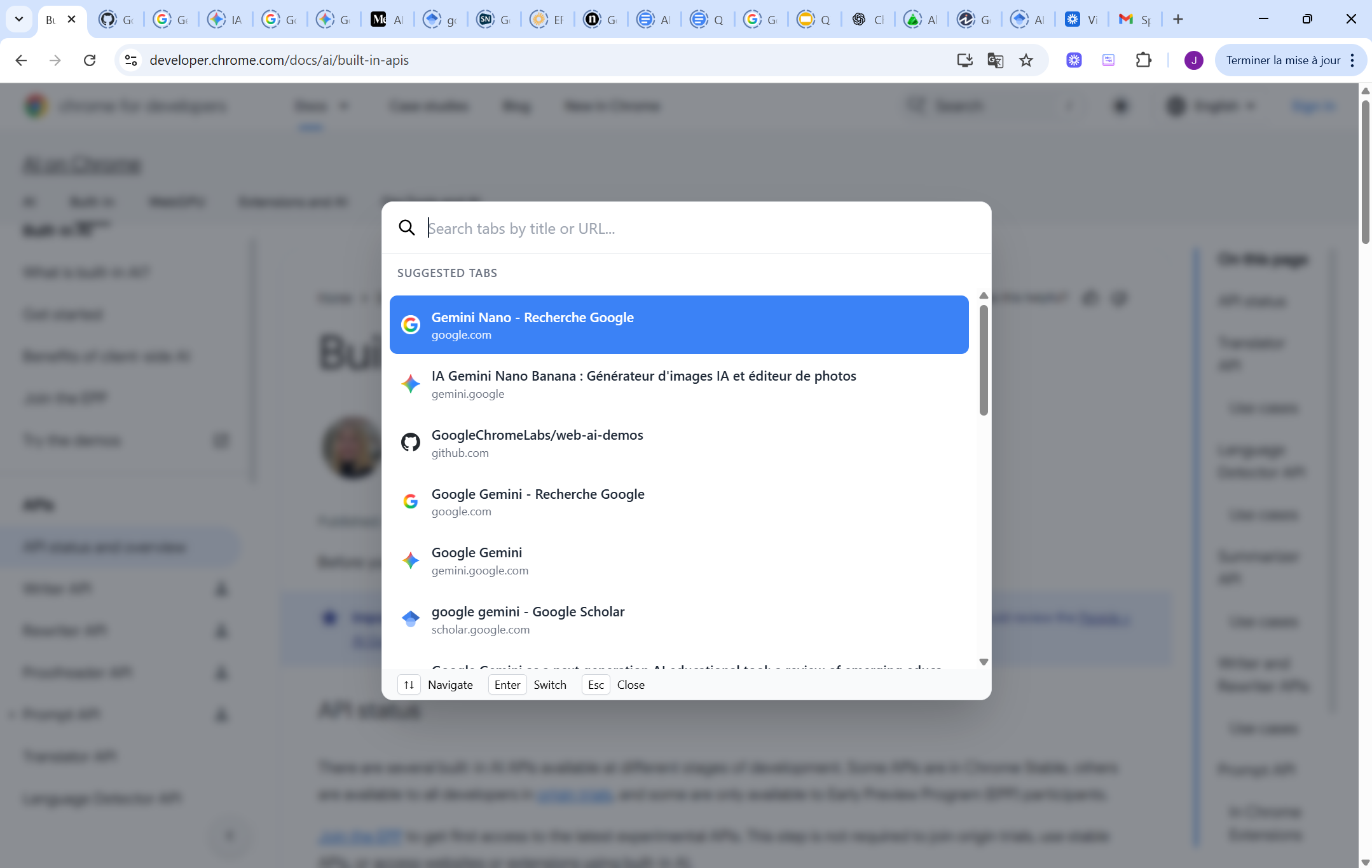
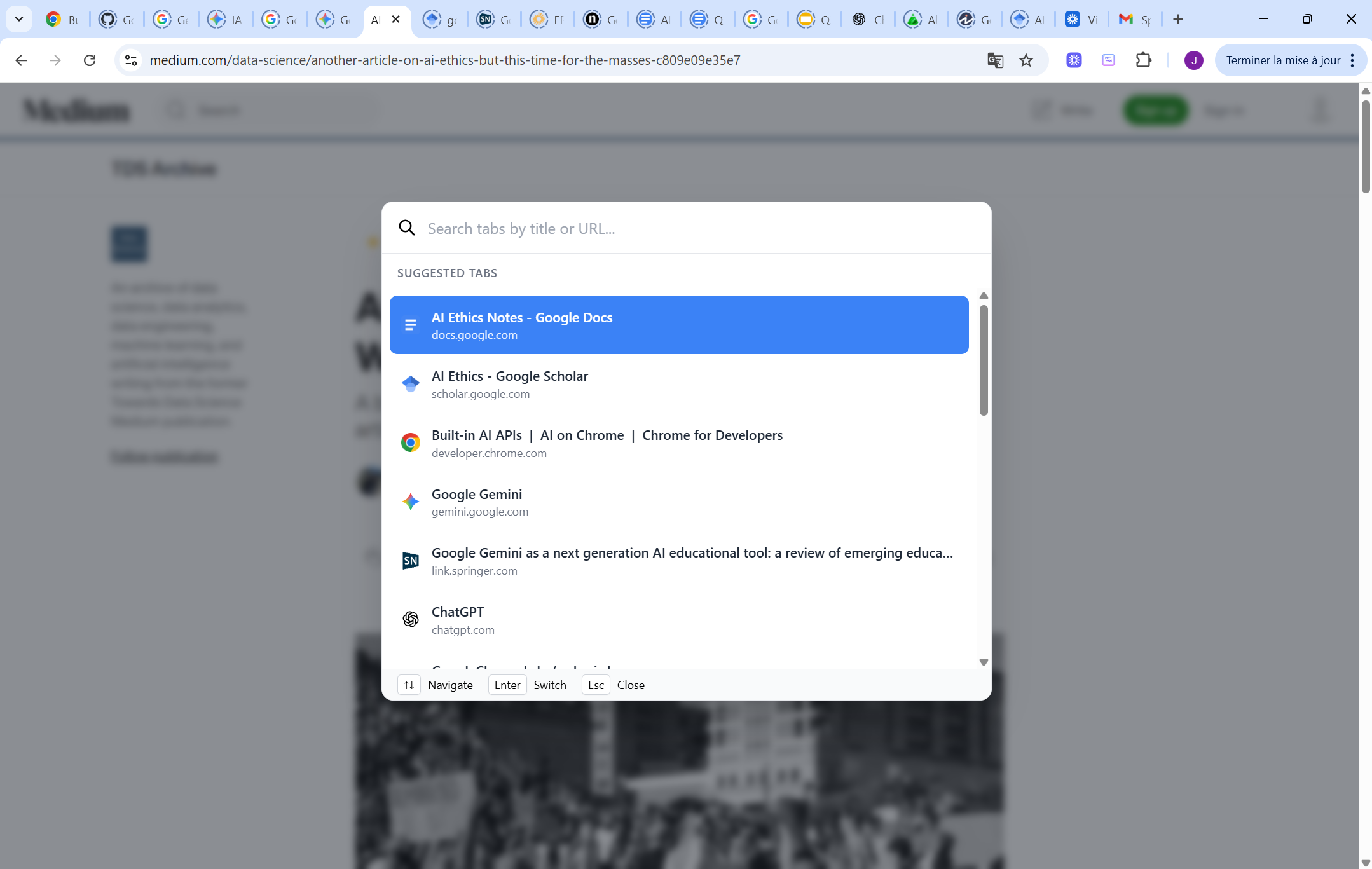
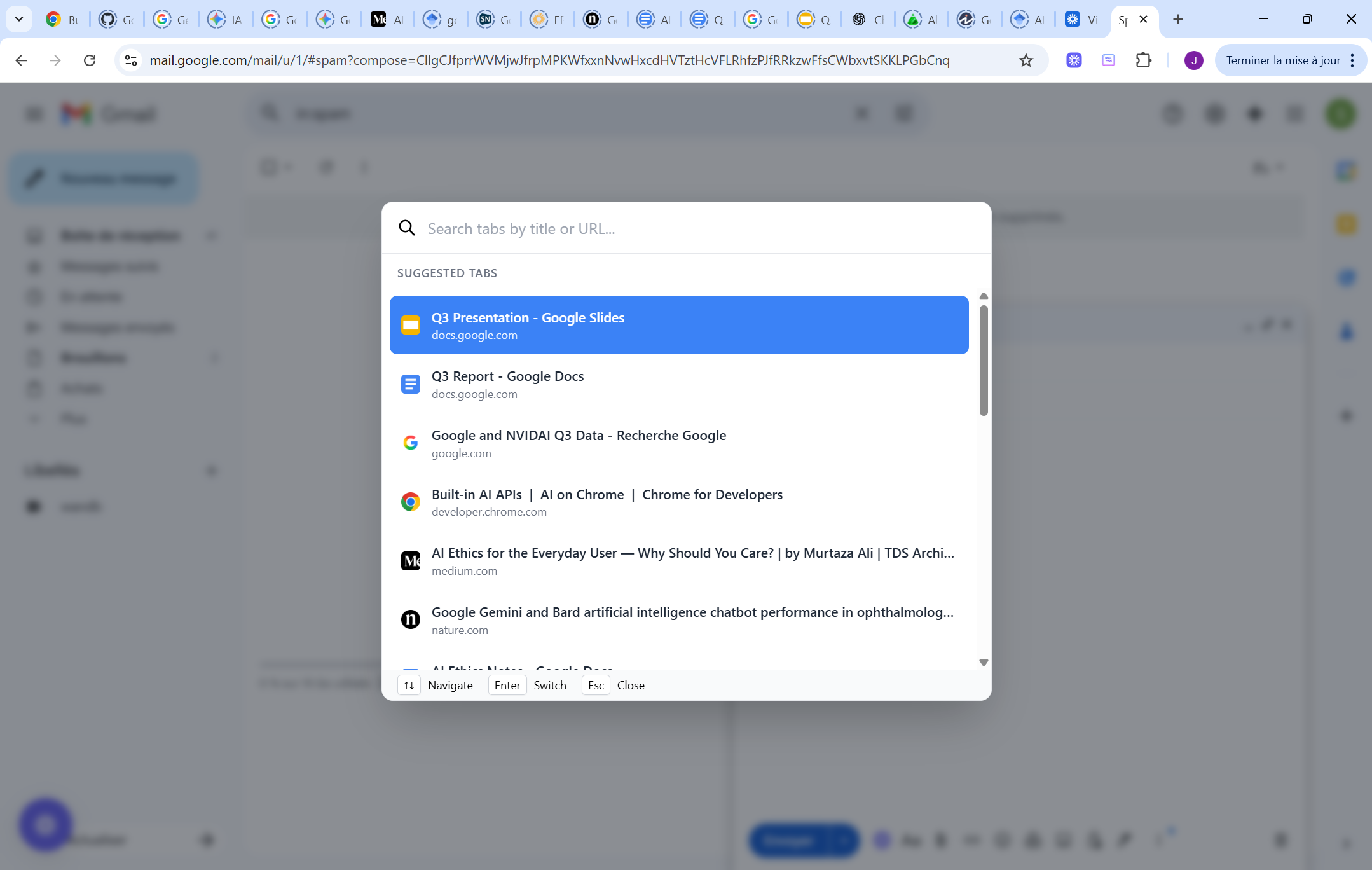
Its key feature is the "Smart Context Switch": Press Ctrl+Shift+L, and Tabyst instantly suggests the tabs you're most likely to need right now, based on what you're currently viewing, your past behavior, and the semantic relationships it has discovered. It's like having an AI assistant that remembers every page you've opened and understands exactly how they connect.
How we built it
Tabyst is a full-stack browser extension built with a privacy-first philosophy, designed to run 100% locally using Chrome's experimental Built-in AI APIs.
The AI Core (The "Hybrid Intelligence Engine")
The heart of Tabyst is not a single AI model, but a carefully orchestrated hybrid of classical algorithms and modern AI:
- Chrome Summarizer API: We use Chrome's local Summarizer API to generate concise, 200-word summaries of tab content. This runs entirely on-device, with no network requests.
- Chrome Prompt API: We architected a structured prompt system that extracts rich metadata—keywords, entities, topics, document types—from the summaries, turning unstructured web content into queryable data.
- Custom TF-IDF Engine: We implemented a full TF-IDF (Term Frequency-Inverse Document Frequency) algorithm with BM25 normalization. This provides instant, reliable text similarity even before AI processing completes.
The Intelligent Scoring System
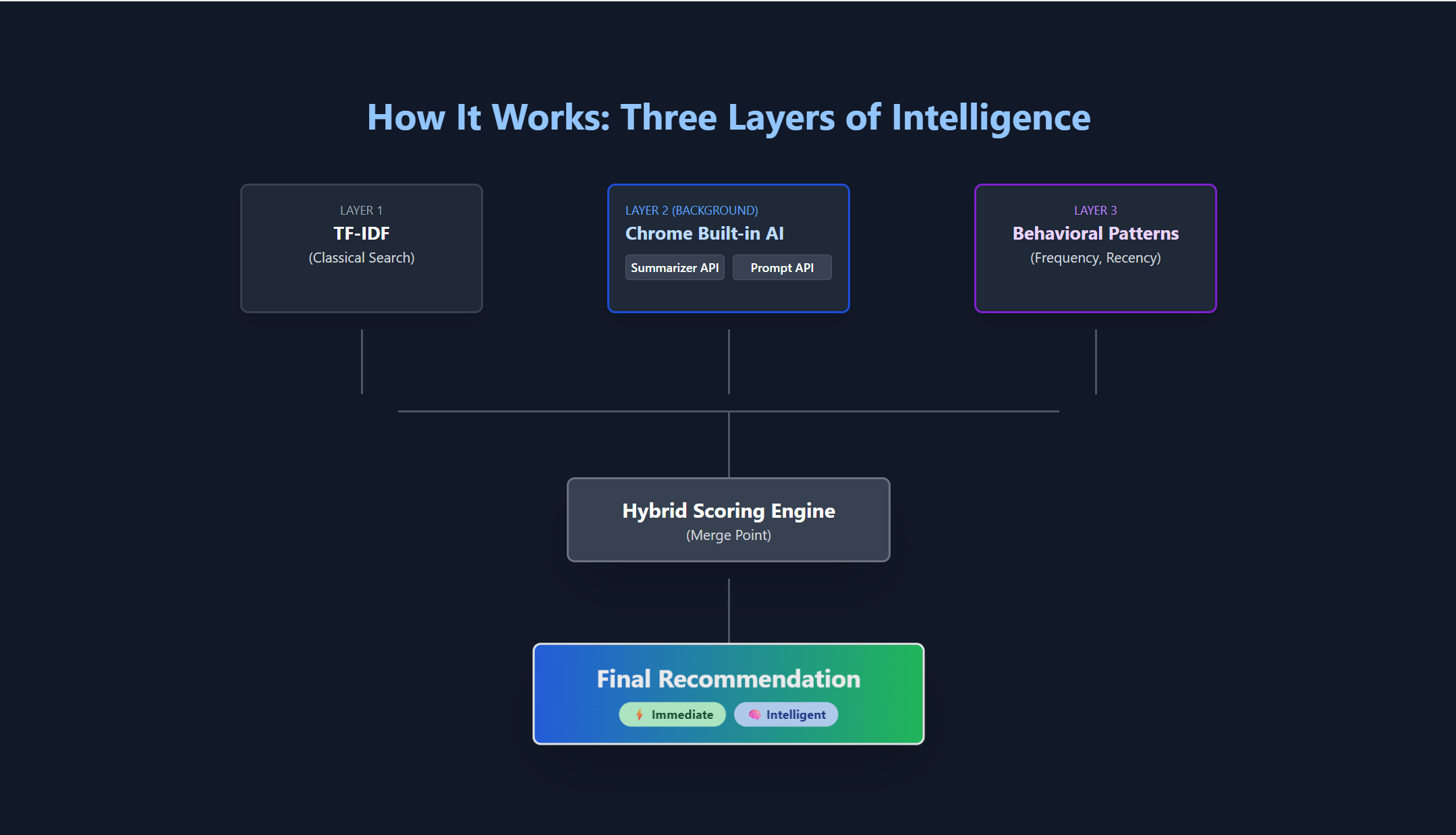
Our hybrid scoring formula is where the magic happens. We don't rely solely on AI or solely on classical algorithms; we combine them:
Final Score =
  18% TF-IDF Similarity        (classical text matching)
  12% Cosine Similarity        (vector space model)
  28% Entity Overlap           (AI-extracted entities)
  22% Topic Overlap            (AI-extracted topics)
  10% Relationship Strength    (AI semantic analysis)
  10% Behavioral Patterns      (access frequency + recency)
This balanced approach gives us the best of both worlds: the speed and reliability of classical algorithms with the contextual understanding of AI.
The Technical Stack
- Extension Framework: Chrome Manifest V3 with Service Worker architecture
- Storage: IndexedDB for all tab data, relationships, and workflow patterns
- AI Processing: Chrome Built-in AI APIs (Summarizer + Prompt/LanguageModel)
- Search Algorithms: Custom implementations of TF-IDF, BM25, Cosine Similarity, Jaccard Similarity
- UI: Shadow DOM for CSS isolation, injected modal with keyboard-first navigation
- Language: Pure JavaScript (ES2022) with no external dependencies for core functionality
The Indexing Pipeline
We built a two-phase indexing system that prioritizes user experience:
Cold Start (Progressive): When first installed, Tabyst creates lightweight entries for all tabs instantly, enabling TF-IDF search in seconds. Then, it progressively AI-indexes tabs in the background—no blocking, no waiting.
Online Indexing (Real-time): As you browse, new tabs are queued for AI processing with a 2-second debounce (allowing the page to fully load). Indexing happens in the background using dedicated AI sessions.
Challenges we ran into
The "Quality vs. Speed" Paradox
Our first major challenge was balancing AI quality with user experience. Initial tests showed that Chrome's AI models could take 1-10 minutes per tab depending on hardware VRAM. Users couldn't wait that long to use the extension.
Our solution was progressive enhancement: We built a complete, fully-functional tab manager using only TF-IDF that works instantly, then progressively enhanced it with AI. This architectural decision became our greatest strength—Tabyst is useful from second one, and becomes exceptional as the AI does its work.
The "Stable Sorting" Nightmare
During testing, users reported that suggestions would "flicker" or reorder unexpectedly. We discovered micro-variations in timestamp-based scoring caused tabs with identical scores to randomly swap positions.
We solved this with two techniques:
- Timestamp rounding: Rounded all temporal scores to the nearest minute
- Secondary sort key: When scores are equal, we sort by tab ID (deterministic)
This created a rock-solid ranking system that feels stable and predictable.
The "Content Extraction" Puzzle
Extracting meaningful content from web pages is notoriously difficult. Modern websites are filled with navigation, ads, boilerplate text. Our initial attempts at content extraction fed too much noise to the AI.
We implemented a smart DOM scraping algorithm that:
- Prioritizes
<article>,<main>, and semantic HTML elements - Removes navigation, footers, and sidebars
- Strips scripts, styles, and hidden elements
- Intelligently limits content to ~5000 words to avoid overwhelming the AI
The "AI Availability" Reality Check
Chrome's Built-in AI is experimental and not available on all machines. We needed graceful degradation.
Our solution: Lite mode isn't a fallback; it's a feature. We designed TF-IDF mode to be genuinely useful on its own. Users can even choose to disable AI and run in lite mode permanently if they prefer speed over semantic understanding.
Accomplishments that we're proud of
A Truly Private AI Agent
From the moment a tab opens to the instant you see suggestions, not a single byte of personal data ever leaves your machine. No cloud servers. No analytics. No tracking. No phone-home. This isn't just a privacy feature—it's our foundation. Tabyst is a perfect example of how Chrome's Built-in AI enables genuinely private intelligence.
The Hybrid Architecture Pattern
We're incredibly proud of our hybrid scoring system. By combining classical TF-IDF (18% + 12% = 30%) with AI-powered semantic analysis (28% + 22% + 10% = 60%) and behavioral patterns (10%), we created a system that is:
- Fast: TF-IDF provides instant results
- Smart: AI adds deep contextual understanding
- Balanced: No single component dominates
- Resilient: Works even if AI fails
This demonstrates a novel application of Chrome's AI APIs—not as a replacement for traditional algorithms, but as an enhancement.
Workflow Intelligence
Our automatic workflow detection system is something we're particularly proud of. It learns that when you visit Tab A, then Tab B, then Tab C in sequence multiple times, it's probably a pattern worth remembering. It then gives workflow-matched tabs a +0.3 score bonus, making your most common navigation paths effortless.
A Complete, Production-Ready Extension
This isn't a prototype or a proof-of-concept. Tabyst is a fully functional Chrome extension with:
- Complete IndexedDB data layer with 4 object stores
- Comprehensive error handling and fallbacks
- Real-time progress tracking for indexing
- Keyboard shortcuts and accessible UI
- Settings persistence and state management
- ~2,000 lines of carefully architected code
We're proud that any developer could load this extension today and start using it immediately.
What we learned
AI Orchestration > AI Monolith
The most important lesson: Don't ask AI to do everything; ask it to do what it's best at. Chrome's Summarizer API is brilliant at condensing content. The Prompt API excels at structured extraction. But neither is good at instant text search—that's where TF-IDF shines. By orchestrating these tools together, each doing its specialty, we built something more powerful than any single approach.
Progressive Enhancement is a Philosophy, Not a Feature
Designing for progressive enhancement from day one changed everything. It forced us to:
- Make TF-IDF genuinely good (not just a placeholder)
- Design data structures that work with or without AI
- Build UI that gracefully shows different levels of intelligence
- Think about performance at every layer
This made Tabyst more resilient, more performant, and more accessible.
Privacy-First Changes Your Architecture
When you commit to local-only processing, you can't rely on cloud infrastructure patterns. You can't queue jobs on a server. You can't easily scale horizontally. But this constraint made us better engineers. We learned to:
- Be thoughtful about what data we store
- Optimize for local performance
- Design for reliability without cloud safety nets
- Respect user resources (CPU, memory, VRAM)
Small Details Matter for Trust
The stable sorting fix, the timestamp rounding, the smart content extraction—these tiny details don't show up in demos, but users feel them. A system that behaves predictably, that doesn't surprise you, that respects your attention—that builds trust.
What's next for Tabyst
The vision for Tabyst is just beginning. Our future roadmap includes:
Visual Relationship Explorer
Building an interactive graph visualization of tab relationships. Imagine seeing your browsing as a network—clusters of related research, work projects visually separated, connections between tabs rendered as edges. This would transform tab management from a list to a spatial experience.
Analytics Dashboard (Privacy-Preserving)
Providing insights into your browsing patterns:
- Which domains do you visit most?
- What are your most common workflows?
- When are you most productive?
- Which tabs get opened but never read?
All computed locally, with zero data transmission.
Smart Tab Groups
Using AI to automatically suggest tab grouping:
- "These 5 tabs are all about React tutorials—group them?"
- "You have 8 tabs from yesterday about travel planning—archive them?"
Custom Workflow Definitions
Allowing users to explicitly define their workflows:
- "Research Mode": GitHub → Docs → Stack Overflow → Notion
- "Writing Mode": Google Docs → Research tabs → Grammarly
Then, when Tabyst detects you're in "Research Mode," it proactively surfaces the right tabs.
Fine-Tuned Recommendation Model
If Chrome allows fine-tuning of local models, we'd love to create a domain-specific recommendation model trained on anonymized, consented tab interaction patterns. This could be a strong candidate for the Most Useful Fine-Tune category, making Tabyst even better at understanding developer workflows, research patterns, and content creation needs.
Cross-Window Intelligence
Extending tab understanding across multiple browser windows, treating your entire browser session as one cohesive workspace.
Ambient Suggestions
Exploring proactive notifications: "You haven't visited this important tab in 3 days—want to review it?"
Why Tabyst Matters
At its core, Tabyst represents a new paradigm for browser productivity tools: one where intelligence and privacy are not in conflict, but in harmony. It proves that you don't need to sacrifice your data to get smart recommendations. It demonstrates that Chrome's Built-in AI APIs can power genuinely useful, production-ready applications.
But more than that, Tabyst is about cognitive kindness. In a world that constantly demands our attention, that fragments our focus across dozens of tabs, Tabyst is a tool that helps you think clearly again. It remembers so you don't have to. It connects dots so you can focus on the work that matters.
We built Tabyst because we believe that technology should serve humans, not surveil them. And we're excited to show what's possible when privacy and intelligence work together.
Built with ❤️ for the Google Chrome AI Challenge 2025
Demonstrating the power of on-device AI for privacy-preserving productivity enhancement.
Built With
- gemini
- html5
- javascript
- promptapi
- summarizerapi
- tailwindcss

Log in or sign up for Devpost to join the conversation.