TABLOOM: The Last Mind of Aevum
Hackathon Submission — Project Story
Inspiration
We kept coming back to one frustration with multiverse stories: they always cheat the emotional stakes. Somewhere out there, in some other branch, you get the happy ending — so the pain in this branch never has to fully matter. It's comforting, but it's also a little hollow.
We wanted to build something that took the browser tab — the most ordinary, invisible piece of UI any of us touch a hundred times a day — and turn it into the actual mechanic of that idea. What if every tab you opened was a different timeline? What if switching tabs wasn't just navigation, but a literal shift of consciousness into another version of yourself? And what if, instead of letting the multiverse be an escape hatch from loss, we built a story where even infinity doesn't give the hero what he wants — and made him figure out what to do with that anyway?
That question became Ari Vaan, and TABLOOM grew outward from there.
What it does
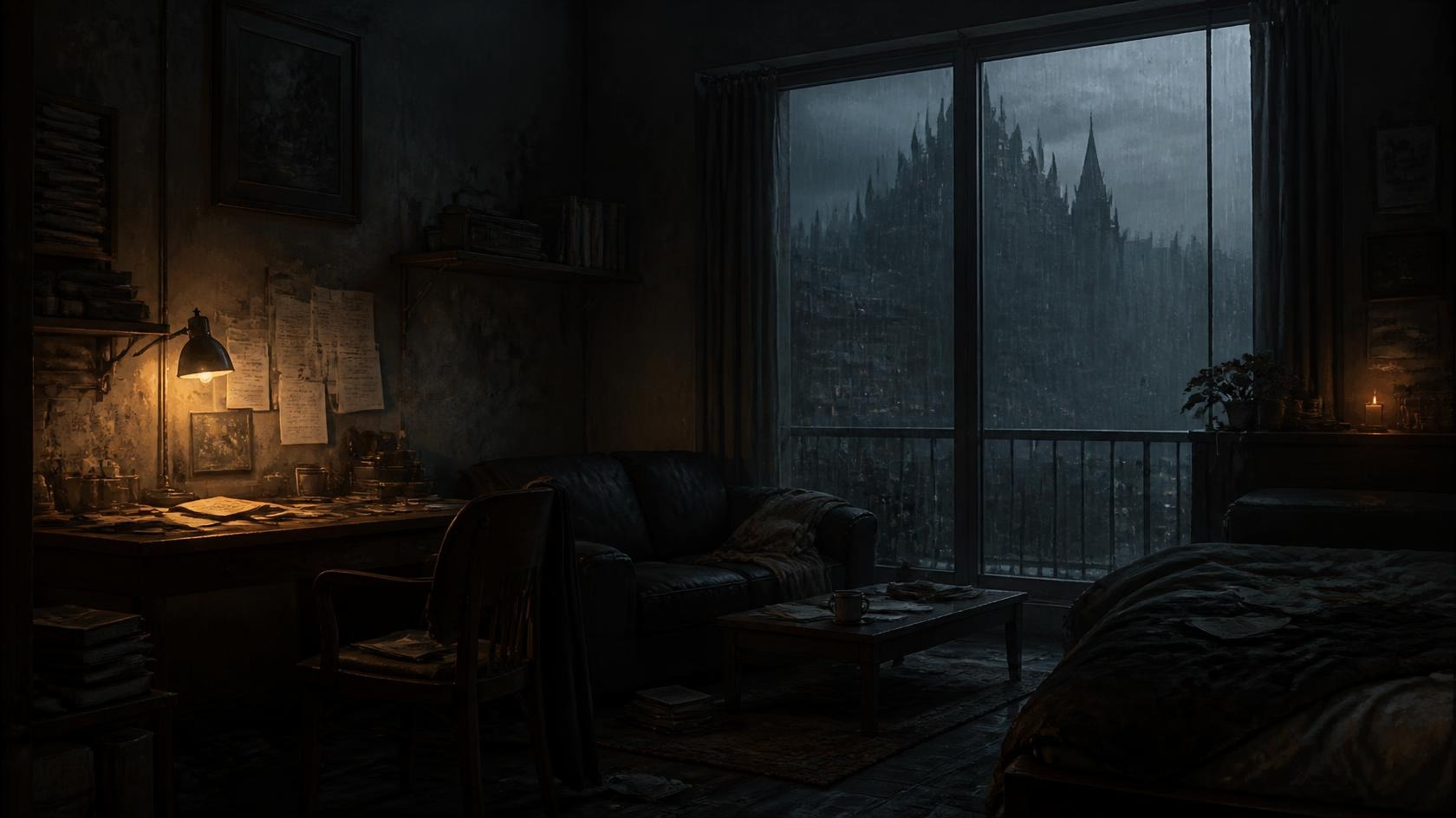
TABLOOM is a browser-native narrative puzzle-adventure where the player controls Ari Vaan — one mind, shared across five parallel realities, each open as its own "tab." Actions taken in one timeline ripple into the others: turning on a lamp in a quiet rain-soaked city might melt an ice gate on a frozen battlefield a world away. Closing your eyes to one reality for too long lets it decay.
Across the five realities, the player uncovers a story about grief, manipulation, and the difference between being loved and being chosen — while a grieving villain, Veyr Sol Auric, pursues his own plan to merge every reality into one, believing that ending separation is the only mercy left. The player fights through five distinct worlds, learns two disciplines of "Root-craft" (Pruning and Grafting — the game's combat/ability system, one destructive, one restorative), and ultimately decides, across three different endings, what a person owes to a world that never gave them what they hoped for.
How we built it
We started with story first, deliberately — we wanted the mechanic to serve an emotional idea rather than the other way around, so before a single asset existed, we fully mapped:
- The cosmology and rules (what a "timeline" actually is, why one mind can hold five of them, why the villain's weapon can wound something that exists across realities at all — every mystical beat needed a real, internally consistent reason)
- A ten-act structure where information revealed in one act deliberately recontextualizes something planted two or three acts earlier, so the story rewards attention rather than just forward progress
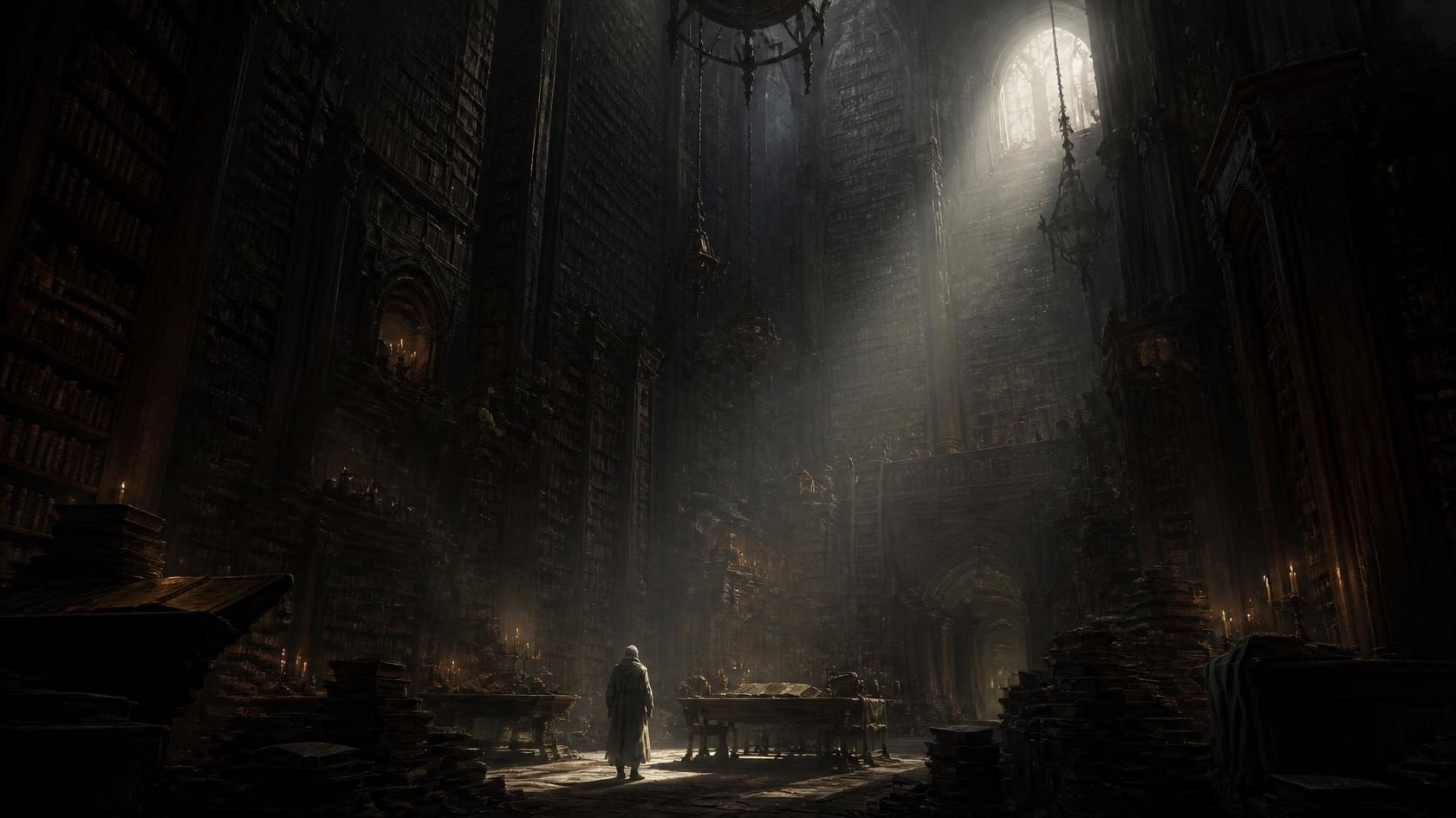
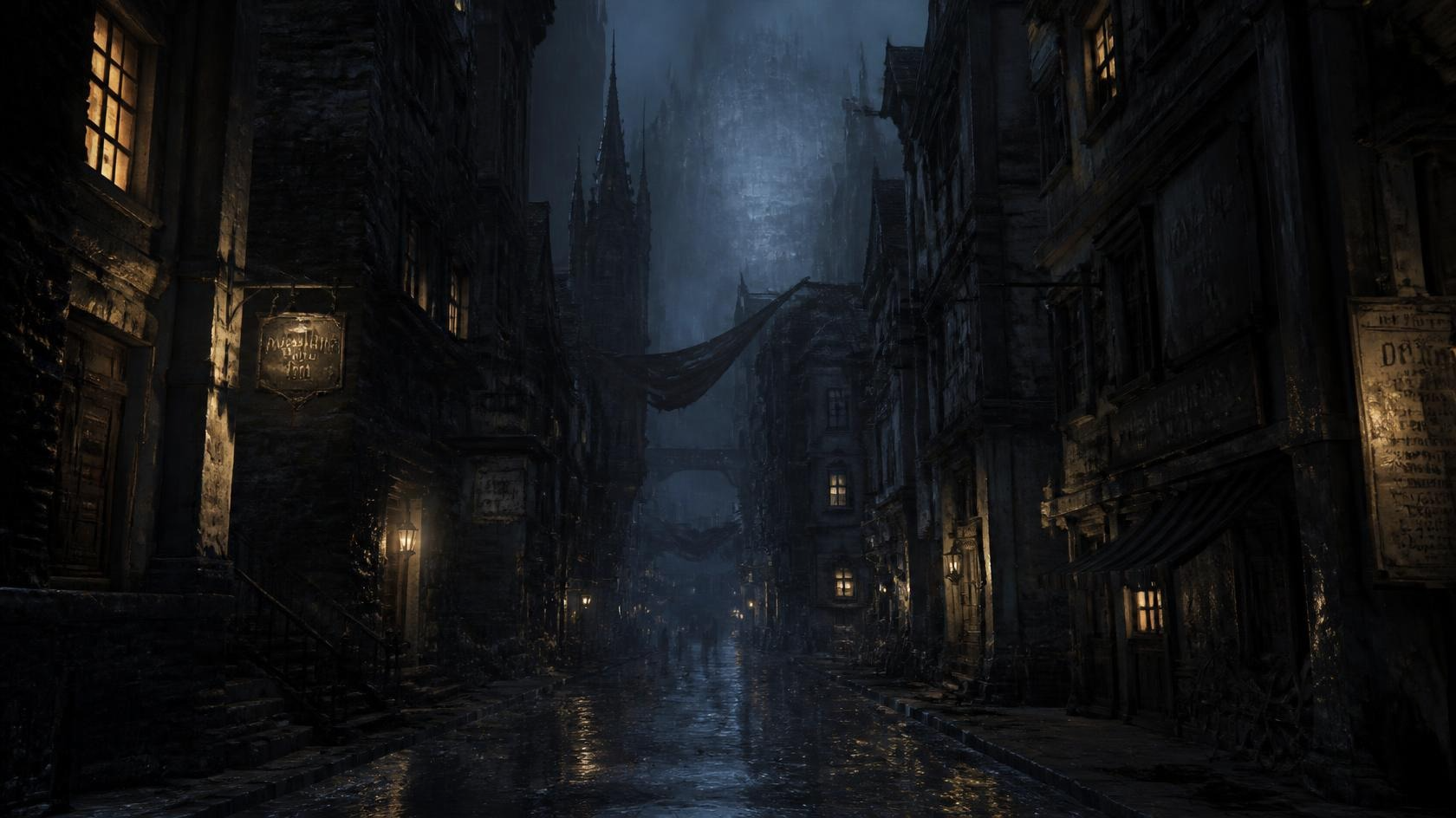
- A full cast, five reality-environments, a weapons/magic system, and a complete audio direction doc — all written out with precise, ready-to-use generation prompts before any art was made
From there, since our assets are 2D static images rather than animated or 3D models, we deliberately built the game as a visual novel / point-and-click hybrid rather than an action game — layered static backgrounds, character sprites, and VFX overlays, with all motion faked through code (fades, slow pans, sprite-state swaps, timing-based click prompts) instead of requiring frame-by-frame animation. This let us get real narrative weight and a working core mechanic without needing an animation pipeline we didn't have time for.
Challenges we ran into
Scope was the constant fight. The story we wanted to tell was, honestly, a 6–12 month indie game's worth of content — fifteen timelines, a full voiced cast, three branching endings. We had to repeatedly cut back to what a hackathon could actually deliver: trimming fifteen timelines down to five, and identifying a minimum playable slice (one act, one full mechanic loop, one combat encounter, one ending beat) that could still prove the whole idea worked.
Making the tab mechanic feel real without fighting the browser. Actual multi-window browser APIs are fragile and hard to control reliably under time pressure, so we chose to simulate the tab bar as UI within a single page instead of using real window.open() calls — a decision that cost us some of the "wow, it's literally your browser" novelty but bought us a mechanic that actually works reliably in a demo.
Keeping the antagonist sympathetic without softening the stakes. Veyr's whole philosophy is coherent and, at moments, almost persuasive — walking the line between "understandable grief" and "still needs to be stopped" took several rewrites of his dialogue to get right.
Static assets, dynamic feeling. With only still 2D images, selling motion, tension, and combat impact took real design work — timing-based click prompts, sprite-state swaps, and screen-shake/color-overlay tricks instead of animation, all planned out act by act so we never needed an asset we couldn't actually produce.
Accomplishments that we're proud of
- A fully worked-out cosmology where every mystical beat — why Ari was chosen, why the villain's blade can wound a multiversal mind, why the "lie" the player is told is structurally necessary rather than arbitrary cruelty — has a real, load-bearing explanation instead of hand-waved lore.
- A story that resists the easy multiverse-comfort trope on purpose, and earns that harder choice by giving every major character (the love interest, her chosen partner, the villain) real interiority instead of leaning on any of them as a prop.
- A complete production pipeline — story, character/asset prompts, environment direction, a weapons/magic system, a full ten-act gameplay flow, and a full music direction doc — built entirely solo, with no budget, using free and AI-assisted tools end to end.
- Designing the entire game to work honestly within the constraints of static 2D assets, rather than overpromising animation we couldn't deliver.
What we learned
That constraints are often the best editor. Cutting fifteen timelines to five, and choosing a visual-novel structure over an action game because of the assets we actually had, made the final concept sharper and more buildable, not weaker. We also learned how much load-bearing work a well-designed reason can do in a story — once we forced ourselves to answer "why" for every mystical rule instead of leaving it as vibes, the plot connections started generating themselves; Kael's early line about "some things are supposed to end once and mean it" wasn't planned as a thematic anchor from the start, but once the invariant-logic was locked in, it became one naturally.
What's next for Tabloom
- Expanding from the five core realities back toward the full fifteen-timeline vision, with the ten remaining branches explored as the "dead" Root Below realities they currently only gesture at.
- Real voice acting for the full cast, building out from the free-TTS placeholder pass used for the hackathon build.
- Animated character work to replace the static-sprite systems once we have the time and resources for a proper animation pipeline.
- Expanding the branching-choice system in the final act beyond its current lightweight implementation into a fuller, more granular set of player-driven paths toward the three endings.
- A real, functioning multi-window build of the tab-switching mechanic — using actual browser tabs and
BroadcastChannelcommunication — once we can properly stress-test it beyond a hackathon deadline.

Log in or sign up for Devpost to join the conversation.