Inspiration
We wanted to build a god-game that inherently suits Meta Quest's hand-tracking capabilities. Weather fits human hands naturally—palms, sweeps, and presses carry intuitive, universal meanings. We also wanted players to see and understand why villagers react the way they do, rather than reading abstract stats or walls of text.
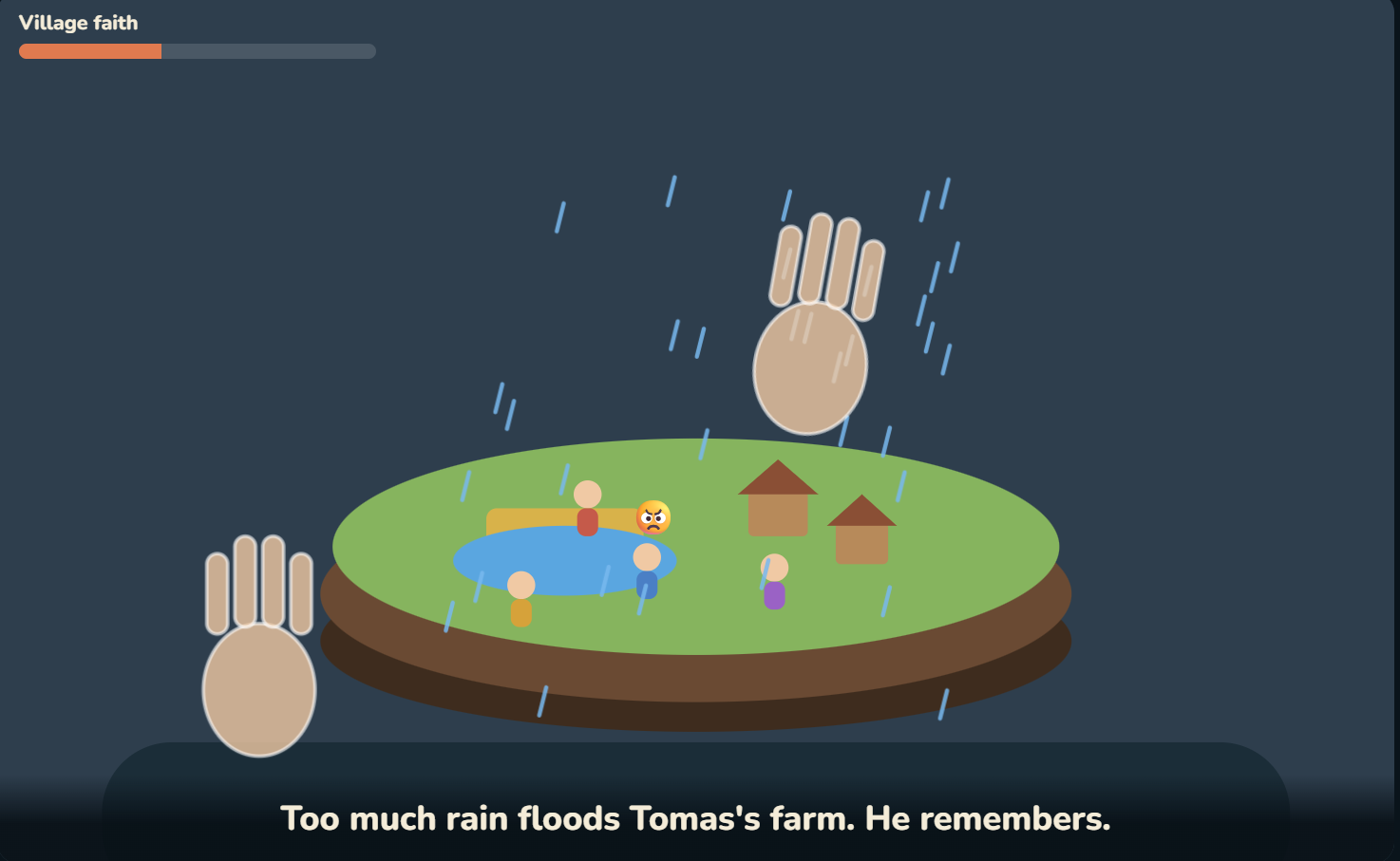
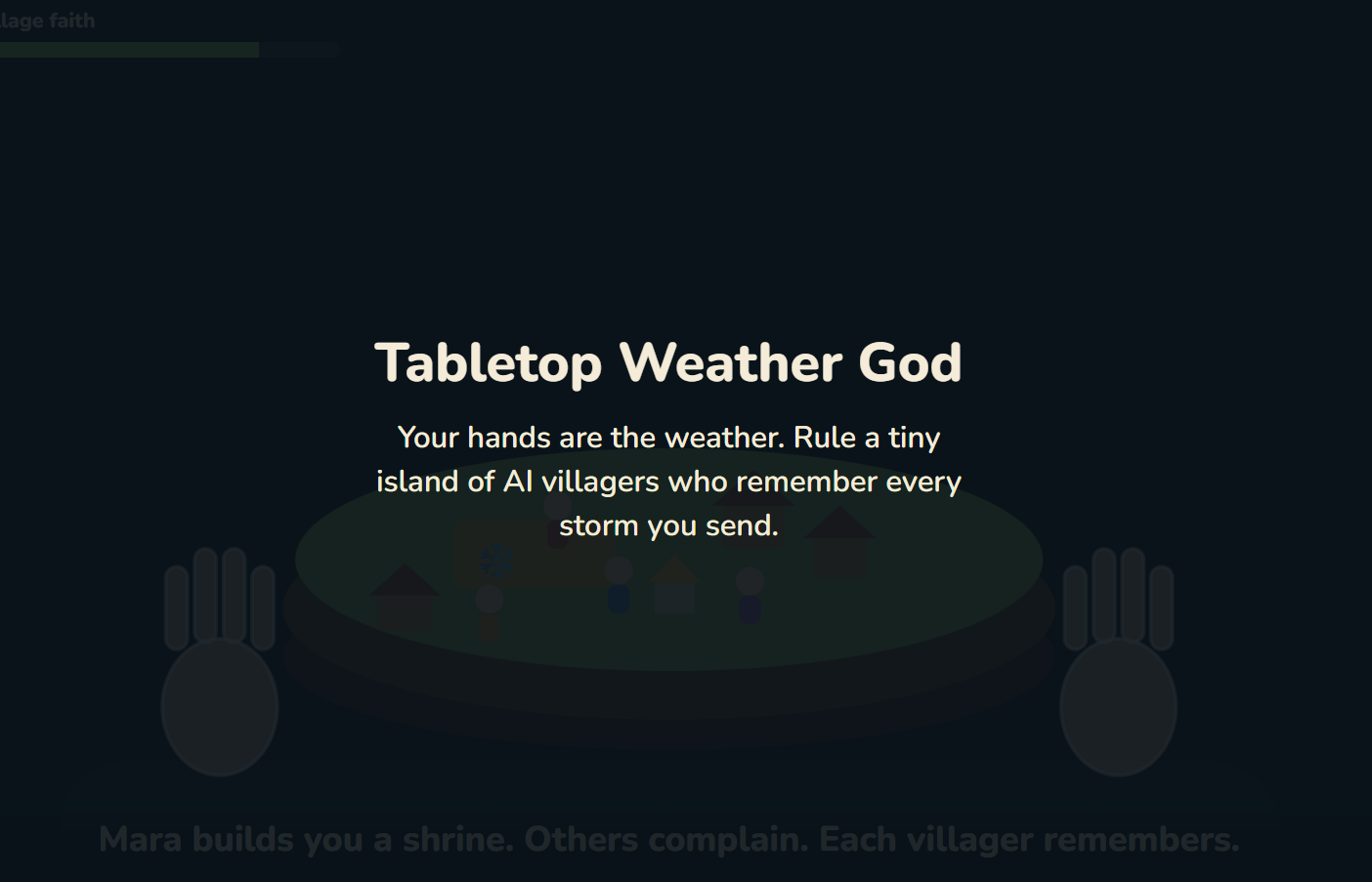
That vision led to Tabletop Weather God: a diorama-style tabletop island placed comfortably within arm's reach in a seated position. Rain can save a crop while simultaneously flooding a hut, and the island remembers your actions. The competition's emphasis on hands-first play, short-session satisfaction, and the "airplane seat" 2 ft reach test directly shaped our physical scale and design rules.
What it does
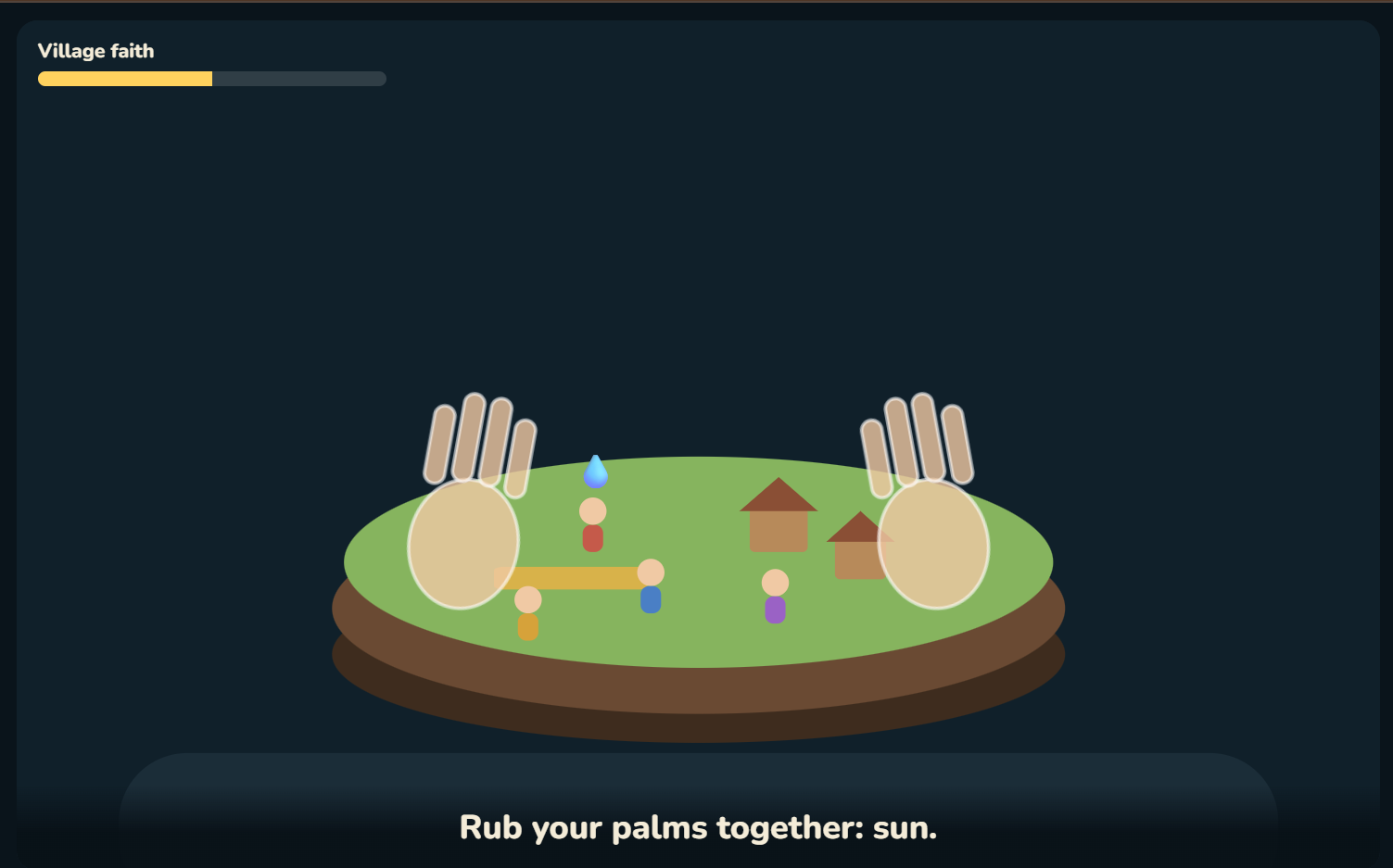
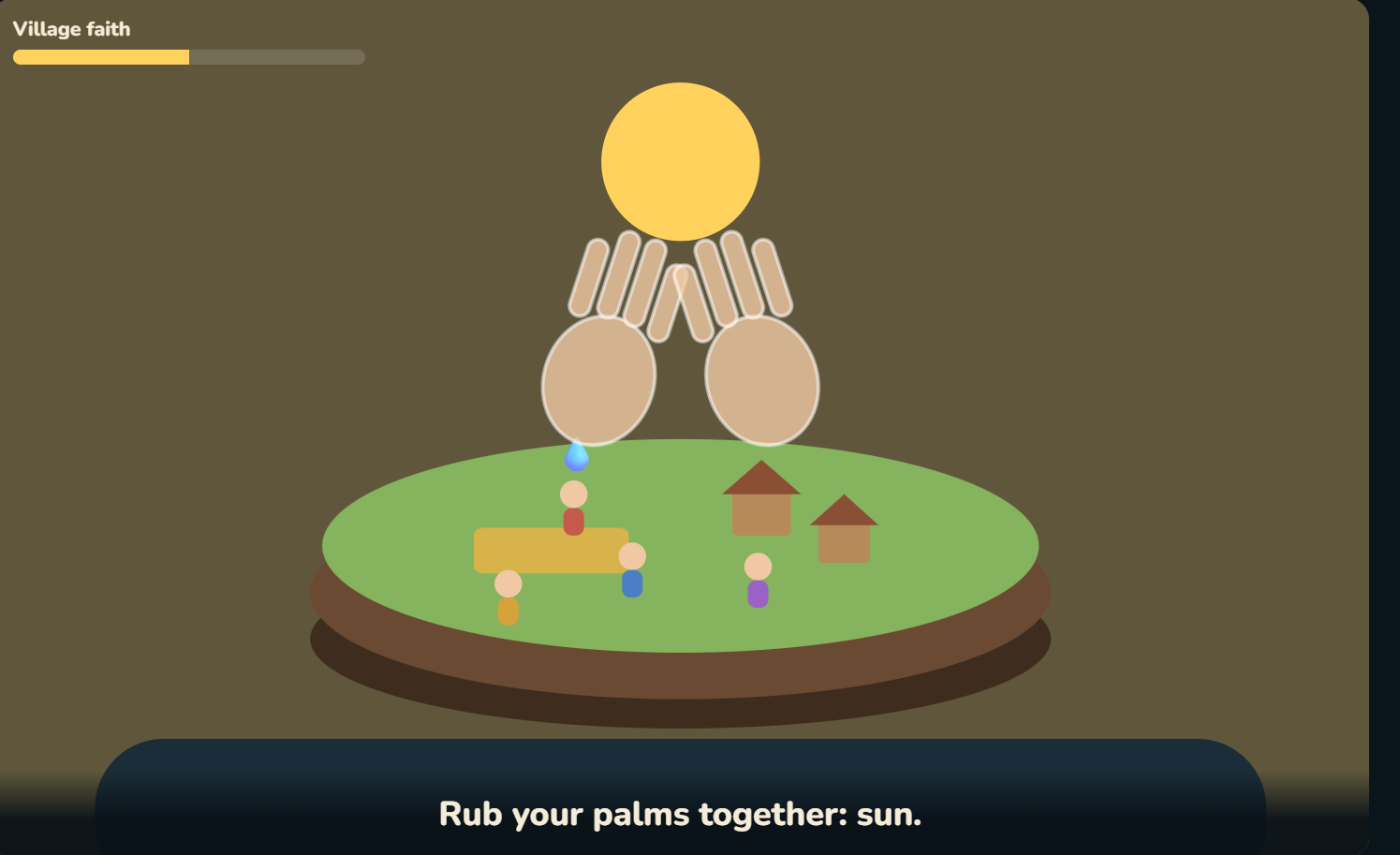
Tabletop Weather God is a seated, hands-only god-game for Meta Quest built with WebXR. A small, reactive diorama island sits in front of you, and your hands directly shape the sky:
- Sun: Warmth and recovery for crops; excess causes dryness.
- Rain: Hydrates soil and crops; excess causes low-ground flooding and chills villagers.
- Wind: Moves cloud layers and sways trees; stresses fragile structure integrity.
- Calm: Subsides active weather escalation without undoing existing damage.
Legible Causal World
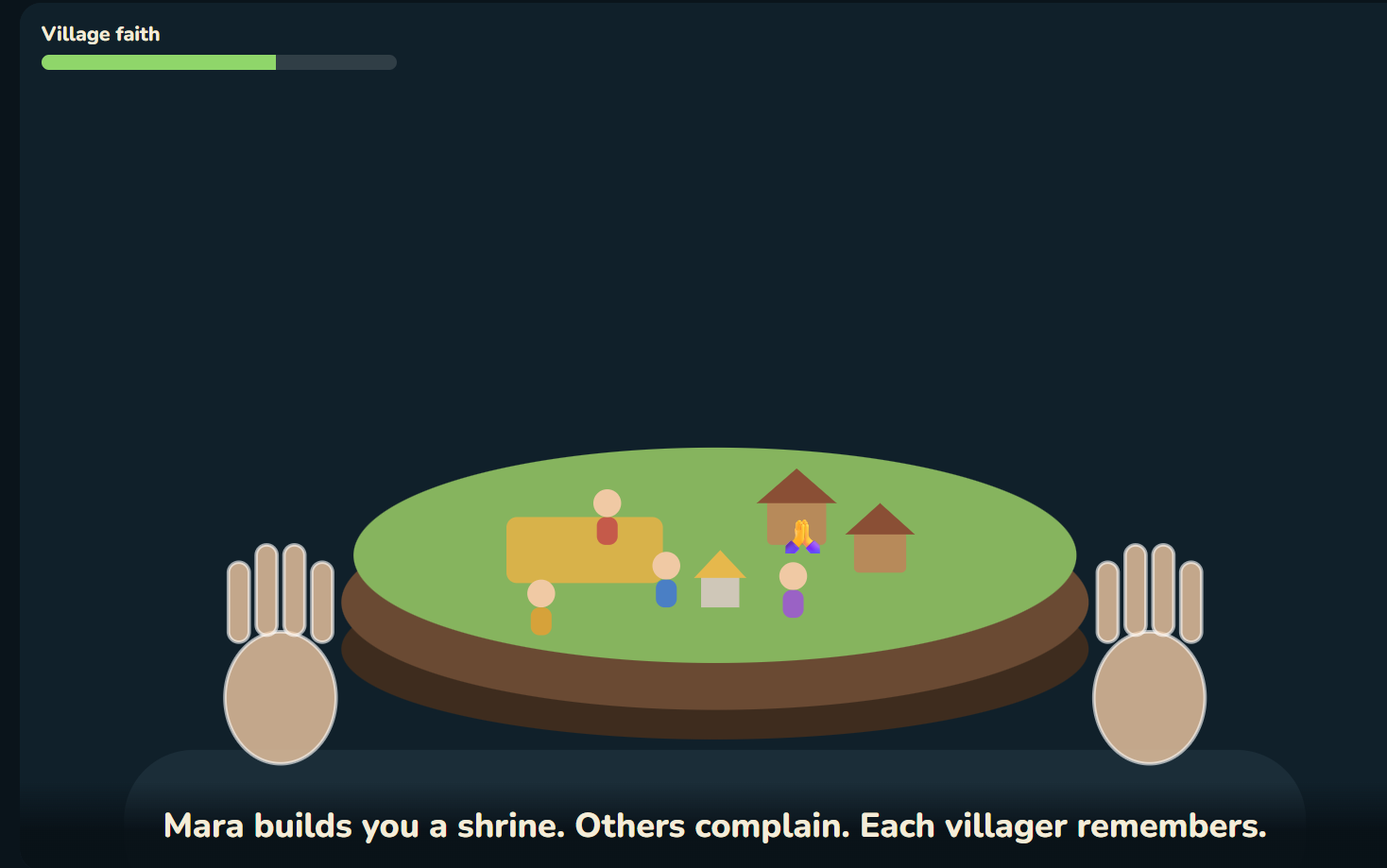
Weather has real environmental consequences on soil moisture, warmth, and structural integrity. Villagers act based on their needs (Sustenance, Warmth, Safety, Faith), personality traits, and memories:
- The same flood can cause a cautious villager to seek dry shelter while a devout villager kneels to pray.
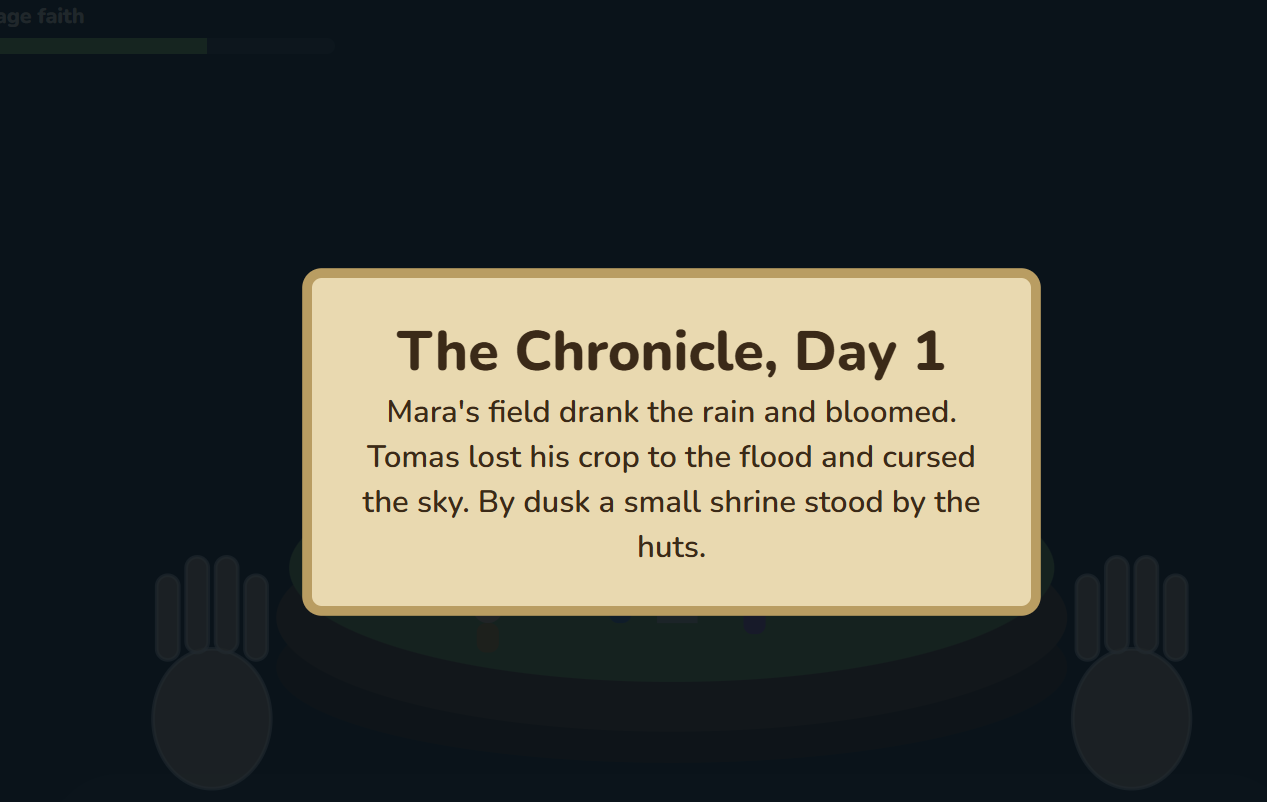
- Each session ends with a short, event-driven chronicle and a changed island that retains your choices upon your return.
- Playable end-to-end with hands only—no controllers required.
How we built it
- Platform & Framework: Built as a WebXR application using Meta's Immersive Web SDK (IWSDK) and Three.js, deployed via HTTPS and played directly in the Meta Quest Browser.
- Deterministic Simulation Engine: A local, fast, fixed-timestep simulation handles environmental physics, utility-based villager decision trees, and reason-tagged behaviors.
- Hands-First Interaction Architecture: Pinch-based weather tokens provide a guaranteed baseline interaction, supplemented by robust gesture recognition. An engagement volume gate above the island prevents natural seated movements from triggering unintended actions.
- Persistence & Memory: Daily chronicles and memories are generated deterministically from an internal event log paired with local templates. Game progress is safely versioned and stored via local browser storage (
IndexedDB/localStorage). - Zero External AI Dependencies: The entire game logic, decision system, memory trace, and rendering run locally on-device without network LLMs or external API dependencies.
Challenges we ran into
- Hands as the Controller (Midas Touch Problem): Seated gestures, resting hands, or reaching for objects can mimic intent. We solved this by creating an engagement volume gate with explicit feedback states (
Ready,Recognising,Confirmed,Rejected). - System Gesture Reserved Conflicts: WebXR on Meta Quest reserves the palm-pinch gesture on both hands for system menus. We adapted our UI by replacing wrist-based gestures with an in-world pause and exit control anchor.
- Performance Budgeting on Headset: To maintain a smooth 60 fps floor on Meta Quest hardware, we constrained asset budgets to under 100k scene triangles, flat-shaded low-poly geometry, shared ASTC texture atlases, and a focused core cast of 3 fully authored villagers.
Accomplishments that we're proud of
- Direct Causal Legibility: Achieving a strict "no cosmetic-only weather" rule where every weather action directly modifies environment variables that villagers evaluate.
- Zero Wall-of-Text Onboarding: Guiding players into their first weather action within 30 seconds of starting XR using contextual visual cues and ghost-hand prompts.
- Fully Resilient Architecture: A self-contained simulation engine that runs completely client-side without external servers or network dependencies after page load.
- Rigorous Engineering Scaffolding: Implementing structured architecture contracts, versioned saves, and deterministic scenario testing before scene assembly.
What we learned
- Depth comes from visible consequences and memory traces, not from gesture complexity or large crowd simulations.
- Hand tracking requires clear visual feedback gates and robust fallback models—desktop emulators speed up iteration, but real-device Quest testing is essential for frame rate and input validation.
- Designing for competition judging requires immediate feedback loops: action within 30 seconds, villager reaction within 2 minutes, and a complete moment inside 5 to 8 minutes.
What's next for Tabletop Weather God
- Conduct real-device gesture experiments to lock in extended gesture sets.
- Expand the villager count from 3 to 5 or 6 as Quest frame budgets allow.
- Introduce stretch weather interactions including cloud/sun steering, structural repair systems, and additional biome variations.
- Evaluate optional Mixed Reality (MR) placement capabilities for placing the diorama on real-world tables using spatial anchors.
Built With
- browser
- immersive-web-sdk-(iwsdk)
- javascript
- meta
- quest
- three.js
- webxr
