
Inspiration
We love the moment at a real card table when someone slams a card down, looks you in the eye and dares you to call it. We wanted VR to capture that feeling, played with your bare hands at your own table, with no menus and no laser pointers.
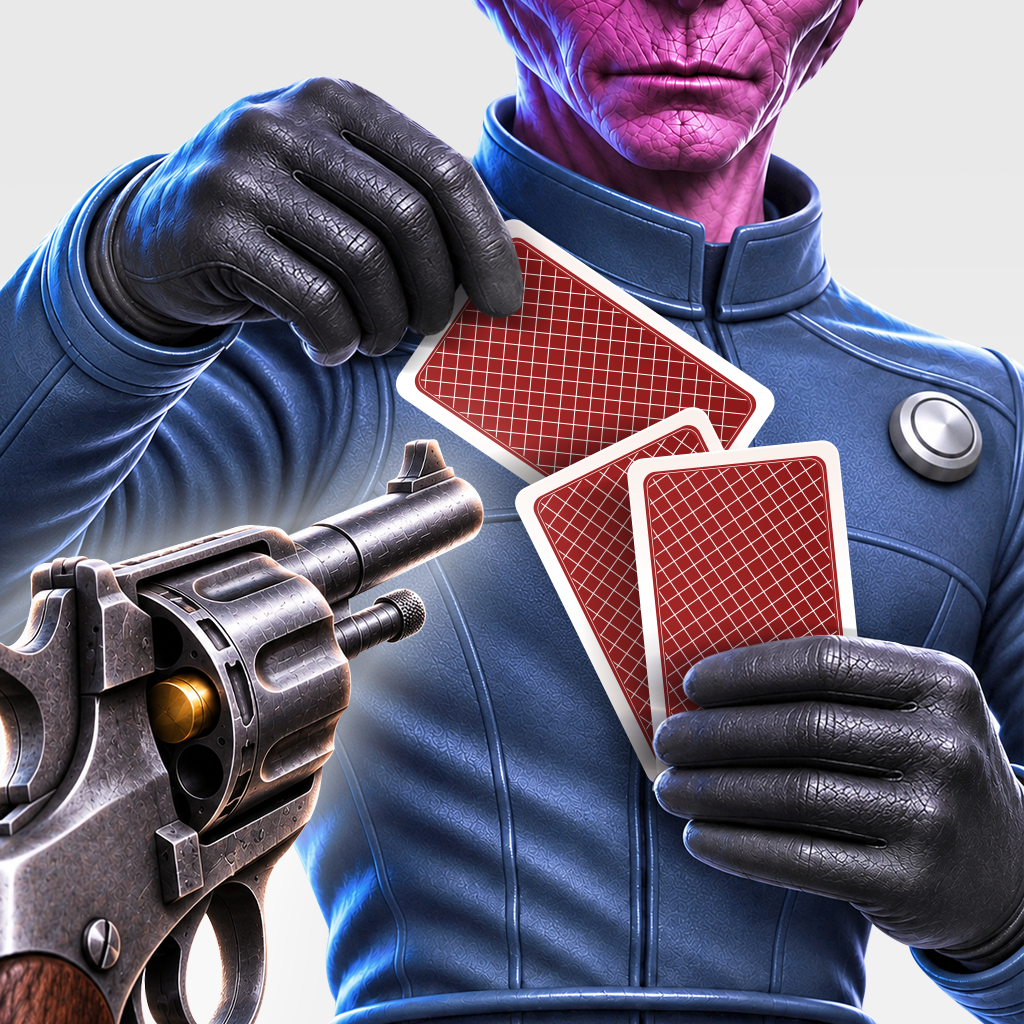
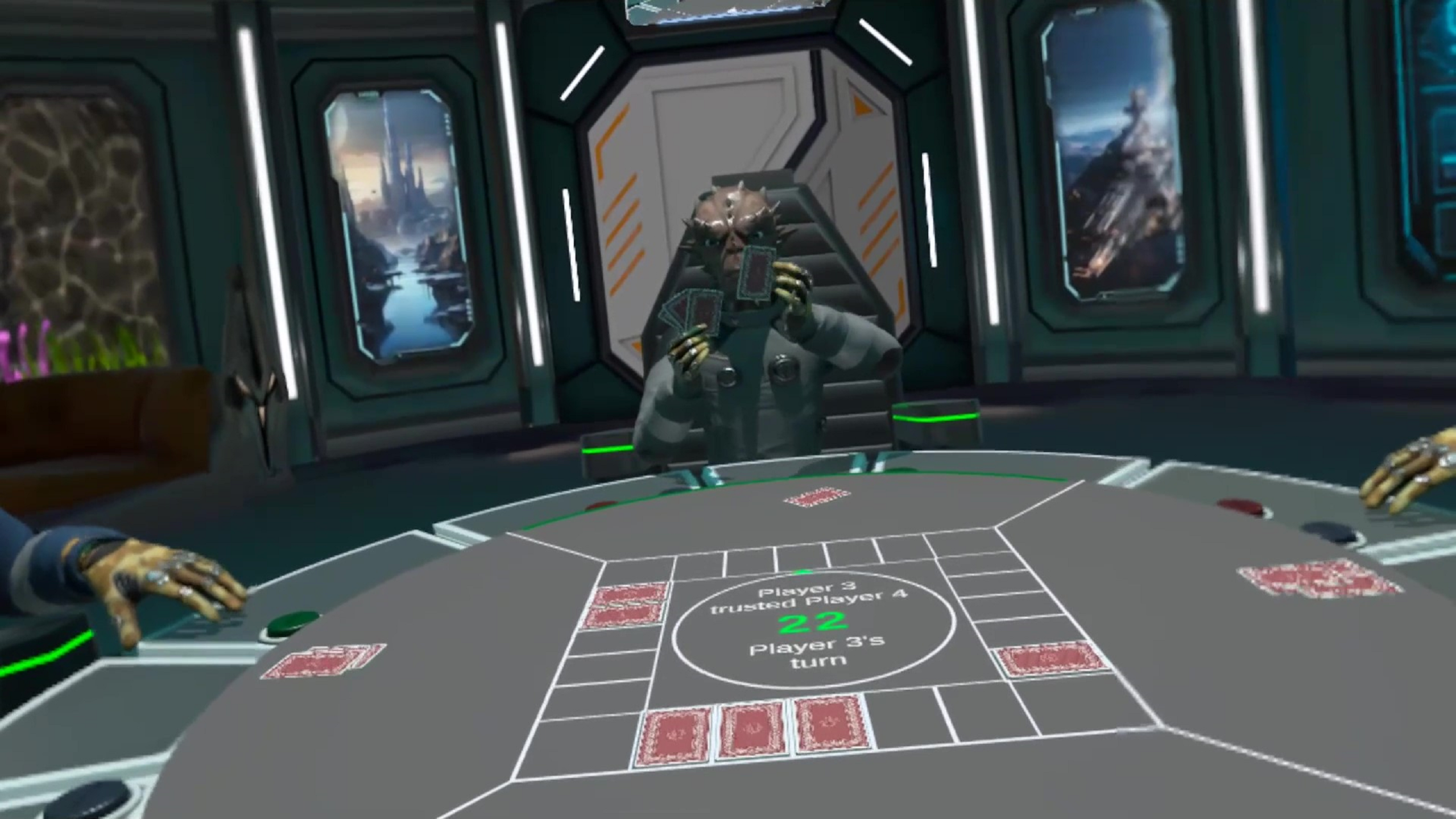
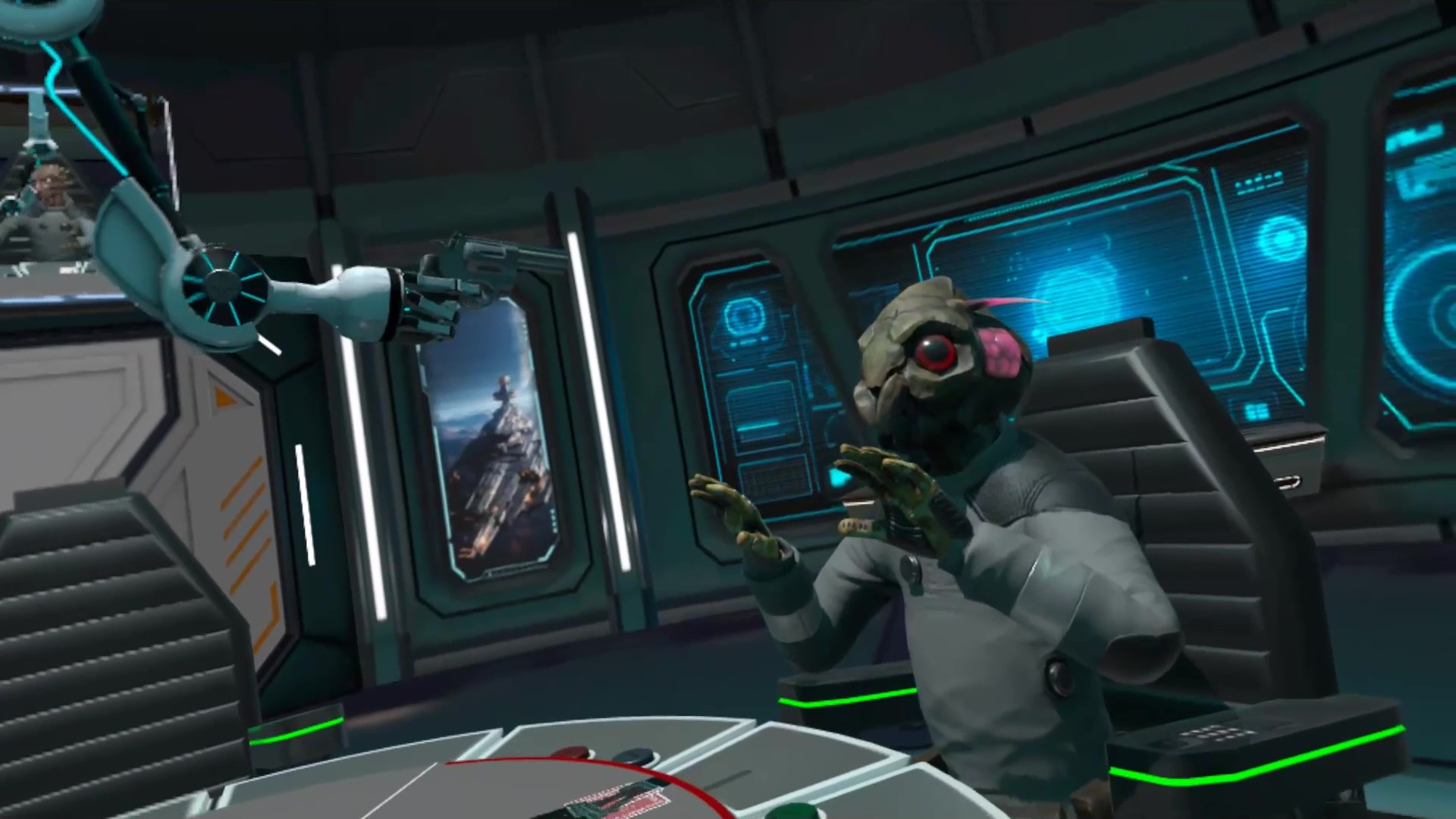
Under Six is a new bluffing ruleset. Each round, you play cards face-down and silently claim that their total is under six. The next player can trust you or slam the SIX! button to call your bluff. Whoever is wrong faces a ceiling-mounted revolver with one bullet in six chambers, and every empty click makes the next pull deadlier.
Under Six is the first game on Table Hub, a platform for controller-free tabletop games in VR.
What it does
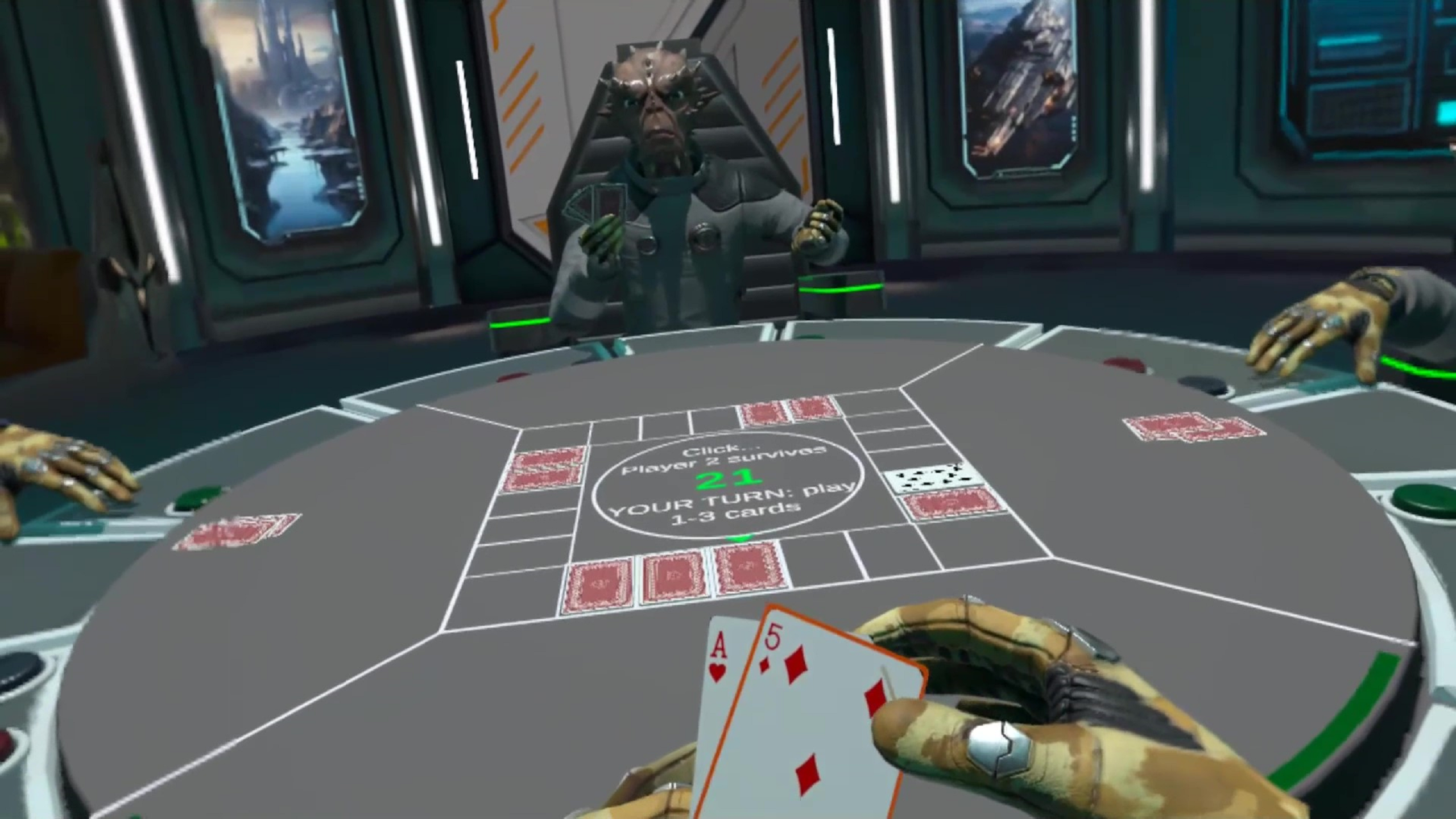
- A 20-card deck from a standard pack: four each of Aces (worth 1), 2s, 5s, 10s and Kings (also worth 10). Each player is dealt 5 cards.
- 10s and Kings are "dead cards": they can never be played honestly, so the only way to get rid of them is to lie.
- A 5 is a trap: it is honest on its own, but any card added to it makes the play a lie.
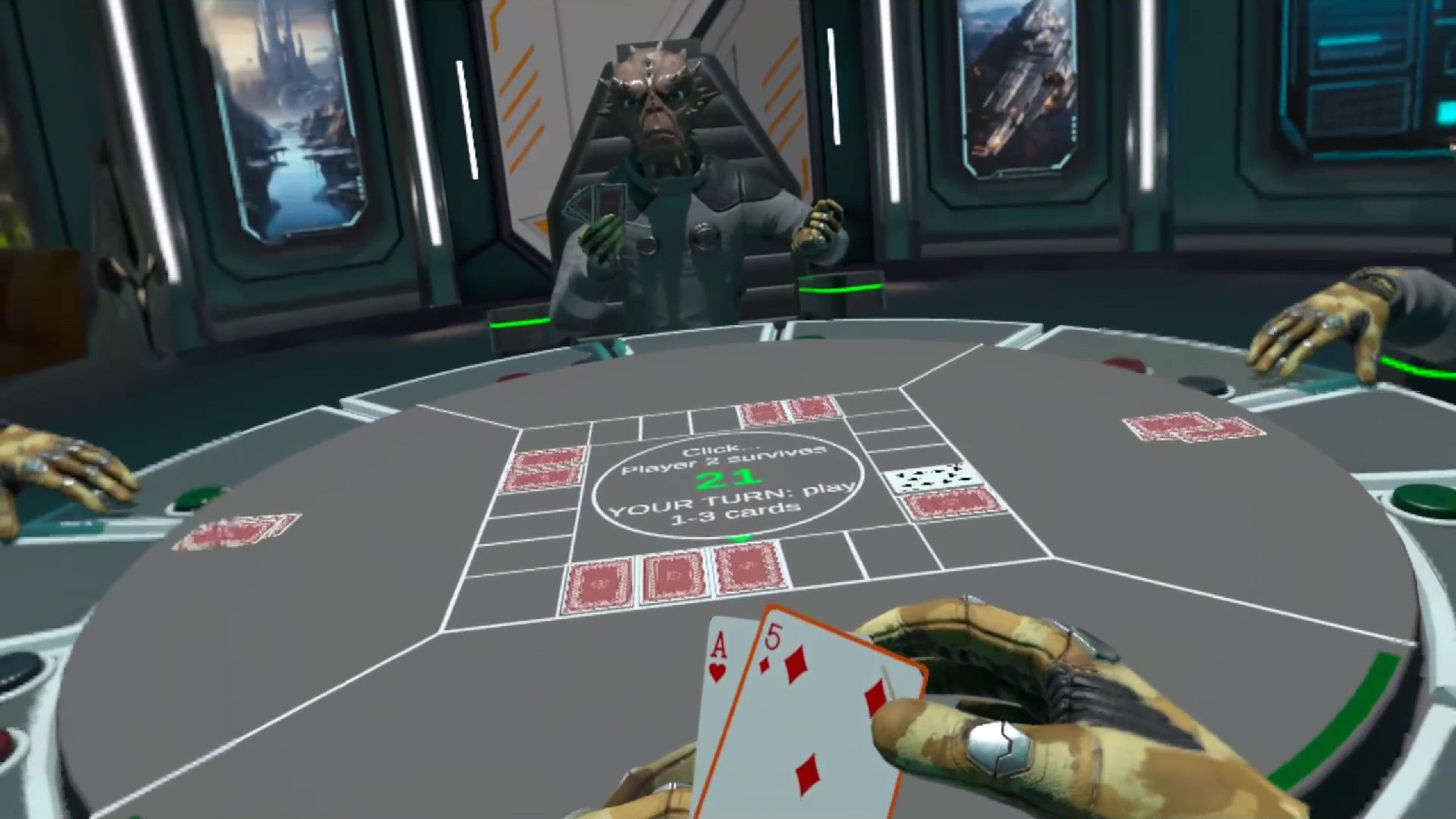
- Your turn: place 1 to 3 cards face-down on the centre mat, then press Play. Placing cards is an implicit claim that their total is under 6.
- The next player decides: press Trust and take the turn, or slam SIX! to challenge. The challenged cards are flipped:
- total 6 or more → the liar loses;
- total under 6 → the accuser loses.
- End of a round: when someone plays their last card and nobody challenges it, the player still holding the highest total in their hand loses. Every player has to keep counting cards and guessing what the others hold.
- The revolver: the loser's revolver descends, tracks their head and counts down from 5. Each player has their own 6-chamber cylinder that carries over between rounds, so the risk climbs from 1/6 up to 1/1. A player who is hit slumps onto the table as a ragdoll and keeps watching the match as a spectator. The last player alive wins, and everyone can choose Play Again or return to the lobby.
- Modes:
- online multiplayer for 2–4 seats, with voice chat for table talk and bluffing. Humans and bots can share the table: the room host (in a custom room or a Quick Match) fills empty seats with 0–3 bots and chooses which seat at the table the second human player takes, so two testers can pick where they sit;
- Play with Bots (1–3 AI opponents);
- a guided Practice / How to Play match.
How we built it
- Engine and SDKs: Unity 6 (URP) with the Meta XR SDK and Meta Interaction SDK for hand tracking, hand grabs and poke buttons. Passthrough is used for the mixed-reality mode, Photon PUN 2 for multiplayer, Photon Voice for voice chat, and PuppetMaster for physics-based death poses.
- Host-authoritative game logic: the room's host owns the deck, card values, bullet positions and every decision. Other players only see a "?" on cards that are not theirs until those cards are revealed, so they cannot see your cards.
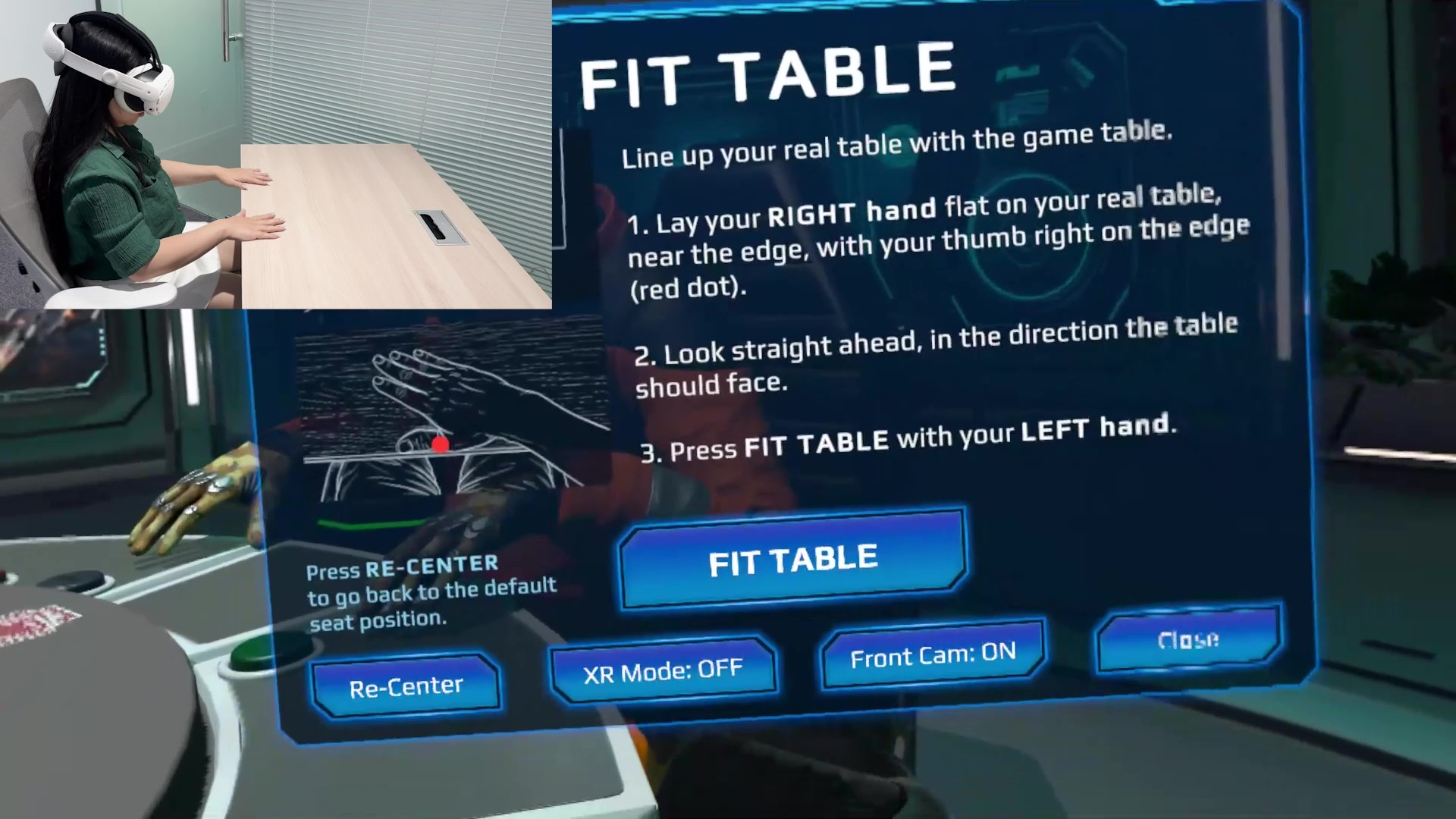
- Fit Table: rest your right hand on the edge of your real table and press Fit Table with your left hand. A preview shows your real table and where the game table will land. The game uses the tracked thumb joint to move the virtual table so that its edge sits exactly on your physical one. When you put cards down or slam a button, your hand meets a real surface. Your calibration is saved for the next match.
- XR mode (Quest 3): switch on Passthrough to see your real room around the virtual table.
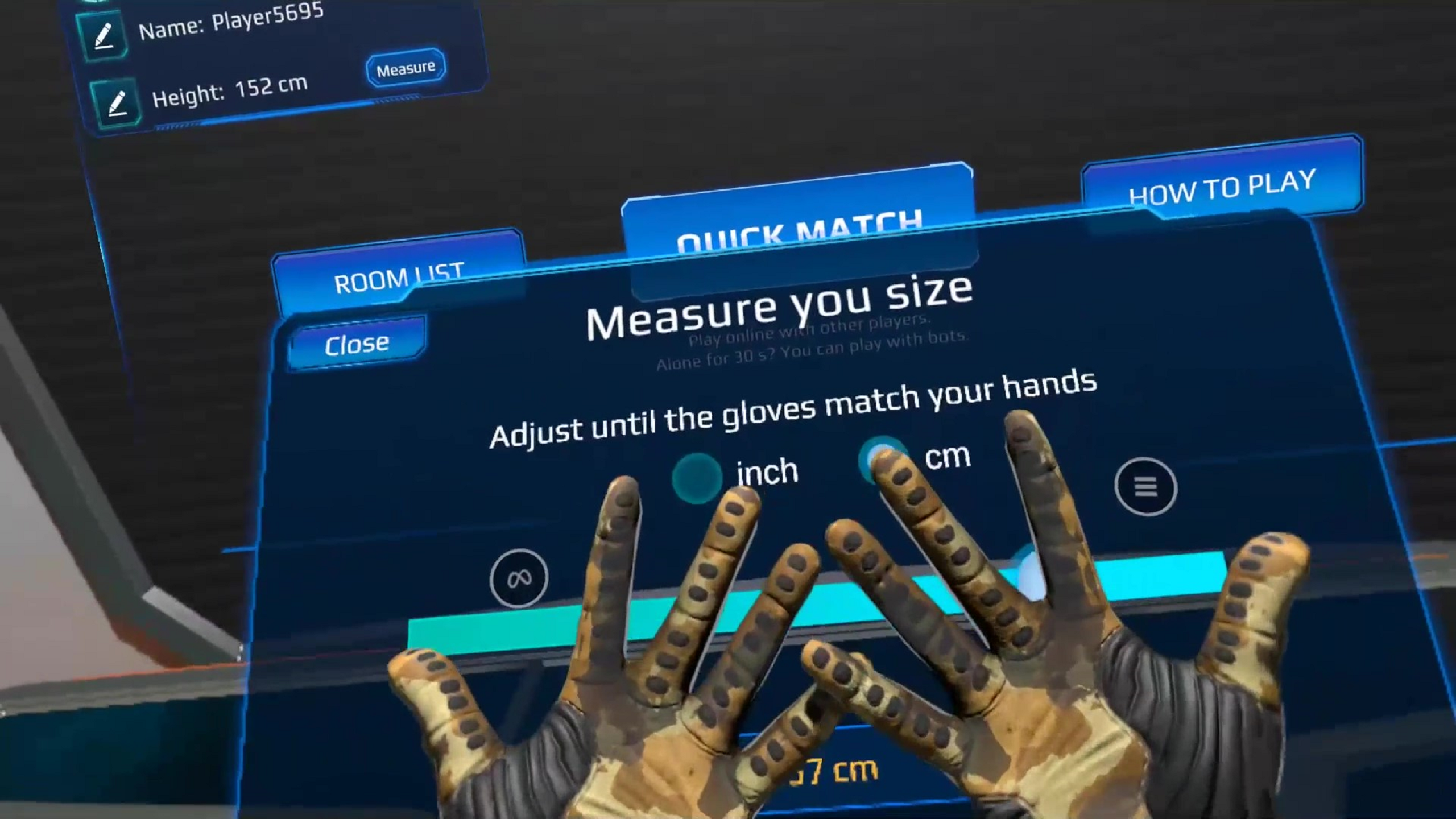
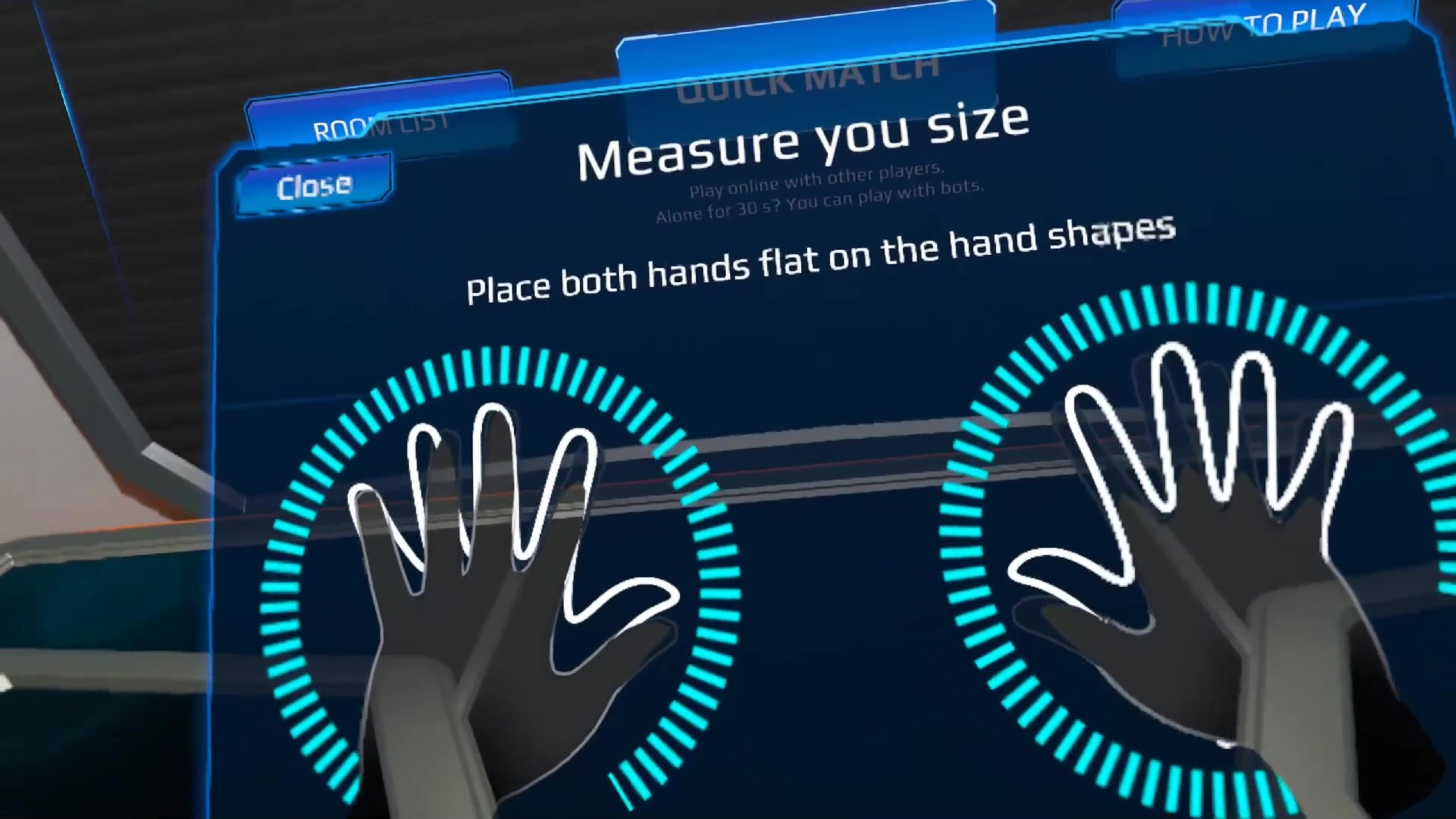
- Seated, small play space: everything you need is within arm's reach of a seated player. A quick palm scan in the lobby measures your hand, so your virtual gloves match your real hands and the table fits your height. If you drift too far from your seat, a "Return to your seat" reminder appears. A typical match lasts 5–12 minutes.
Challenges we ran into
- Making bare-hand input feel physical: cards must be easy to pick up, place and slide, and buttons must press reliably without accidental triggers. We spent many iterations tuning grab zones, poke depth and visual feedback on button presses.
- Matching the virtual table to the real one: headset tracking origins change every time the headset is put on. We designed a calibration that uses only one hand pose and one button press, and stores your offset relative to your seat rather than as an absolute position.
- Balancing a brand-new ruleset: we wrote a simulator to test deck composition, hand size and end-of-round penalties before settling on the 20-card deck and the "highest total loses" rule.
- Performance on standalone hardware: we inherited a large codebase from an earlier project, so we removed hundreds of unused assets and scripts to keep the build lean. The game holds 72 fps or more on Quest 3 and runs at 64–69 fps on Quest 2.
Accomplishments that we're proud of
- The whole game, from guest login and lobby to every match and menu, can be played with hands only.
- Fit Table makes slamming SIX! on a real table feel convincing.
- A ruleset that is easy to explain but still rewards card counting, reading other players and nerve.
Accessibility
- Fully playable with one hand: picking up and placing cards and pressing Play, Trust and SIX! all work with either hand alone. (Fit Table calibration is optional and uses both hands.)
- Multi-sensory feedback: spatial audio cues, lit buttons and a clear on-table display show whose turn it is, how much time is left and how many times each player's revolver has been fired.
- Seated play: designed for a chair at a table, with no standing or room-scale movement needed.
What's next for Table Hub
- More tabletop games on Table Hub, starting with Tiến Lên, Vietnam's most popular card game, so we can bring it to a global VR audience.
- Friend invites.
- Planned launch: [LAUNCH DATE] on the Meta Horizon Store. (The Official Rules require a planned launch date in the description.)


