-
-
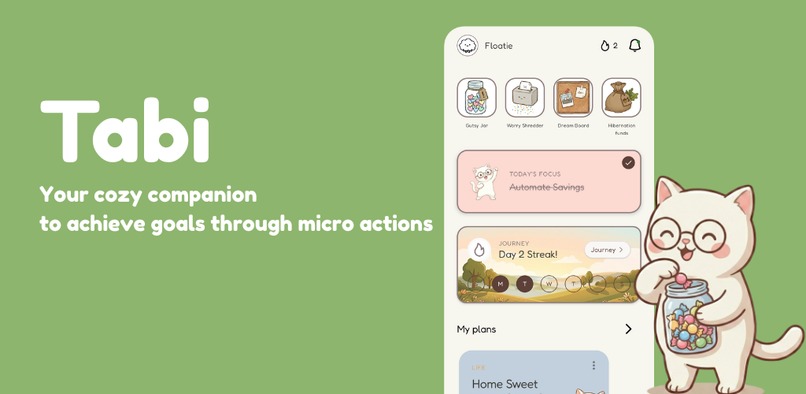
Your cozy companion to achieve goals through micro actions
-
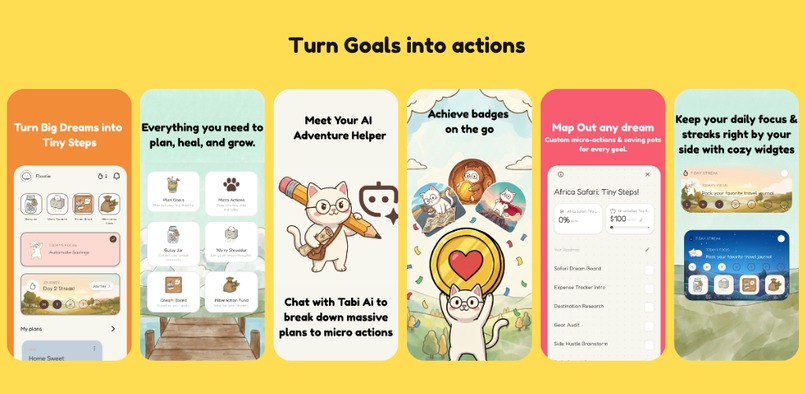
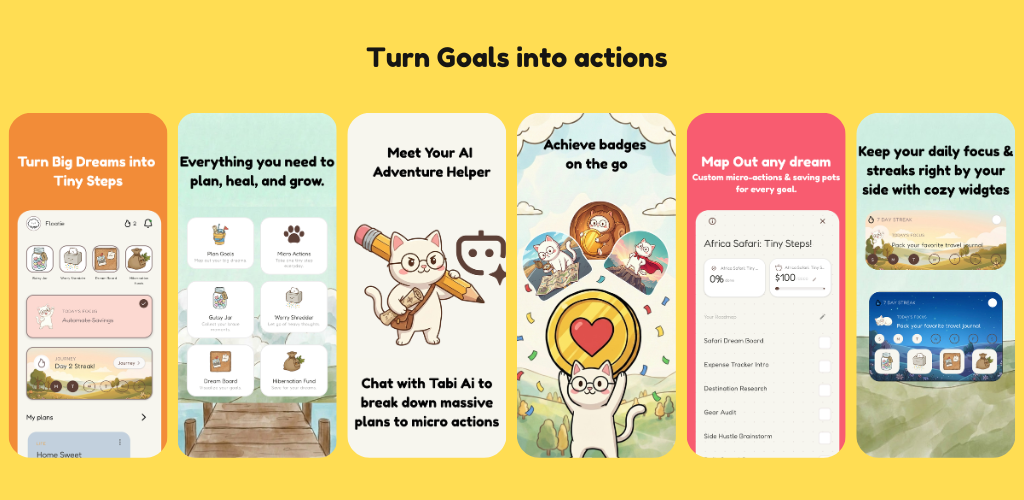
Turn Goals into actions
-
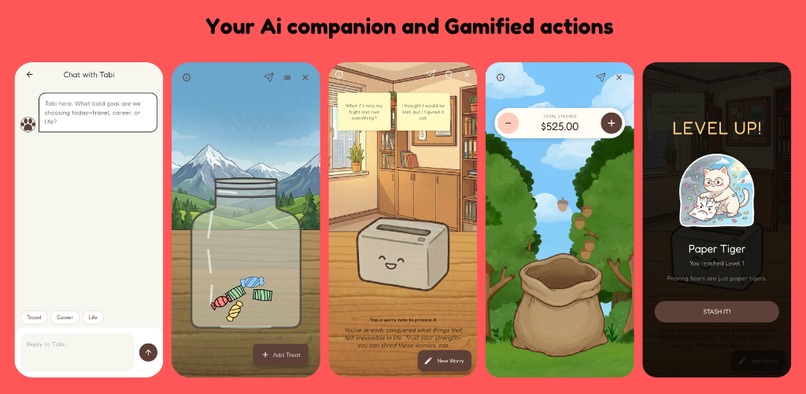
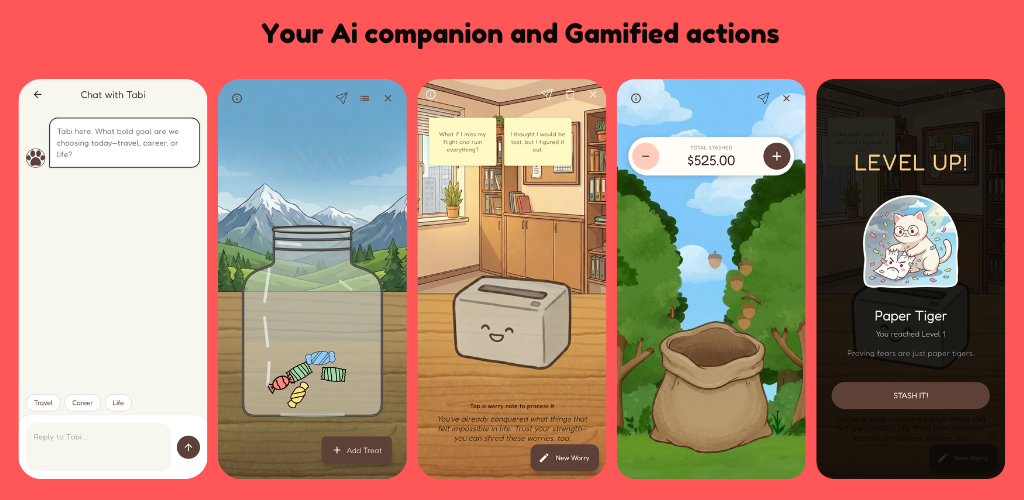
Your Ai companion and Gamified actions
Inspiration
Tabi means Journey in Japanese The spark for Tabi came from a concept by Gabby that instantly hooked me. Every woman has a 'Next Big Thing'—a solo trip, a career pivot, or a lifestyle change—but the gap between dreaming and doing is often filled with anxiety. Coming from an Edtech background, I’ve seen firsthand how gamification transforms difficult tasks into engaging habits. Tabi was built to bring that same energy to personal growth and answer a simple question: How can we make the scary work of chasing dreams feel safe, cozy, and even fun?
What it does
1. Goal Cards: The Interactive Roadmap (The Logic) Using the Gemini API, Tabi acts as an intelligent coach. Users input a vague dream (like "Start a Business"), and Tabi generates a personalized Goal Card—a dedicated dashboard for that specific ambition. AI Decomposition: It breaks the goal into a Notebook-style checklist with satisfying "Scribble Checkboxes" that turn green as you progress.
Goal-Specific Savings: Uniquely, Tabi tracks tasks and money together. Each card features a local saving pot with a live progress bar (e.g., "$1200 / $5000"), ensuring the financial and practical aspects of that specific goal move in sync.
2. Emotional Resilience Toolkit (The Heart) We know that mindset is the biggest blocker. Tabi includes unique therapeutic tools:
The Worry Shredder: A therapeutic space where users log anxieties and virtually destroy them with a satisfying, tactile paper-shredding animation. It clears mental static instantly, while the "Shredded History" proves they’ve conquered bigger fears before—reminding them they are capable of handling anything.
The Gutsy Jar: A digital jar where users collect "treats" for every small act of courage, creating a visual history of their bravery.
The Hibernation Fund: A dedicated, separate vault for your "Ultimate Dream" (e.g., buying a house or returning to college). It keeps your long-term life vision safe while you work on daily goals.
Interactive Home-Screen Widget: Mindfulness at a Glance The Tabi Step Widget is a powerful extension of the app that brings the core philosophy of "tiny steps" and Resilience Toolkit directly to the user’s home screen. It acts as a persistent, low-friction bridge between the user's daily life and their long-term dreams.
Manifestation Board: Turning Visions into Reality The Manifestation Board is a digital sanctuary for visual inspiration. It’s more than just a gallery; it’s an interactive "Corkboard" where users can pin their future experiences to make them feel tangible.
3. Gamified Growth (The Fun) Tabi turns self-improvement into an RPG. Deep Leveling System: Tabi launches with 15 unique, beautifully cozy badges with our mascot. This isn't just a quick checklist—every single badge has a massive leveling system, meaning users can progress from "Novice" to "Master" in categories like Bravery, Consistency, and Savings.
4. Journey Map & Calendar(The Way) A visual history of growth. The map tracks daily consistency through a streak system and an "Improved Mini Week Strip," allowing users to look back at their dedication.
How we built it
Native First We prioritized a buttery-smooth experience, so Tabi is built entirely in Kotlin with Jetpack Compose. To ensure scalability and clean architecture, we utilized Dagger Hilt for dependency injection and Coroutines for seamless background tasks. The Brain (AI) Google Gemini API serves as Tabi’s intelligence layer. It powers the "Plan Goals" feature, acting as an empathetic task planner that takes a user's vague dream and intelligently deconstructs it into concrete, actionable "Tiny Steps." The Backend & Monetization: Firebase (Auth & Firestore) handles secure user data and real-time syncing and Ofcourse Revenuecat for smooth subscription managment 😊
Challenges we ran into
1. Finding the Right Visual Identity (The Pivot from Neo-Brutalism) Our initial prototype used a trendy Neo-Brutalism design (high contrast, harsh lines). However, after testing, I realized that while striking, it wasn't visually soothing for a daily-use wellness app. We researched successful apps like Quabble, Catzy, and Fabulous and pivoted to a "Cozy Productivity" aesthetic. We learned from user psychology that "cute" mascots build trust and retention(read in twitter), which led us to replace our harsh lines with soft, thick edges and pastel tones that feel safe to come back to every day.
2. The Branding Crisis: "Backpeck" vs. "Tabi" Originally, the app was called "Backpeck" and featured a Woodpecker mascot to symbolize "migratory" travel. The Challenge: I realized the app was limiting itself. Tabi isn't just for travel; it’s for any life transition (career, education, habits). The Fix: I rebranded to "Tabi" (Japanese for "Journey") and swapped the bird for a comforting cat companion. This shift opened up the product scope significantly.
3. The "Gutsy Jar" Physics The most technical friction wasn't the database—it was the animation physics. Getting the "Gutsy Jar" to feel tactile and satisfying (where items drop in with the right weight and bounce) required endless tweaking of animation curves. We spent the most time here because if the reward doesn't feel good, the gamification fails.
4. AI Model Selection We spent time benchmarking OpenAI vs. Gemini for our "Tiny Steps" feature. I needed an AI that could be empathetic and structured. Gemini ultimately won out for its ability to seamlessly format complex goals into our specific JSON structure for the "Goal Cards" without losing the conversational, supportive tone.
5. The Last-Minute Polish As with any hackathon, the final hours were a battle against UI bugs—specifically ensuring our custom fonts and "Day/Night" themes switched seamlessly without restarting the app.
Accomplishments that we're proud of
This is a fantastic point to include. Since this is a RevenueCat Hackathon, showing that you obsessed over the psychology of the Paywall (not just the code) will get you major points with the judges.
Here is the polished section to add to your "Challenges we ran into":
6. The "Perfect" Paywall Dilemma We didn't just want to "add billing"; we wanted to optimize conversion from Day 1. The Challenge: Balancing monetization with a friendly, non-predatory user experience. The Fix: We researched psychological triggers on https://www.google.com/search?q=paywallexperiment.com and designed 5 different iterations. We debated between a "Blinkist-style" transparency model vs. an "Anchor Pricing" model. Ultimately, we chose a high-contrast design that highlights the Yearly Plan with a 40% discount against a higher monthly anchor. Thanks to RevenueCat, swapping these offerings during development was instant, allowing us to focus on the UI design rather than backend logic.
What we learned
I learned that "Vibe" is a feature. By pivoting from a cold Neo-Brutalist style to a "Cozy/Thick Edge" aesthetic with a mascot, we completely changed how the app feels. We discovered that for a self-improvement app, users don't just want a tool; they want a safe, non-judgmental space. A "Worry Shredder" isn't just a delete button—it’s a therapeutic interaction.
Designing 5 different paywalls taught us that monetization is a UX challenge, not just a coding one. Through our research on https://www.google.com/search?q=paywallexperiment.com, we learned that clarity and "Anchor Pricing" (showing the monthly cost vs. the discounted yearly breakdown) significantly impact perceived value.
What's next for Tabi: Woman Adventure Companion
Here is a strategic, exciting "What's next" section. It highlights that you aren't just stopping at the hackathon—you have a roadmap for a real product launch.
What's next for Tabi: Woman Adventure Companion
1. The Native iOS Launch (High Priority) As a native specialist, I am immediately starting development on the OS version using Swift and SwiftUI. Since 2. Smarter AI with RAG (Retrieval-Augmented Generation) Currently, Tabi gives general advice. The next step is implementing RAG so the AI "remembers" a user’s past journal entries, completed "Tiny Steps," and shredded worries. This will allow Tabi to give hyper-personalized advice like, You were anxious about your solo trip last month, but you crushed it. Use that same courage for your next thing today."*
3. Duolingo-Level" Animation Polish I want to double down on the "Cozy/Thick Edge" aesthetic. The goal is to introduce Duolingo-style character animations—where Tabi (the cat) reacts emotionally to your streaks, sleeping when you're inactive and dancing when you hit a milestone. We believe delight is a retention metric.
4. Expanding the "Adventure Catalog" I plan to add pre-built "Goal Templates" for specific life chapters beyond just travel and business—such as "Finance" "Education," or "Fitness life."
5. Go-to-Market & Distribution The app is currently in Internal Testing. The immediate next step is pushing to initial user acquisition user base.
_Tabi is just getting started. The journey has only begun! _
Built With
- andorid
- firebase
- jetpack-compose
- kotlin
- revenuecat

Log in or sign up for Devpost to join the conversation.