-
-
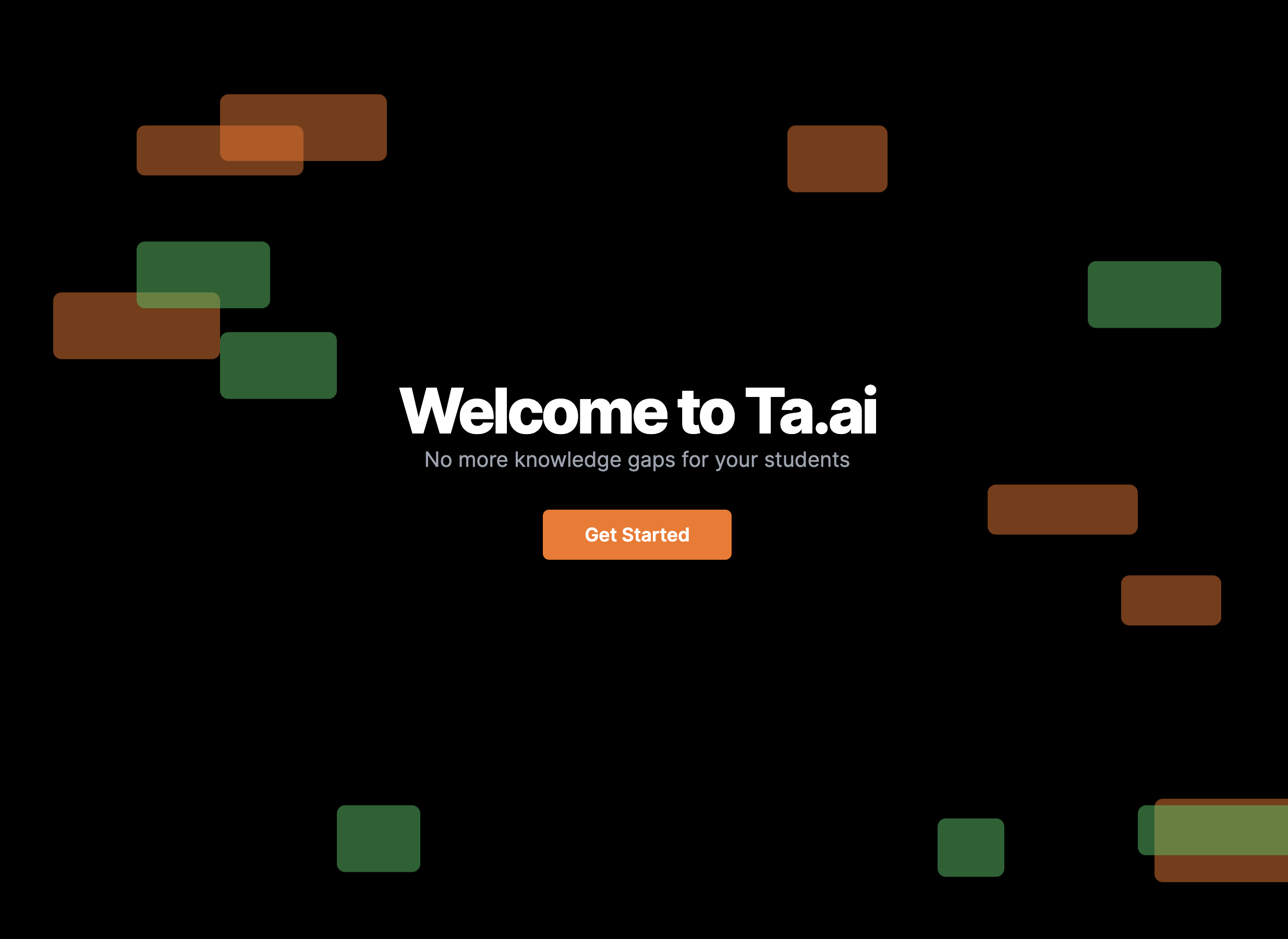
Landing page
-
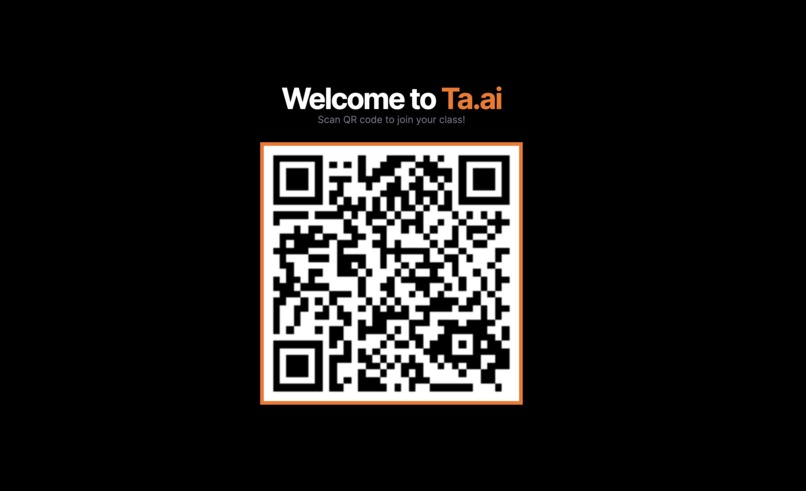
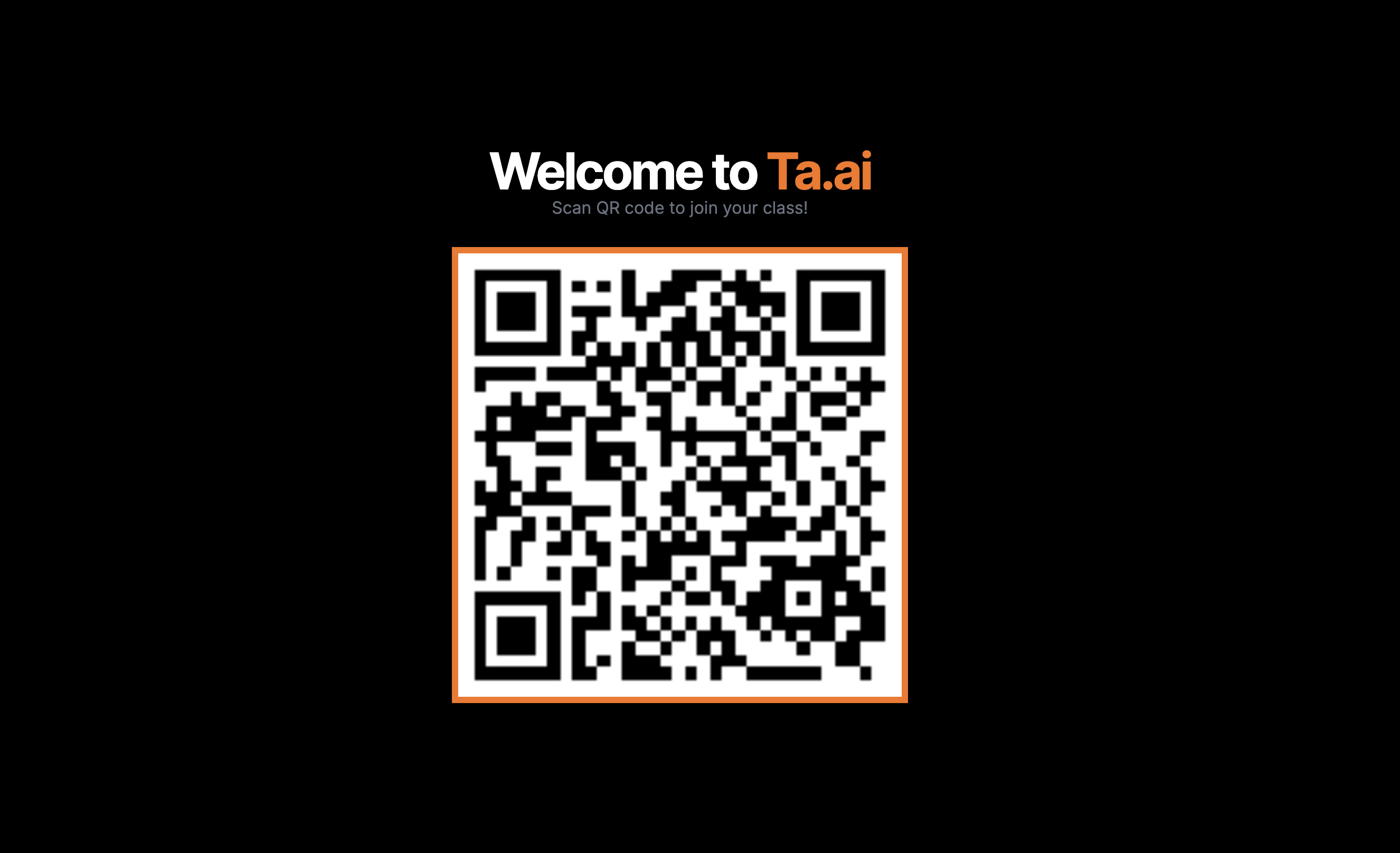
Live QR code
-
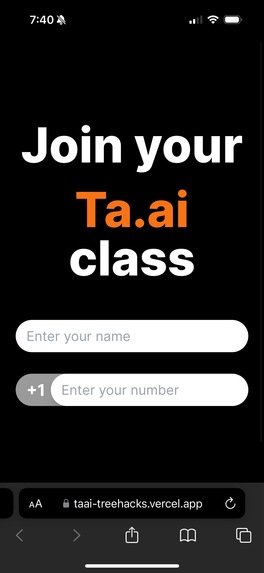
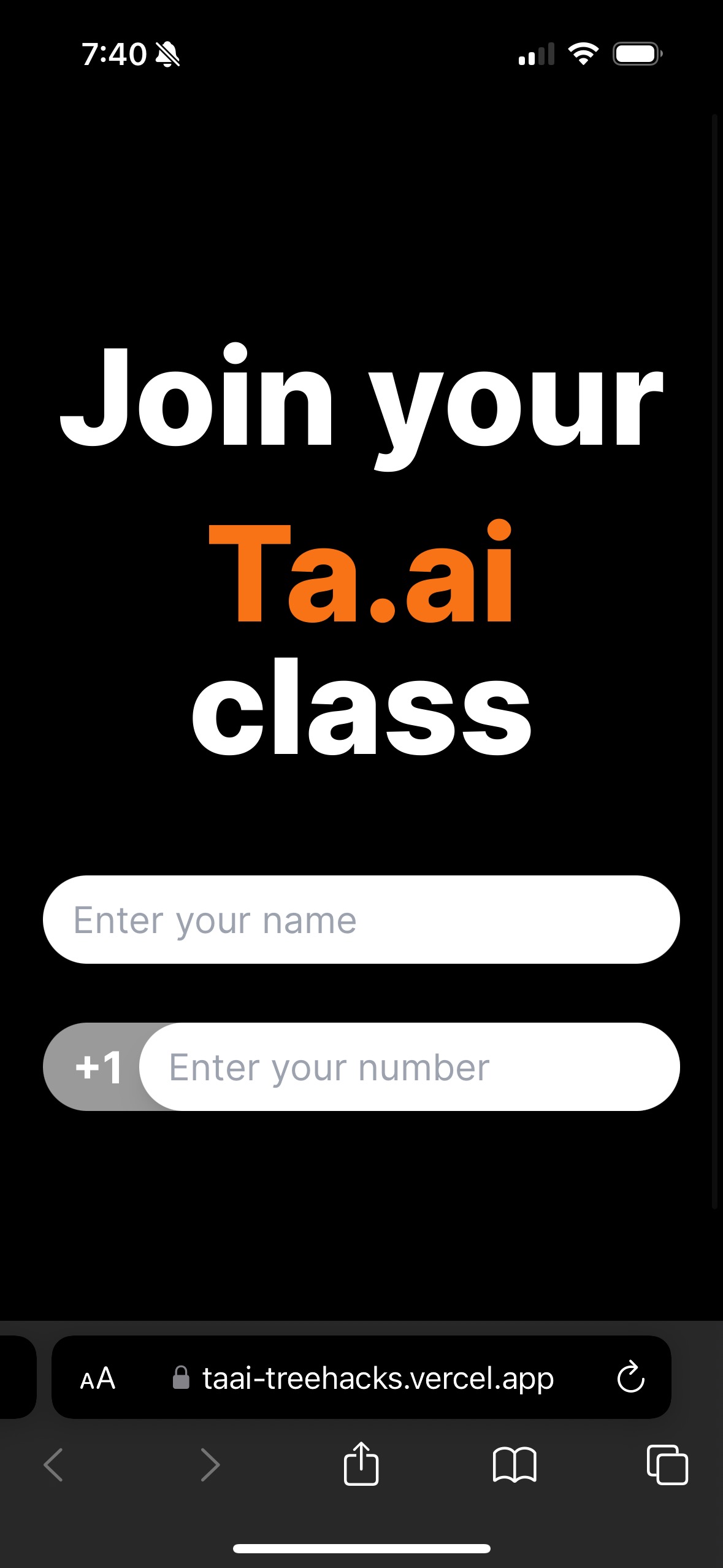
Class join screen 1
-
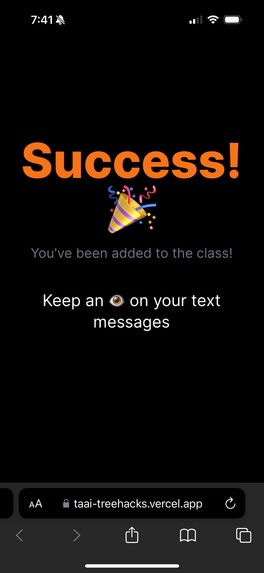
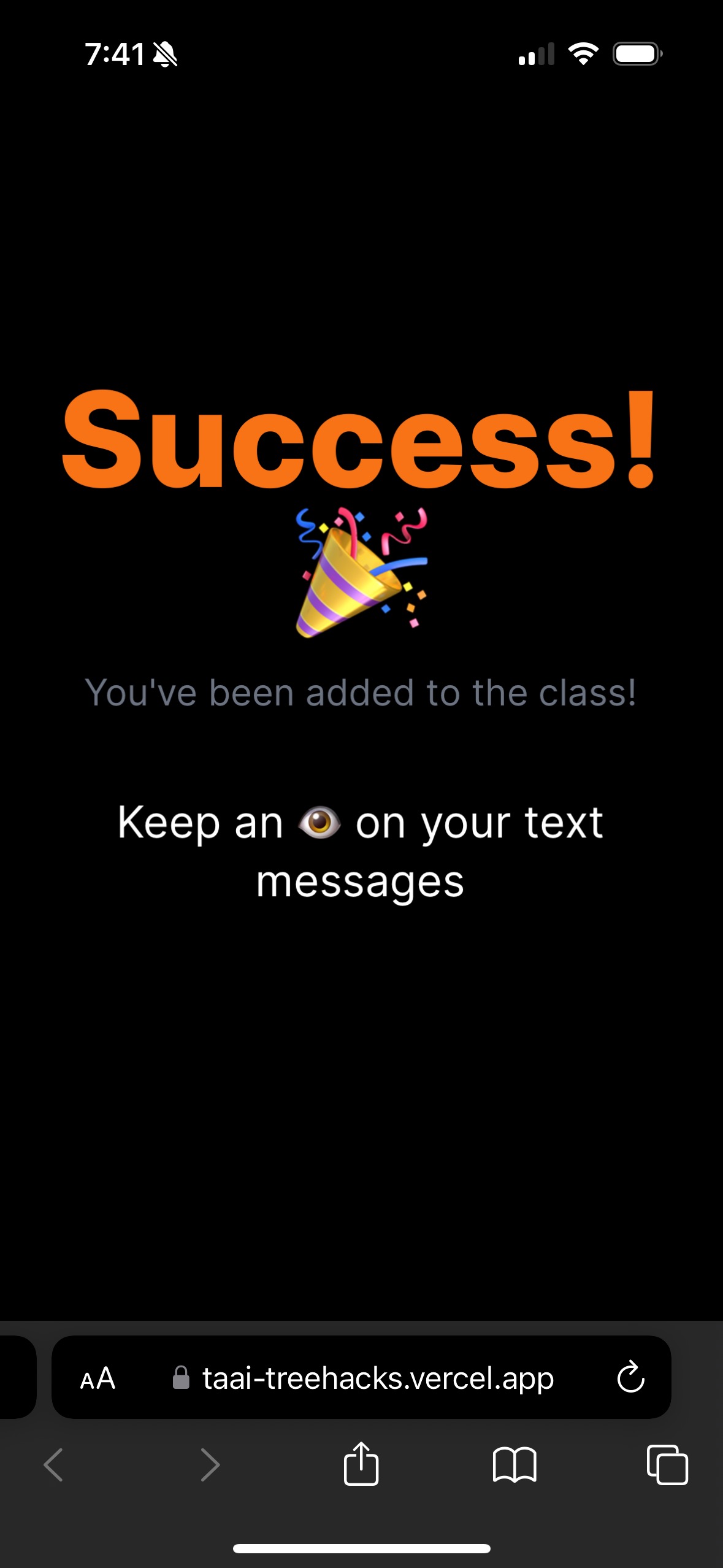
Class join screen 2
-
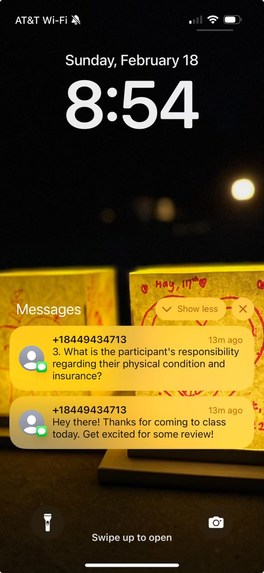
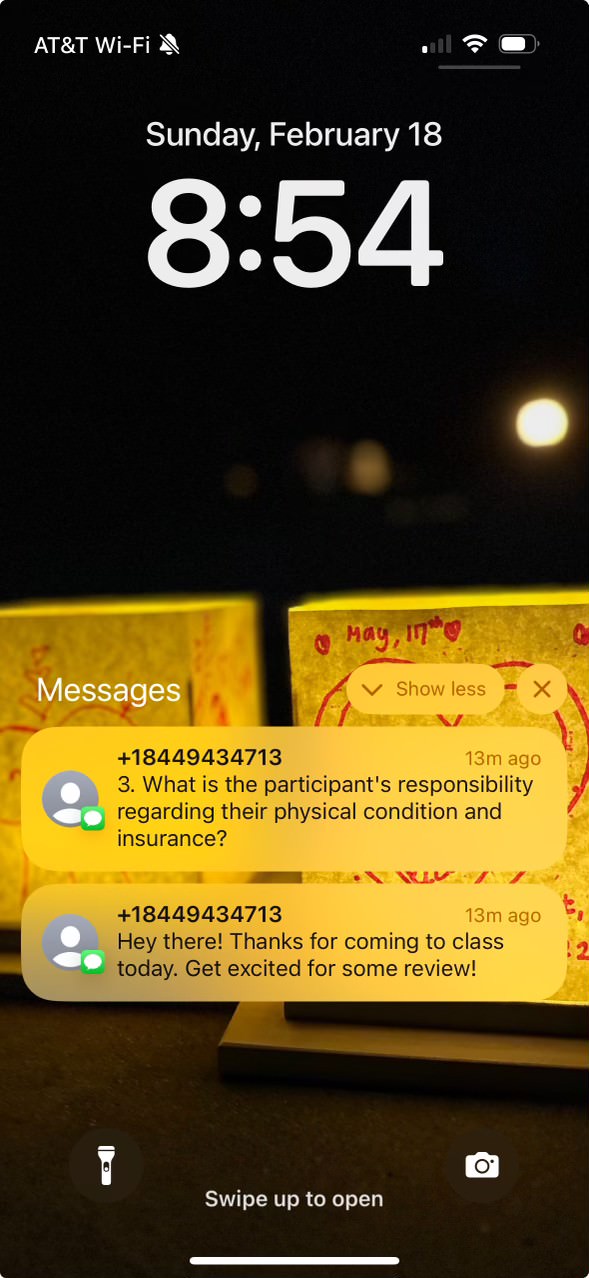
Twillio texts on phone
-
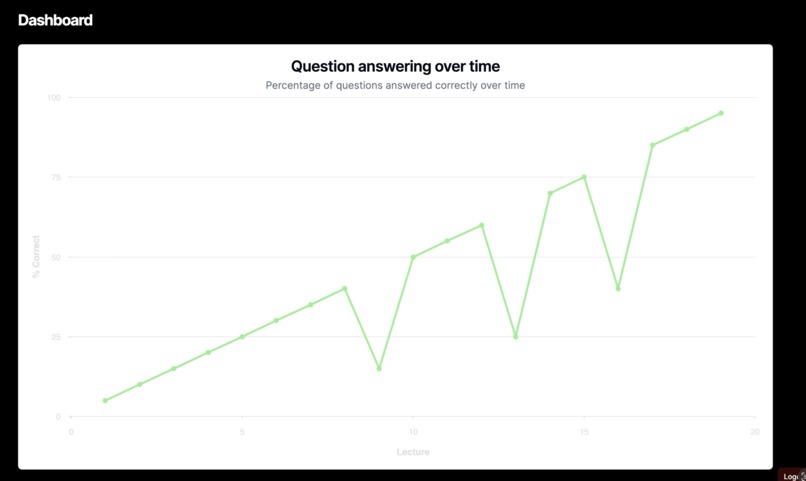
Teacher dashboard
-

Per student progress
-
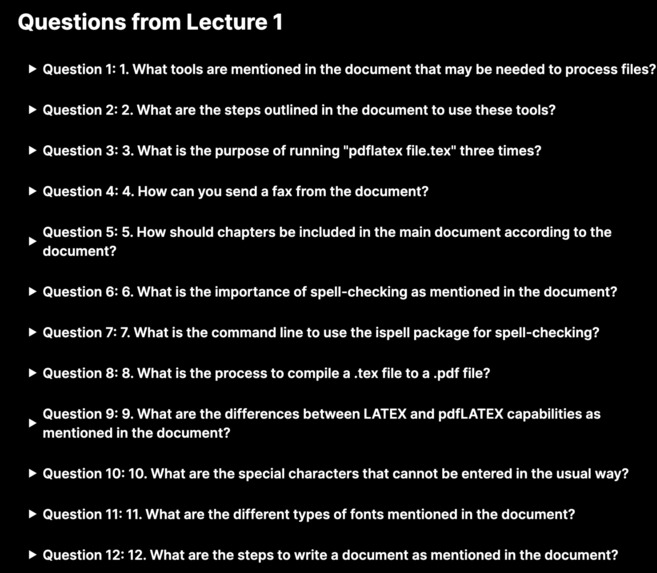
Generated questions with dropdowns
-
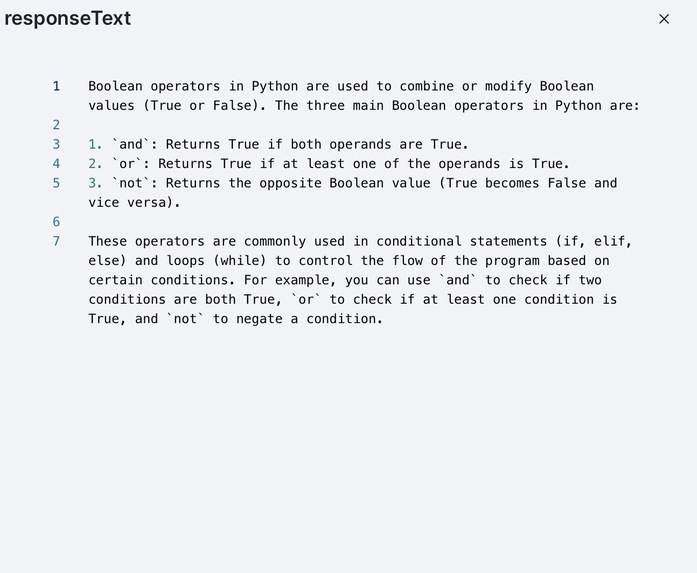
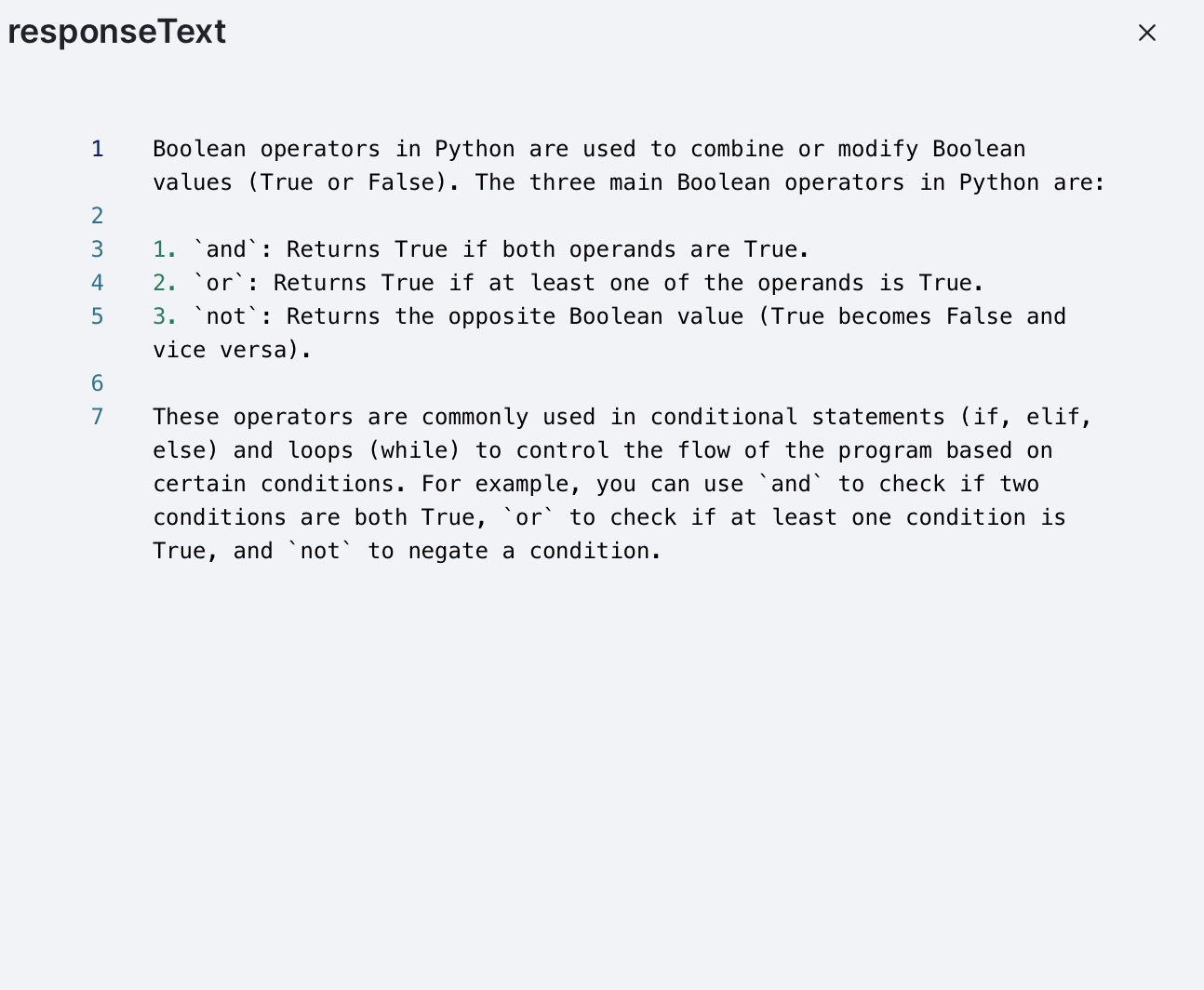
Backend 1


Everything in this project was planned & completed during TreeHacks.
Inspiration
Every student knows the week in a course after which nothing makes much sense. When enough "knowledge gaps" form in a course that builds upon itself, it becomes impossible to learn, and easy to stop paying attention, doubt yourself, or even switch majors.
A top-tier TED talk is Sal Khan on mastery learning. His core idea is that if we teach for mastery rather than passing, we can remedy the problems in learning caused by knowledge gaps, which grow exponentially over time.
There's lots of talk about using AI to catch cheating, to assist in grading and translation, but less about facilitating mastery learning. We want to build a tool that helps educators facilitate this seamlessly.
What it does
Educators join Ta.ai and get a QR code students can scan to join their class. Before lecture, educators upload their slides, and as students leave lecture, they receive a few short/long-answer questions based on the slides via text, allowing them to answer at their convenience. Each answer gets a quantitative score depending on how thoroughly the student answered the question.
On the flip side, educators are able to track which students are yet to complete the questions, the cumulative % of correctness in each lecture, and the individual-level responses to each question sent out. This helps educators understand what topics need to be better communicated, and what students are failing to grasp the material.
As the class progresses, students have access to a search that provides chatGPT-style answers to their questions about course content, powered by the content of the slide decks.
How we built it
We thought about our pain points at students, and then asked educators about theirs. We learned educators needed better ways to track student knowledge gaps. We knew that we needed an easier, more engaging way to demonstrate knowledge: text-messaging is a non-utilized and highly-convenient medium, which made it a good one to try. The product emerged from this intersection.
We used Convex as our backend, Flask to deploy functions, and Next.js as our front-end. We used Chroma, Langchain and OpenAI to generate multi-modal embeddings for the slides and conduct Retrieval-Augmented Detection (RAG.) We used Twillio to send text messages to students.
Challenges we ran into
Refusing to compromise front-end quality Coming from a startup background, we knew that the devil is in the details for product usage, and wanted to build something that was shippable and usable for real-world usage. This came with a lot of extra time spent on interaction design, animation, and hosting.
Picking up Convex Had to pick up a new backend stack and then play musical chairs switching ownership and membership as only 2 people were allowed in the free tier. Stuck with it because we loved the ease of using Convex in our stack otherwise :)
Deploying with Twillio Spent hours debugging a niche error which was turned out to be the need to run it locally on a specific port :(
Accomplishments that we're proud of
- First ever hackathon for all of us!
- Shipped a lot, fast to bring the vision to life
- Lots of laughing with each other
- 20 hours of sleep between the 4 of us
What we learned
Don't shoot for the moon We originally planned to be a lot more ambitious, hoping to make embeddings for lecture recordings, and integrate the search with Canvas and Ed.
Picking up new stacks isn't easy Two of us were completely new to web development 36 hours ago. Tools like v0 and Cursor make it a lot easier to learn, but the learning curve is still there!
What's next for Ta.ai
- We're going to expand search functionality and data availability, by allowing search across Canvas and EdStem too.
- We've already sent a few feeler emails to run a pilot program with Stanford CS classes this Spring quarter. We'll be cold-emailing 100 more CS professors across quarter-system schools.


Log in or sign up for Devpost to join the conversation.