Inspiration
What it does
How we built it
Challenges we ran into
Accomplishments that we're proud of
What we learned
What's next for Exit Thread
What it does
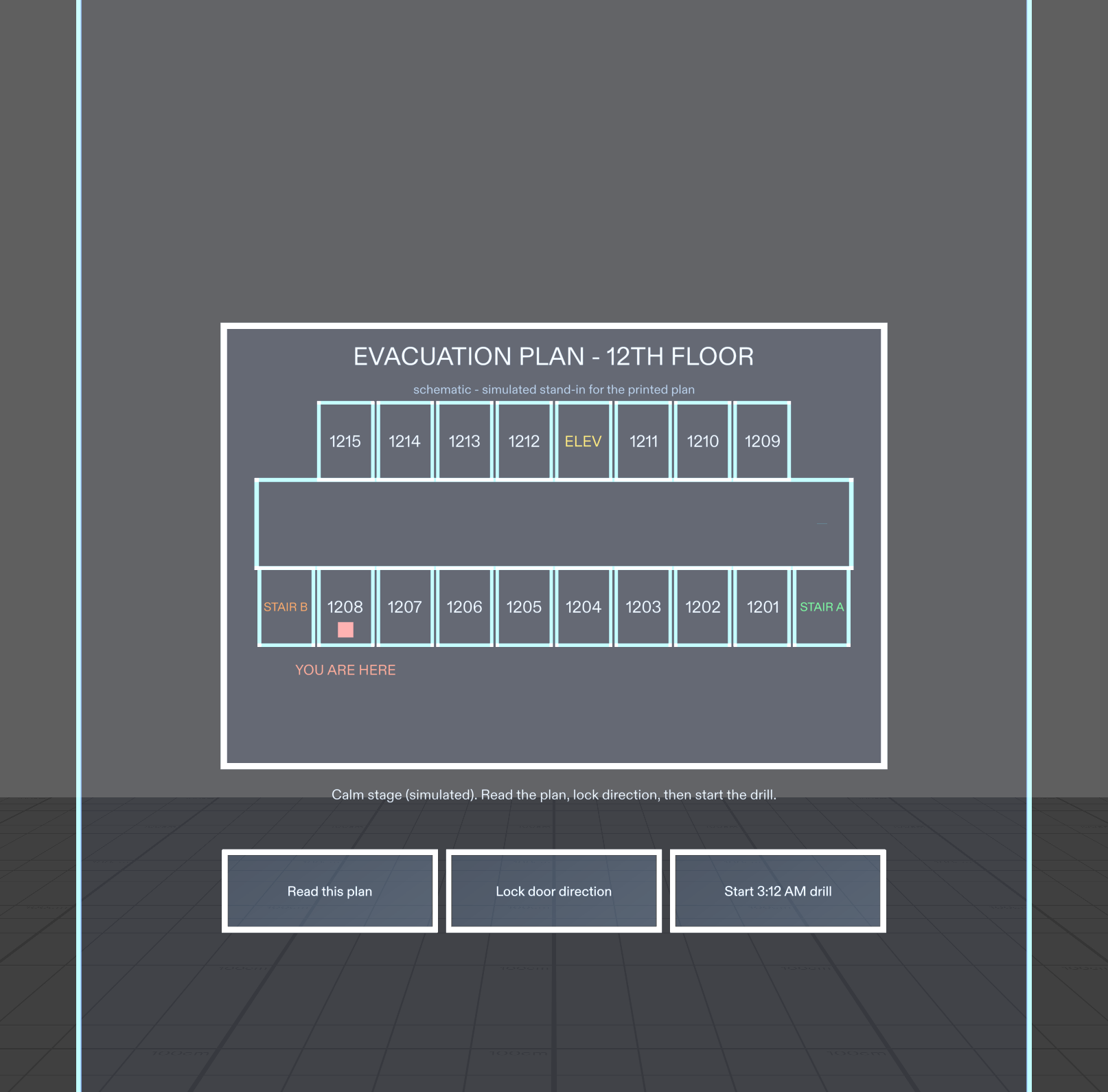
Exit Thread is a SPECS Lens that trains hotel guests to escape a fire on an unfamiliar floor, hands free and eyes up. You start in the room farthest from the usable exit, on a virtual 15-room floor. You read the evacuation plan on the back of the door, lock your bearings while things are calm, then run a 3:12 AM drill:
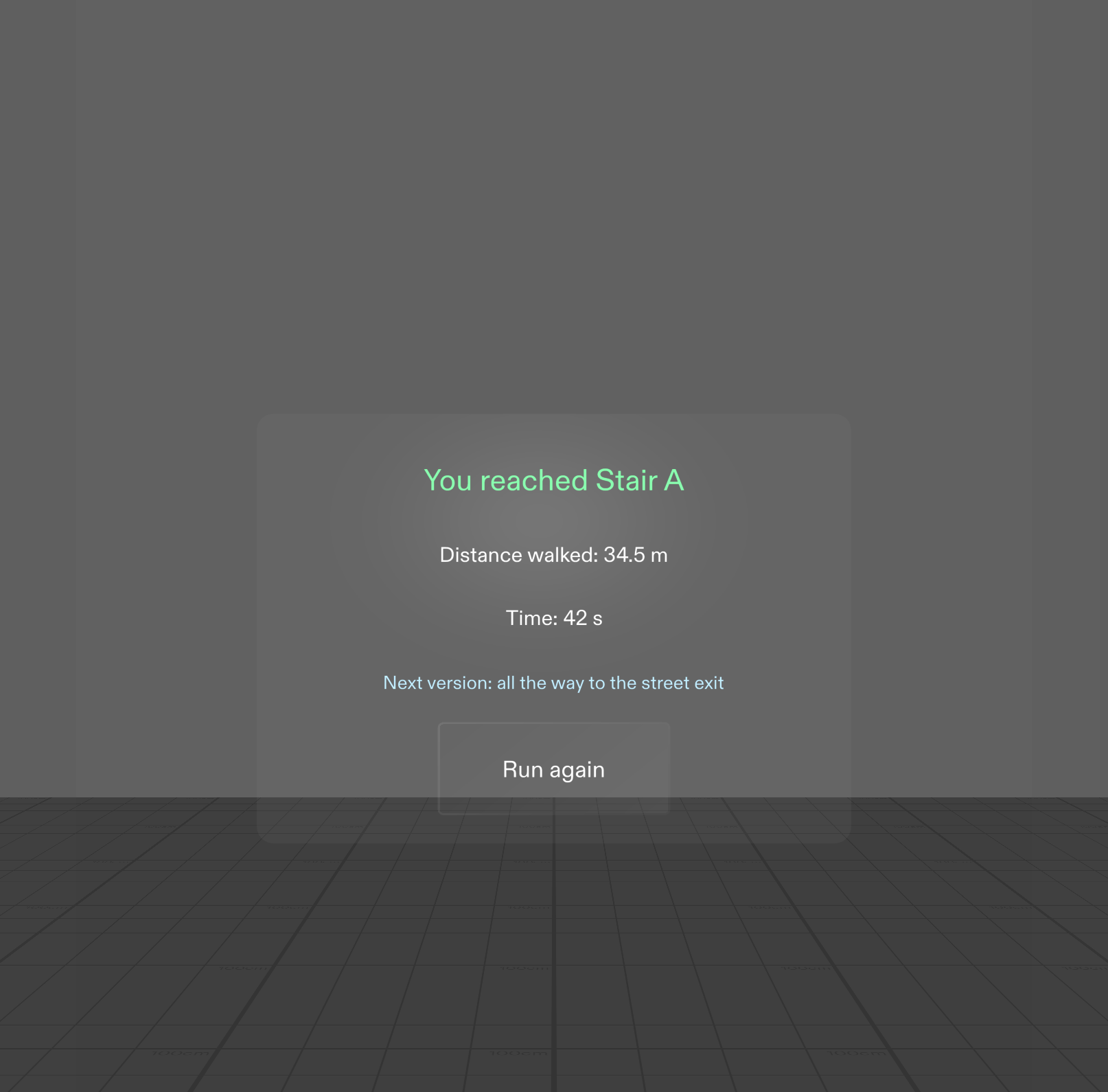
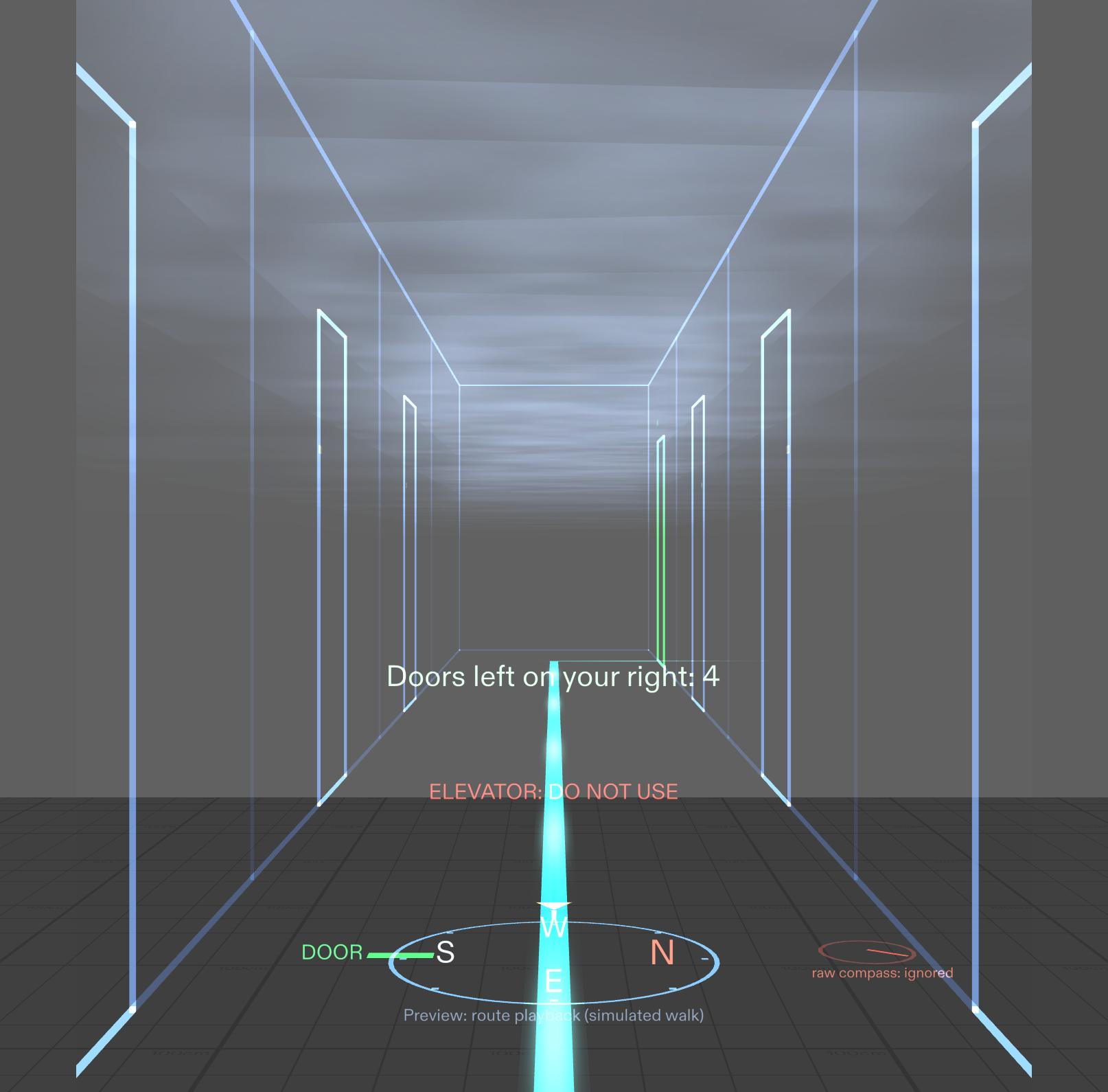
- A thread of light on the floor leads from your room to Stair A. The closer stairs are blocked.
- A door count ("Doors left on your right: 8") drops as you pass each door, so you can navigate when you can't see the exit.
- Smoke comes down, and the Lens tells you to get low. The thread brightens when you do.
- A door-based compass stays locked to a reading taken in calm conditions, snapped to the nearest of eight directions, while a raw needle swings beside it, ignored.
- The elevators are on the plan but never on the route, with one short warning as you pass.
Who it's for
Hotel guests, especially travelers in a building they've never seen, and hotel safety trainers who want guests to walk the route once instead of reading a plan they'll forget.
How I built it
I planned it with the Devpost Learn skill pack's design brief and made the design decisions myself. CLAD built it in Lens Studio through the Lens Studio MCP with Claude Code, and LEAF scenarios cover all eight done criteria. I then played it in Interactive Preview with real mouse and keyboard, and gave CLAD design notes to fix what didn't work.
What's simulated
Everything runs in the Lens Studio preview, not on glasses. Plan recognition is a button with a hard-coded route. The calm compass reading (187 degrees) and the fire alarm are simulated. The hotel is invented, and no real floor plan is used. Comfort and tracking in real smoke are unproven. This is a training concept, not a certified safety device. The advice to count doors, stay low and avoid elevators comes from public fire-service guidance.
What I learned
On glasses, the useful thing is often less information in the right place. My first build had a compass you could only see by looking at your feet, and huge bright walls that hid the corridor. Trying it myself showed that, and the tests couldn't. The hardest design question was the compass: a live one can swing during an incident, but a purely relative one can confuse people who have a good sense of direction. Locking it in calm conditions and snapping to the nearest of eight directions kept both.
What's next
Reading real evacuation plans, recording a route by walking it once so no floor plan is needed, and guiding all the way to the street exit.
Built With
- clad
- claude-code
- leaf
- lens-studio
- specs
- spectacles-interaction-kit
- typescript