-
-
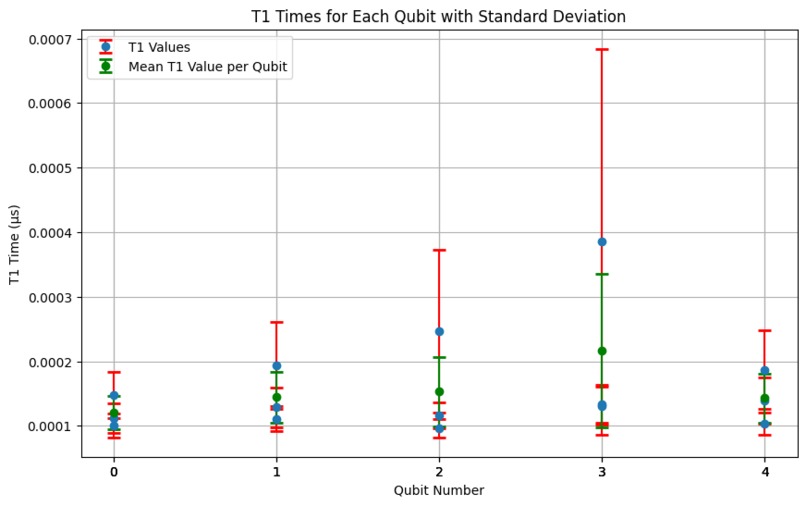
Example T1 Experiment Graph
-
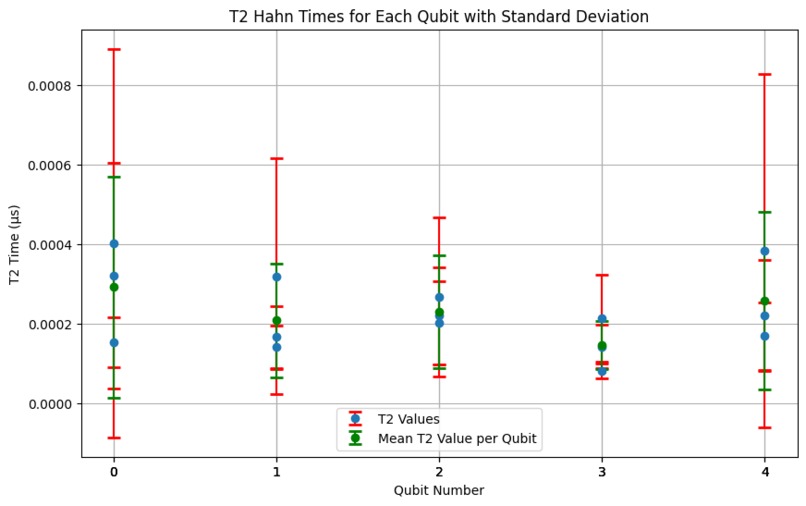
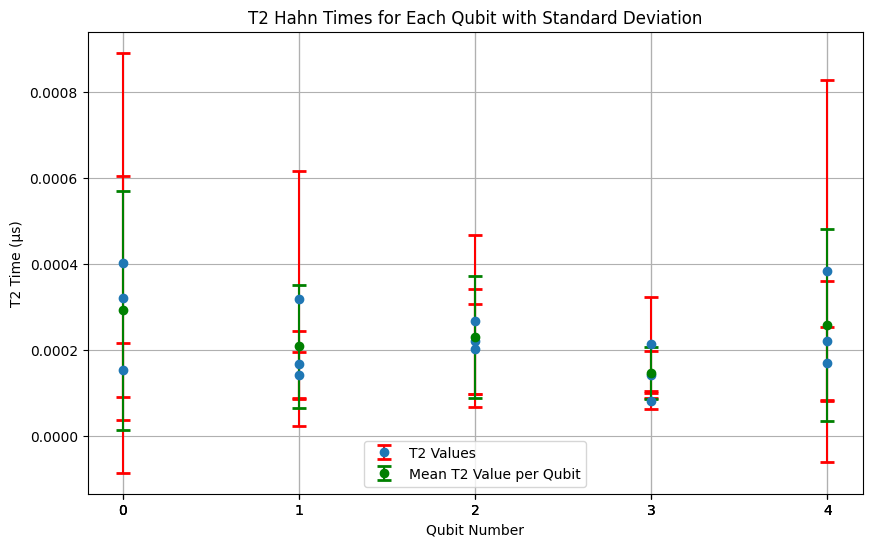
Example T2 Experiment Graph
-
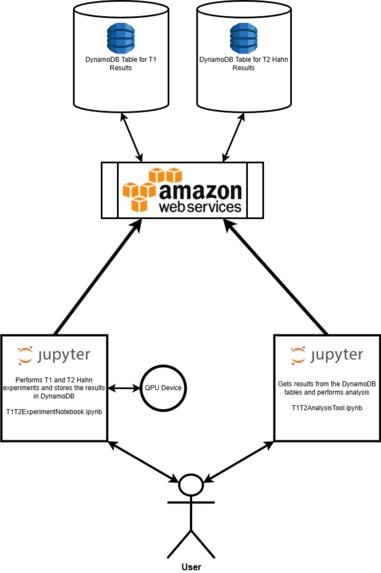
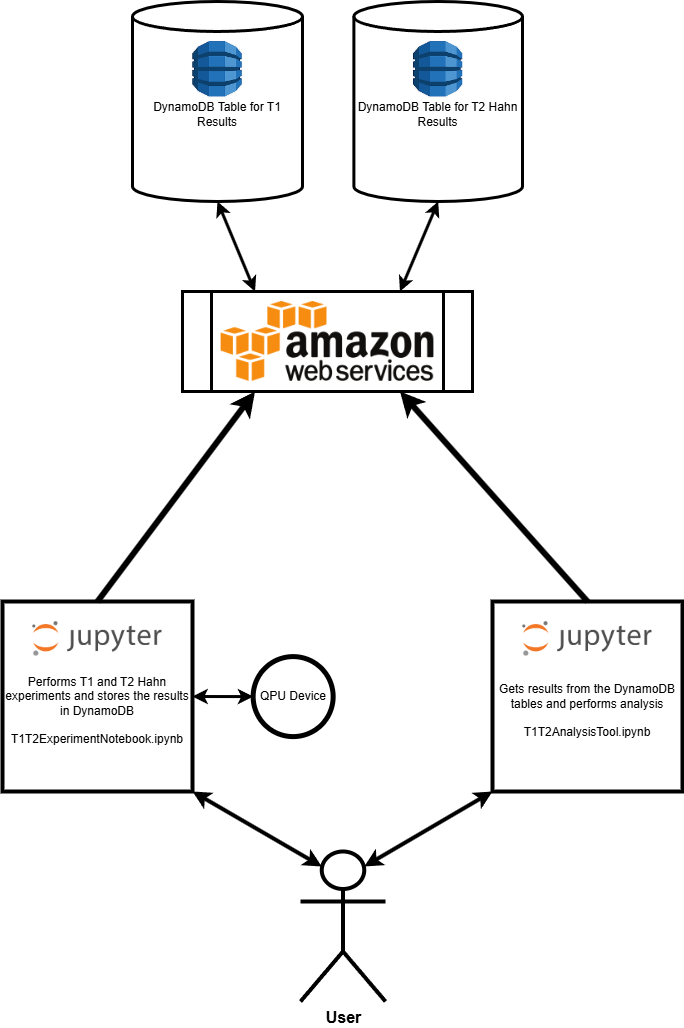
Diagram of the architecture I implemented
Inspiration
The inspiration for this came from my VRAM beginning to go out on my desktop's GPU. It reminded me how it is important to gather data on hardware that is put through constant use in order to identify when errors may arise and create better future hardware. This also goes for QPUs and upon discovering that there was not public tools to gather and analyze important historical data on QPUs I thought it would be important to make one.
What it does
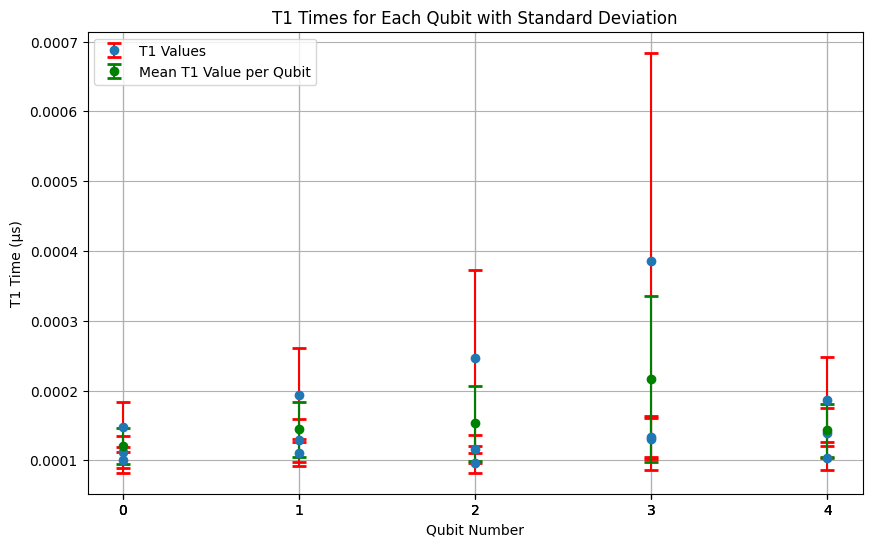
This project includes two Jupyter Notebooks. The one gives users the ability to control and run T1 and T2 Hahn experiments through Qiskit on a QPU. It has functions that give full control over delays and then nicely packages the data to be stored in some sort of table. I have it storing all the data in DynamoDB tables in the AWS cloud, but the data can really be stored anywhere. The second notebook provides a boilerplate for data analysis. It includes functions that pull and package all the data from the DynamoDB tables so that analysis can be run on the historical data. I included two examples that graph the experiment times for each qubit and the mean times in order to provide a visual of how these times behave for each qubit in the T1 and T2 Hahn experiments. Currently IBM live and fake backends are supported. I have a custom fake V2 backend in the code right now just for good visual representation, but this shows that a local backend can also be easily implemented without having to change much code.
How we built it
I used PyCharm to code and debug the project before putting it all into Jupyter Notebooks so that people can easily use the functions and create easy visual analysis's. In order to make sure the data was being stored in AWS correctly I used a built in table explorer to verify data.
Challenges we ran into
The largest challenge was making sure that the T1 and T2 experiments were giving good results that would make sense on the plots. Eventually after playing with the linspace function I was able to create good function arguments for someone to custom set their own experiment delays that would also result in sensible data.
Accomplishments that I am proud of
I am proud of being able to get the data nicely packaged into the DynamoDB tables so that the tables could be easily scaled up to thousands of tests that anybody with proper credentials can access quickly and perform an analysis.
What we learned
I learned how to use T1 and T2 Hahn experiments and the importance of them for analyzing hardware and deciding how faulty certain qubits can be.
What's next for T1/T2 Experiment Analysis Tool
In the future I hope to add support for exporting and importing with more databases along with adding an easy method for someone to add a local QPU to perform testing on.
Built With
- amazon-dynamodb
- amazon-web-services
- jupyter-notebook
- python
- qiskit


Log in or sign up for Devpost to join the conversation.