-
-
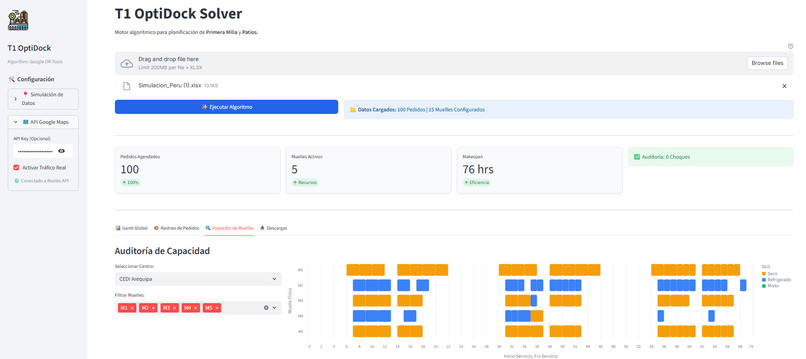
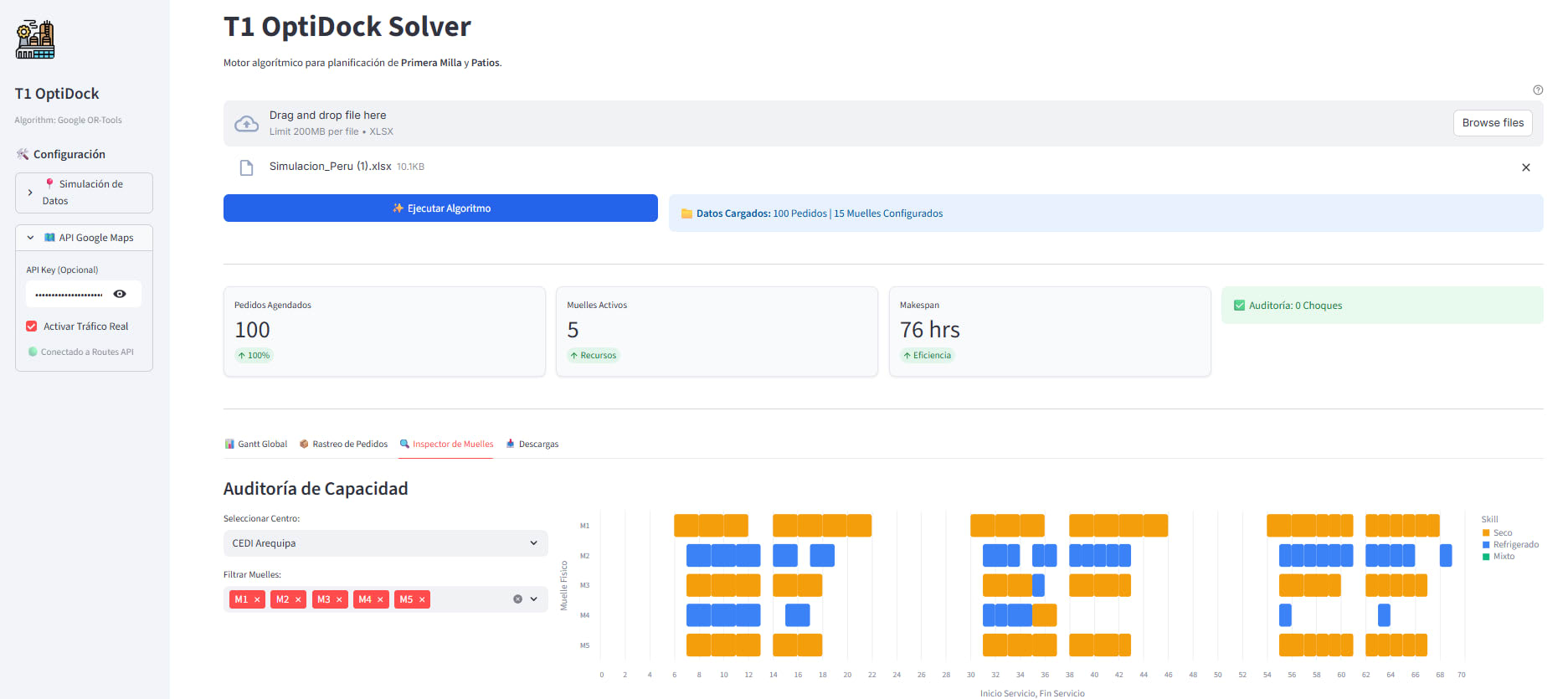
T1 OptiDock main dashboard showing real-time metrics and simulation controls.
-
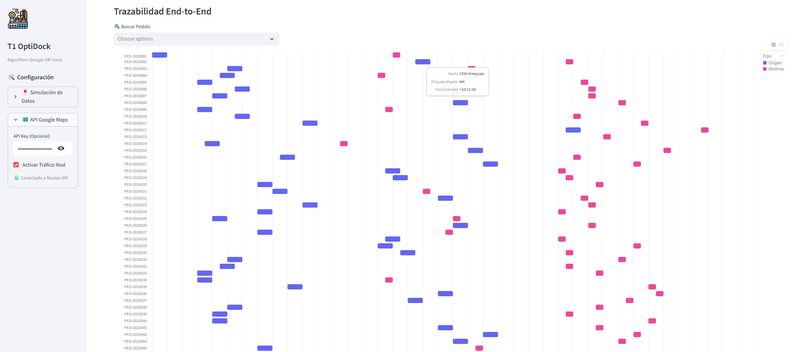
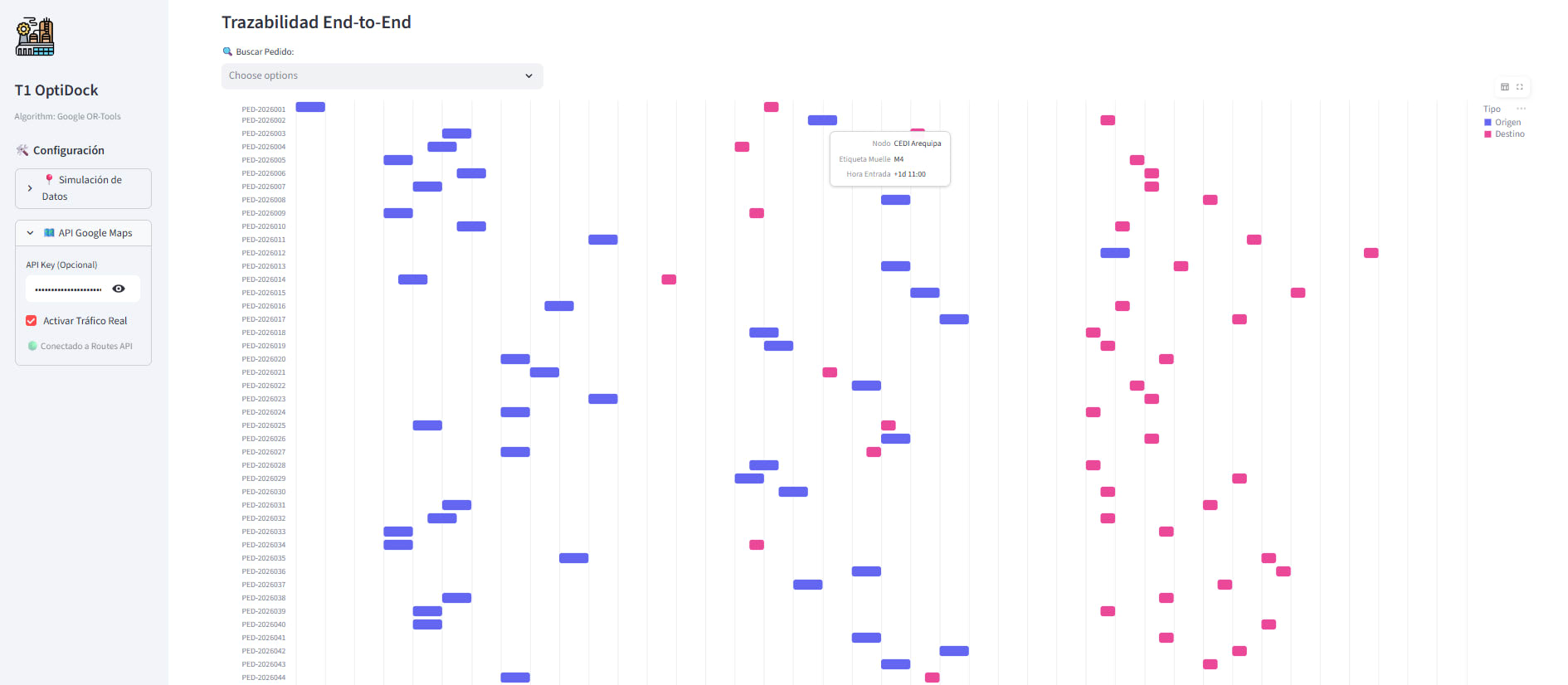
End-to-end traceability map detailing scheduling and routes.
-
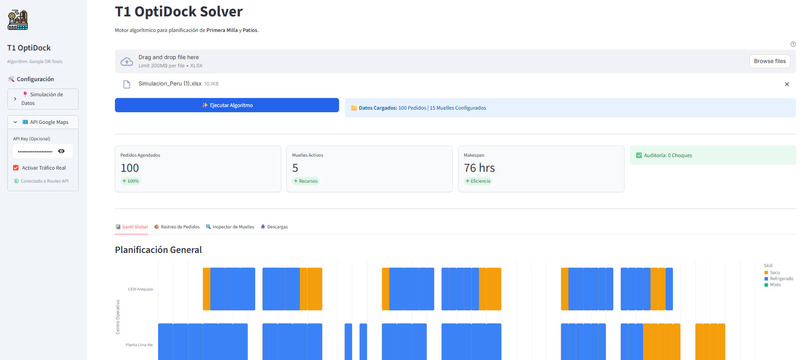
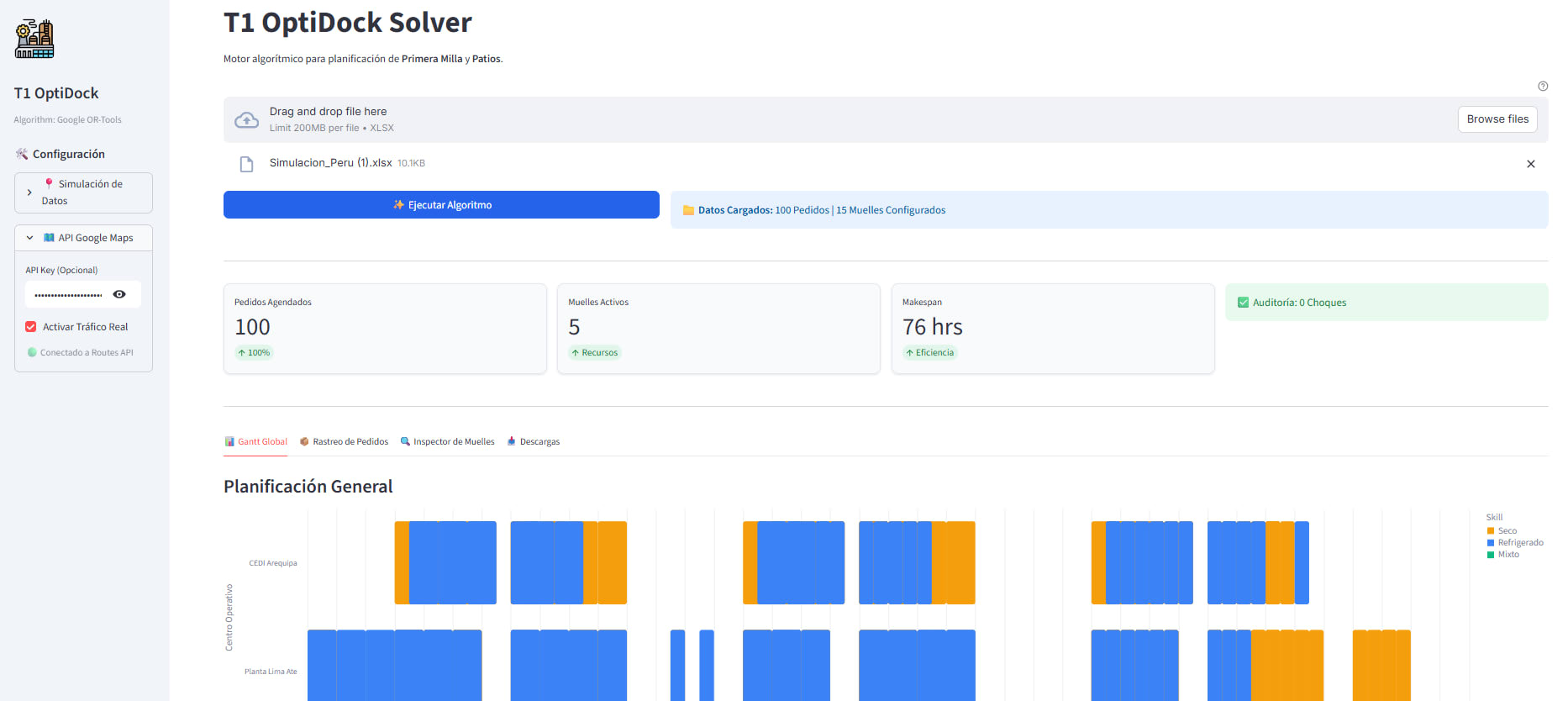
General planning timeline and zero-clash dock allocation audit.
-
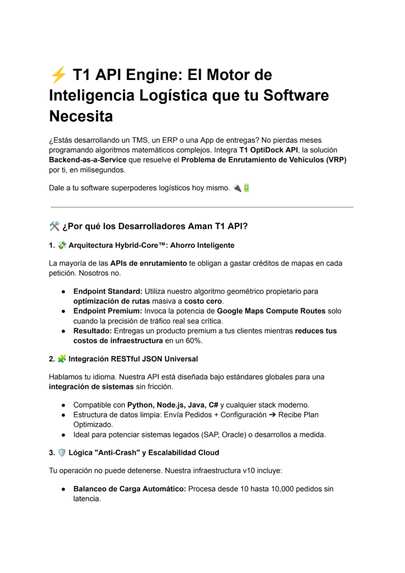
Architecture and Hybrid-Core system specifications.
-
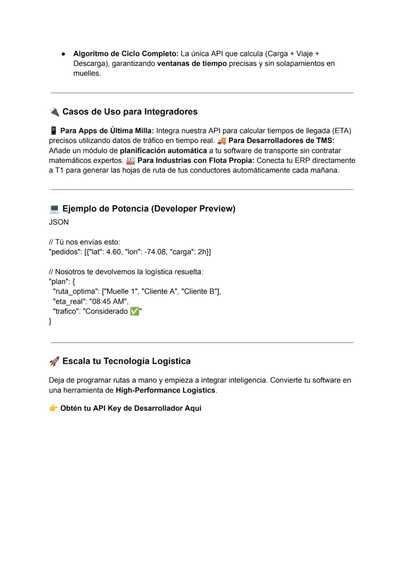
Mathematical logic and compliance framework overview.
Inspiration
In Latin America, first-mile logistics and mass distribution face a critical bottleneck in Distribution Centers (DCs) and industrial plants: chaos in yard and dock management. Traditionally, companies coordinate the arrival of dozens or hundreds of daily trucks using spreadsheets, WhatsApp messages, and manual intuition. This leads to massive queues outside plants, severe regulatory penalties (such as Colombia's Decree 1017 or Brazil's Lei do Motorista), dock overbooking, and skyrocketing costs from depending on mass-market mapping APIs. T1 OptiDock was built to transform this chaos into an executable mathematical operation, acting as a Cloud Logistics Brain that guarantees optimal dock allocation without collisions and with controlled infrastructure costs.
What it does
T1 OptiDock is an interactive web platform built with Streamlit and advanced mathematical models that enables:
- Massive Simulation: Process up to 100 orders to determine ideal fleet size and optimal bay allocation.
- Zero-Clash Guarantee: Perfect synchronization between loading docks and vehicles to avoid overlaps and downtime.
- End-to-End (E2E) Traceability: Complete control of the logistics operation from a single real-time dashboard.
- Capacity & History Audits: Clear visualization of flows to spot savings opportunities before hitting the road.
How we built it
T1 OptiDock is designed on a Cloud-Native and API-First decoupled architecture powered by:
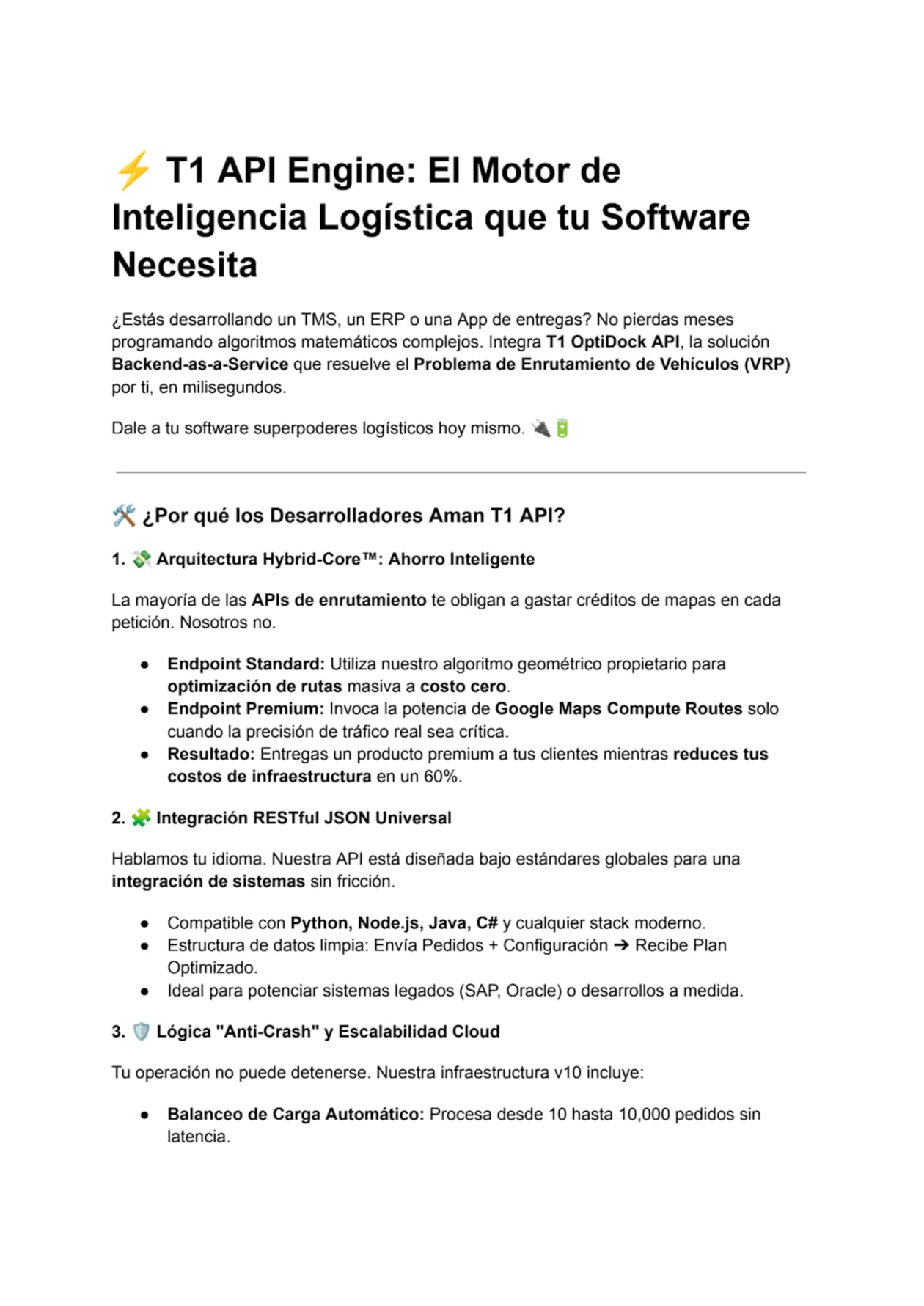
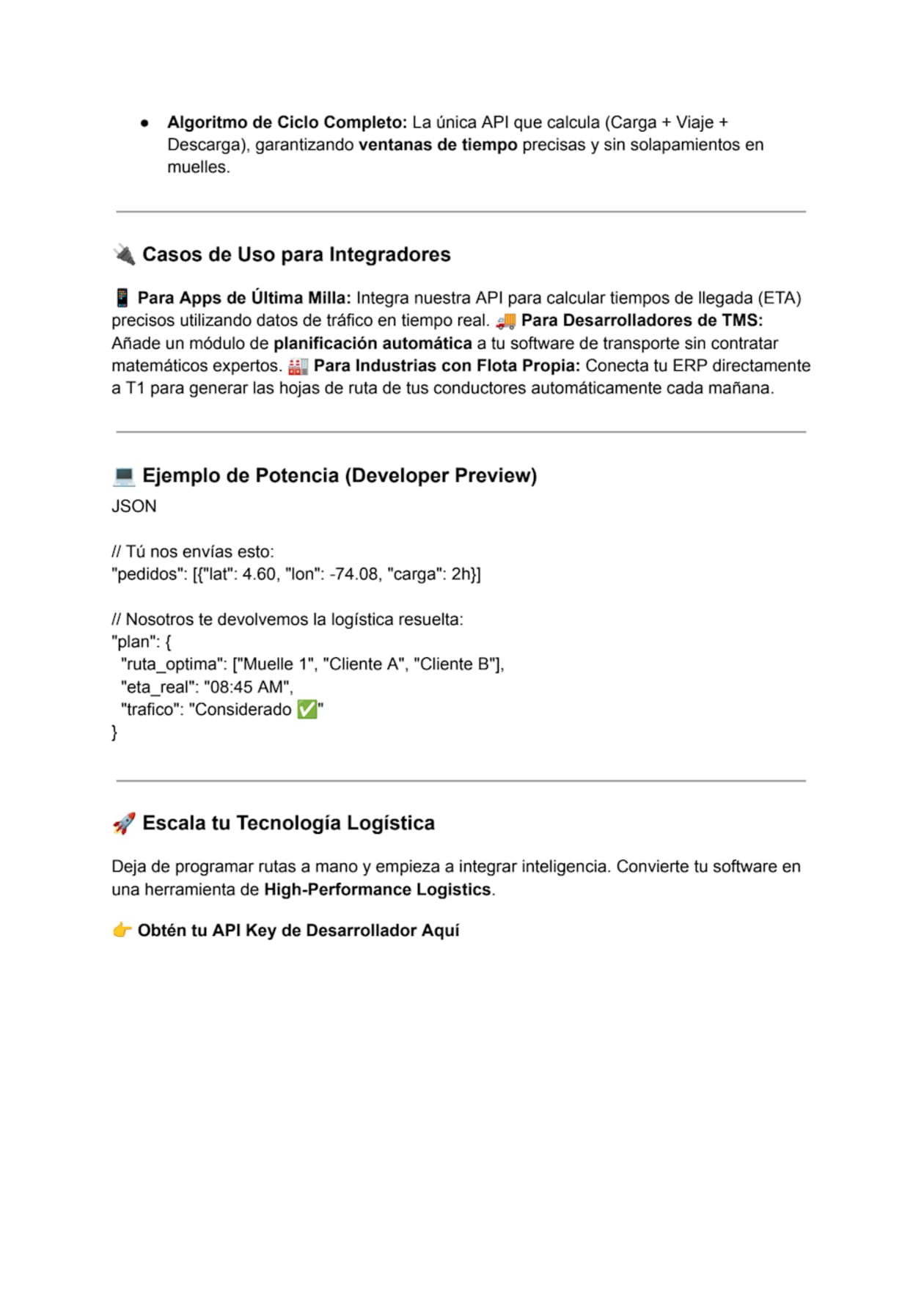
- Hybrid-Core™ Engine: A dual-engine approach offering a Standard Mode (mathematical solver using Haversine distance corrected by a 1.3x road network factor for $0 API cost simulations) and a Premium Mode (native integration with Google Maps Platform Compute Routes for live traffic-aware execution).
- Zero-Clash Algorithm: Evaluates the complete logistics cycle: $$\text{Complete Cycle} = \text{Loading Time} + \text{Travel Time} + \text{Unloading Time} + \text{Return Time}$$
- Serverless Backend & Dashboard: Built on Python and Streamlit for rapid interactive deployment, leveraging microservices for automated scaling and hybrid persistence.
Challenges we ran off
- Zero dock overlaps with finite capacity: Mathematically solving resource allocation under hard constraints (e.g., refrigerated vs. dry freight skills, variable unloading durations, strict time windows).
- Anti-crash resilience: Developing a fail-safe mechanism that dynamically adjusts search horizons during hyper-congestion to always guarantee an executable plan instead of throwing server errors.
- API cost reduction: Implementing the Hybrid-Core™ methodology so 90% of network simulations run at zero cost, cutting third-party geolocation API expenses by up to 60%.
- Regulatory shielding: Translating complex LATAM regulations into logical blocking rules prior to dispatch authorization.
What's next
- Integration with Generative AI (Vertex AI / Gemini) to create a conversational logistics copilot.
- Predictive machine learning models for precise loading/unloading time estimations.
- Plug-and-play connectors for major enterprise ERPs (SAP S/4HANA, Oracle OTM).
Built With
- api
- cloudrun
- google-bigquery
- google-cloud
- python
- sreamlit

Log in or sign up for Devpost to join the conversation.