-
-
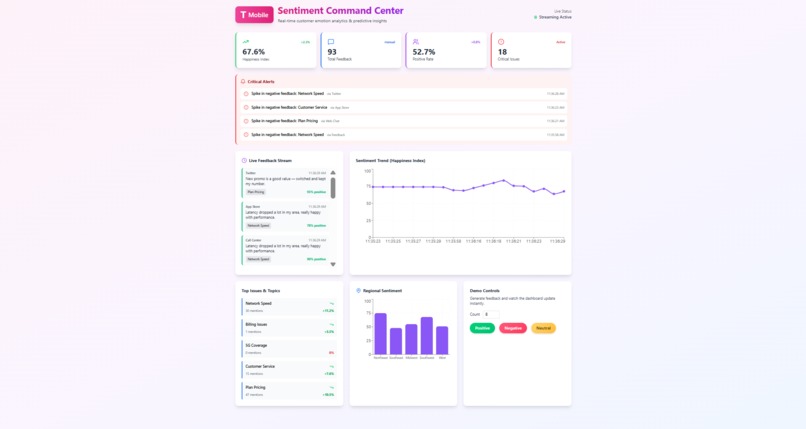
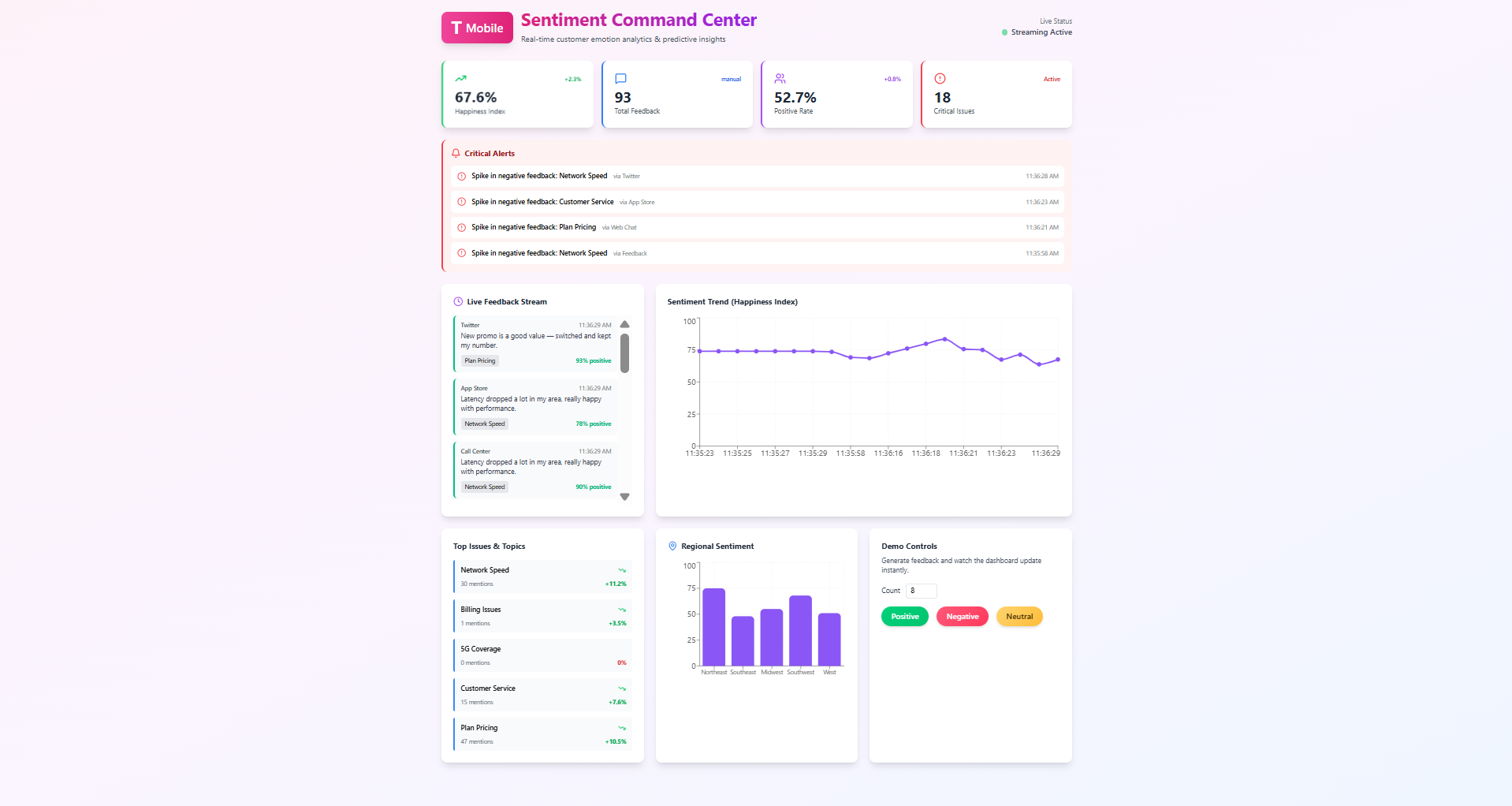
HapinessIndex
Inspiration
T-Mobile deals with massive amounts of customer feedback, yet issues often become visible only after they spread online. We wanted to build a real-time system that detects sentiment shifts instantly, shows happiness levels, and alerts teams before problems escalate. That inspired our Customer Happiness Index project.
What it does
We built a live AI-powered dashboard that analyzes customer feedback in real time and updates a Happiness Index instantly.
Tech Stack:
FastAPI, MongoDB, WebSockets
React, Tailwind, Socket.IO
OpenAI + Gemini for sentiment, topic, severity
Real-time charts and alert engine
How we built it
Backend (FastAPI): REST + WebSockets for streaming new feedback, alerts, and happiness score. AI Service: OpenAI + Gemini classify sentiment, detect issues, assign severity, extract topics, and return structured JSON. Database (MongoDB): Stores enriched feedback with sentiment, AI insights, timestamps, and network metrics. Frontend (React + Tailwind): Real-time dashboard showing the Happiness Index, live sentiment feed, trend charts, and alerts. WebSocket Pipeline: Sends enriched feedback instantly to the dashboard.
Challenges we ran into
One of the biggest challenges we faced was connecting the frontend and backend so that feedback data updated instantly across both the user and admin panels. We also struggled with getting the regional heatmap to display properly and dynamically change based on new feedback. Balancing visual design with functionality and ensuring real-time performance without errors took a lot of testing and fine-tuning.
Accomplishments that we're proud of
We’re proud of building a fully functional system that connects user feedback to real-time analytics. The platform not only collects and processes data but also visualizes it through an interactive happiness index and regional heatmap. We’re especially proud that everything updates instantly without needing page reloads, creating a smooth and engaging experience for both users and admins.
What we learned
We learned how to connect a frontend interface with a backend database to handle real-time updates and data visualization. We also gained experience working with APIs, managing state across different components, and using tools like MongoDB and Node.js effectively. Most importantly, we learned how small design and technical details can make data easier to understand and more meaningful for users.
What's next for T-Mobile Happiness Index
Next, we plan to expand the platform by integrating real customer data and advanced AI models to detect sentiment directly from written feedback. We also want to improve the dashboard with deeper analytics, such as time-based trends and predictive insights. In the future, we aim to deploy it on the cloud so companies like T-Mobile can use it in real-world environments to continuously track and improve customer satisfaction.
Built With
- css
- html
- javascript
- node.js
- react
- tailwind


Log in or sign up for Devpost to join the conversation.