-
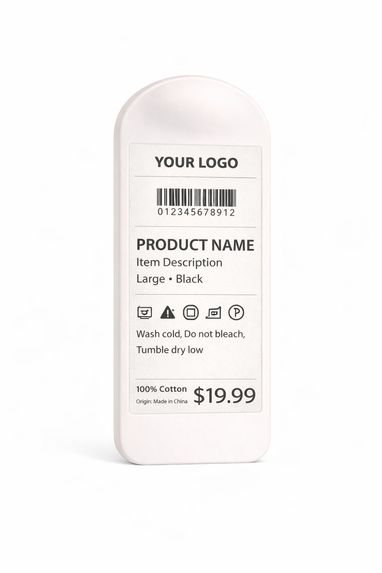
Prototype
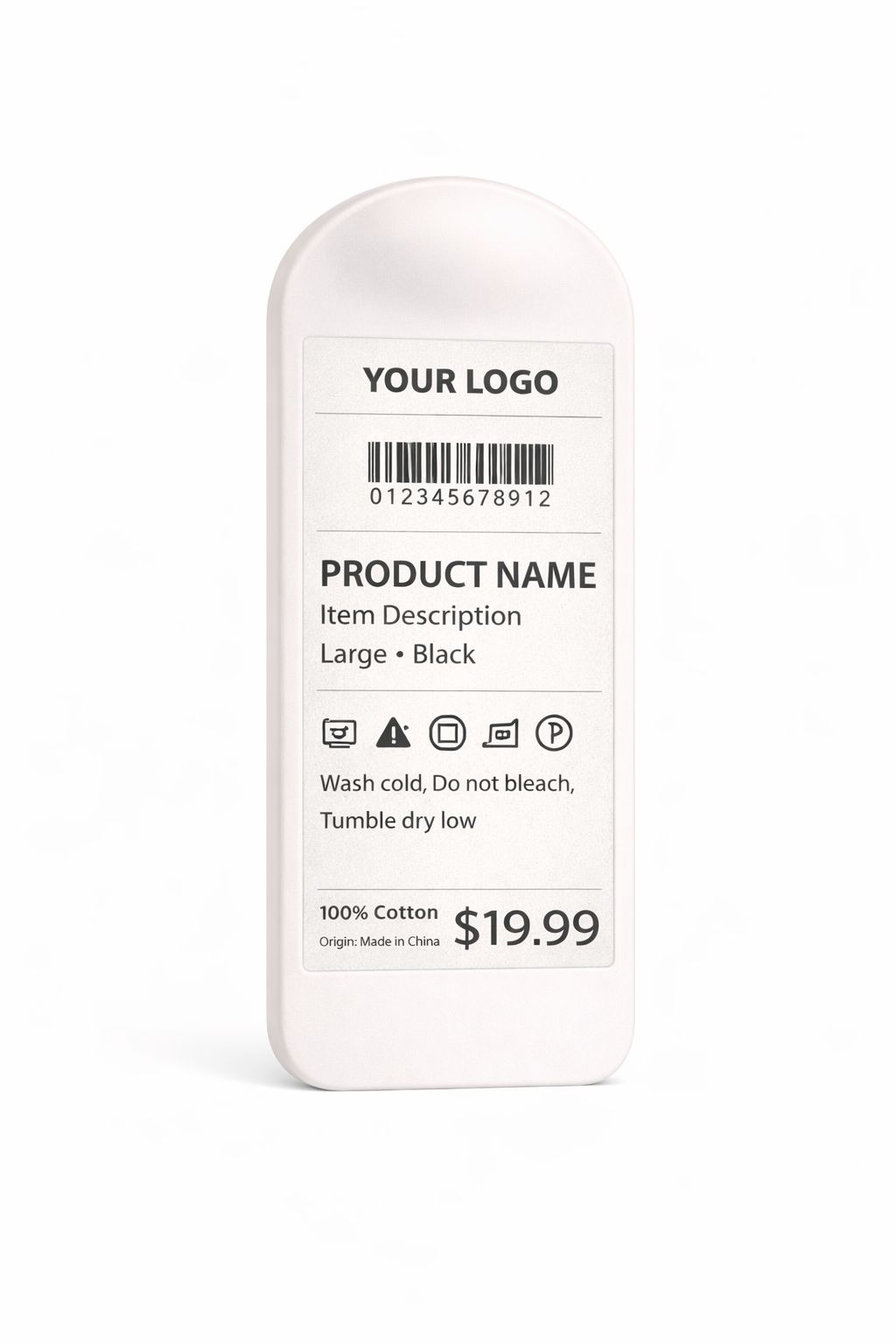
What It Does
TAG is a smart security tag for clothing retail that attaches to garments like a traditional hard tag but adds digital functionality.
Automated Checkout
The tag contains an RFID/NFC chip storing the product ID.
When scanned at checkout, the product is automatically registered in the POS system and the tag unlocks. No barcode scanning needed.Digital Product Information
A small e-paper display shows price, size, or SKU directly on the tag, replacing paper labels.Anti-Theft Protection
A mechanical lock and magnetic detachment system prevent unauthorized removal, similar to existing security tags.Reusable System
After purchase, the tag is collected, reprogrammed, and reused on another item.
Why It’s Different
TAG does not add another layer to retail systems.
It combines what already exists into one object.
Checkout and unlocking are linked
The tag only unlocks after being scanned, reducing errors and theft.No paper labels
Prices and product data are updated digitally.Designed for mid-range fashion retail
Stores that rely on staff interaction but still want efficiency gains.Product-level, not shelf-level
Unlike electronic shelf labels, TAG stays with the item.
How It’s Built (Concept Level)
TAG is designed as a hardware-first product, intentionally simple for early prototyping.
- RFID/NFC chip storing GTIN and Store ID
- E-paper display for low-power information display
- Internal battery powering the display and basic logic
- Mechanical locking system compatible with magnetic detachers
- Compact casing roughly 60 × 30 × 6 mm, under 20g
- Programming station to update product data between uses
Challenges We’re Addressing
- Combining electronics and mechanical locking in a small form factor
- Keeping unit cost low enough for large-scale retail use
- Ensuring battery life supports repeated reuse cycles
- Designing a workflow that fits existing store operations
What’s Next for TAG
- Building a functional prototype
- Testing usability and workflow with retailers
- Continuing IP and patent work
- Exploring partnerships with security tag manufacturers
- Refining materials and casing for durability and sustainability
TAG is an exploration of how physical retail infrastructure can become
simpler, cleaner, and more efficient, without changing how people shop.
When working in a retail store, you start to notice how many steps it takes to sell a single item.
Not the big things, but the small ones.
Scanning barcodes that peel off.
Replacing paper price tags for every markdown.
Removing a plastic security tag that knows nothing about the product it’s protecting.
You repeat these actions hundreds of times a week.
They slow things down.
They waste materials.
They leave room for error.
And they don’t talk to each other.
One tag for the price.
One for the barcode.
One for security.
All separate.
All disposable.
That’s where the idea for our T.A.G. — Tech Augmented Label (TAG) began.
Not in theory, but in practice.
What if one tag could do it all?
What if the price was shown on a digital screen and updated without paper?
What if scanning the product automatically told the system what it was?
And what if that same scan confirmed the sale and triggered the tag to unlock?
That wouldn’t just make life easier for store staff.
It would save time at checkout.
It would save money on printing, waste, and labor.
It would mean fewer errors, fewer forgotten markdowns, and a smoother experience for both staff and customers.
And over time, as stores change and digital tools become part of physical retail, this one tag could do even more.
It could connect to inventory systems.
It could be tracked between stores.
It could carry data across the supply chain.
It could become a tiny, invisible bridge between the physical and the digital — without changing how people shop.
TAG isn’t about making retail more complicated or high-tech for the sake of it.
It’s about building a tool that’s smarter in the background, while staying simple in the hand.
TAG doesn’t change the way stores sell.
It just makes each step faster, cleaner, and easier to get right.
Fewer tags.
Fewer mistakes.
Less waste.
And a retail process that finally works as one.

Log in or sign up for Devpost to join the conversation.