Inspiration
The idea for SZM Forge came from my own experience with mechanical engineering. Whenever I wanted to build or experiment with a machine, I realized how many physical components, tools, materials, machines, space, time, and money were required.
I started thinking: What if I could have all of these things virtually? What if I could design a machine, experiment with it, test different ideas, find problems, and improve it before actually building it?
That idea stayed with me. Later, as AI became more capable, I realized it could make this concept much more powerful by helping with engineering, design, analysis, optimization, and experimentation.
What it does
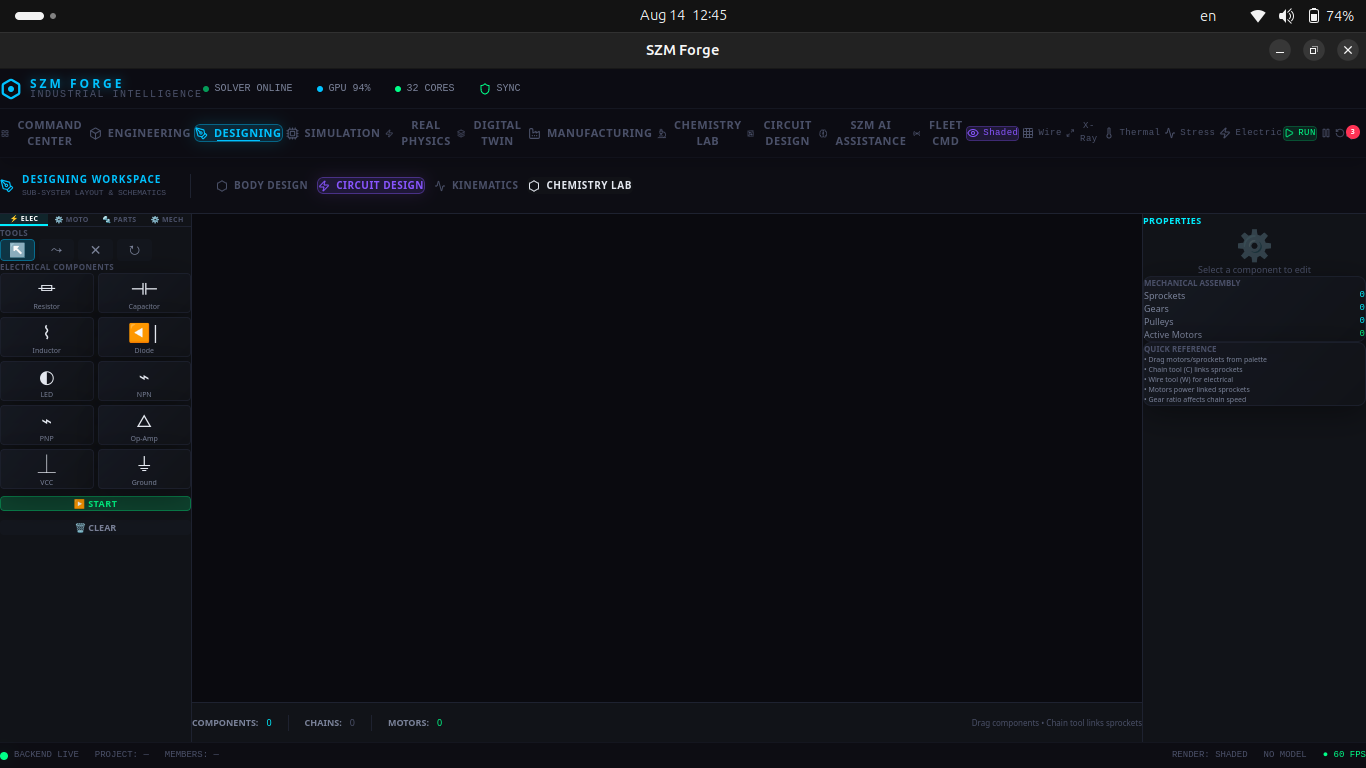
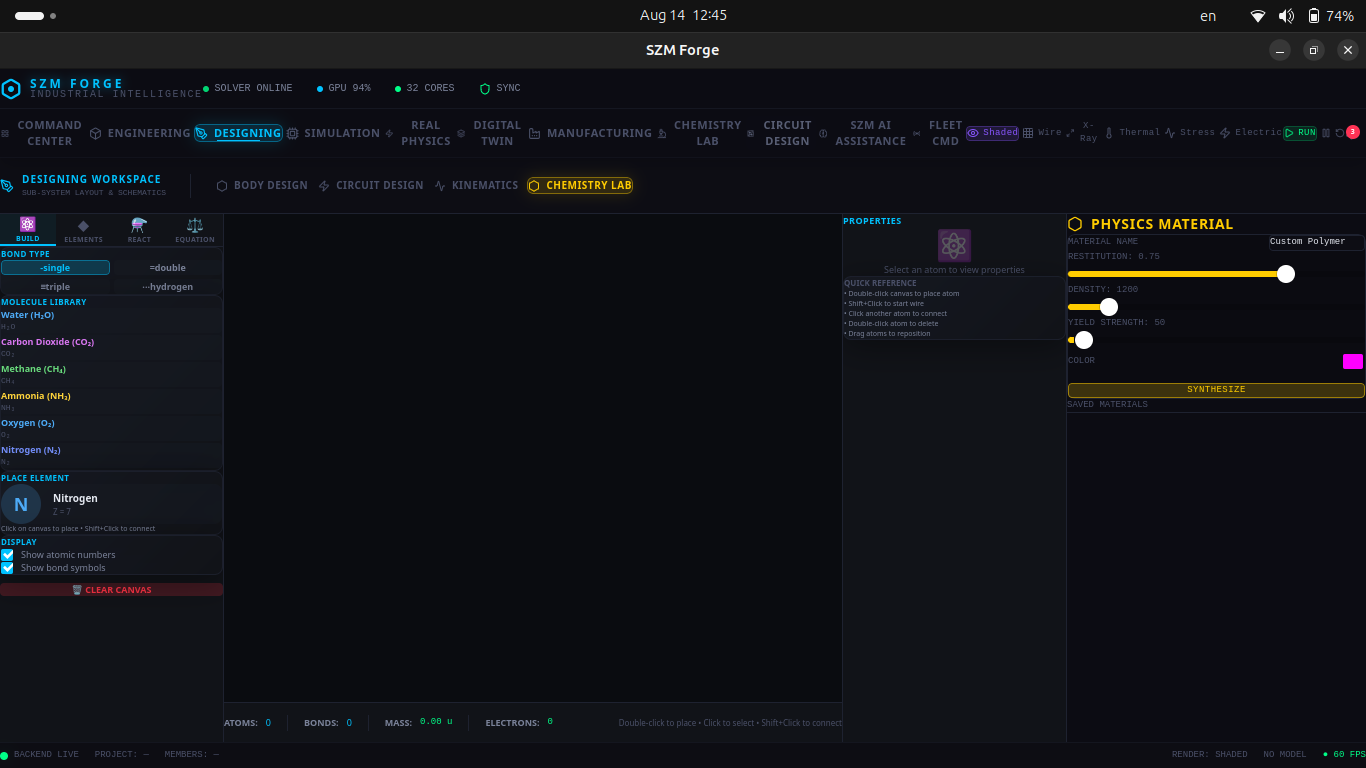
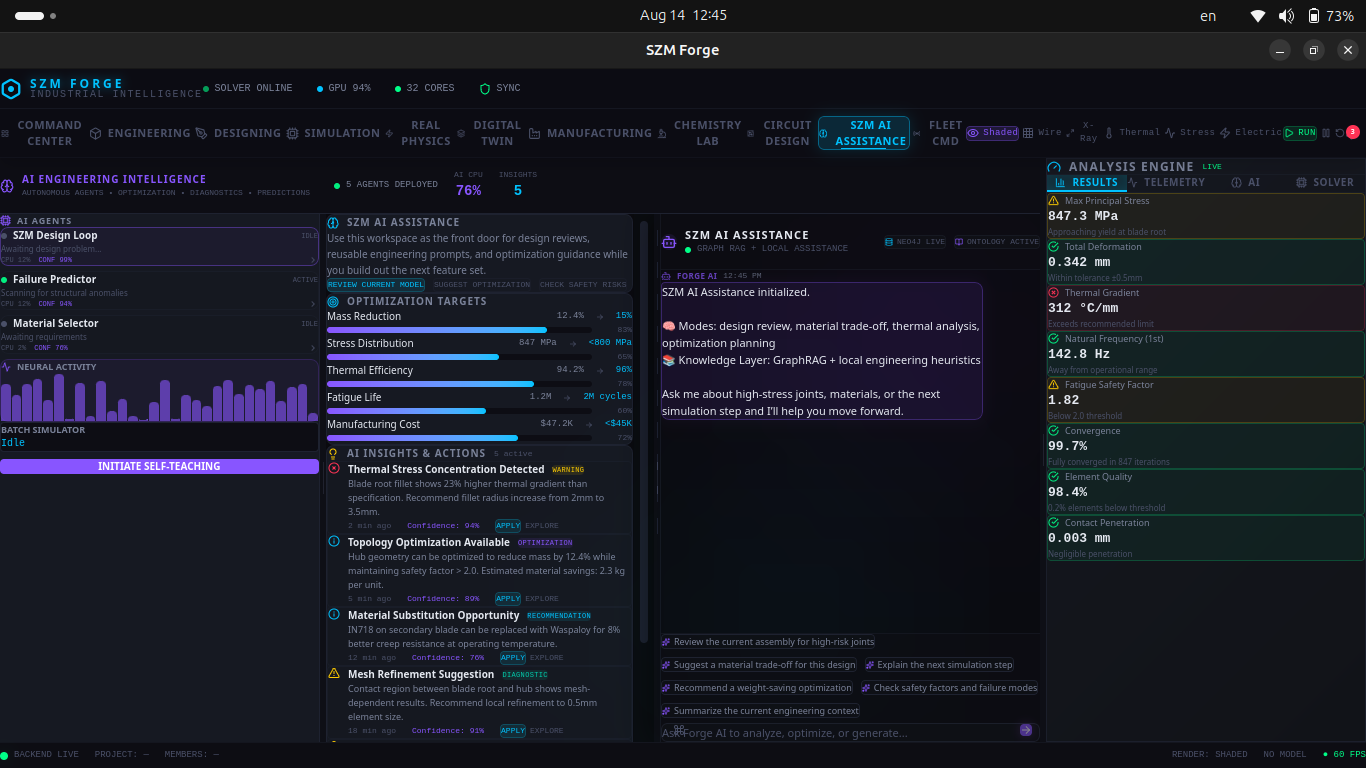
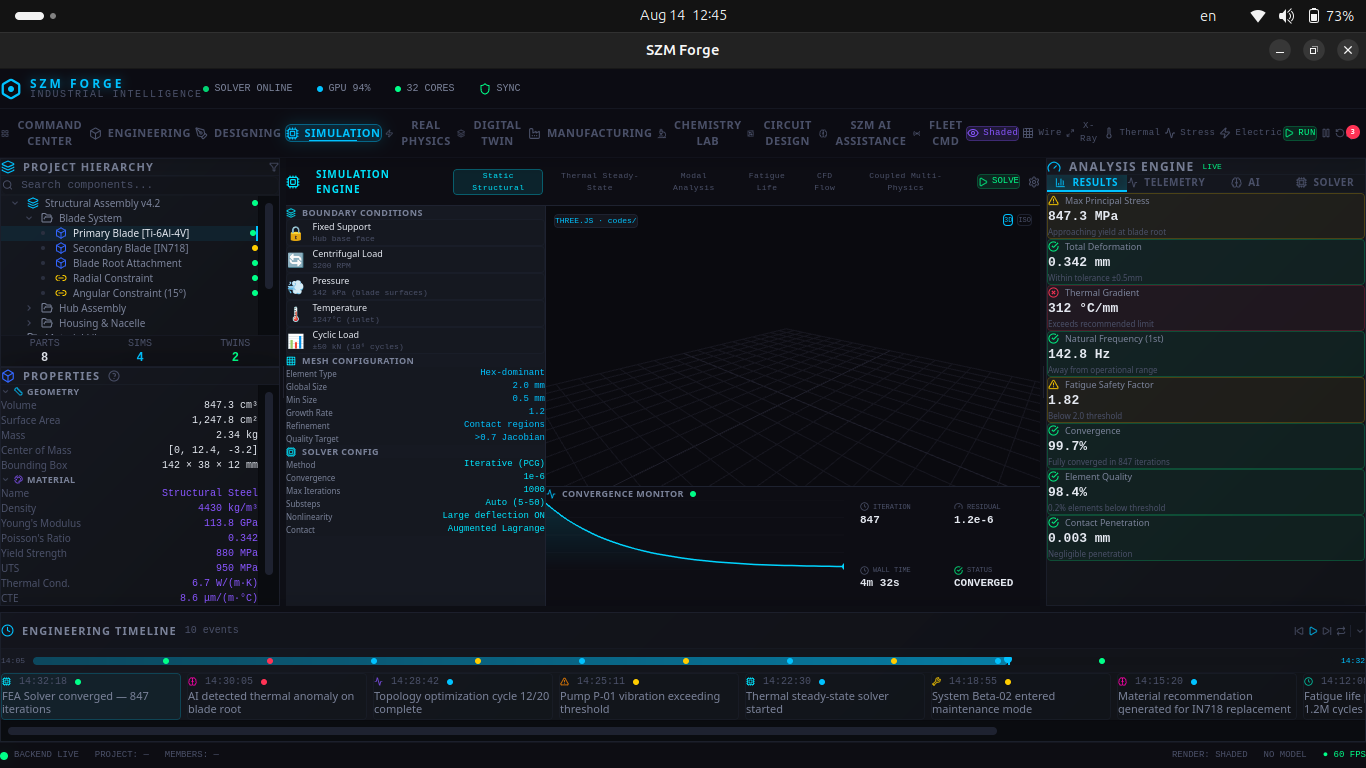
SZM Forge is a prototype of an AI-powered engineering environment where machines can be designed, analyzed, simulated, experimented with, and eventually optimized virtually.
The bigger vision is to connect AI, CAD, simulation, digital twins, optimization, manufacturing, and engineering knowledge into one ecosystem.
How we built it
I built SZM Forge completely on my own, without a team or external technical support. I designed the concept, architecture, workflows, and prototype based on my own ideas and learning.
I focused on making the architecture modular so that different engineering capabilities can be added and connected as the project grows.
The goal was not to build one small tool, but to create a foundation that could eventually become a much larger engineering platform.
Challenges we ran into
The biggest challenge was the scale of the idea. SZM Forge combines AI with engineering, simulation, CAD, digital twins, optimization, and manufacturing.
Working on all of this alone meant constantly deciding what to build first while keeping the larger vision intact.
Another challenge was making the project practical rather than just an AI concept. Engineering has real physical constraints, so the system has to eventually connect intelligent reasoning with simulation and real-world validation.
Accomplishments that we're proud of
I am most proud that I was able to take an idea that started in my head and turn it into a working prototype and a structured engineering platform entirely by myself.
More importantly, I didn't limit the project to a single feature. I built the foundation with the intention that it can grow into a much larger ecosystem.
What we learned
I learned that building an ambitious engineering system is very different from simply building an application. Every part is connected to another part, and decisions made at the architecture level matter a lot later.
I also learned that AI becomes much more interesting when it is connected to real problems. Instead of using AI only to generate information, I started thinking about how it could actually participate in engineering workflows.
Most importantly, I learned how much can be built independently when you start with a clear idea and keep experimenting.
What's next for SZM Forge
SZM Forge is still at the beginning. The next step is to make the virtual engineering environment much more capable by improving CAD, simulation, AI reasoning, digital twins, optimization, and eventually manufacturing and robotics integration.
The long-term goal is simple:
Build a system where I can imagine a machine, create it virtually, experiment with it, optimize it, and eventually turn it into something real.


Log in or sign up for Devpost to join the conversation.