-
-
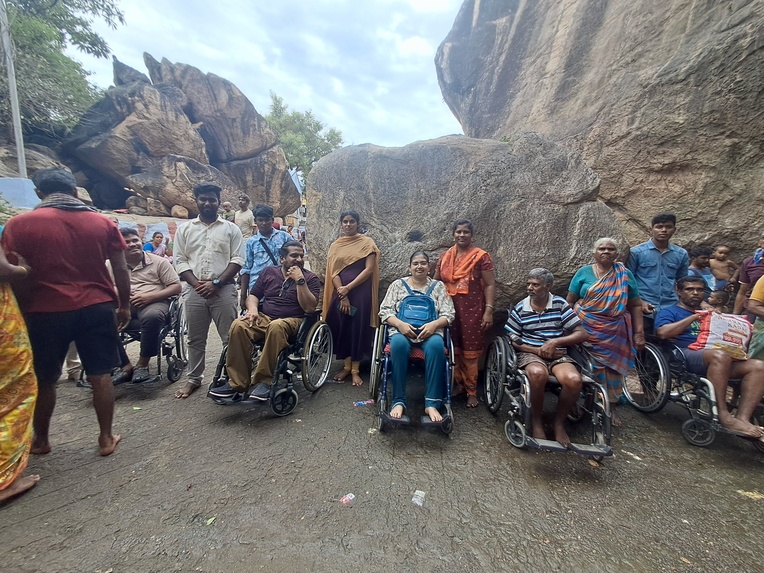
Accessibility is a key to unlock footfalls, visibility and loyalty, whether it is a temple or a business entity or an open space
-
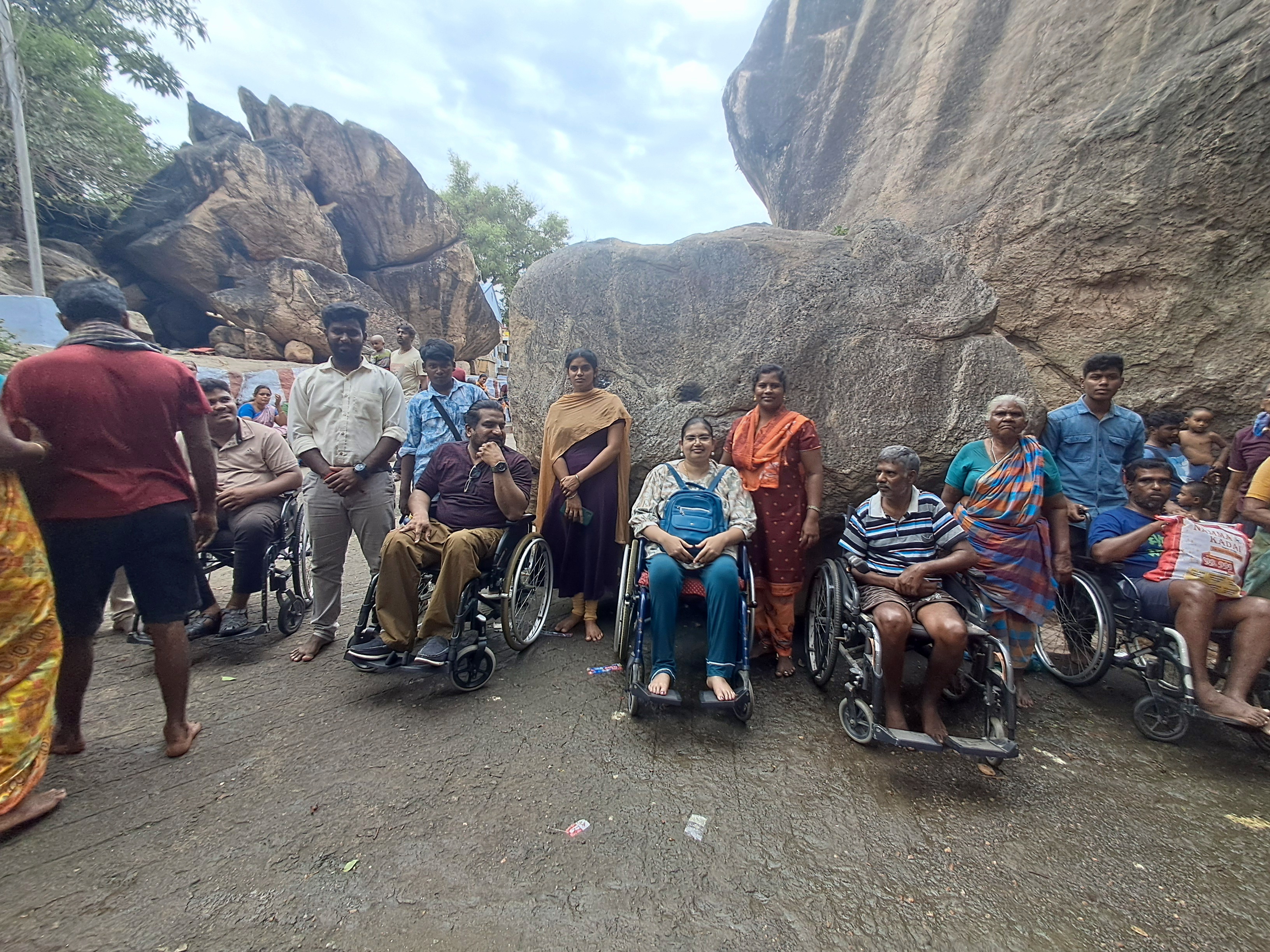
Accessibility is not only challenged for differently abled but also for nursing mothers, elderly and temporary disabilities
“Unlocking profits, brand visibility and loyalty for businesses through Accessibility intelligence"
Inspiration
Access to Inclusion emerged from a clear realization: despite robust laws and growing social awareness, most public and private spaces remain fundamentally inaccessible—not because of disability, but because of design. For millions in India, exclusion is a daily reality. Yet, with every barrier, we saw the potential for new business models, collective action, and a future where accessibility is standard, not special.
Our platform was inspired by:
- Lived experiences of exclusion and resilience and the network of professionals
by the founders and the family members in their every day
- Deep technical and sectoral knowledge of accessibility, sustainability, and
inclusive business obtained by the founders and the family in those experiences
- The untapped opportunity for businesses, institutions, and public systems to gain trust, expand reach, and drive growth by embracing universal design.
- The power of networks: We leveraged alliances with experts—architects, engineers, auditors, DEI champions, and community advocates—to bring together a coalition for change.
What is the product offering ?
Integrated platform for inclusive businesses, network of networks, alliance of alliances from accessibility professionals, and end-users
Access to Inclusion is India’s pioneering platform to make physical, digital, and systemic spaces inclusive for Differently Abled individuals, the elderly, and all with diverse access needs.
- Smart accessibility audits & certifications (tiered, actionable, standards-aligned)
- Inclusive design and retrofit consulting for built spaces, transportation systems and automobiles, adaptive clothing(custom solutions, implementation support)
- Digital Accessibility Intelligence Platform (real-time monitoring, compliance tracking, analytics dashboard)
- Impact & Reporting: DEI & SDG-linked Accessibility Score Card, Star-rating system for institutions and enabling compliance dashboards and alerts
- Community & Collaboration: Forges alliance of alliances and network of networks of Differently abled associations and alliances, accessibility auditors associations and networks, CREDAI, Developers Association, CII, Business Chamber Associations and gather user-generated reviews, provide volunteer and employment opportunities for differently abled individuals and their friends and family members.
To whom we service:
a) Community members (Differently Abled Elderly and Adults, Differently Abled Children, Nursing Mothers, Elderly and Caregivers)
b) Businesses and organisations (Temples, Churches, Mosques, Bus stops, Platforms, Bus Station, , Railway Station, Metro Stations,, Movie Halls, Colleges and Universities, Playgrounds and Stadiums, Auditoriums, Banks, Malls, Tech Parks, Business Districts, private/public, parks, open spaces, built environment, policy-makers)
c) Real Estate Developers and Impact Funders (to invest in scalable accessibility constructions, verifiable accessibility)
How We Built It
Our MVP was developed with the following process.
- Defined Vision and Problem • Established the MVP’s aim: enable an accessibility-intelligent society by validating designs against standards and reframing accessibility as a strategic, business-positive investment. • Addressed the widespread lack of accessibility, noting that 75% of disabled individuals and families had left businesses due to poor accessibility—highlighting a major missed market.
- Forged Strategic Alliances • Accessibility Alliance Network (AAN): Market-facing coalition of auditors, architects, compliance specialists, tech firms, and franchise partners for technical and consulting services. • Disability Group Alliance Network (DGAN): Community-driven group led by Differently Abled individuals and caregivers, trained and compensated for audits, ensuring “nothing about us, without us.” • Broader Stakeholders: Included academia, CSR/ESG funders, and digital developers. Differently Abled experiences integrated throughout.
- Developed Core Tech Capabilities • AI-Driven Audit System: Used computer vision to assess images of built environments for compliance (e.g., ramps, handrails, Braille signage), referencing Indian and global standards. • Multi-modal Outputs: Annotated images highlighting compliance/non-compliance, with detailed textual compliance summaries, checklists, and direct citations to standards. • Consulting Services: Provided redesign support, technical review, cost-benefit analysis, and staff training. • User Feedback App: Launched a public app for Differently Abled individuals to report and rate facilities, linked to the UDID system and guidelines.
- Integrated Technology and Universal Design • Leveraged AI/ML, IoT, CAD, AR/VR for audits, validation, and monitoring. • Ensured universal design from inception, benefiting all users, not just Differently Abled individuals. • Addressed photo-based limitations (e.g., scale) via estimation/user calibration; ensured scalability and personalization for diverse disabilities.
- Planned for Financial Sustainability and Impact • Revenue: Platform subscriptions, consulting, outcome-based financing, regional franchises, and design template licensing. • Impact Measurement: Used frameworks like the Progressive Accessibility Star System (PASS), Disability Equality Index, and SDG indicators to track both social and economic impact. • Reinvestment: Committed part of profits to social innovation (Differently Abled labs, scholarships). • Governance: Ensured participatory governance with strong Differently Abled representation in decision-making.
Challenges we ran into Building an Integrated Universal Design Offering
Business Case and Value Demonstration Absence of sector-specific, actionable data linking universal design investments to increased footfall, customer loyalty, and ROI constrained buy-in from decision-makers. Difficulty quantifying long-term benefits (brand equity, expanded market reach, legal risk reduction) versus perceived short-term costs, limiting strategic prioritization.
Robust Assessment and Standardization Lack of unified, industry-endorsed frameworks and assessment tools for measuring and benchmarking universal accessibility across physical and digital environments. Resource Constraints were there in attracting skilled contributors for a mission-driven, early-stage initiative demanded persistent outreach and creative incentives. Fragmented or inconsistent application of global/national standards (e.g., Harmonised Guidelines, ADA, WCAG) hindered scalability and comparability.
Networked Backend Integration Challenges in creating seamless backend platforms to connect certified professionals—auditors, architects, therapists, product designers—restricting the ability to offer comprehensive, multidisciplinary solutions at scale. Limited mechanisms for real-time, data-driven knowledge sharing among practitioners and stakeholders.
Ecosystem and Brand Building: Underleveraged alliances with associations representing differently abled, elderly, and other user groups meant missed opportunities for credibility, advocacy, and community-driven brand building.Difficulty translating collaborative brand equity into increased visibility, market differentiation, and authentic user trust.
Real-Time Knowledge and Accessibility Intelligence : Lack of real-time, dynamic data on accessibility status and user experiences (for retail, public spaces, workplaces) prevented businesses from proactively addressing gaps, optimizing service, and demonstrating visible leadership in inclusion. Limited integration with user feedback platforms and government accessibility databases curtailed the ability to offer actionable, location-based insights.
Accomplishments that we're proud of
- 53 Institutional Partners onboarded across sectors—built environment, transport, healthcare, education.
- Pilots launched in education, health, retail, and public transport hubs, laying the groundwork for demonstration and scale.
- Frameworks aligned with Indian (RPwD Act, AIC) and international (ISO 21542, WCAG) standards.
- Development of the PASS Scorecard—a Professional Accessibility Scoring System to benchmark and communicate progress.
- National Alliance: Created a network of contributors and volunteers, empowering systemic transformation.
- Impactful Storytelling: Positioned accessibility as a win-win for compliance, culture, and commercial outcomes.
What we learned
“People are excluded not because of disability, poor will of businesses and mindset . It is because invisibility of business potential and absence of unlocking affordable mechanisms"
- Accessibility benefits all: Solutions designed for Differently Abled individuals deliver value for the elderly, families, caregivers, and business growth.
- Implementation gap is real: Bridging policy intent with execution requires robust tracking, local partnerships, and dynamic support.
- Community-led intelligence matters: Real-time feedback and user-generated reviews surface hidden barriers and drive improvement.
- Change is contagious: Pilots, early adopters, and public recognition accelerate mindset shifts among organizations and policymakers.
- Data and visibility fuel momentum: Institutions respond to clear benchmarks and transparent reporting of accessibility progress.
What's Next for Systemic Shift to Universal Design Intelligence
Launch beta platform: With tiered access for community users, businesses, and institutions.
a) Onboard more partners: Engage networks of networks and alliances of alliances, accessibility auditors, associations of differently abled, real estate, education, and municipal bodies for integrated planning.
b) Enhance platform intelligence: Integrate user feedback for continuous audit improvement and better co-creation.
c) Enable equitable financing: Mobilize support for Accessibility Bonds and CSR-led projects.
d) Measure progress systematically: Expand from 10 pilot sites to 200+; build a national alliance of 500+ stakeholders; target 10,000+ monthly platform users; scale the accessibility index for wider adoption.
Access to Inclusion is shaping a future where Universal Design drives business success, social participation, and systemic change—making inclusion the fundamental element for India’s institutions and public life.
Built With
- 21st.dev
- bolt
- cloud
- excel
- firebase
- firestore
- github
- google-places
- googlesheets
- mapjavascript
- maps
- razor
- stackblitz
- vs

Log in or sign up for Devpost to join the conversation.