-
-
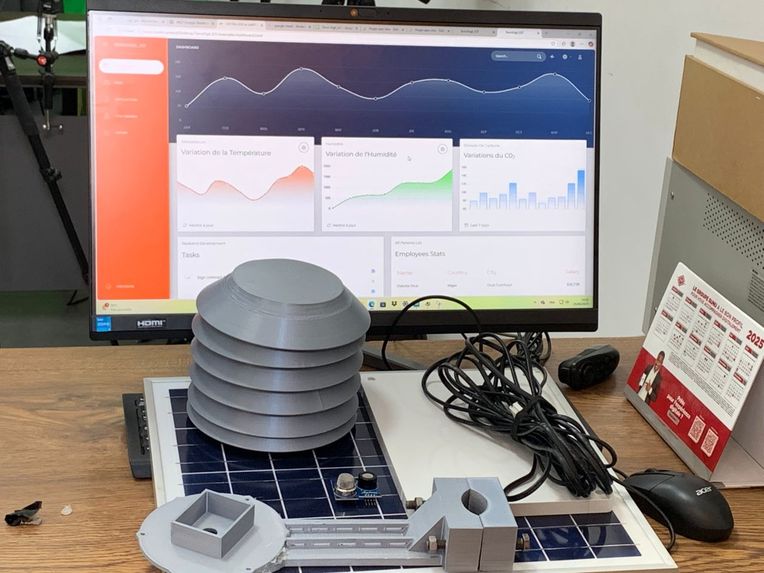
real-time dashboard + components
-
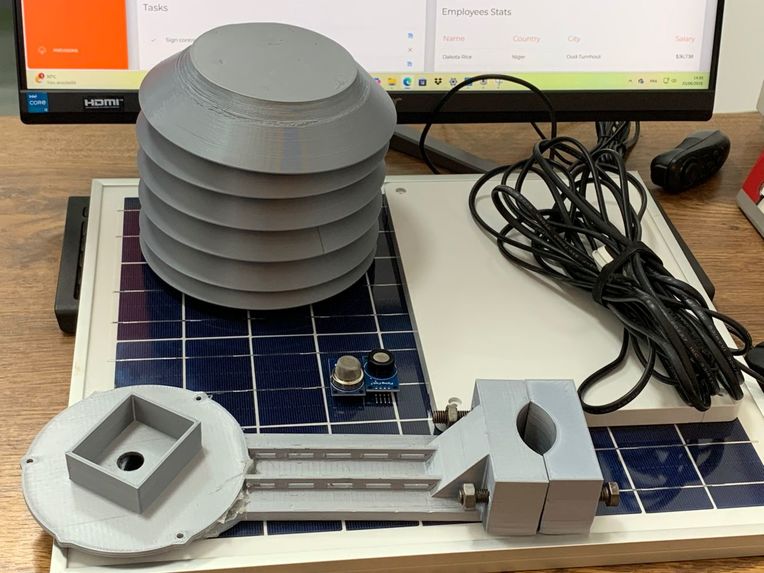
components
-
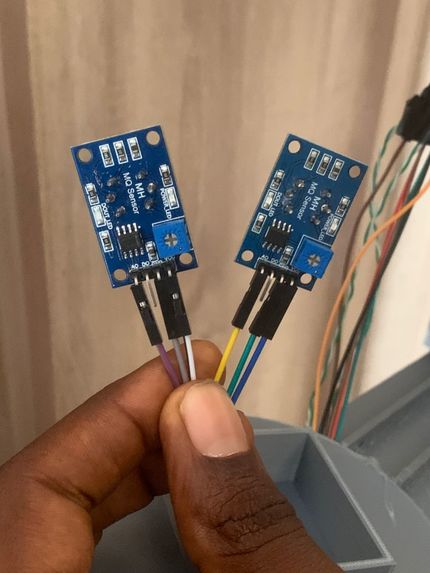
sensors (MQ-2 and MQ-7)
-
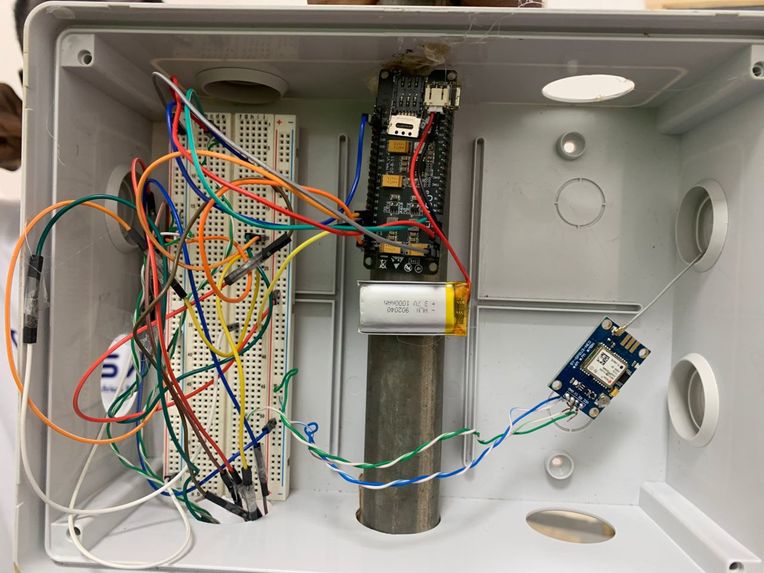
case + some components
-
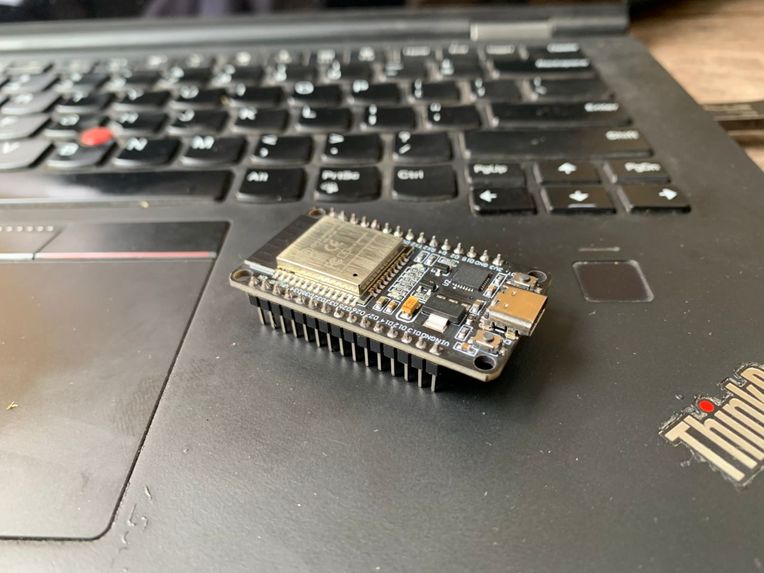
ESP32 (microcontroller)
-
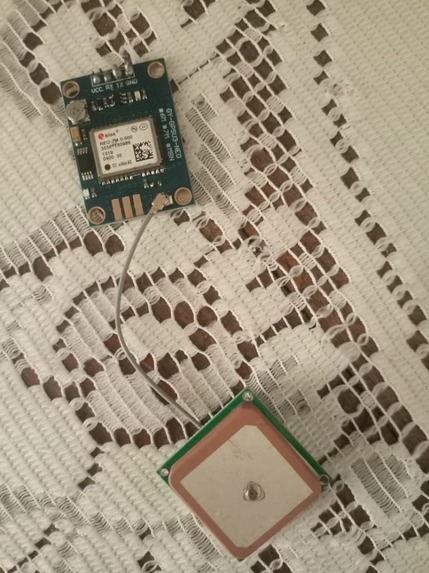
GPS sensor
-
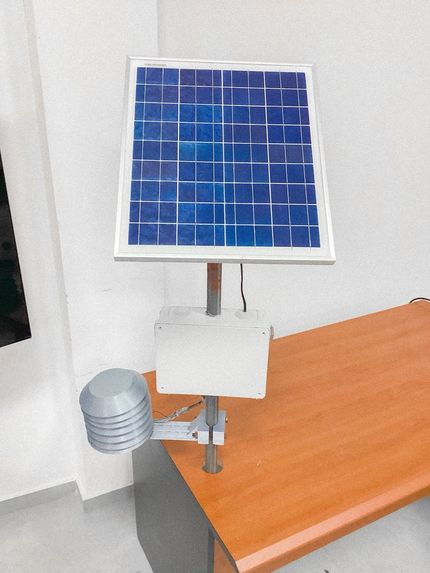
FINAL RESULT


Inspiration
In Togo, as in many parts of sub-Saharan Africa, bushfires are a major threat to the environment, agriculture, and rural populations. Every year, thousands of hectares are destroyed, causing:
- Economic losses (crops, livestock, timber)
- Destruction of biodiversity
- Air pollution (CO, CO₂, fine particles)
Limitations of Current Systems
Today, most fire detection systems, such as satellite surveillance, human patrols, fire towers, and thermal cameras, suffer from significant limitations: -Late response: fires are often detected after they’ve already spread dangerously -High cost: drones, satellites, and thermal imaging are expensive and hard to deploy locally -Low local adaptability: few systems are tailored to the needs of our rural areas -Limited coverage: fires can start in unmonitored zones and spread rapidly.
According to the FAO, 90% of bushfires in Africa are man-made and only reported once they are already out of control. Most rural regions lack automated early-warning systems at low cost. (FAO Fire Management).
Our Vision
This is where the Bushfire Early Detection System (BEDS) comes in: a low-cost, autonomous and locally-adaptable device built to detect early environmental signals and issue automated alerts, to prevent disasters before they happen.
What it does
BEDS is an embedded system designed to:
- Monitor in real time:
- Ambient temperature
- Humidity
- Atmospheric pressure
- Air quality (CO, CO₂ concentrations)
- GPS location
- Detect unusual values that indicate potential fire outbreaks
- Trigger automatic warning alerts
- Send data to a real-time interactive dashboard
- Display live sensor readings and graphs using Chart.js
Main goal: Early detection and prevention of bushfires. Secondary use case: Air quality monitoring in rural environments.
How we built it
Hardware (planned for physical prototype)
- Microcontroller: ESP32
- Sensors:
- Temperature & humidity: BMP280
- CO: MQ-7
- CO₂: MH-Z19
- Pressure: BMP280
- GPS: NEO-6M
- 12–15V battery, breadboard, soldering, enclosure
- 3D-printed case using PLA filament
Software
- Frontend: HTML, CSS, JavaScript
- Charts: Chart.js
- Backend: Google AppScript + Google Sheets
- Sensor simulation: Arduino IDE
We first designed a complete system architecture, then developed a fully working simulated prototype, ready to be migrated to physical hardware as soon as it becomes available. Due to lack of resources, we lent components (temperature sensor, humidity sensor, CO2 sensor, GPS sensor, pressure sensor, 12 to 15V battery, Arduino kit, board, rope gun, case, tin, 3D filament, Solar panel, Charging modules, Charger converter) to see if the physical realization will work and therefore with some assemblies, we were able to make a prototype.
Challenges we ran into
Hardware Accessibility
- We search but it’s difficult to source specific sensors like CO, CO₂, or GPS modules locally
- Importing components is costly and slow
System Design
- Integrating several sensors on a single microcontroller while optimizing energy consumption
- Building a simple and intuitive UI for non-technical users
- Creating a modular, affordable, and robust system suited to rural deployment.
Accomplishments that we're proud of
- Built a working software prototype with real-time data visualization
- Simulated fire scenarios with realistic environmental input
- Successfully collaborated across hardware, software, and design roles
- Designed a solution that is tailored to African realities and scalable to other regions
What we learned
- How to configure the ESP32 microcontroller to read multiple sensor inputs
- How to send and display real-time data to a custom-built web dashboard
- Integration of Chart.js to visualize environmental changes dynamically
- Use of Google AppScript as a creative, low-cost backend
- How to build an evolvable and modular system architecture
What's next for Bushfire Early Detection System (BEDS)
- Move to a full physical prototype with real sensor data
- Add SMS / Push notifications for alerting stakeholders
- Use LoRa or GSM modules for long-distance transmission
- Implement AI models for fire risk prediction
- Partner with local governments, NGOs, and rural communities for field deployment
- Expand use cases to urban air quality and pollution detection
Built With
- arduino
- bmp
- chart.js
- css
- dashboard
- esp32
- google-apps-script
- html
- javascript
- low-power
- microcontroller
- mq
- real-time
- web-technologies

Log in or sign up for Devpost to join the conversation.