-
-
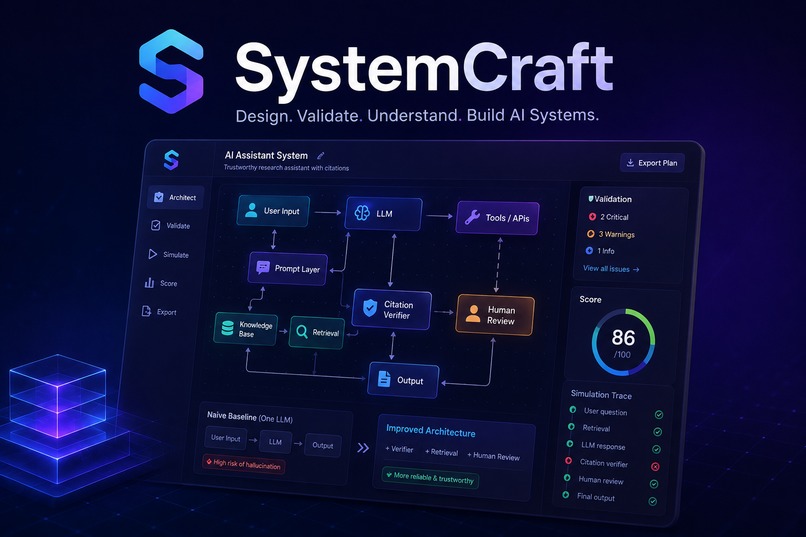
Design Idea
-
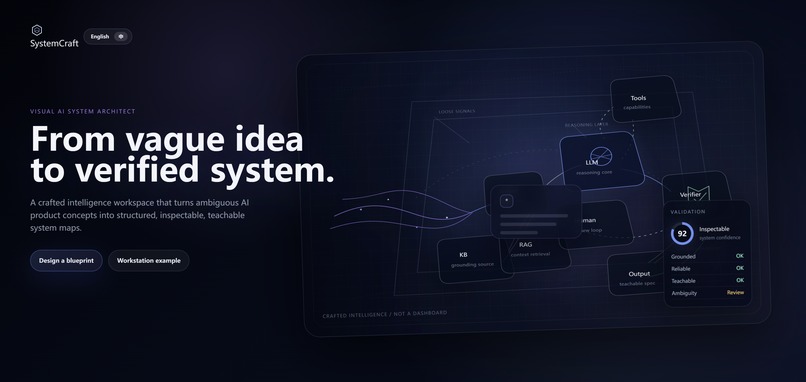
Home Page
-
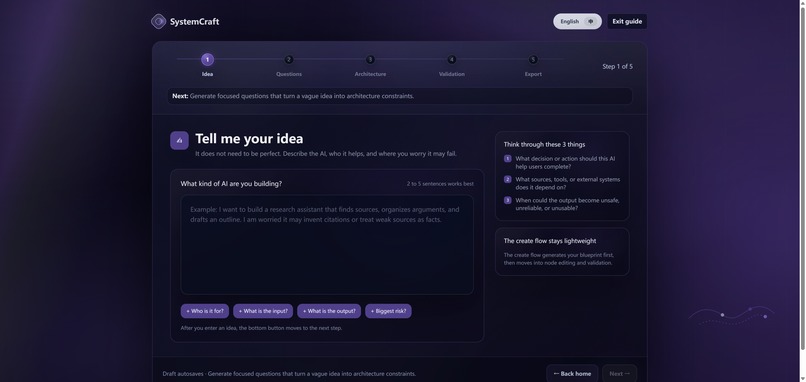
Idea brainstorming
-
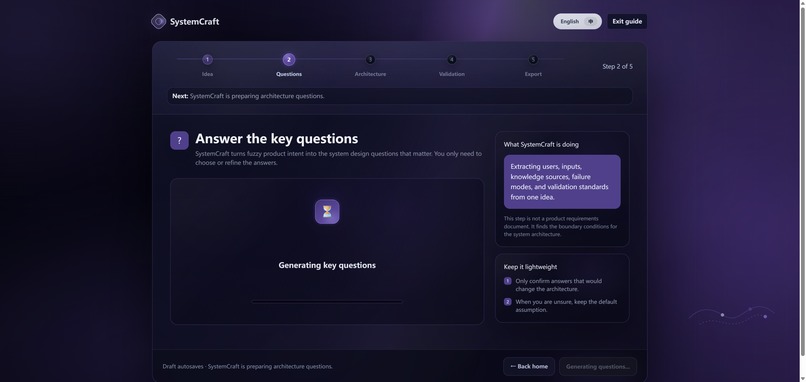
Good things takes time
-
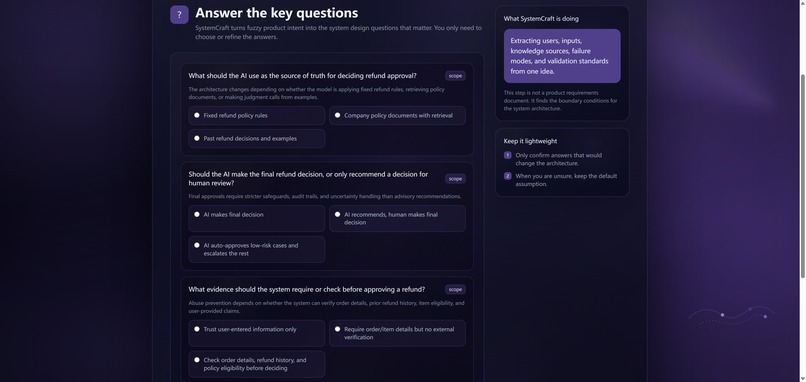
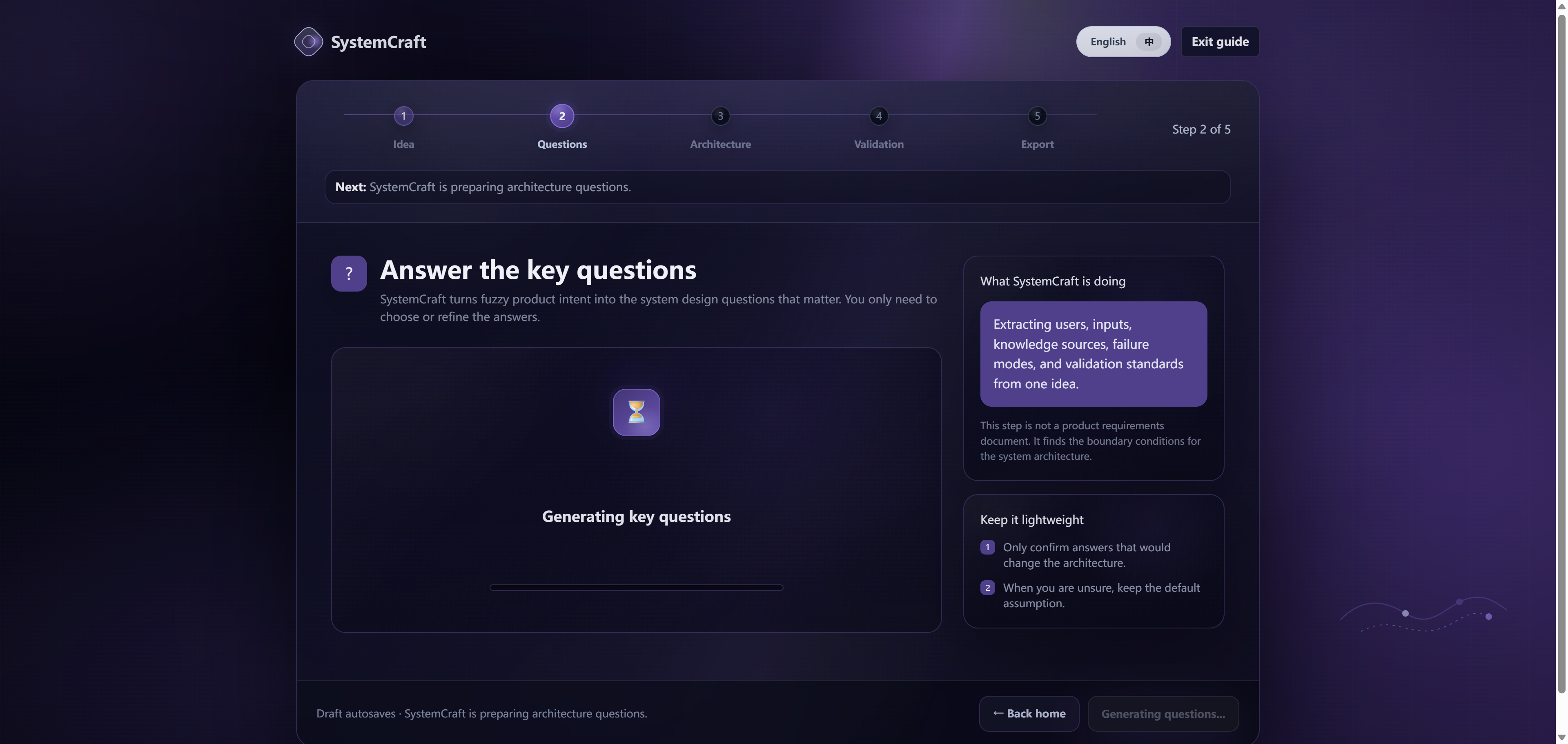
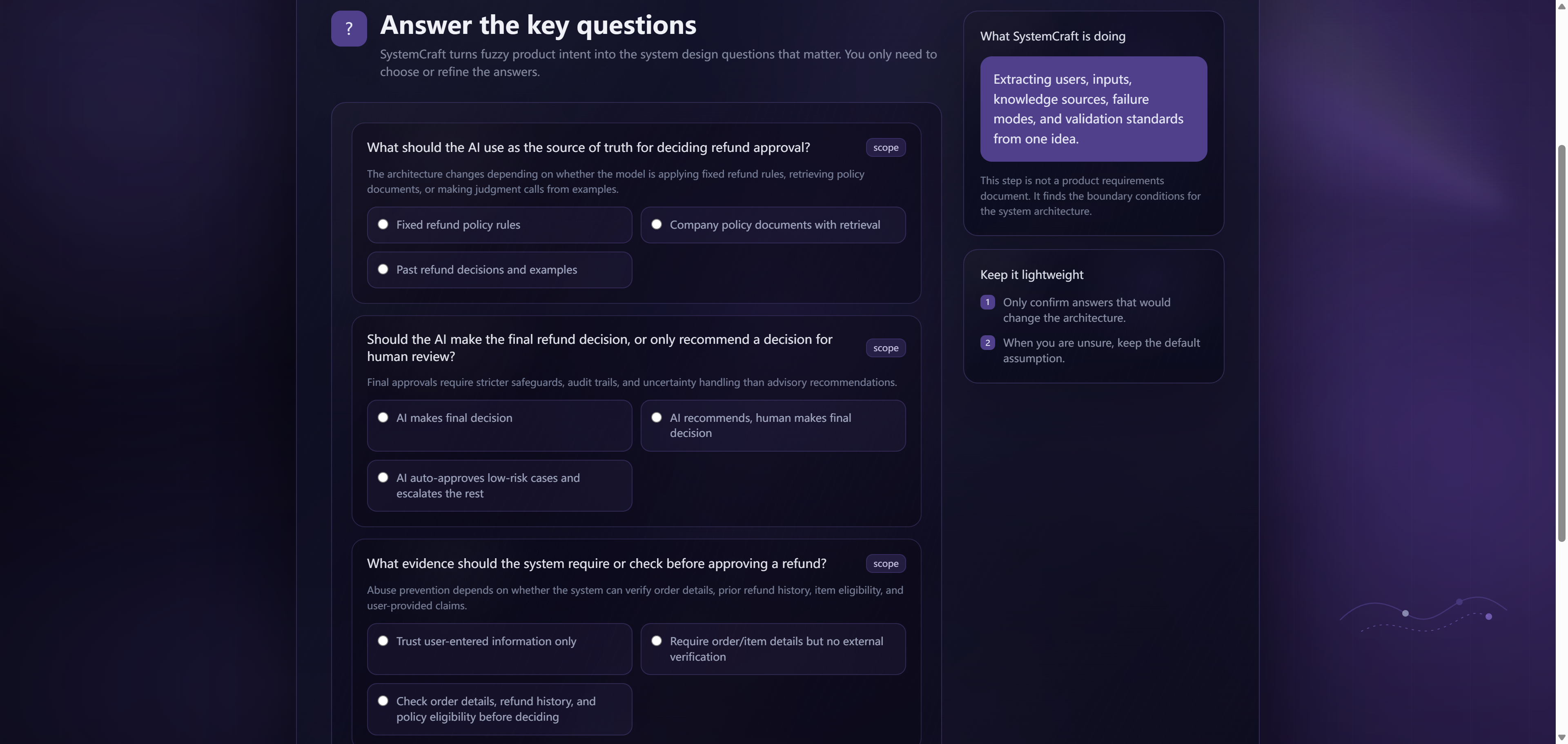
Answer Key Questions properly
-
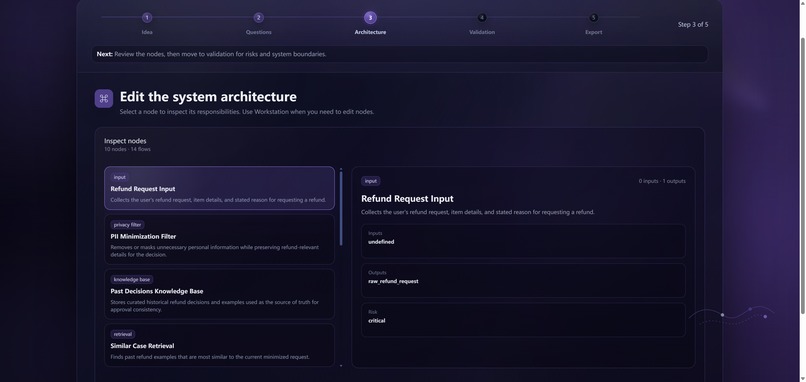
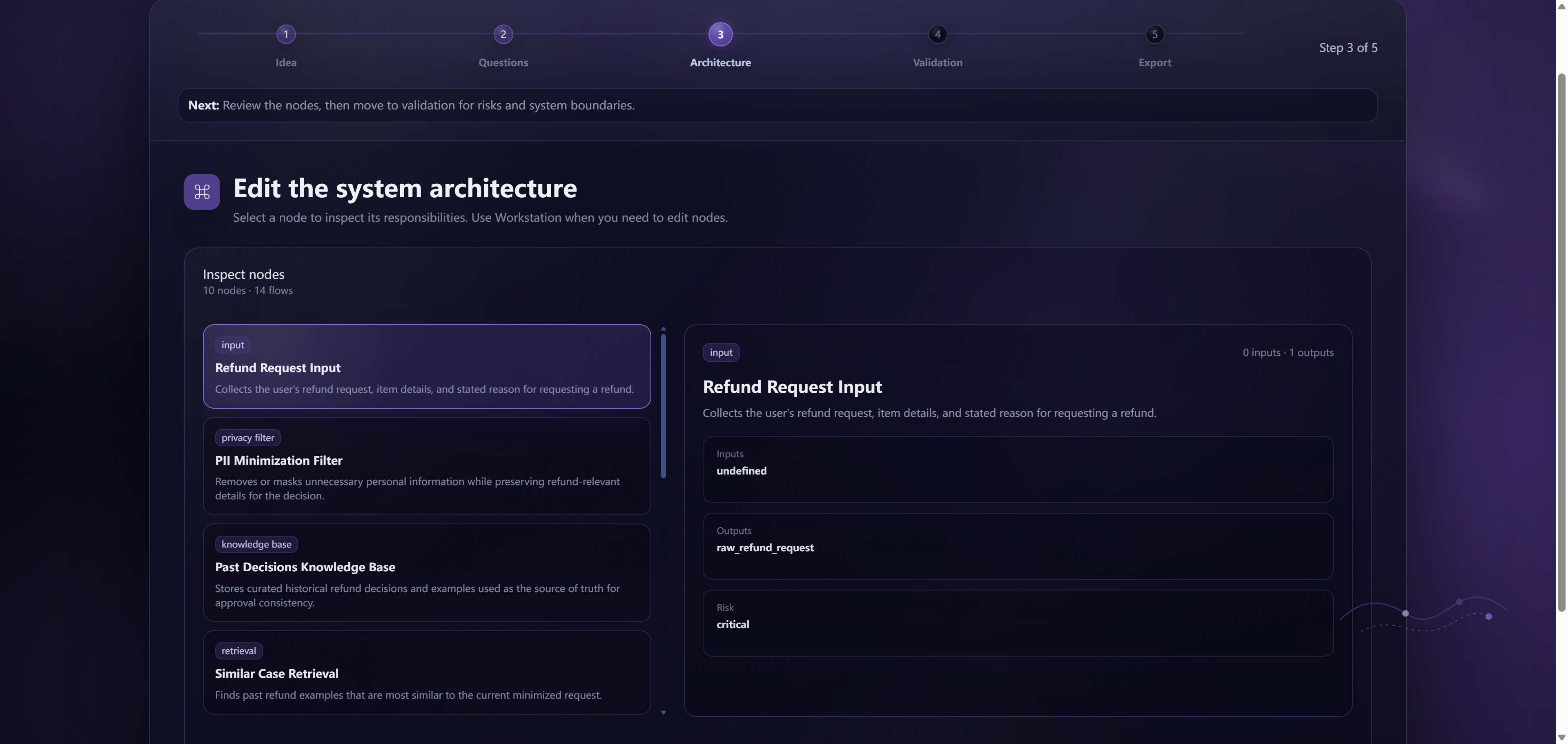
Previewing the full system
-
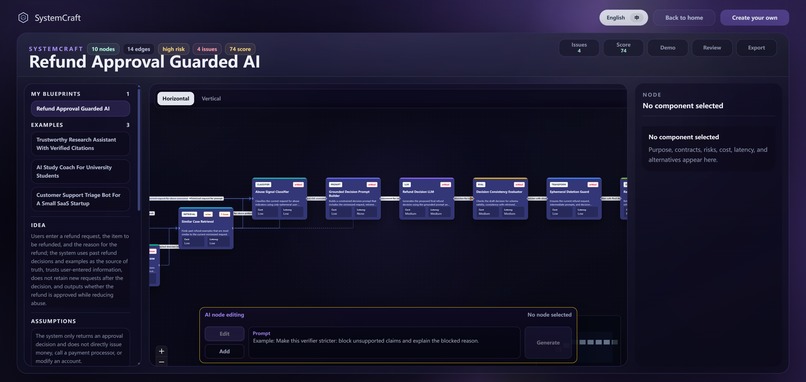
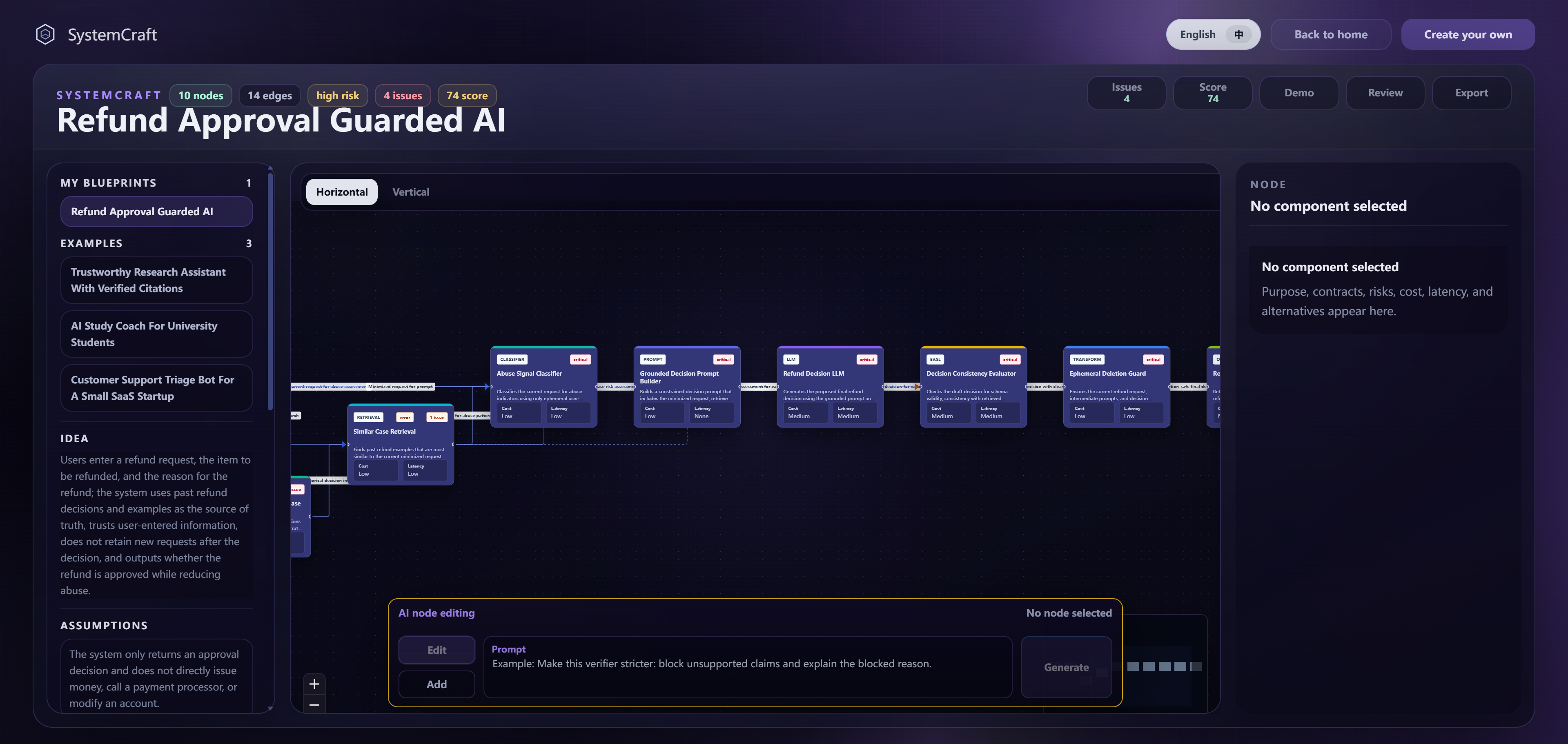
A directed graph view
-
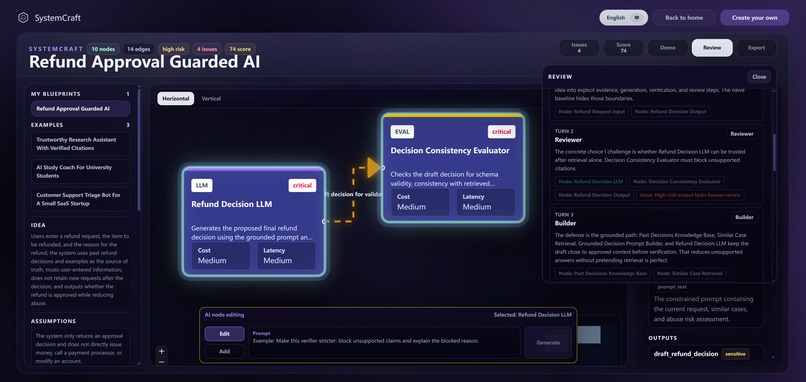
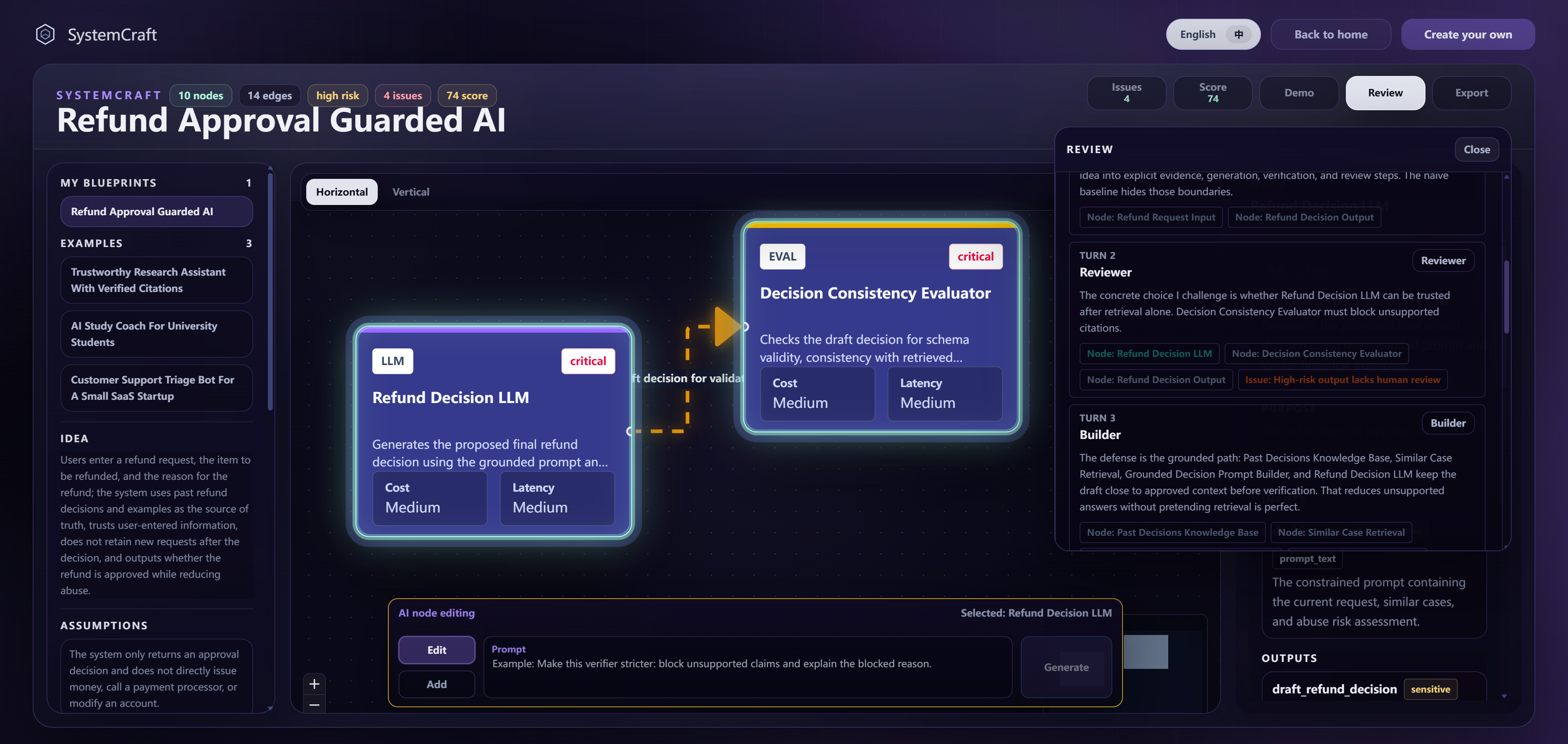
Context Highlighter During speech
-
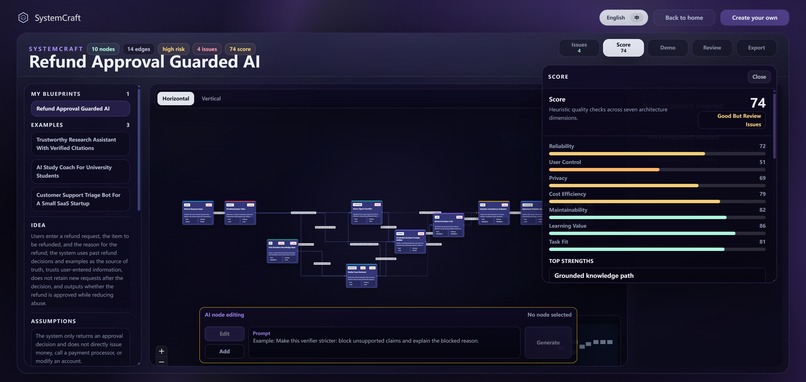
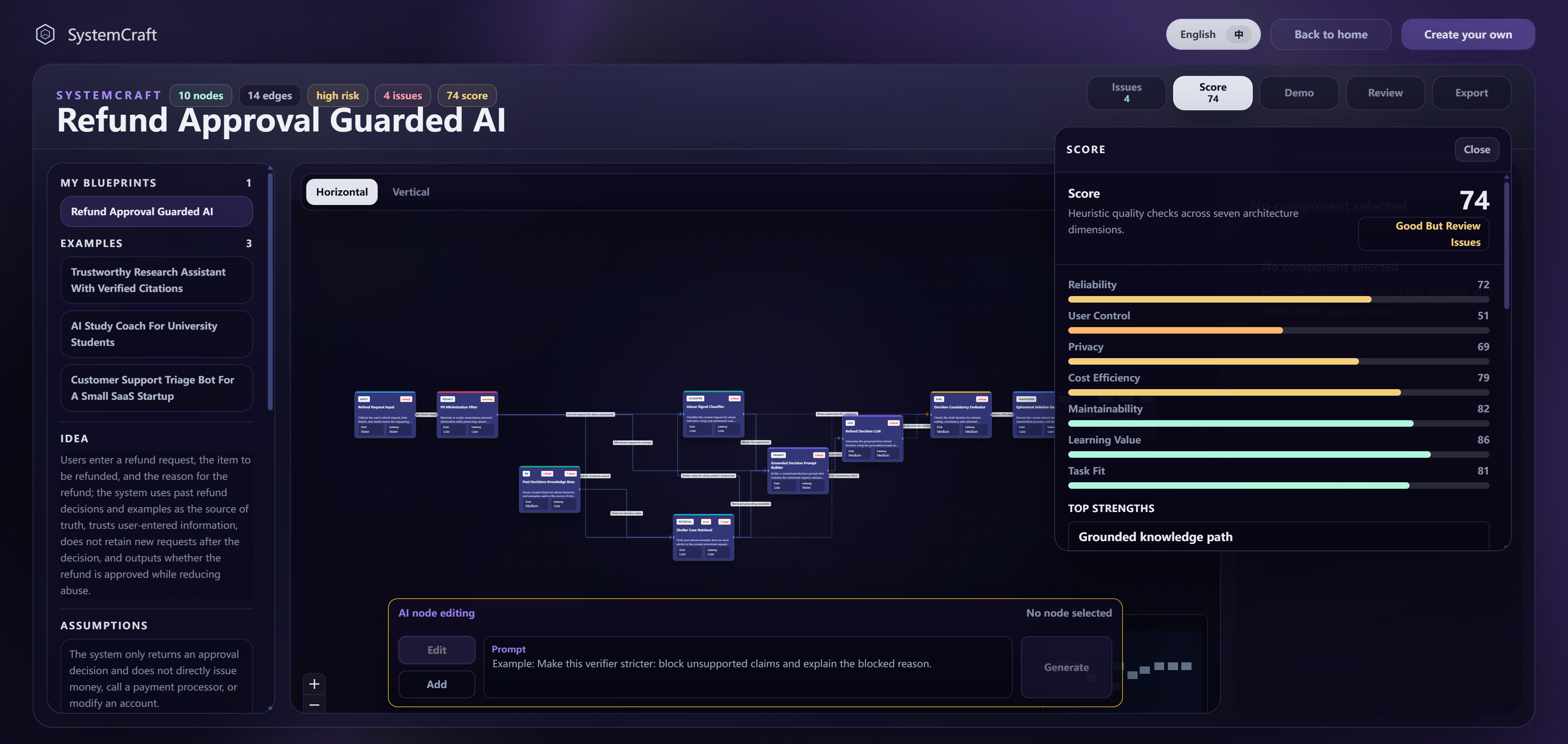
Imporve the scores!
Public Post Link: https://www.instagram.com/p/DZ-qYlVyk4K/?igsh=aXYyNmticHY2dmdh Demo BackUp Link: https://github.com/Minecrash98/System-Craft/blob/main/SystemCraft_final_demo.mp4
SystemCraft Submission
Inspiration
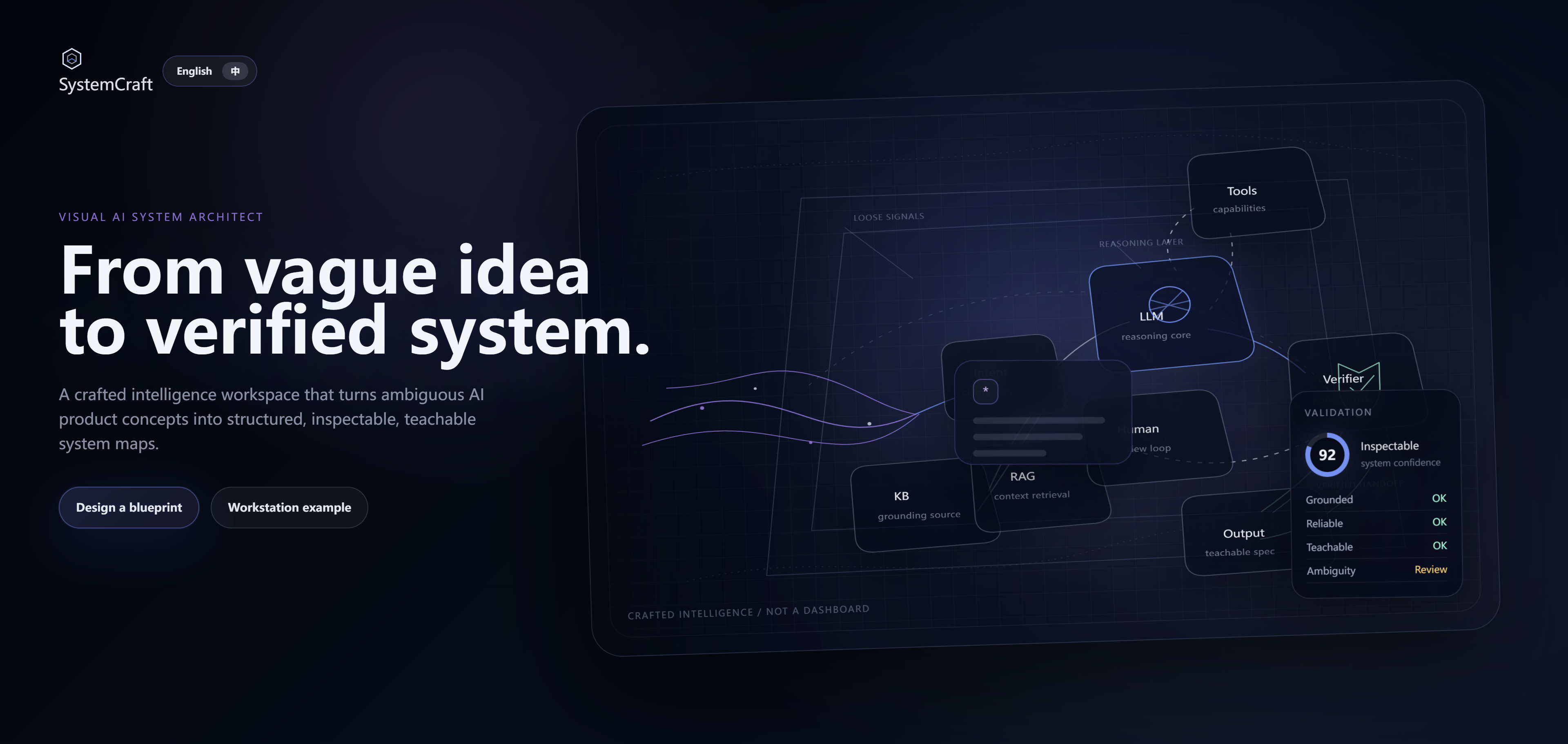
Many students and builders already know how to prompt AI, but prompting is not the same as designing reliable AI systems. We built SystemCraft to help people move from "one big prompt" thinking to real system architecture thinking: components, data flow, verification, human review, privacy, cost, and failure modes.
What it does
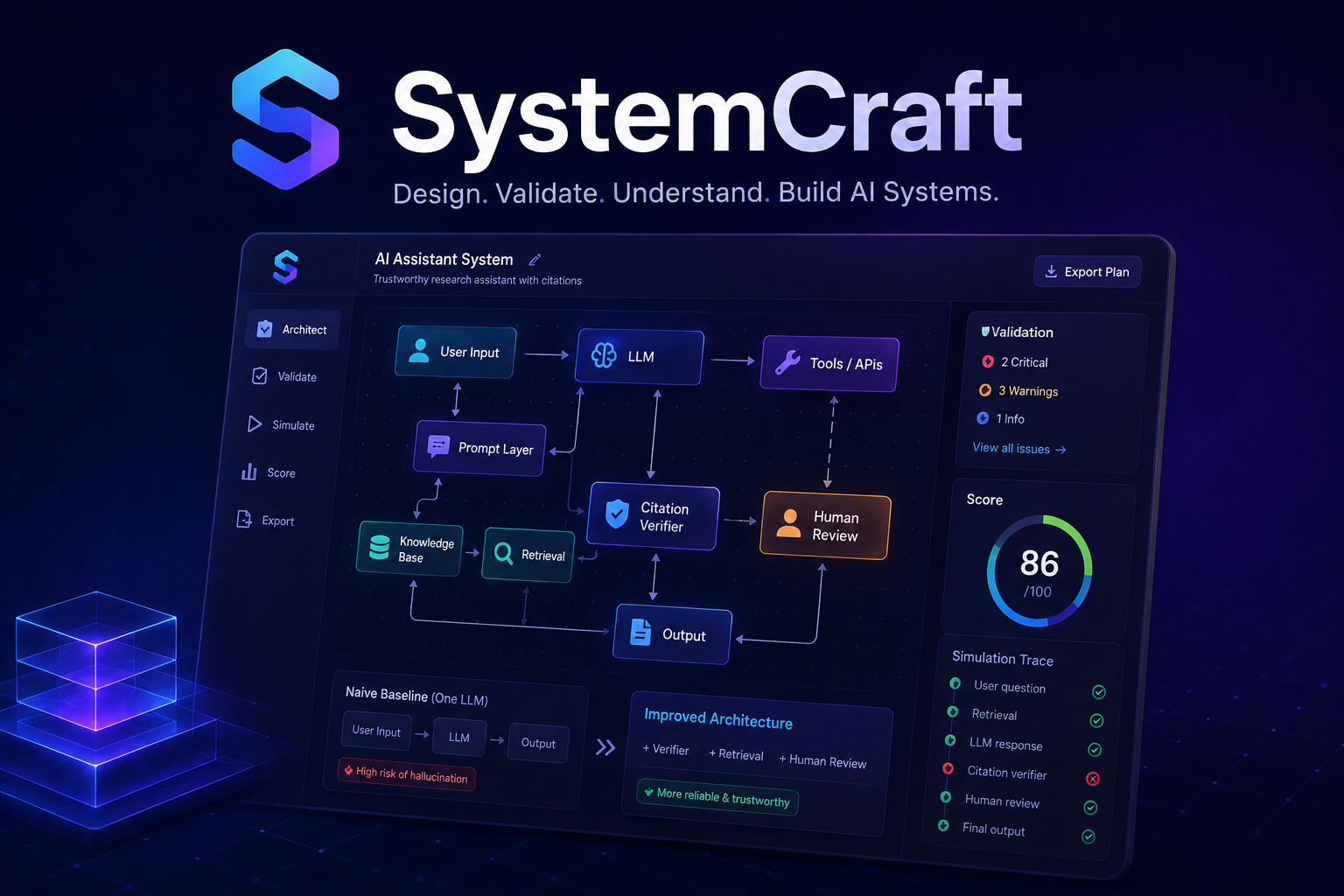
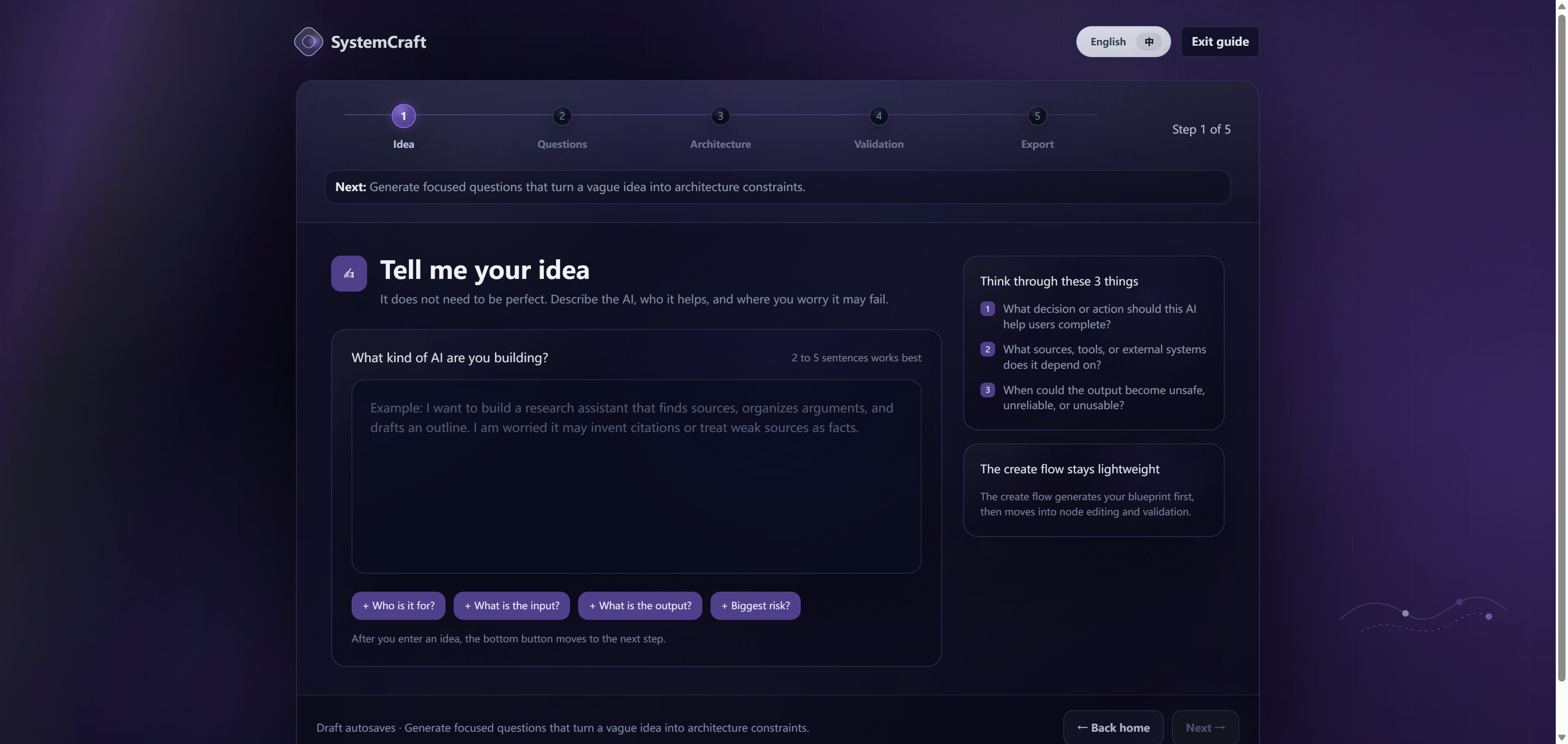
SystemCraft turns a vague AI product idea into a visual, inspectable system blueprint. Users can enter an idea, answer architecture-focused questions, generate a graph, inspect each node, view validation issues, see heuristic scores, run a simulated failure trace, review design trade-offs, and export the architecture as JSON or Markdown.
The main demo shows a trustworthy research assistant where an unsupported citation is caught by a Citation Verifier and routed through review instead of reaching the final answer.
How we built it
We built SystemCraft with Next.js, React, TypeScript, Tailwind CSS, and React Flow. Architecture graphs are generated as structured JSON, validated with Zod and JSON Schema, then rendered as interactive system maps.
The app includes deterministic fallback paths, rule-based validation, heuristic scoring, local simulation, Markdown/JSON export, a workstation for saved blueprints, graph editing support, and bundled demo narration/design-review audio for reliable offline playback.
Challenges we ran into
The biggest challenge was keeping the product focused. It was tempting to build a full workflow automation tool, real RAG execution, or a voice-first assistant, but the strongest version of SystemCraft is an architecture learning and critique tool.
We also had to make AI output safe and predictable: generated graphs needed schema validation, normalization, repair attempts, and fallback templates so the demo could work even without API keys or network access.
Accomplishments that we're proud of
We are proud that SystemCraft makes invisible AI system design visible. A user can start with a messy idea and end with a concrete architecture, risks, trade-offs, simulated behavior, and an implementation-ready plan.
We are especially proud of the research assistant demo: it clearly shows why a naive one-LLM design can fail, and how retrieval, verification, human review, and explicit output contracts make the system more trustworthy.
What we learned
We learned that good AI products are not just about better prompts or stronger models. They are about system boundaries, verification steps, fallback behavior, human control, and honest communication about what is simulated versus what is actually executed.
We also learned that educational tools need to show trade-offs, not just final answers. SystemCraft works best when it teaches users why each component exists.
What's next for SystemCraft
Next, we want to add richer portfolio exports, stronger graph editing, more scenario templates, classroom workflows, and real evaluation test cases. Longer term, SystemCraft could generate starter code, support real document ingestion, compare architecture versions, and help teams turn validated blueprints into working AI systems.
Built With
- claude
- elevenlabs
- javascript
- openai
