-
-
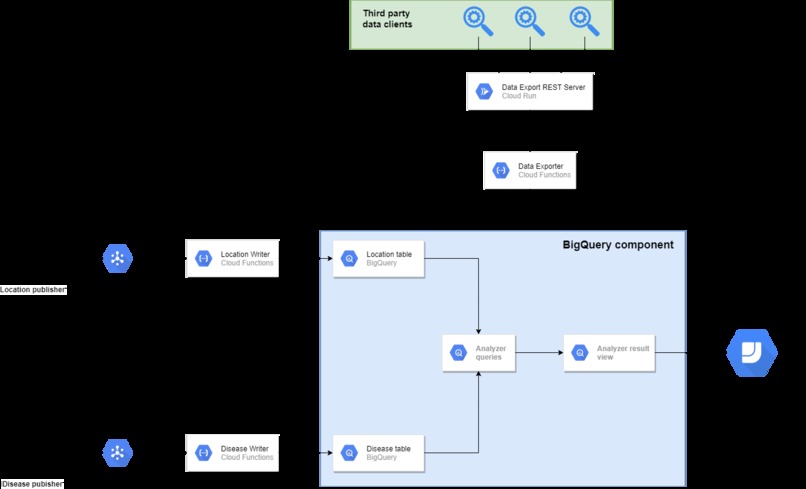
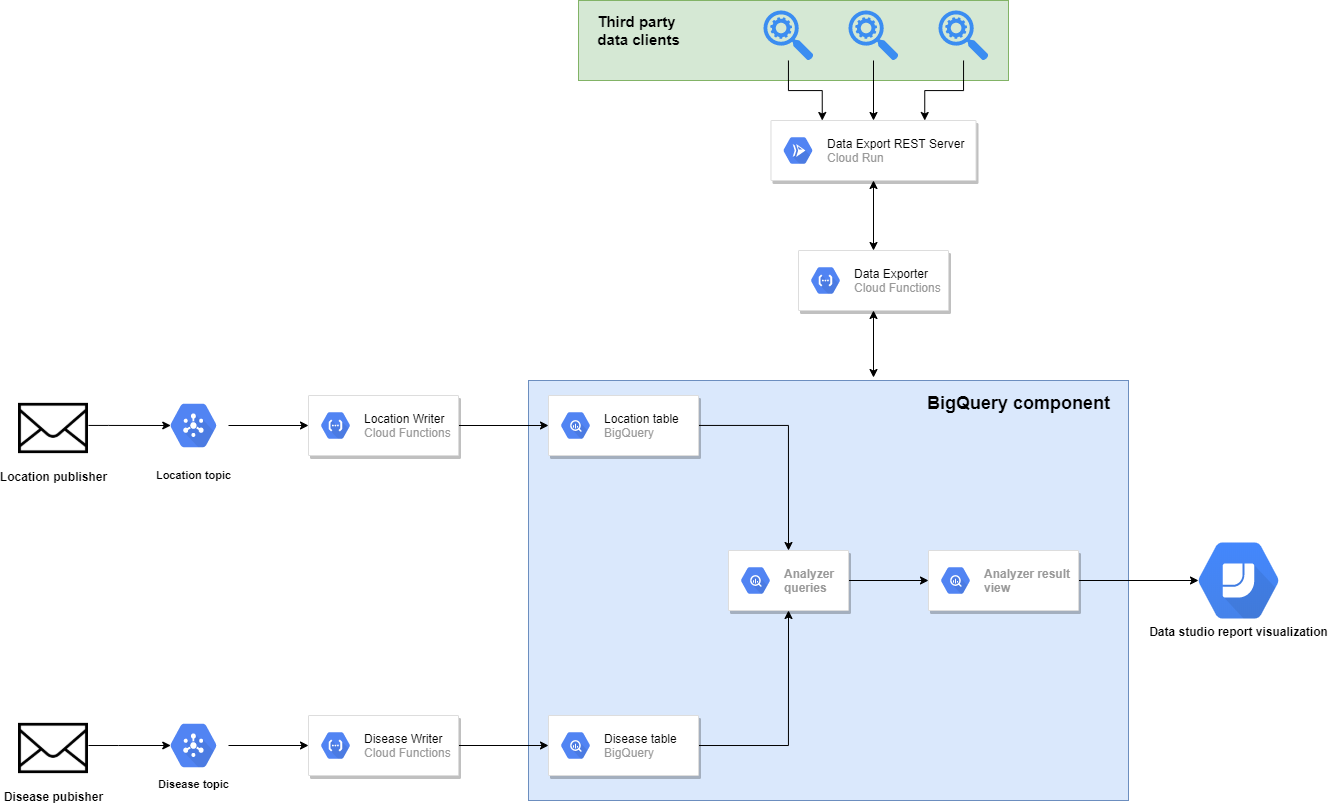
Data engineering pipeline
-
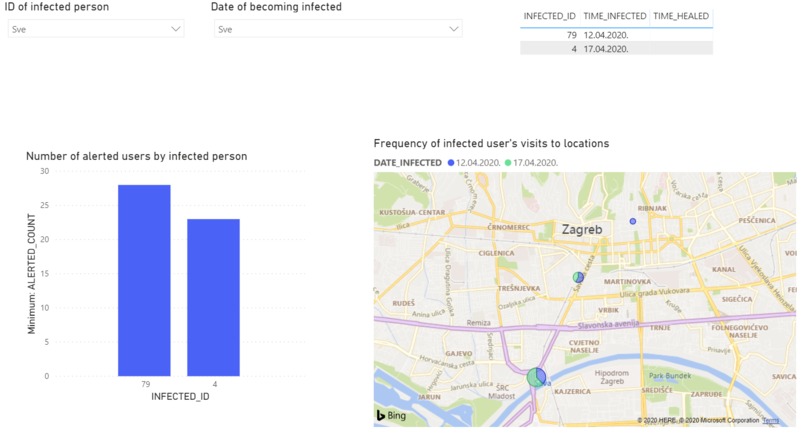
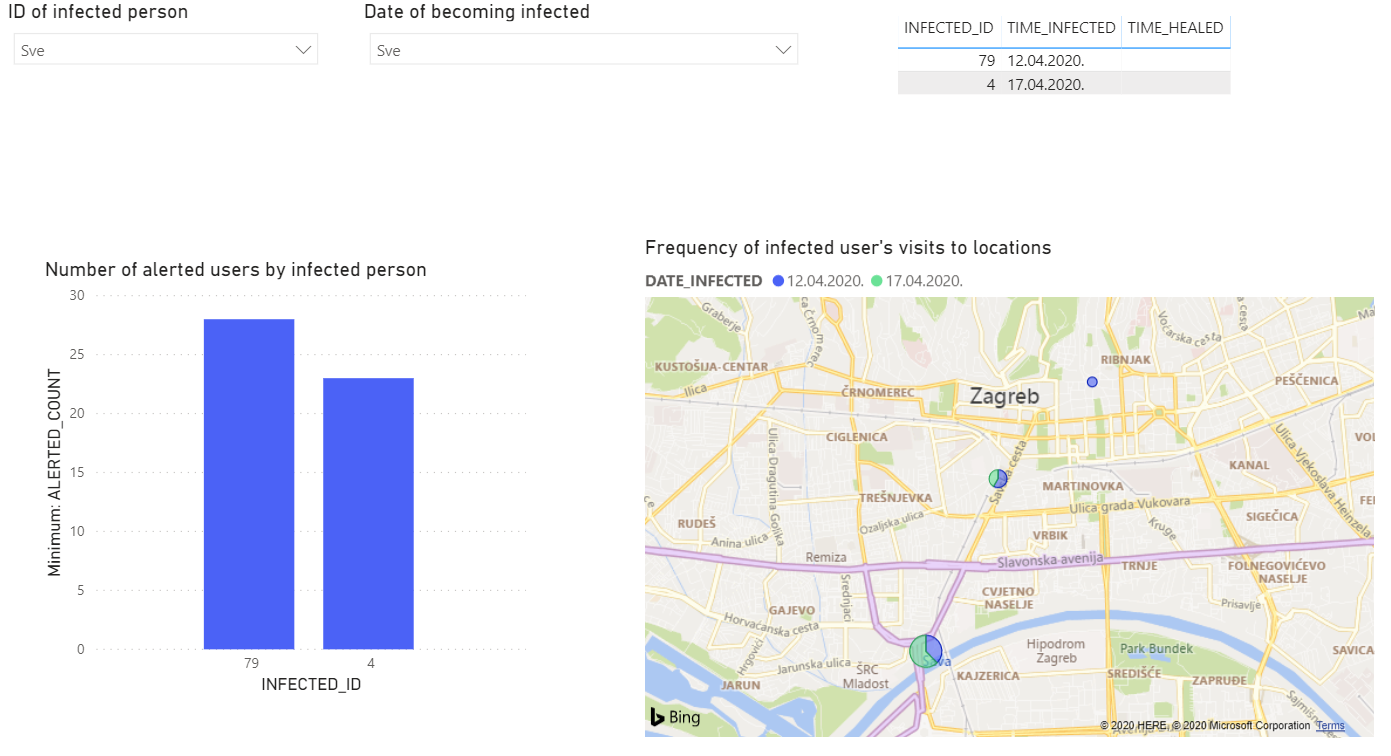
Alerted users by an infected person
-
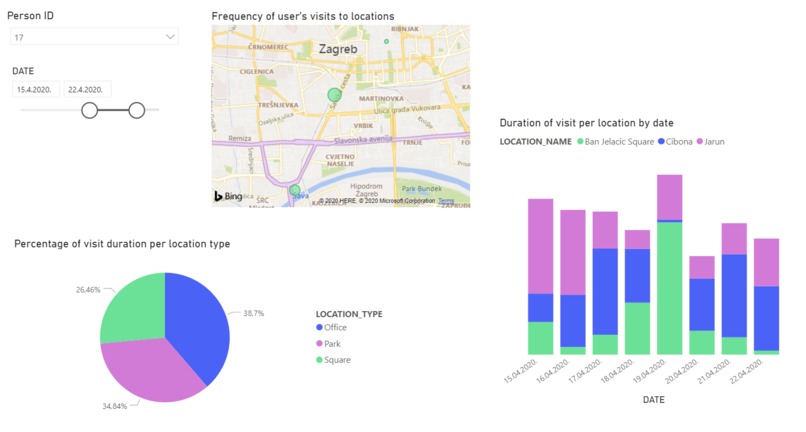
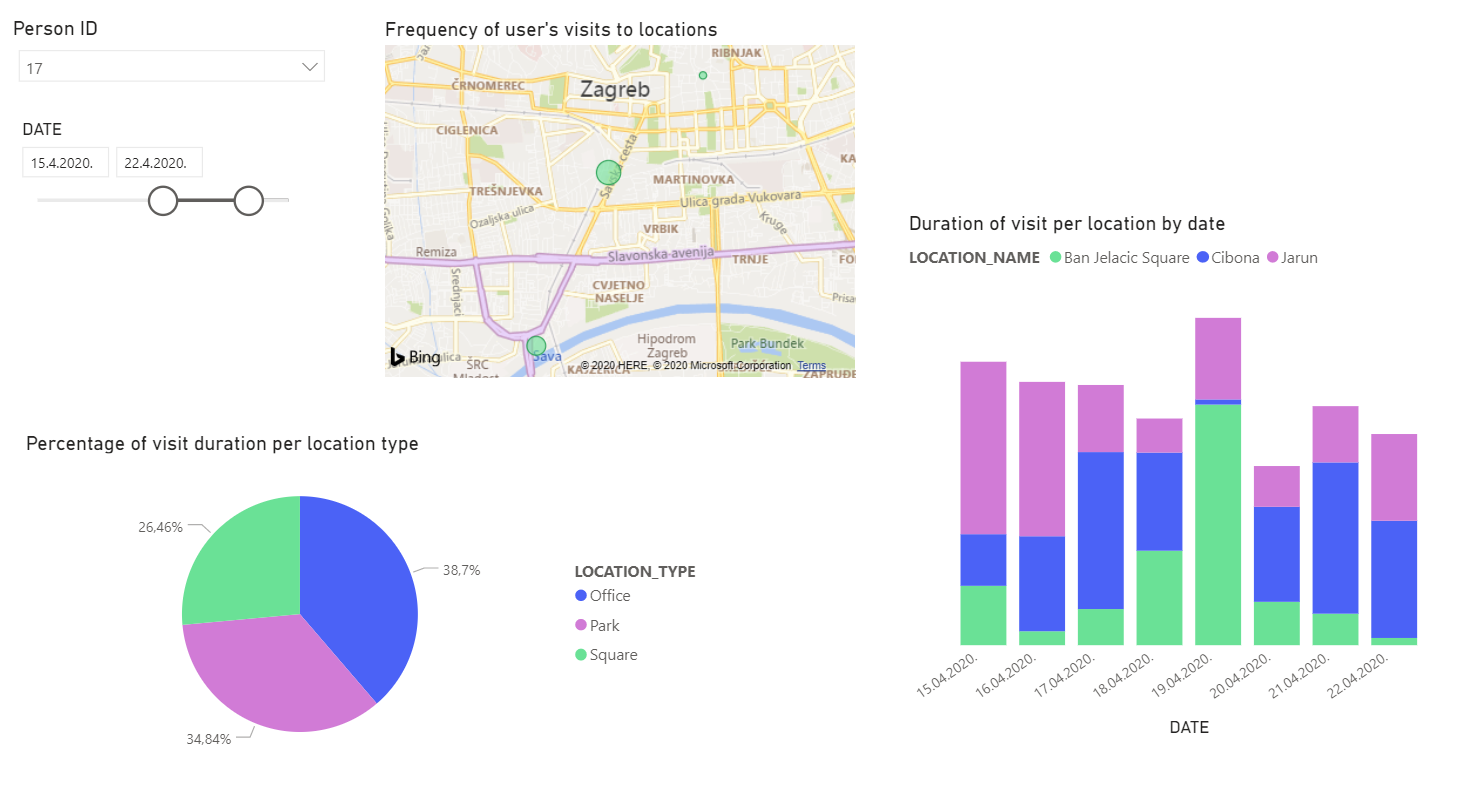
Representation of time and movement
-
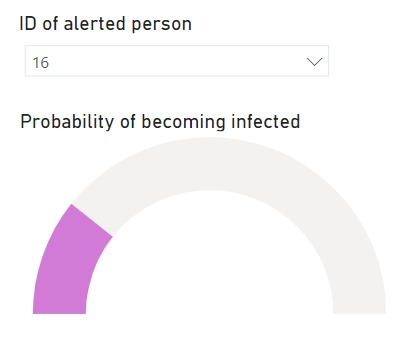
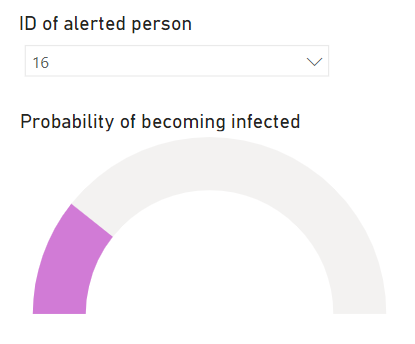
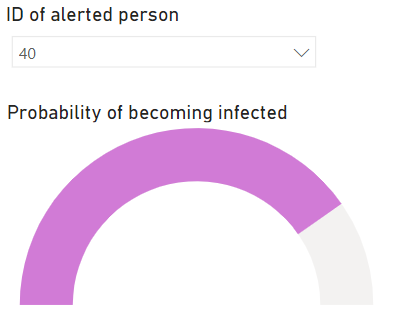
This Gauge chart shows probability of getting infected based on amount of time spent around the infected person
-
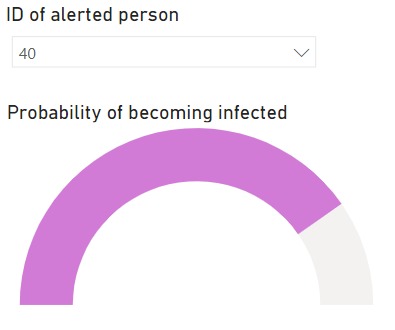
This Gauge chart shows probability of getting infected based on amount of time spent around the infected person
Inspiration
Quarantine has ended but Corona Virus is still here! Everyone wants to go out, but everyone is scared of becoming infected! It would be ideal if you could just get notified via phone app if you have been in contact with COVID-infected person and isolate yourself on time. Wouldn't it be even better if you could avoid places that are most contagious and avoid the risk?
The solution for the crisis
We plan to create and implement an algorithm that artificially generates and simulates geographical locations. We plan to provide a data engineering solution on how to handle these big data situations and a way of storing them in the cloud! We plan to create a phone app for citizens that: pulls user's locations, stores them in the database, analyses the data, alerts the user when being in touch with the infected person, creates statistics of the places with high probability of becoming infected. We plan to create a Desktop app for epidemiological service through which they can insert test-positive persons and analyse their movement throughout the last 14 days. We plan to create a way for third parties to reach our data on demand.
Challenges we are facing
Enormous amount of data - how to store them? If you want to analyze infected people's movement and their contacts with other people, you have to deal with enormous amount of data. Each user's phone sends new location every second, at least. We are talking about 86,400 data for one user a day. If you extend this problem to several days and to several users... you have a serious big data situation here :)
What data to use to test your app? It is very difficult to find data which simulates real movement and you have to have them so you can develop and test your algorithms for the app. You cannot find samples online because people's GPS locations are private data, given under certain consent. Furthermore, you cannot simulate this kind of data just like that. You have to calculate in people's holding on the locations, and you have to include the simulation of crossing people's paths. Since there is countless of latitudes and longitudes in the world, even in one city, and 86,400 seconds a day, it is quite a muss.
Build phone and desktop app - integration? How to integrate apps together and with our database? What functionalities need to be included?
How we built it
We created and implemented an algorithm for creating artificial data that simulates people's movement and contacts with other people. We provided a data engineering solution on how to store enormous number of geographical locations and additional informations. We created a simulation of the data usage for which we used PowerBI to analyse the data. This way we have shown that our solution is not only applicable to the tracking apps, but also serves anyone who needs to use the data about movement of infected people in any way (e.g. data science). We created a simulation of our tracking phone app. We created a way for others (anyone who wants our data) to get our data over HTTP by using REST API.
What we learned
Teamwork is everything! Beside all the fun stuff that we have done and learned while coding, good teamwork is the most important part. It is applicable for the situation we are dealing regarding the coronavirus crisis. We need to step up and work together on fighting this virus. Anyone can help in some way, you just need to figure out your path!
What's next for SynTrackers against Coronavirus
Big plans, not enough time?! That could be listed as our biggest problem. So our future plans are as follows. Build an actual phone app, with solutions implemented above, that would help people keep safe and slow down the spread of the infection. Build a Desktop app that would connect epidemiological services to the app, and this way epidemiologists would be able to notify every new test-positive infected person as well as track the person's movement in a easy and straightforward way. Build a machine learning model that can predict some high-probability infected places, forecast corona spread in the future based on the movement data, or similar helpful analysis.
Built With
- gcp
- go
- google-cloud
- powerbi
- python


Log in or sign up for Devpost to join the conversation.