
Inspiration
We wanted to explore what education could look like when AI moves beyond simply answering questions and becomes an active teaching assistant. Teachers spend significant time researching topics, planning lessons, creating resources and assessments. SYNTRA was inspired by the idea of using multiple specialised AI agents to handle these tasks while keeping the human teacher at the centre.
What it does
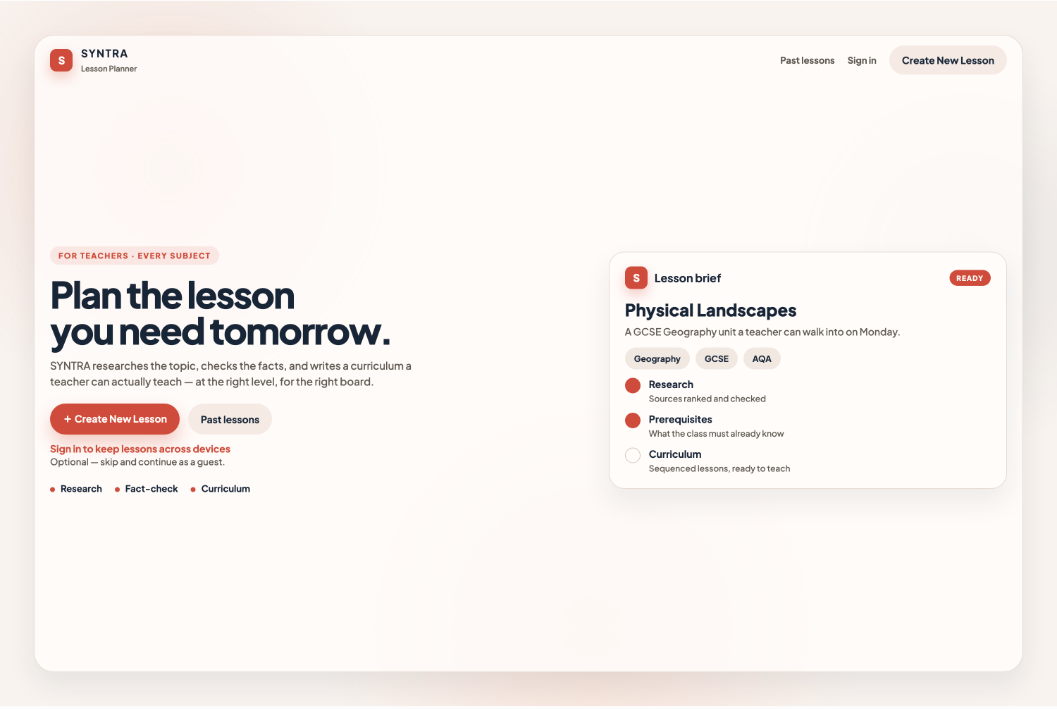
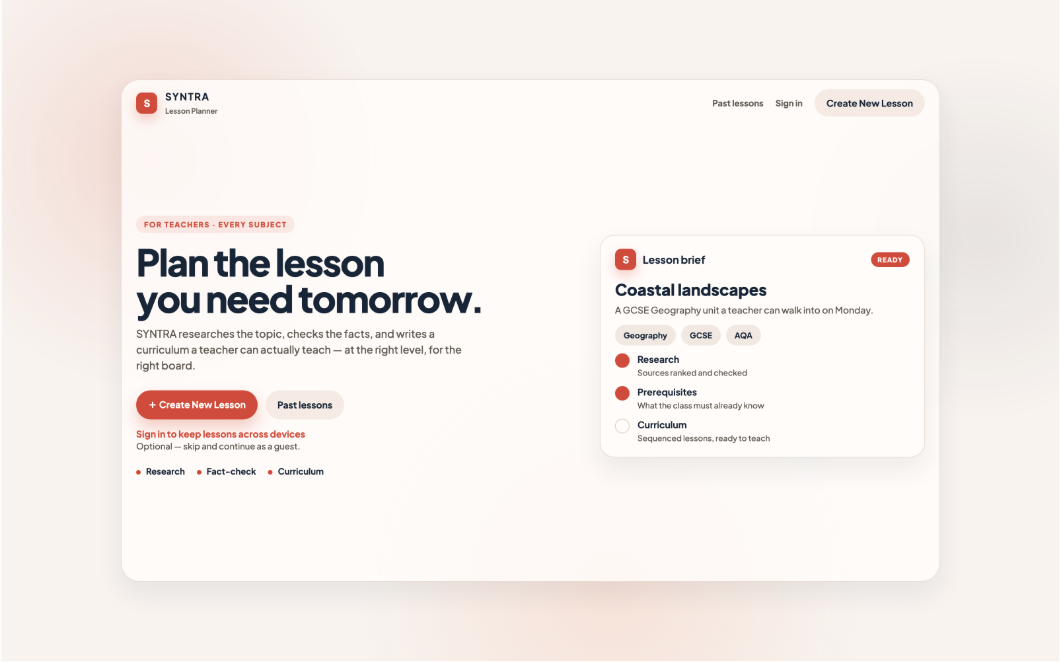
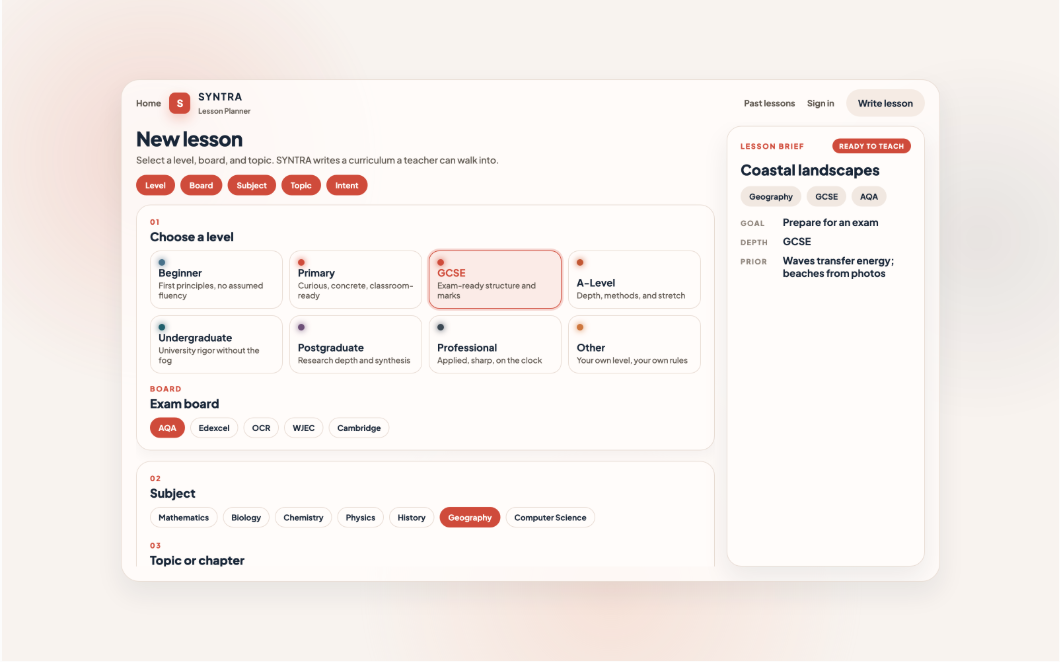
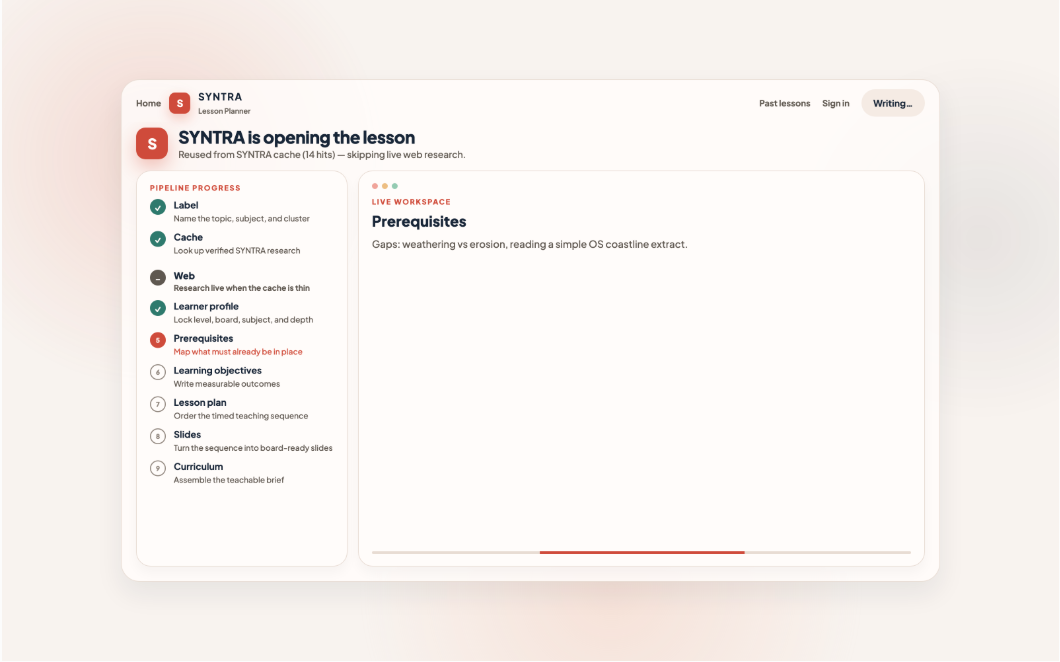
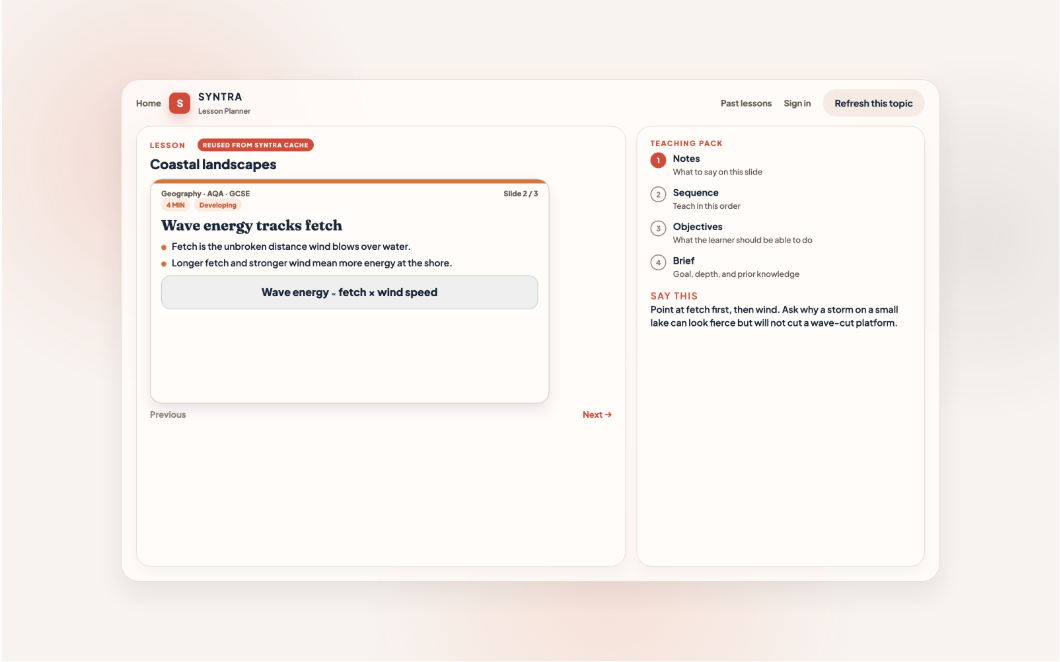
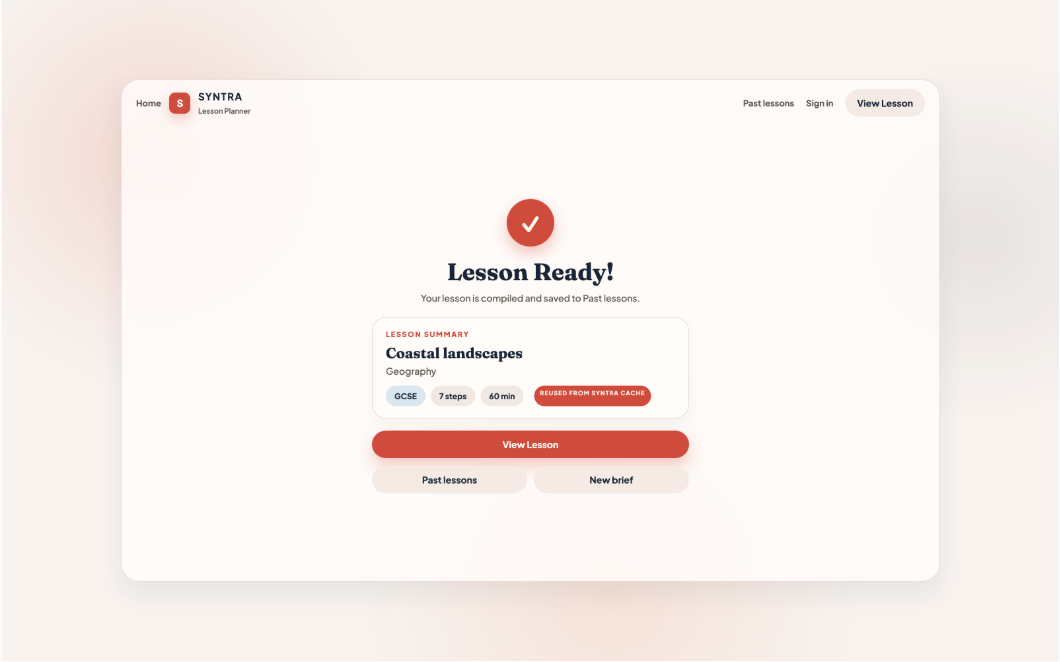
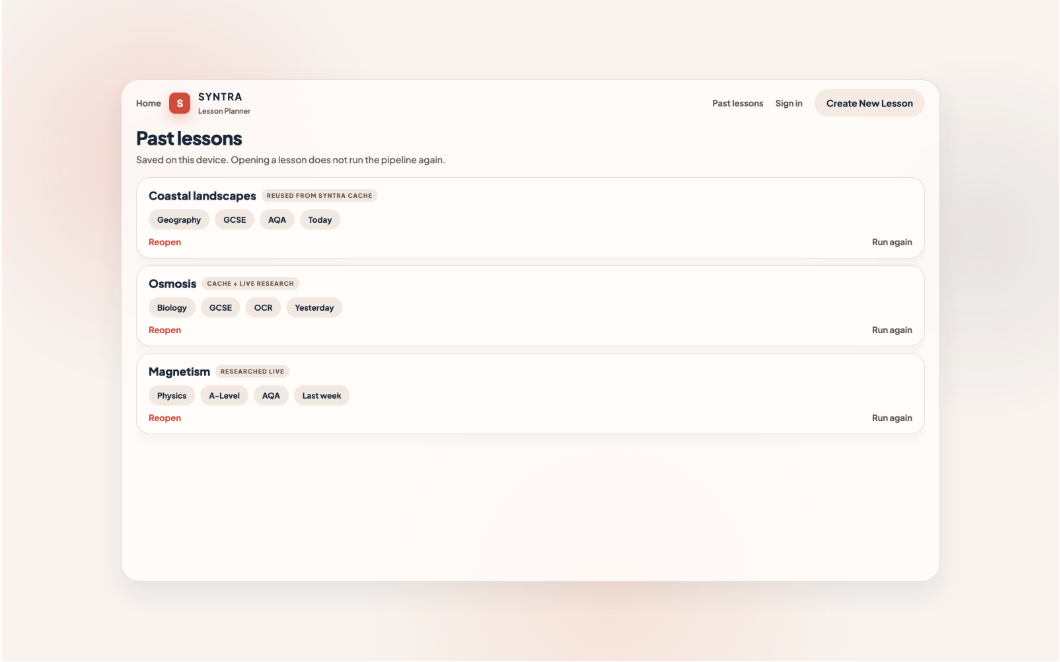
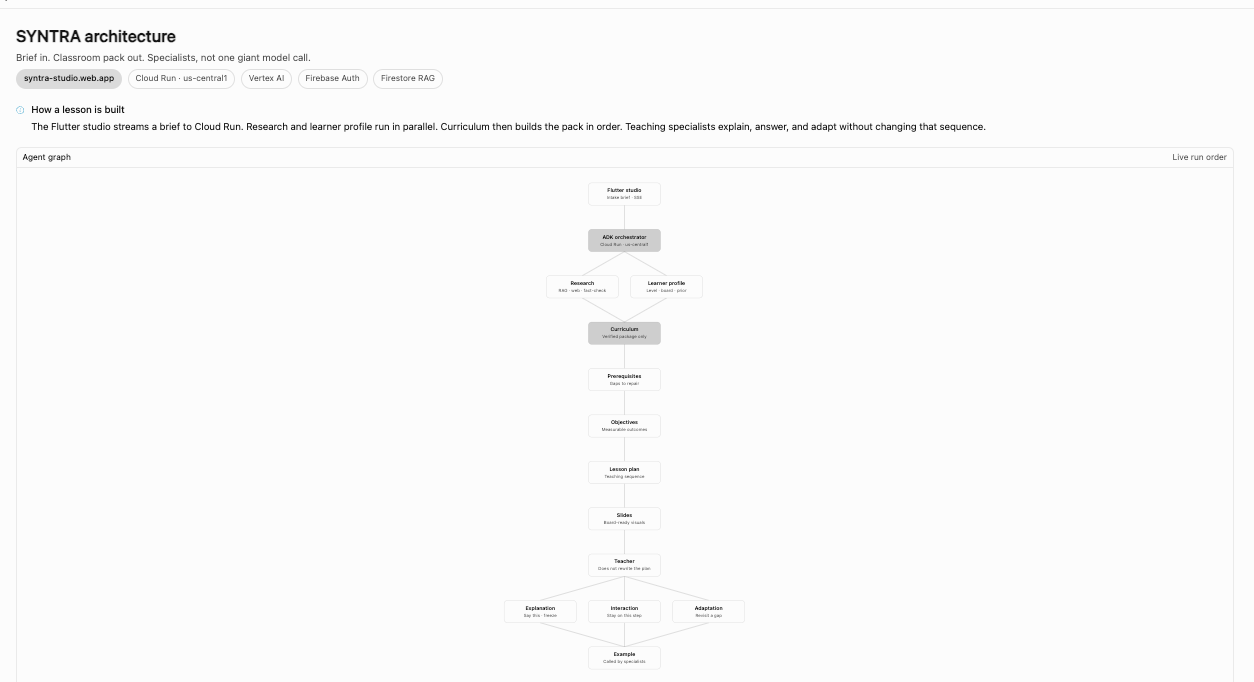
SYNTRA is an AI-powered multi-agent teaching platform. A Teaching Orchestrator coordinates specialised agents for research, fact-checking, curriculum planning, slide creation and assessment. The system can turn a teaching objective into structured, engaging learning content while using reliable sources and RAG/vector databases to improve the quality and relevance of information.
How we built it
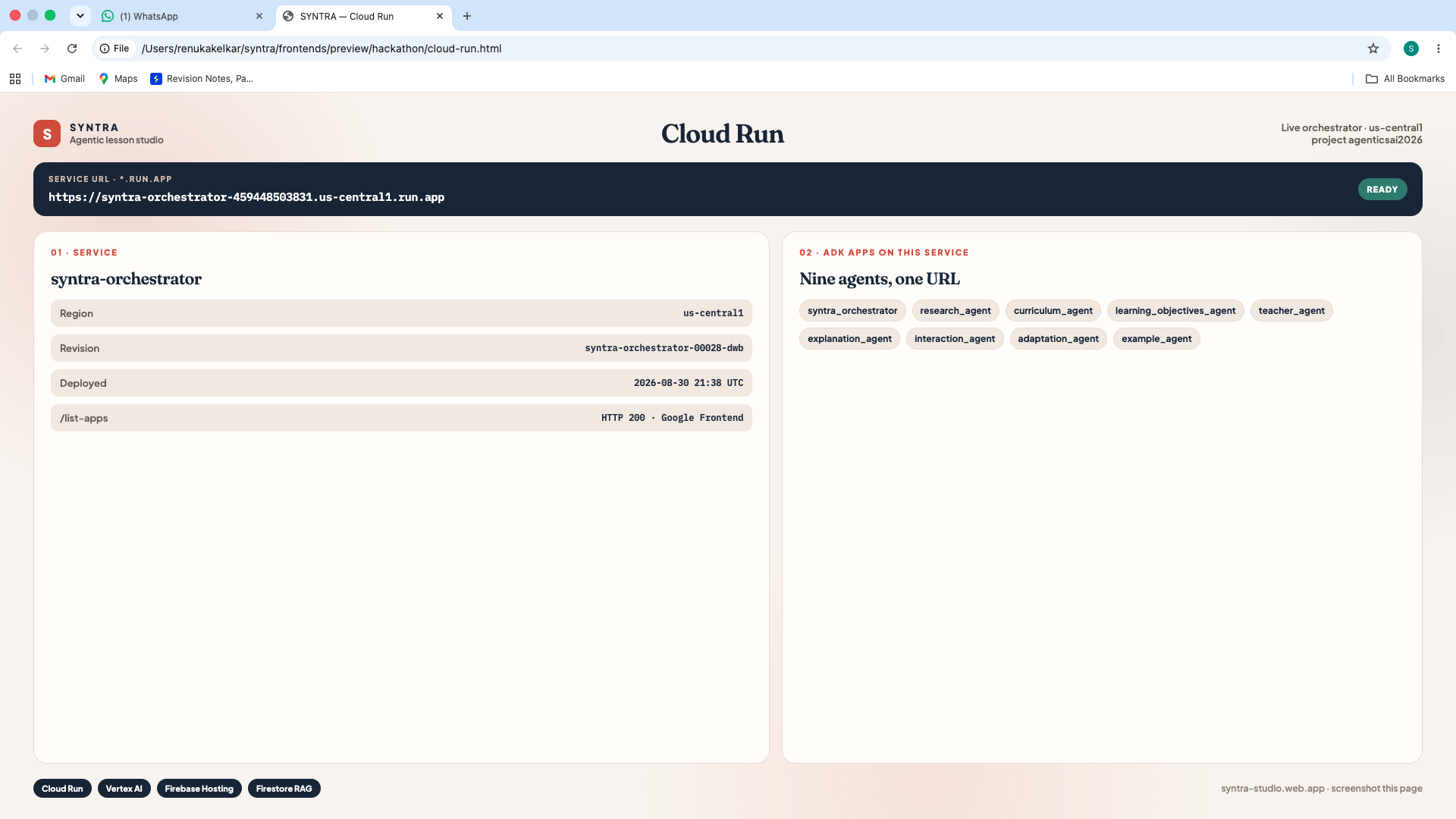
SYNTRA is being built with Python, Google ADK and Flutter, using a multi-agent architecture where each agent has a clearly defined responsibility. The Research Agent gathers information, the Fact Checker validates it, the Curriculum and Slide Agents structure the lesson, and the Assessment Agent creates ways to test understanding. RAG and vector databases provide additional context and knowledge retrieval.
Challenges we ran into
One of the biggest challenges was designing the agents so they collaborate effectively rather than duplicating each other's work. We also had to consider reliability, source quality, hallucinations and how to maintain consistency as information moves between agents. Building a useful orchestration layer while keeping the architecture modular was another major challenge.
Accomplishments that we're proud of
We're proud to have developed SYNTRA around a genuine multi-agent architecture rather than treating AI as a single chatbot. We have established specialised agents, implemented RAG and vector database capabilities, and created an architecture that can be expanded with additional teaching and assessment capabilities.
What we learned
We learned that building an agentic system requires much more than connecting multiple AI models. Clear task boundaries, orchestration, context management, reliable retrieval and validation are essential. We also learned that AI works best in education when it augments human expertise rather than attempting to replace it.
What's next for SYNTRA
Next, we want to improve agent collaboration, expand personalisation and strengthen evaluation and fact-checking. We also plan to develop the student-facing experience, improve lesson generation and introduce stronger observability and AI safety measures. Ultimately, SYNTRA aims to become a complete AI teaching ecosystem where the human teacher remains at the centre, supported by a team of specialised AI agents.
Built With
- firebase
- flutter
- google-adk
- google-cloud
- python

Log in or sign up for Devpost to join the conversation.