Inspiration
I started SYNTRA with a simple question: what happens when an organization has too many operational signals and not enough time to understand them?
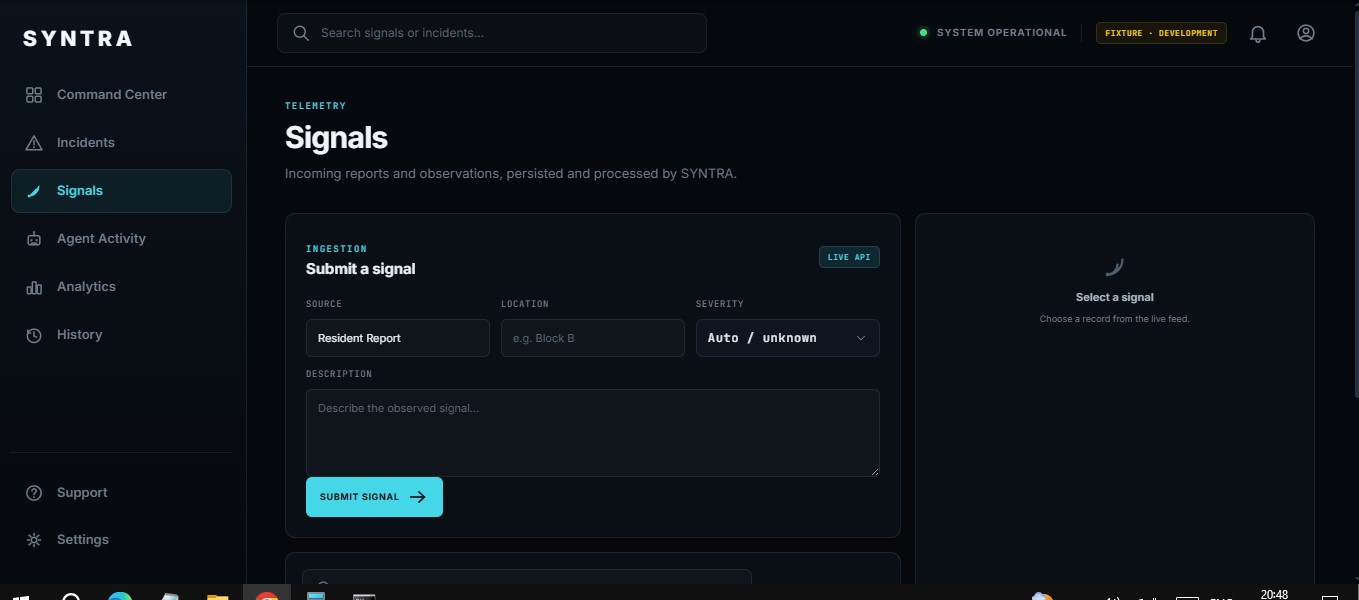
A resident report, a sensor reading, and a system alert may look like separate events, but together they can describe the same developing incident. I wanted to build something that could connect those signals, understand their significance, and help an operator decide what to do next.
That became SYNTRA.
My goal was not to build an AI system that blindly takes control. I wanted AI agents to handle the repetitive reasoning and coordination work while keeping a human responsible for consequential decisions.
What it does
SYNTRA is an operational intelligence platform built around a five-stage agent workflow:
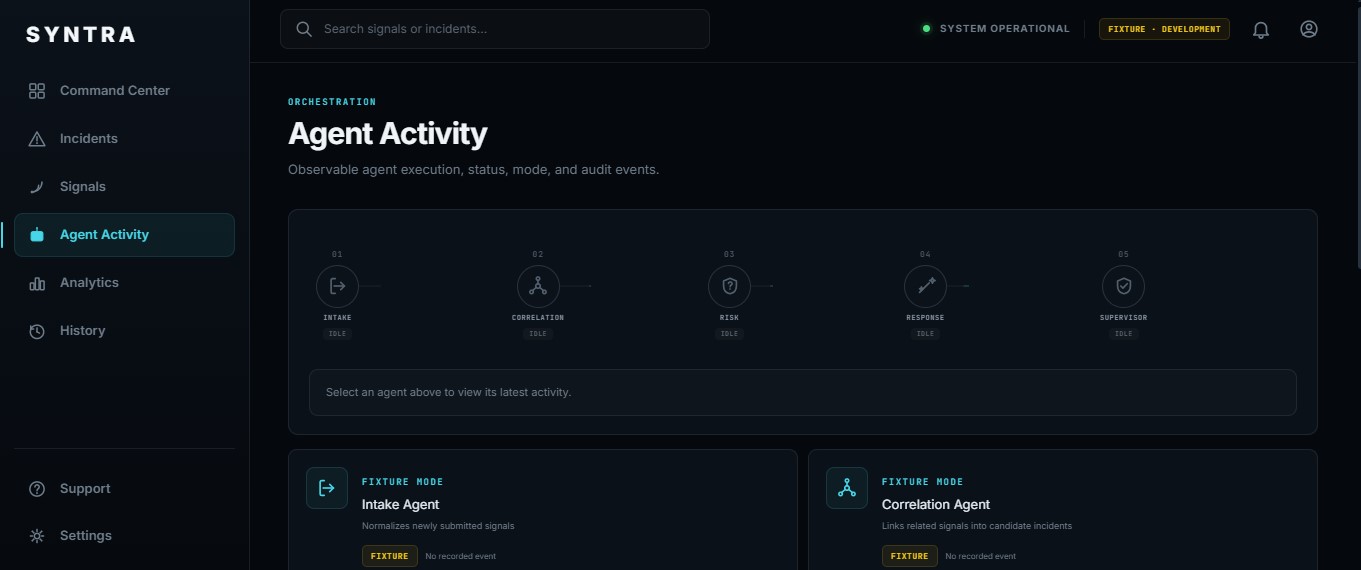
Intake → Correlation → Risk → Response → Supervisor
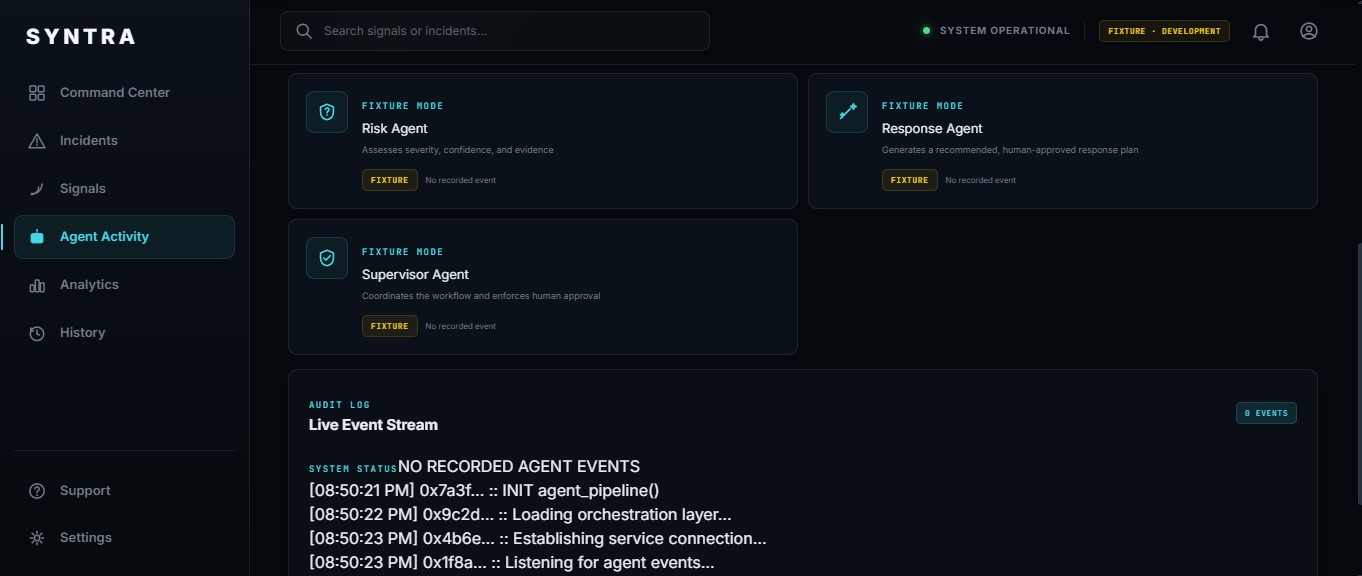
The Intake agent normalizes incoming signals such as reports, sensor readings, and system alerts. The Correlation agent looks for related signals, the Risk agent assesses their severity, and the Response agent produces recommended actions.
When an action requires authority beyond the configured operator policy, SYNTRA stops and asks for human approval instead of acting autonomously.
This creates a clear chain from raw signal to incident, risk assessment, recommended response, and human decision.
How I built it
I built SYNTRA as a full-stack application using React and Vite for the frontend and Python with FastAPI for the backend. SQLite provides persistent operational storage, and the agent workflow is built around AWS Strands Agents.
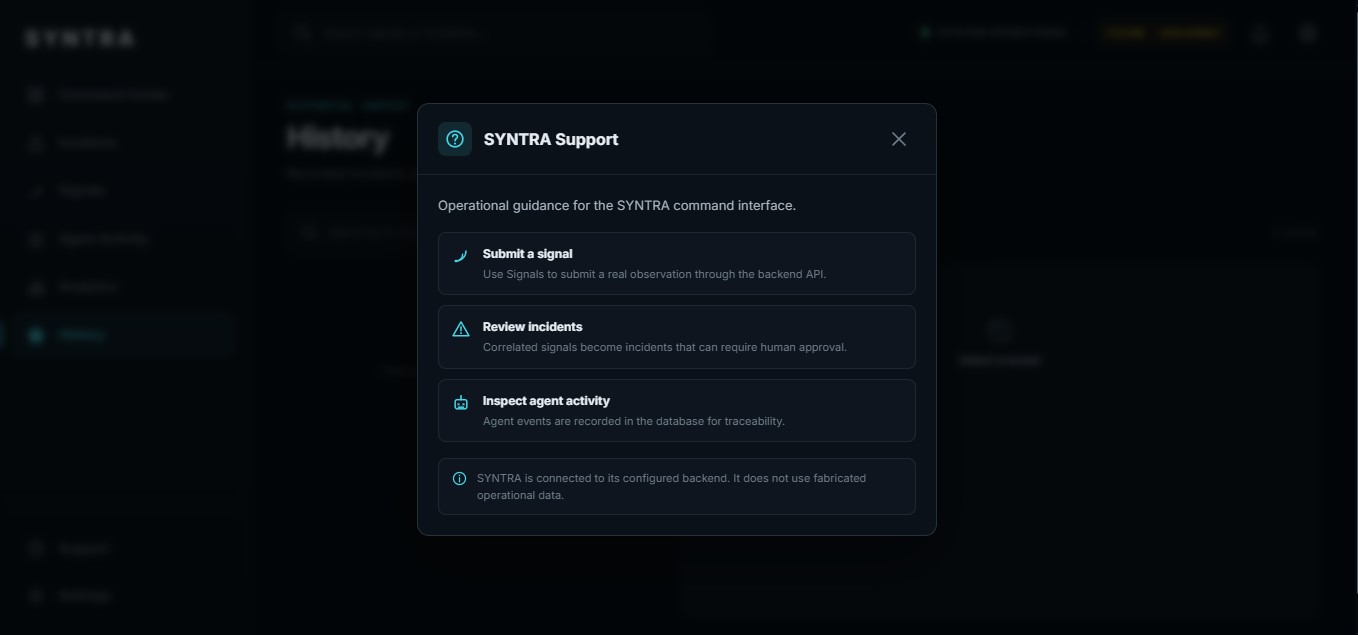
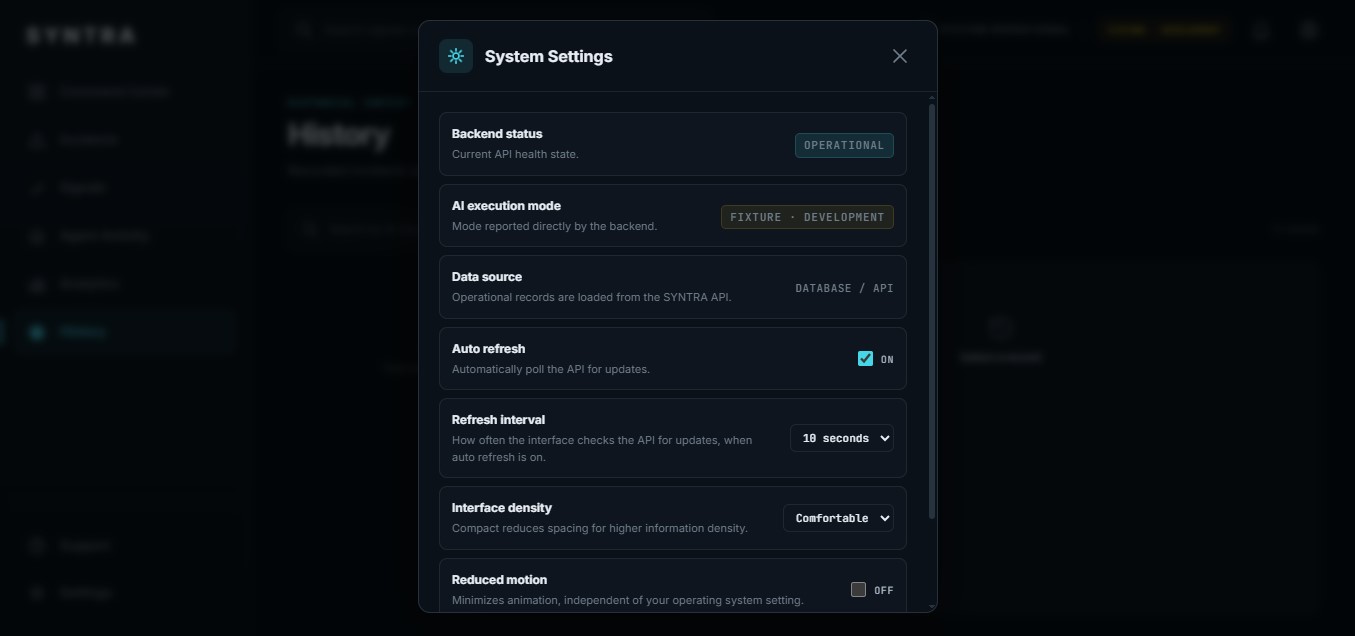
I also added a fixture/development mode so I could reliably demonstrate the complete workflow without pretending that simulated data is real-world data or real AI output. The interface clearly identifies this mode.
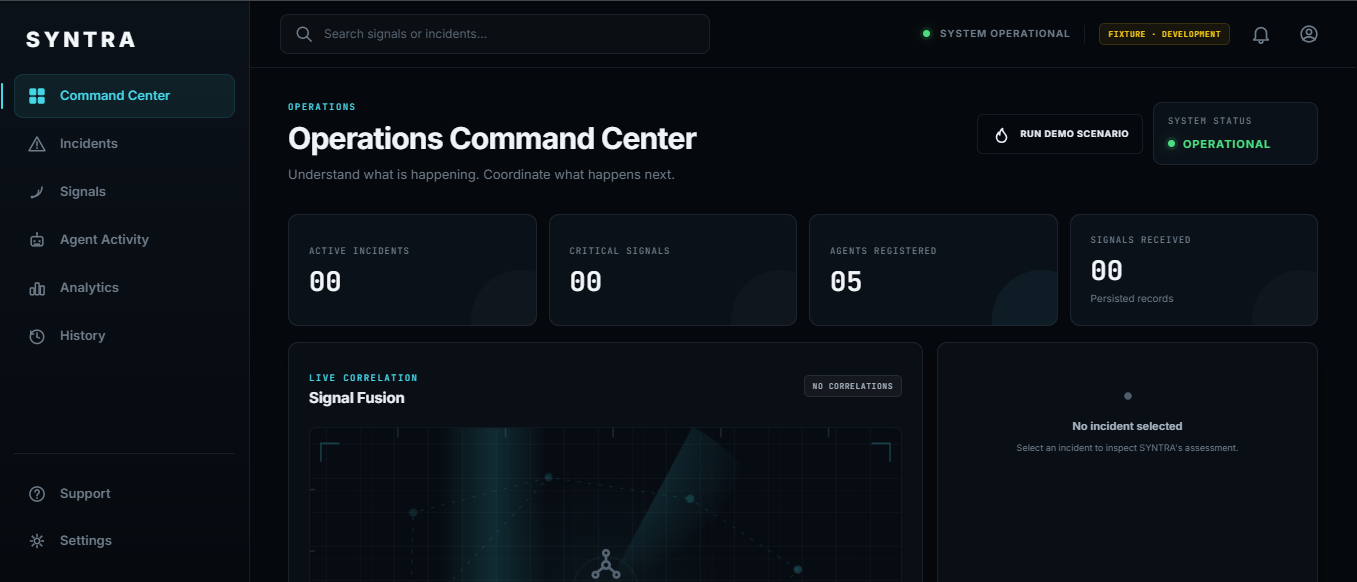
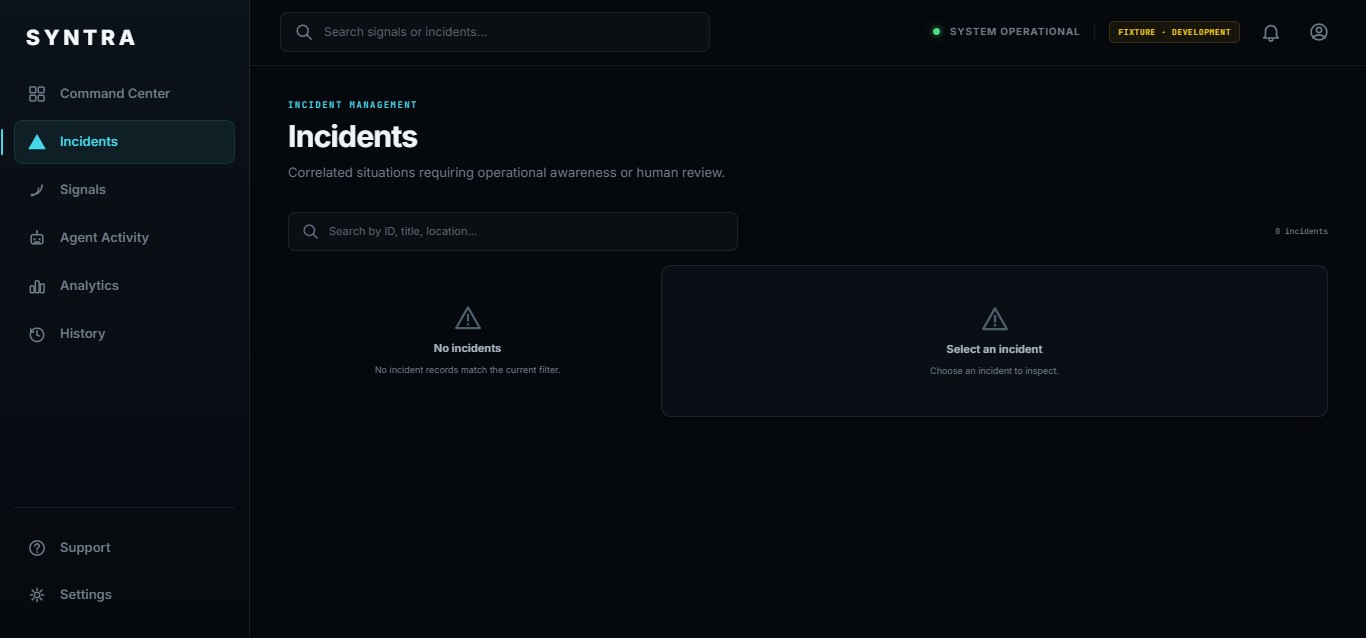
The frontend is designed as an operations command center where an operator can follow incidents, inspect correlated signals, see agent activity, review risk assessments, and make approval decisions.
Challenges I ran into
The biggest challenge was making SYNTRA feel like a real operational system instead of a dashboard filled with static demo information.
I had to make sure that signals were actually persisted, incidents were created from real relationships between signals, agent events belonged to the correct incident, and approval decisions respected the configured authority.
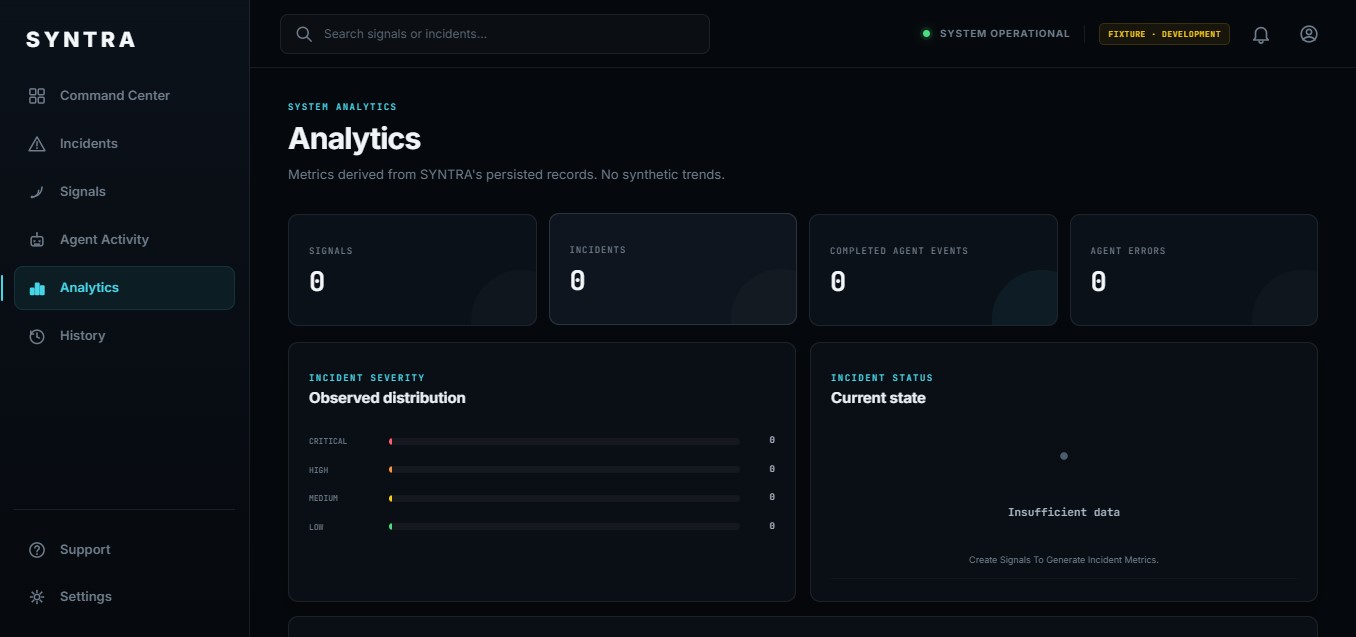
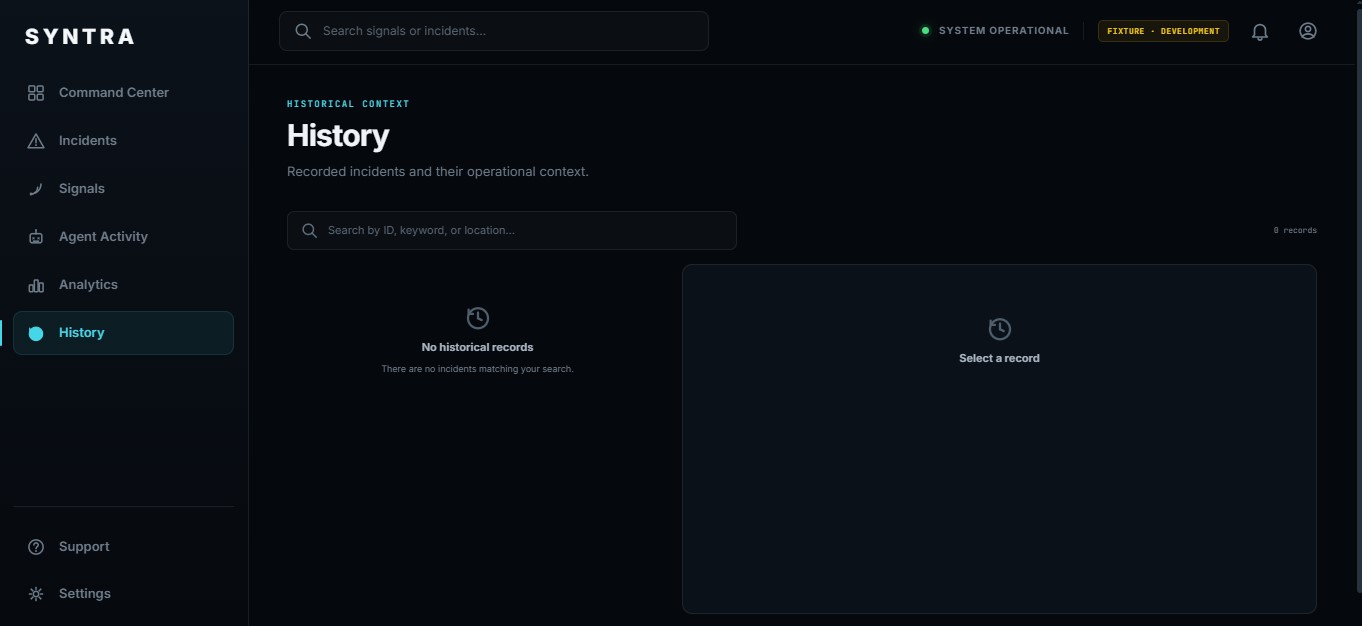
Another challenge was the interface. In an operational system, small details matter. Information needs to remain readable, related events need to be easy to follow, and the system should be honest when there is no data instead of filling the screen with fabricated activity.
Building the project alone also meant working across the frontend, backend, database, agent workflow, deployment, testing, and UI design.
Accomplishments I'm proud of
I am most proud that SYNTRA became a working end-to-end system rather than remaining a concept or a collection of UI screens.
A set of operational signals can enter the system, become correlated into an incident, receive a risk assessment, generate recommended actions, and reach a human approval decision.
I also built a one-click electrical incident scenario that creates real persisted signals and allows the complete workflow to be demonstrated consistently.
Most importantly, I made human oversight part of the workflow itself. SYNTRA does not treat human approval as an afterthought. It is a deliberate control point between AI recommendations and consequential action.
What I learned
Building SYNTRA taught me that the difficult part of agentic systems is not simply getting an AI model to produce an answer.
The harder problem is designing everything around the model: how information moves between agents, how state is persisted, how decisions can be explained, how failures are handled, and where a human should remain in control.
I also learned that a good operational interface should show both what the system knows and what it does not know. That is why SYNTRA avoids presenting fabricated operational data as if it were real.
What's next for SYNTRA
My next step is to connect SYNTRA to more real-world data sources and expand the types of incidents it can detect and correlate.
I would also like to improve its geospatial context, add stronger authentication and role-based authorization, and connect it to real operational systems.
The long-term goal is to make SYNTRA a practical coordination layer where AI agents help people understand complex situations and act faster, without removing humans from the decisions that matter.
Built With
- amazon-web-services
- fastapi
- javascript
- python
- react
- vite

Log in or sign up for Devpost to join the conversation.