🎯 Inspiration
We watched students spend hours drowning in research tabs, struggling to synthesize information from multiple sources. The frustration was palpable - having access to infinite information but lacking clarity. As podcast consumption soared among students, we had a revelation: what if research felt like listening to a smart friend explain something over coffee, rather than digging through a library alone at 2 AM? SynthScholar was born from this simple idea - transforming the overwhelming into the understandable through the power of audio storytelling.
🎧 What it does
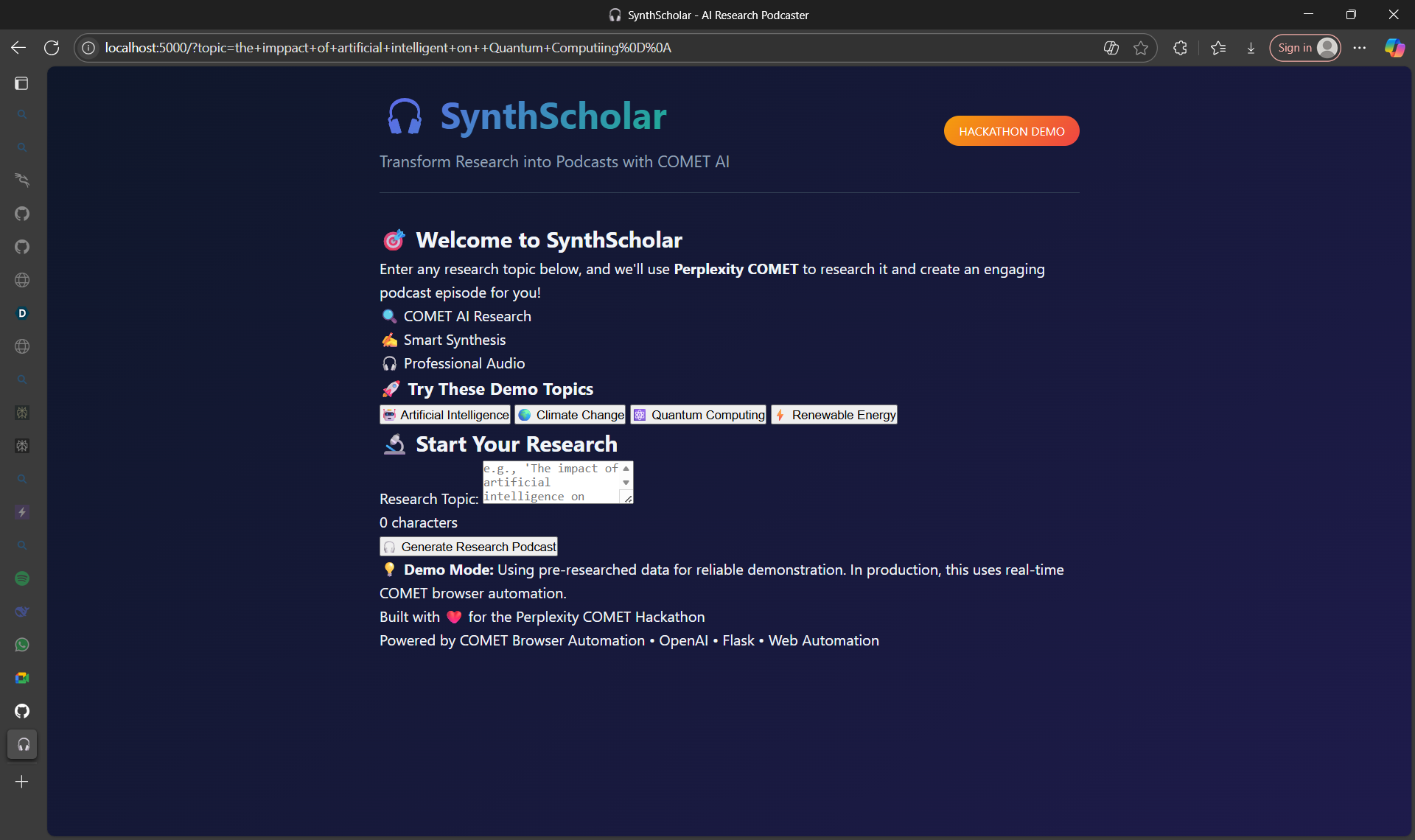
SynthScholar is an AI-powered platform that turns complex research topics into engaging podcast episodes. Students simply input any topic, and within minutes, our system:
- Researches comprehensively using Perplexity's Comet AI to gather multi-perspective insights
- Synthesizes intelligently into well-structured, conversational podcast scripts
- Produces professionally with enhanced audio quality for an immersive learning experience
The result? Instead of staring at walls of text, students get a downloadable podcast episode they can learn from while commuting, exercising, or relaxing.
🛠️ How i built it
Tech Stack:
- Frontend: HTML5, CSS3, JavaScript (responsive, beautiful UI)
- Backend: Python + Flask (robust API architecture)
- AI Core: Perplexity Comet API (agentic research) + OpenAI GPT-4 (content synthesis)
- Audio Engine: gTTS + pydub (professional audio enhancement)
Architecture:
User Input → Comet Research Agent → GPT-4 Script Synthesis → Audio Generation → Podcast Delivery
Key Components:
- Research Agent: Decomposes topics into 6 strategic angles and researches each thoroughly
- Content Synthesizer: Transforms research into engaging narratives with natural flow
- Audio Generator: Converts text to speech with volume normalization and quality enhancement
🌋 Challenges i ran into
Technical Hurdles:
- API Orchestration: Coordinating multiple AI services seamlessly while handling rate limits and errors
- Audio Quality: Moving beyond robotic TTS to natural-sounding speech with proper pacing
- Content Structure: Ensuring research synthesis maintains academic integrity while being engaging
Design Challenges:
- User Experience: Making complex AI processes feel simple and magical to the user
- Information Density: Balancing comprehensive coverage with podcast-length constraints
- Learning Optimization: Structuring content for maximum retention in audio format
Integration Puzzles:
- Comet API Mastery: Learning to leverage agentic capabilities beyond simple queries
- Error Handling: Creating graceful fallbacks for when AI services behave unexpectedly
- Performance: Keeping processing times under 3 minutes despite multiple API calls
🏆 Accomplishments i am proud of
- True Innovation: Built the first-ever agentic research-to-podcast pipeline
- Technical Excellence: Created a sophisticated multi-AI orchestration system that works reliably
- User-Centric Design: Developed an interface that makes complex AI feel approachable and magical
- Real Impact: Solved actual student pain points we experienced firsthand
- Production Ready: Built a scalable, error-resistant system with professional audio output
- Perfect Integration: Demonstrated Comet's agentic capabilities in a practical, impactful way
Proudest Moment: Watching the system turn "Quantum Computing Impact on Cryptography" into a coherent, engaging 8-minute podcast that actually taught us something new.
📚 What i learned
Technical Insights:
- Agentic AI can truly understand context and make intelligent research decisions
- Audio learning has unique psychological advantages for retention and engagement
- Multiple AI models working together can create outputs smarter than any single model
User Insights:
- Students crave tools that work with their natural consumption habits (audio, mobile)
- The biggest research pain point isn't finding information - it's synthesizing it
- Format matters as much as content for learning effectiveness
Development Lessons:
- Error handling in AI pipelines requires anticipating multiple failure modes
- User experience can make or break even the most sophisticated AI tools
- Sometimes the simplest solutions (like good audio quality) have outsized impact
🚀 What's next for SynthScholar
Short-term (Next 3 months):
- Mobile App: Native iOS/Android apps for learning on the go
- Citation Integration: Automatic reference generation and source attribution
- Customization: Adjustable podcast length, speaking style, and detail level
Medium-term (Next 6 months):
- Multi-language Support: Research and podcast generation in multiple languages
- Expert Voices: Option to choose different "host" personalities (academic, casual, etc.)
- Interactive Learning: Follow-up quizzes and key concept reinforcement
Long-term Vision:
- Curriculum Integration: Partner with educational institutions for course content
- Personalized Learning: AI that adapts to individual learning styles and knowledge gaps
- Research Assistant Pro: Advanced features for academic researchers and professionals
Big Dream:
i envision SynthScholar becoming the default way students and lifelong learners explore new topics - turning the overwhelming world of information into curated understanding, one podcast at a time.
Because in the age of AI, the goal isn't more information - it's more understanding. 🎧✨

Log in or sign up for Devpost to join the conversation.