-
-
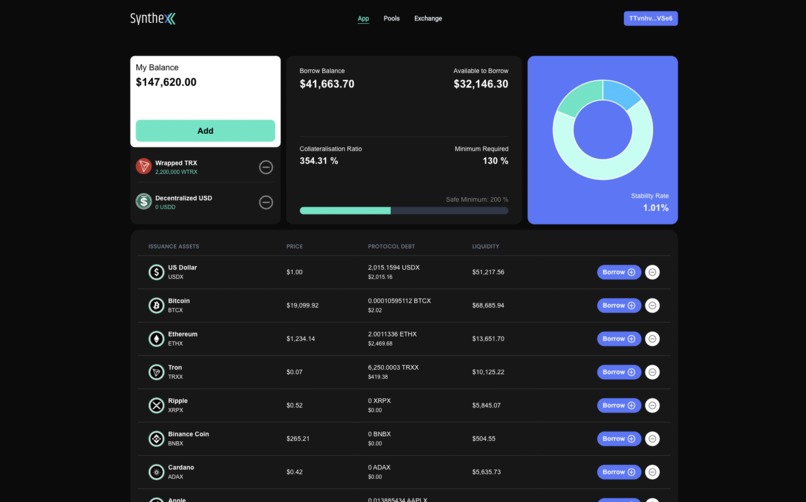
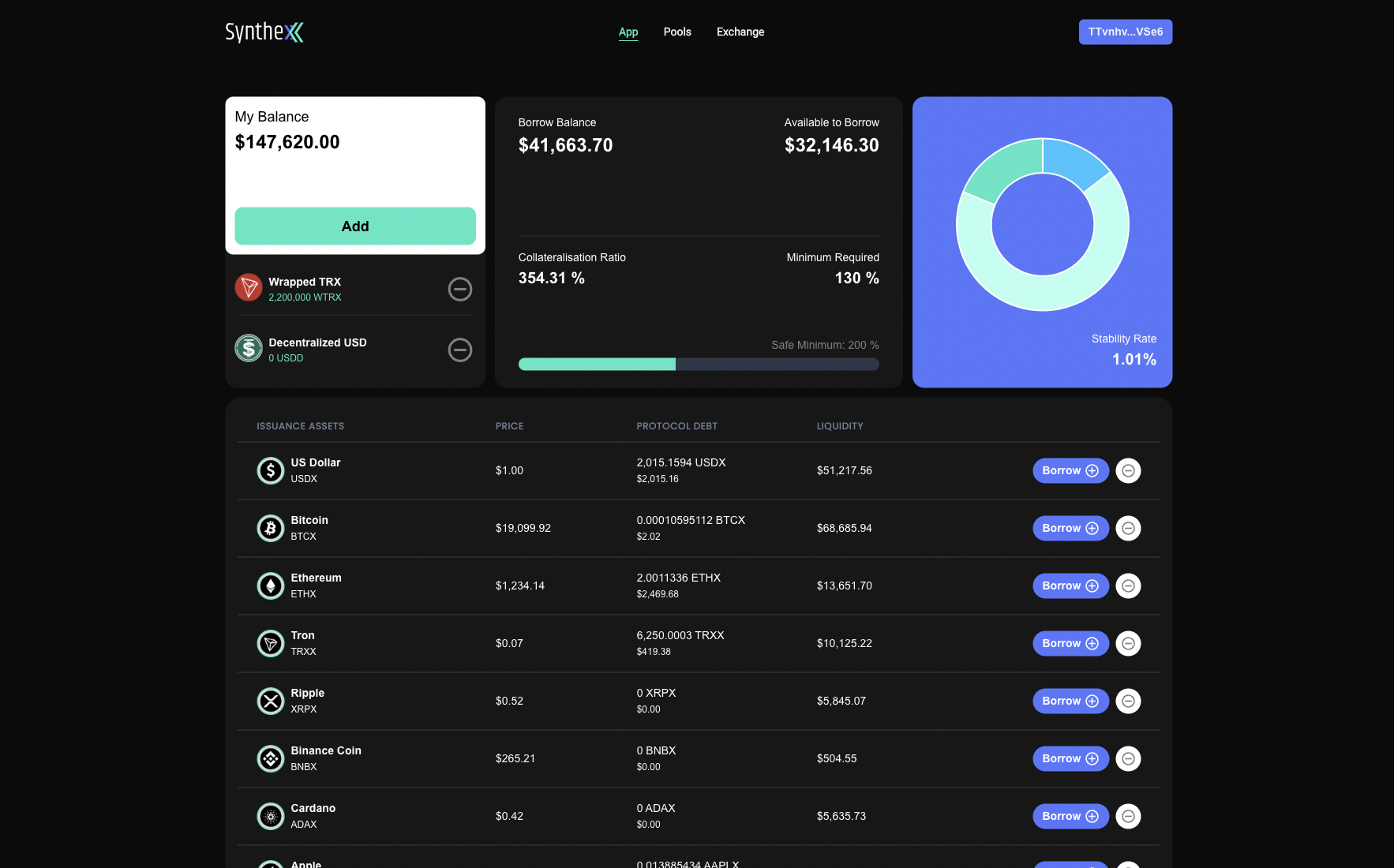
App Dashboard: Deposit Collateral, Issue Synths
-
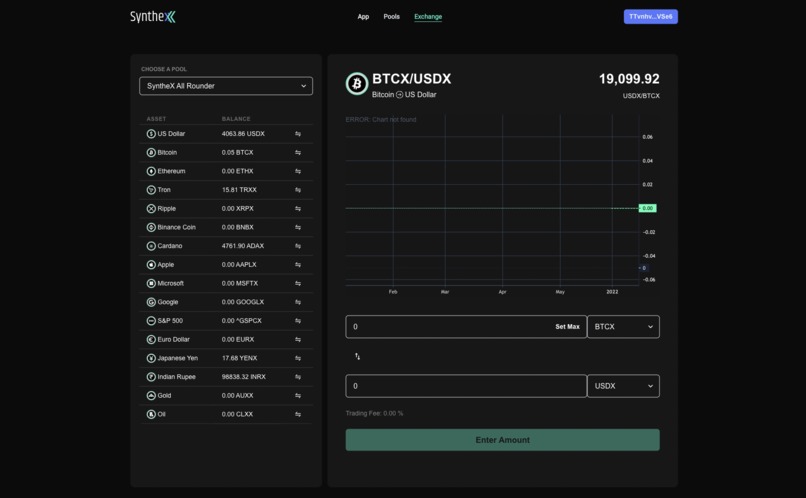
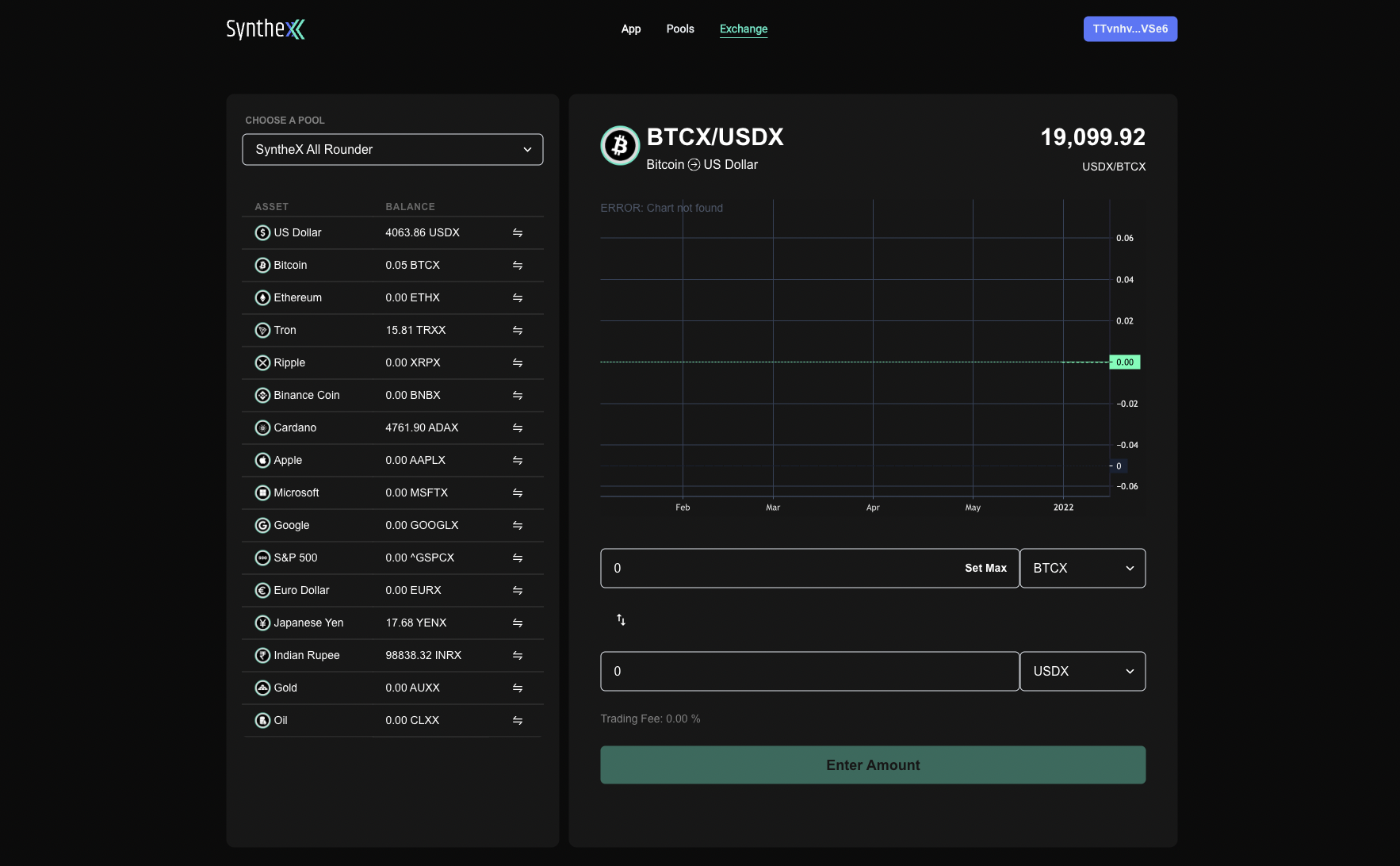
Exchange: Choose a trading pool and trade assets
-
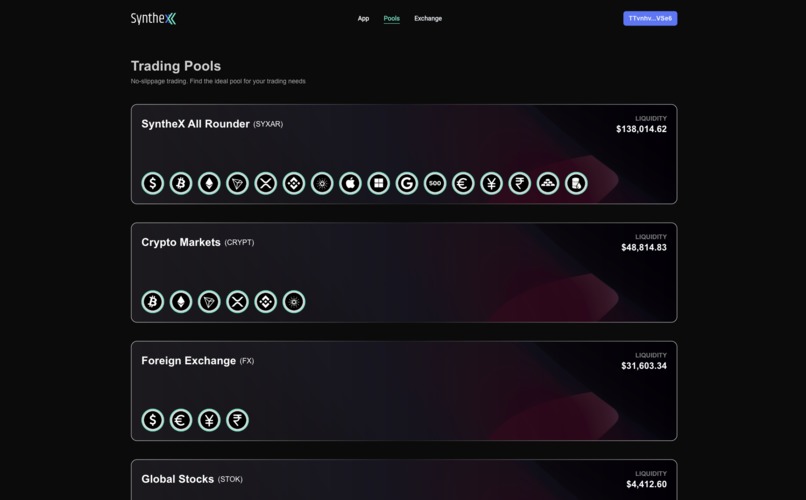
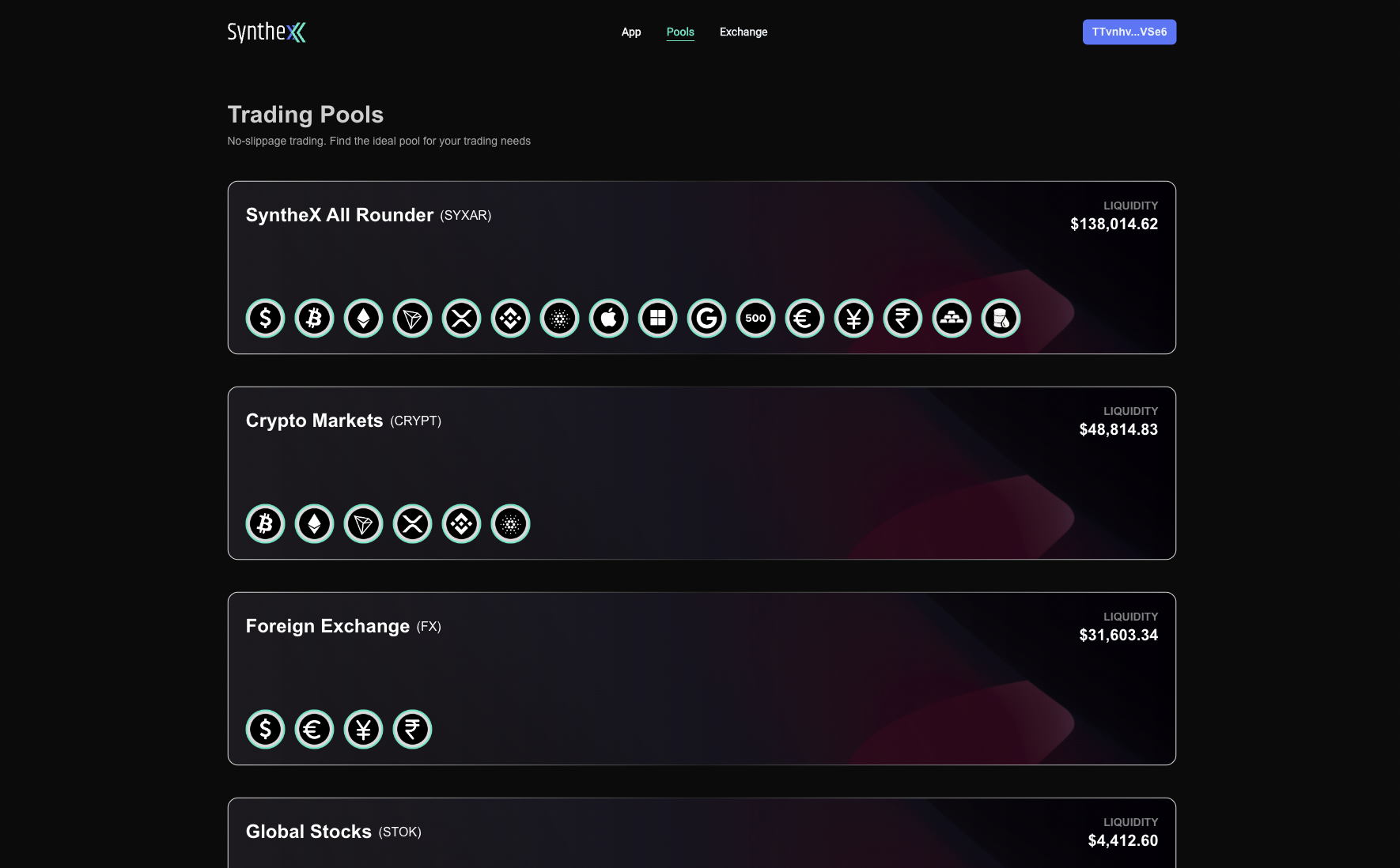
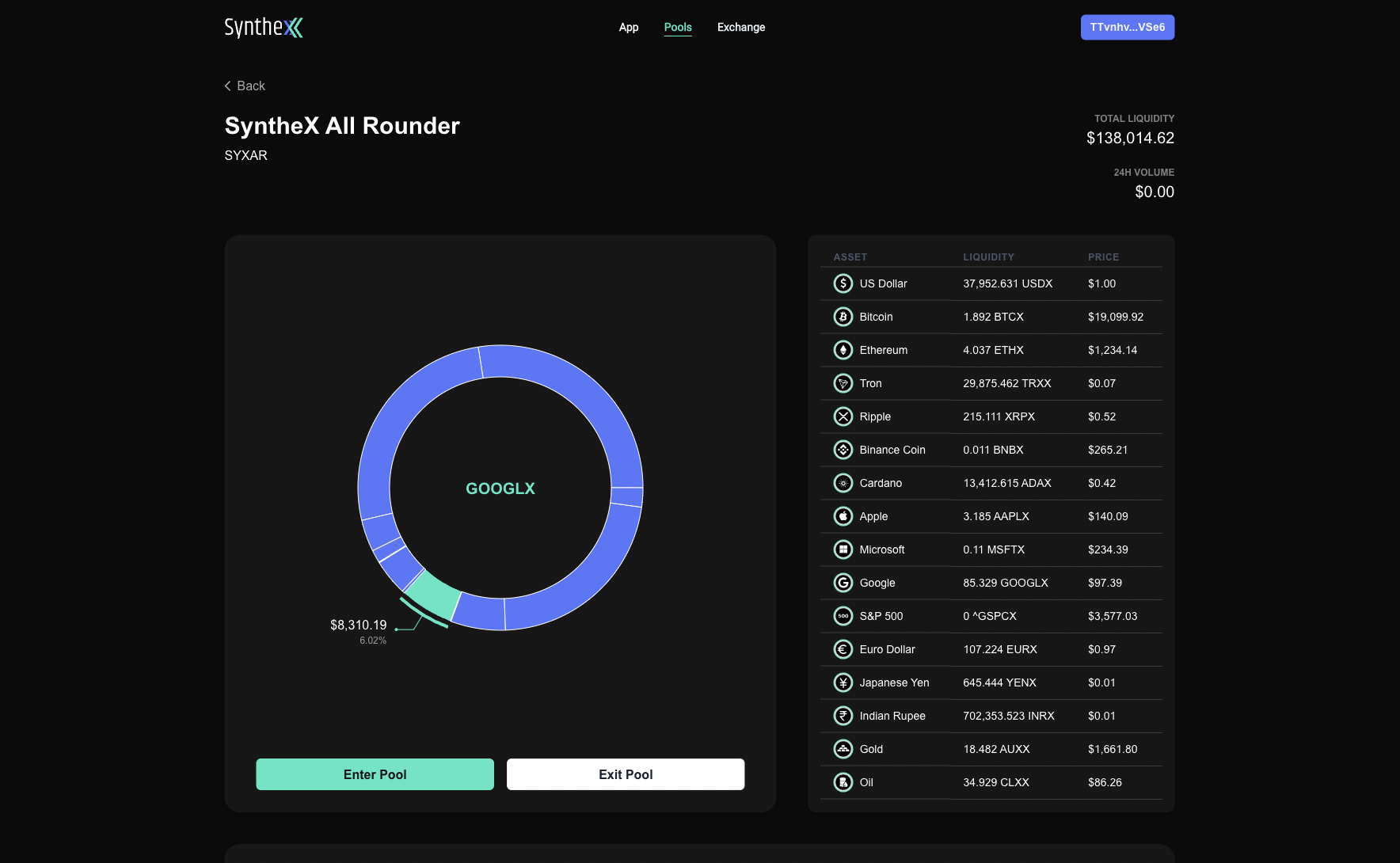
Trading Pools: Different trading pools to enter/exit
-
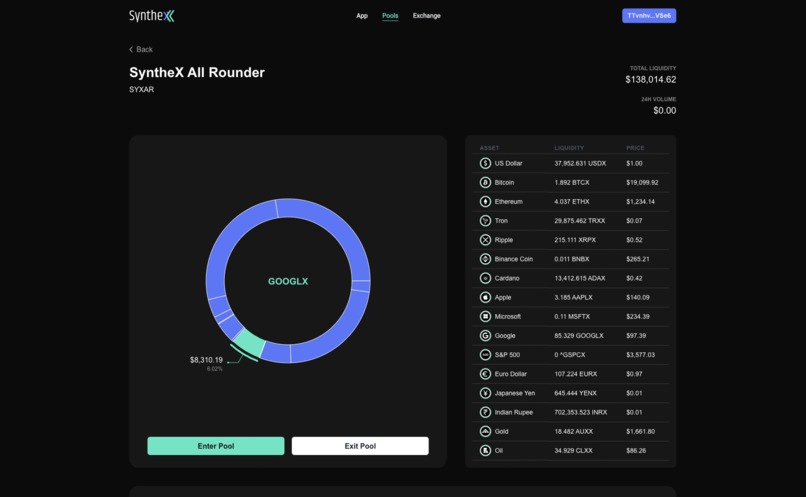
Trading Pool Analytics
-
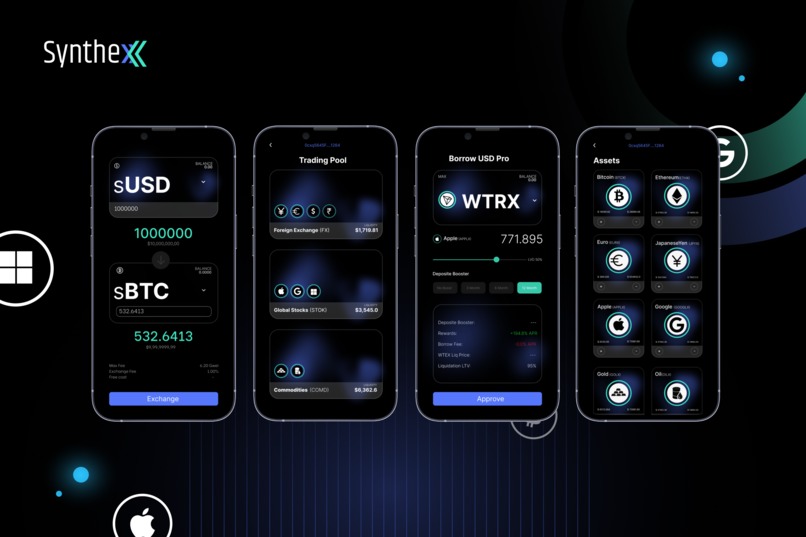
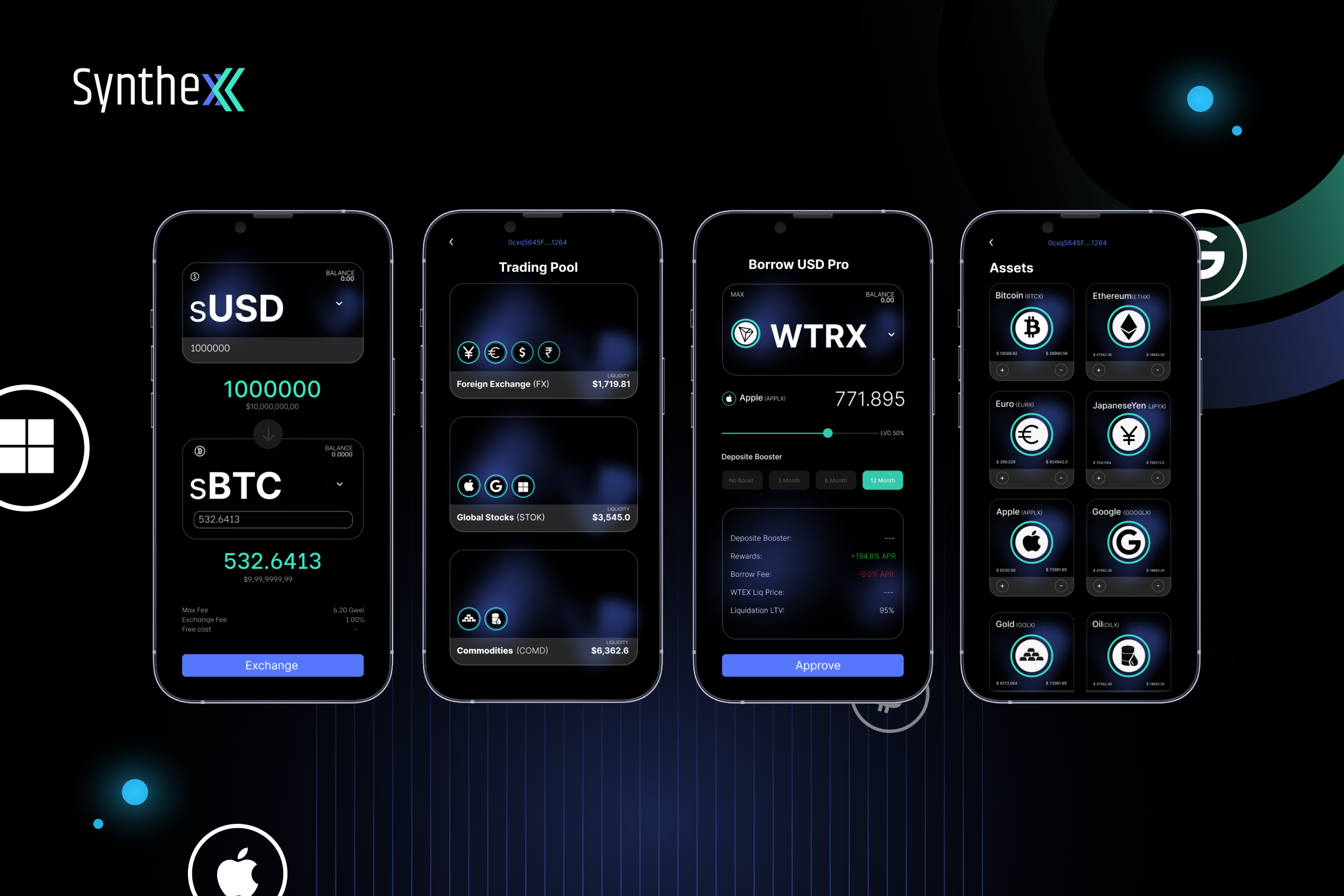
Mobile Mockups
Inspiration
The inspiration behind this project came from observing the limitations faced while trading on-chain. First, Liquidity Pools have not enough incentive to provide liquidity. As DEXes are dependent on Liquidity Pools, they're at risk of impermanent loss. This causes the DEXes to have little liquidity, which leads to high slippage on (1-5%), even making large trades impossible. Second, there are limitations on the range of assets that can be traded. The current system can only trade digital assets that were created on the same blockchain. Having cross-chain assets exposes users to bridge exploits and several security risks. Reserve-backed assets such as Tether (USDT) and USD Coin (USDC) are centralized and risk being seized by the government or being insolvent.
So we decided to create a protocol that would allow users to issue their own derivative assets, which is backed by native tokens, and users would be able to trade these tokens without any slippage. We believe that synthetic assets will be a game-changer for the DeFi Ecosystem as they are more flexible than any financial instrument. TRX and USDD would be used as collateral for issuing derivatives in order to access capital without having to sell their underlying asset.
What it does
SyntheX is a synthetic asset issuance and trading protocol that brings multi-chain assets ($BTC, $ETH), stocks ($AAPL, $MSFT), forex ($EUR, $YEN, $INR), indices, commodities, and much more to Tron’s DeFi ecosystem, bridging the gap between the real world assets and the DeFi ecosystem. It allows traders to gain exposure to multiple assets by issuing synthetic equivalents backed by TRON and USDD, with unlimited liquidity.
With Synthex, traders can also create debt pools to enable trading, or margin trading with leverage upto 25x. Synthex offers a variety of trading pairs that are as simple as entering the number of units you wish to purchase, alongside your purchase price. Trades under debt pools never have slippage and always have infinite liquidity, allowing users to place their trades exactly where they want them.
Synthex shall enable:
Assets overcollaterizated by TRON and USDD
No slippage trading of issued assets ($BTC <-> $ETH) in a debt pool
Multiple types of debt pools based on use-case (forex, commodities, futures, etc)
20+ Foreign currencies ($EURO, $YEN, $INR, $CAD, and much more) overcollaterized by TRX + USDD
Futures trading LONG/SHORT (upto 25x leverage)
The protocol will also provide users with access to a large selection of cryptocurrencies and other assets, allowing them to diversify their portfolios while maintaining all of their funds in one place.
Foreign Currencies
- Support for 20+ foreign currencies: USD, INR, EUR, YEN, CAD, etc
- Global payments and remittances: One of the most obvious uses for global payments is to allow people to send payments in their native currency instead of having to use intermediary currency like the US dollar or Euro
Stocks and Commodities
- Bridge to real-world assets
Financial Instruments
- Exposure to traditional finance (Indices, CFDs, CDPs)
DeFi derivatives
- Cross chain assets without relying on bridges
- DeFi derivatives (such as Indices, CDPs, Futures)
How we built it
The Synthex protocol will be built on top of the TRON blockchain, which is known for its speed and very cost effective transactions. All transactions on the platform will be settled with smart contracts which means no third party has control over your funds while they are being exchanged. Synthex’s architecture includes two modules–
Asset Issuance
Allows issuance of tokenized assets backed by a pool of native collateral tokens. Synthex uses risk management metrics to determine the appropriate collateral ratio based upon the underlying market dynamics and volatility of the asset being issued.
Trading
Synthex's Trading platform provides a wide range of hybrid trading pools (aka debt pools) that enables no-slippage trading of synthetic assets. It will also provide its users with access to a wide range of trading tools, including charting software, price alerts and analysis reports. The platform is designed for both beginners and experienced traders, with features that make it easy to use. Synthex will also provide users with access to a large selection of cryptocurrencies and other digital assets, allowing them to diversify their portfolios while maintaining all of their funds in one place.
- Zero Slippage
The platform guarantees that all orders are executed at the price you set without any slippage, and is designed to provide the most efficient way to trade cryptocurrency pairs with minimal fees.
- Custom Trading Pools
The platform allows creation of custom trading pools based on use cases for any asset in the market. You can create multiple pools for different assets and then enter them easily at one time.
- Wide Range of Assets
The trading platform has a wide range of assets that users can trade in, including stocks, futures and forex, including major cross-cryptocurrencies like BTC, ETH, LTC and BCH as well as fiat currencies like USD, EURO and JPY. You can also trade gold and silver through this platform.
- Conditional Orders
We are solving the liquidity problem by introducing an order matching engine which operates on a conditional trading principle while still allowing all assets in SyntheX to be traded against each other with conditions– unlike current exchanges do. Synthex allows traders to place limit orders, stop losses and much more on their trades so they can set buy or sell prices at a particular conditional amount rather than just trading all at one and giving a percentage profit margin as most other trading platforms do.
- Futures Trading
Synthex allows traders to trade futures contracts, which is a type of derivative that allows them to buy or sell an asset at a specified price in the future. This strategy can be beneficial for people who want to trade commodities like gold or oil but don’t have enough money right now—they can still take advantage of price fluctuations by borrowing against their future income.
Architecture
Issuance
To issue new tokens, users must provide collateral in the form of native tokens (USDT or TRX). The Collateral Manager contract tracks how much collateral each user has. When the user supplies collateral, they receive a proportional number of cTokens that can be used for farming rewards. The Debt Manager contract can also issue and destroy cTokens based on requests from token holders.
Parameters:
- Collateral Ratio: (130-200%)
Against the value of collateral, user should be able to issue tokens with minimum collateralization ratio
- Safe Collateral Ratio: (200-500%)
This factor makes sure that the user's position is initially safe from liquidation.
- Liquidation Reward: (5-10%)
Reward for liquidators to execute the trade

Exchange
Exchange of tokens is enabled only in particular trading pools (aka debt pools), which are of two types:
Issuer Collateral Pool (icPool) This cPool consists of tokens only the issuers individual debt
Multi-Issuer Collateral Pool (mcPool) This cPool is made of up multiple participants
SyntheX enables anyone to create synthetic assets and trading pools. They can use their own assets or choose from a wide range of pre-made assets.
Stability
Synthex’s system paramters makes sure the generated token’s prices will gradually stabilize. In order to maintain the stability of the generated tokens, the Synthex assets has two factors that constantly play on the pricing and supply:
Savings Rate
The Saving Rate is a yield for holding generated assets, which is funded directly from the Fee-Reserve and Treasury. If the rewards for holding assets increase, then demand for those assets will increase as well. The saving fee rate can be adjusted to control the supply of generated assets.
Stability Rate
The stability fee rate can be adjusted to control the supply of generated assets. If the fee rate is set high, fewer people will be interested in taking out loans, so the supply of generated assets will decrease. If the fee rate is set low, then more people will be interested in taking out loans and the supply of generated assets will increase.
Challenges we ran into
Testing contracts with tronbox was challenging, but we were able to get help from tron team.
Accomplishments that we're proud of
We were able to develop and thoroughly test the application on TRON within the hackathon period
What we learned
Tron unique dPoS architecture and accounts model
What's next for synthex
- Enabling leverage and limit order trading
- Strategies and Fund Management
- Security Audit and Mainnet Launch by Q1 23
Built With
- express.js
- mongodb
- nextjs
- react
- solidity
- tronbox
- trongrid


Log in or sign up for Devpost to join the conversation.