-
-
main
-
main2
Inspiration
The inspiration for Synthetica came from a deep interest in cybersecurity and the critical need for robust, accessible tools that can enhance the efficiency and efficacy of cyber threat intelligence analysts. In today's digital age, where cyber threats are increasingly sophisticated and pervasive, the ability to rapidly interpret complex datasets and derive meaningful insights is paramount. Synthetica was envisioned as a solution to bridge the gap between raw data and actionable intelligence, facilitating a more informed and proactive approach to cyber defense for agencies like the CIA, NSA, and FBI and also big tech companies.
What it does
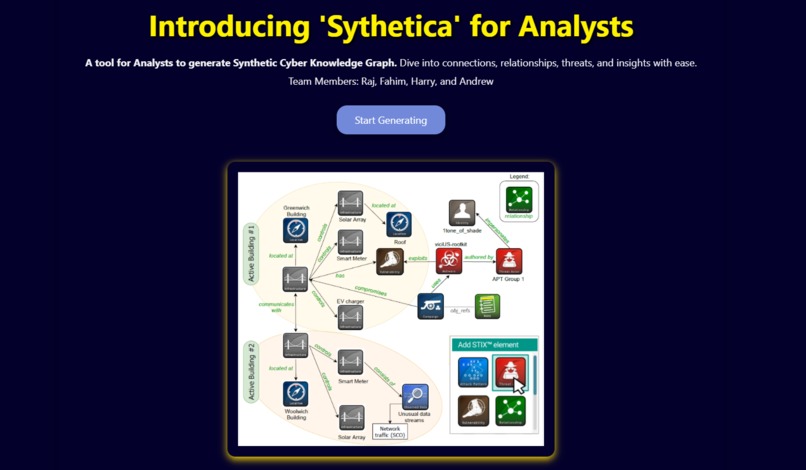
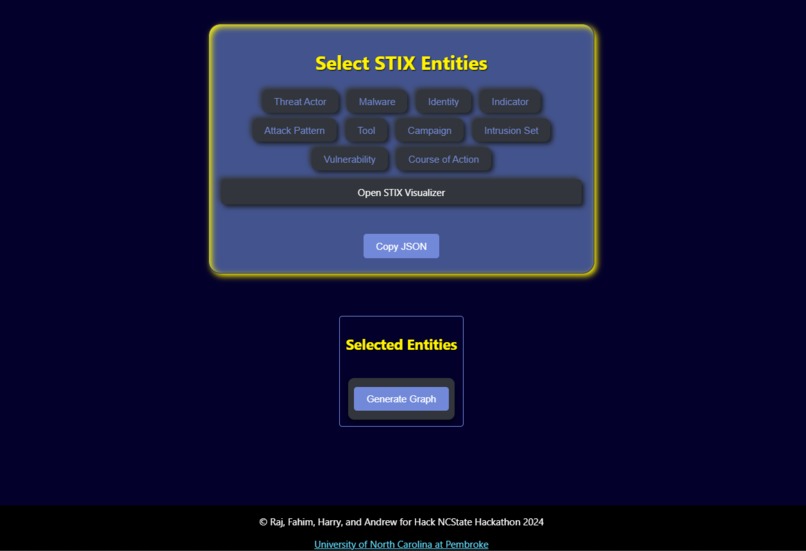
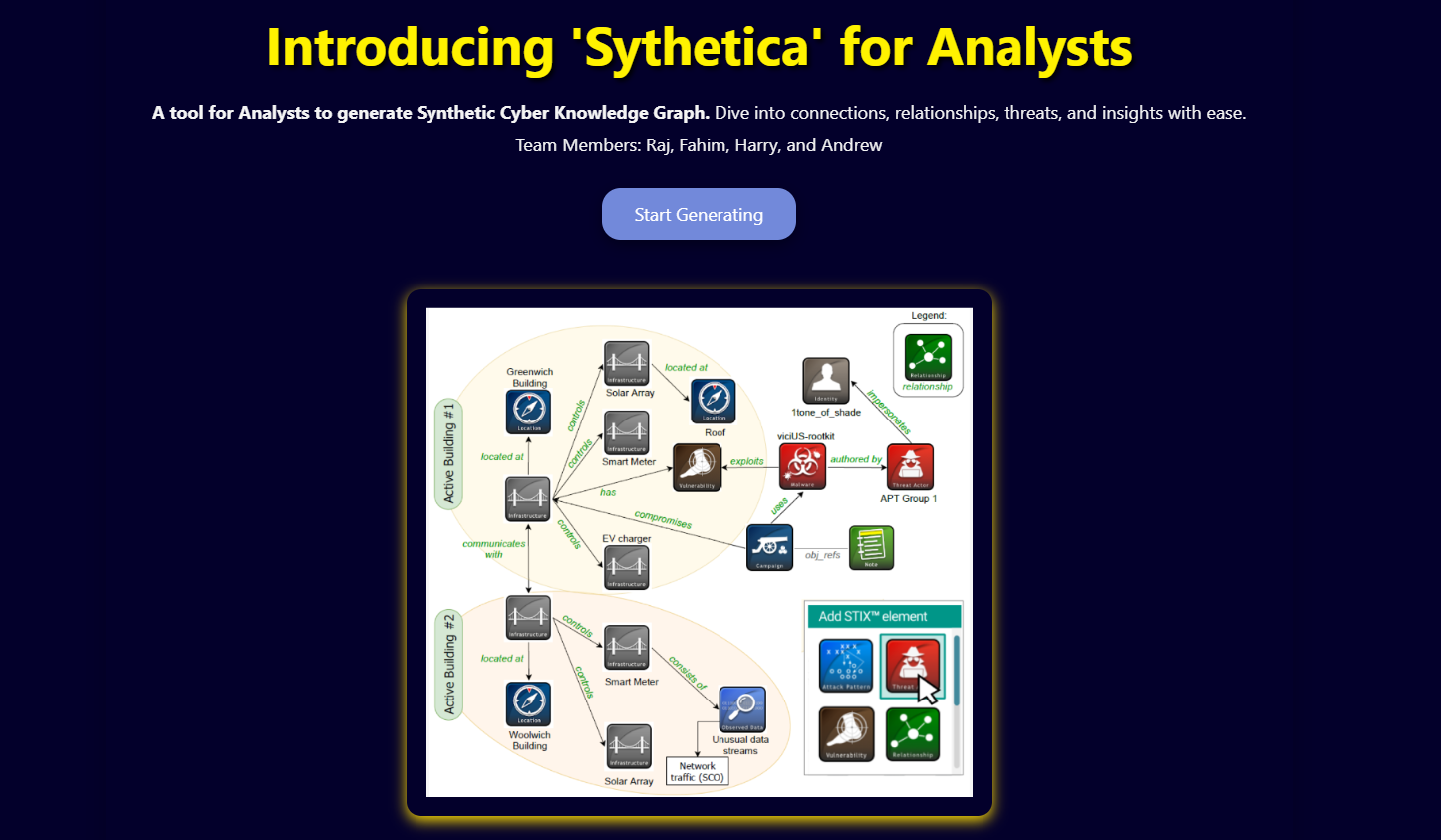
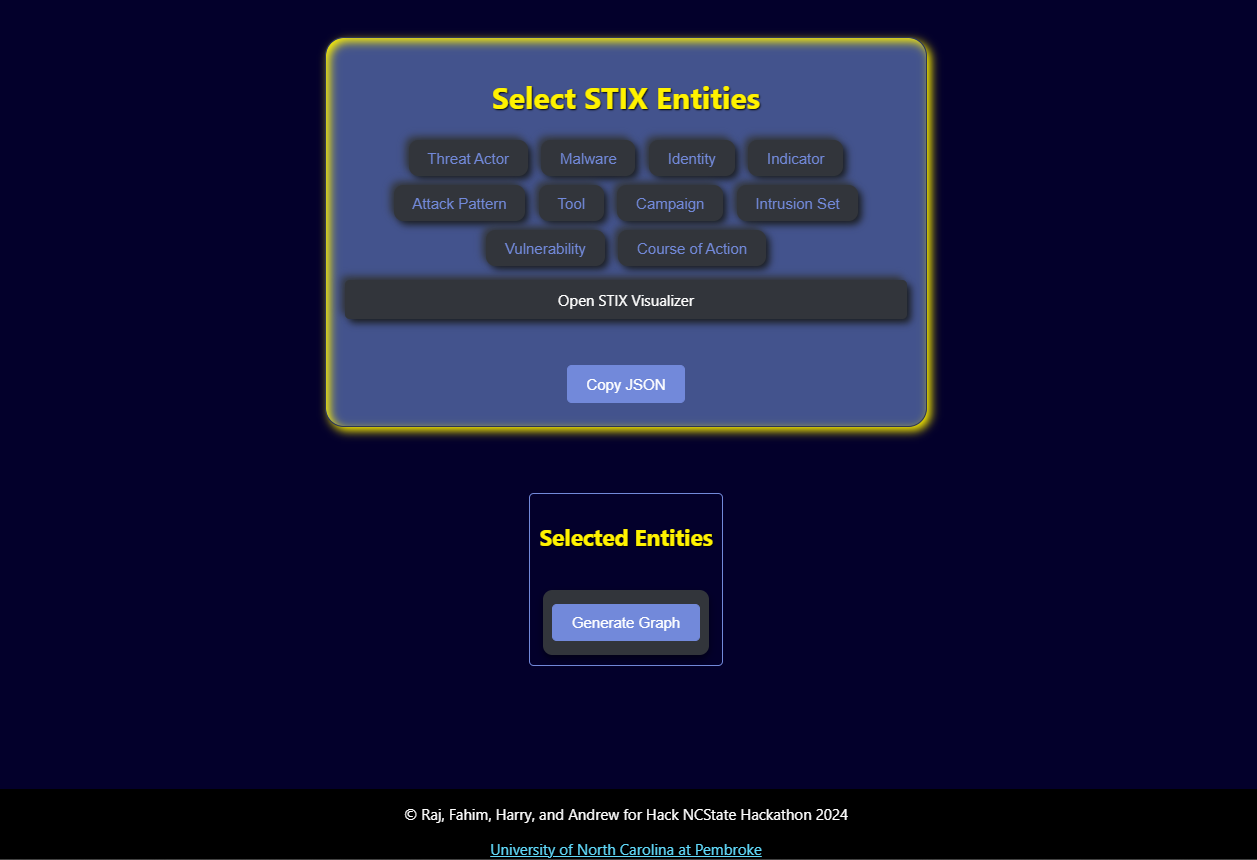
Synthetica leverages the power of STIX2 to create a dynamic, synthetic cyber knowledge graph that models threat data in an intuitive and interactive manner. It allows analysts to visualize connections between cyber threats, actors, and vulnerabilities in real-time, fostering a deeper understanding of the threat landscape. The application supports threat hunting, incident analysis, and strategic planning by providing a comprehensive platform for data exploration, pattern recognition, and hypothesis generation.
How we built it
We built Synthetica by integrating STIX2.1, an industry-standard language for cyber threat intelligence, with a Flask-based web application to ensure flexibility and ease of use. The backend, powered by Python, handles the logic for data processing, graph generation, and API interactions, while the frontend, developed with HTML, CSS, and JS presents a user-friendly interface for interaction with the knowledge graph. We emphasized modularity and scalability in our design to accommodate future expansions and updates.
Challenges we ran into
One of the major challenges was effectively modeling and visualizing complex threat intelligence data in a way that is both comprehensive and comprehensible to analysts. Also, one time trying to add more objects almost broke the code but we were able to fix it! Ensuring the real-time performance of the application while managing large datasets posed significant technical hurdles. Additionally, integrating STIX2.1 standards with our custom web application required meticulous attention to detail to maintain compliance and interoperability with existing cyber threat intelligence tools and frameworks.
Accomplishments that we're proud of
We are particularly proud of developing a functional, intuitive application that meets the real-world needs of cyber intelligence analysts. Overcoming the technical challenges to deliver a platform that not only visualizes but also enriches cyber threat data in a meaningful way is a significant accomplishment for our team. The positive feedback from initial users on its impact on their analytical workflows has been incredibly rewarding.
What we learned
Through the development of Synthetica, we deepened our understanding of cyber threat intelligence, data visualization, and the practical challenges faced by analysts in high-stakes environments. We learned the importance of user-centered design in developing tools for complex data analysis and the value of interdisciplinary collaboration in tackling cybersecurity challenges.
What's next for Synthetica!
The journey for Synthetica is just beginning. Our roadmap includes implementing AI and machine learning algorithms to predict and identify emerging threats based on historical and real-time data. We plan to expand our dataset and integrate more sources of threat intelligence, enhancing the application's comprehensiveness. Additionally, we aim to foster a community around Synthetica, encouraging feedback and contributions to evolve the platform further to meet the ever-changing landscape of cyber threats.
Built With
- css
- faker-library
- flask
- html5
- javascript
- python
- stix2
- vscode


Log in or sign up for Devpost to join the conversation.