Inspiration
Our project is inspired from the fact that there are many connections that exist between drugs and diseases that are very difficult to track without extesnive research. There are 20,000+ FDA-approved drugs and many are only tested for one disease even though they may have connections to others. Ie. Metformin: Originally a diabetes drug, now being actively studied for cancer, Alzheimer's, and aging.
What it does
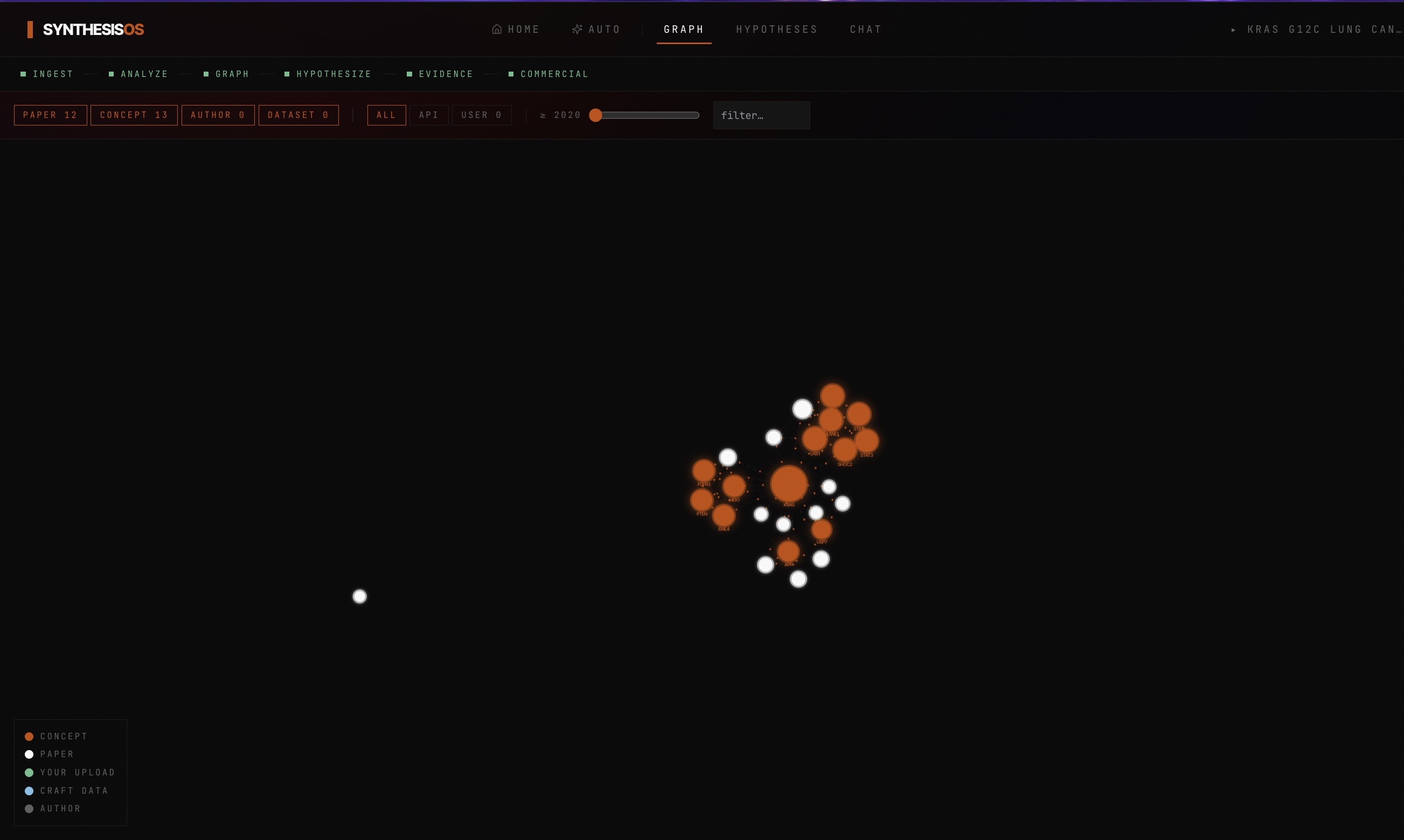
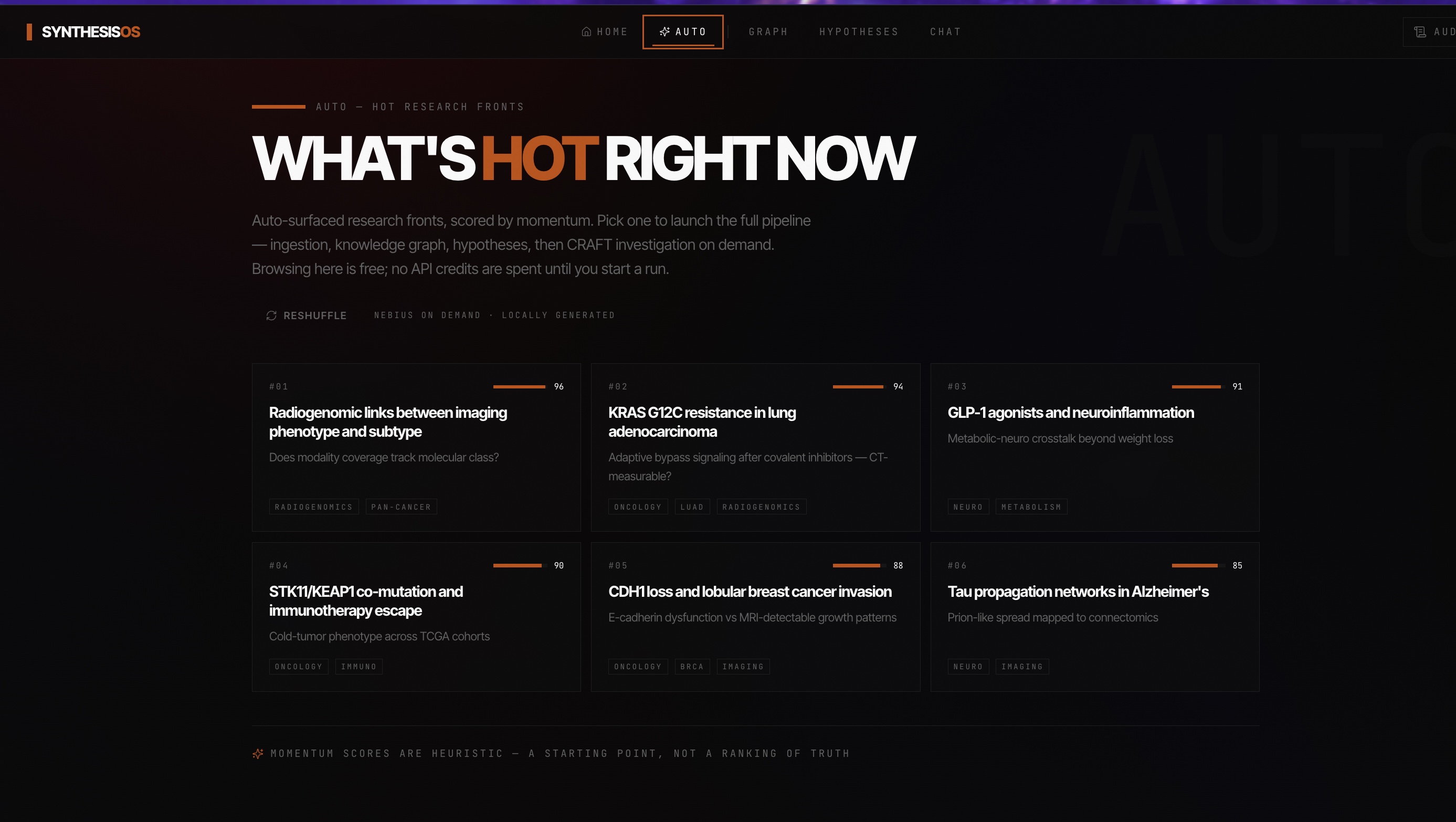
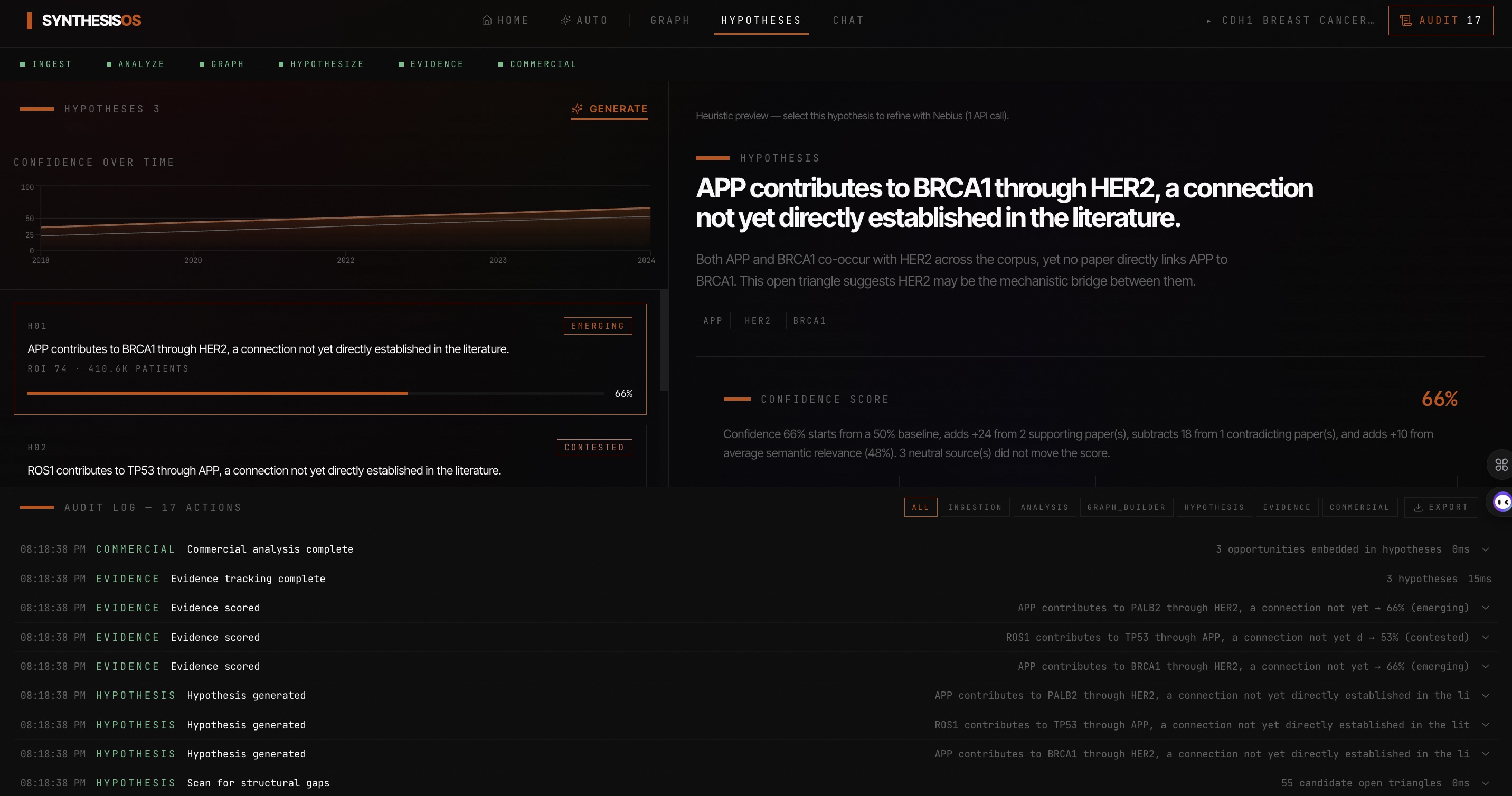
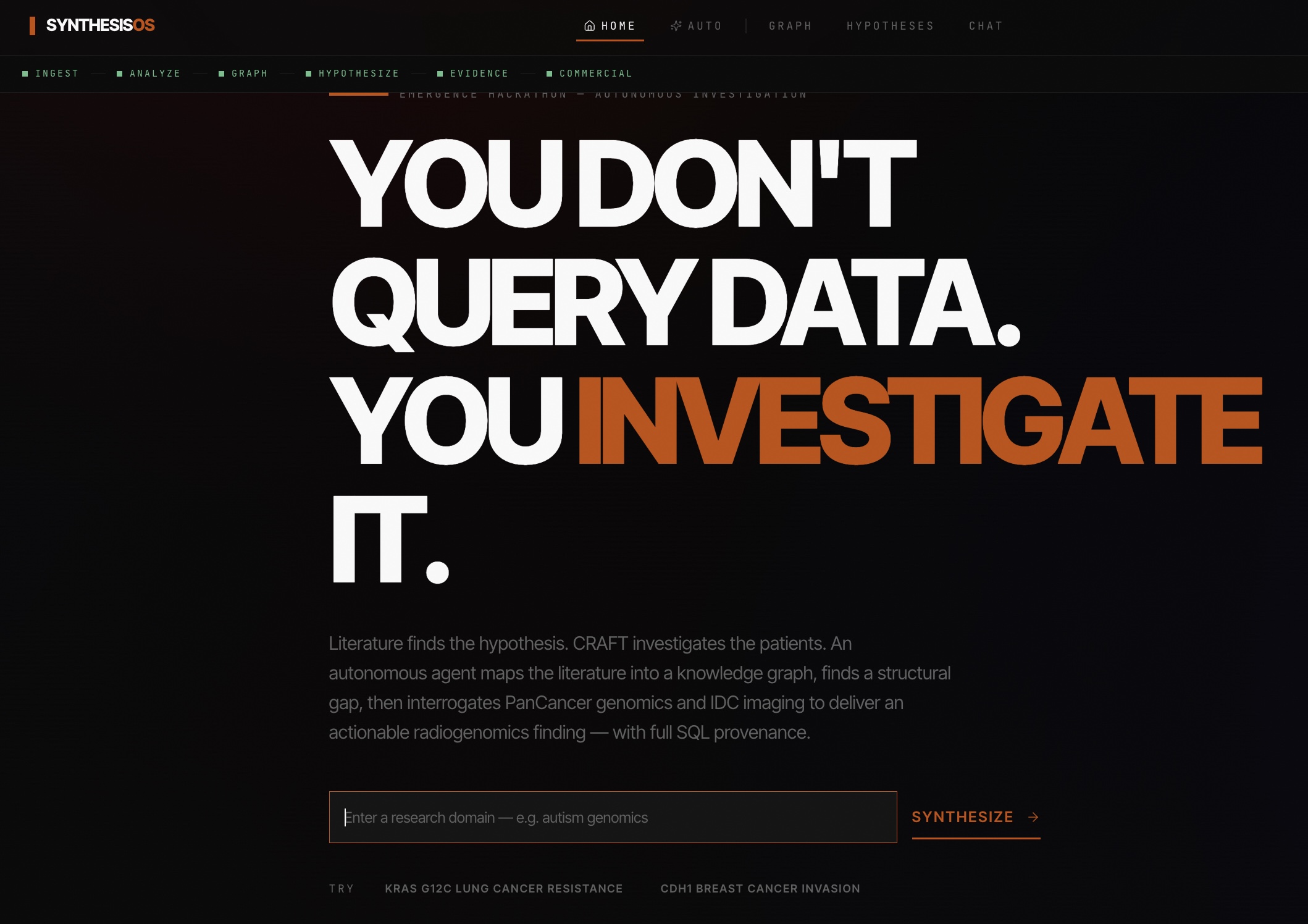
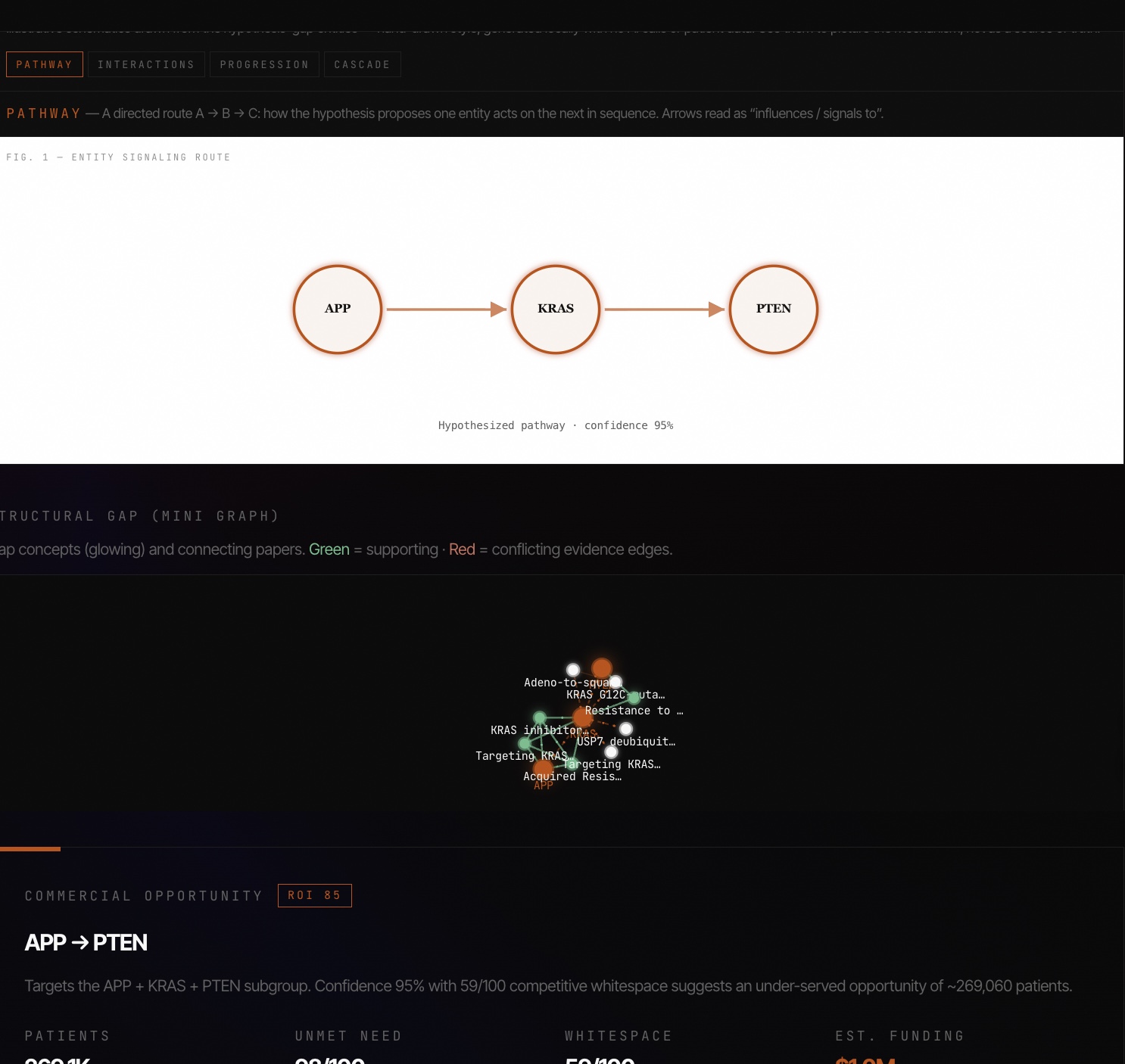
SynthesisOS is a research assistant that does the work of a whole research team automatically. You give it a topic, and it reads scientific papers (from public databases and any PDFs you upload), builds a visual map of how concepts connect, spots gaps in the research that suggest new ideas worth testing, checks whether evidence backs those ideas up or contradicts them, and points out where there might be business opportunities. It keeps a full record of everything it does, so anyone can check its work.
How we built it
We connected several tools together: Craft's databases, the Emergence MCP, LangGraph (to coordinate the different AI agents), and Google's Gemini AI. This setup lets the system look beyond just outside research papers as it also digs into database information about serious illnesses like cancer and their related treatments.
Challenges we ran into
The hardest part was teaching the system to correctly link diseases, drugs, and treatments together. Making these connections accurately instead of just guessing or missing them which took a lot of trial and error.
Accomplishments that we're proud of
This was our first time ever using MCP (Model Context Protocol), and we're proud that we managed to get it working smoothly in our project despite the learning curve.
What we learned
We learned how powerful it can be to combine different AI tools instead of relying on just one. Connecting LangGraph, Gemini, and MCP together taught us how these pieces can pass information back and forth to do something none of them could do alone. We also learned that finding real connections between medical concepts (like linking a drug to a disease) is much harder than it sounds since the AI needs good context and structure, not just raw data, to make accurate links. Finally, we learned a lot about MCP itself, since this was our first time using it, including how to set it up and get it talking smoothly with the rest of our system.
What's next for SynthesisOS
Next, we want to improve how accurately the system connects diseases, drugs, and treatments, since that was our biggest challenge. We'd also like to expand beyond terminal illnesses to cover more research areas, add more data sources, and make the hypothesis-generation smarter so it can suggest even more useful, testable ideas. Longer term, we're interested in making the commercial opportunity dashboard more detailed, so it can help real research and business teams make faster, better-informed decisions.
Built With
- chromadb
- craft
- emergence
- fastapi
- langgraph
- nebius
- react
- vite

Log in or sign up for Devpost to join the conversation.