-
-
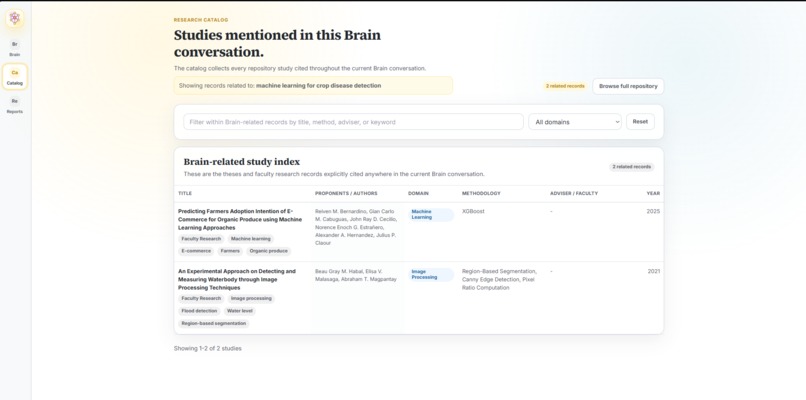
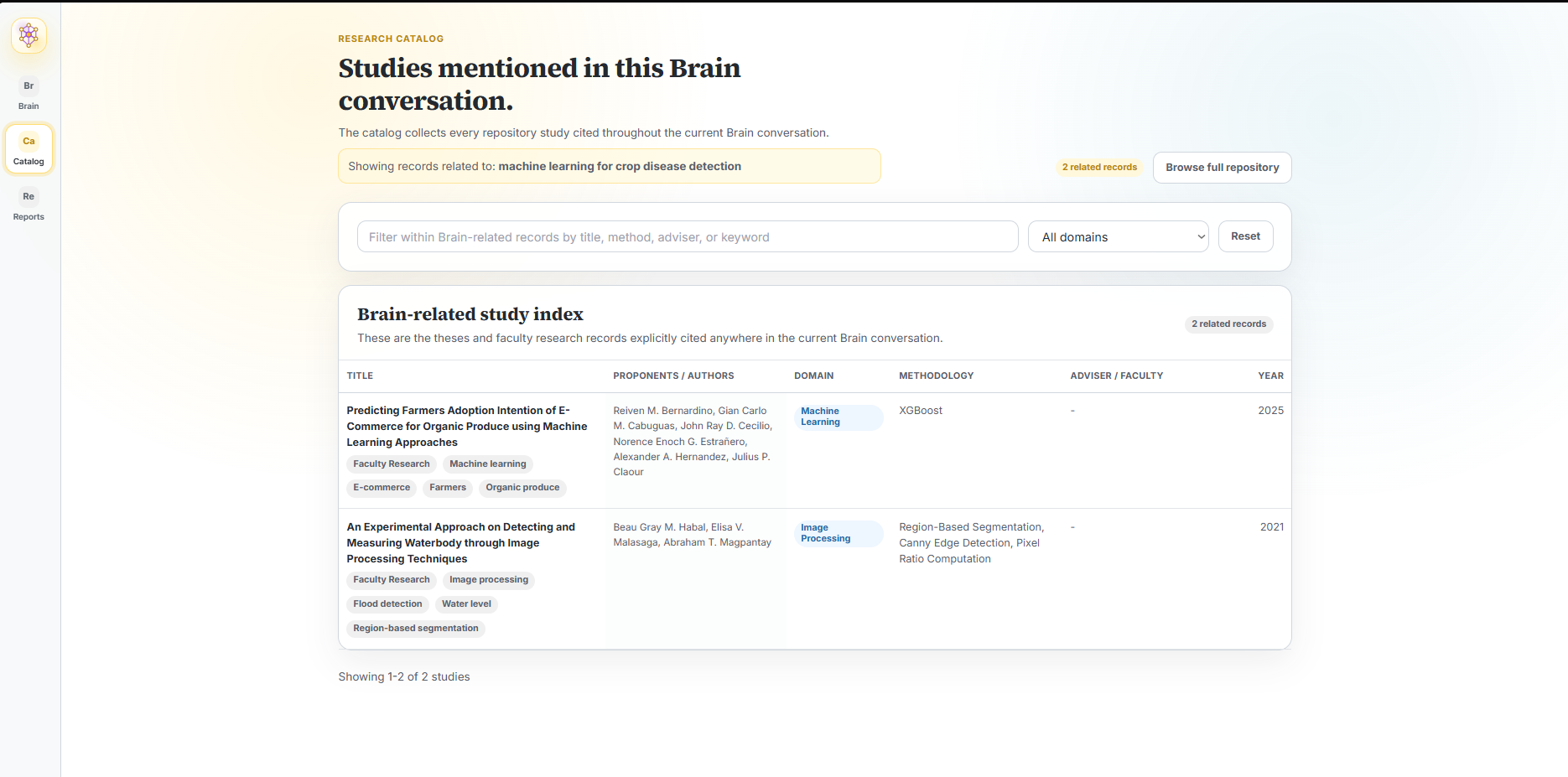
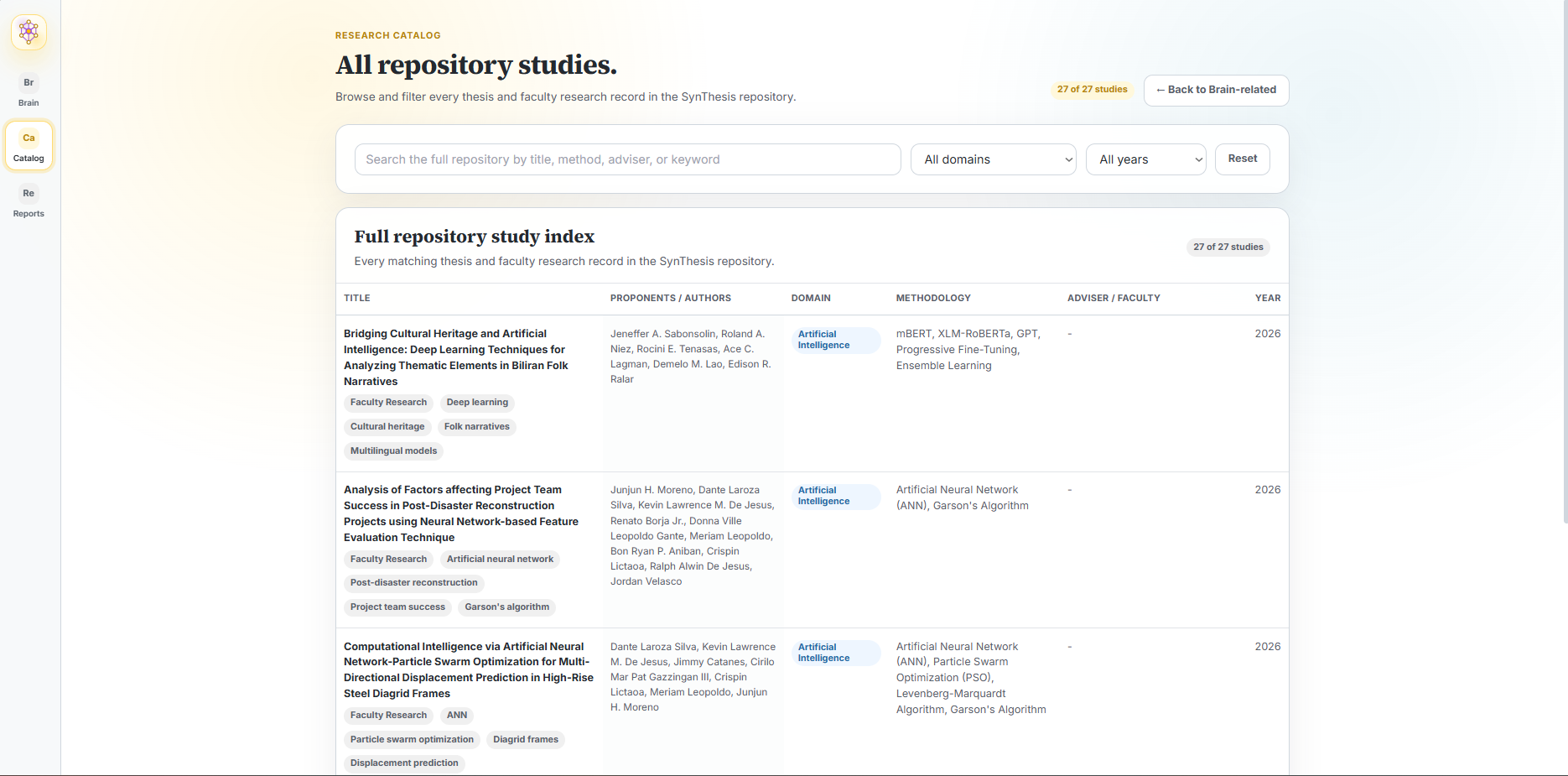
Represents the Catalog Tab in which displays all repositories or again repositories mentioned in the Brain Tab
-
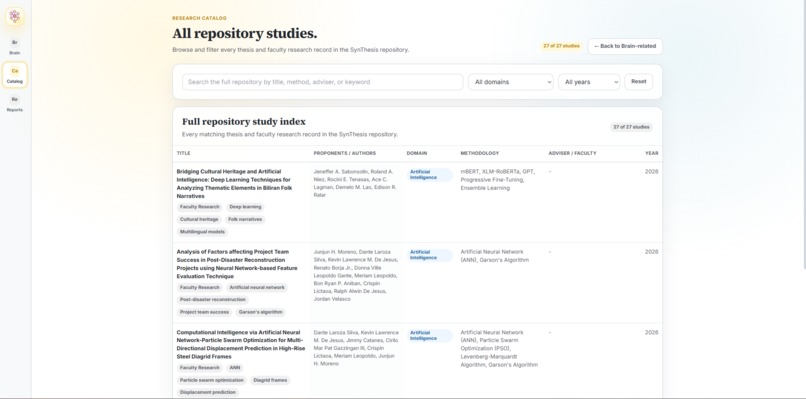
Represents the Catalog Tab in which displays all repositories or again repositories mentioned in the Brain Tab
-
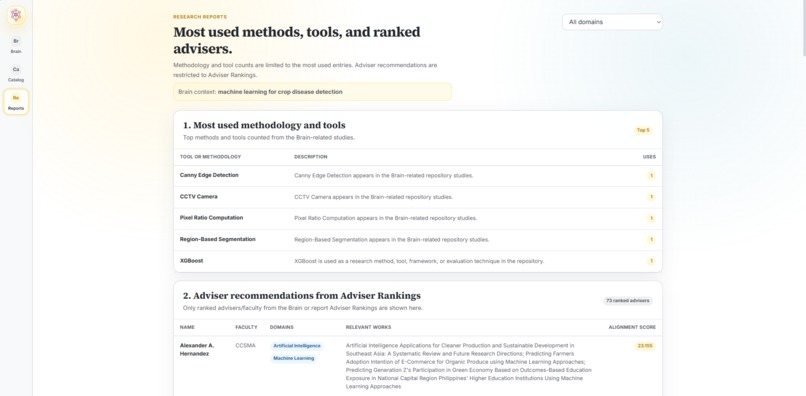
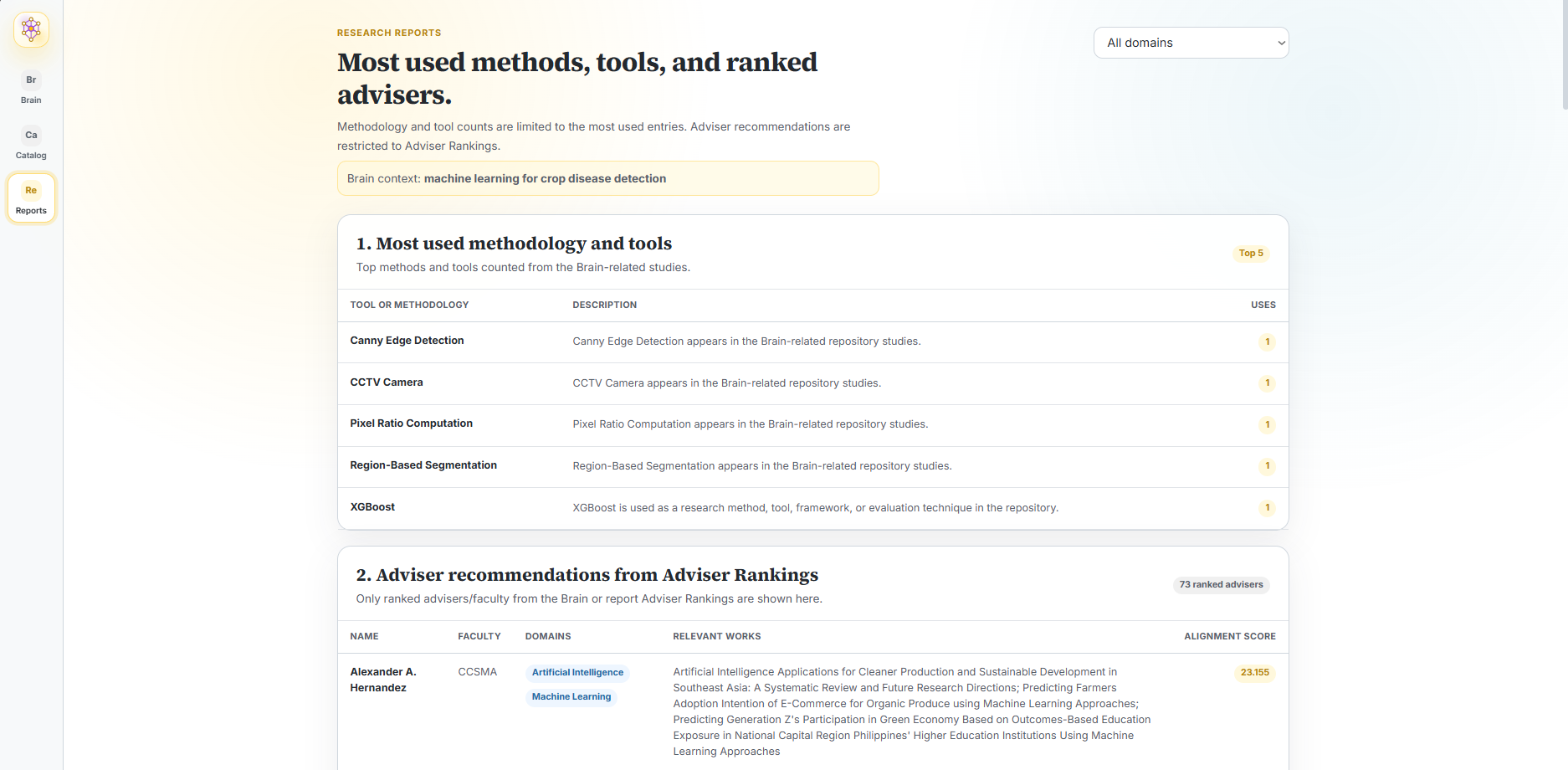
Represents the Report Tab which includes methodology and tools utilized by projects cited in the Brain Tab.
-
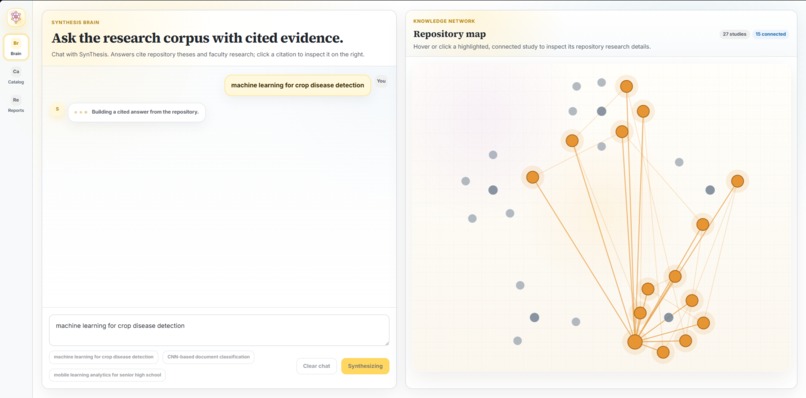
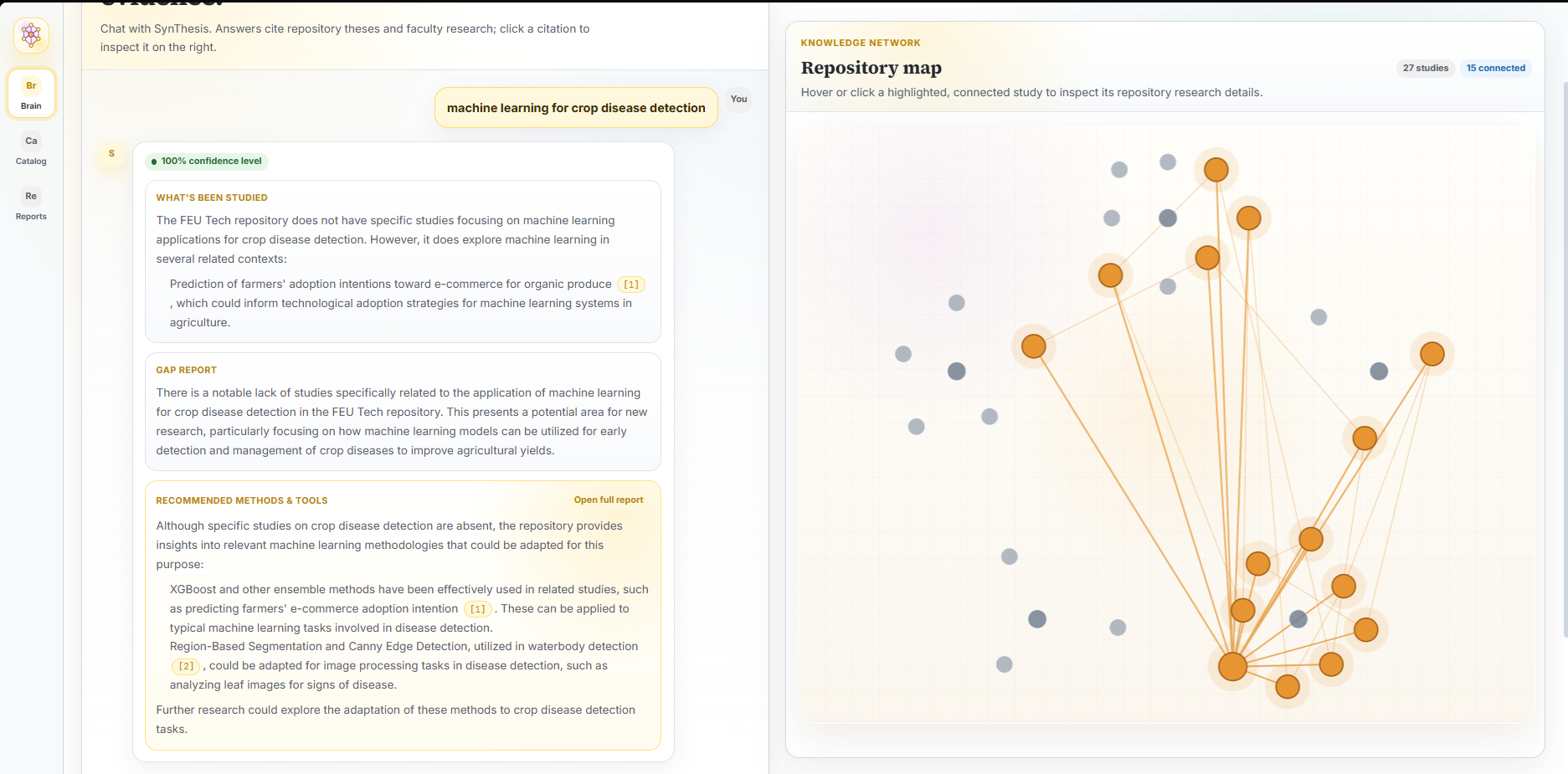
Represents the Brain Tab. Allows user to ask information in Natural Language. User can hover and clicked those somewhat related studies
-
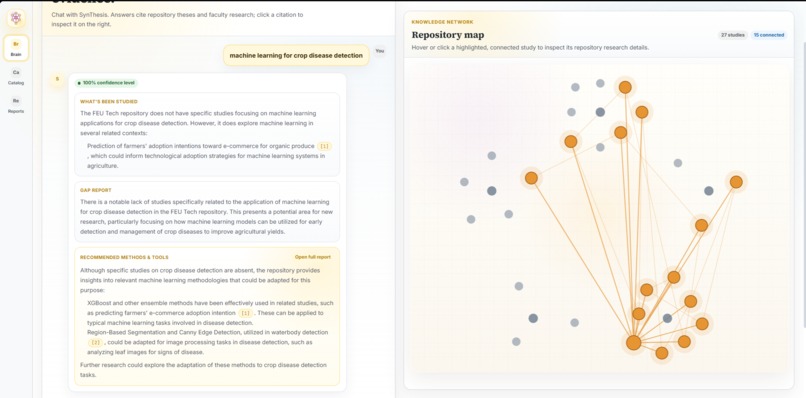
Represents the Brain Tab. Allows user to ask information in Natural Language. User can hover and clicked those somewhat related studies
-
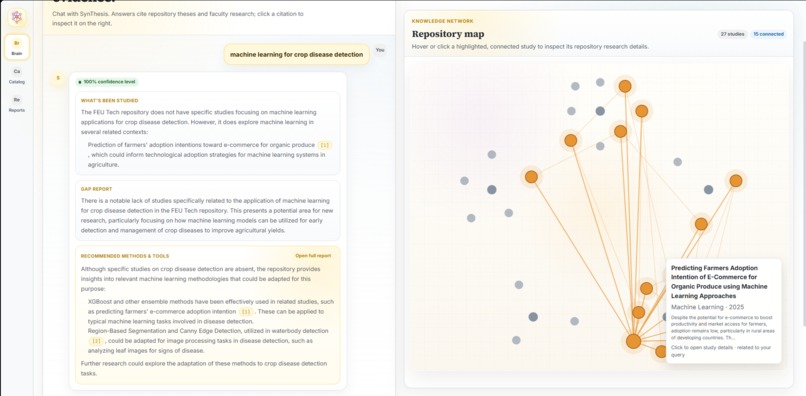
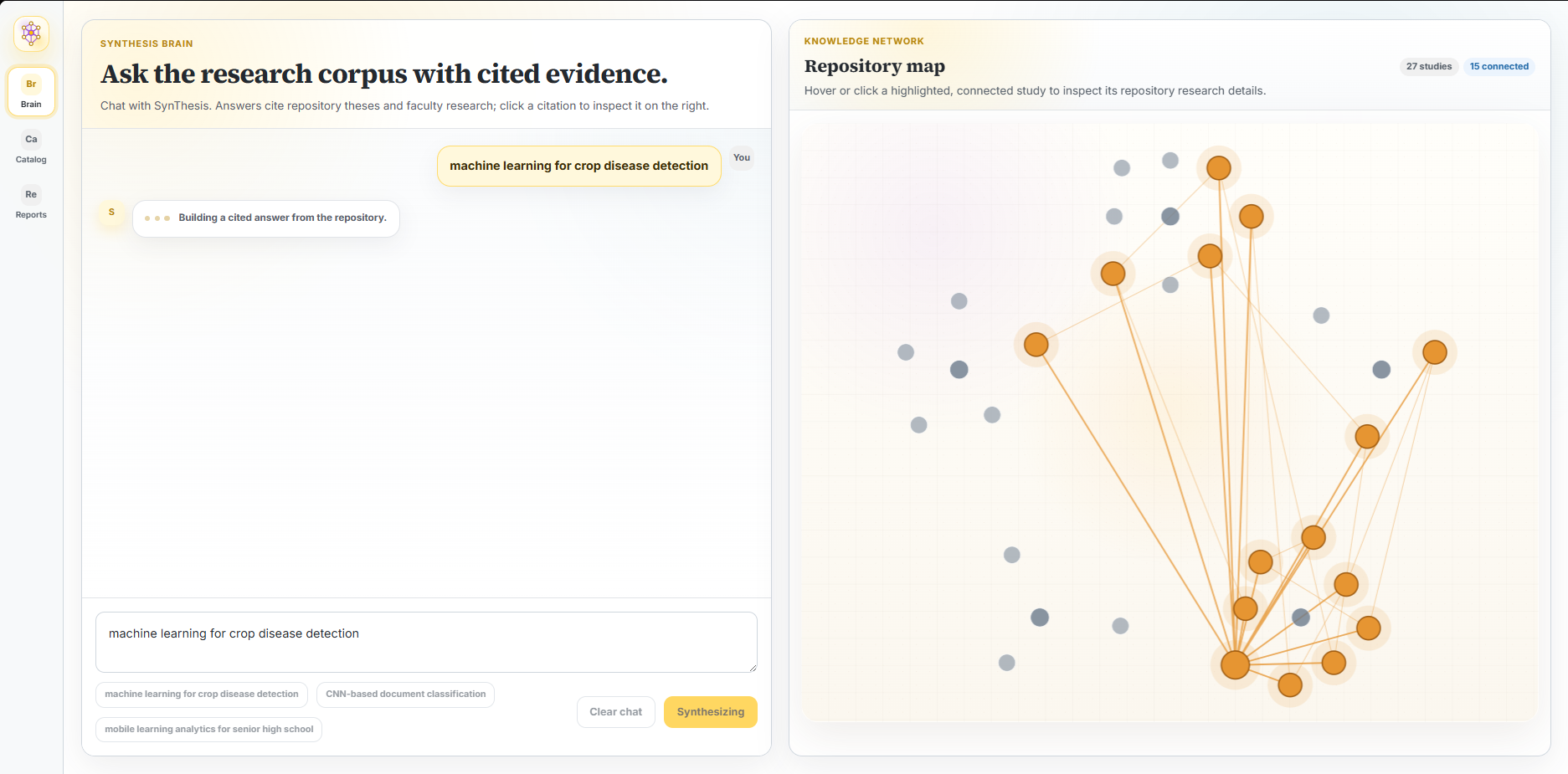
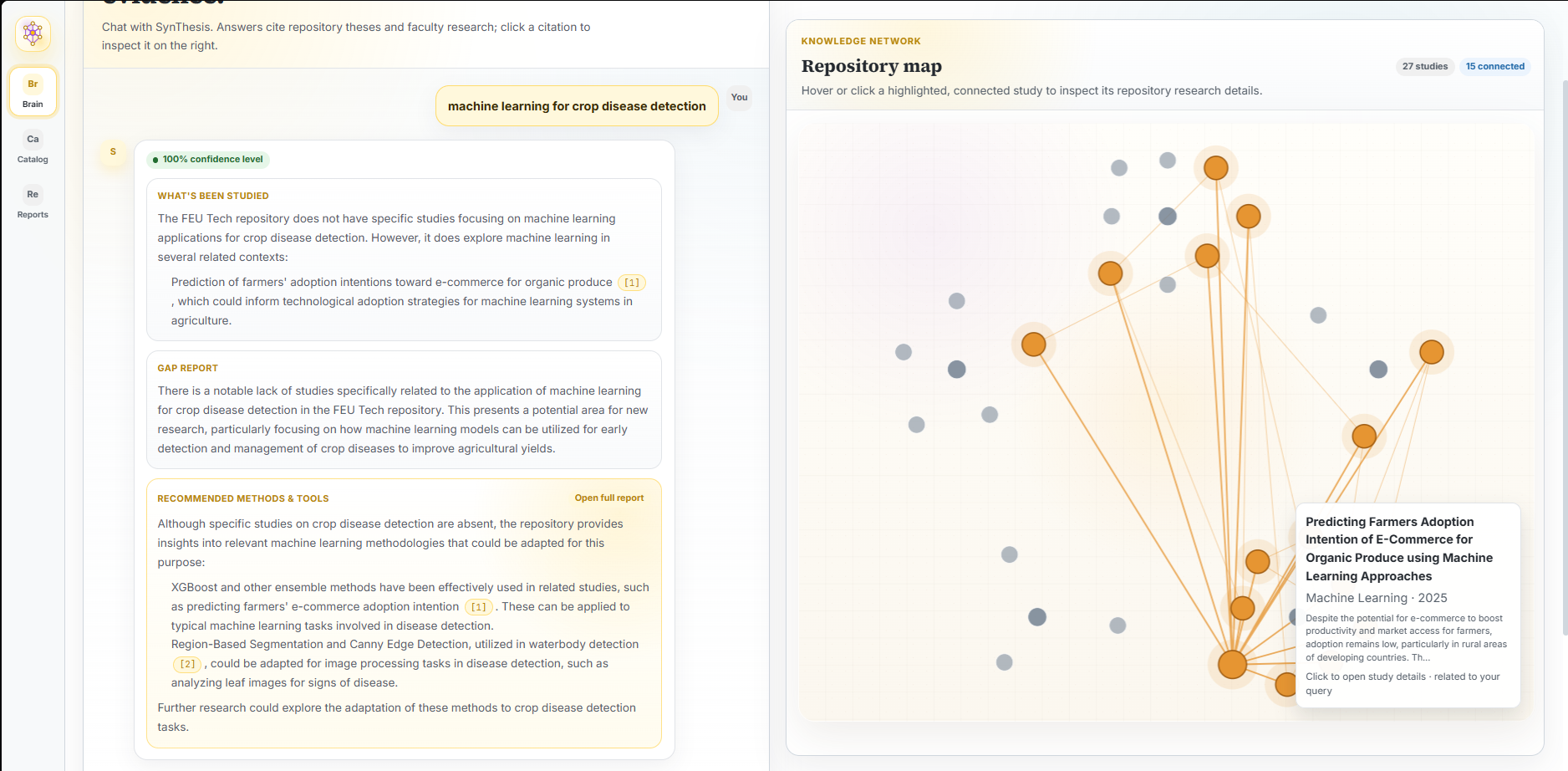
Represents the Brain Tab. Allows user to ask information in Natural Language. User can hover and clicked those somewhat related studies
Inspiration
SynThesis was inspired by the difficulty that us students faced when choosing and finding a thesis topic, finding related studies, and identifying the most suitable mentor. Many previous research already did exist, but they are often stored in static files or archived files that are difficult to search, compare, or use for decision making. We wanted to turn those archived thesis records into something useful, an intelligent research assistant that can help students discover patterns, gaps, and possible thesis directions.
What it does
SynThesis is an AI-powered thesis research assistant that helps students explore previous research thesis records and faculty research works. Users can search for any topic, and the system retrieves relevant studies based on meaning, not just exact keywords. It then uses GPT-5.6-sol to generate structured research guidance, including what has already been studied, possible research gaps, suggested directions, and recommended methods or tools.
The system also provides a catalog of thesis records, adviser or faculty recommendations, methodology reports, and a knowledge map that visualizes research domains and related works.
How we built it
We built SynThesis using a FastAPI backend, a structured JSON thesis dataset, and OpenAI models. The thesis records are loaded from a JSON file and converted into searchable text using important fields such as title, abstract, domain, adviser, proponents, keywords, methodologies, and datasets.
The system uses text-embedding-3-small to convert user queries into representations. These are then compared with stored thesis to retrieve the most relevant records. The retrieved records are then passed as context to GPT-5.6-sol, which then generates the final research response while being instructed to base its answer only on the provided archive context.
Challenges we ran into
One challenge we ran into was making sure that the AI responses stayed grounded in the thesis archive instead of generating unsupported information. To address this, we designed the system prompt to strictly require the model to use only the retrieved archive records and cite them using source numbers and by also providing a confidence rating of its answers.
Another challenge was handling cases where embeddings, JSON FIle records, or the AI service might not be available. We solved this by adding fallback keyword search and fallback response generation so the system can still provide useful results even when some AI features fail. We also had to structure the thesis data carefully so the system could recognize advisers, proponents, methodologies, domains, and related records consistently.
Built With
- codex
- css
- fastapi
- gpt-5.6-sol
- javascript
- text-embedding

Log in or sign up for Devpost to join the conversation.