🌟 Inspiration
Let's face it, traditional online educational content falls short in interactivity and adaptability. Whether you're watching a YouTube tutorial on a home DIY project or a recorded lecture on Machine Learning, the monologue format of videos leaves no room for all your spontaneous questions. This gap not only disrupts how you learn but also hinders your ability to fully understand the material. The urge to ask your smart, all-knowing friend to bridge this gap of information is stronger than ever. That’s where synthesis comes in.
🧠 What it does
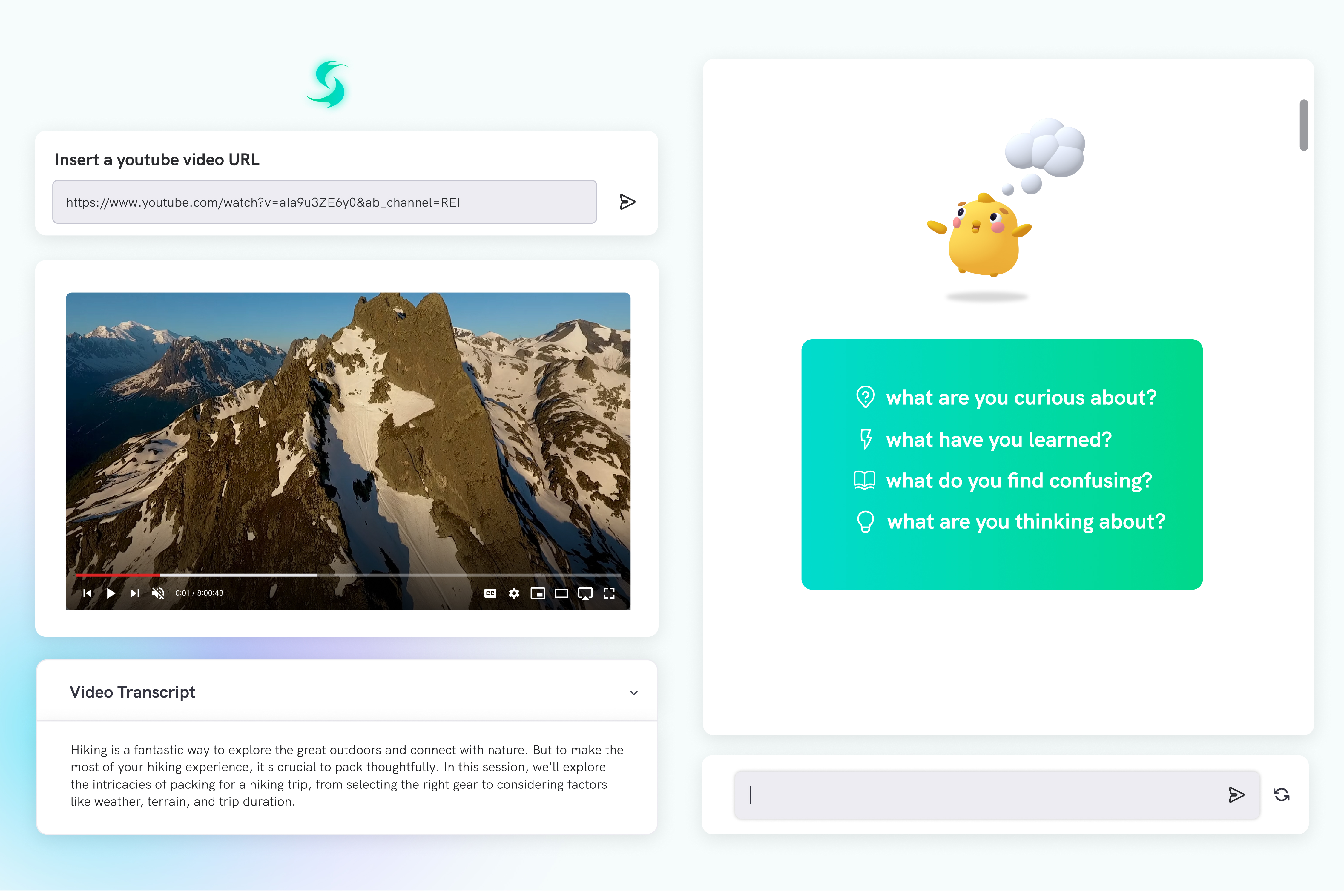
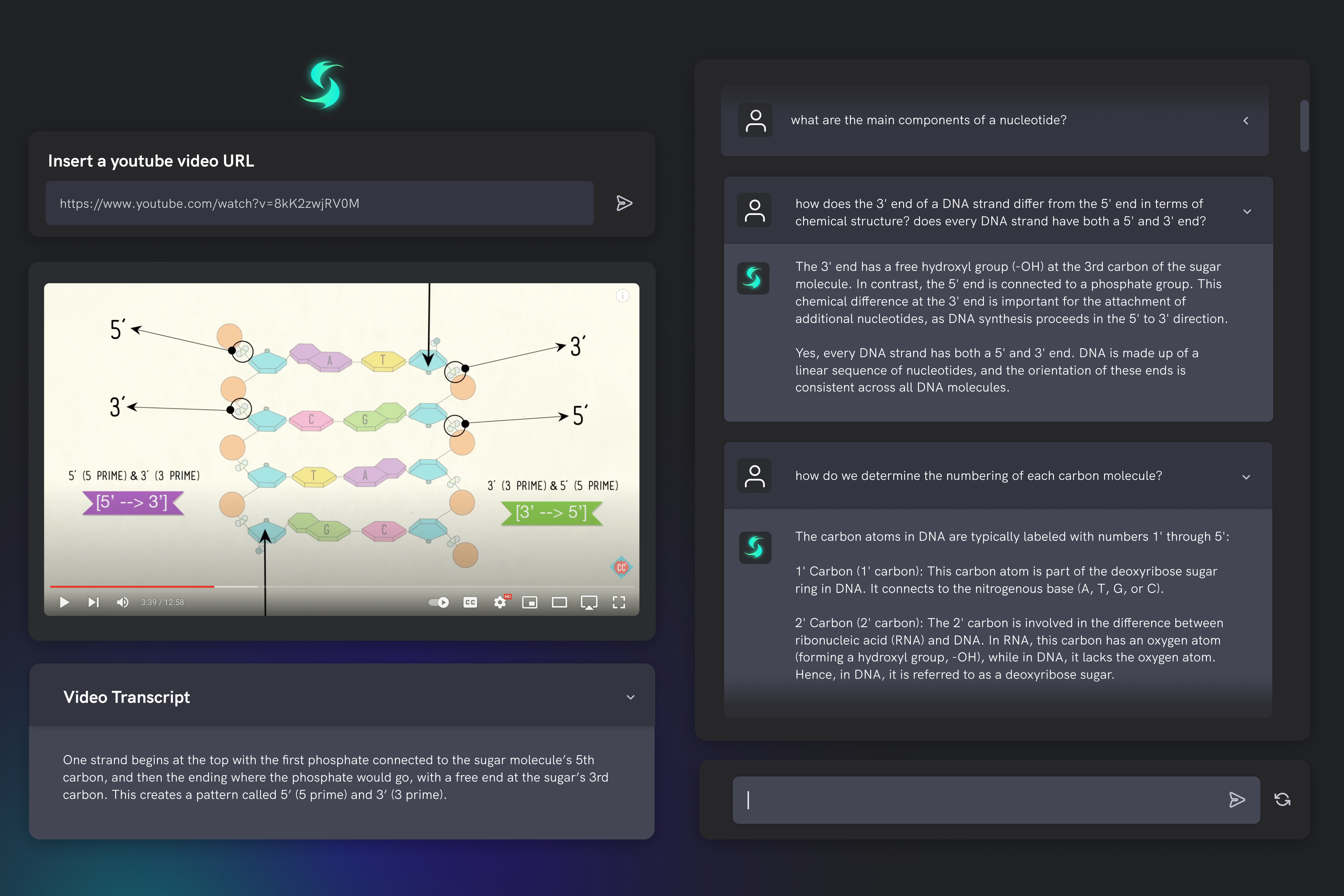
Synthesis integrates seamlessly with your video platforms, analyzing content in real time to provide interactive Q&A, insights, and contextual information. It's like a living, breathing study buddy that evolves to suit your unique learning journey.
🛠️ How we built it
We extract the transcript and other metadata from YouTube videos by API. This data serves as the input to a GPT-4-based model, fine-tuned with domain-specific prompts to achieve highly contextual and informative responses. The front-end and back-end are implemented using Next.js
🧱 Challenges we ran into
TailwindCSS, and general tiredness.
🏆 Accomplishments that we're proud of
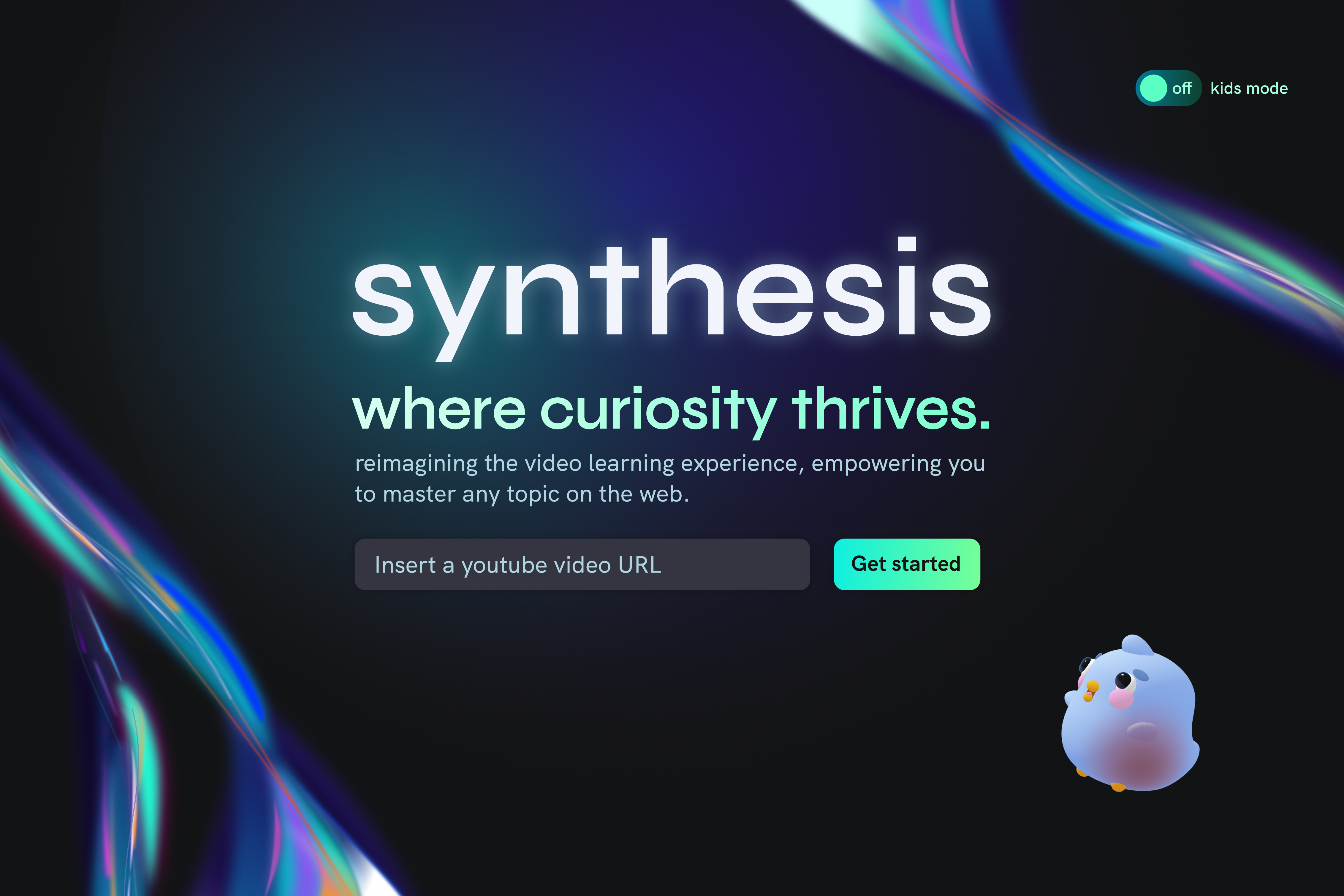
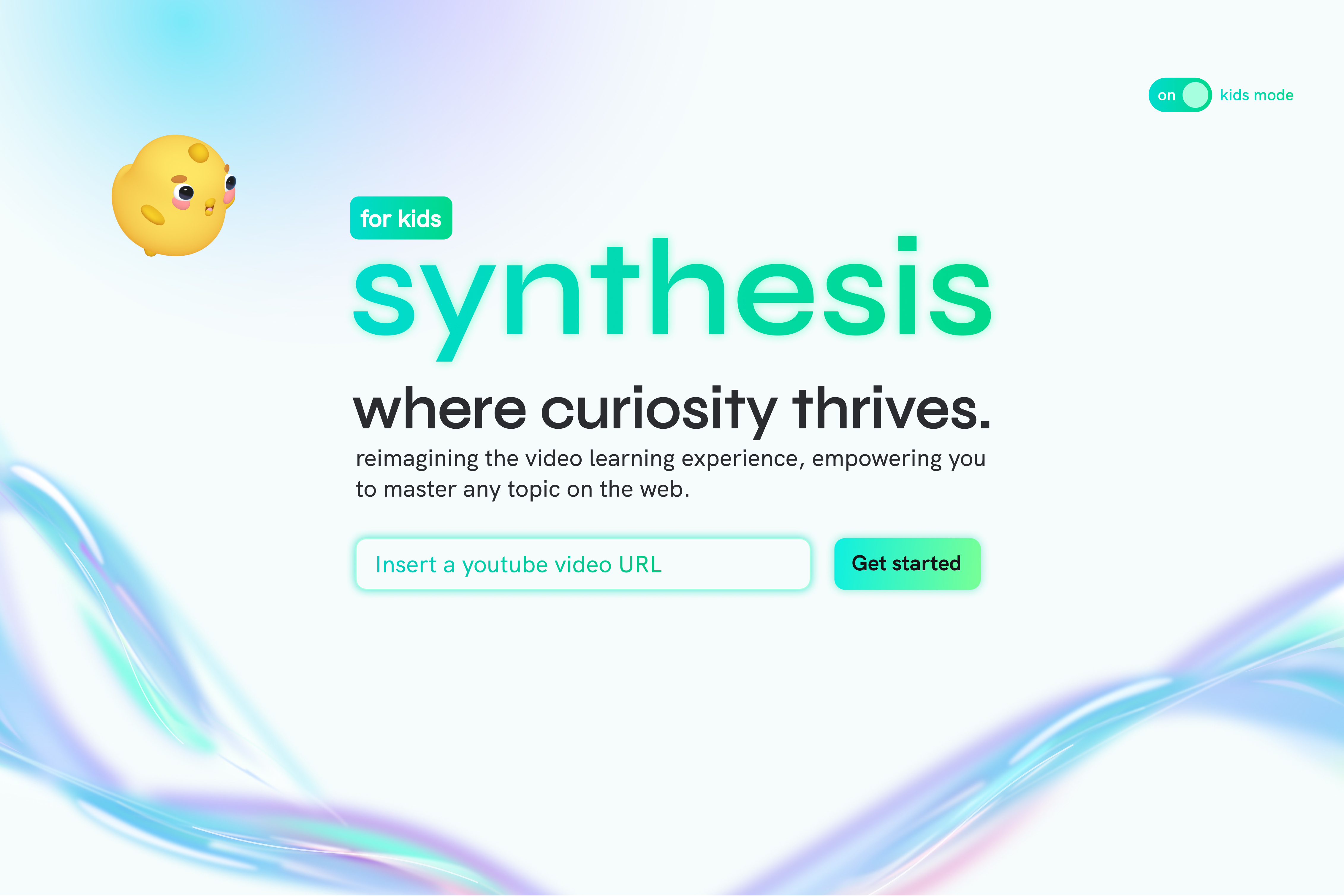
We enjoyed making the mascot and the creation of a user-friendly kids' mode that made the app more accessible and cute. We're also particularly happy that we managed to avoid scope creep to deliver a robust MVP that even includes some of our stretch features.
📚 What we learned
We gained valuable insights into the capabilities of GPT-4 by fine-tuning our prompt strategies. This entailed iterative experiments to determine the optimal query structure, ensuring more accurate and context-relevant responses. We also delved into the nuances of the model's attention mechanisms to better understand how to retrieve the information we needed. This was crucial in applications such as extracting timestamps from video transcripts, where accuracy matters. Understanding the various parameters and how they interact with the model's internal token distribution helped us not just utilize GPT-4 more effectively, but also enhance the overall performance and reliability of our application.
💡 What's next for synthesis
Future enhancements include multilingual support, compatibility with additional media like podcasts and Zoom recordings, and extending our real-time analysis to include not just textual and auditory, but also visual elements of the video through annotations.
This modified version aims to broaden the application domain of Synthesis, making it a universally applicable solution to satisfy your curiosity.
Built With
- api
- figma
- gpt-4
- nextjs
- openai
- react




Log in or sign up for Devpost to join the conversation.